Getting Started in an
 Open Source Community

Dru Lavigne
Community Manager, PC-BSD Project
SummerCamp 2010
This presentation will discuss:

WHY? (would I want to contribute?)

WHAT? (type of contributions can I make?)

HOW? (do I decide which community?)

WHERE? (do I begin?)

WHAT IF? (something goes wrong?)

Closing Thoughts
WHY?
Q. Why should I bother getting involved?

And what if:
● I'm not that geeky...


● I don't know how to code...


● I really don't have that much time to


  spare....
● I don't know anyone in open source...


● I've tried before and had a bad


  experience (or two)...
WHY: Experience

       ●   Gain experience
           you can add to
           your resume

       ●   Learn hard and soft
           skills

       ●   Learn from others
           in your spare time
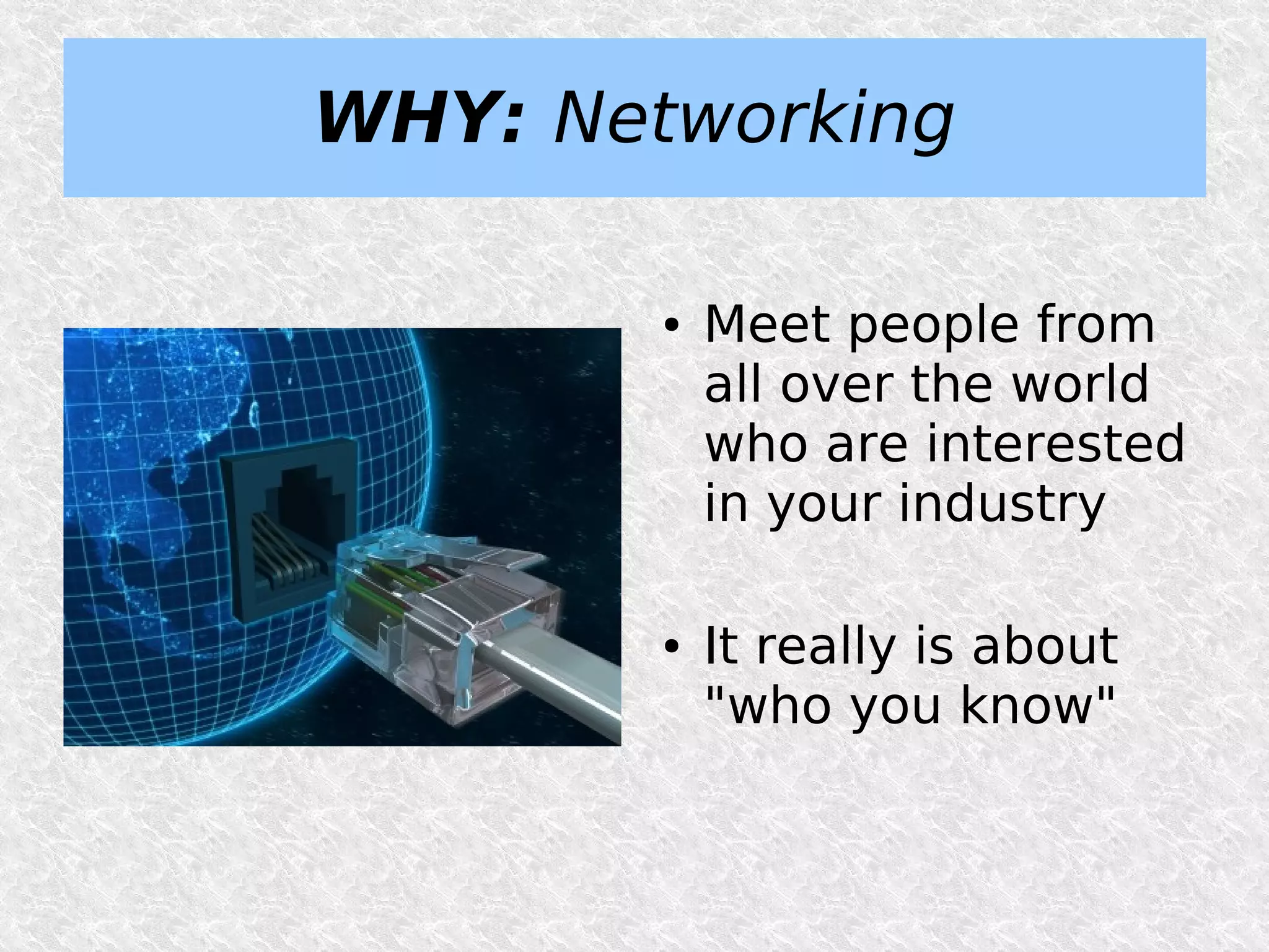
WHY: Networking

        ●   Meet people from
            all over the world
            who are interested
            in your industry

        ●   It really is about
            "who you know"
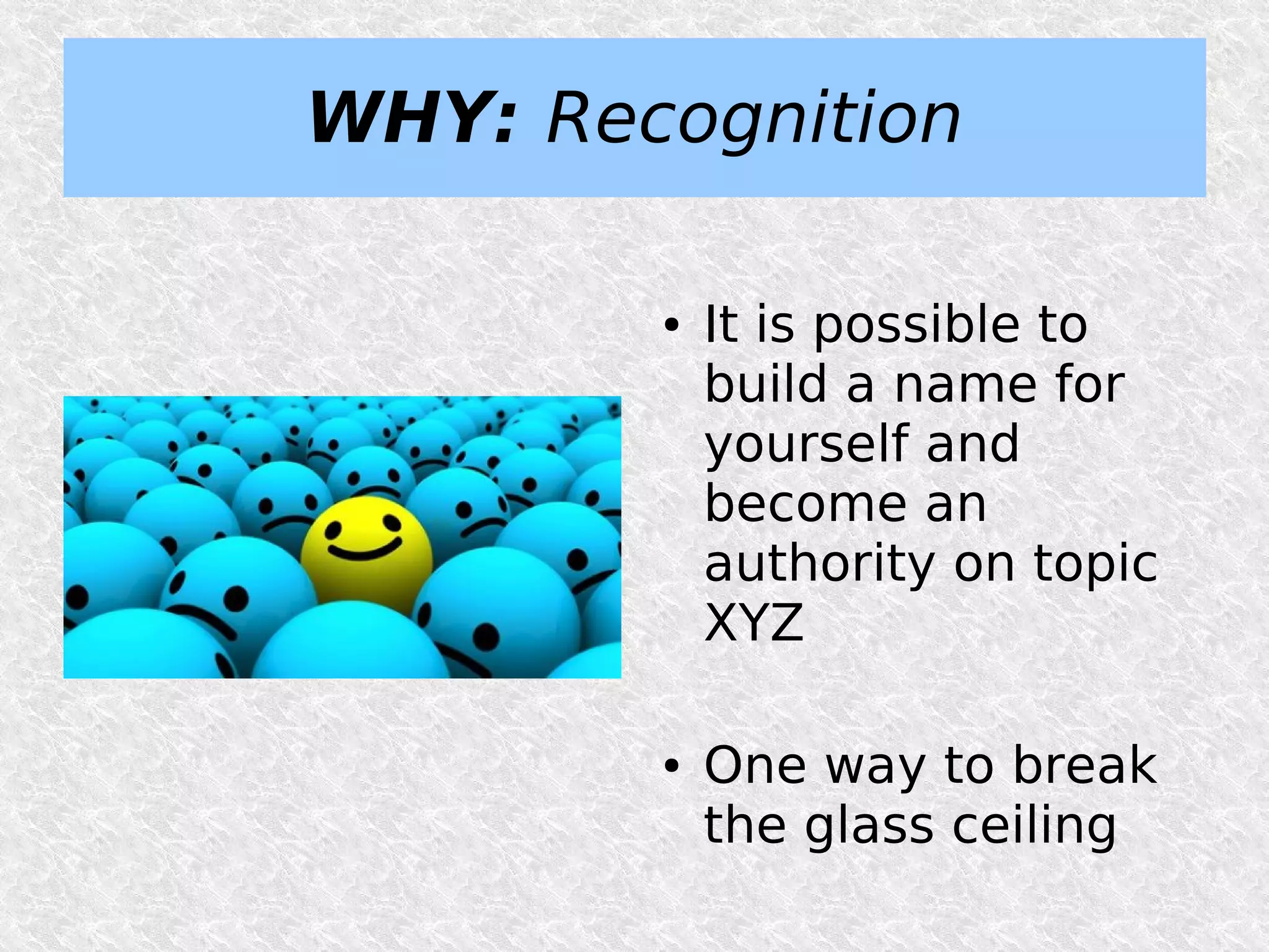
WHY: Recognition

        ●   It is possible to
            build a name for
            yourself and
            become an
            authority on topic
            XYZ

        ●   One way to break
            the glass ceiling
WHAT?


   ●   Coding is the most
       obvious, but not
       the only type of
       contribution
WHAT?
  Every project needs
  help with:

   ●   Documentation
   ●   Marketing/Advocacy
   ●   Graphics
   ●   System and/or web
       administration
   ●   Helping new users
WHAT?
       You could:

   ●   Start a blog
   ●   Tweet news
   ●   Answer questions on
       forums, mailing lists,
       or IRC
   ●   Get involved!
HOW?
  Create a Project
  short list:
   ● What open source


     are you currently
     using?
   ● Do you have


     friends already
     involved in a
     Project?
   ● What are your


     interests?
HOW?
  Research each
  Project's
  communication
  channels:
  ● Are you comfortable


    using their
    technology?
  ● Are you comfortable


    with their tone?
HOW?
  Look for opportunity:
  ● Does the Project


    need assistance in
    areas that match
    your goals?
  ● Does it publish a


    wish or TO DO list?
  ● Is it easy to


    contribute or are
    there barriers to
    overcome?
HOW?
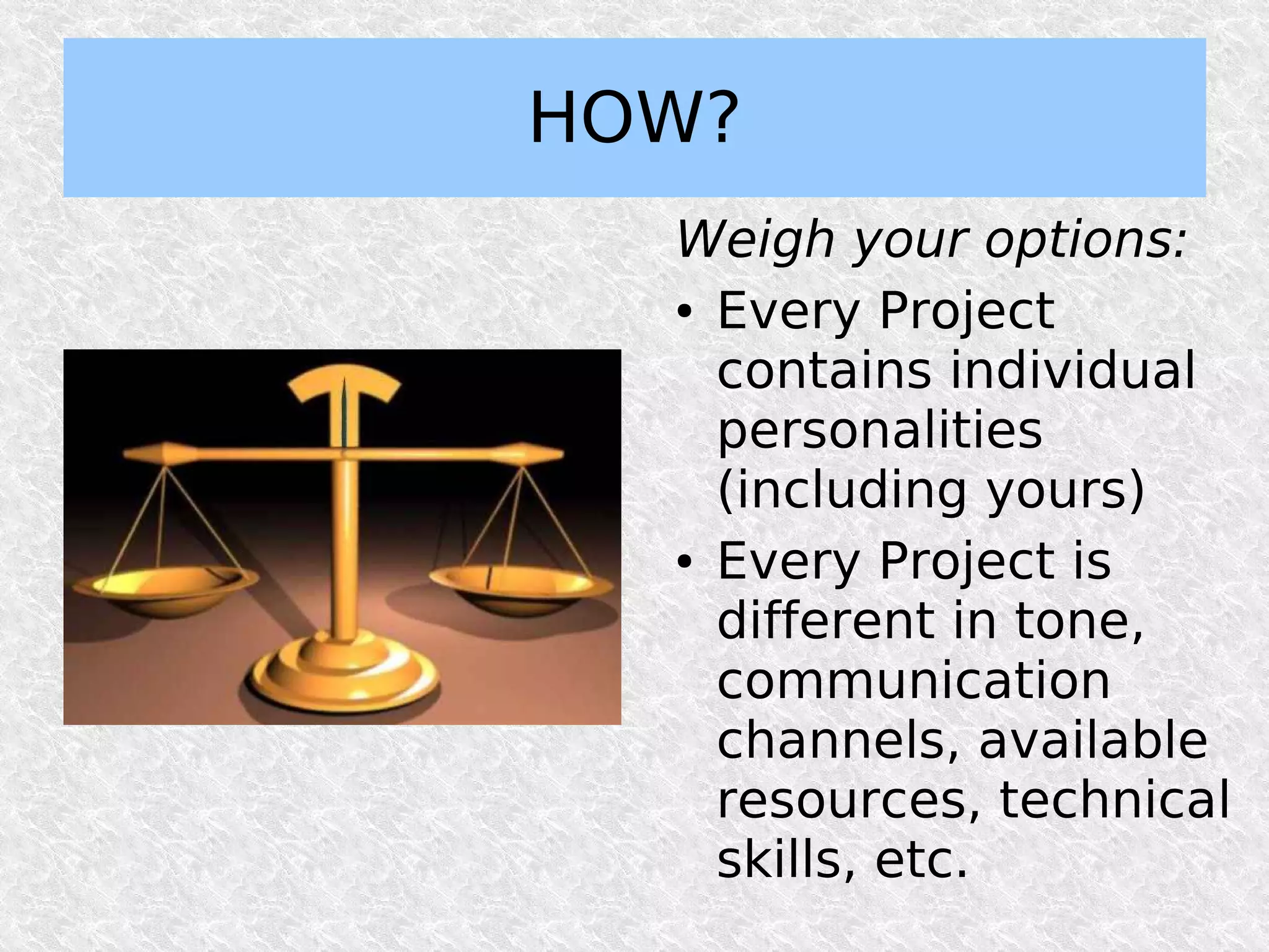
  Weigh your options:
  ● Every Project


    contains individual
    personalities
    (including yours)
  ● Every Project is


    different in tone,
    communication
    channels, available
    resources, technical
    skills, etc.
HOW?
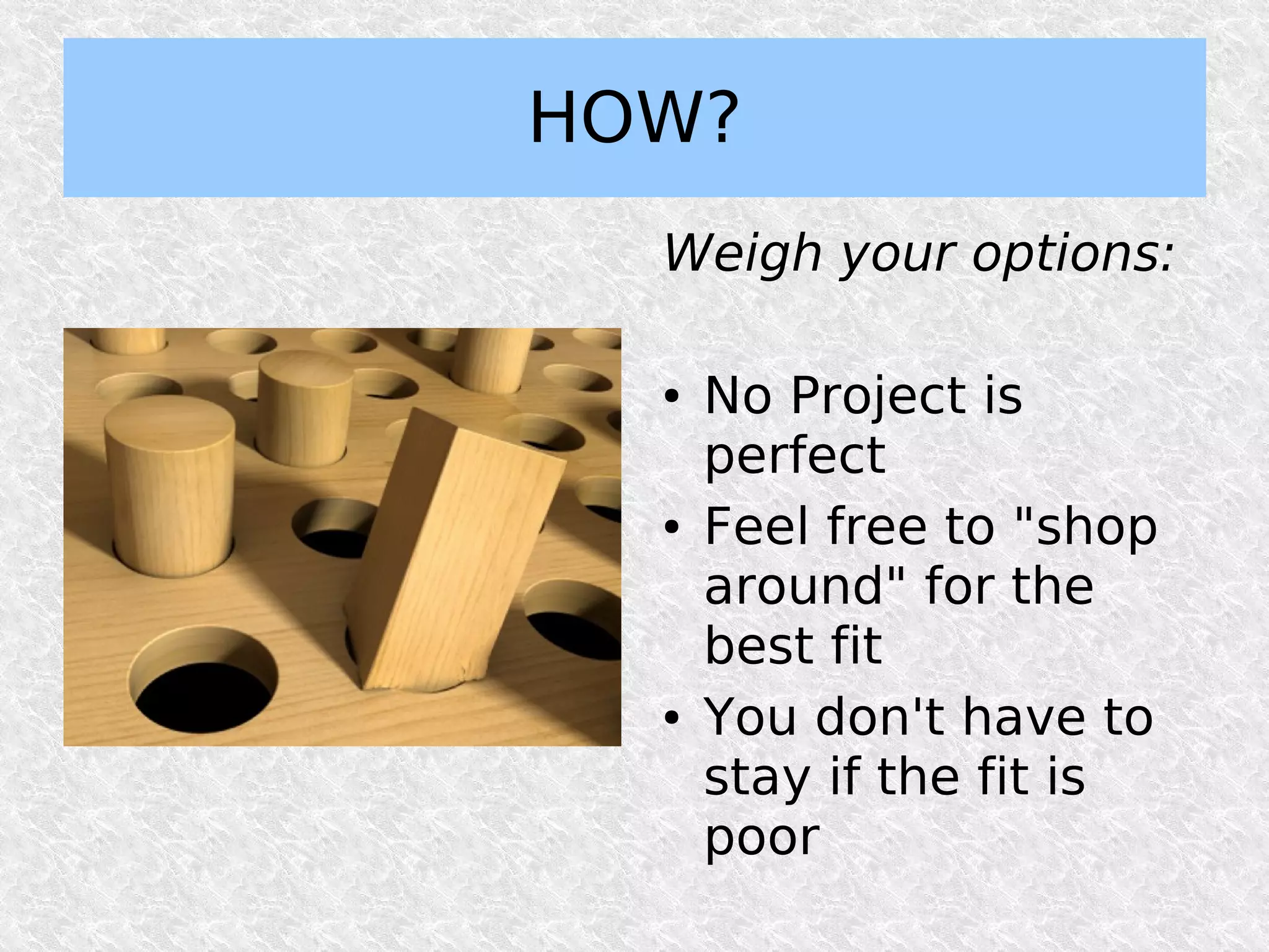
  Weigh your options:

  ●   No Project is
      perfect
  ●   Feel free to "shop
      around" for the
      best fit
  ●   You don't have to
      stay if the fit is
      poor
WHERE?

   ●   Find and engage in
       a communication
       channel

   ●   Join a local user
       group

   ●   Attend a
       conference
WHERE?

   ●   Learn the rules of
       Netiquette
   ●   Read the Project's
       FAQs
   ●   Treat others how
       you'd want to be
       treated
   ●   Be persistent
WHAT IF?
    Noone responds?

    ●   Check your question
    ●   Try another
        communication
        channel
    ●   Over time, notice
        patterns
WHAT IF?
    You start a flame
    war?

    ●   Apologize once,
        then stay out of it

    ●   Don't do whatever
        it was you did
        again
WHAT IF?
    You encounter elitism,
    sexism, racism, or
    some other nasty-ism?

    ●   Don't pretend it
        didn't happen

    ●   Privately bring it to
        the attention of a
        leader in the Project
Closing Thoughts

        ●   Opportunities are
            available

        ●   Well worth the
            time spent

        ●   The more you find
            time to give, the
            more you get back
Questions?


           URL to slides:
http://www.slideshare.net/dlavigne
        /summercamp-2010

        dru@freebsd.org

SummerCamp 2010

  • 1.
    Getting Started inan Open Source Community Dru Lavigne Community Manager, PC-BSD Project SummerCamp 2010
  • 2.
    This presentation willdiscuss: WHY? (would I want to contribute?) WHAT? (type of contributions can I make?) HOW? (do I decide which community?) WHERE? (do I begin?) WHAT IF? (something goes wrong?) Closing Thoughts
  • 3.
    WHY? Q. Why shouldI bother getting involved? And what if: ● I'm not that geeky... ● I don't know how to code... ● I really don't have that much time to spare.... ● I don't know anyone in open source... ● I've tried before and had a bad experience (or two)...
  • 4.
    WHY: Experience ● Gain experience you can add to your resume ● Learn hard and soft skills ● Learn from others in your spare time
  • 5.
    WHY: Networking ● Meet people from all over the world who are interested in your industry ● It really is about "who you know"
  • 6.
    WHY: Recognition ● It is possible to build a name for yourself and become an authority on topic XYZ ● One way to break the glass ceiling
  • 7.
    WHAT? ● Coding is the most obvious, but not the only type of contribution
  • 8.
    WHAT? Everyproject needs help with: ● Documentation ● Marketing/Advocacy ● Graphics ● System and/or web administration ● Helping new users
  • 9.
    WHAT? You could: ● Start a blog ● Tweet news ● Answer questions on forums, mailing lists, or IRC ● Get involved!
  • 10.
    HOW? Createa Project short list: ● What open source are you currently using? ● Do you have friends already involved in a Project? ● What are your interests?
  • 11.
    HOW? Researcheach Project's communication channels: ● Are you comfortable using their technology? ● Are you comfortable with their tone?
  • 12.
    HOW? Lookfor opportunity: ● Does the Project need assistance in areas that match your goals? ● Does it publish a wish or TO DO list? ● Is it easy to contribute or are there barriers to overcome?
  • 13.
    HOW? Weighyour options: ● Every Project contains individual personalities (including yours) ● Every Project is different in tone, communication channels, available resources, technical skills, etc.
  • 14.
    HOW? Weighyour options: ● No Project is perfect ● Feel free to "shop around" for the best fit ● You don't have to stay if the fit is poor
  • 15.
    WHERE? ● Find and engage in a communication channel ● Join a local user group ● Attend a conference
  • 16.
    WHERE? ● Learn the rules of Netiquette ● Read the Project's FAQs ● Treat others how you'd want to be treated ● Be persistent
  • 17.
    WHAT IF? Noone responds? ● Check your question ● Try another communication channel ● Over time, notice patterns
  • 18.
    WHAT IF? You start a flame war? ● Apologize once, then stay out of it ● Don't do whatever it was you did again
  • 19.
    WHAT IF? You encounter elitism, sexism, racism, or some other nasty-ism? ● Don't pretend it didn't happen ● Privately bring it to the attention of a leader in the Project
  • 20.
    Closing Thoughts ● Opportunities are available ● Well worth the time spent ● The more you find time to give, the more you get back
  • 21.
    Questions? URL to slides: http://www.slideshare.net/dlavigne /summercamp-2010 dru@freebsd.org