Concrete Technology
(BCV503)
Topic: Sulphate Attack
and Chloride
Attack
Sreekanth Gowtham G
S
4NI22CV041
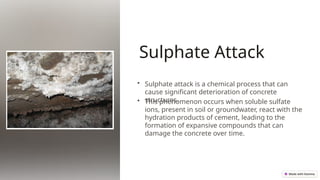
Sulphate Attack
• Sulphate attack is a chemical process that can
cause significant deterioration of concrete
structures.
• This phenomenon occurs when soluble sulfate
ions, present in soil or groundwater, react with the
hydration products of cement, leading to the
formation of expansive compounds that can
damage the concrete over time.
Causes of Sulphate Attack
Sulphate Sources
• Sulphate ions can
originate from various
sources, including
groundwater, soil,
industrial waste, and
even certain types of
aggregates.
• The presence of these
ions in the concrete's
environment is a key
factor in the onset of
sulphate attack.
Moisture Availability
• Moisture is essential for
the chemical reactions
involved in sulphate
attack.
• Concrete structures
exposed to a consistent
supply of water, such as
those in contact with
groundwater or
subjected to periodic
flooding, are more
susceptible to sulphate
attack.
Concrete Permeability
• The porosity and
permeability of the
concrete can also
contribute to the severity
of sulphate attack.
• Poorly compacted or
cured concrete, or
concrete with high
water-to-cement ratios,
is more vulnerable to the
penetration of sulphate
ions.
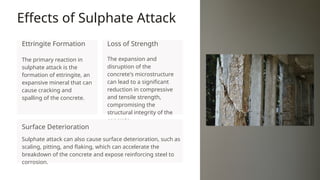
Effects of Sulphate Attack
Ettringite Formation
The primary reaction in
sulphate attack is the
formation of ettringite, an
expansive mineral that can
cause cracking and
spalling of the concrete.
Loss of Strength
The expansion and
disruption of the
concrete's microstructure
can lead to a significant
reduction in compressive
and tensile strength,
compromising the
structural integrity of the
concrete.
Surface Deterioration
Sulphate attack can also cause surface deterioration, such as
scaling, pitting, and flaking, which can accelerate the
breakdown of the concrete and expose reinforcing steel to
corrosion.
Preventive Measures Against Sulphate Attack
Use Sulphate-Resistant Cement
Selecting a cement with a low C3A (tricalcium
aluminate) content, such as Type V or Type HS
cement, can significantly improve the concrete's
resistance to sulfate attack.
Reduce Concrete Permeability
Ensuring proper concrete mix design, curing, and
compaction can reduce the concrete's
permeability, making it more resistant to the
ingress of sulfate ions.
Provide Adequate Cover
Ensuring that reinforcing steel has adequate
concrete cover can protect the steel from
corrosion caused by the expansive products of
sulfate attack.
Limit Water-to-Cement Ratio
Maintaining a low water-to-cement ratio in the
concrete mix design can also improve resistance to
sulfate attack by reducing the concrete's porosity
and permeability.
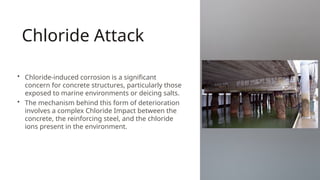
Chloride Attack
• Chloride-induced corrosion is a significant
concern for concrete structures, particularly those
exposed to marine environments or deicing salts.
• The mechanism behind this form of deterioration
involves a complex Chloride Impact between the
concrete, the reinforcing steel, and the chloride
ions present in the environment.
Sources of Chloride
Marine Environments
Seawater and saltwater
aerosols can introduce
high levels of chloride
ions into the concrete,
leading to corrosion of
the reinforcing steel.
Deicing Salts
In cold climates, the use
of deicing salts, such as
sodium chloride, on roads
and bridges can also
contribute to the
presence of chloride ions
in the concrete.
Contaminated Aggregates
Chloride can also enter
the concrete mix through
the use of contaminated
aggregates, which may
contain high levels of
chloride ions from
various sources.
Chloride Penetration and
Corrosion
1 Chloride Ingress
Chloride ions from external sources can penetrate
the concrete through various mechanisms, including
diffusion, capillary absorption, and permeation.
2 Preventing Corrosion of Reinforcement
As the chloride concentration reaches a critical
threshold at the depth of the reinforcing steel, it
disrupts the passive oxide layer, making the steel
vulnerable to corrosion.
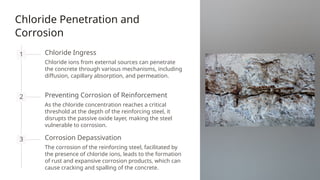
3 Corrosion Depassivation
The corrosion of the reinforcing steel, facilitated by
the presence of chloride ions, leads to the formation
of rust and expansive corrosion products, which can
cause cracking and spalling of the concrete.
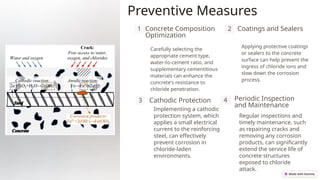
Preventive Measures
1 Concrete Composition
Optimization
Carefully selecting the
appropriate cement type,
water-to-cement ratio, and
supplementary cementitious
materials can enhance the
concrete's resistance to
chloride penetration.
2 Coatings and Sealers
Applying protective coatings
or sealers to the concrete
surface can help prevent the
ingress of chloride ions and
slow down the corrosion
process.
3 Cathodic Protection
Implementing a cathodic
protection system, which
applies a small electrical
current to the reinforcing
steel, can effectively
prevent corrosion in
chloride-laden
environments.
4 Periodic Inspection
and Maintenance
Regular inspections and
timely maintenance, such
as repairing cracks and
removing any corrosion
products, can significantly
extend the service life of
concrete structures
exposed to chloride
attack.
Sulfate-Attack chloride attack. Power point presentation

Sulfate-Attack chloride attack. Power point presentation

  • 1.
    Concrete Technology (BCV503) Topic: SulphateAttack and Chloride Attack Sreekanth Gowtham G S 4NI22CV041
  • 2.
    Sulphate Attack • Sulphateattack is a chemical process that can cause significant deterioration of concrete structures. • This phenomenon occurs when soluble sulfate ions, present in soil or groundwater, react with the hydration products of cement, leading to the formation of expansive compounds that can damage the concrete over time.
  • 3.
    Causes of SulphateAttack Sulphate Sources • Sulphate ions can originate from various sources, including groundwater, soil, industrial waste, and even certain types of aggregates. • The presence of these ions in the concrete's environment is a key factor in the onset of sulphate attack. Moisture Availability • Moisture is essential for the chemical reactions involved in sulphate attack. • Concrete structures exposed to a consistent supply of water, such as those in contact with groundwater or subjected to periodic flooding, are more susceptible to sulphate attack. Concrete Permeability • The porosity and permeability of the concrete can also contribute to the severity of sulphate attack. • Poorly compacted or cured concrete, or concrete with high water-to-cement ratios, is more vulnerable to the penetration of sulphate ions.
  • 4.
    Effects of SulphateAttack Ettringite Formation The primary reaction in sulphate attack is the formation of ettringite, an expansive mineral that can cause cracking and spalling of the concrete. Loss of Strength The expansion and disruption of the concrete's microstructure can lead to a significant reduction in compressive and tensile strength, compromising the structural integrity of the concrete. Surface Deterioration Sulphate attack can also cause surface deterioration, such as scaling, pitting, and flaking, which can accelerate the breakdown of the concrete and expose reinforcing steel to corrosion.
  • 5.
    Preventive Measures AgainstSulphate Attack Use Sulphate-Resistant Cement Selecting a cement with a low C3A (tricalcium aluminate) content, such as Type V or Type HS cement, can significantly improve the concrete's resistance to sulfate attack. Reduce Concrete Permeability Ensuring proper concrete mix design, curing, and compaction can reduce the concrete's permeability, making it more resistant to the ingress of sulfate ions. Provide Adequate Cover Ensuring that reinforcing steel has adequate concrete cover can protect the steel from corrosion caused by the expansive products of sulfate attack. Limit Water-to-Cement Ratio Maintaining a low water-to-cement ratio in the concrete mix design can also improve resistance to sulfate attack by reducing the concrete's porosity and permeability.
  • 6.
    Chloride Attack • Chloride-inducedcorrosion is a significant concern for concrete structures, particularly those exposed to marine environments or deicing salts. • The mechanism behind this form of deterioration involves a complex Chloride Impact between the concrete, the reinforcing steel, and the chloride ions present in the environment.
  • 7.
    Sources of Chloride MarineEnvironments Seawater and saltwater aerosols can introduce high levels of chloride ions into the concrete, leading to corrosion of the reinforcing steel. Deicing Salts In cold climates, the use of deicing salts, such as sodium chloride, on roads and bridges can also contribute to the presence of chloride ions in the concrete. Contaminated Aggregates Chloride can also enter the concrete mix through the use of contaminated aggregates, which may contain high levels of chloride ions from various sources.
  • 8.
    Chloride Penetration and Corrosion 1Chloride Ingress Chloride ions from external sources can penetrate the concrete through various mechanisms, including diffusion, capillary absorption, and permeation. 2 Preventing Corrosion of Reinforcement As the chloride concentration reaches a critical threshold at the depth of the reinforcing steel, it disrupts the passive oxide layer, making the steel vulnerable to corrosion. 3 Corrosion Depassivation The corrosion of the reinforcing steel, facilitated by the presence of chloride ions, leads to the formation of rust and expansive corrosion products, which can cause cracking and spalling of the concrete.
  • 9.
    Preventive Measures 1 ConcreteComposition Optimization Carefully selecting the appropriate cement type, water-to-cement ratio, and supplementary cementitious materials can enhance the concrete's resistance to chloride penetration. 2 Coatings and Sealers Applying protective coatings or sealers to the concrete surface can help prevent the ingress of chloride ions and slow down the corrosion process. 3 Cathodic Protection Implementing a cathodic protection system, which applies a small electrical current to the reinforcing steel, can effectively prevent corrosion in chloride-laden environments. 4 Periodic Inspection and Maintenance Regular inspections and timely maintenance, such as repairing cracks and removing any corrosion products, can significantly extend the service life of concrete structures exposed to chloride attack.