Successful Interactions
with Student Veterans
Melissa Johnson-Tribout & Stephanie Sevedge
Veterans in Missouri
 567,388 total Missouri military community population
 9.3% of Missouri’s total population
 1.651 billion paid in compensation and pension benefits
to veterans in Missouri
 49,587 Veteran-owned businesses in Missouri
 14,332 student veterans with VA education benefits going
into Missouri-based higher education institutions
 $55,026,605 in VA education benefits going to Missouri-
based higher education institutions
Student Veterans at MCC
 2015
 2016
Penn Valley = 83
All Campuses = 456
Penn Valley = 105
All Campuses = 439
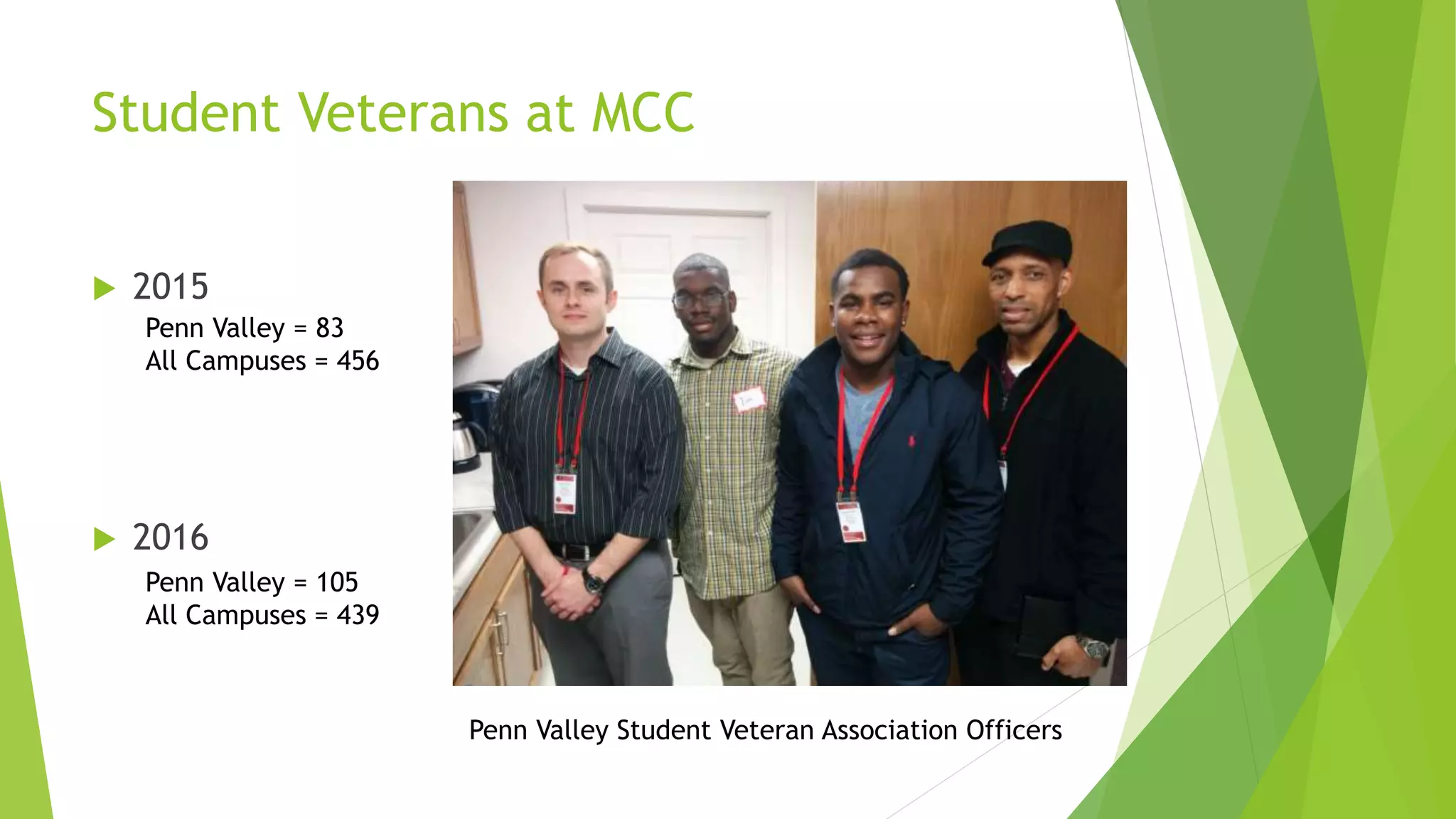
Penn Valley Student Veteran Association Officers
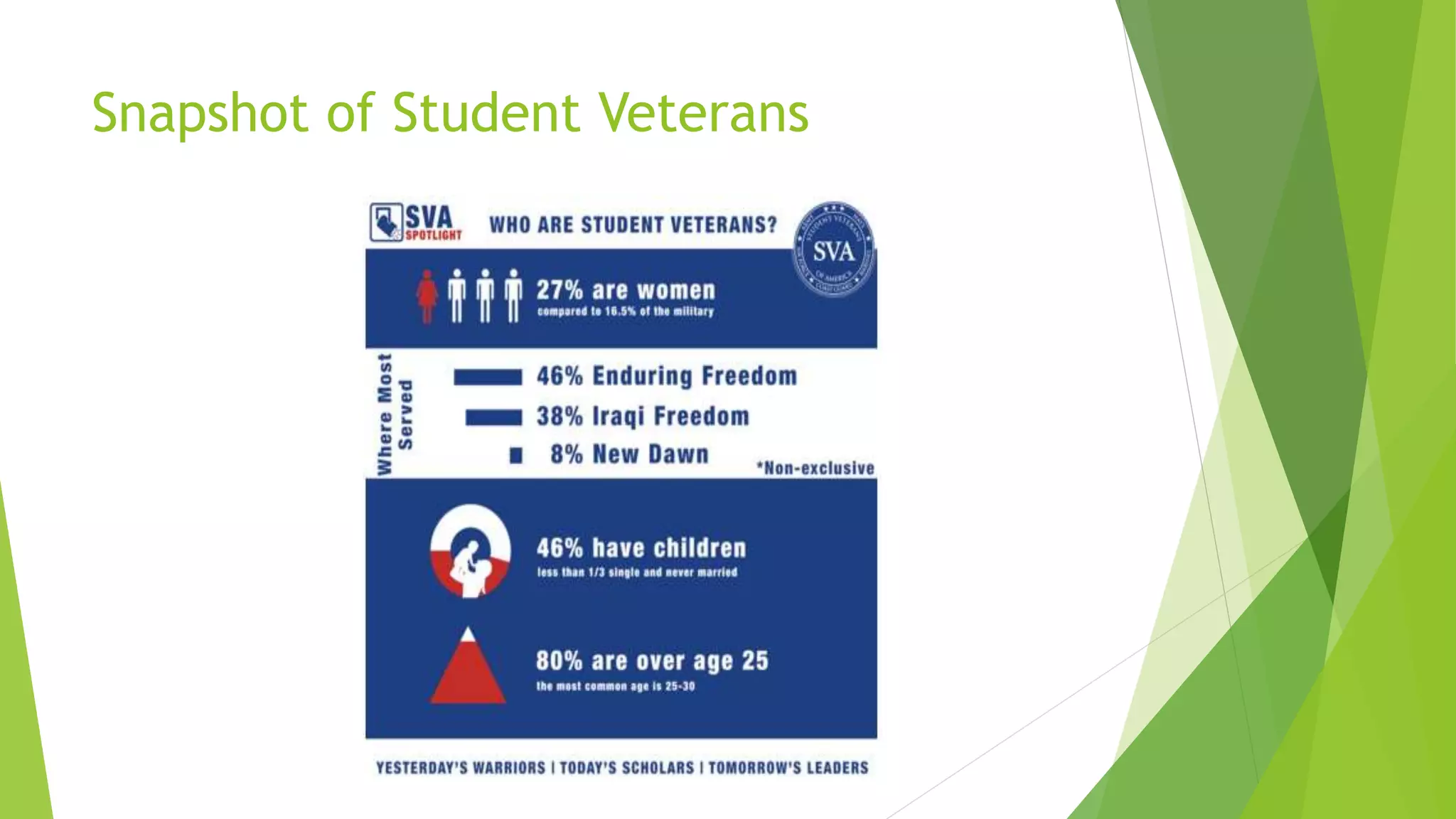
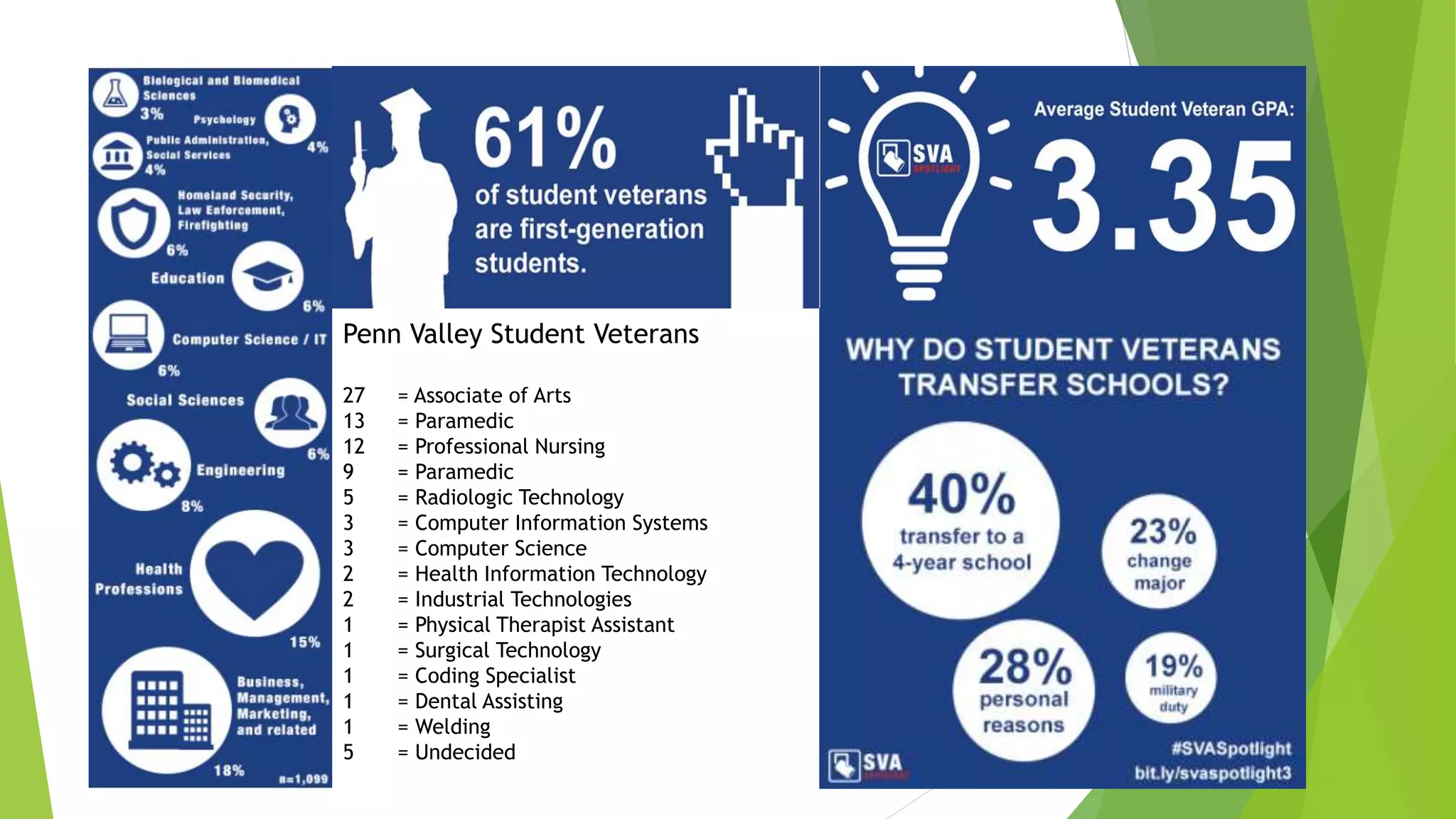
Snapshot of Student Veterans
Penn Valley Student Veterans
27 = Associate of Arts
13 = Paramedic
12 = Professional Nursing
9 = Paramedic
5 = Radiologic Technology
3 = Computer Information Systems
3 = Computer Science
2 = Health Information Technology
2 = Industrial Technologies
1 = Physical Therapist Assistant
1 = Surgical Technology
1 = Coding Specialist
1 = Dental Assisting
1 = Welding
5 = Undecided
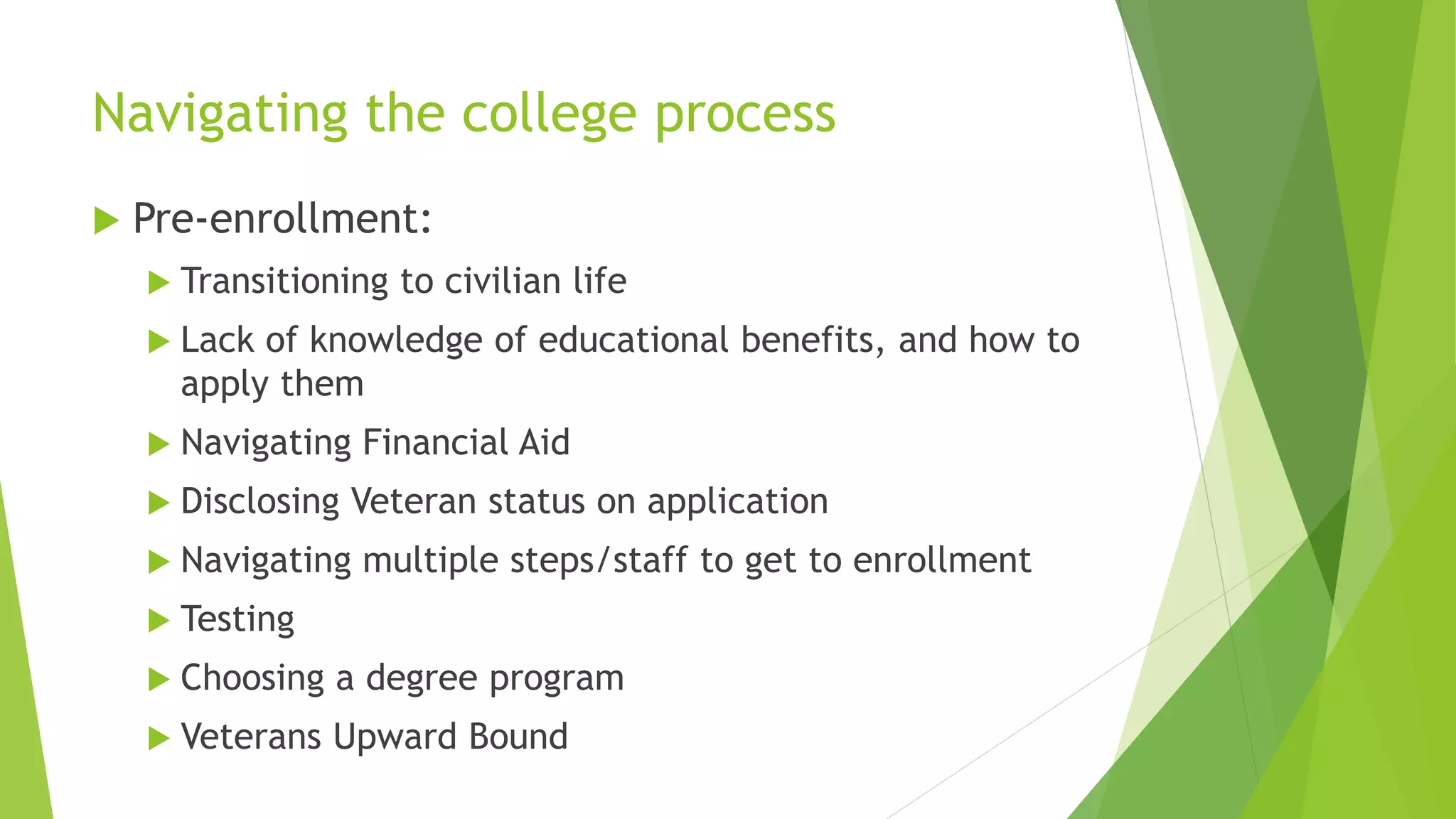
Navigating the college process
 Pre-enrollment:
 Transitioning to civilian life
 Lack of knowledge of educational benefits, and how to
apply them
 Navigating Financial Aid
 Disclosing Veteran status on application
 Navigating multiple steps/staff to get to enrollment
 Testing
 Choosing a degree program
 Veterans Upward Bound
 Enrollment:
 Housing
 Lack of available information on applying benefits
 Concern over being stigmatized
 Enrollment center layout/ wait times
 Navigating multiple steps/staff to get to enrollment
 Lack of communication
 Selecting classes
 Starting College
 Expectations vs Reality
 Non-traditional student, many have young families
 Navigating new disabilities (physical, cognitive,
emotional)
 Fear of being singled out or stigmatized
 Lack of campus connection
 Resistant to asking for help
 Frustrated by the behaviors of others
 Feeling inadequate
 Getting to Graduation
Time management
Managing school, work, family responsibilities
Access to resources/ removing the stigma
Finding a way to give back and connect
Preparing to transition to a University setting or
career
Access to employment services
Concerns over losing the structure of college
How to Assist in Overcoming Obstacles
 Do not “sugar-coat”
 Only refer to trusted, tried and true resources
 Introduce to new professionals face-to-face (with a
handshake)
 Know how to access on-campus veteran resources and SVA
leadership on campus (access to additional resources)
 Follow up and follow through
How to Provide a Veteran Friendly
Experience
 Set up your space accordingly
 Maintain eye contact
 Handshake with eye contact at opening and closing of
conversations
 Acknowledge unavoidable distractions
 Provide a stable point of contact that does not rotate in
your office
 Follow up and follow through
Unique Needs of Student Veterans
 Need class schedules to be flexible enough to allow for
family, work, training & potential deployment(s).
 Veterans may not be aware of the extent of any identified
or unidentified disabilities.
 They are learning and navigating a new system.
 A Veterans time is not “their own.” There are many
demands placed upon them and they typically detest
wasting time.
 Encourage communication and demonstrate flexibility.
Veteran Resources
 United Way 2-1-1
 Hotline provides resources for everyday needs
 Available 24/7
 FREE!
 Full-time veterans navigator
 Full-time healthcare advocate
 Veterans Crisis Line
 Confidential Help for Veterans and Their Families
 Crisis intervention and suicide prevention
 Available 24/7 online (VeteransCrisisLine.net)
 Available 24/7 via phone (1-800-273-8255 press 1)
 Available 24/7 via text (838255)
 Military.com
 Provides basic information on GI Bill and other benefits
 Useful for translating benefits into “laymen's terms”
 Gibill.va.gov
 Resources for all things GIBill
 Provides direct links for application and forms
 Provides up-to-date information on changes and payment information for benefits
 Provides links to other VA related services
References Last, F. M. (Year, Month Date Published). Article title.
Retrieved from URL
 Cahn, D. (2011, March 23). Colleges struggle with turning veterans into graduates. Retrieved
from http://pilotonline.com/news/military/colleges-struggle-with-turning-veterans-into-
graduates/article_7e3d5093-2683-5406-abe5-dab0762ee157.html
 Lighthall, A. (ND). Ten Things You Should Know About Today’s Student Veteran. Retrieved
from http://www.nea.org/home/53407.htm
 MCC AC Research and Assessment. (2016, May 24). Veterans (Military) Bi-weekly Report.
Kansas City, MO: Metropolitan Community College.
 Missouri Behavioral Health Alliance. (2016). Missouri’s Military Community; A look at Service
Members, Veterans, & their Families. Jefferson City, Missouri: Missouri Behavioral Health
Alliance.
 O’Connor, P. (2011, November 20). Vets returning to college face unique challenges.
Retrieved from http://www.stltoday.com/news/local/metro/vets-returning-to-college-face-
unique-challenges/article_ae59e54c-6fd7-5238-a22a-d4112bd663cc.html
 Student Veterans of America. (2016). Research Brief SVA Spotlight: Commonalities and
Intersections within the Student Veteran Population. Washington, DC: Student Veterans of
America.

Successful Interactions with Student Veterans

  • 1.
    Successful Interactions with StudentVeterans Melissa Johnson-Tribout & Stephanie Sevedge
  • 2.
    Veterans in Missouri 567,388 total Missouri military community population  9.3% of Missouri’s total population  1.651 billion paid in compensation and pension benefits to veterans in Missouri  49,587 Veteran-owned businesses in Missouri  14,332 student veterans with VA education benefits going into Missouri-based higher education institutions  $55,026,605 in VA education benefits going to Missouri- based higher education institutions
  • 3.
    Student Veterans atMCC  2015  2016 Penn Valley = 83 All Campuses = 456 Penn Valley = 105 All Campuses = 439 Penn Valley Student Veteran Association Officers
  • 4.
  • 5.
    Penn Valley StudentVeterans 27 = Associate of Arts 13 = Paramedic 12 = Professional Nursing 9 = Paramedic 5 = Radiologic Technology 3 = Computer Information Systems 3 = Computer Science 2 = Health Information Technology 2 = Industrial Technologies 1 = Physical Therapist Assistant 1 = Surgical Technology 1 = Coding Specialist 1 = Dental Assisting 1 = Welding 5 = Undecided
  • 6.
    Navigating the collegeprocess  Pre-enrollment:  Transitioning to civilian life  Lack of knowledge of educational benefits, and how to apply them  Navigating Financial Aid  Disclosing Veteran status on application  Navigating multiple steps/staff to get to enrollment  Testing  Choosing a degree program  Veterans Upward Bound
  • 7.
     Enrollment:  Housing Lack of available information on applying benefits  Concern over being stigmatized  Enrollment center layout/ wait times  Navigating multiple steps/staff to get to enrollment  Lack of communication  Selecting classes
  • 8.
     Starting College Expectations vs Reality  Non-traditional student, many have young families  Navigating new disabilities (physical, cognitive, emotional)  Fear of being singled out or stigmatized  Lack of campus connection  Resistant to asking for help  Frustrated by the behaviors of others  Feeling inadequate
  • 9.
     Getting toGraduation Time management Managing school, work, family responsibilities Access to resources/ removing the stigma Finding a way to give back and connect Preparing to transition to a University setting or career Access to employment services Concerns over losing the structure of college
  • 10.
    How to Assistin Overcoming Obstacles  Do not “sugar-coat”  Only refer to trusted, tried and true resources  Introduce to new professionals face-to-face (with a handshake)  Know how to access on-campus veteran resources and SVA leadership on campus (access to additional resources)  Follow up and follow through
  • 11.
    How to Providea Veteran Friendly Experience  Set up your space accordingly  Maintain eye contact  Handshake with eye contact at opening and closing of conversations  Acknowledge unavoidable distractions  Provide a stable point of contact that does not rotate in your office  Follow up and follow through
  • 12.
    Unique Needs ofStudent Veterans  Need class schedules to be flexible enough to allow for family, work, training & potential deployment(s).  Veterans may not be aware of the extent of any identified or unidentified disabilities.  They are learning and navigating a new system.  A Veterans time is not “their own.” There are many demands placed upon them and they typically detest wasting time.  Encourage communication and demonstrate flexibility.
  • 13.
    Veteran Resources  UnitedWay 2-1-1  Hotline provides resources for everyday needs  Available 24/7  FREE!  Full-time veterans navigator  Full-time healthcare advocate  Veterans Crisis Line  Confidential Help for Veterans and Their Families  Crisis intervention and suicide prevention  Available 24/7 online (VeteransCrisisLine.net)  Available 24/7 via phone (1-800-273-8255 press 1)  Available 24/7 via text (838255)  Military.com  Provides basic information on GI Bill and other benefits  Useful for translating benefits into “laymen's terms”  Gibill.va.gov  Resources for all things GIBill  Provides direct links for application and forms  Provides up-to-date information on changes and payment information for benefits  Provides links to other VA related services
  • 14.
    References Last, F.M. (Year, Month Date Published). Article title. Retrieved from URL  Cahn, D. (2011, March 23). Colleges struggle with turning veterans into graduates. Retrieved from http://pilotonline.com/news/military/colleges-struggle-with-turning-veterans-into- graduates/article_7e3d5093-2683-5406-abe5-dab0762ee157.html  Lighthall, A. (ND). Ten Things You Should Know About Today’s Student Veteran. Retrieved from http://www.nea.org/home/53407.htm  MCC AC Research and Assessment. (2016, May 24). Veterans (Military) Bi-weekly Report. Kansas City, MO: Metropolitan Community College.  Missouri Behavioral Health Alliance. (2016). Missouri’s Military Community; A look at Service Members, Veterans, & their Families. Jefferson City, Missouri: Missouri Behavioral Health Alliance.  O’Connor, P. (2011, November 20). Vets returning to college face unique challenges. Retrieved from http://www.stltoday.com/news/local/metro/vets-returning-to-college-face- unique-challenges/article_ae59e54c-6fd7-5238-a22a-d4112bd663cc.html  Student Veterans of America. (2016). Research Brief SVA Spotlight: Commonalities and Intersections within the Student Veteran Population. Washington, DC: Student Veterans of America.