Merck KGaA
Darmstadt, Germany
Judit Huarte Ciganda, PhD
Technical Product Manager Synthetic Lipids
Critical aspects and strategies
The life science business of
Merck KGaA, Darmstadt, Germany
operates as MilliporeSigma
in the U.S. and Canada.
Successful drug development with synthetic lipids: Critical aspects and strategies | May 24, 20182
01 Lipids: role in liposomal formulation
02 Synthetic lipids: process development
03 Regulatory aspects
04 Troubleshooting: examples
05 Enhanced surface characteristics
06 Overview of facilities and capabilities
3
01 Lipids: role in liposomal formulation
02 Synthetic lipids: process development
03 Regulatory aspects
04 Troubleshooting: examples
05 Enhanced surface characteristics
06 Overview of facilities and capabilities
4
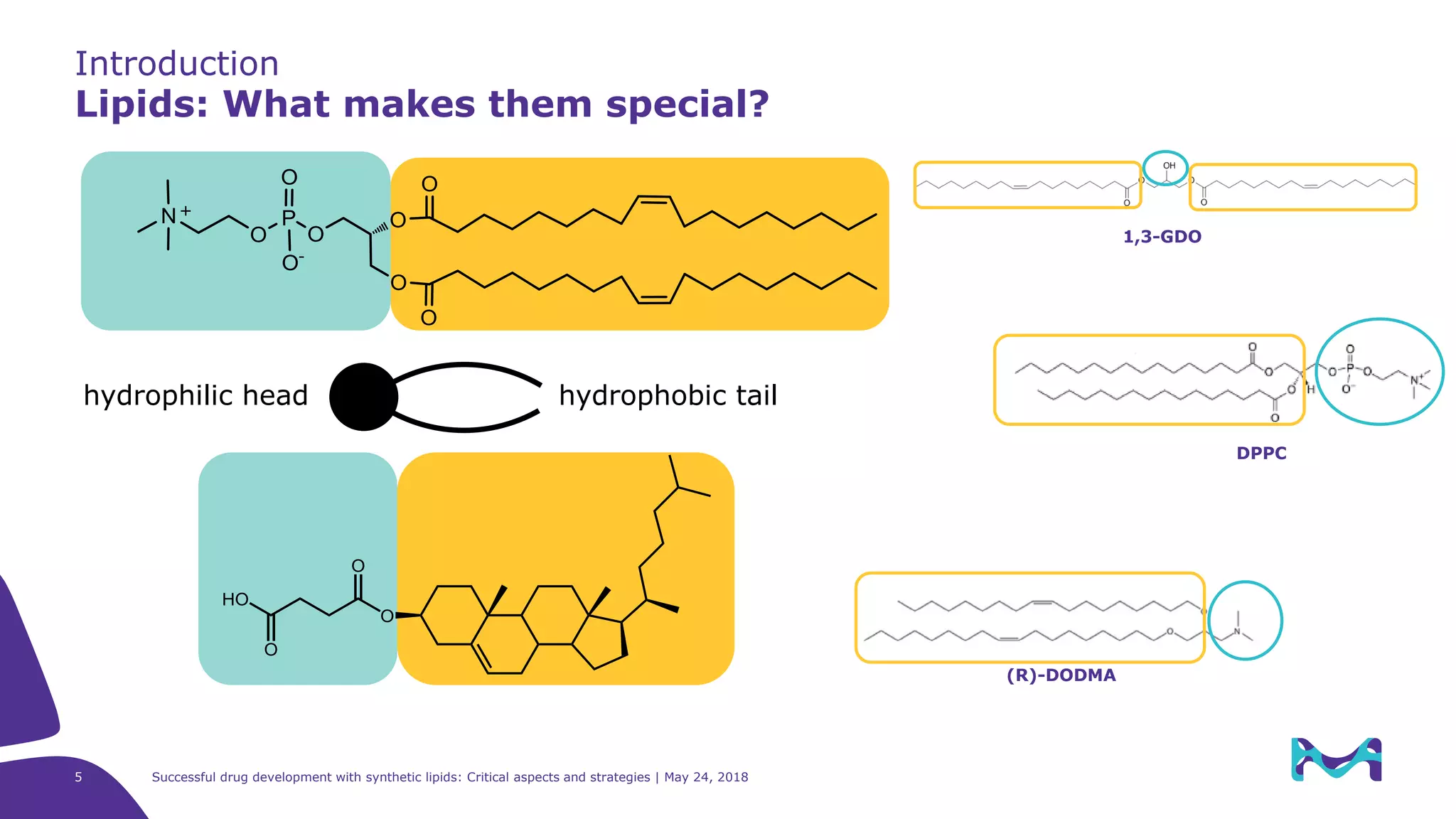
Introduction
Lipids: What makes them special?
5 Successful drug development with synthetic lipids: Critical aspects and strategies | May 24, 2018
hydrophilic head hydrophobic tail
1,3-GDO
(R)-DODMA
DPPC
6 Successful drug development with synthetic lipids: Critical aspects and strategies | May 24, 2018
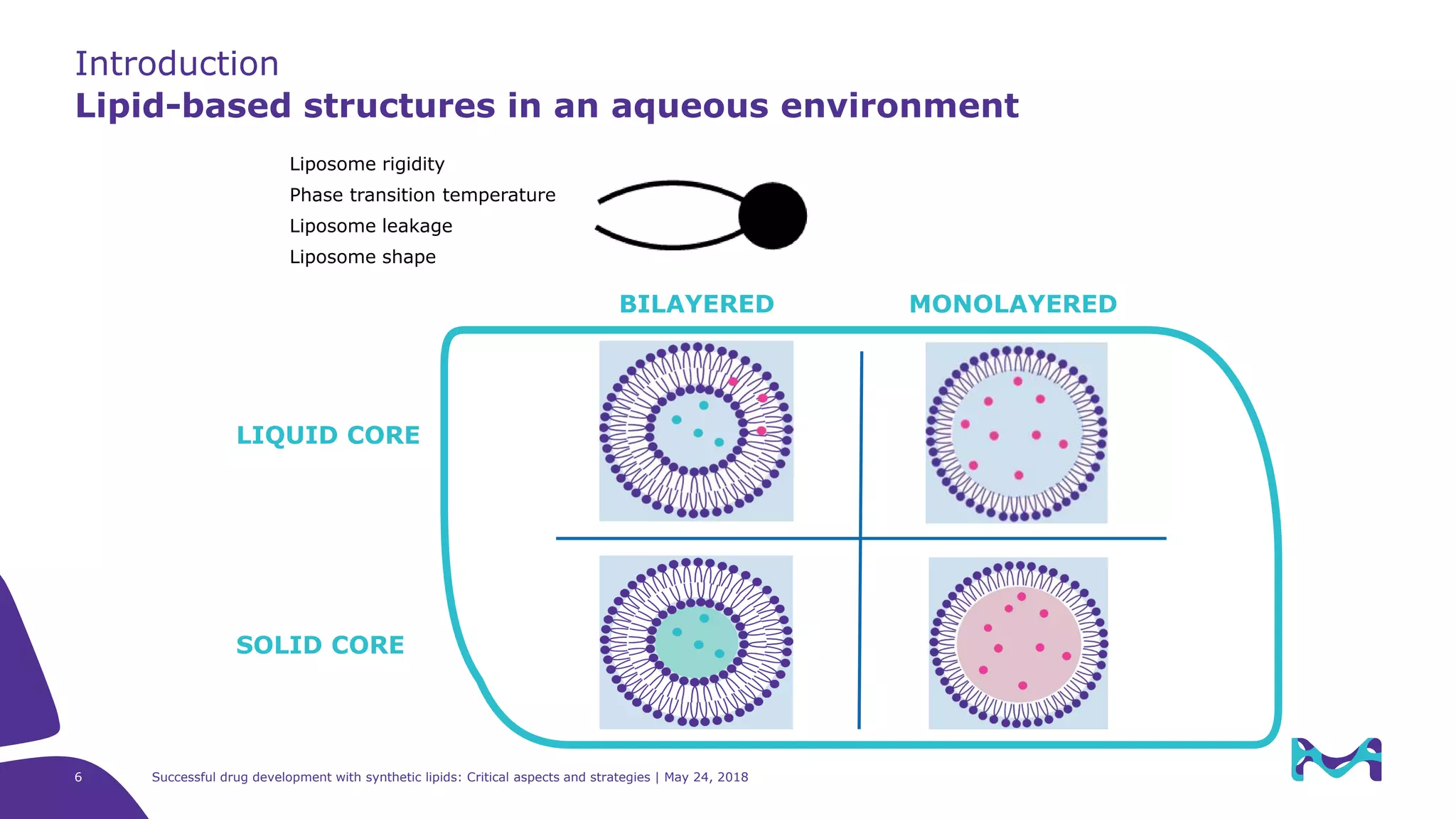
Liposome rigidity
Phase transition temperature
Liposome leakage
Liposome shape
Introduction
Lipid-based structures in an aqueous environment
BILAYERED MONOLAYERED
LIQUID CORE
SOLID CORE
7 Successful drug development with synthetic lipids: Critical aspects and strategies | May 24, 2018
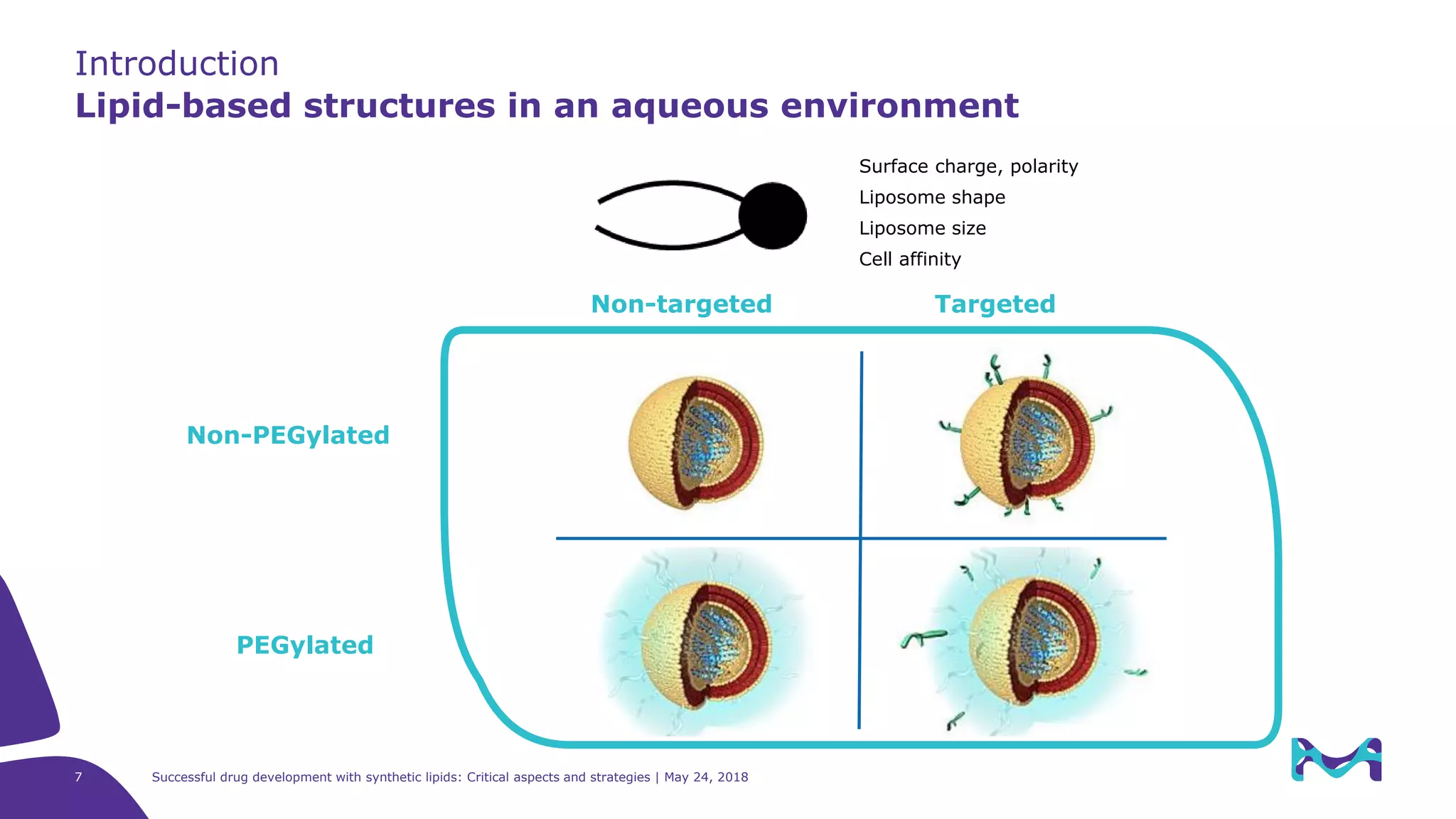
Surface charge, polarity
Liposome shape
Liposome size
Cell affinity
Introduction
Lipid-based structures in an aqueous environment
Non-targeted Targeted
Non-PEGylated
PEGylated
Introduction
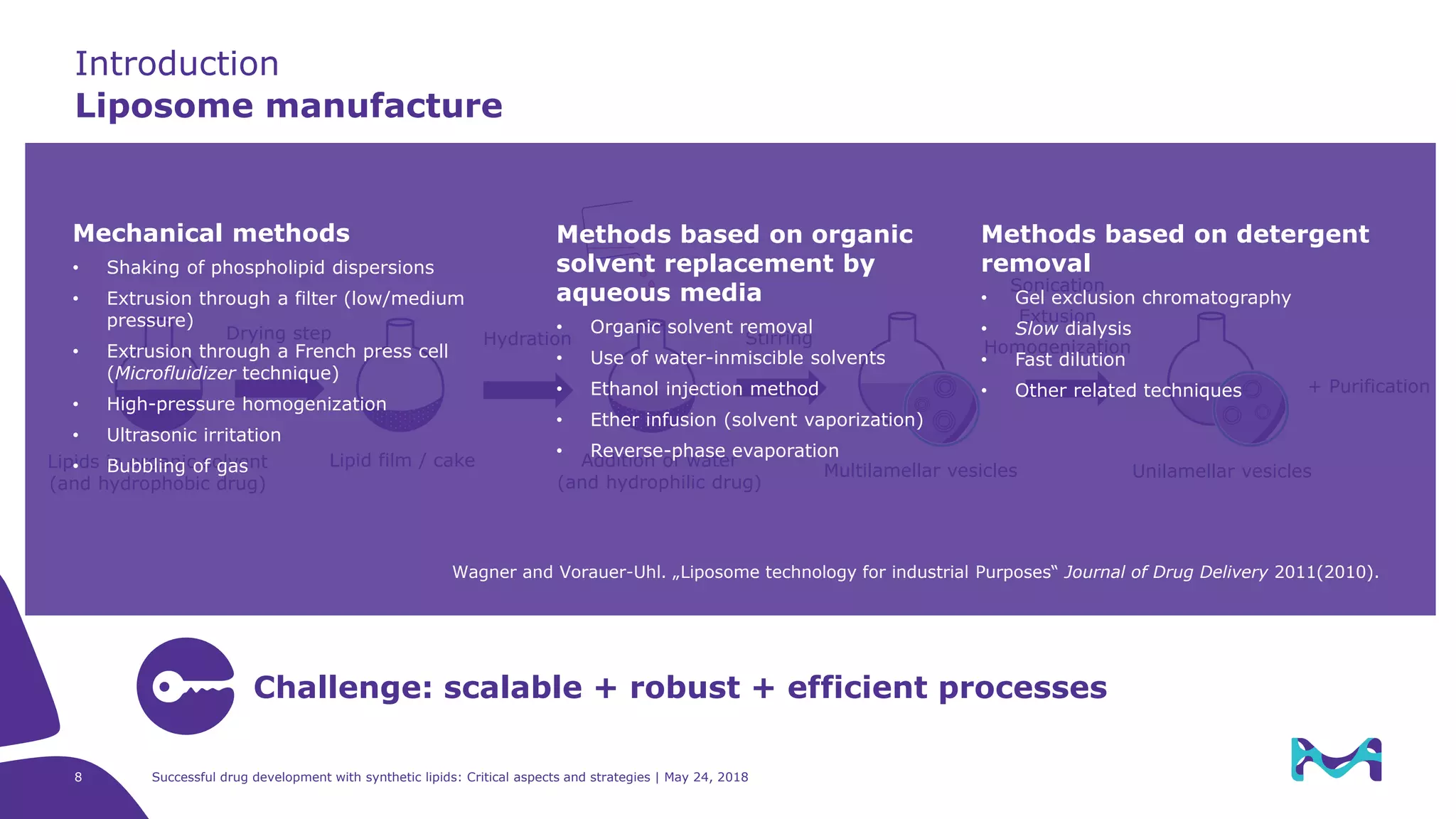
Liposome manufacture
Lipids in organic solvent
(and hydrophobic drug)
Drying step Hydration
Addition of water
(and hydrophilic drug)
Stirring
Sonication
Extusion
Homogenization
Multilamellar vesicles Unilamellar vesicles
Lipid film / cake
+ Purification
Successful drug development with synthetic lipids: Critical aspects and strategies | May 24, 20188
Mechanical methods
• Shaking of phospholipid dispersions
• Extrusion through a filter (low/medium
pressure)
• Extrusion through a French press cell
(Microfluidizer technique)
• High-pressure homogenization
• Ultrasonic irritation
• Bubbling of gas
Methods based on organic
solvent replacement by
aqueous media
• Organic solvent removal
• Use of water-inmiscible solvents
• Ethanol injection method
• Ether infusion (solvent vaporization)
• Reverse-phase evaporation
Methods based on detergent
removal
• Gel exclusion chromatography
• Slow dialysis
• Fast dilution
• Other related techniques
Wagner and Vorauer-Uhl. „Liposome technology for industrial Purposes“ Journal of Drug Delivery 2011(2010).
Challenge: scalable + robust + efficient processes
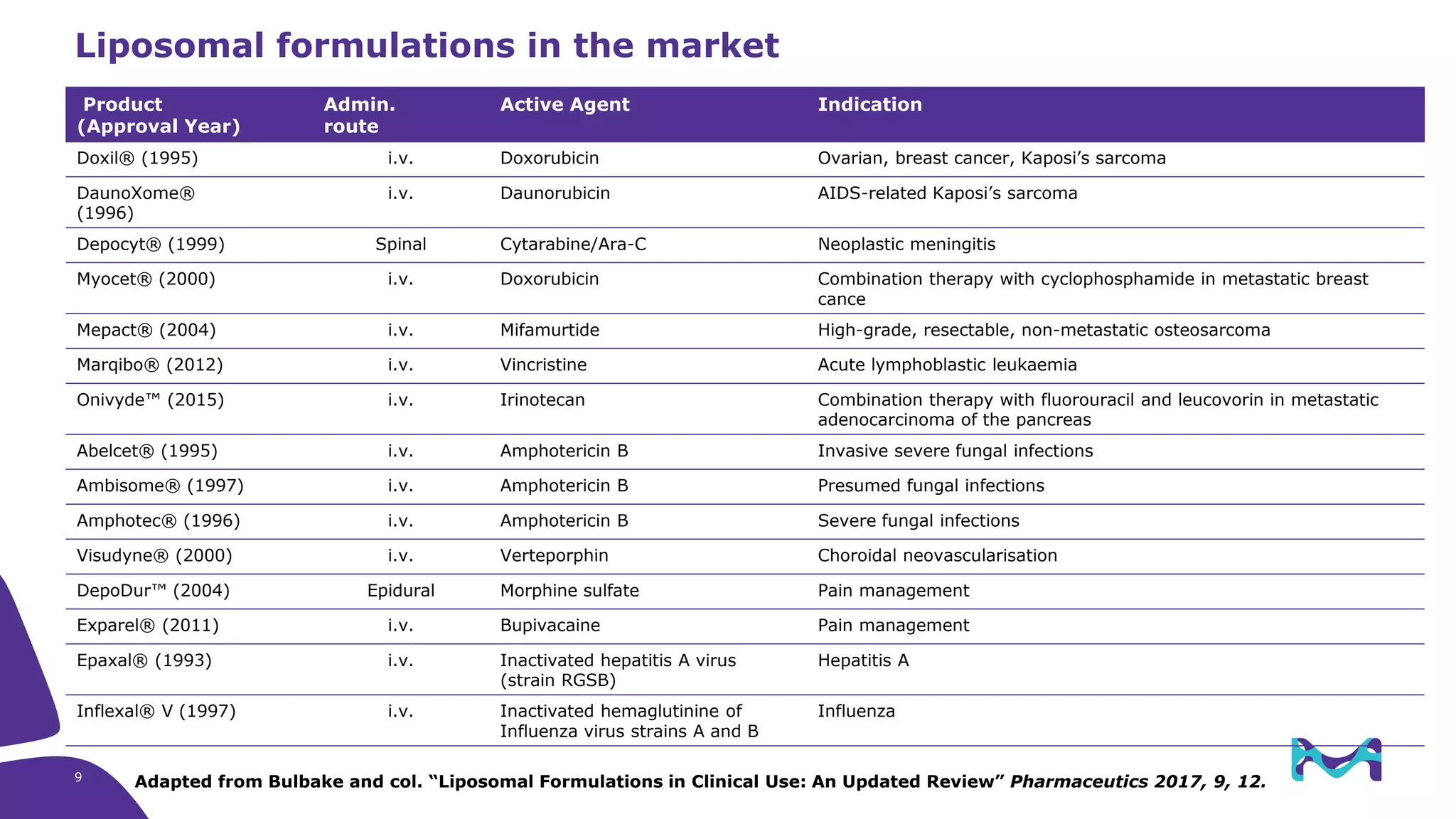
Liposomal formulations in the market
9
Product
(Approval Year)
Admin.
route
Active Agent Indication
Doxil® (1995) i.v. Doxorubicin Ovarian, breast cancer, Kaposi’s sarcoma
DaunoXome®
(1996)
i.v. Daunorubicin AIDS-related Kaposi’s sarcoma
Depocyt® (1999) Spinal Cytarabine/Ara-C Neoplastic meningitis
Myocet® (2000) i.v. Doxorubicin Combination therapy with cyclophosphamide in metastatic breast
cance
Mepact® (2004) i.v. Mifamurtide High-grade, resectable, non-metastatic osteosarcoma
Marqibo® (2012) i.v. Vincristine Acute lymphoblastic leukaemia
Onivyde™ (2015) i.v. Irinotecan Combination therapy with fluorouracil and leucovorin in metastatic
adenocarcinoma of the pancreas
Abelcet® (1995) i.v. Amphotericin B Invasive severe fungal infections
Ambisome® (1997) i.v. Amphotericin B Presumed fungal infections
Amphotec® (1996) i.v. Amphotericin B Severe fungal infections
Visudyne® (2000) i.v. Verteporphin Choroidal neovascularisation
DepoDur™ (2004) Epidural Morphine sulfate Pain management
Exparel® (2011) i.v. Bupivacaine Pain management
Epaxal® (1993) i.v. Inactivated hepatitis A virus
(strain RGSB)
Hepatitis A
Inflexal® V (1997) i.v. Inactivated hemaglutinine of
Influenza virus strains A and B
Influenza
Adapted from Bulbake and col. “Liposomal Formulations in Clinical Use: An Updated Review” Pharmaceutics 2017, 9, 12.
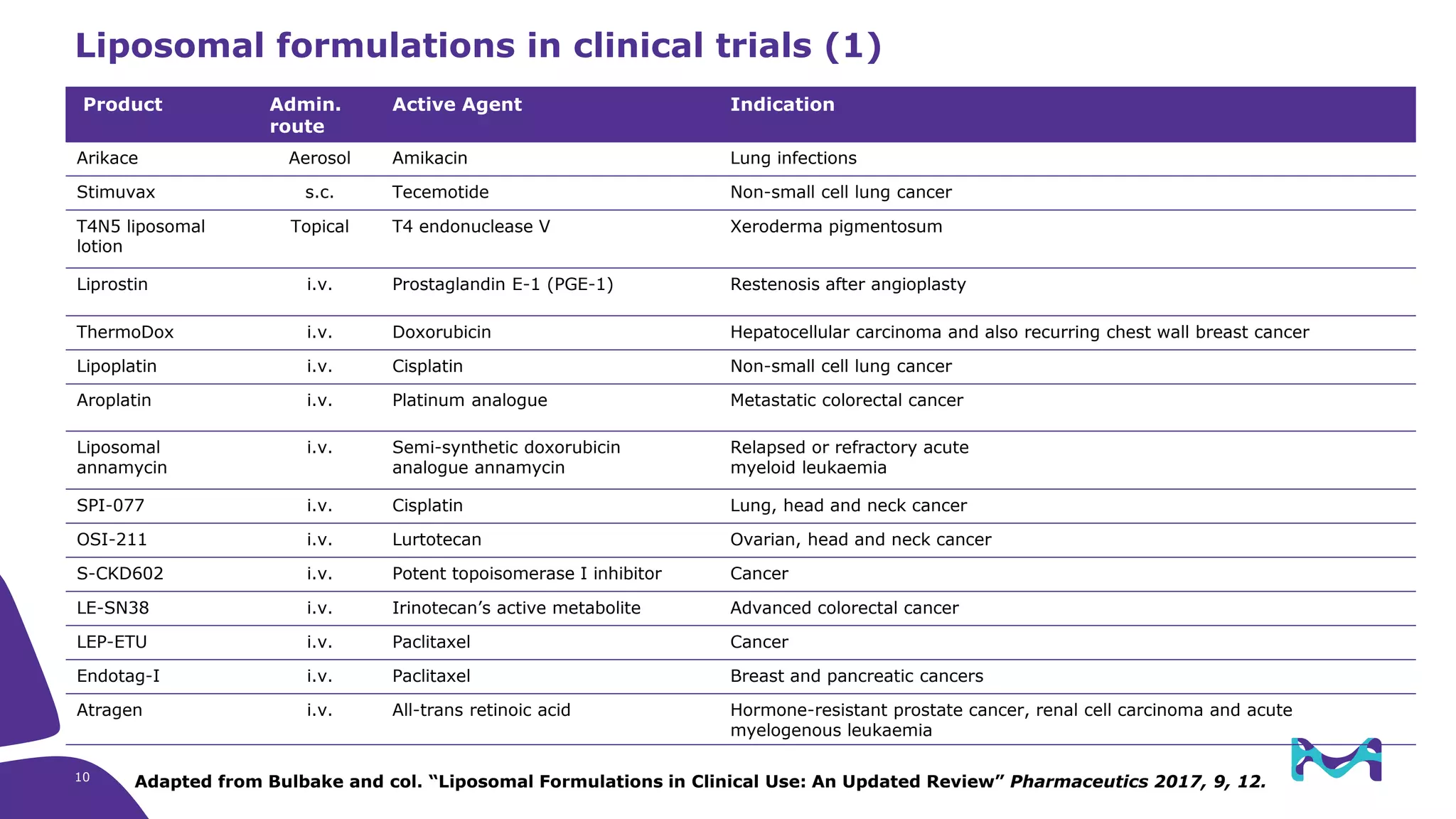
Liposomal formulations in clinical trials (1)
10
Product Admin.
route
Active Agent Indication
Arikace Aerosol Amikacin Lung infections
Stimuvax s.c. Tecemotide Non-small cell lung cancer
T4N5 liposomal
lotion
Topical T4 endonuclease V Xeroderma pigmentosum
Liprostin i.v. Prostaglandin E-1 (PGE-1) Restenosis after angioplasty
ThermoDox i.v. Doxorubicin Hepatocellular carcinoma and also recurring chest wall breast cancer
Lipoplatin i.v. Cisplatin Non-small cell lung cancer
Aroplatin i.v. Platinum analogue Metastatic colorectal cancer
Liposomal
annamycin
i.v. Semi-synthetic doxorubicin
analogue annamycin
Relapsed or refractory acute
myeloid leukaemia
SPI-077 i.v. Cisplatin Lung, head and neck cancer
OSI-211 i.v. Lurtotecan Ovarian, head and neck cancer
S-CKD602 i.v. Potent topoisomerase I inhibitor Cancer
LE-SN38 i.v. Irinotecan’s active metabolite Advanced colorectal cancer
LEP-ETU i.v. Paclitaxel Cancer
Endotag-I i.v. Paclitaxel Breast and pancreatic cancers
Atragen i.v. All-trans retinoic acid Hormone-resistant prostate cancer, renal cell carcinoma and acute
myelogenous leukaemia
Adapted from Bulbake and col. “Liposomal Formulations in Clinical Use: An Updated Review” Pharmaceutics 2017, 9, 12.
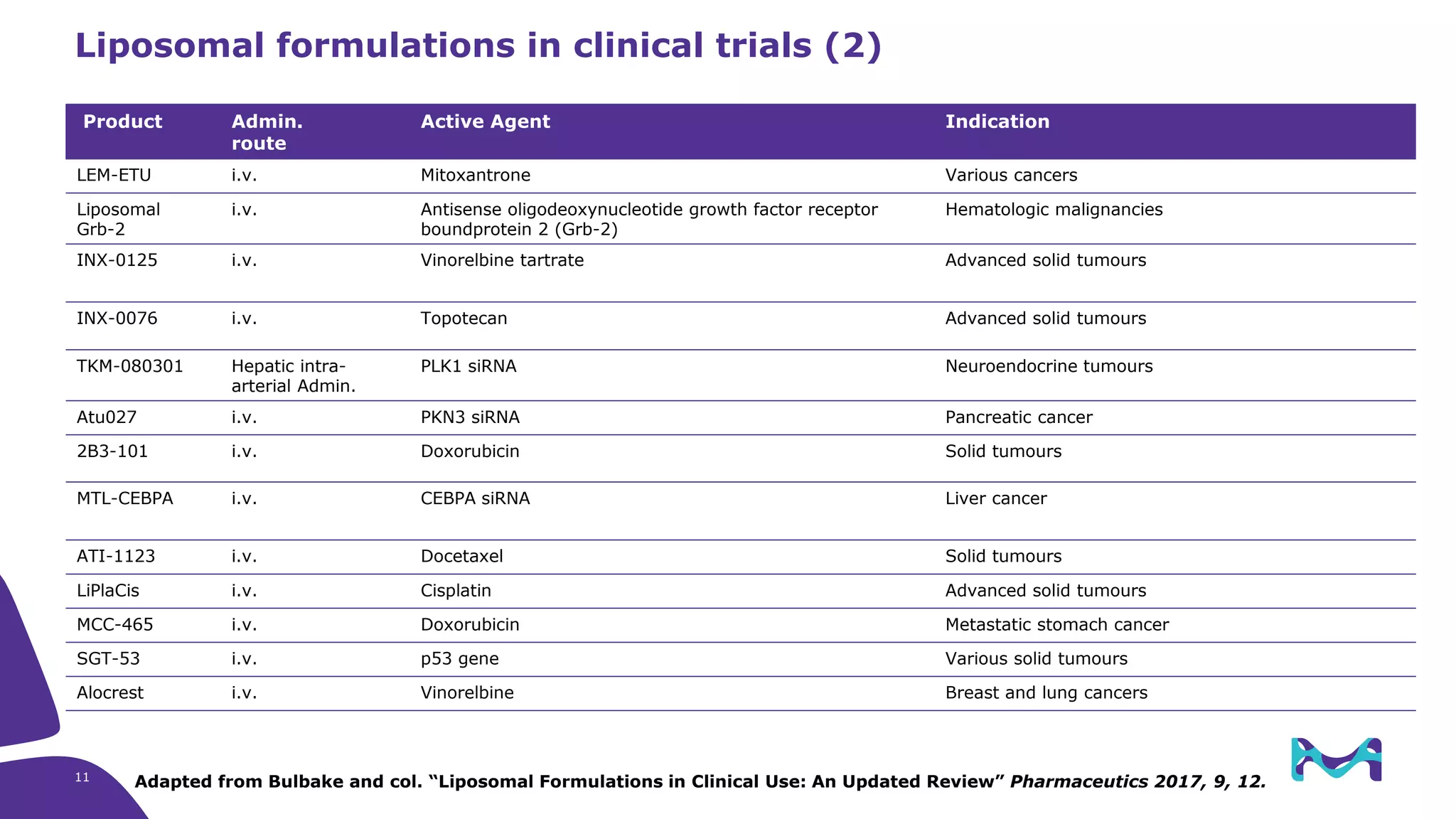
Liposomal formulations in clinical trials (2)
11
Product Admin.
route
Active Agent Indication
LEM-ETU i.v. Mitoxantrone Various cancers
Liposomal
Grb-2
i.v. Antisense oligodeoxynucleotide growth factor receptor
boundprotein 2 (Grb-2)
Hematologic malignancies
INX-0125 i.v. Vinorelbine tartrate Advanced solid tumours
INX-0076 i.v. Topotecan Advanced solid tumours
TKM-080301 Hepatic intra-
arterial Admin.
PLK1 siRNA Neuroendocrine tumours
Atu027 i.v. PKN3 siRNA Pancreatic cancer
2B3-101 i.v. Doxorubicin Solid tumours
MTL-CEBPA i.v. CEBPA siRNA Liver cancer
ATI-1123 i.v. Docetaxel Solid tumours
LiPlaCis i.v. Cisplatin Advanced solid tumours
MCC-465 i.v. Doxorubicin Metastatic stomach cancer
SGT-53 i.v. p53 gene Various solid tumours
Alocrest i.v. Vinorelbine Breast and lung cancers
Adapted from Bulbake and col. “Liposomal Formulations in Clinical Use: An Updated Review” Pharmaceutics 2017, 9, 12.
Agenda
01 Lipids: role in liposomal formulation
02 Synthetic lipids: process development
03 Regulatory aspects
04 Troubleshooting: examples
05 Enhanced surface characteristics
06 Overview of facilities and capabilities
12
01 Lipids: role in liposomal formulation
02 Synthetic lipids: process development
03 Regulatory aspects
04 Troubleshooting: examples
05 Enhanced surface characteristics
06 Overview of facilities and capabilities
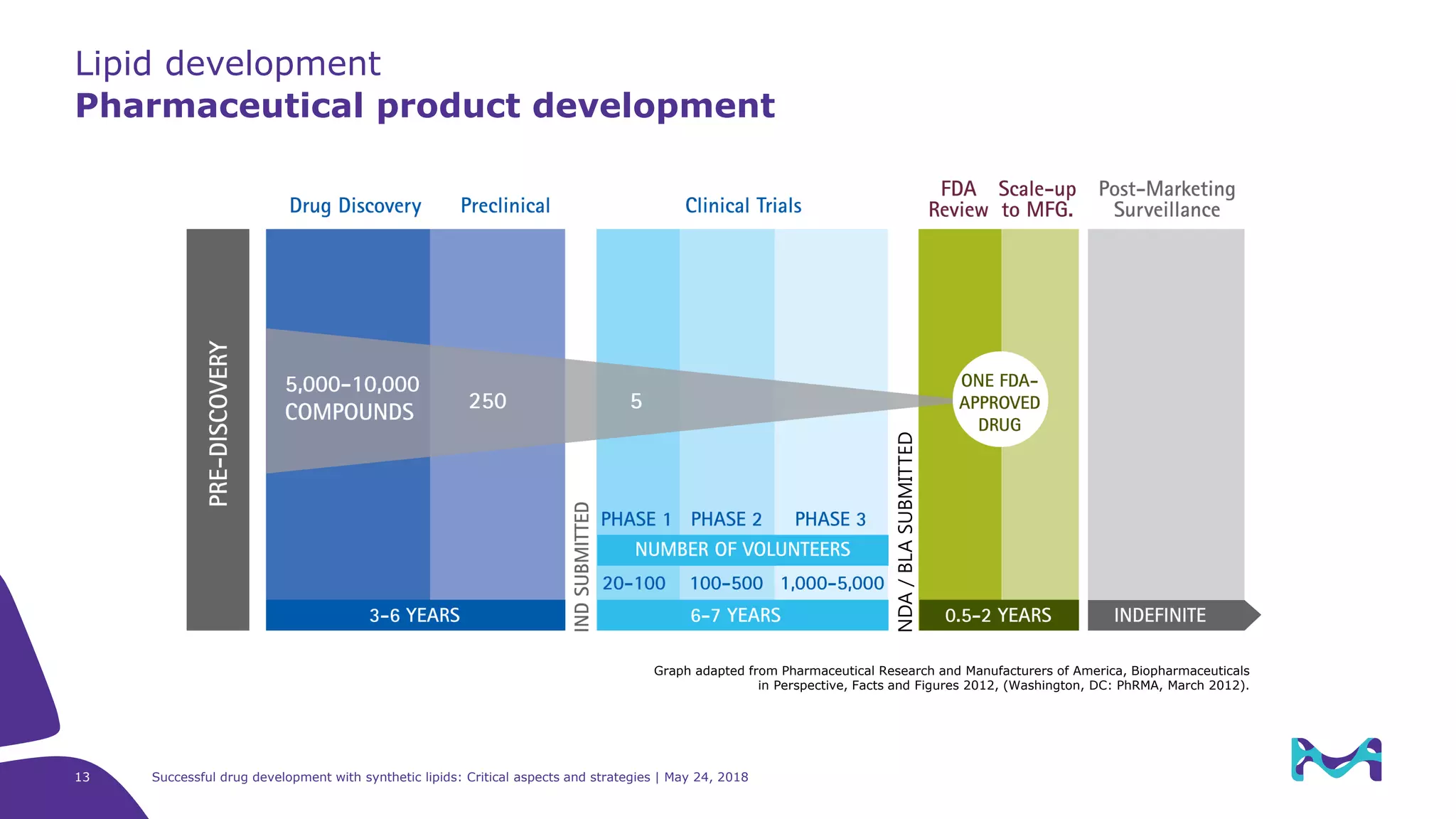
NDA/BLASUBMITTED
Lipid development
Pharmaceutical product development
Graph adapted from Pharmaceutical Research and Manufacturers of America, Biopharmaceuticals
in Perspective, Facts and Figures 2012, (Washington, DC: PhRMA, March 2012).
Successful drug development with synthetic lipids: Critical aspects and strategies | May 24, 201813
14 Successful drug development with synthetic lipids: Critical aspects and strategies | May 24, 2018
Synthetic lipids for drug development
What is needed from them?
Convenient and reproducible behavior in formulation: particle characteristics, stability and release profile
High purity will influence:
• lipid stability
• lipid bilayer structure in formulation
• formulation stability
• formulation release profile
1
Lipids purity
How can it be optimized?
15 Successful drug development with synthetic lipids: Critical aspects and strategies | May 24, 2018
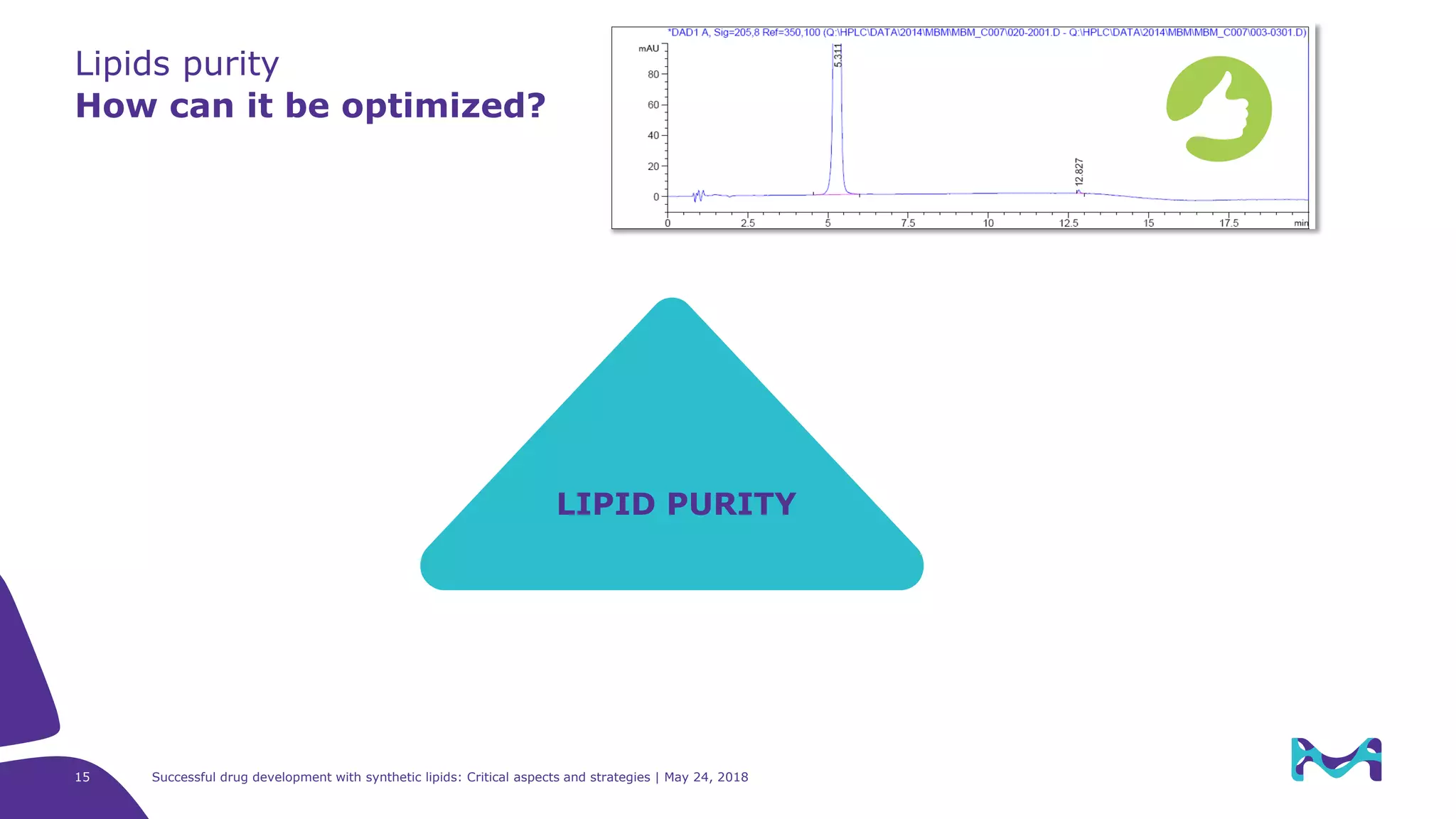
LIPID PURITY
Lipids purity
How can it be optimized?
16 Successful drug development with synthetic lipids: Critical aspects and strategies | May 24, 2018
LIPID PURITY
Quality of
starting
materials
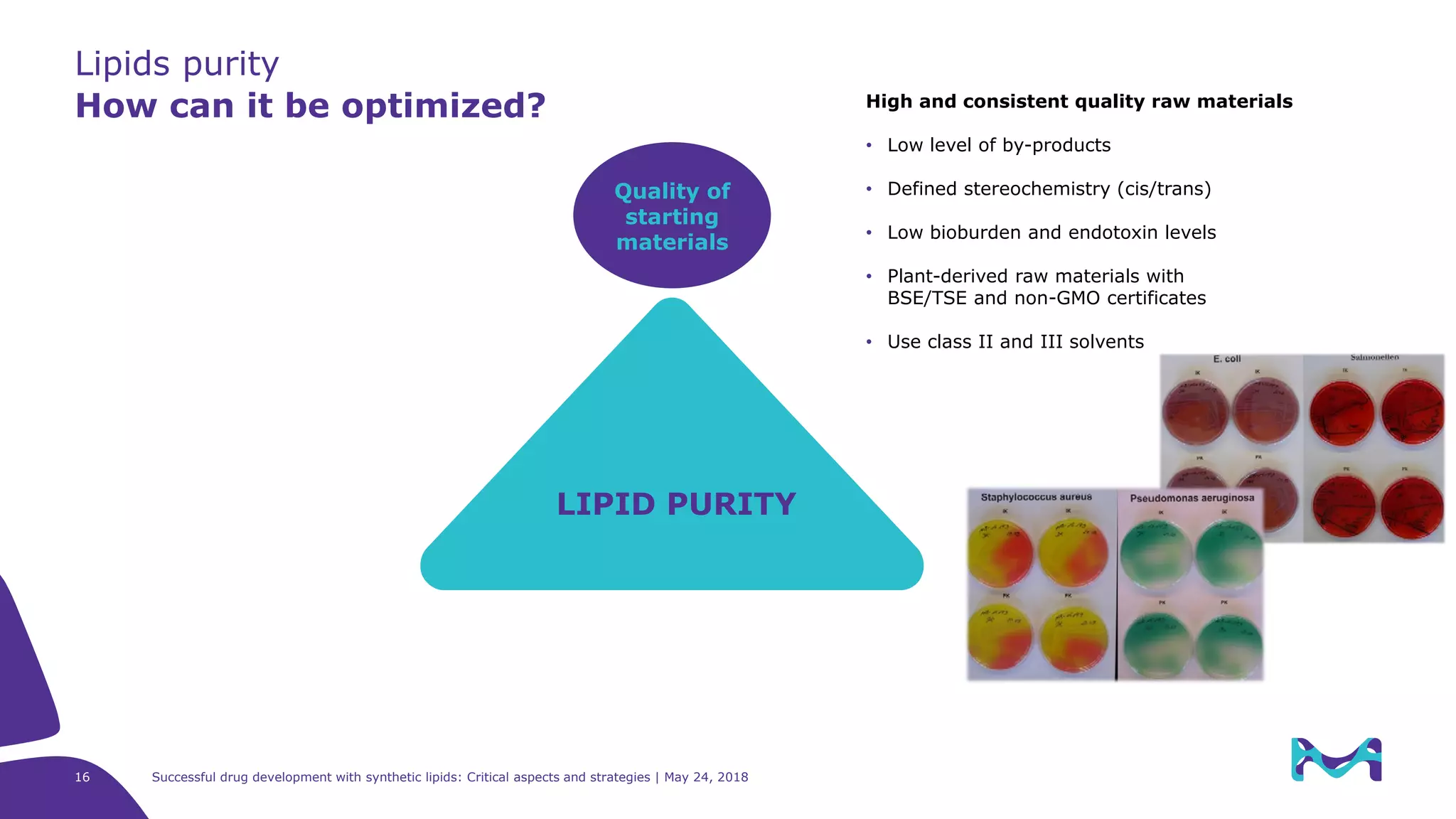
High and consistent quality raw materials
• Low level of by-products
• Defined stereochemistry (cis/trans)
• Low bioburden and endotoxin levels
• Plant-derived raw materials with
BSE/TSE and non-GMO certificates
• Use class II and III solvents
Lipids purity
How can it be optimized?
17 Successful drug development with synthetic lipids: Critical aspects and strategies | May 24, 2018
LIPID PURITY
Manufacturing
process
Quality of
starting
materials
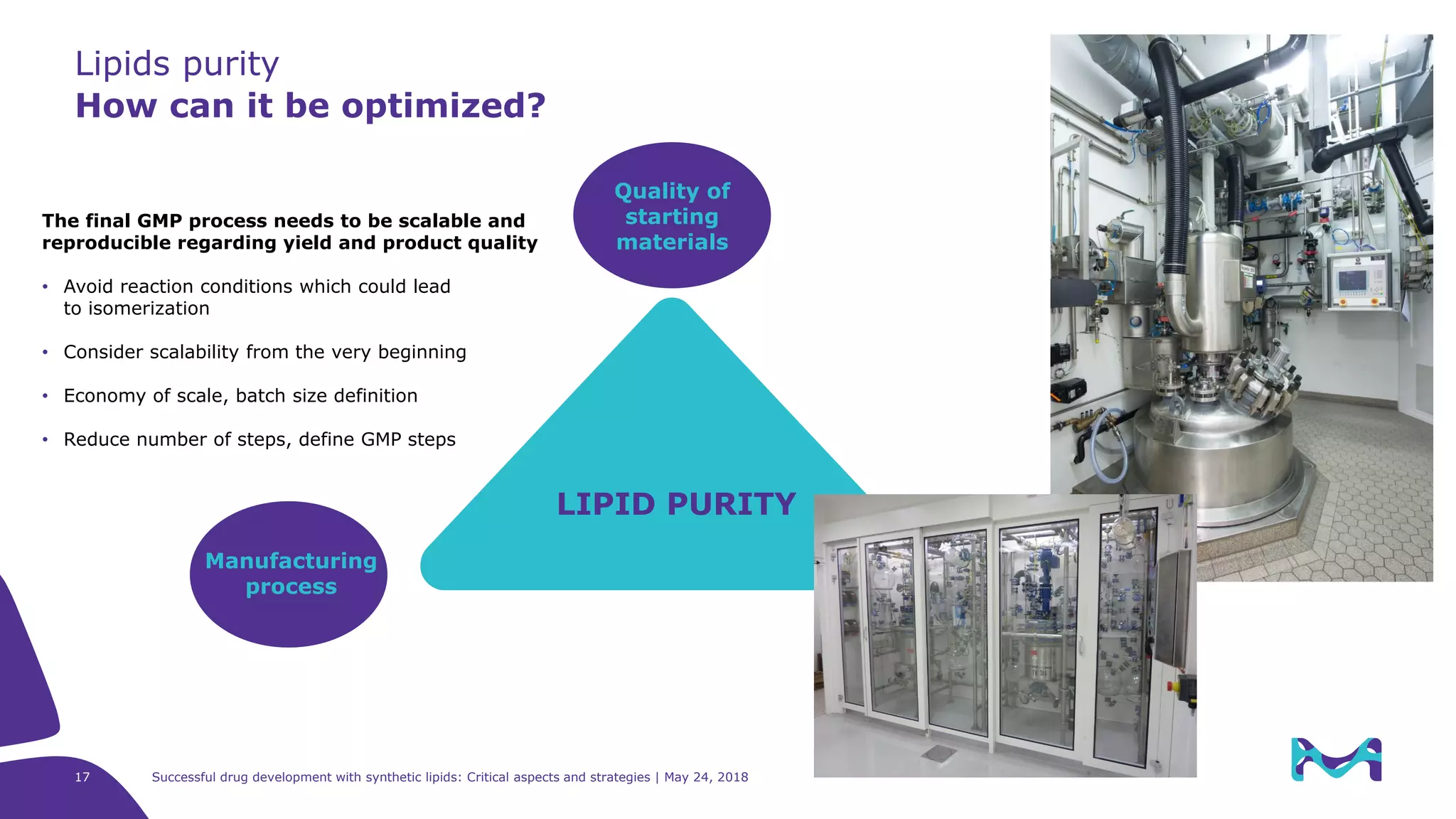
The final GMP process needs to be scalable and
reproducible regarding yield and product quality
• Avoid reaction conditions which could lead
to isomerization
• Consider scalability from the very beginning
• Economy of scale, batch size definition
• Reduce number of steps, define GMP steps
Lipids purity
How can it be optimized?
18 Successful drug development with synthetic lipids: Critical aspects and strategies | May 24, 2018
LIPID PURITY
Purification
process
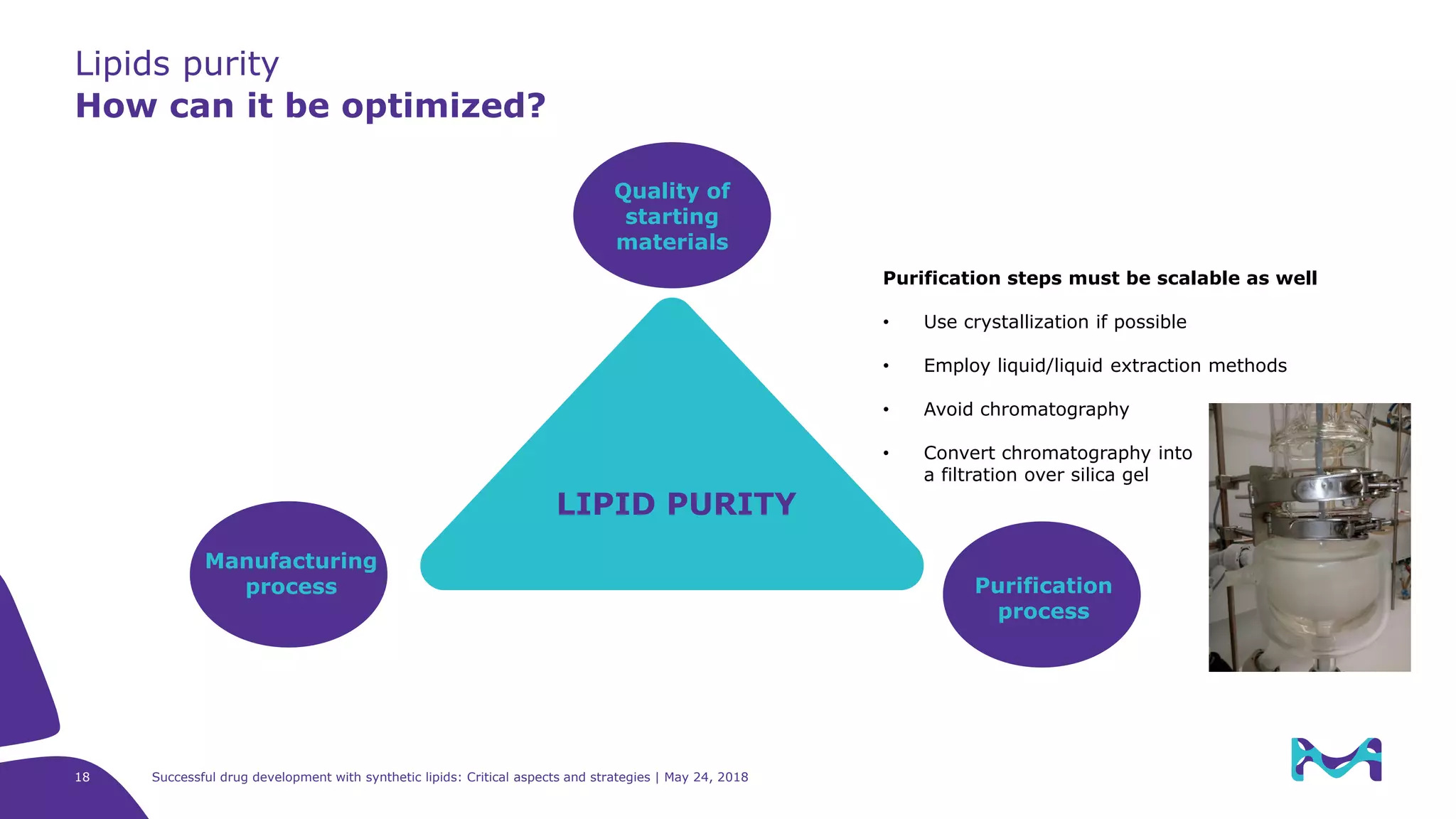
Purification steps must be scalable as well
• Use crystallization if possible
• Employ liquid/liquid extraction methods
• Avoid chromatography
• Convert chromatography into
a filtration over silica gel
Manufacturing
process
Quality of
starting
materials
19 Successful drug development with synthetic lipids: Critical aspects and strategies | May 24, 2018
Synthetic lipids for drug development
What is needed from them?
Convenient and reproducible behavior in formulation: particle characteristics, stability and release profile
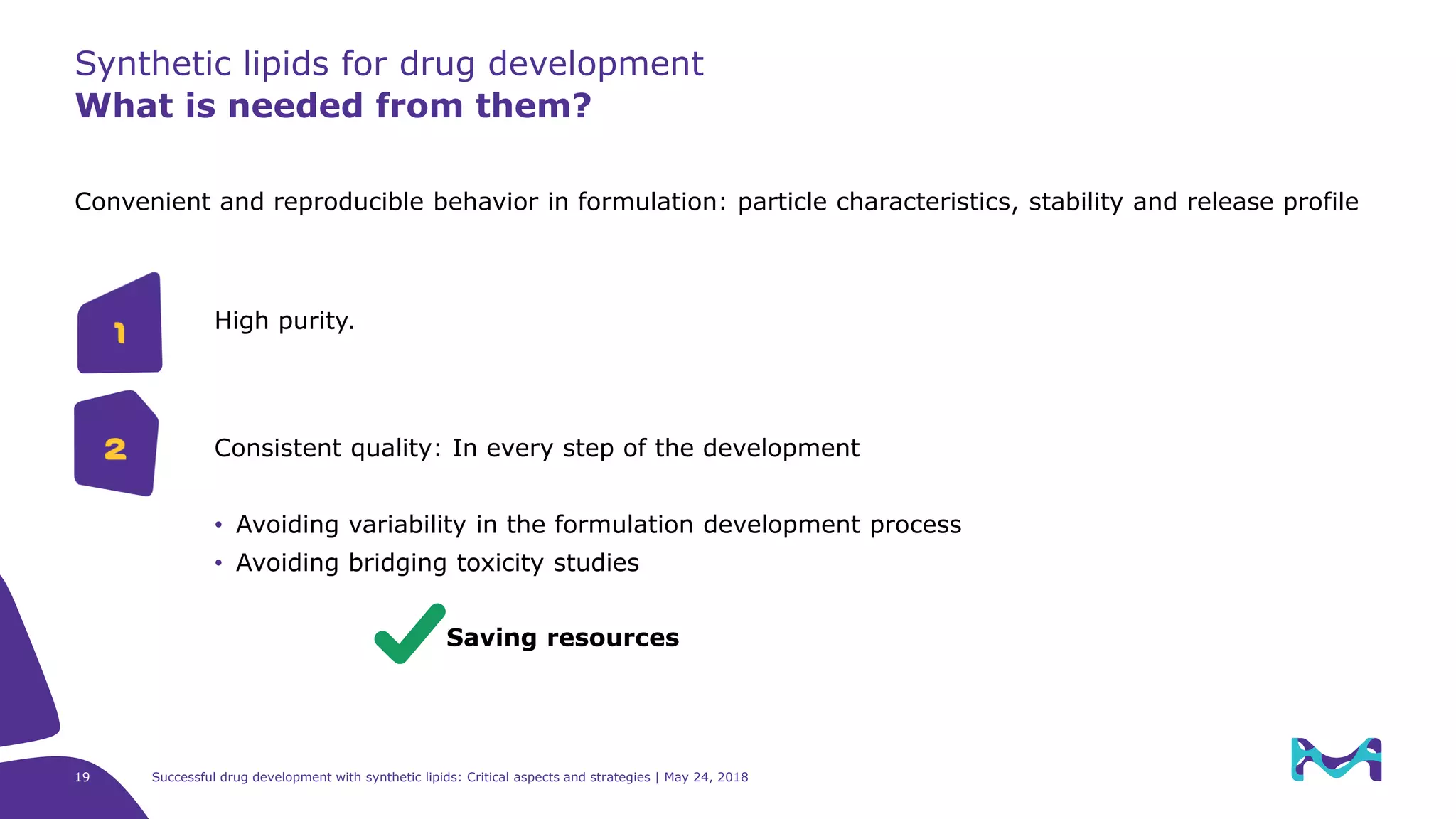
Consistent quality: In every step of the development
• Avoiding variability in the formulation development process
• Avoiding bridging toxicity studies
Saving resources
1
2
High purity.
20 Successful drug development with synthetic lipids: Critical aspects and strategies | May 24, 2018
Synthetic lipids for drug development
What is needed from them?
Convenient and reproducible behavior in formulation: particle characteristics, stability and release profile
Consistent quality.
1
2
3
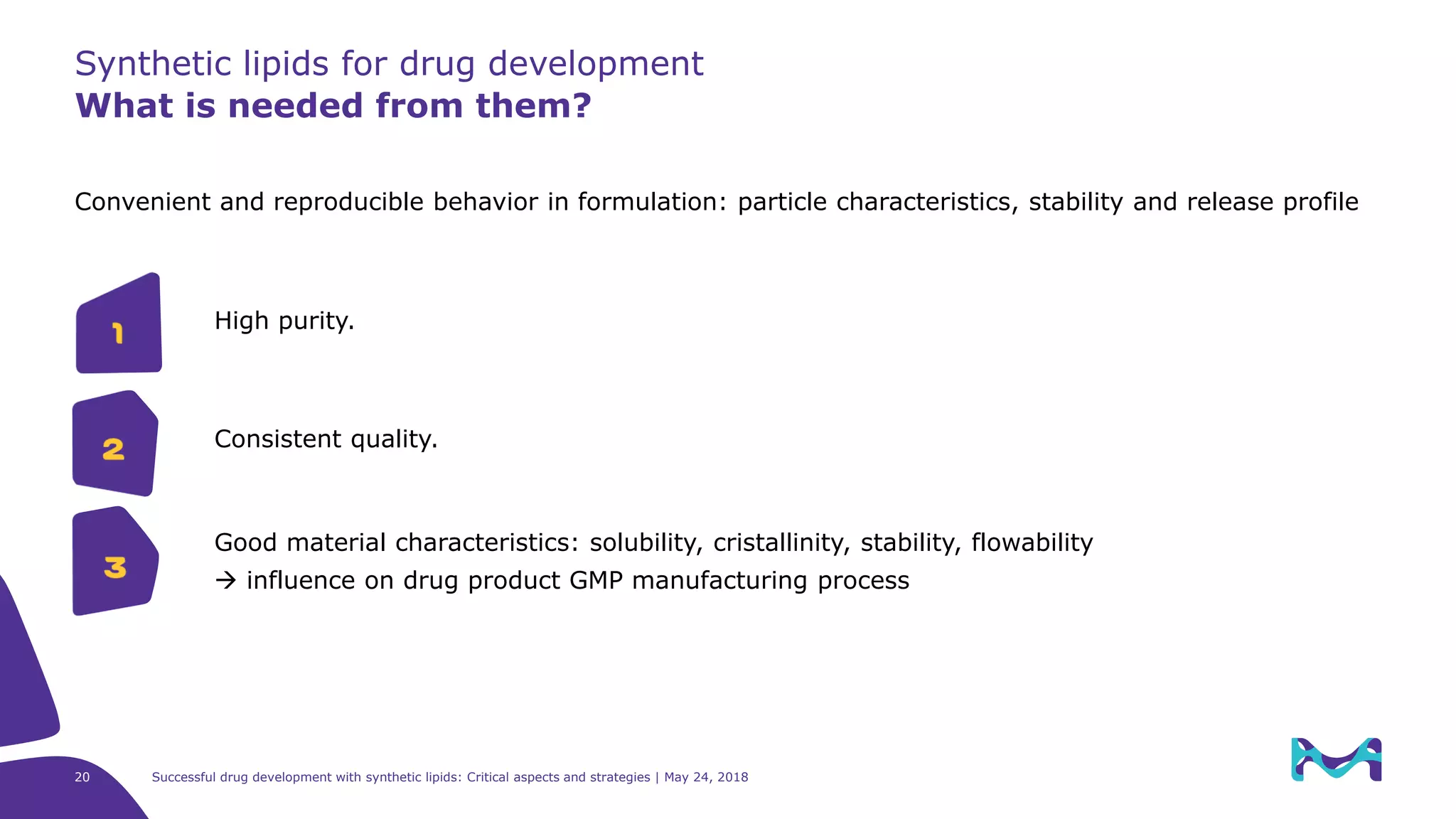
Good material characteristics: solubility, cristallinity, stability, flowability
 influence on drug product GMP manufacturing process
High purity.
by courtesy of Büchi Labortechnik AG, Flawil, Switzerland
Lipids characteristics
How can they be optimized for an easier formulation process?
21 Successful drug development with synthetic lipids: Critical aspects and strategies | May 24, 2018
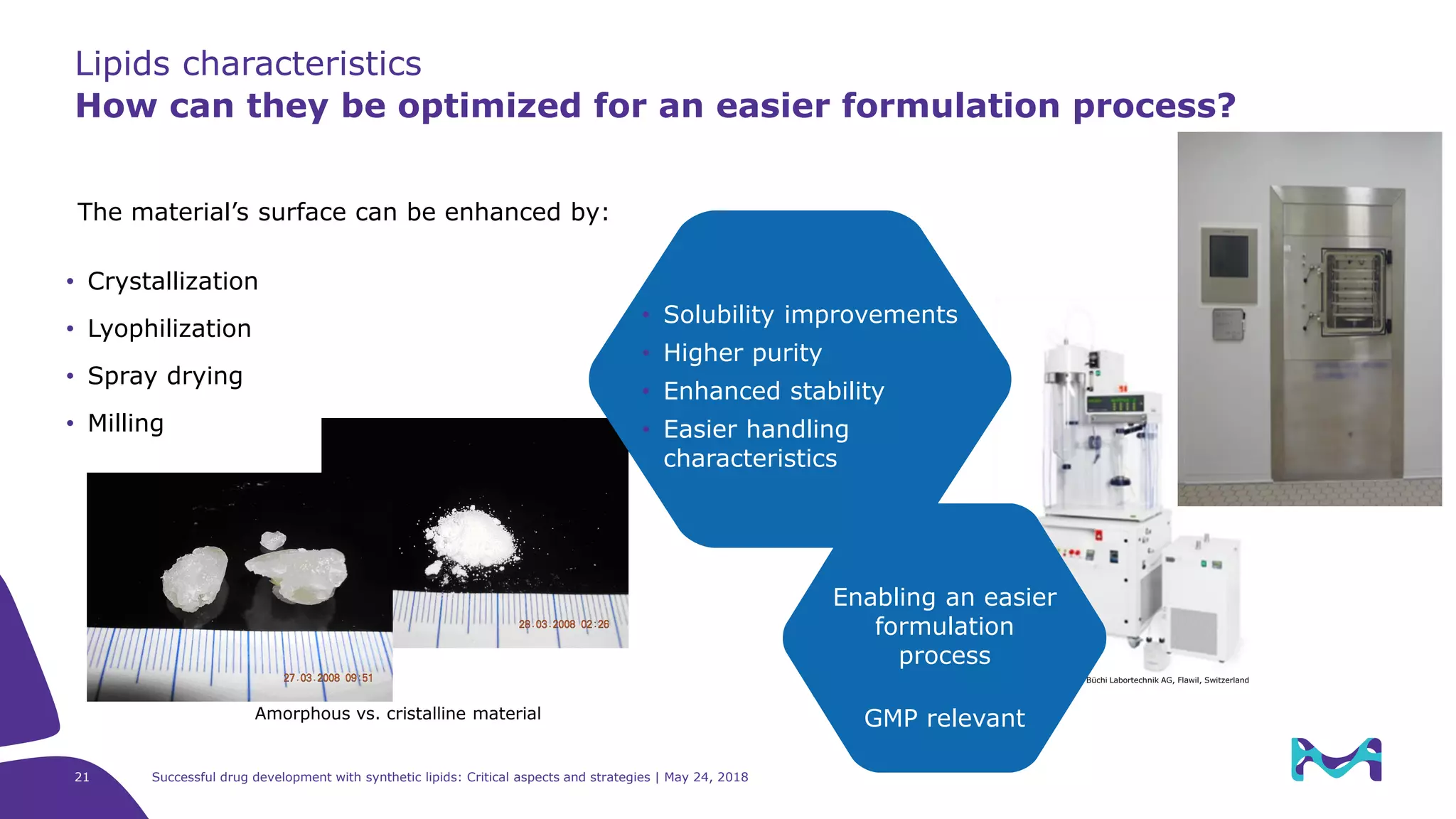
The material’s surface can be enhanced by:
• Crystallization
• Lyophilization
• Spray drying
• Milling
• Solubility improvements
• Higher purity
• Enhanced stability
• Easier handling
characteristics
Enabling an easier
formulation
process
GMP relevantAmorphous vs. cristalline material
Lipid development
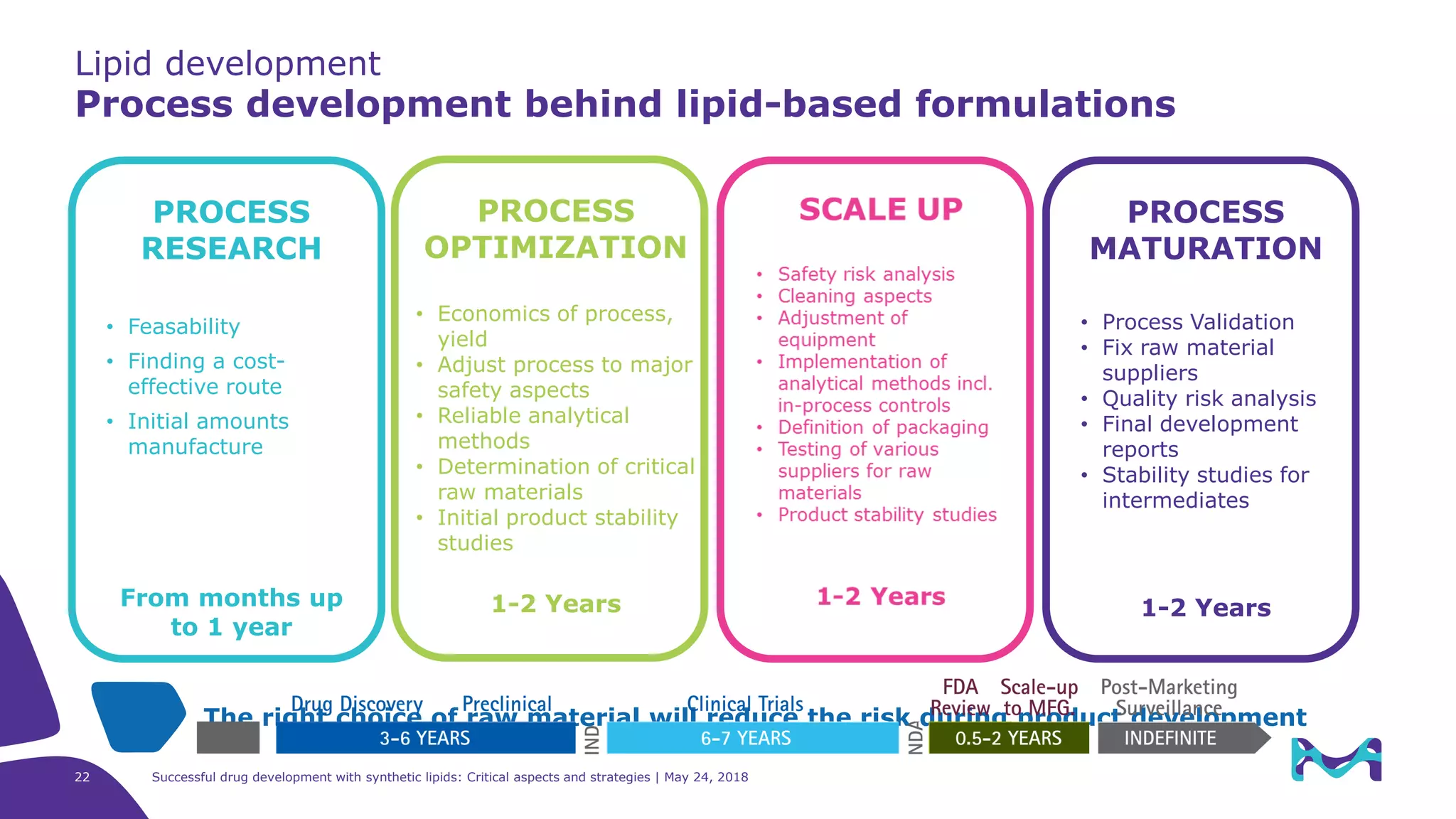
Process development behind lipid-based formulations
Successful drug development with synthetic lipids: Critical aspects and strategies | May 24, 201822
The right choice of raw material will reduce the risk during product development
PROCESS
RESEARCH
• Feasability
• Finding a cost-
effective route
• Initial amounts
manufacture
From months up
to 1 year
PROCESS
OPTIMIZATION
• Economics of process,
yield
• Adjust process to major
safety aspects
• Reliable analytical
methods
• Determination of critical
raw materials
• Initial product stability
studies
1-2 Years
PROCESS
MATURATION
• Process Validation
• Fix raw material
suppliers
• Quality risk analysis
• Final development
reports
• Stability studies for
intermediates
1-2 Years
Agenda
23
Successful drug development with synthetic lipids: Critical aspects and strategies | May 24, 201824
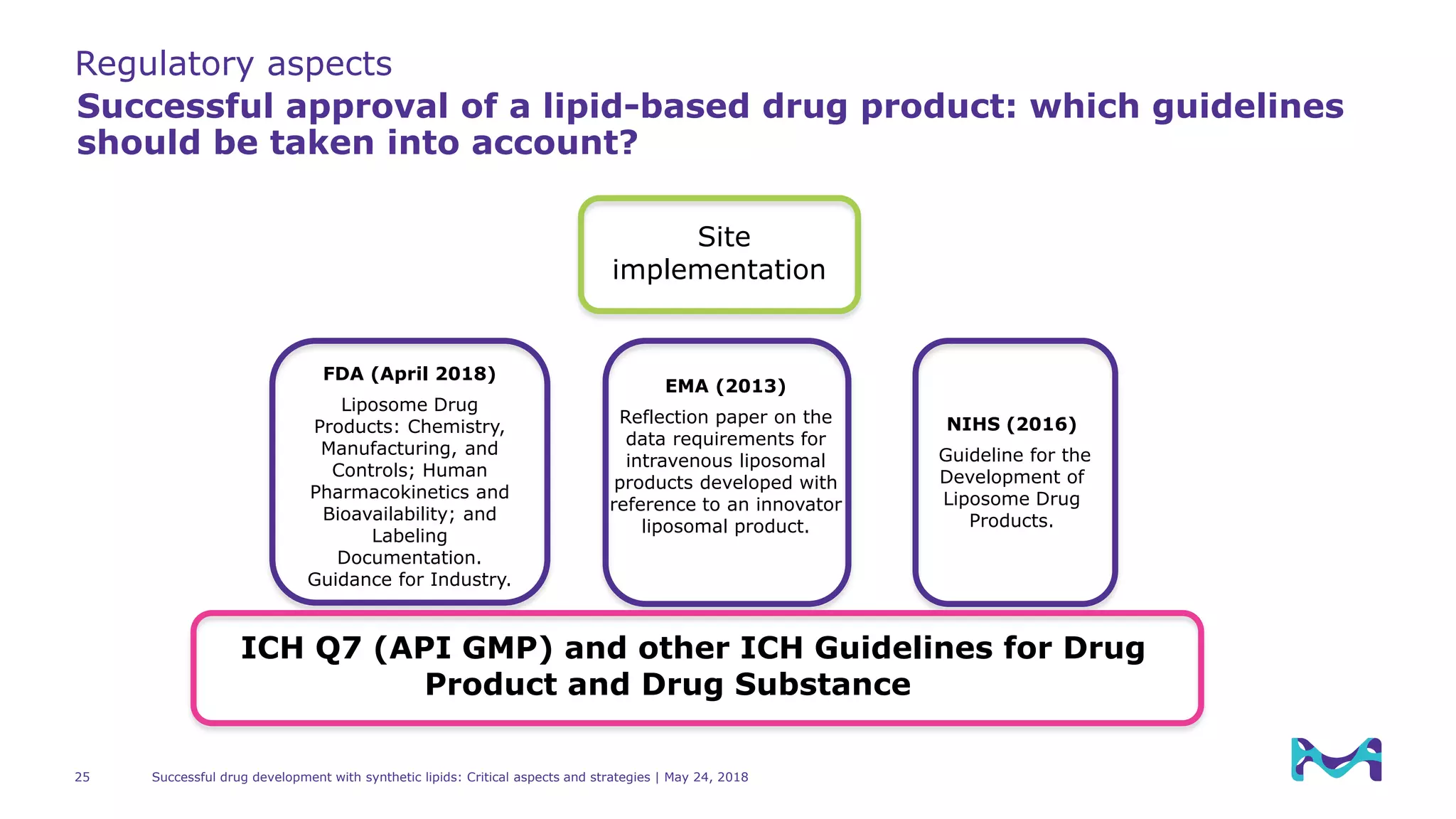
Regulatory aspects
Successful approval of a lipid-based drug product: which guidelines
should be taken into account?
“[…] The quality of lipid components, including
modified lipids (e.g., polyethylene glycol (PEG)
modified lipids), can affect the quality and
performance of the liposome drug product.
In cases of novel lipid components, the level of
detail provided in the submission should be
comparable to that for a drug substance.[…] see
ICH Q11 Development and Manufacture of Drug
Substances […]”
“[…] The quality and purity of the lipid
starting materials is essential for the later
quality of the drug product, therefore the
appropriate characterization and specification
of the lipid starting material is considered as
vital. […]
The level of information to be provided
with the relevant submission depends on
complexity of the excipients. […]”
“[…] Because the quality of liposome components
such as lipids can affect the quality of whole
liposome drug products, the quality of liposome
components should be appropriately controlled […]
In liposome drug products, lipid components […] and
molecules for liposome modification […] contribute to
an improvement in the in vivo stability,
pharmacokinetics, and intracellular behavior of the
active substance. Therefore, liposome components,
especially ligands (targeting moiety) and antibodies
that have a significant impact on the function of
the drug product, should be evaluated and
controlled to a greater extent than general
excipients to ensure their intended
properties.[…]”
Successful drug development with synthetic lipids: Critical aspects and strategies | May 24, 201825
Regulatory aspects
Successful approval of a lipid-based drug product: which guidelines
should be taken into account?
FDA (April 2018)
Liposome Drug
Products: Chemistry,
Manufacturing, and
Controls; Human
Pharmacokinetics and
Bioavailability; and
Labeling
Documentation.
Guidance for Industry.
EMA (2013)
Reflection paper on the
data requirements for
intravenous liposomal
products developed with
reference to an innovator
liposomal product.
NIHS (2016)
Guideline for the
Development of
Liposome Drug
Products.
Site
implementation
ICH Q7 (API GMP) and other ICH Guidelines for Drug
Product and Drug Substance
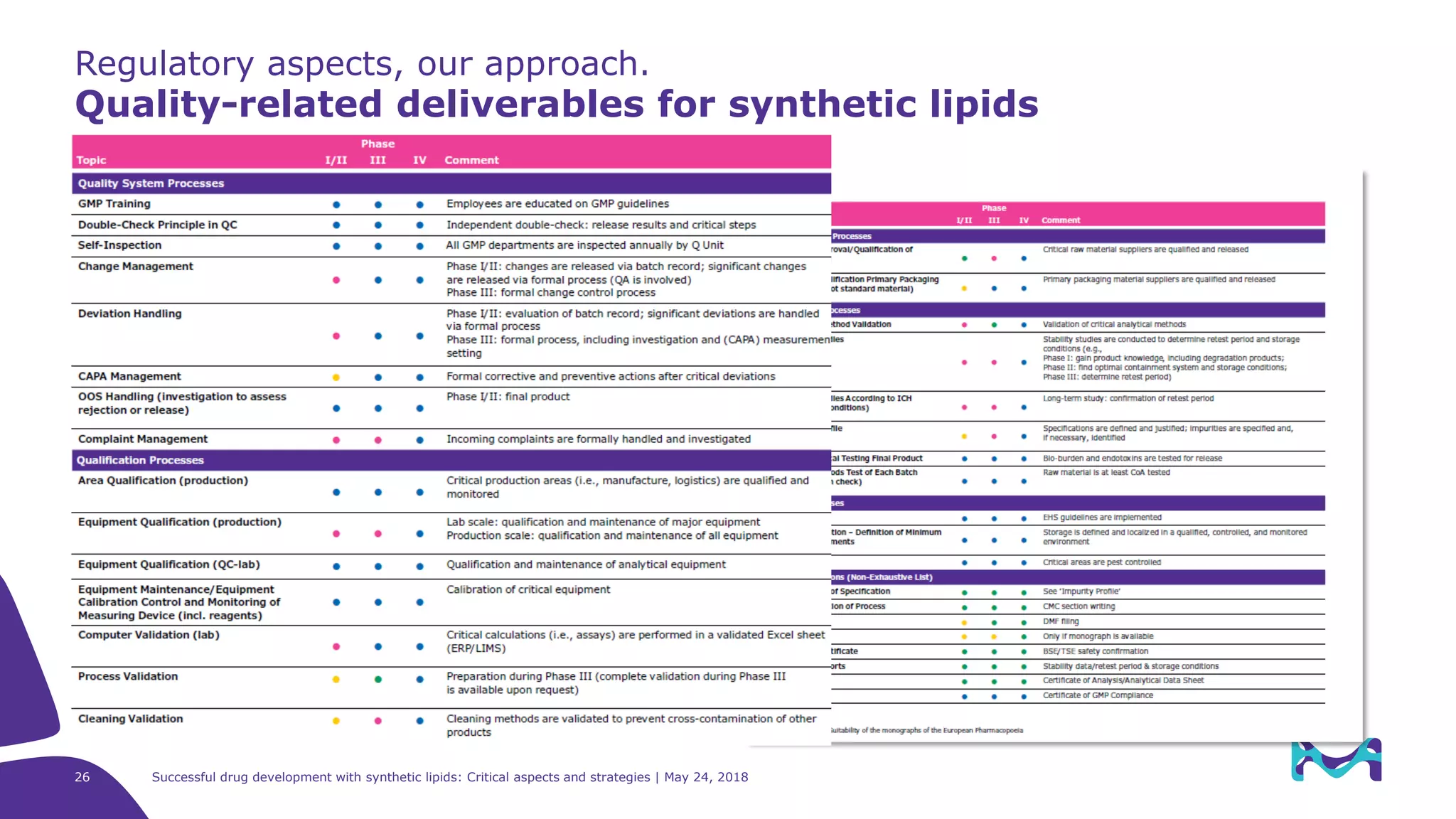
Regulatory aspects, our approach.
Quality-related deliverables for synthetic lipids
Successful drug development with synthetic lipids: Critical aspects and strategies | May 24, 201826
Agenda
01 Lipids: role in liposomal formulation
02 Synthetic lipids: process development
03 Regulatory aspects
04 Troubleshooting: examples
05 Enhanced surface characteristics
06 Overview of facilities and capabilities
27
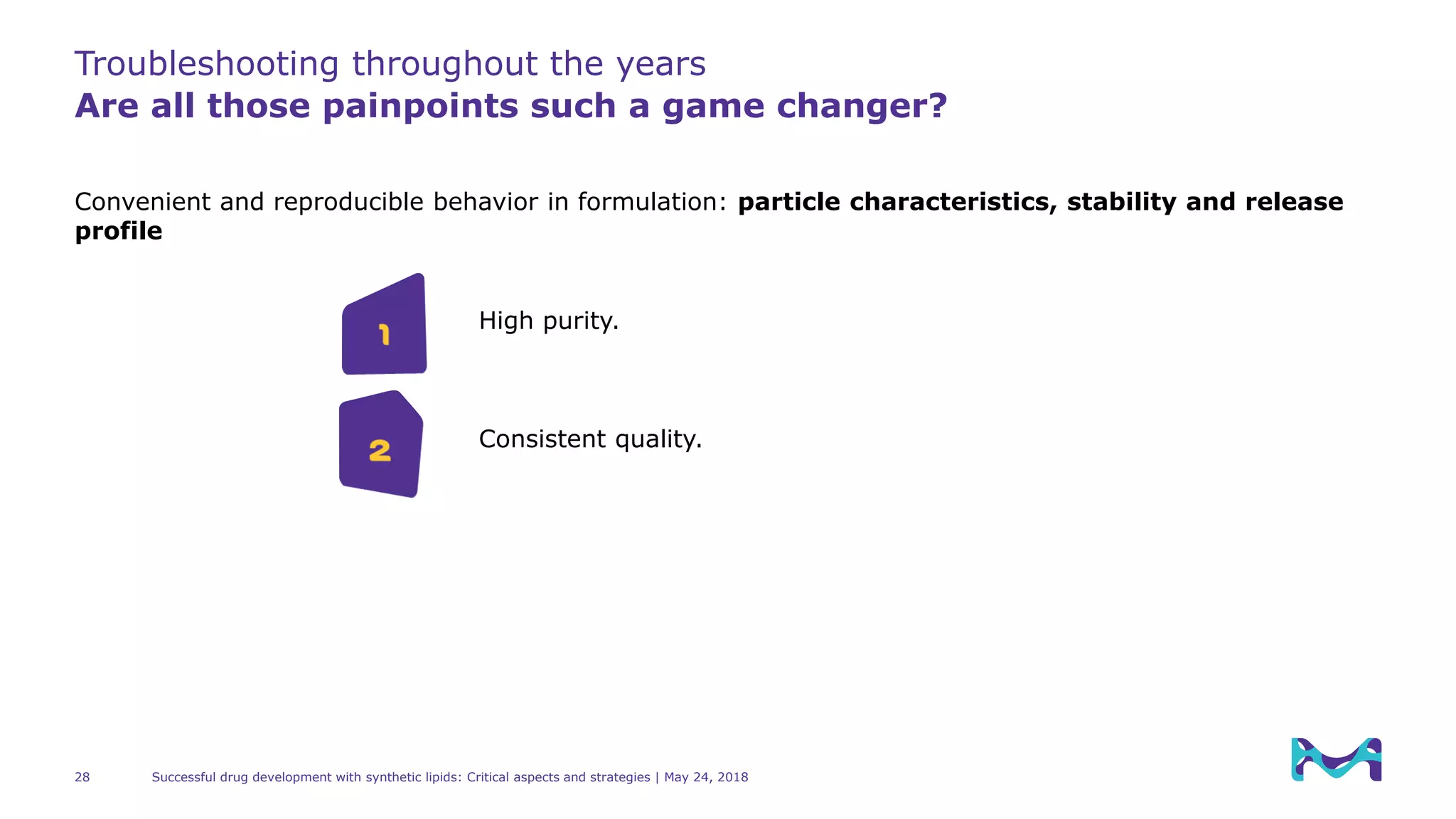
Troubleshooting throughout the years
Are all those painpoints such a game changer?
Successful drug development with synthetic lipids: Critical aspects and strategies | May 24, 201828
Convenient and reproducible behavior in formulation: particle characteristics, stability and release
profile
Consistent quality.
1
2
High purity.
Purity & Consistent quality
Lipids developed with the application in mind: 1,3-GDO
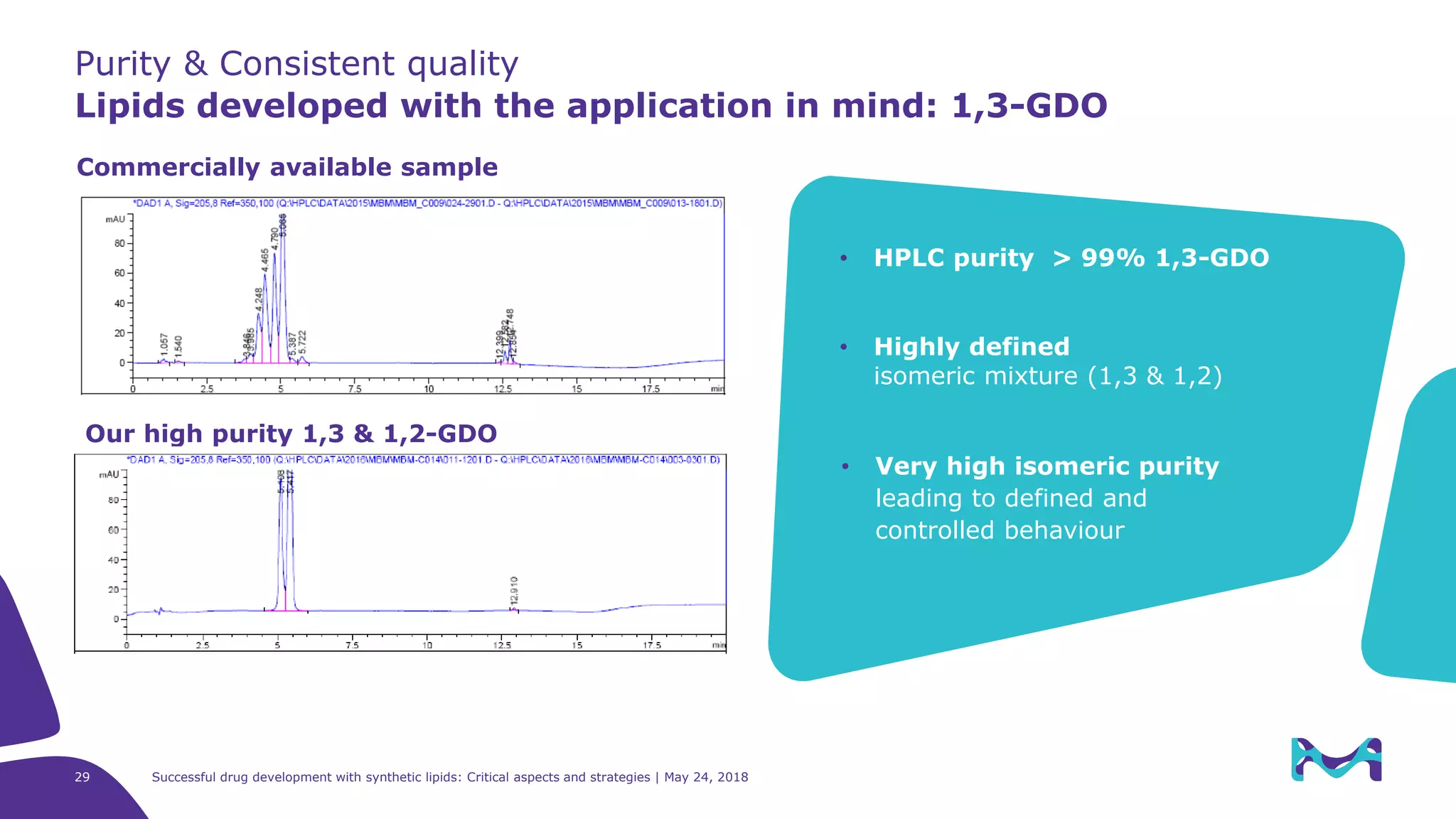
• Very high isomeric purity
leading to defined and
controlled behaviour
Commercially available sample
Our high purity 1,3-GDO
Successful drug development with synthetic lipids: Critical aspects and strategies | May 24, 201829
Our high purity 1,3 & 1,2-GDO
• HPLC purity > 99% 1,3-GDO
• Highly defined
isomeric mixture (1,3 & 1,2)
Troubleshooting throughout the years
Are all those painpoints such a game changer?
Successful drug development with synthetic lipids: Critical aspects and strategies | May 24, 201830
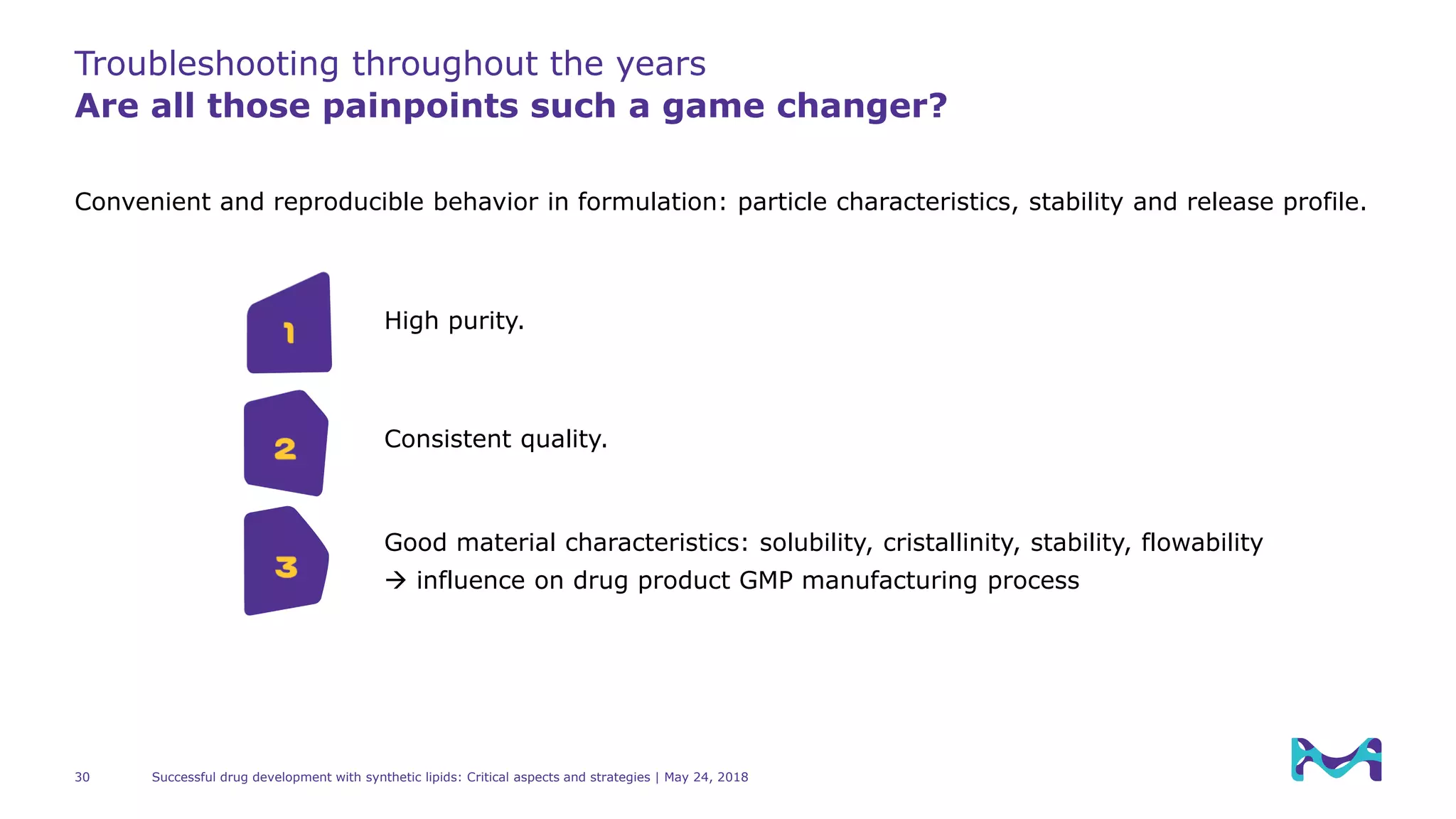
Convenient and reproducible behavior in formulation: particle characteristics, stability and release profile.
Consistent quality.
1
2
3
Good material characteristics: solubility, cristallinity, stability, flowability
 influence on drug product GMP manufacturing process
High purity.
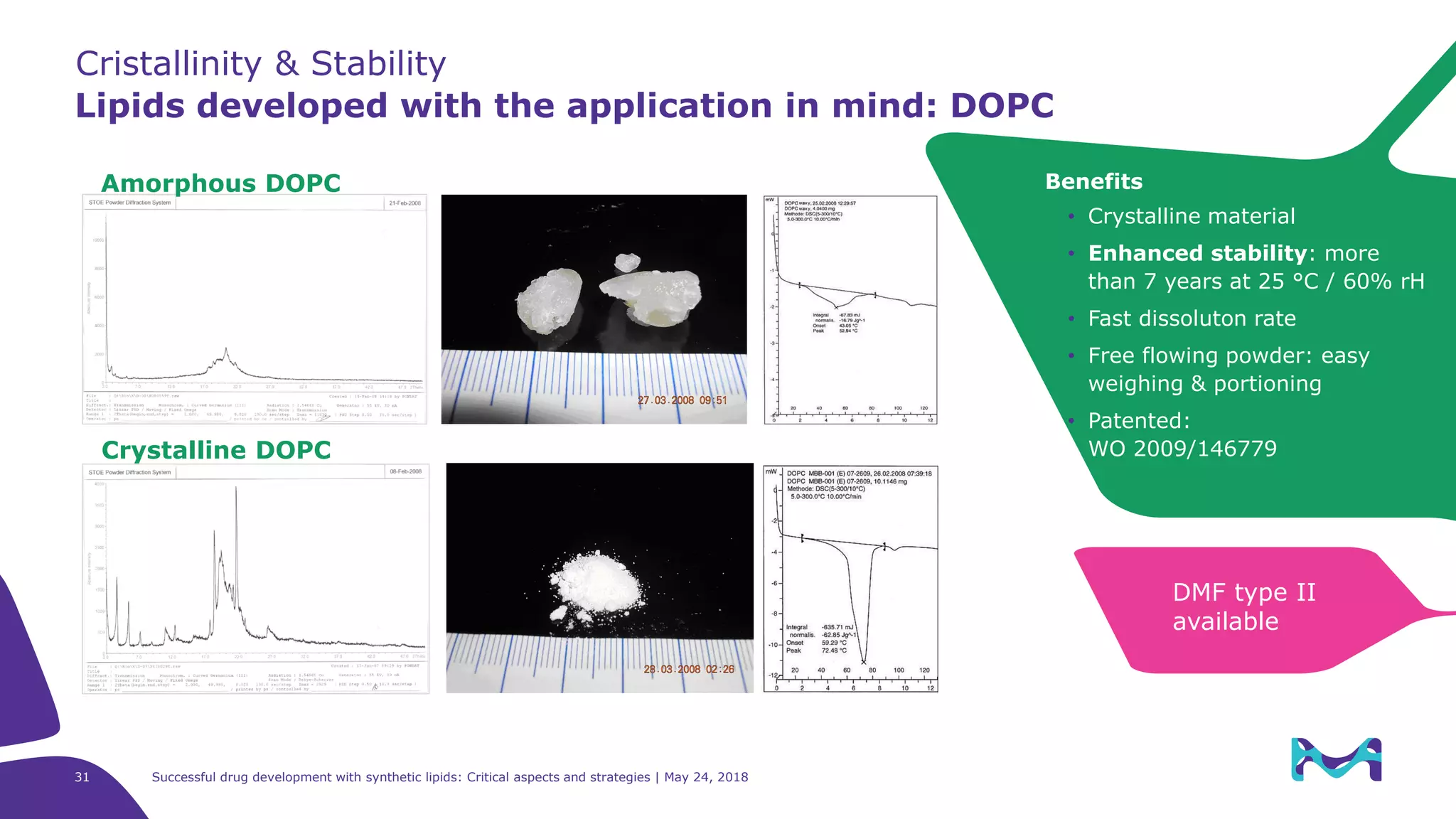
Cristallinity & Stability
Lipids developed with the application in mind: DOPC
Benefits
• Crystalline material
• Enhanced stability: more
than 7 years at 25 °C / 60% rH
• Fast dissoluton rate
• Free flowing powder: easy
weighing & portioning
• Patented:
WO 2009/146779Crystalline DOPC
DMF type II
available
Amorphous DOPC
Successful drug development with synthetic lipids: Critical aspects and strategies | May 24, 201831
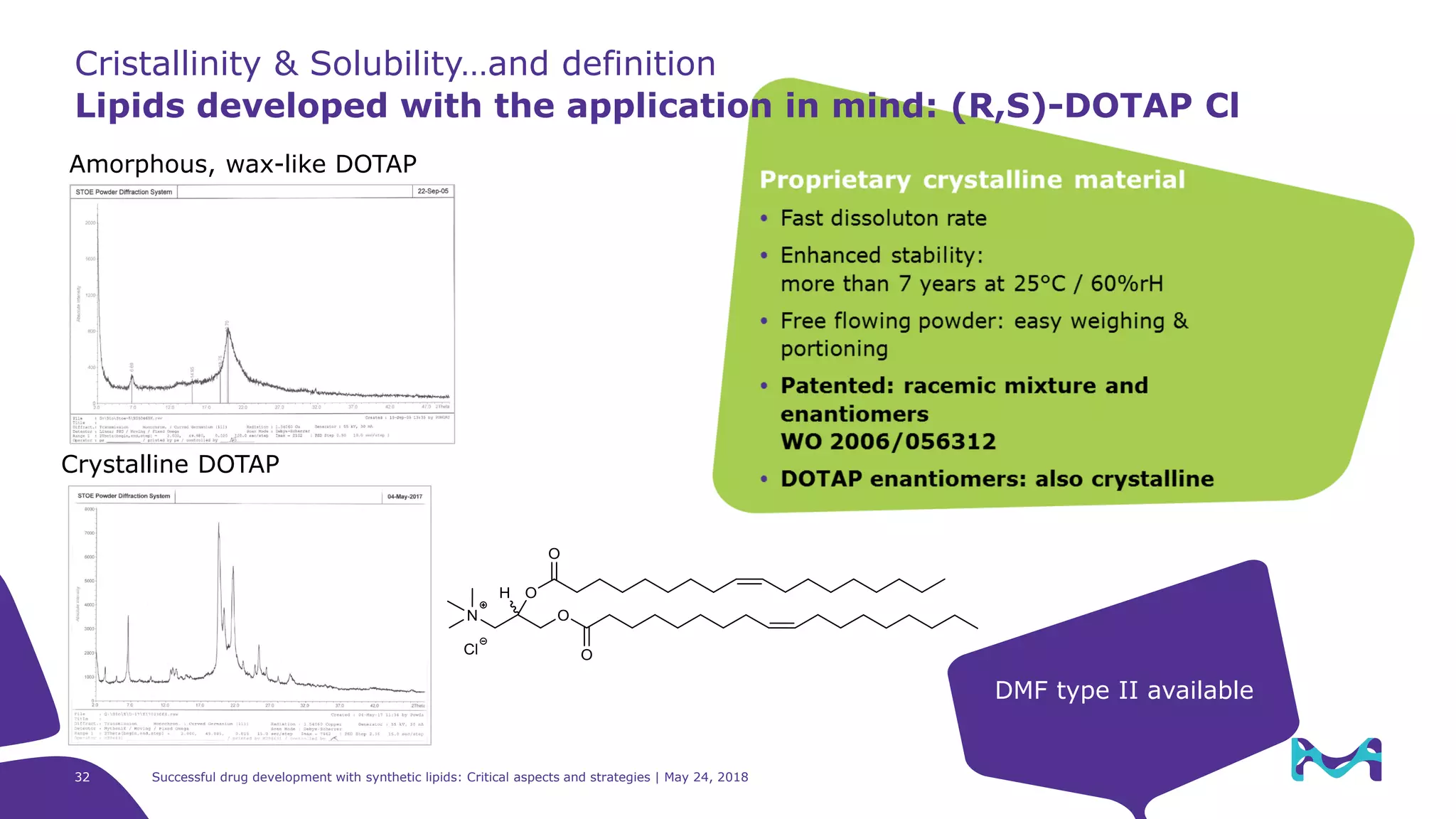
Lipids developed with the application in mind: (R,S)-DOTAP Cl
Cristallinity & Solubility…and definition
Crystalline DOTAP
Amorphous, wax-like DOTAP
DMF type II available
Successful drug development with synthetic lipids: Critical aspects and strategies | May 24, 201832
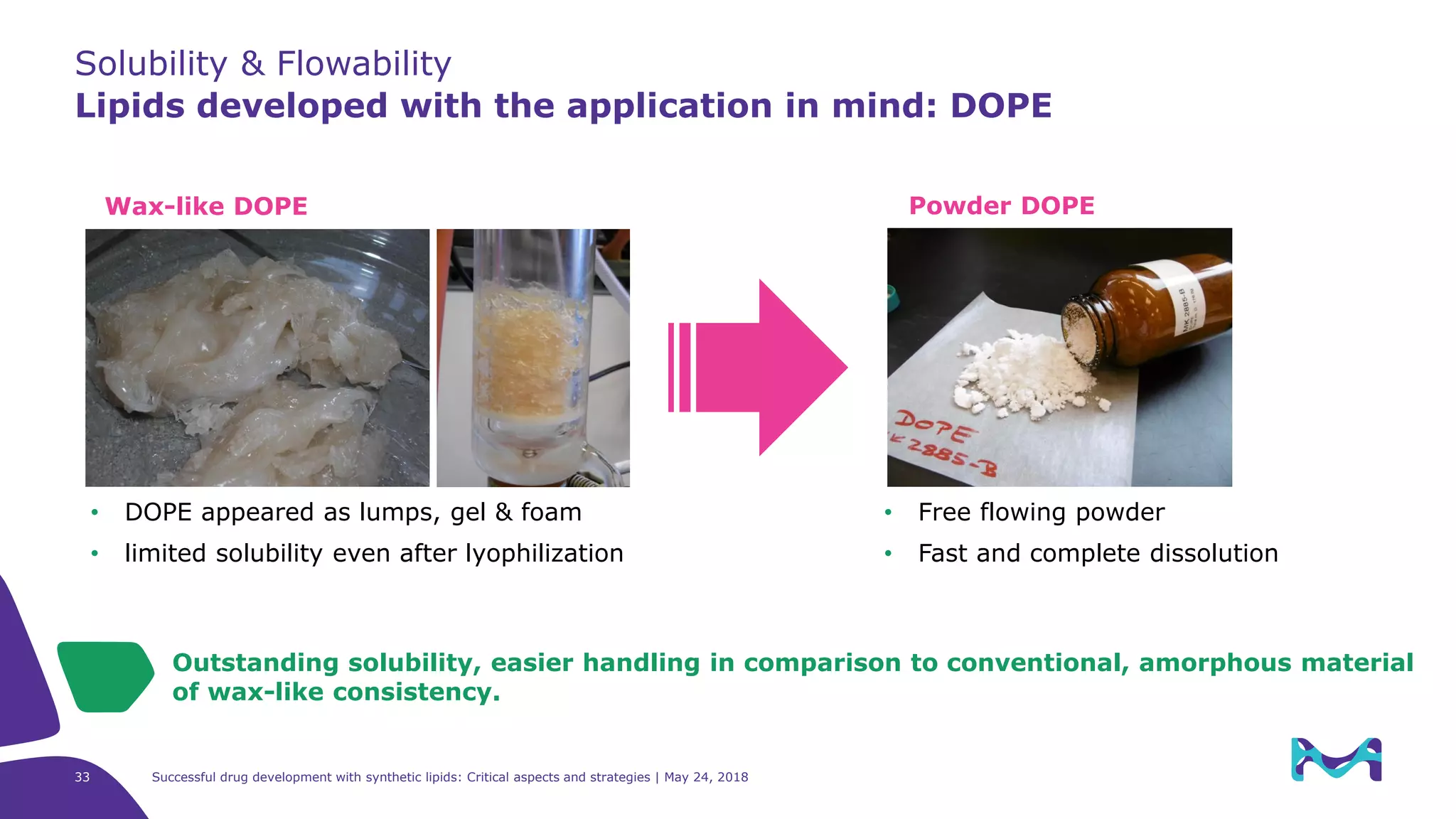
Solubility & Flowability
Lipids developed with the application in mind: DOPE
Outstanding solubility, easier handling in comparison to conventional, amorphous material
of wax-like consistency.
• Free flowing powder
• Fast and complete dissolution
• DOPE appeared as lumps, gel & foam
• limited solubility even after lyophilization
Powder DOPEWax-like DOPE
Successful drug development with synthetic lipids: Critical aspects and strategies | May 24, 201833
Agenda
01 Lipids: role in liposomal formulation
02 Synthetic lipids: process development
03 Regulatory aspects
04 Troubleshooting: examples
05 Enhanced surface characteristics
06 Overview of facilities and capabilities
34
Successful drug development with synthetic lipids: Critical aspects and strategies | May 24, 201835
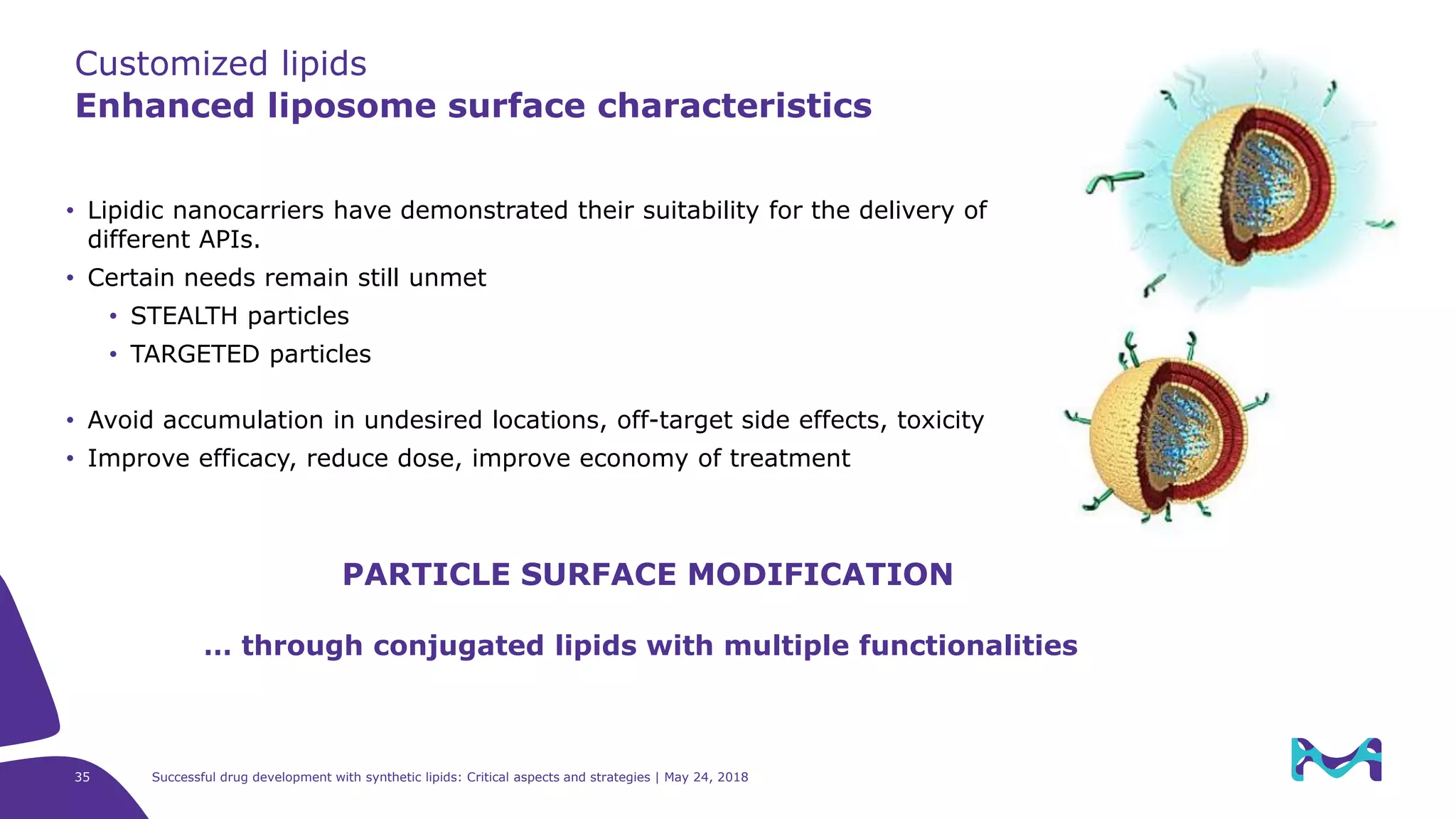
Customized lipids
Enhanced liposome surface characteristics
PARTICLE SURFACE MODIFICATION
… through conjugated lipids with multiple functionalities
• Lipidic nanocarriers have demonstrated their suitability for the delivery of
different APIs.
• Certain needs remain still unmet
• STEALTH particles
• TARGETED particles
• Avoid accumulation in undesired locations, off-target side effects, toxicity
• Improve efficacy, reduce dose, improve economy of treatment
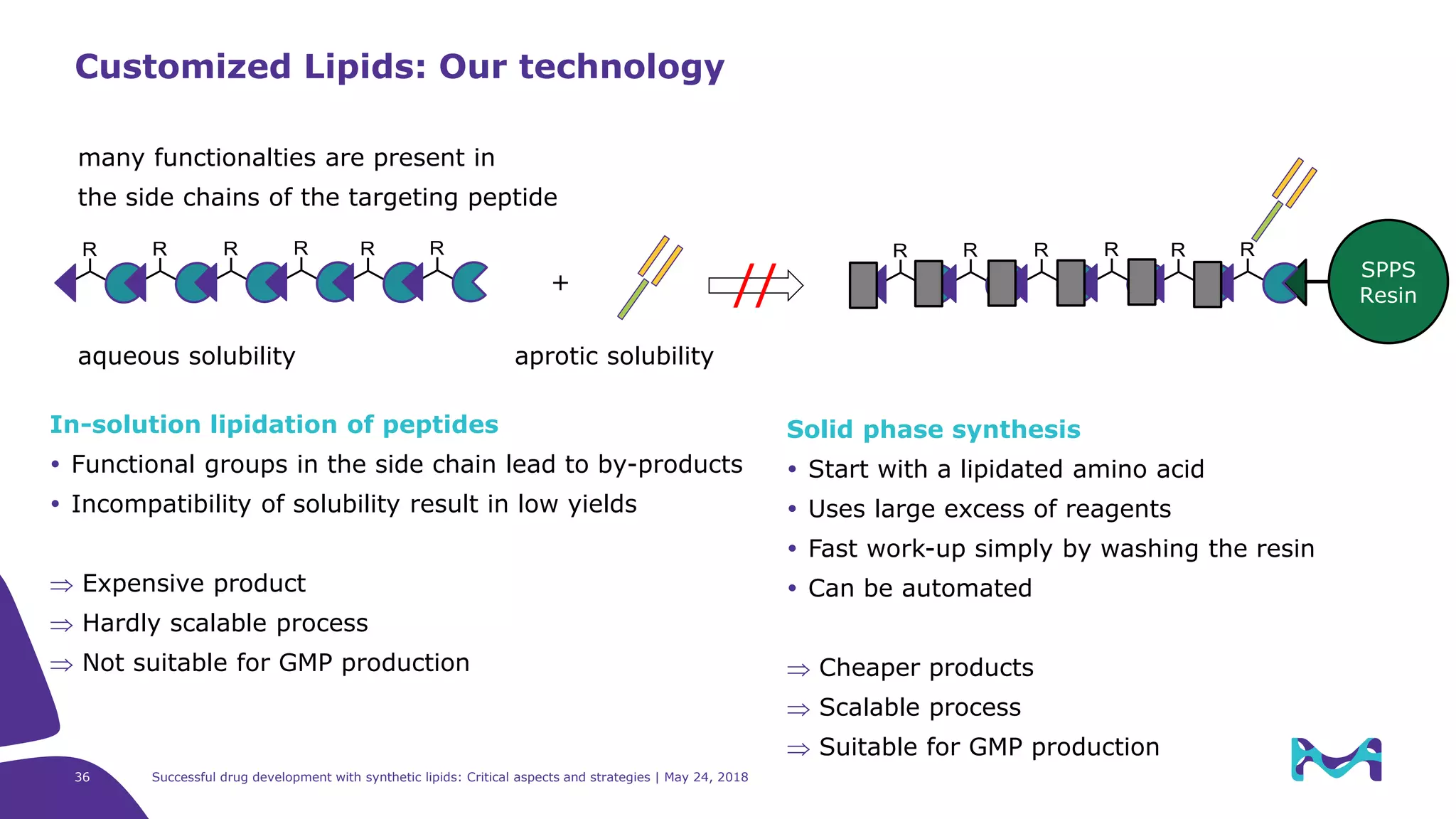
In-solution lipidation of peptides
 Functional groups in the side chain lead to by-products
 Incompatibility of solubility result in low yields
 Expensive product
 Hardly scalable process
 Not suitable for GMP production
R RR R R R R RR R R R
SPPS
Resin
+ //
Customized Lipids: Our technology
Solid phase synthesis
 Start with a lipidated amino acid
 Uses large excess of reagents
 Fast work-up simply by washing the resin
 Can be automated
 Cheaper products
 Scalable process
 Suitable for GMP production
many functionalties are present in
the side chains of the targeting peptide
aqueous solubility aprotic solubility
Successful drug development with synthetic lipids: Critical aspects and strategies | May 24, 201836
Agenda
01 Lipids: role in liposomal formulation
02 Synthetic lipids: process development
03 Regulatory aspects
04 Troubleshooting: examples
05 Enhanced surface characteristics
06 Overview of facilities and capabilities
37
38
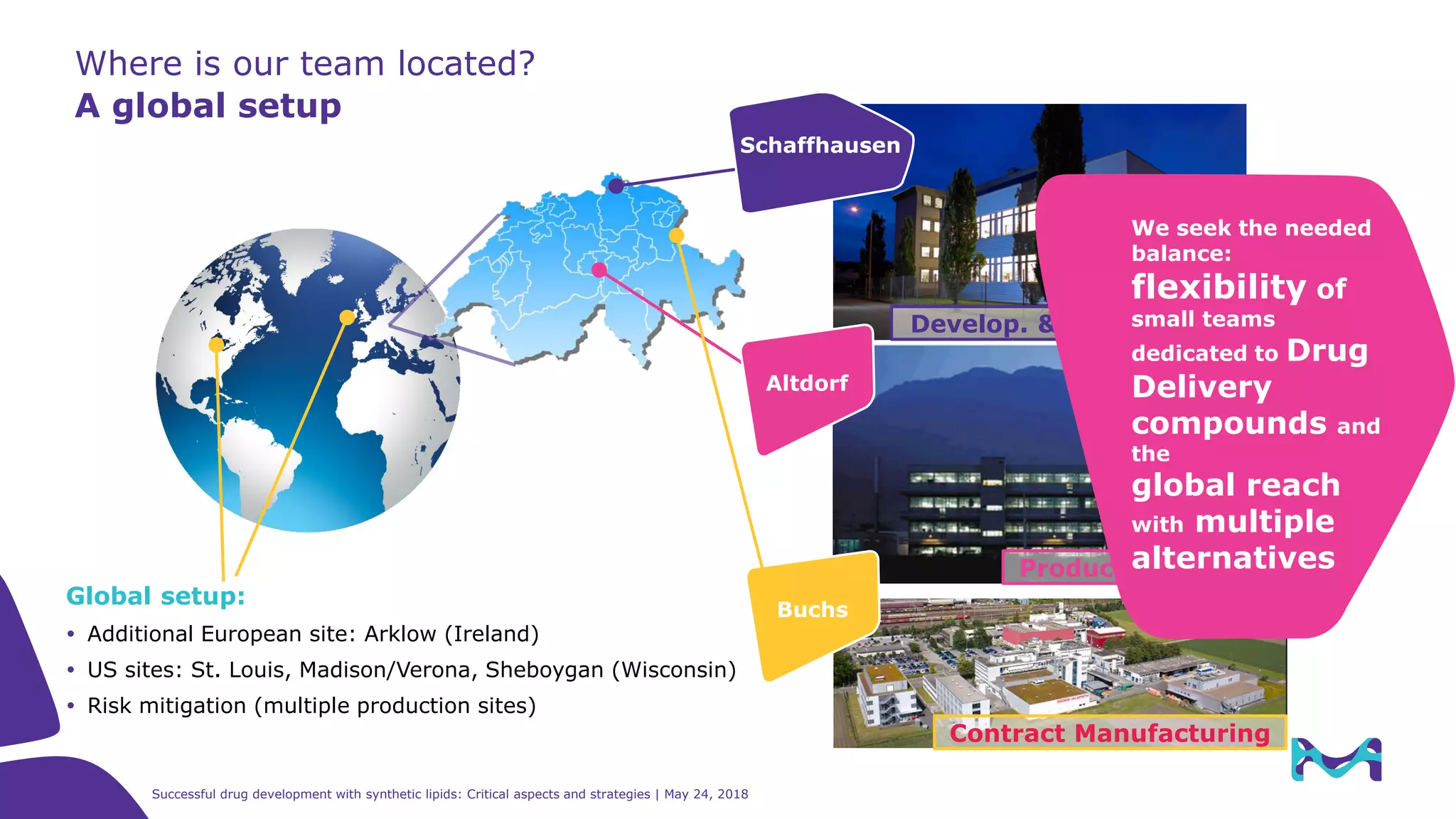
Where is our team located?
A global setup
Develop. & Launch Site
Schaffhausen
Global setup:
 Additional European site: Arklow (Ireland)
 US sites: St. Louis, Madison/Verona, Sheboygan (Wisconsin)
 Risk mitigation (multiple production sites)
Production Site
Altdorf
Buchs
Contract Manufacturing
Successful drug development with synthetic lipids: Critical aspects and strategies | May 24, 2018
We seek the needed
balance:
flexibility of
small teams
dedicated to Drug
Delivery
compounds and
the
global reach
with multiple
alternatives
A GMP manufacturing process that is scalable and reproducible in quality and yield facilitates
formulation and is a prerequisite for a consistent quality of the final product.
 We specialize in cGMP manufacturing that follows the concepts of ICH Q7
 Scale-up processes, from lab to kilo-lab to a production scale of up to 4,000 liters
The quality of lipids has a major impact on the performance of the liposomal formulation.
 We offer a consistently high product quality from grams to tons.
High regulatory requirements that are close to the ones for APIs.
 We support you with regulatory expertise and counsel from a dedicated team through all phases of
clinical development and commercialization
 Covering all aspects of quality assurance and documentation
Successful drug development with synthetic lipids
Summary
Our high purity lipids and our expertise in cGMP manufacture and regulatory matters
facilitate your formulation and support you from development to commercialization.
Successful drug development with synthetic lipids: Critical aspects and strategies | May 24, 201839
Thank You
Questions?
Judit Huarte Ciganda, PhD
judit.huarte-ciganda@emdgroup.com
The Vibrant M is a trademark of Merck KGaA, Darmstadt, Germany or its affiliates. All other trademarks are
the property of their respective owners. Detailed information on trademarks is available via publicly
accessible resources. © 2018 Merck KGaA, Darmstadt, Germany and/or its affiliates. All Rights Reserved.

Successful Drug Development with Synthetic Lipids: Critical Aspects and Strategies

  • 1.
    Merck KGaA Darmstadt, Germany JuditHuarte Ciganda, PhD Technical Product Manager Synthetic Lipids Critical aspects and strategies
  • 2.
    The life sciencebusiness of Merck KGaA, Darmstadt, Germany operates as MilliporeSigma in the U.S. and Canada. Successful drug development with synthetic lipids: Critical aspects and strategies | May 24, 20182
  • 3.
    01 Lipids: rolein liposomal formulation 02 Synthetic lipids: process development 03 Regulatory aspects 04 Troubleshooting: examples 05 Enhanced surface characteristics 06 Overview of facilities and capabilities 3
  • 4.
    01 Lipids: rolein liposomal formulation 02 Synthetic lipids: process development 03 Regulatory aspects 04 Troubleshooting: examples 05 Enhanced surface characteristics 06 Overview of facilities and capabilities 4
  • 5.
    Introduction Lipids: What makesthem special? 5 Successful drug development with synthetic lipids: Critical aspects and strategies | May 24, 2018 hydrophilic head hydrophobic tail 1,3-GDO (R)-DODMA DPPC
  • 6.
    6 Successful drugdevelopment with synthetic lipids: Critical aspects and strategies | May 24, 2018 Liposome rigidity Phase transition temperature Liposome leakage Liposome shape Introduction Lipid-based structures in an aqueous environment BILAYERED MONOLAYERED LIQUID CORE SOLID CORE
  • 7.
    7 Successful drugdevelopment with synthetic lipids: Critical aspects and strategies | May 24, 2018 Surface charge, polarity Liposome shape Liposome size Cell affinity Introduction Lipid-based structures in an aqueous environment Non-targeted Targeted Non-PEGylated PEGylated
  • 8.
    Introduction Liposome manufacture Lipids inorganic solvent (and hydrophobic drug) Drying step Hydration Addition of water (and hydrophilic drug) Stirring Sonication Extusion Homogenization Multilamellar vesicles Unilamellar vesicles Lipid film / cake + Purification Successful drug development with synthetic lipids: Critical aspects and strategies | May 24, 20188 Mechanical methods • Shaking of phospholipid dispersions • Extrusion through a filter (low/medium pressure) • Extrusion through a French press cell (Microfluidizer technique) • High-pressure homogenization • Ultrasonic irritation • Bubbling of gas Methods based on organic solvent replacement by aqueous media • Organic solvent removal • Use of water-inmiscible solvents • Ethanol injection method • Ether infusion (solvent vaporization) • Reverse-phase evaporation Methods based on detergent removal • Gel exclusion chromatography • Slow dialysis • Fast dilution • Other related techniques Wagner and Vorauer-Uhl. „Liposome technology for industrial Purposes“ Journal of Drug Delivery 2011(2010). Challenge: scalable + robust + efficient processes
  • 9.
    Liposomal formulations inthe market 9 Product (Approval Year) Admin. route Active Agent Indication Doxil® (1995) i.v. Doxorubicin Ovarian, breast cancer, Kaposi’s sarcoma DaunoXome® (1996) i.v. Daunorubicin AIDS-related Kaposi’s sarcoma Depocyt® (1999) Spinal Cytarabine/Ara-C Neoplastic meningitis Myocet® (2000) i.v. Doxorubicin Combination therapy with cyclophosphamide in metastatic breast cance Mepact® (2004) i.v. Mifamurtide High-grade, resectable, non-metastatic osteosarcoma Marqibo® (2012) i.v. Vincristine Acute lymphoblastic leukaemia Onivyde™ (2015) i.v. Irinotecan Combination therapy with fluorouracil and leucovorin in metastatic adenocarcinoma of the pancreas Abelcet® (1995) i.v. Amphotericin B Invasive severe fungal infections Ambisome® (1997) i.v. Amphotericin B Presumed fungal infections Amphotec® (1996) i.v. Amphotericin B Severe fungal infections Visudyne® (2000) i.v. Verteporphin Choroidal neovascularisation DepoDur™ (2004) Epidural Morphine sulfate Pain management Exparel® (2011) i.v. Bupivacaine Pain management Epaxal® (1993) i.v. Inactivated hepatitis A virus (strain RGSB) Hepatitis A Inflexal® V (1997) i.v. Inactivated hemaglutinine of Influenza virus strains A and B Influenza Adapted from Bulbake and col. “Liposomal Formulations in Clinical Use: An Updated Review” Pharmaceutics 2017, 9, 12.
  • 10.
    Liposomal formulations inclinical trials (1) 10 Product Admin. route Active Agent Indication Arikace Aerosol Amikacin Lung infections Stimuvax s.c. Tecemotide Non-small cell lung cancer T4N5 liposomal lotion Topical T4 endonuclease V Xeroderma pigmentosum Liprostin i.v. Prostaglandin E-1 (PGE-1) Restenosis after angioplasty ThermoDox i.v. Doxorubicin Hepatocellular carcinoma and also recurring chest wall breast cancer Lipoplatin i.v. Cisplatin Non-small cell lung cancer Aroplatin i.v. Platinum analogue Metastatic colorectal cancer Liposomal annamycin i.v. Semi-synthetic doxorubicin analogue annamycin Relapsed or refractory acute myeloid leukaemia SPI-077 i.v. Cisplatin Lung, head and neck cancer OSI-211 i.v. Lurtotecan Ovarian, head and neck cancer S-CKD602 i.v. Potent topoisomerase I inhibitor Cancer LE-SN38 i.v. Irinotecan’s active metabolite Advanced colorectal cancer LEP-ETU i.v. Paclitaxel Cancer Endotag-I i.v. Paclitaxel Breast and pancreatic cancers Atragen i.v. All-trans retinoic acid Hormone-resistant prostate cancer, renal cell carcinoma and acute myelogenous leukaemia Adapted from Bulbake and col. “Liposomal Formulations in Clinical Use: An Updated Review” Pharmaceutics 2017, 9, 12.
  • 11.
    Liposomal formulations inclinical trials (2) 11 Product Admin. route Active Agent Indication LEM-ETU i.v. Mitoxantrone Various cancers Liposomal Grb-2 i.v. Antisense oligodeoxynucleotide growth factor receptor boundprotein 2 (Grb-2) Hematologic malignancies INX-0125 i.v. Vinorelbine tartrate Advanced solid tumours INX-0076 i.v. Topotecan Advanced solid tumours TKM-080301 Hepatic intra- arterial Admin. PLK1 siRNA Neuroendocrine tumours Atu027 i.v. PKN3 siRNA Pancreatic cancer 2B3-101 i.v. Doxorubicin Solid tumours MTL-CEBPA i.v. CEBPA siRNA Liver cancer ATI-1123 i.v. Docetaxel Solid tumours LiPlaCis i.v. Cisplatin Advanced solid tumours MCC-465 i.v. Doxorubicin Metastatic stomach cancer SGT-53 i.v. p53 gene Various solid tumours Alocrest i.v. Vinorelbine Breast and lung cancers Adapted from Bulbake and col. “Liposomal Formulations in Clinical Use: An Updated Review” Pharmaceutics 2017, 9, 12.
  • 12.
    Agenda 01 Lipids: rolein liposomal formulation 02 Synthetic lipids: process development 03 Regulatory aspects 04 Troubleshooting: examples 05 Enhanced surface characteristics 06 Overview of facilities and capabilities 12 01 Lipids: role in liposomal formulation 02 Synthetic lipids: process development 03 Regulatory aspects 04 Troubleshooting: examples 05 Enhanced surface characteristics 06 Overview of facilities and capabilities
  • 13.
    NDA/BLASUBMITTED Lipid development Pharmaceutical productdevelopment Graph adapted from Pharmaceutical Research and Manufacturers of America, Biopharmaceuticals in Perspective, Facts and Figures 2012, (Washington, DC: PhRMA, March 2012). Successful drug development with synthetic lipids: Critical aspects and strategies | May 24, 201813
  • 14.
    14 Successful drugdevelopment with synthetic lipids: Critical aspects and strategies | May 24, 2018 Synthetic lipids for drug development What is needed from them? Convenient and reproducible behavior in formulation: particle characteristics, stability and release profile High purity will influence: • lipid stability • lipid bilayer structure in formulation • formulation stability • formulation release profile 1
  • 15.
    Lipids purity How canit be optimized? 15 Successful drug development with synthetic lipids: Critical aspects and strategies | May 24, 2018 LIPID PURITY
  • 16.
    Lipids purity How canit be optimized? 16 Successful drug development with synthetic lipids: Critical aspects and strategies | May 24, 2018 LIPID PURITY Quality of starting materials High and consistent quality raw materials • Low level of by-products • Defined stereochemistry (cis/trans) • Low bioburden and endotoxin levels • Plant-derived raw materials with BSE/TSE and non-GMO certificates • Use class II and III solvents
  • 17.
    Lipids purity How canit be optimized? 17 Successful drug development with synthetic lipids: Critical aspects and strategies | May 24, 2018 LIPID PURITY Manufacturing process Quality of starting materials The final GMP process needs to be scalable and reproducible regarding yield and product quality • Avoid reaction conditions which could lead to isomerization • Consider scalability from the very beginning • Economy of scale, batch size definition • Reduce number of steps, define GMP steps
  • 18.
    Lipids purity How canit be optimized? 18 Successful drug development with synthetic lipids: Critical aspects and strategies | May 24, 2018 LIPID PURITY Purification process Purification steps must be scalable as well • Use crystallization if possible • Employ liquid/liquid extraction methods • Avoid chromatography • Convert chromatography into a filtration over silica gel Manufacturing process Quality of starting materials
  • 19.
    19 Successful drugdevelopment with synthetic lipids: Critical aspects and strategies | May 24, 2018 Synthetic lipids for drug development What is needed from them? Convenient and reproducible behavior in formulation: particle characteristics, stability and release profile Consistent quality: In every step of the development • Avoiding variability in the formulation development process • Avoiding bridging toxicity studies Saving resources 1 2 High purity.
  • 20.
    20 Successful drugdevelopment with synthetic lipids: Critical aspects and strategies | May 24, 2018 Synthetic lipids for drug development What is needed from them? Convenient and reproducible behavior in formulation: particle characteristics, stability and release profile Consistent quality. 1 2 3 Good material characteristics: solubility, cristallinity, stability, flowability  influence on drug product GMP manufacturing process High purity.
  • 21.
    by courtesy ofBüchi Labortechnik AG, Flawil, Switzerland Lipids characteristics How can they be optimized for an easier formulation process? 21 Successful drug development with synthetic lipids: Critical aspects and strategies | May 24, 2018 The material’s surface can be enhanced by: • Crystallization • Lyophilization • Spray drying • Milling • Solubility improvements • Higher purity • Enhanced stability • Easier handling characteristics Enabling an easier formulation process GMP relevantAmorphous vs. cristalline material
  • 22.
    Lipid development Process developmentbehind lipid-based formulations Successful drug development with synthetic lipids: Critical aspects and strategies | May 24, 201822 The right choice of raw material will reduce the risk during product development PROCESS RESEARCH • Feasability • Finding a cost- effective route • Initial amounts manufacture From months up to 1 year PROCESS OPTIMIZATION • Economics of process, yield • Adjust process to major safety aspects • Reliable analytical methods • Determination of critical raw materials • Initial product stability studies 1-2 Years PROCESS MATURATION • Process Validation • Fix raw material suppliers • Quality risk analysis • Final development reports • Stability studies for intermediates 1-2 Years
  • 23.
  • 24.
    Successful drug developmentwith synthetic lipids: Critical aspects and strategies | May 24, 201824 Regulatory aspects Successful approval of a lipid-based drug product: which guidelines should be taken into account? “[…] The quality of lipid components, including modified lipids (e.g., polyethylene glycol (PEG) modified lipids), can affect the quality and performance of the liposome drug product. In cases of novel lipid components, the level of detail provided in the submission should be comparable to that for a drug substance.[…] see ICH Q11 Development and Manufacture of Drug Substances […]” “[…] The quality and purity of the lipid starting materials is essential for the later quality of the drug product, therefore the appropriate characterization and specification of the lipid starting material is considered as vital. […] The level of information to be provided with the relevant submission depends on complexity of the excipients. […]” “[…] Because the quality of liposome components such as lipids can affect the quality of whole liposome drug products, the quality of liposome components should be appropriately controlled […] In liposome drug products, lipid components […] and molecules for liposome modification […] contribute to an improvement in the in vivo stability, pharmacokinetics, and intracellular behavior of the active substance. Therefore, liposome components, especially ligands (targeting moiety) and antibodies that have a significant impact on the function of the drug product, should be evaluated and controlled to a greater extent than general excipients to ensure their intended properties.[…]”
  • 25.
    Successful drug developmentwith synthetic lipids: Critical aspects and strategies | May 24, 201825 Regulatory aspects Successful approval of a lipid-based drug product: which guidelines should be taken into account? FDA (April 2018) Liposome Drug Products: Chemistry, Manufacturing, and Controls; Human Pharmacokinetics and Bioavailability; and Labeling Documentation. Guidance for Industry. EMA (2013) Reflection paper on the data requirements for intravenous liposomal products developed with reference to an innovator liposomal product. NIHS (2016) Guideline for the Development of Liposome Drug Products. Site implementation ICH Q7 (API GMP) and other ICH Guidelines for Drug Product and Drug Substance
  • 26.
    Regulatory aspects, ourapproach. Quality-related deliverables for synthetic lipids Successful drug development with synthetic lipids: Critical aspects and strategies | May 24, 201826
  • 27.
    Agenda 01 Lipids: rolein liposomal formulation 02 Synthetic lipids: process development 03 Regulatory aspects 04 Troubleshooting: examples 05 Enhanced surface characteristics 06 Overview of facilities and capabilities 27
  • 28.
    Troubleshooting throughout theyears Are all those painpoints such a game changer? Successful drug development with synthetic lipids: Critical aspects and strategies | May 24, 201828 Convenient and reproducible behavior in formulation: particle characteristics, stability and release profile Consistent quality. 1 2 High purity.
  • 29.
    Purity & Consistentquality Lipids developed with the application in mind: 1,3-GDO • Very high isomeric purity leading to defined and controlled behaviour Commercially available sample Our high purity 1,3-GDO Successful drug development with synthetic lipids: Critical aspects and strategies | May 24, 201829 Our high purity 1,3 & 1,2-GDO • HPLC purity > 99% 1,3-GDO • Highly defined isomeric mixture (1,3 & 1,2)
  • 30.
    Troubleshooting throughout theyears Are all those painpoints such a game changer? Successful drug development with synthetic lipids: Critical aspects and strategies | May 24, 201830 Convenient and reproducible behavior in formulation: particle characteristics, stability and release profile. Consistent quality. 1 2 3 Good material characteristics: solubility, cristallinity, stability, flowability  influence on drug product GMP manufacturing process High purity.
  • 31.
    Cristallinity & Stability Lipidsdeveloped with the application in mind: DOPC Benefits • Crystalline material • Enhanced stability: more than 7 years at 25 °C / 60% rH • Fast dissoluton rate • Free flowing powder: easy weighing & portioning • Patented: WO 2009/146779Crystalline DOPC DMF type II available Amorphous DOPC Successful drug development with synthetic lipids: Critical aspects and strategies | May 24, 201831
  • 32.
    Lipids developed withthe application in mind: (R,S)-DOTAP Cl Cristallinity & Solubility…and definition Crystalline DOTAP Amorphous, wax-like DOTAP DMF type II available Successful drug development with synthetic lipids: Critical aspects and strategies | May 24, 201832
  • 33.
    Solubility & Flowability Lipidsdeveloped with the application in mind: DOPE Outstanding solubility, easier handling in comparison to conventional, amorphous material of wax-like consistency. • Free flowing powder • Fast and complete dissolution • DOPE appeared as lumps, gel & foam • limited solubility even after lyophilization Powder DOPEWax-like DOPE Successful drug development with synthetic lipids: Critical aspects and strategies | May 24, 201833
  • 34.
    Agenda 01 Lipids: rolein liposomal formulation 02 Synthetic lipids: process development 03 Regulatory aspects 04 Troubleshooting: examples 05 Enhanced surface characteristics 06 Overview of facilities and capabilities 34
  • 35.
    Successful drug developmentwith synthetic lipids: Critical aspects and strategies | May 24, 201835 Customized lipids Enhanced liposome surface characteristics PARTICLE SURFACE MODIFICATION … through conjugated lipids with multiple functionalities • Lipidic nanocarriers have demonstrated their suitability for the delivery of different APIs. • Certain needs remain still unmet • STEALTH particles • TARGETED particles • Avoid accumulation in undesired locations, off-target side effects, toxicity • Improve efficacy, reduce dose, improve economy of treatment
  • 36.
    In-solution lipidation ofpeptides  Functional groups in the side chain lead to by-products  Incompatibility of solubility result in low yields  Expensive product  Hardly scalable process  Not suitable for GMP production R RR R R R R RR R R R SPPS Resin + // Customized Lipids: Our technology Solid phase synthesis  Start with a lipidated amino acid  Uses large excess of reagents  Fast work-up simply by washing the resin  Can be automated  Cheaper products  Scalable process  Suitable for GMP production many functionalties are present in the side chains of the targeting peptide aqueous solubility aprotic solubility Successful drug development with synthetic lipids: Critical aspects and strategies | May 24, 201836
  • 37.
    Agenda 01 Lipids: rolein liposomal formulation 02 Synthetic lipids: process development 03 Regulatory aspects 04 Troubleshooting: examples 05 Enhanced surface characteristics 06 Overview of facilities and capabilities 37
  • 38.
    38 Where is ourteam located? A global setup Develop. & Launch Site Schaffhausen Global setup:  Additional European site: Arklow (Ireland)  US sites: St. Louis, Madison/Verona, Sheboygan (Wisconsin)  Risk mitigation (multiple production sites) Production Site Altdorf Buchs Contract Manufacturing Successful drug development with synthetic lipids: Critical aspects and strategies | May 24, 2018 We seek the needed balance: flexibility of small teams dedicated to Drug Delivery compounds and the global reach with multiple alternatives
  • 39.
    A GMP manufacturingprocess that is scalable and reproducible in quality and yield facilitates formulation and is a prerequisite for a consistent quality of the final product.  We specialize in cGMP manufacturing that follows the concepts of ICH Q7  Scale-up processes, from lab to kilo-lab to a production scale of up to 4,000 liters The quality of lipids has a major impact on the performance of the liposomal formulation.  We offer a consistently high product quality from grams to tons. High regulatory requirements that are close to the ones for APIs.  We support you with regulatory expertise and counsel from a dedicated team through all phases of clinical development and commercialization  Covering all aspects of quality assurance and documentation Successful drug development with synthetic lipids Summary Our high purity lipids and our expertise in cGMP manufacture and regulatory matters facilitate your formulation and support you from development to commercialization. Successful drug development with synthetic lipids: Critical aspects and strategies | May 24, 201839
  • 40.
  • 41.
    Judit Huarte Ciganda,PhD judit.huarte-ciganda@emdgroup.com The Vibrant M is a trademark of Merck KGaA, Darmstadt, Germany or its affiliates. All other trademarks are the property of their respective owners. Detailed information on trademarks is available via publicly accessible resources. © 2018 Merck KGaA, Darmstadt, Germany and/or its affiliates. All Rights Reserved.