SUCCESS AND FAILURE OF
ORGANISATIONAL DESIGN
 SUBJECT: ORGANISATIONAL DESIGN
 NAME: R. SAKTHIMANOJ
 SECTION: “B”
 REGISTRATION NO: RA1952001020108
Organizational Design
 Organizational design is a step-by-step
methodology which identifies dysfunctional
aspects of work flow, procedures, structures and
systems, realigns them to fit current business
realities/goals and then develops plans to
implement the new changes. ... A clear strategy
for managing and growing your business.
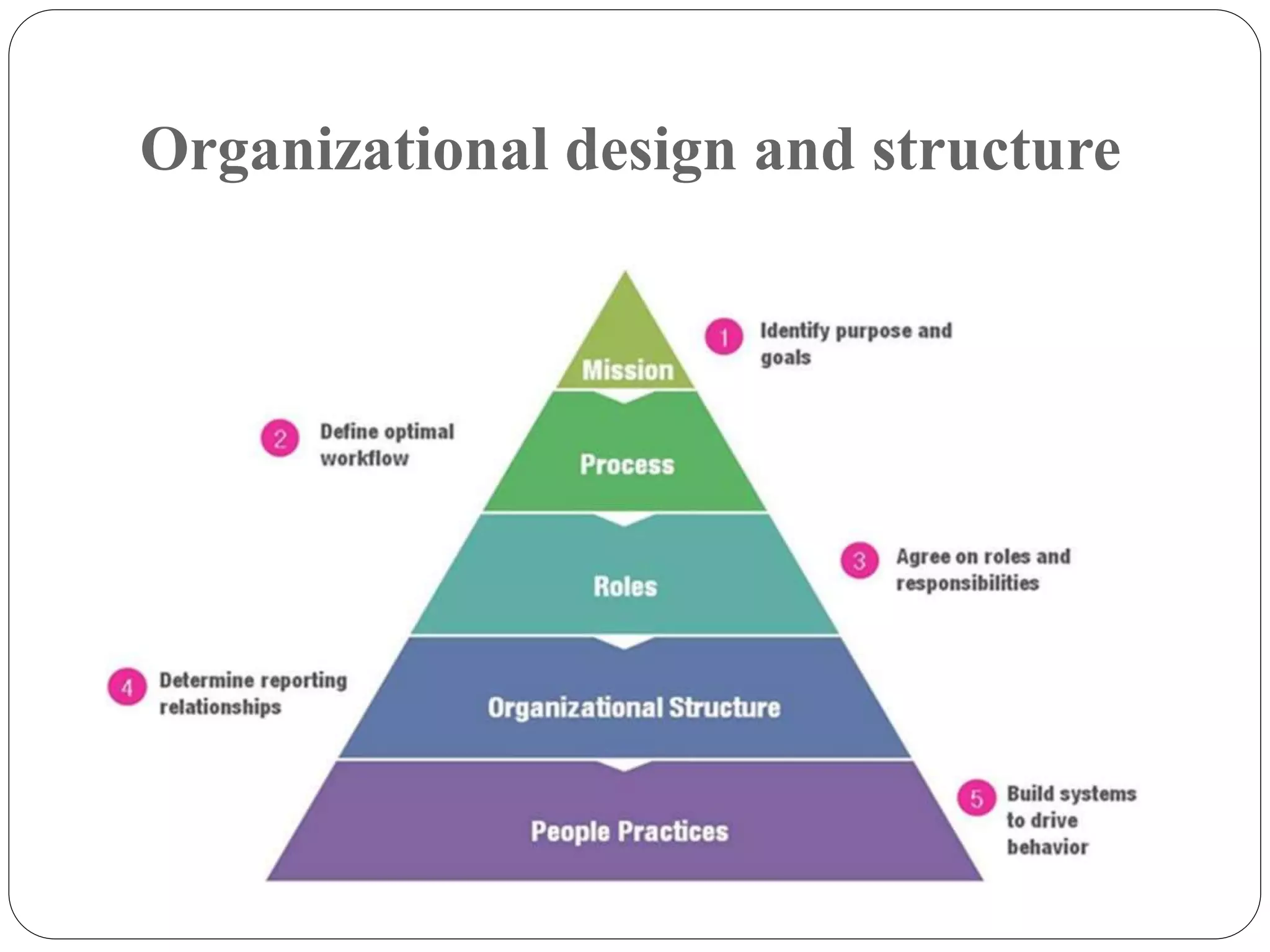
Organizational design and structure
Different types of organizational
design :
 The six most common approaches
to organizational design include simple,
functional, divisional, matrix, team and
network designs. A company will choose
their organizational structure based on their
needs.
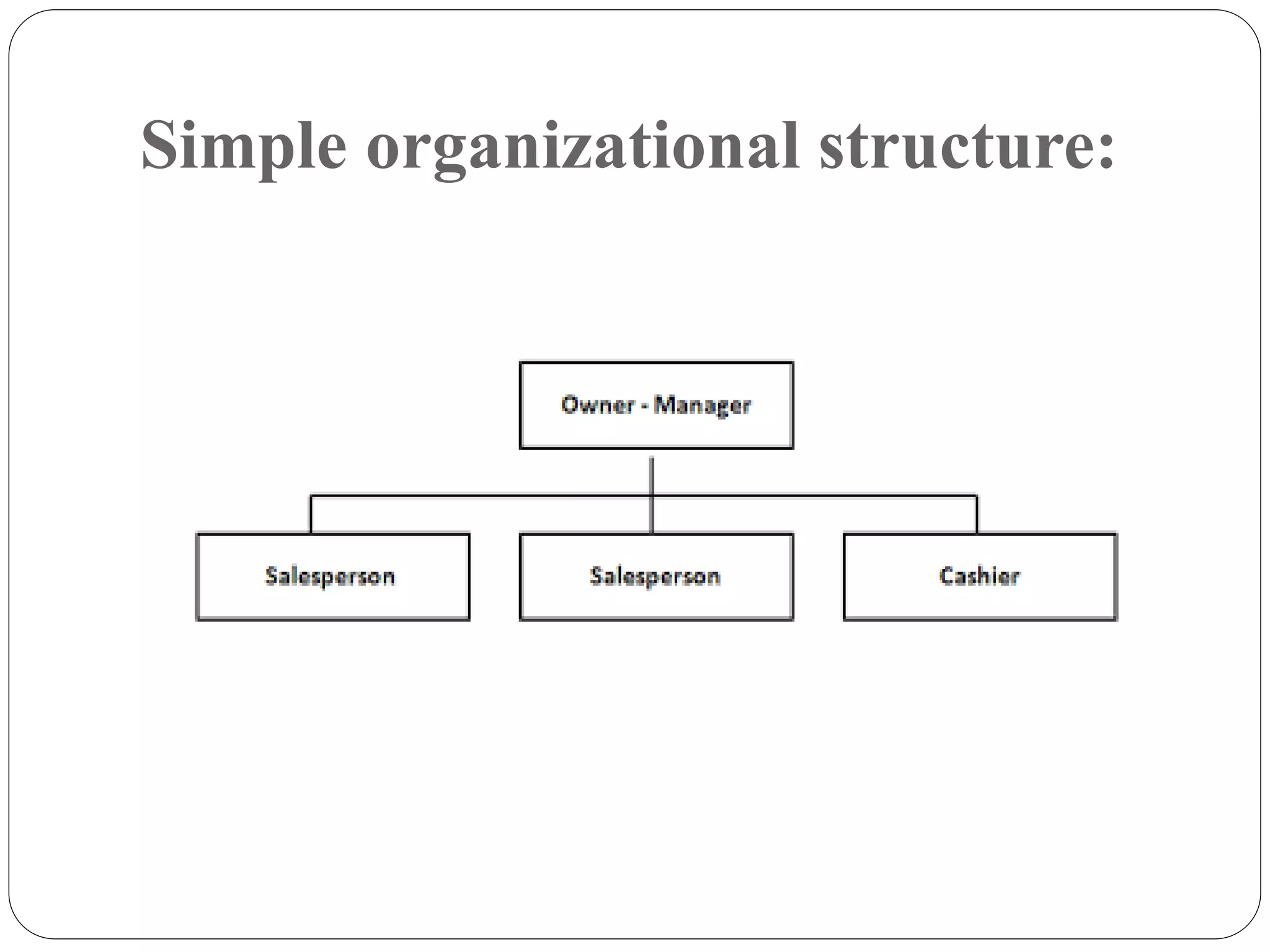
Simple organizational structure:
Functional organizational structure :
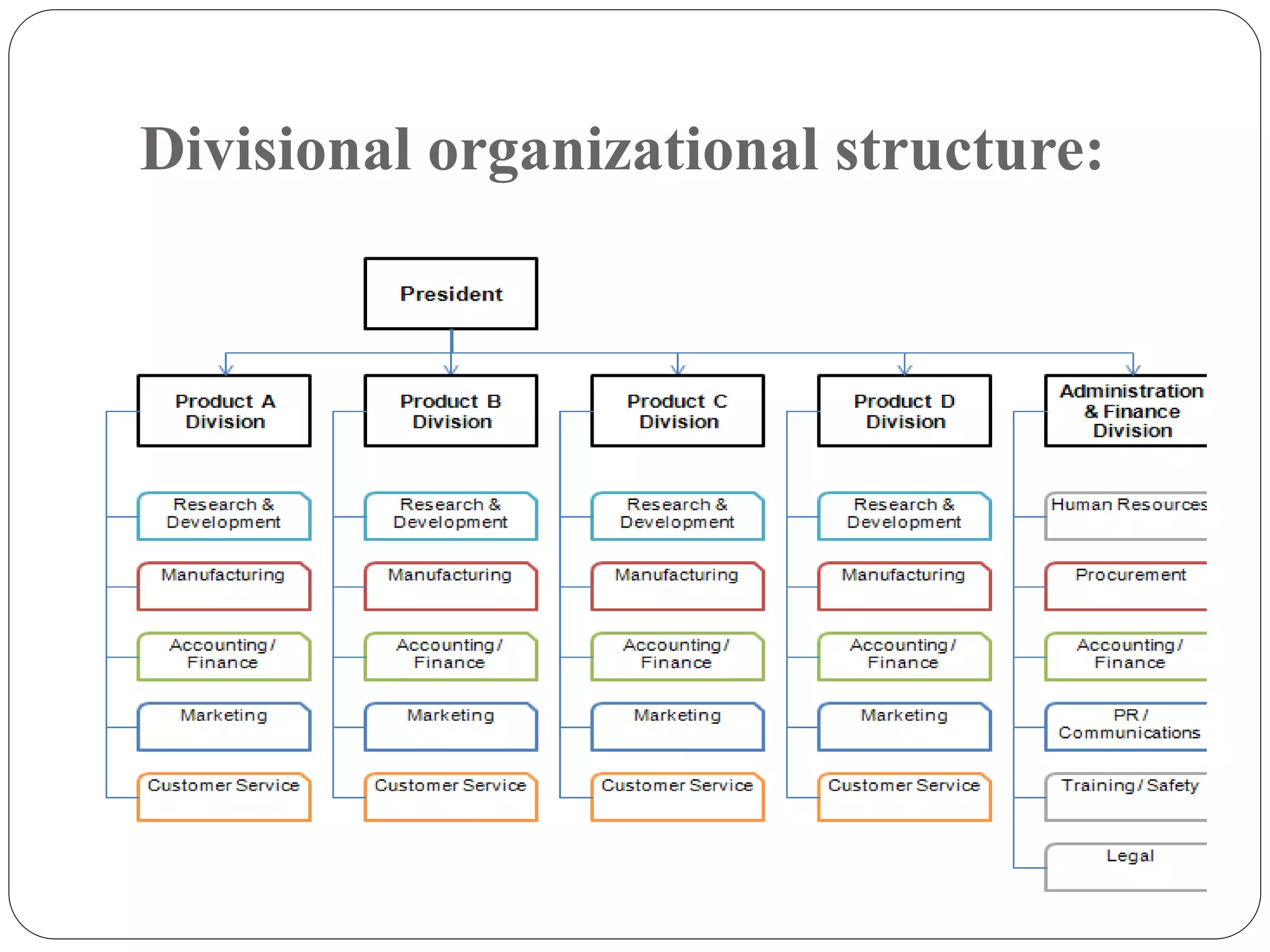
Divisional organizational structure:
Matrix organizational structure:
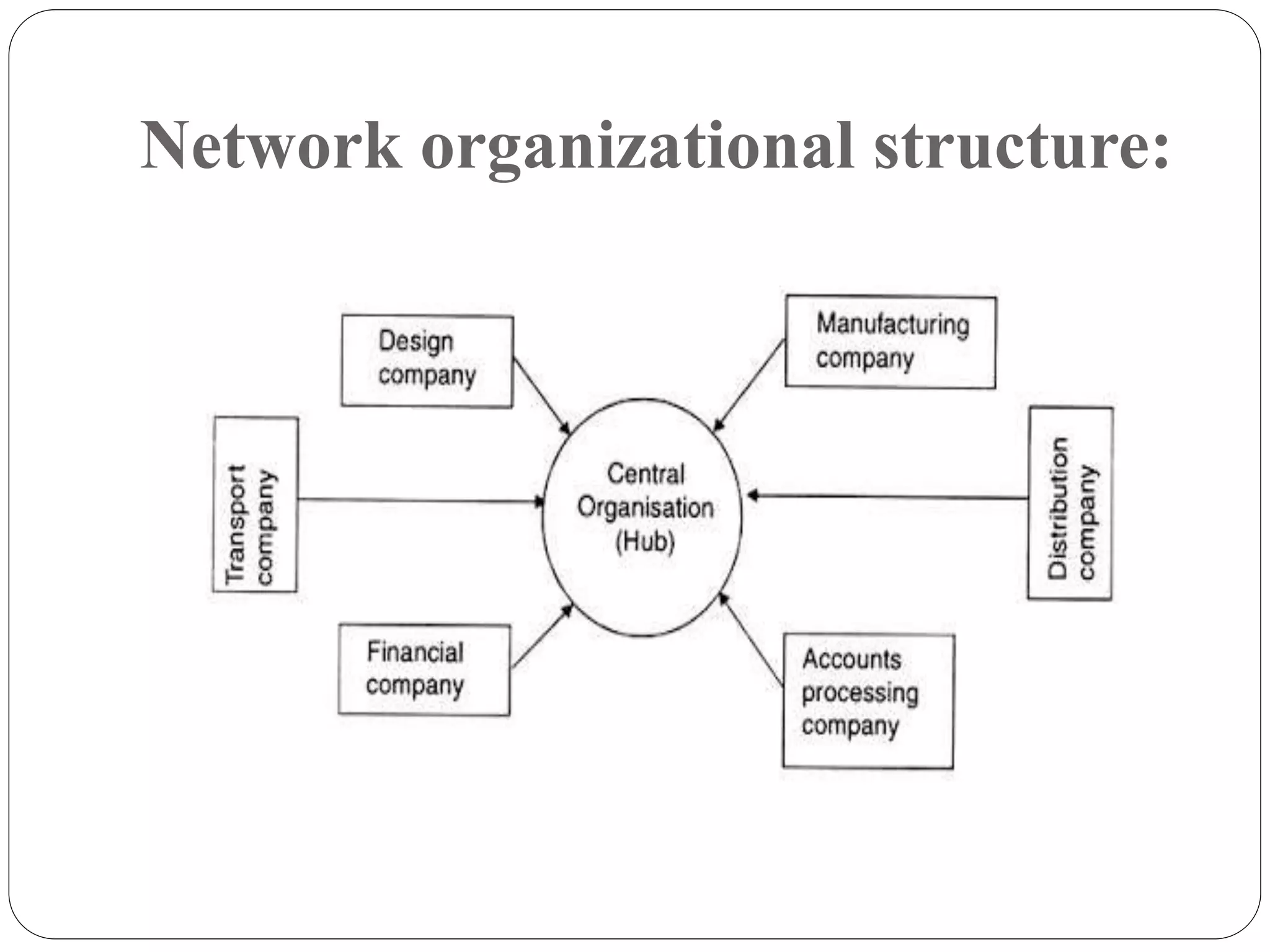
Network organizational structure:
Failures of organizational design :
 Not knowing what you are trying to achieve.
 Structuring an organization for specific personnel.
 Causing more disruption than needed.
 Making decisions and/or having sidebar agreements outside of
the agreed-upon process.
 Skipping current state assessment.
 Breaking the circle of confidentiality.
 Bypassing a formal change management and communications
plan.
Success of organizational design:
 Clarity in reporting relationships.
 Better information flows .
 Quick decision-making.
 Increasing operational efficiency.
 Growth opportunities than more loosely designed
companies.
 Facilitates quick adaptability to gain competitive
advantages.
 High-performing employees.
THANK YOU

Success and failure of organisational design

  • 1.
    SUCCESS AND FAILUREOF ORGANISATIONAL DESIGN  SUBJECT: ORGANISATIONAL DESIGN  NAME: R. SAKTHIMANOJ  SECTION: “B”  REGISTRATION NO: RA1952001020108
  • 2.
    Organizational Design  Organizationaldesign is a step-by-step methodology which identifies dysfunctional aspects of work flow, procedures, structures and systems, realigns them to fit current business realities/goals and then develops plans to implement the new changes. ... A clear strategy for managing and growing your business.
  • 3.
  • 4.
    Different types oforganizational design :  The six most common approaches to organizational design include simple, functional, divisional, matrix, team and network designs. A company will choose their organizational structure based on their needs.
  • 5.
  • 6.
  • 7.
  • 8.
  • 9.
  • 10.
    Failures of organizationaldesign :  Not knowing what you are trying to achieve.  Structuring an organization for specific personnel.  Causing more disruption than needed.  Making decisions and/or having sidebar agreements outside of the agreed-upon process.  Skipping current state assessment.  Breaking the circle of confidentiality.  Bypassing a formal change management and communications plan.
  • 11.
    Success of organizationaldesign:  Clarity in reporting relationships.  Better information flows .  Quick decision-making.  Increasing operational efficiency.  Growth opportunities than more loosely designed companies.  Facilitates quick adaptability to gain competitive advantages.  High-performing employees.
  • 12.