SUBJECTIVE DATA
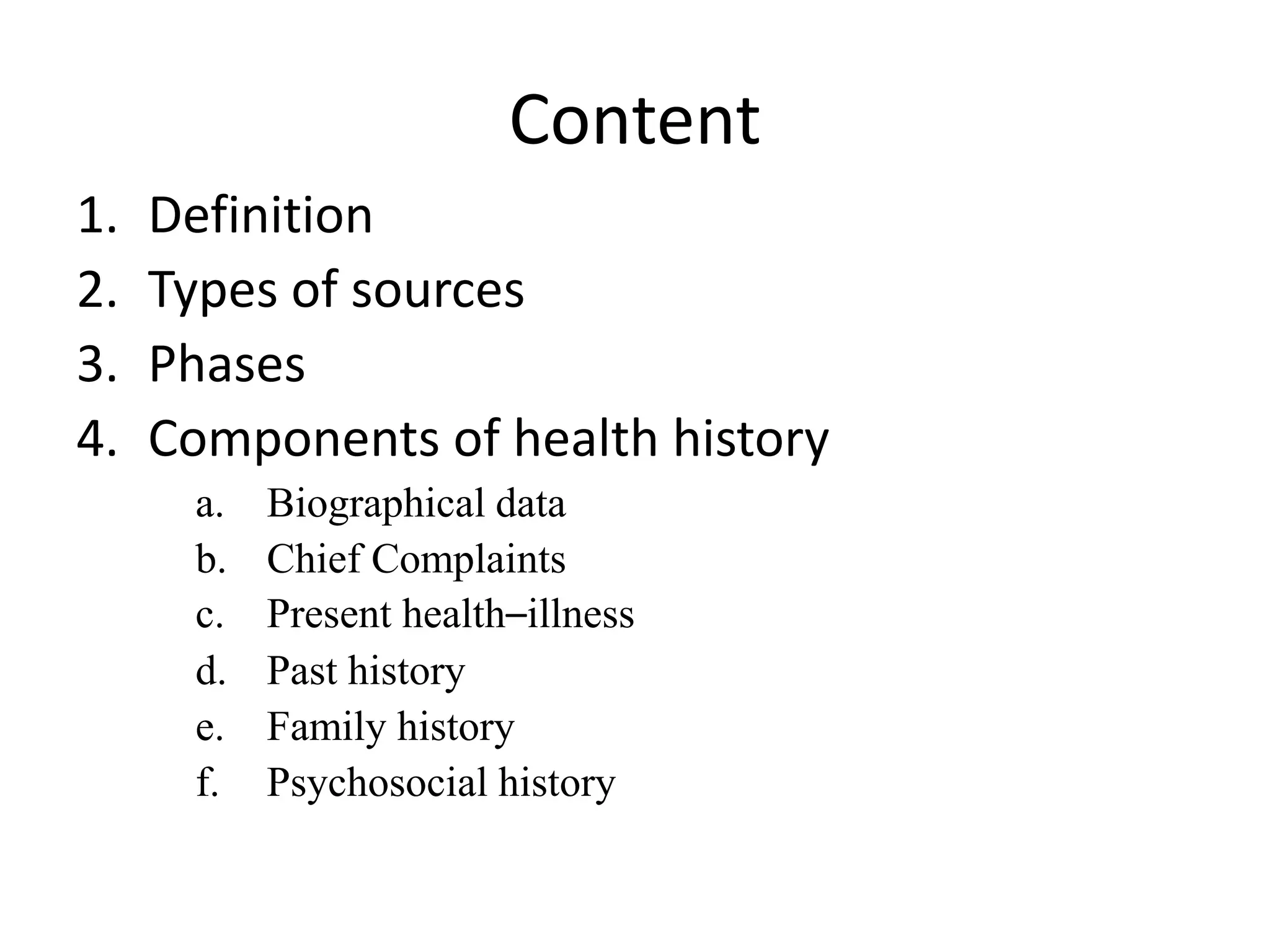
Content
1. Definition
2. Types of sources
3. Phases
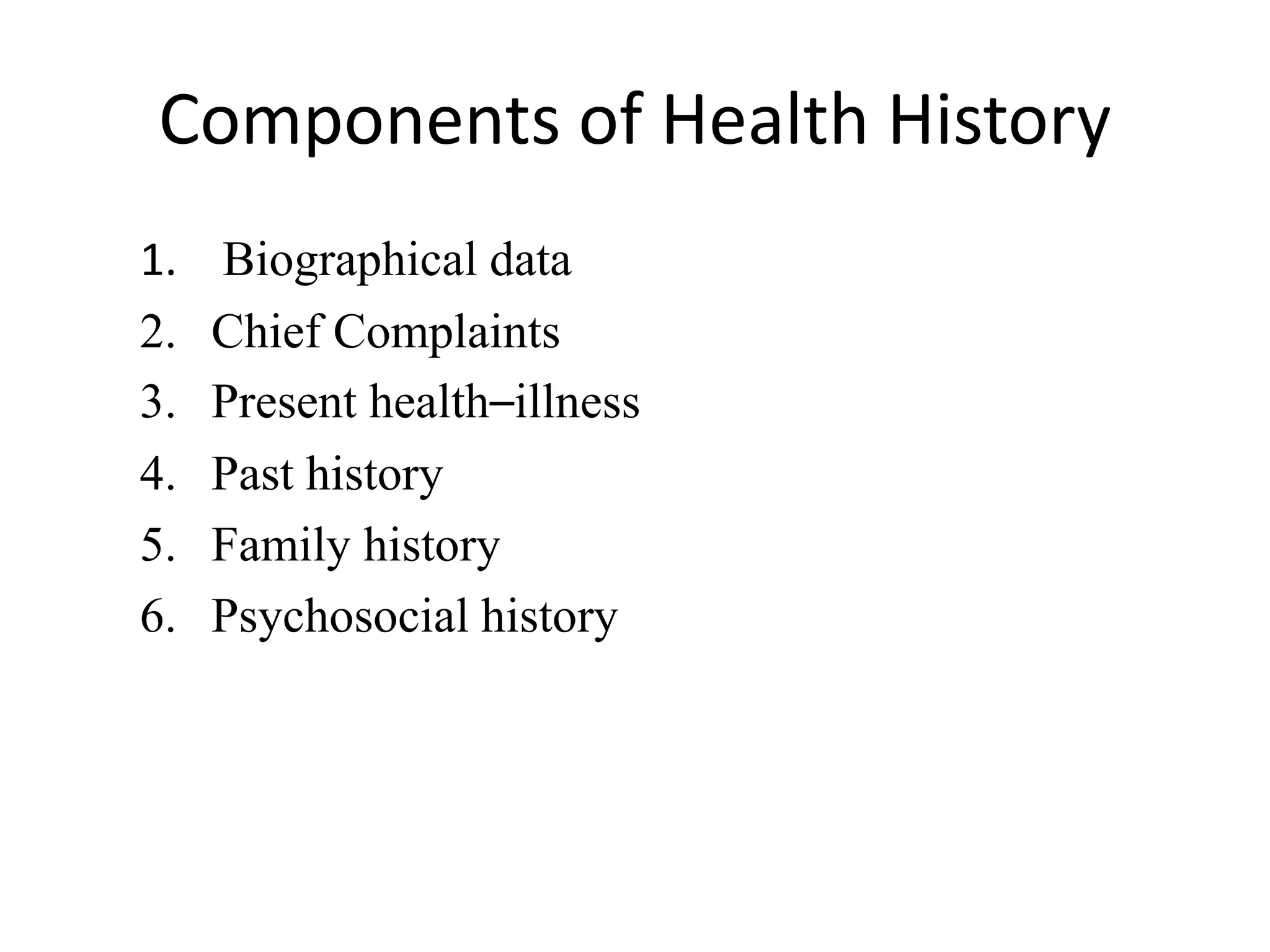
4. Components of health history
a. Biographical data
b. Chief Complaints
c. Present health–illness
d. Past history
e. Family history
f. Psychosocial history
Definition
Health History: Important and relevant
information given by the patient and/or
patient family or significant other about the
patient’s current and past history for the
purpose of creating a health care plan
pathway for the patient
This makes up the subjective data
SUBJECTIVE DATA
Health information collected from the
patient, family, Nurse and Patient’s previous
Medical health records.
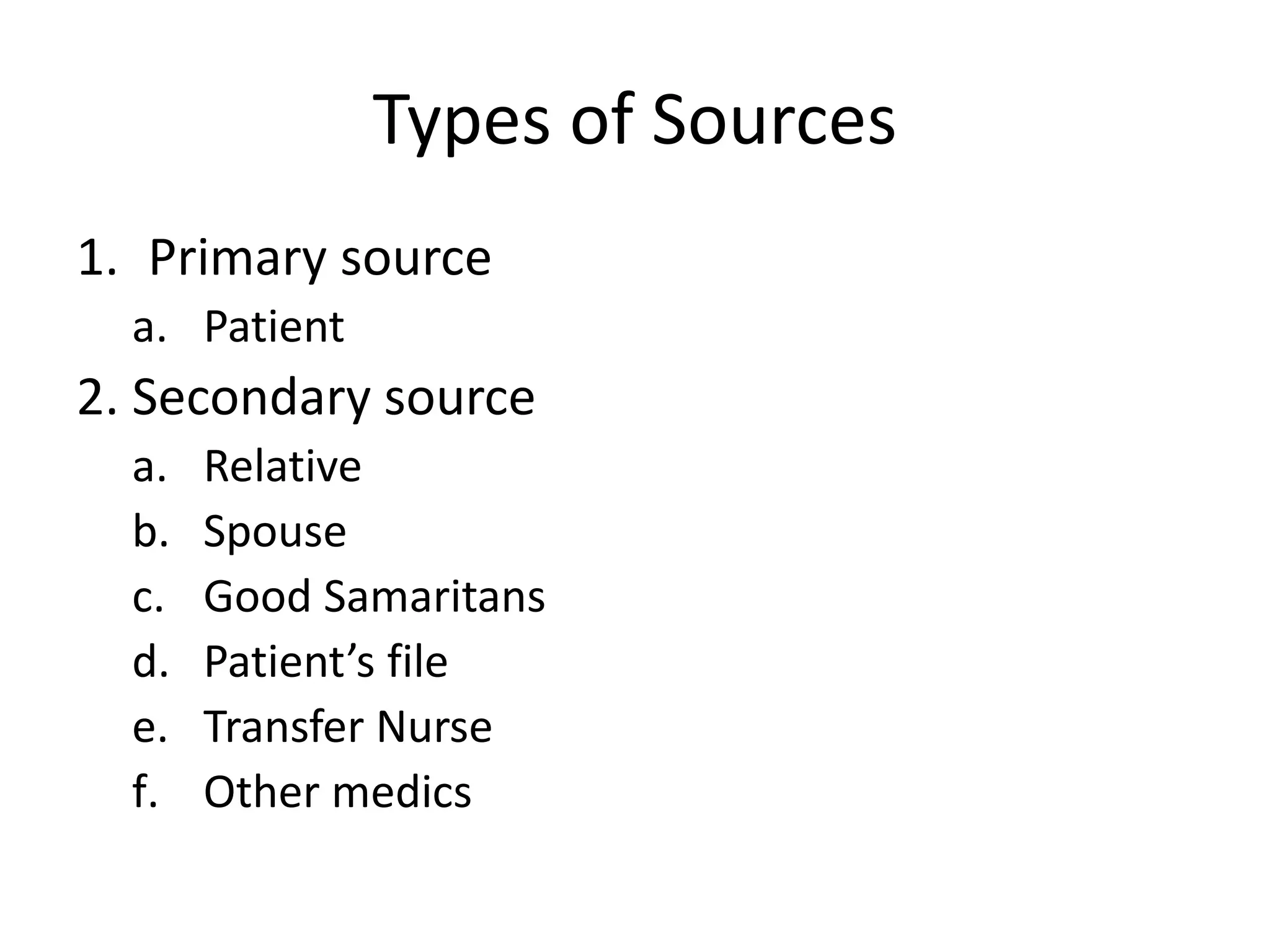
Types of Sources
1. Primary source
a. Patient
2. Secondary source
a. Relative
b. Spouse
c. Good Samaritans
d. Patient’s file
e. Transfer Nurse
f. Other medics
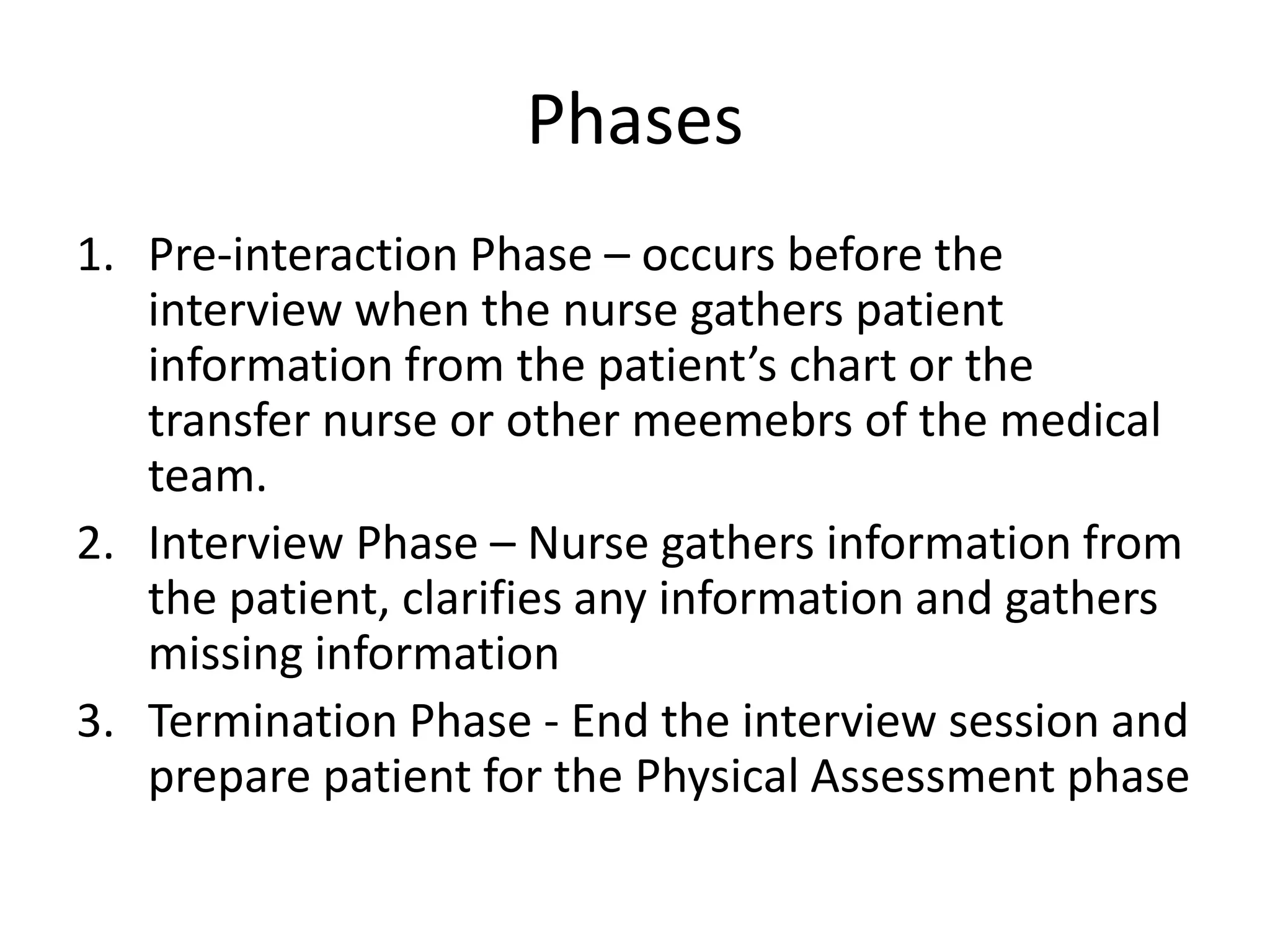
Phases
1. Pre-interaction Phase – occurs before the
interview when the nurse gathers patient
information from the patient’s chart or the
transfer nurse or other meemebrs of the medical
team.
2. Interview Phase – Nurse gathers information from
the patient, clarifies any information and gathers
missing information
3. Termination Phase - End the interview session and
prepare patient for the Physical Assessment phase
Components of Health History
1. Biographical data
2. Chief Complaints
3. Present health–illness
4. Past history
5. Family history
6. Psychosocial history
1. Biographical Data
Specific information that identifies the patient
Example
Name, Age, Date of birth, Address, Place of
birth, Gender, Marital Status, Ethinic/Culture,
Religion/Spirituality, Occupation, Source of
Health Insurance
Note the source and reliability of the
information
Name: Kutus Sagana Kirinyaga
Age: 30
Date of birth: October 2nd 2018
Address: P.O. BOX 123 Mount Kenya
Place of birth: Nyeri, Kenya
Gender: female
Marital Status: Married
Ethinic/Culture: Gikuyu
Religion/Spirituality: PCEA
Occupation: Nurse
Source of Health Insurance: NHIF
Reliability of information: Very reliable
2. Chief Complain
The main reason(s) that has made the patient
seek medical attention
Eg. ‘I am shaking like a leaf then I sweat like a
pig, then my head hits me like a hammer and I
hear a bell ringing in my ear’
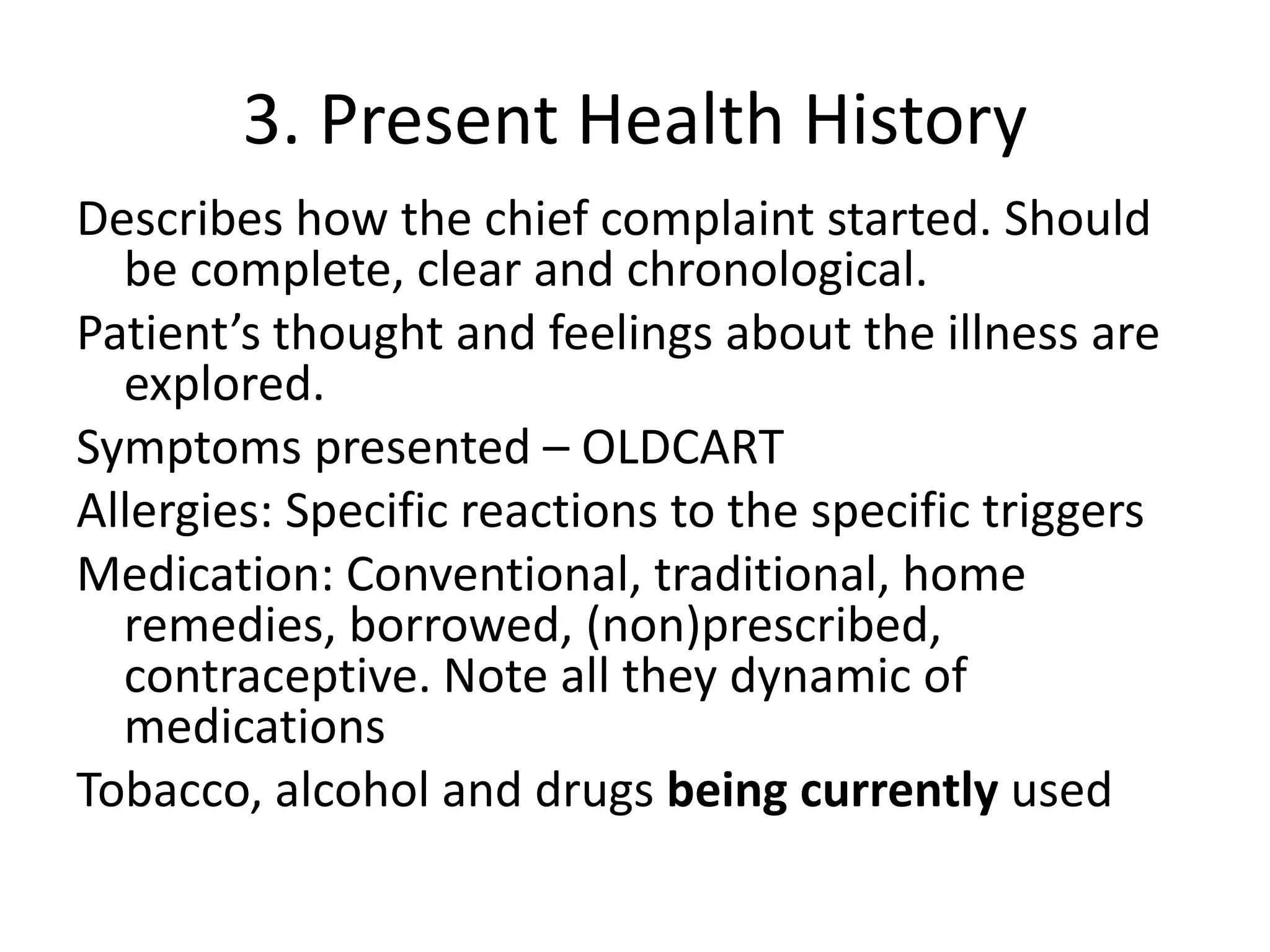
3. Present Health History
Describes how the chief complaint started. Should
be complete, clear and chronological.
Patient’s thought and feelings about the illness are
explored.
Symptoms presented – OLDCART
Allergies: Specific reactions to the specific triggers
Medication: Conventional, traditional, home
remedies, borrowed, (non)prescribed,
contraceptive. Note all they dynamic of
medications
Tobacco, alcohol and drugs being currently used
4. Past History
1. Childhood illness: Chronic illness,
immunizations
2. Adult illness:
a. Medical-Screening tests done( pap smear,
mammograms), Disease and conditions,
Prevailing lifestyle illnesses, blood
transfusion, Admissions, Sexual partenre
b. Surgical – Dates, indications, diagnois after
surgery, type of operations, (un)healed scars
c. Obstetrics and Gynecological history –
Menstrual history (Menarche, flow, frequency,
days of flow, menopause), Contraceptives,
Sexual function, Number of pregnancies,
Number of children(alive or causes of death)
d. Psychiatric – Dates, diagnosis, Admission and
treatments
e. Allergies – Include those that patient has out
grown
f. Substance use – Even if not presently using it.
5. Family History
Age and health/causes of death of relatives like
children, siblings, parents, grandparents,
grandchildren and any other significant
member.
Ask for lifestyle diseases like DM, HPTN, lung
diseases, kidney diseases, TB, Mental illness,
suicide, substance use, allergies and
alternative lifestyles
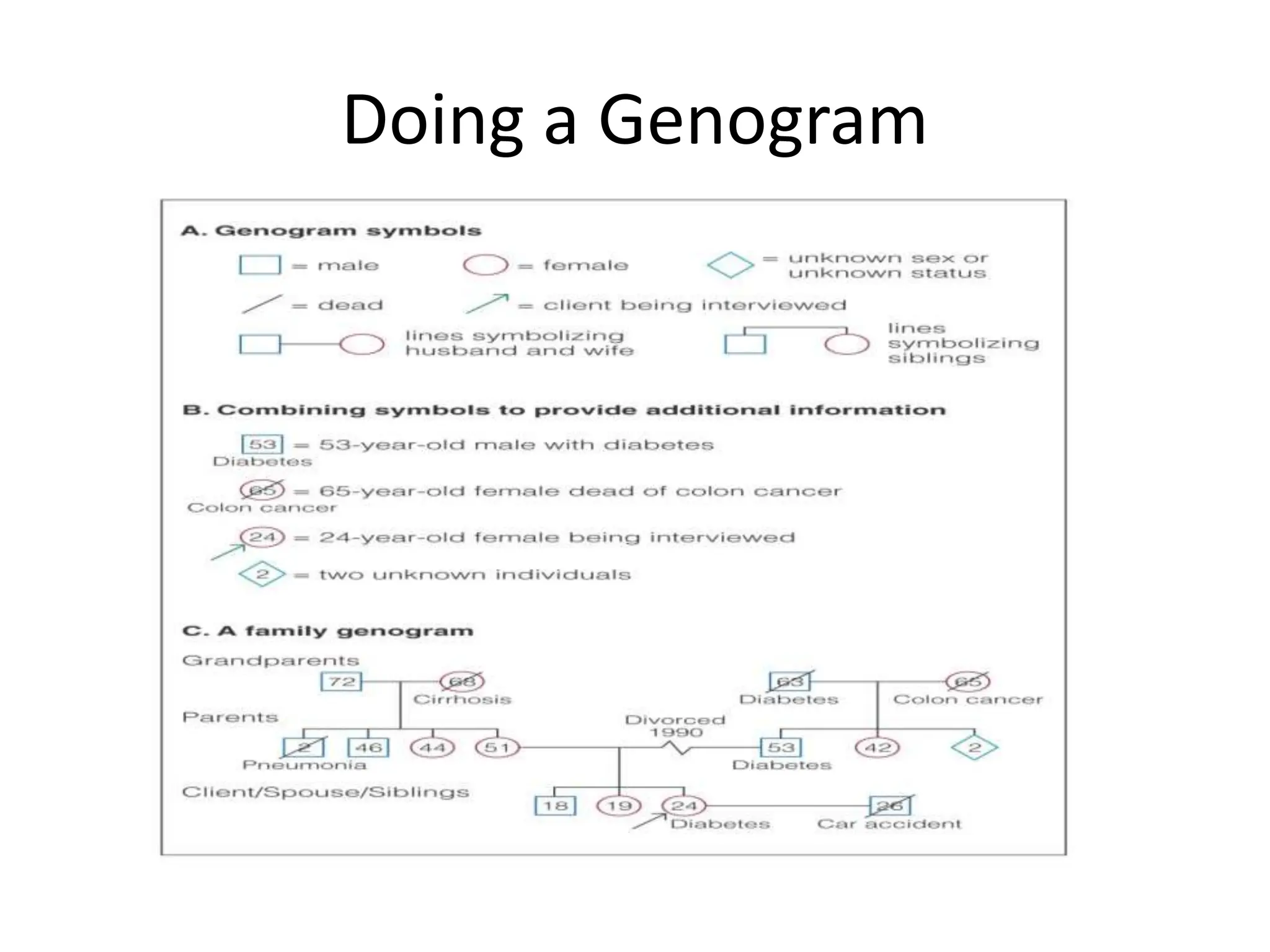
Doing a Genogram
6. Personal and Social History
Patient’s personality and interests
Sources of support
Coping style
Fears
Strengths and weakness
Sources of support
Occupation
Education
Activities of daily living
Leisure activities
Lifestyle habits that promote/risk health
Safety measures
Alternative healthcare practices
Roles and relationships
Self Concept – How does the patient feel about
themselves and where they are in their lives
NB: Some information can be gathered as you
move on with the assessment
Subjective
Data
Biographical
Information
Chief
ccomplaint
Present
Health
Histroy
Past Health
History
Family
History
Psychosocial
History
Termination Phase
• Terminate the history taking session and
prepare patient for either Head to Toe
assessment or systematic assessment
Referrences

SUBJECTIVE DATA IN HEALTHCARE ASSESSMENT

  • 1.
  • 2.
    Content 1. Definition 2. Typesof sources 3. Phases 4. Components of health history a. Biographical data b. Chief Complaints c. Present health–illness d. Past history e. Family history f. Psychosocial history
  • 3.
    Definition Health History: Importantand relevant information given by the patient and/or patient family or significant other about the patient’s current and past history for the purpose of creating a health care plan pathway for the patient This makes up the subjective data
  • 4.
    SUBJECTIVE DATA Health informationcollected from the patient, family, Nurse and Patient’s previous Medical health records.
  • 5.
    Types of Sources 1.Primary source a. Patient 2. Secondary source a. Relative b. Spouse c. Good Samaritans d. Patient’s file e. Transfer Nurse f. Other medics
  • 6.
    Phases 1. Pre-interaction Phase– occurs before the interview when the nurse gathers patient information from the patient’s chart or the transfer nurse or other meemebrs of the medical team. 2. Interview Phase – Nurse gathers information from the patient, clarifies any information and gathers missing information 3. Termination Phase - End the interview session and prepare patient for the Physical Assessment phase
  • 7.
    Components of HealthHistory 1. Biographical data 2. Chief Complaints 3. Present health–illness 4. Past history 5. Family history 6. Psychosocial history
  • 8.
    1. Biographical Data Specificinformation that identifies the patient Example Name, Age, Date of birth, Address, Place of birth, Gender, Marital Status, Ethinic/Culture, Religion/Spirituality, Occupation, Source of Health Insurance Note the source and reliability of the information
  • 9.
    Name: Kutus SaganaKirinyaga Age: 30 Date of birth: October 2nd 2018 Address: P.O. BOX 123 Mount Kenya Place of birth: Nyeri, Kenya Gender: female Marital Status: Married Ethinic/Culture: Gikuyu Religion/Spirituality: PCEA Occupation: Nurse Source of Health Insurance: NHIF Reliability of information: Very reliable
  • 10.
    2. Chief Complain Themain reason(s) that has made the patient seek medical attention Eg. ‘I am shaking like a leaf then I sweat like a pig, then my head hits me like a hammer and I hear a bell ringing in my ear’
  • 11.
    3. Present HealthHistory Describes how the chief complaint started. Should be complete, clear and chronological. Patient’s thought and feelings about the illness are explored. Symptoms presented – OLDCART Allergies: Specific reactions to the specific triggers Medication: Conventional, traditional, home remedies, borrowed, (non)prescribed, contraceptive. Note all they dynamic of medications Tobacco, alcohol and drugs being currently used
  • 12.
    4. Past History 1.Childhood illness: Chronic illness, immunizations 2. Adult illness: a. Medical-Screening tests done( pap smear, mammograms), Disease and conditions, Prevailing lifestyle illnesses, blood transfusion, Admissions, Sexual partenre b. Surgical – Dates, indications, diagnois after surgery, type of operations, (un)healed scars
  • 13.
    c. Obstetrics andGynecological history – Menstrual history (Menarche, flow, frequency, days of flow, menopause), Contraceptives, Sexual function, Number of pregnancies, Number of children(alive or causes of death) d. Psychiatric – Dates, diagnosis, Admission and treatments e. Allergies – Include those that patient has out grown f. Substance use – Even if not presently using it.
  • 14.
    5. Family History Ageand health/causes of death of relatives like children, siblings, parents, grandparents, grandchildren and any other significant member. Ask for lifestyle diseases like DM, HPTN, lung diseases, kidney diseases, TB, Mental illness, suicide, substance use, allergies and alternative lifestyles
  • 15.
  • 16.
    6. Personal andSocial History Patient’s personality and interests Sources of support Coping style Fears Strengths and weakness Sources of support Occupation Education
  • 17.
    Activities of dailyliving Leisure activities Lifestyle habits that promote/risk health Safety measures Alternative healthcare practices Roles and relationships Self Concept – How does the patient feel about themselves and where they are in their lives NB: Some information can be gathered as you move on with the assessment
  • 18.
  • 19.
    Termination Phase • Terminatethe history taking session and prepare patient for either Head to Toe assessment or systematic assessment
  • 20.