Student Religious Expression in Public Schools What’s Permissible & What’s Not William Allan Kritsonis, PhD
Student religious expression in public schools Foundation Principles Dissecting Myths Overview of What’s Permissible Overview of What’s Not Untangling “student-initiated”
Issues/Topics: Classrooms Student Clubs Release Time Athletic events Assemblies  Graduation Ceremonies Distribution of Literature Religious Holidays Student Opt-outs: curriculum, garb, holidays Teachers
Key Word: Sponsorship
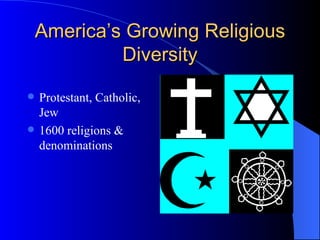
America’s Growing Religious Diversity Protestant, Catholic, Jew 1600 religions & denominations
Buddhism 3-4 Million Americans
Hinduism 1.5-2 Million Americans
Islam 6-8 Million Americans
How Religious Diversity Impacts Schools Different traditions & ways to pray Holidays & observances Sensitivity to course content Attire Dietary needs
Foundation Principles Not the business of government to control, support or influence the kinds of prayer Americans say. Government power & prestige behind religion places indirect pressure on religious minorities to conform to prevailing expressions.
“Government must avoid sending messages to religious minorities that they are outsiders, not full members of the political community, and an accompanying message to adherents that they are insiders, favored members of the political community.” Justice Sandra Day O’Connor
Trust Relationship “Families entrust public schools with the education of their children, but condition their trust on the understanding that the classroom will not be used to advance religious views that conflict with the private beliefs of the student or his or her family” Justice William Brennan
“The place of religion in our society is an exalted one, but it is not the place of the state to interfere with the role of the church, the family, or the inviolable citadel of the human heart and mind.” Justice Tom Clark
Myths Students cannot pray, read Bible Prayer & Bible reading was common prior to Court decisions Bible cannot be studied in school Public schools cannot teach values Teachers cannot discuss religion or acknowledge holidays Lack of religion cause of social ills
Myth: Students cannot pray, read the Bible Fact: Court forbade school ORGANIZED or SPONSORED religion Private expression allowed Moments of silence
Myth: Prayer & Bible reading was common Fact: Only 1/3 of public schools had organized religious exercises before 1962
Myth: Bible cannot be studied in schools Fact: Court forbade only inspirational or devotional study Academic study OK
Myth: Public Schools cannot teach values Fact: Teachers can and do teach common values: honesty, respect, trust, civility, responsibility, etc.
Myth: Teachers cannot acknowledge religion Fact: Religious topics may be discussed when germane Religious themes part of our history, literature & social relationships However, teachers may not use religious references to proselytize
Myth: Social problems due to lack of school prayer Non sequitur Many causes; no simple solutions
What’s Permissible Individual & private prayer Moments of silence Student-initiated religious clubs (secondary) Distribution of religious literature Student selected assignments/projects Teach “about” religion
What’s Not Rule: School sponsored, directed, controlled or encouraged religious exercises Teacher-led prayer or Bible reading Teacher/administrator participating with students Turning over classrooms to students or outsiders Prayer/Bible reading over public address system Prayer/Bible reading at assemblies, concerts, athletic events, other official activities Presentations or distributions by outsiders
Quandary: “Student-Led” Must be truly student-controlled or student autonomy Not “student-led” if part of school sponsored or controlled activity Student votes
Classrooms Assignments Art - work ,  projects Student presentations Teacher discussions Teach “about” religions Moments of silence
Student Clubs Equal Access Act (1984) (secondary) Student-initiated & led Before or after classes Non-curriculum related Similar access to facilities, recognition Teachers monitor, not participate Good News Club
Release Time School-day religious instruction Off-campus Meaningful alternatives Good News Club  complication
Athletic Events School controlled and directed activities Student-led prayer not  permitted Coach-led prayer not  permitted Team   prayers  ?
Assemblies School organized, controlled events Outsider access prohibited Student speech Public Forum – “Equal Treatment?”
Graduation Prayer Clergy prayer  not  permitted Student led for prayer  not  permitted Student votes Deep   South  exception Baccalaureates
Student Distributions Same rules as govern non-religious items Schools may impose reasonable time, place & manner limits Offensive material
Religious Holidays Observances – OK Celebrations – NOT OK Teaching opportunities Carols, sacred music
Student Opt-Outs Religious holidays & attend services “ Offensive” course material Religious garb Prayer time?
Evolution Teaching evolution permissible “ Equal time” for creation science or “intelligent design”  not  permitted
Ten Commandments Posting of Ten Commandments in schools  not  permitted May be used in academic study
Teacher Religious Expression Limited Opportunities (Public Employees) Not use classroom to share faith Not participate in student religious activities
Partnerships Church members may volunteer to tutor, mentor in schools Not for proselytizing
Contacts American Jewish Congress  212-360-1545 Americans United  202-466-3234 ADL  212-885-7733 Baptist Joint Committee  202-544-4226 Christian Legal Society  703-642-1070 First Amend. Center  703-284-2859 PTA  202-289-6790
 

Students Rights - Dr. William Allan Kritsonis

  • 1.
    Student Religious Expressionin Public Schools What’s Permissible & What’s Not William Allan Kritsonis, PhD
  • 2.
    Student religious expressionin public schools Foundation Principles Dissecting Myths Overview of What’s Permissible Overview of What’s Not Untangling “student-initiated”
  • 3.
    Issues/Topics: Classrooms StudentClubs Release Time Athletic events Assemblies Graduation Ceremonies Distribution of Literature Religious Holidays Student Opt-outs: curriculum, garb, holidays Teachers
  • 4.
  • 5.
    America’s Growing ReligiousDiversity Protestant, Catholic, Jew 1600 religions & denominations
  • 6.
  • 7.
  • 8.
  • 9.
    How Religious DiversityImpacts Schools Different traditions & ways to pray Holidays & observances Sensitivity to course content Attire Dietary needs
  • 10.
    Foundation Principles Notthe business of government to control, support or influence the kinds of prayer Americans say. Government power & prestige behind religion places indirect pressure on religious minorities to conform to prevailing expressions.
  • 11.
    “Government must avoidsending messages to religious minorities that they are outsiders, not full members of the political community, and an accompanying message to adherents that they are insiders, favored members of the political community.” Justice Sandra Day O’Connor
  • 12.
    Trust Relationship “Familiesentrust public schools with the education of their children, but condition their trust on the understanding that the classroom will not be used to advance religious views that conflict with the private beliefs of the student or his or her family” Justice William Brennan
  • 13.
    “The place ofreligion in our society is an exalted one, but it is not the place of the state to interfere with the role of the church, the family, or the inviolable citadel of the human heart and mind.” Justice Tom Clark
  • 14.
    Myths Students cannotpray, read Bible Prayer & Bible reading was common prior to Court decisions Bible cannot be studied in school Public schools cannot teach values Teachers cannot discuss religion or acknowledge holidays Lack of religion cause of social ills
  • 15.
    Myth: Students cannotpray, read the Bible Fact: Court forbade school ORGANIZED or SPONSORED religion Private expression allowed Moments of silence
  • 16.
    Myth: Prayer &Bible reading was common Fact: Only 1/3 of public schools had organized religious exercises before 1962
  • 17.
    Myth: Bible cannotbe studied in schools Fact: Court forbade only inspirational or devotional study Academic study OK
  • 18.
    Myth: Public Schoolscannot teach values Fact: Teachers can and do teach common values: honesty, respect, trust, civility, responsibility, etc.
  • 19.
    Myth: Teachers cannotacknowledge religion Fact: Religious topics may be discussed when germane Religious themes part of our history, literature & social relationships However, teachers may not use religious references to proselytize
  • 20.
    Myth: Social problemsdue to lack of school prayer Non sequitur Many causes; no simple solutions
  • 21.
    What’s Permissible Individual& private prayer Moments of silence Student-initiated religious clubs (secondary) Distribution of religious literature Student selected assignments/projects Teach “about” religion
  • 22.
    What’s Not Rule:School sponsored, directed, controlled or encouraged religious exercises Teacher-led prayer or Bible reading Teacher/administrator participating with students Turning over classrooms to students or outsiders Prayer/Bible reading over public address system Prayer/Bible reading at assemblies, concerts, athletic events, other official activities Presentations or distributions by outsiders
  • 23.
    Quandary: “Student-Led” Mustbe truly student-controlled or student autonomy Not “student-led” if part of school sponsored or controlled activity Student votes
  • 24.
    Classrooms Assignments Art- work , projects Student presentations Teacher discussions Teach “about” religions Moments of silence
  • 25.
    Student Clubs EqualAccess Act (1984) (secondary) Student-initiated & led Before or after classes Non-curriculum related Similar access to facilities, recognition Teachers monitor, not participate Good News Club
  • 26.
    Release Time School-dayreligious instruction Off-campus Meaningful alternatives Good News Club complication
  • 27.
    Athletic Events Schoolcontrolled and directed activities Student-led prayer not permitted Coach-led prayer not permitted Team prayers ?
  • 28.
    Assemblies School organized,controlled events Outsider access prohibited Student speech Public Forum – “Equal Treatment?”
  • 29.
    Graduation Prayer Clergyprayer not permitted Student led for prayer not permitted Student votes Deep South exception Baccalaureates
  • 30.
    Student Distributions Samerules as govern non-religious items Schools may impose reasonable time, place & manner limits Offensive material
  • 31.
    Religious Holidays Observances– OK Celebrations – NOT OK Teaching opportunities Carols, sacred music
  • 32.
    Student Opt-Outs Religiousholidays & attend services “ Offensive” course material Religious garb Prayer time?
  • 33.
    Evolution Teaching evolutionpermissible “ Equal time” for creation science or “intelligent design” not permitted
  • 34.
    Ten Commandments Postingof Ten Commandments in schools not permitted May be used in academic study
  • 35.
    Teacher Religious ExpressionLimited Opportunities (Public Employees) Not use classroom to share faith Not participate in student religious activities
  • 36.
    Partnerships Church membersmay volunteer to tutor, mentor in schools Not for proselytizing
  • 37.
    Contacts American JewishCongress 212-360-1545 Americans United 202-466-3234 ADL 212-885-7733 Baptist Joint Committee 202-544-4226 Christian Legal Society 703-642-1070 First Amend. Center 703-284-2859 PTA 202-289-6790
  • 38.