STRUCTURES
1. STRENGTH AND
STRUCTURES
 STRENGTH/FORCE: Is all that can deform a
body or modify its state of movement or rest.
 STRUCTURE: is the group of elements of a
body that are bound to support the effects of
the strengths that act over it. The structure
keeps the body from breaking or deforming in
excess.
Structures have to be resistant and stable.
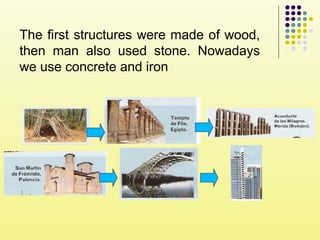
The first structures were made of wood,
then man also used stone. Nowadays
we use concrete and iron
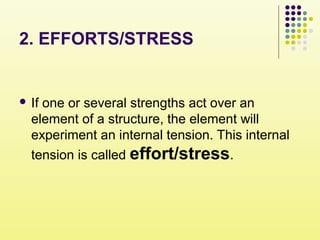
2. EFFORTS/STRESS
 If one or several strengths act over an
element of a structure, the element will
experiment an internal tension. This internal
tension is called effort/stress.
2.1 Different kinds of
EFFORTS/STRESS
 TRACTION/TENSILE
 COMPRESSION
 FLEXION/BENDING
 TORSION
 CUT/SHEAR
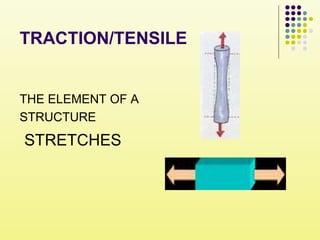
TRACTION/TENSILE
THE ELEMENT OF A
STRUCTURE
STRETCHES
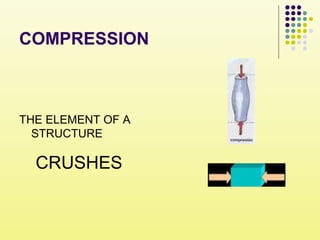
COMPRESSION
THE ELEMENT OF A
STRUCTURE
CRUSHES
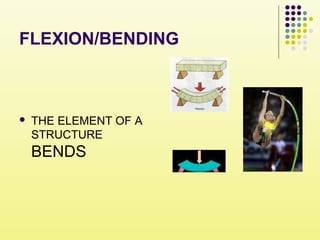
FLEXION/BENDING
 THE ELEMENT OF A
STRUCTURE
BENDS
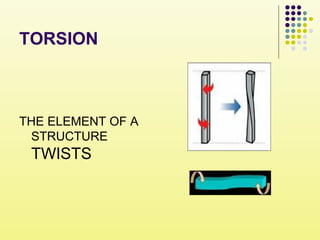
TORSION
THE ELEMENT OF A
STRUCTURE
TWISTS
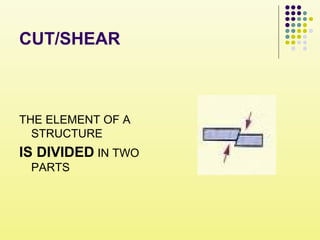
CUT/SHEAR
THE ELEMENT OF A
STRUCTURE
IS DIVIDED IN TWO
PARTS
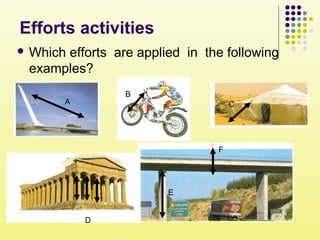
Efforts activities
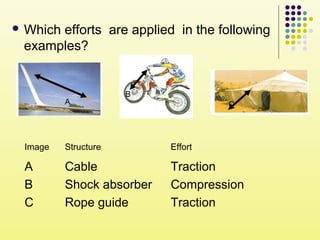
 Which efforts are applied in the following
examples?
A
B
C
D
E
F
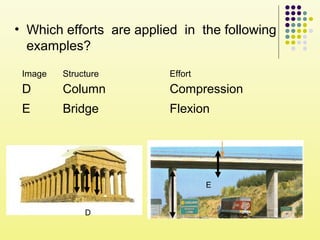
 Which efforts are applied in the following
examples?
A
B
C
Image Structure Effort
A Cable Traction
B Shock absorber Compression
C Rope guide Traction
D
E
Image Structure Effort
D Column Compression
E Bridge Flexion
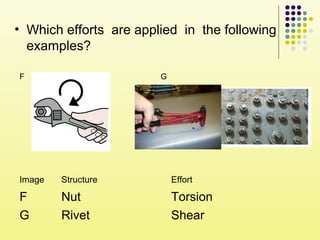
• Which efforts are applied in the following
examples?
Image Structure Effort
F Nut Torsion
G Rivet Shear
F G
• Which efforts are applied in the following
examples?
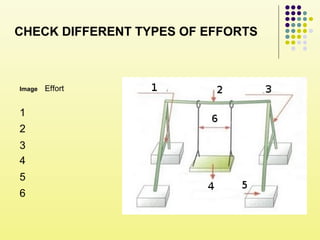
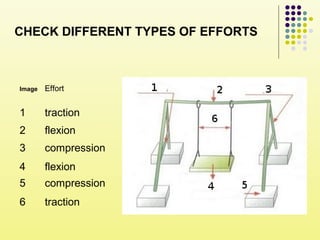
CHECK DIFFERENT TYPES OF EFFORTS
Image Effort
1
2
3
4
5
6
CHECK DIFFERENT TYPES OF EFFORTS
Image Effort
1 traction
2 flexion
3 compression
4 flexion
5 compression
6 traction
Structural Conditions
 Stability: the capacity of a structure to remain
upright and not tip over.
 Resistance: the capacity of a structure to bear
the tensions that it is subjected to without
breaking.
 Rigidity: relative stiffness of a material that
allows it to resist bending, stretching, twisting or
other deformation under a load.
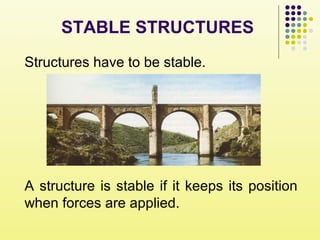
STABLE STRUCTURES
Structures have to be stable.
A structure is stable if it keeps its position
when forces are applied.
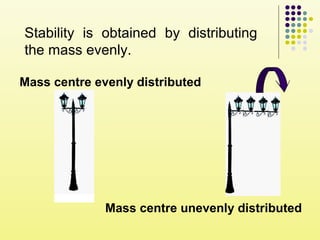
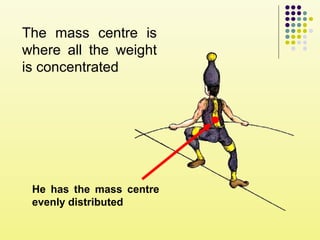
Stability is obtained by distributing
the mass evenly.
Mass centre evenly distributed
Mass centre unevenly distributed
The mass centre is
where all the weight
is concentrated
He has the mass centre
evenly distributed
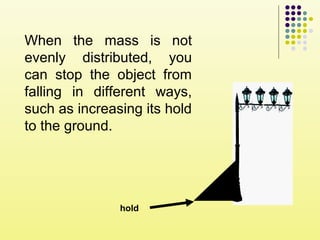
When the mass is not
evenly distributed, you
can stop the object from
falling in different ways,
such as increasing its hold
to the ground.
hold
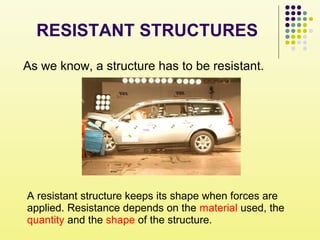
As we know, a structure has to be resistant.
A resistant structure keeps its shape when forces are
applied. Resistance depends on the material used, the
quantity and the shape of the structure.
RESISTANT STRUCTURES
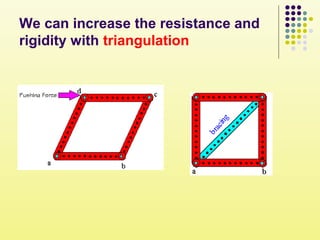
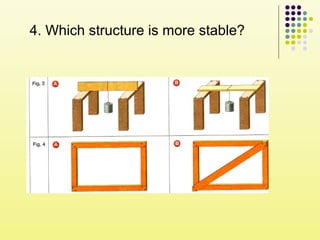
We can increase the resistance and
rigidity with triangulation
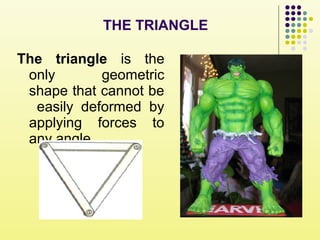
The triangle is the
only geometric
shape that cannot be
easily deformed by
applying forces to
any angle.
THE TRIANGLE
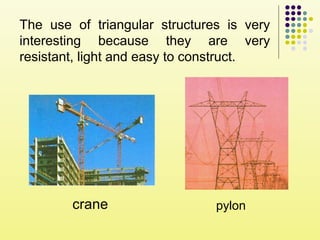
The use of triangular structures is very
interesting because they are very
resistant, light and easy to construct.
crane pylon
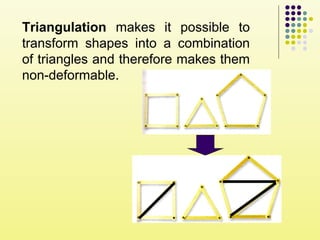
Triangulation makes it possible to
transform shapes into a combination
of triangles and therefore makes them
non-deformable.
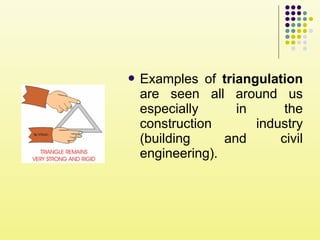
 Examples of triangulation
are seen all around us
especially in the
construction industry
(building and civil
engineering).
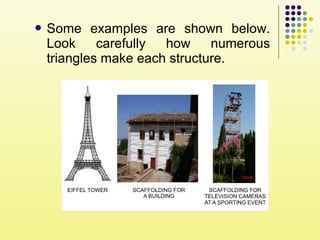
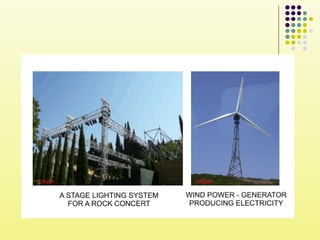
 Some examples are shown below.
Look carefully how numerous
triangles make each structure.
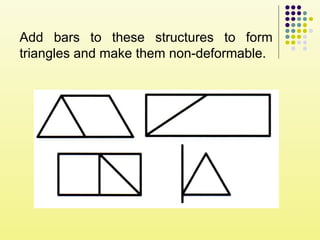
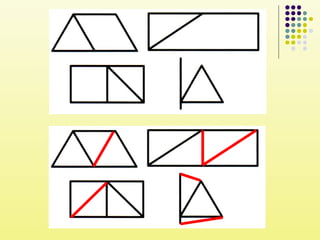
Add bars to these structures to form
triangles and make them non-deformable.
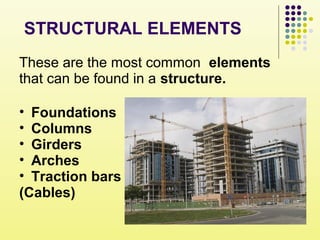
STRUCTURAL ELEMENTS
These are the most common elements
that can be found in a structure.
• Foundations
• Columns
• Girders
• Arches
• Traction bars
(Cables)
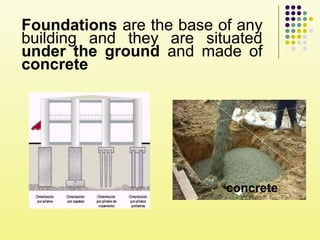
Foundations are the base of any
building and they are situated
under the ground and made of
concrete
concrete
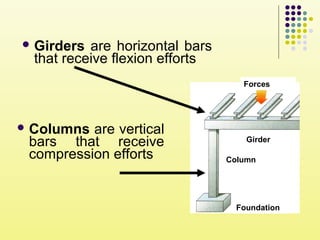
 Girders are horizontal bars
that receive flexion efforts
Foundation
Column
Girder
Forces
 Columns are vertical
bars that receive
compression efforts
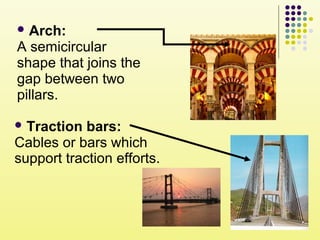
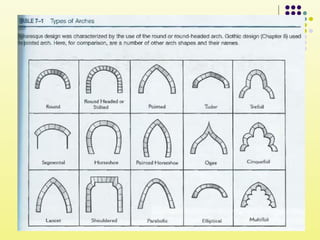
 Arch:
A semicircular
shape that joins the
gap between two
pillars.
 Traction bars:
Cables or bars which
support traction efforts.
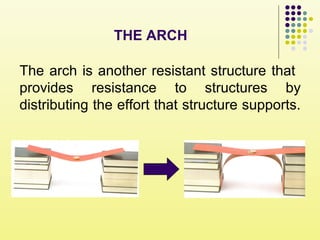
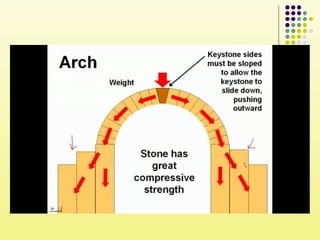
The arch is another resistant structure that
provides resistance to structures by
distributing the effort that structure supports.
THE ARCH
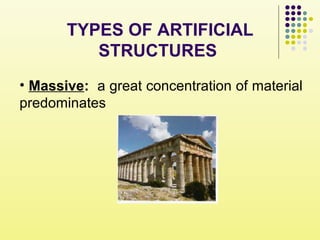
TYPES OF ARTIFICIAL
STRUCTURES
• Massive: a great concentration of material
predominates
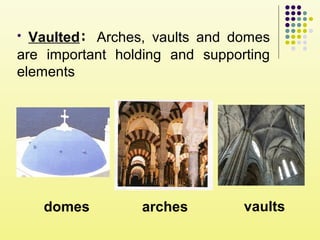
• Vaulted: Arches, vaults and domes
are important holding and supporting
elements
arches vaultsdomes
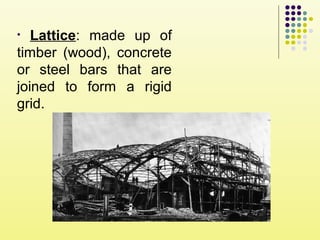
• Lattice: made up of
timber (wood), concrete
or steel bars that are
joined to form a rigid
grid.
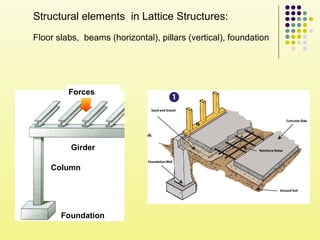
Structural elements in Lattice Structures:
Floor slabs, beams (horizontal), pillars (vertical), foundation
Foundation
Column
Girder
Forces
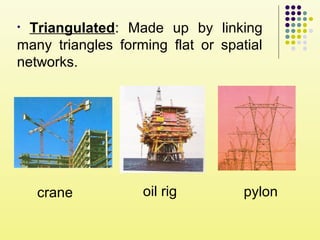
• Triangulated: Made up by linking
many triangles forming flat or spatial
networks.
crane oil rig pylon
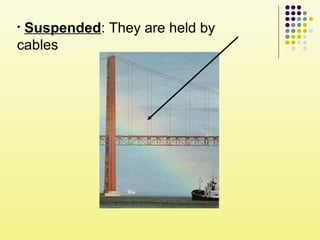
• Suspended: They are held by
cables
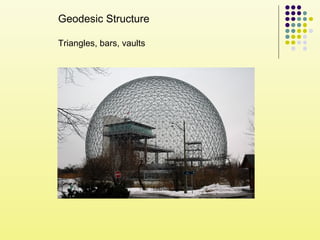
Geodesic Structure
Triangles, bars, vaults
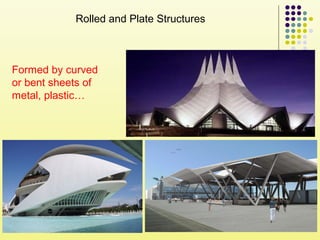
Rolled and Plate Structures
Formed by curved
or bent sheets of
metal, plastic…
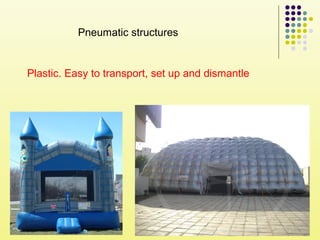
Pneumatic structures
Plastic. Easy to transport, set up and dismantle
REVISION ACTIVITIES
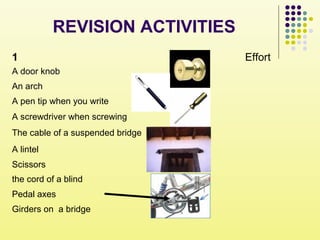
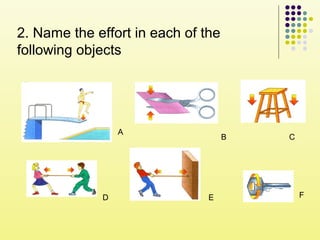
1 Effort
A door knob
An arch
A pen tip when you write
A screwdriver when screwing
The cable of a suspended bridge
A lintel
Scissors
the cord of a blind
Pedal axes
Girders on a bridge
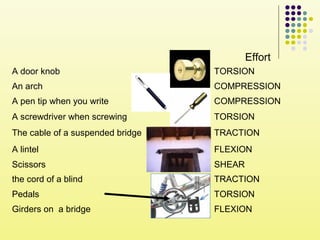
Effort
A door knob TORSION
An arch COMPRESSION
A pen tip when you write COMPRESSION
A screwdriver when screwing TORSION
The cable of a suspended bridge TRACTION
A lintel FLEXION
Scissors SHEAR
the cord of a blind TRACTION
Pedals TORSION
Girders on a bridge FLEXION
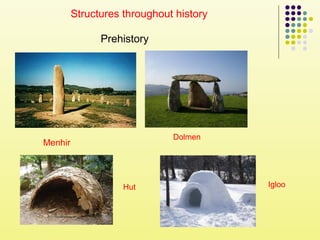
Prehistory
Menhir
Dolmen
Hut Igloo
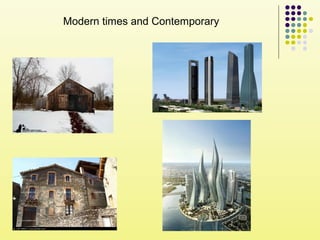
Structures throughout history
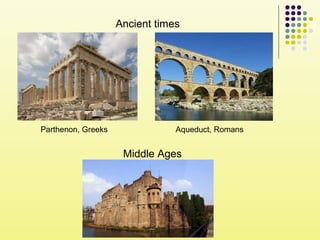
Ancient times
Parthenon, Greeks Aqueduct, Romans
Middle Ages
Modern times and Contemporary
2. Name the effort in each of the
following objects
A
CB
D E F
4. Which structure is more stable?
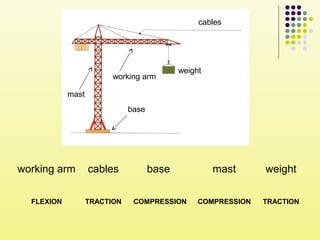
working arm
cables
base
weight
mast
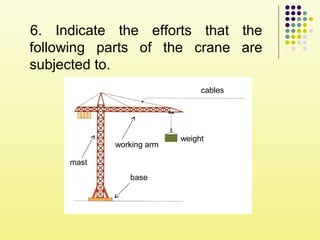
6. Indicate the efforts that the
following parts of the crane are
subjected to.
working arm
cables
base
weight
mast
working arm cables base mast weight
FLEXION TRACTION COMPRESSION COMPRESSION TRACTION
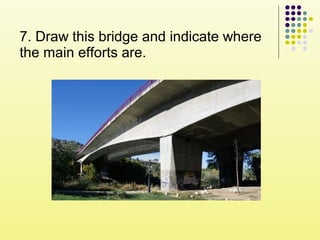
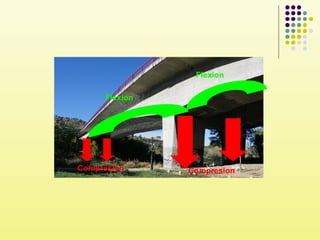
7. Draw this bridge and indicate where
the main efforts are.
Compresion Compresion
Flexion
Flexion

Structures c