STRUCTURAL FAMILY THEORY David Potts
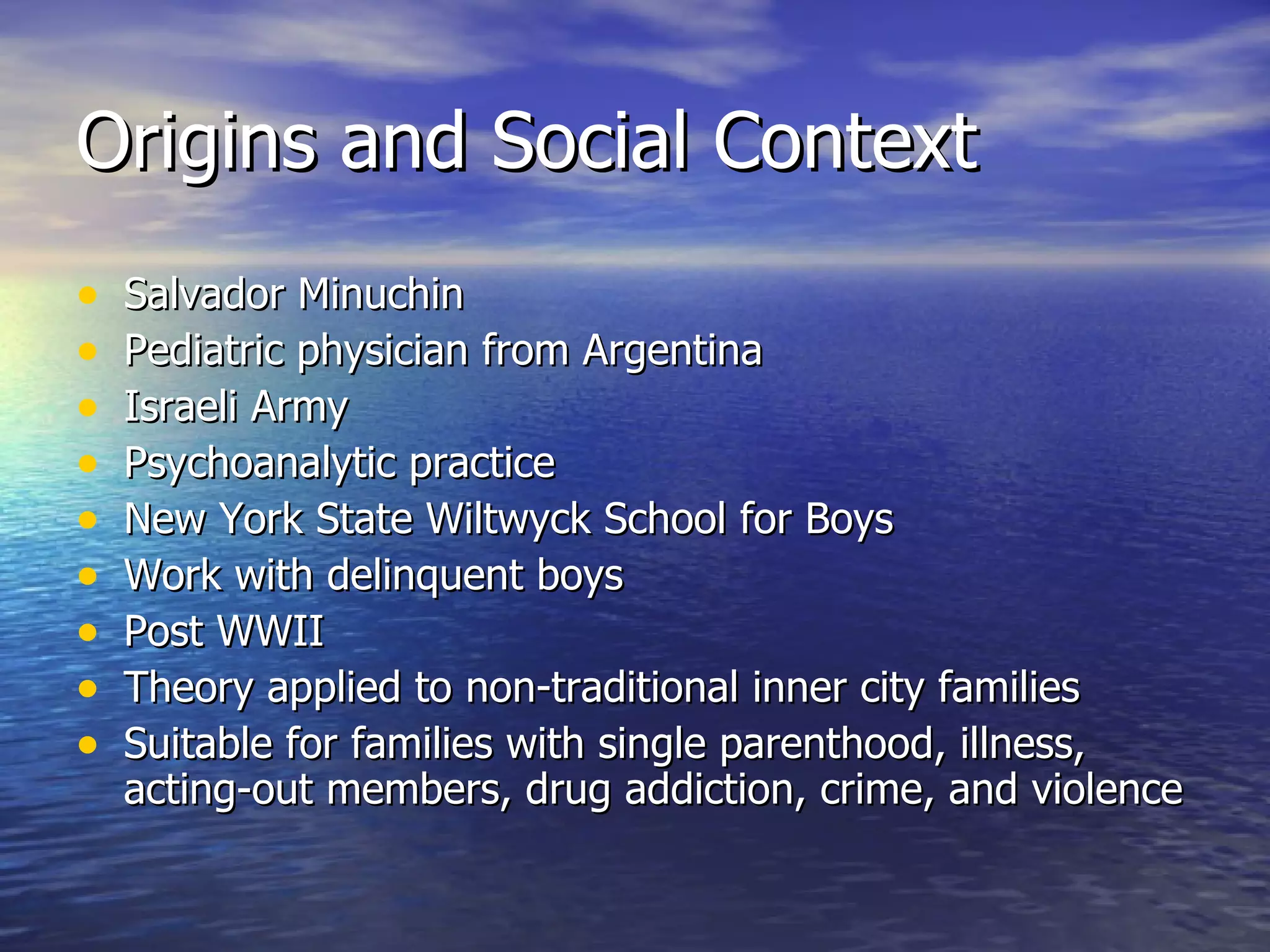
Origins and Social Context Salvador Minuchin Pediatric physician from Argentina Israeli Army Psychoanalytic practice New York State Wiltwyck School for Boys Work with delinquent boys Post WWII Theory applied to non-traditional inner city families Suitable for families with single parenthood, illness, acting-out members, drug addiction, crime, and violence
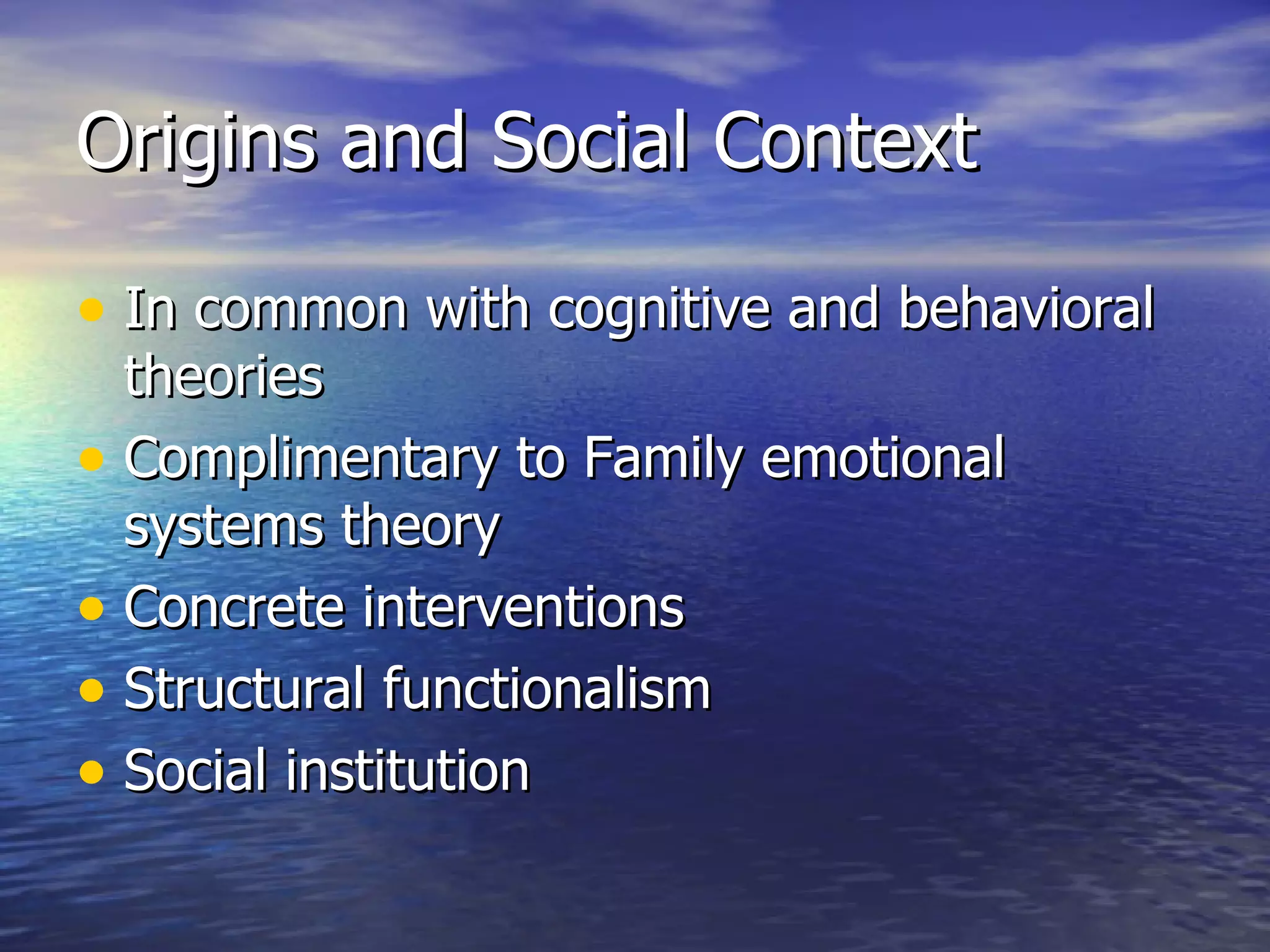
Origins and Social Context In common with cognitive and behavioral theories Complimentary to Family emotional systems theory Concrete interventions Structural functionalism Social institution
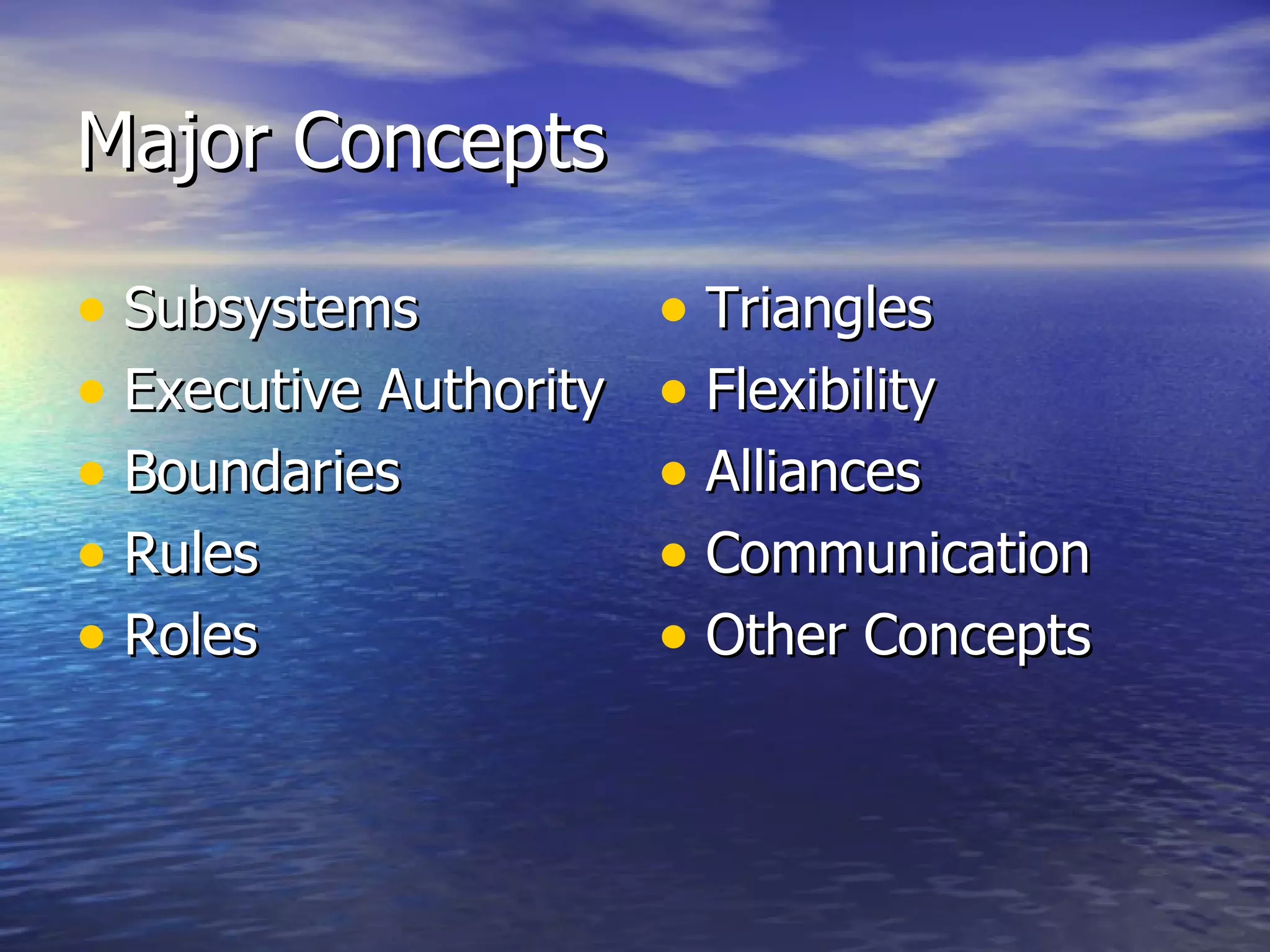
Major Concepts Subsystems Executive Authority Boundaries Rules Roles Triangles Flexibility Alliances Communication Other Concepts
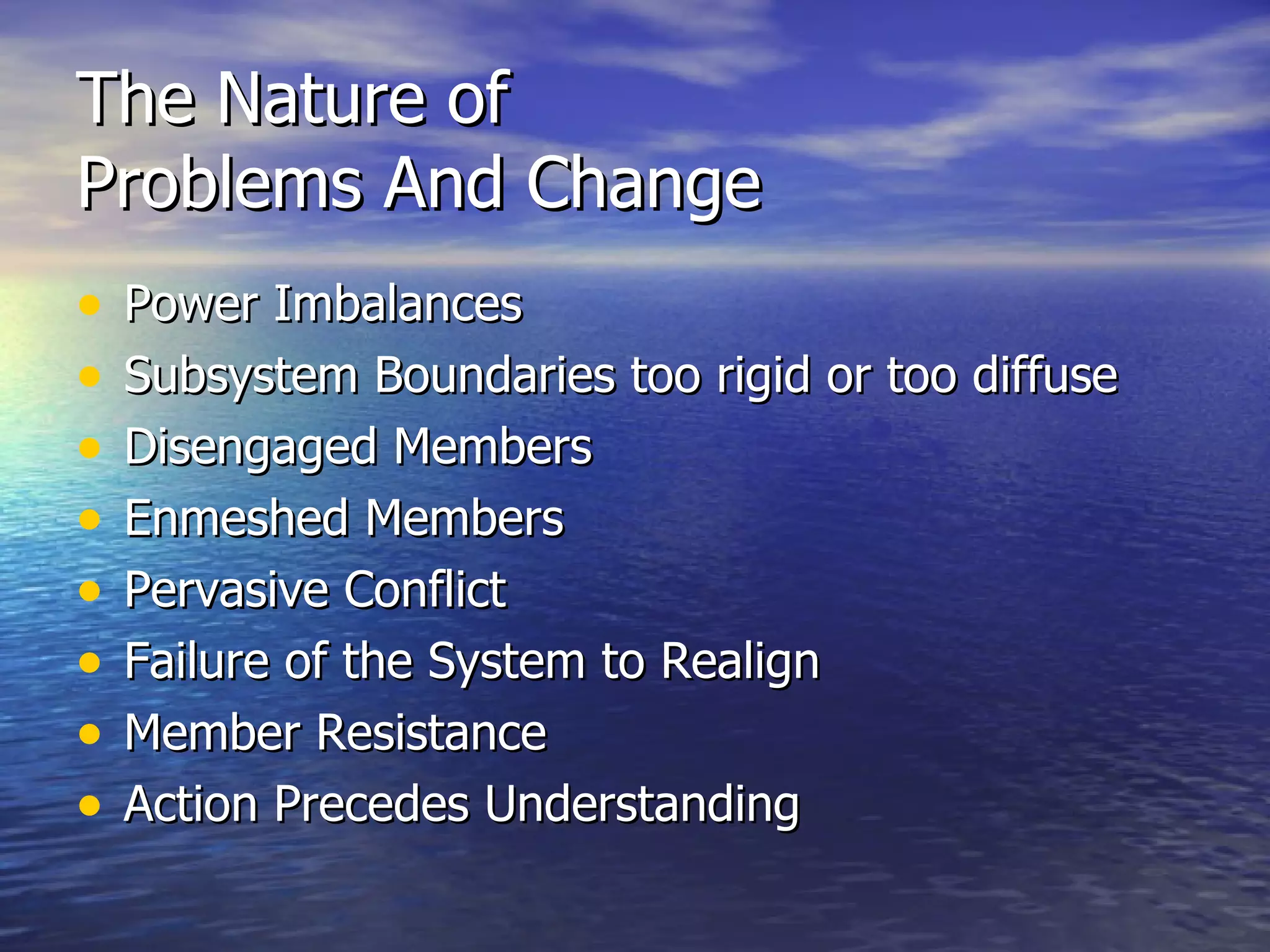
The Nature of  Problems And Change Power Imbalances Subsystem Boundaries too rigid or too diffuse Disengaged Members Enmeshed Members Pervasive Conflict Failure of the System to Realign Member Resistance Action Precedes Understanding
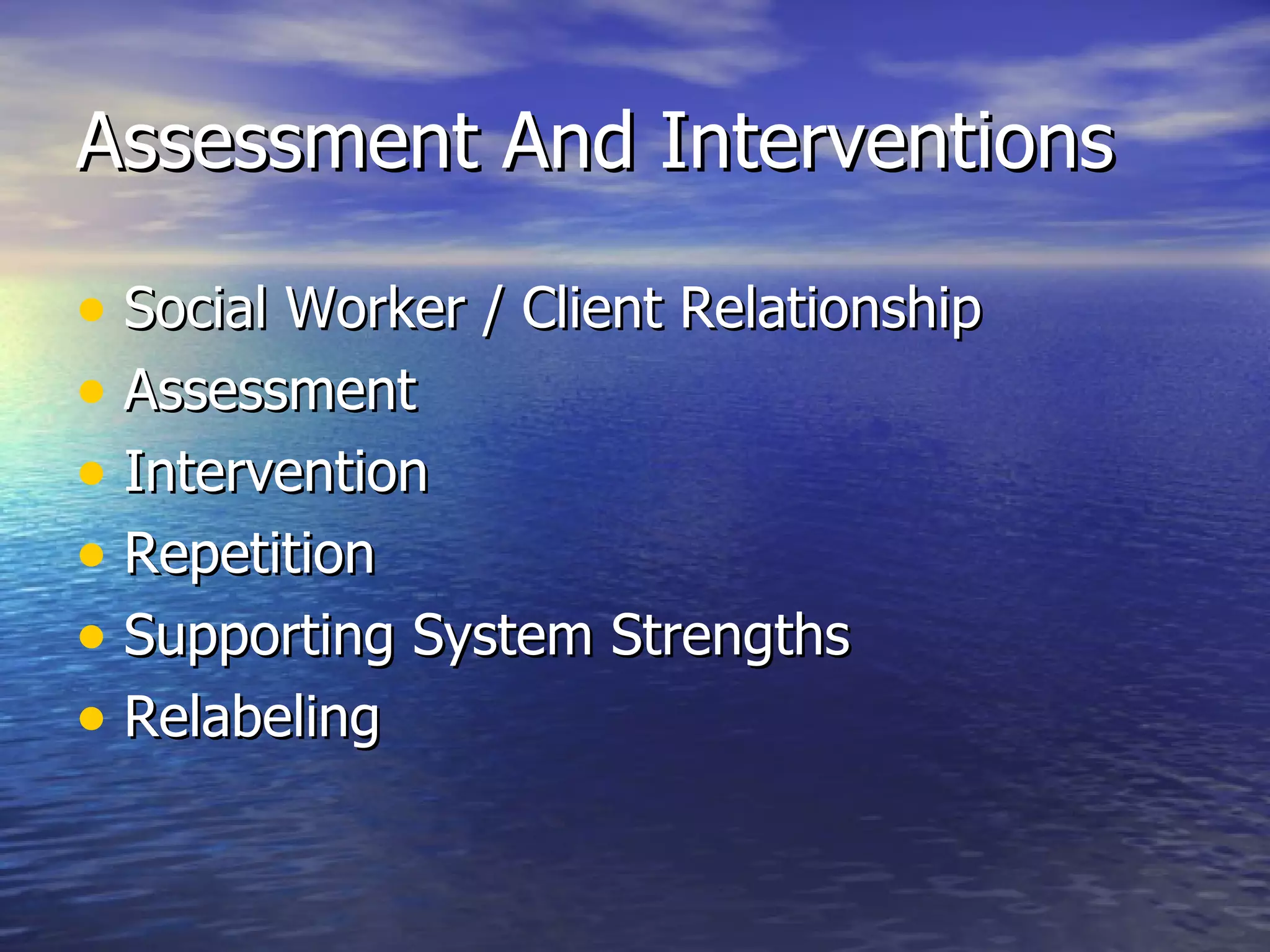
Assessment And Interventions Social Worker / Client Relationship Assessment Intervention Repetition Supporting System Strengths Relabeling
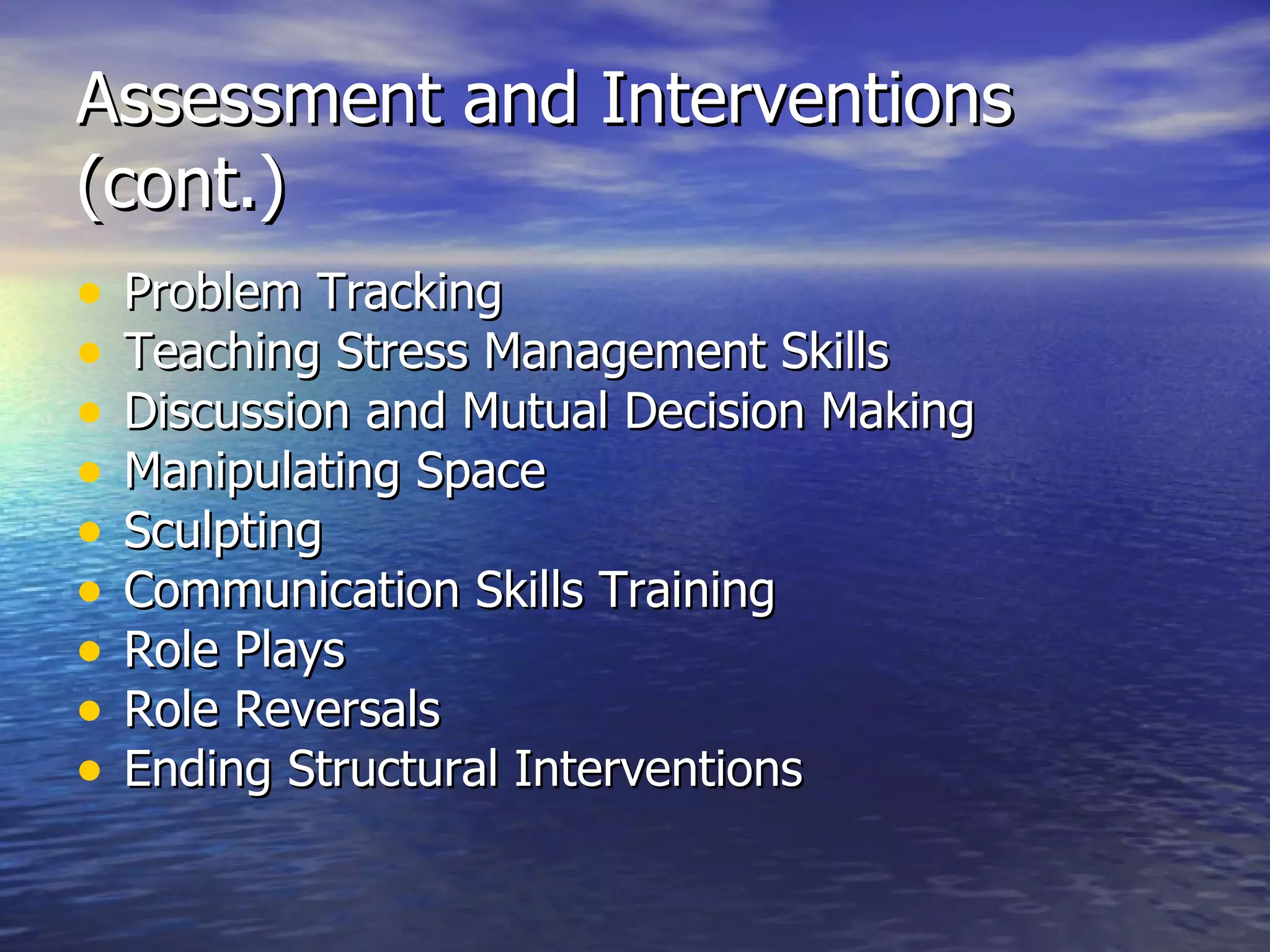
Assessment and Interventions (cont.) Problem Tracking Teaching Stress Management Skills Discussion and Mutual Decision Making Manipulating Space Sculpting Communication Skills Training Role Plays Role Reversals Ending Structural Interventions
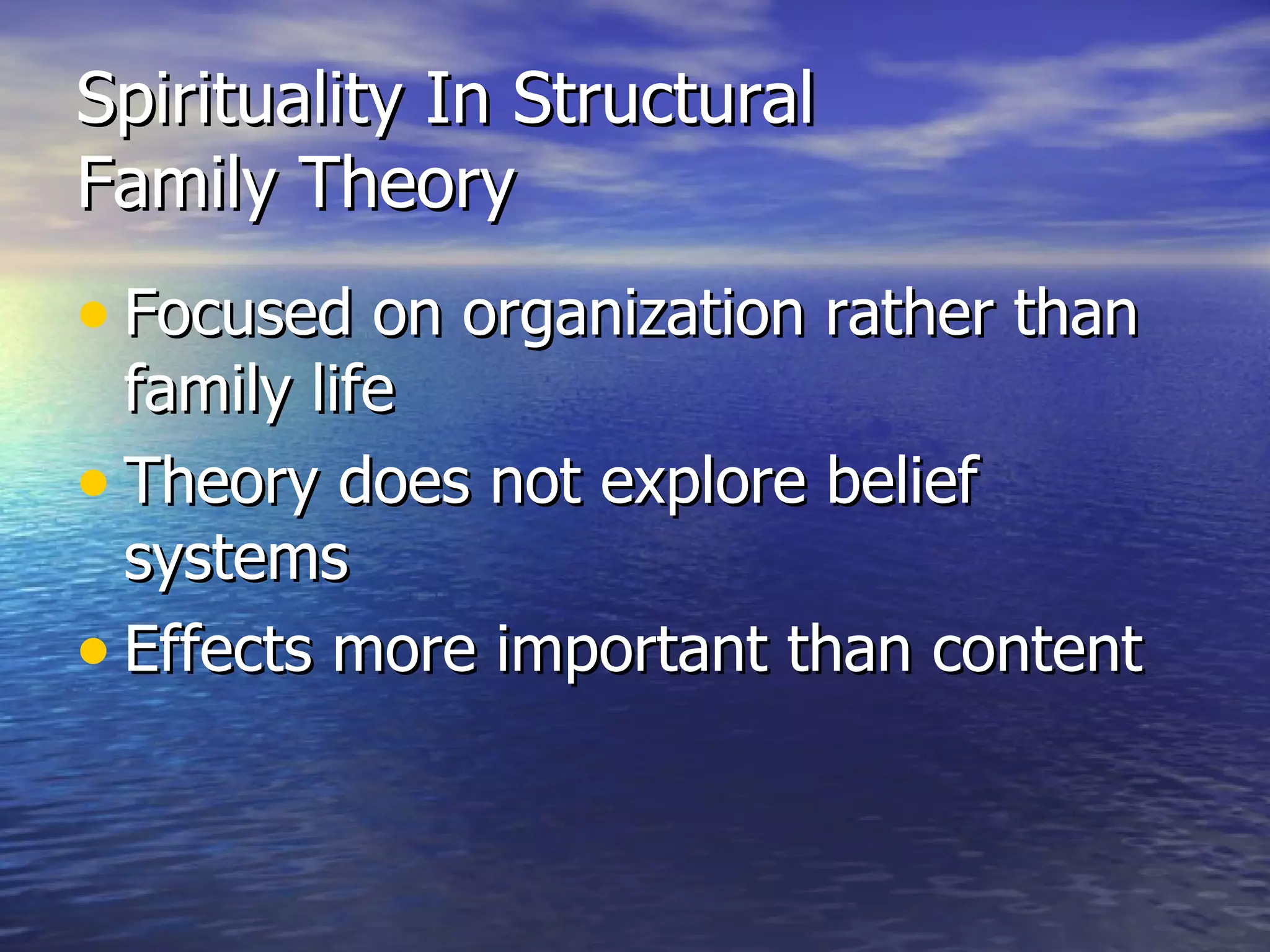
Spirituality In Structural Family Theory Focused on organization rather than family life Theory does not explore belief systems Effects more important than content
Attention To Social Justice Issues Focus on change issues related to poverty, unemployment, discrimination, and other forms of social injustice Families not receptive to office based needs, w\either for cultural reasons or because they do not have transportation resources Two tier: Primary focus on structure of family intervention and secondary focus family invited to participate in multiple family support group meetings
Evidence in Effectiveness 10 year study Results vary Children with health issues Children with ADHD/Hyperactivity Disorder Substance Abuse Adolescents with behavior problems
Criticisms Of The Theory De-emphasizes emotional lives Biases on appropriate family structure Cross Cultural considerations Avoiding Assumptions
Conclusion Architecture of a given family considered Help families with multiple problems Used in case management Environmental interventions Used for over 40 years and continued today as society is rapidly changing
References Walsh, J. (2006). Theories For Direct Social Work Practice. Thomson Brooks/Cole. Belmont, CA. http://www.minuchincenter.org . retrieved March 1, 2009.

Structural Family Theory Ppt

  • 1.
  • 2.
    Origins and SocialContext Salvador Minuchin Pediatric physician from Argentina Israeli Army Psychoanalytic practice New York State Wiltwyck School for Boys Work with delinquent boys Post WWII Theory applied to non-traditional inner city families Suitable for families with single parenthood, illness, acting-out members, drug addiction, crime, and violence
  • 3.
    Origins and SocialContext In common with cognitive and behavioral theories Complimentary to Family emotional systems theory Concrete interventions Structural functionalism Social institution
  • 4.
    Major Concepts SubsystemsExecutive Authority Boundaries Rules Roles Triangles Flexibility Alliances Communication Other Concepts
  • 5.
    The Nature of Problems And Change Power Imbalances Subsystem Boundaries too rigid or too diffuse Disengaged Members Enmeshed Members Pervasive Conflict Failure of the System to Realign Member Resistance Action Precedes Understanding
  • 6.
    Assessment And InterventionsSocial Worker / Client Relationship Assessment Intervention Repetition Supporting System Strengths Relabeling
  • 7.
    Assessment and Interventions(cont.) Problem Tracking Teaching Stress Management Skills Discussion and Mutual Decision Making Manipulating Space Sculpting Communication Skills Training Role Plays Role Reversals Ending Structural Interventions
  • 8.
    Spirituality In StructuralFamily Theory Focused on organization rather than family life Theory does not explore belief systems Effects more important than content
  • 9.
    Attention To SocialJustice Issues Focus on change issues related to poverty, unemployment, discrimination, and other forms of social injustice Families not receptive to office based needs, w\either for cultural reasons or because they do not have transportation resources Two tier: Primary focus on structure of family intervention and secondary focus family invited to participate in multiple family support group meetings
  • 10.
    Evidence in Effectiveness10 year study Results vary Children with health issues Children with ADHD/Hyperactivity Disorder Substance Abuse Adolescents with behavior problems
  • 11.
    Criticisms Of TheTheory De-emphasizes emotional lives Biases on appropriate family structure Cross Cultural considerations Avoiding Assumptions
  • 12.
    Conclusion Architecture ofa given family considered Help families with multiple problems Used in case management Environmental interventions Used for over 40 years and continued today as society is rapidly changing
  • 13.
    References Walsh, J.(2006). Theories For Direct Social Work Practice. Thomson Brooks/Cole. Belmont, CA. http://www.minuchincenter.org . retrieved March 1, 2009.