Stress
ELIJAH M. AVANTE
BIO201
Stress
 Biological response elicited when an individual perceives a “threat”
to its homeostasis
 Part of life and is not inherently bad
 All life forms evolve mechanisms to cope with stresses of their life.
 Has a degree of specificity depending on the particular challenge
to homeostasis and the organism’s perceptions of the stressor and
ability to cope with it
(Moberg, 2000) & (McEwen, 2002)
Homeostasis
 maintenance within acceptable ranges of physiological variables
 “Allostasis” process of achieving homeostasis through
physiological or behavioral change
Stressors
(Moberg, 2000) ,(McEwen, 2002), (Goldstein, 2010)
 It is the “threat” applied on an organism. When response truly
threatens the organism’s well-being, then the animal (cell)
experience “Distress”
Freeze – Fight – Flight
 increasing levels of threat, animals activate qualitatively
different defensive modes, including freezing and active
fight-or-flight reactions
 freezing - behavioral inhibition accompanied by
parasympathetically dominated heart rate deceleration
 fight-or-flight - associated with sympathetically driven
heart rate acceleration
(Roelof, 2016)
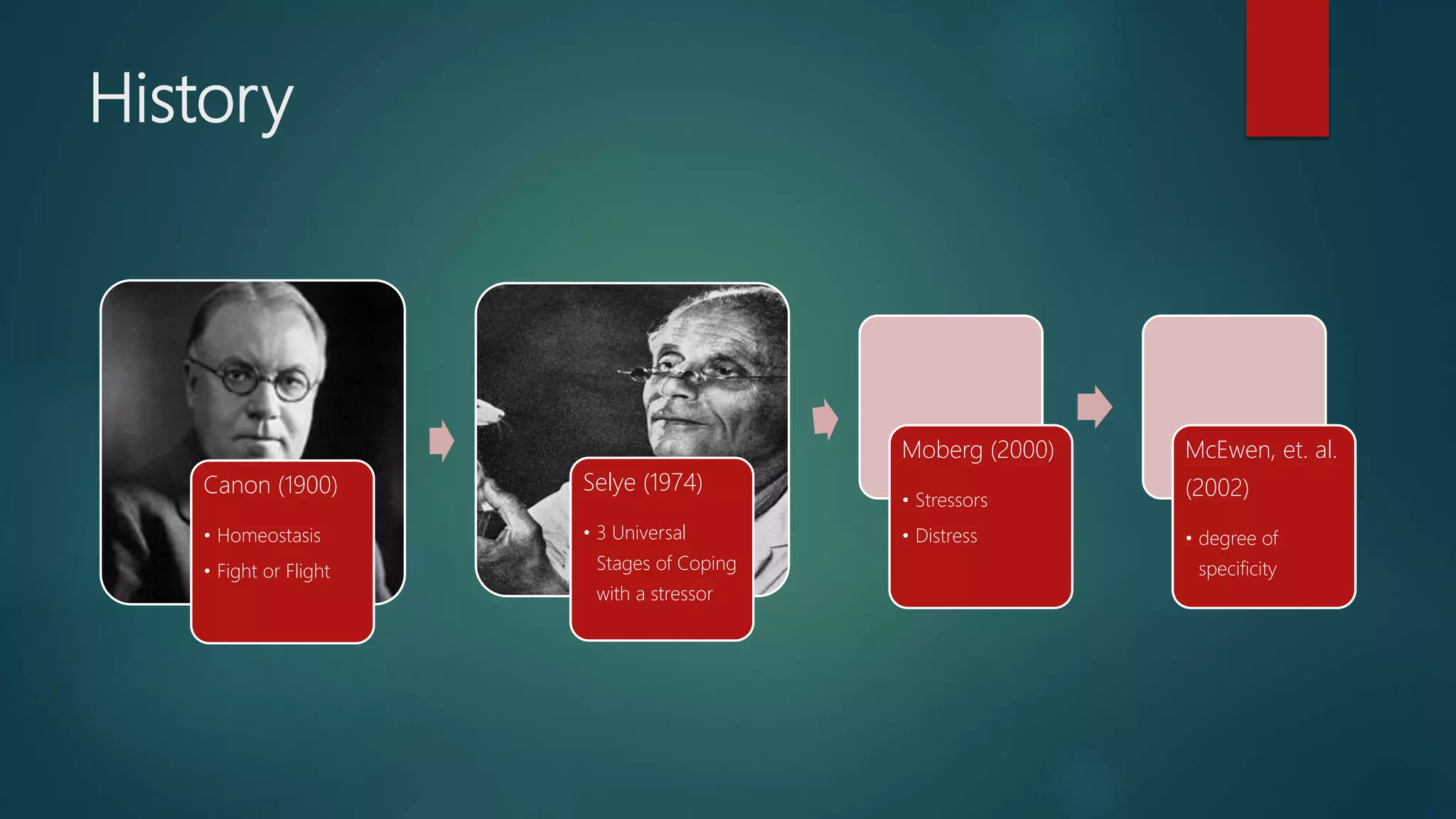
History
Canon (1900)
• Homeostasis
• Fight or Flight
Selye (1974)
• 3 Universal
Stages of Coping
with a stressor
Moberg (2000)
• Stressors
• Distress
McEwen, et. al.
(2002)
• degree of
specificity
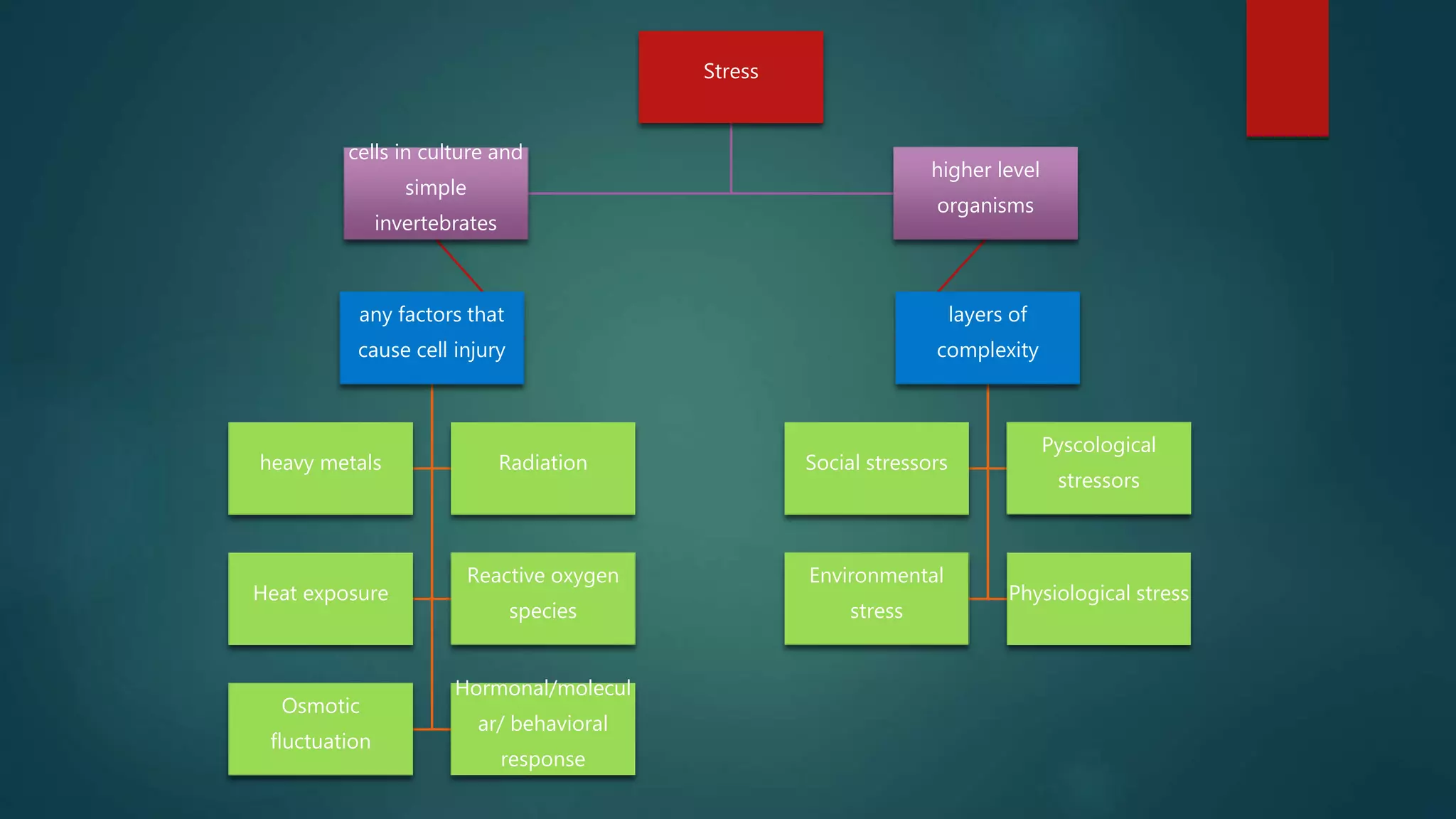
Stress
cells in culture and
simple
invertebrates
any factors that
cause cell injury
heavy metals Radiation
Heat exposure
Reactive oxygen
species
Osmotic
fluctuation
Hormonal/molecul
ar/ behavioral
response
higher level
organisms
layers of
complexity
Social stressors
Pyscological
stressors
Environmental
stress
Physiological stress
Cellular Stress Response
 equilibrium between the net growth rate and the net
rate of cell death
 stress stimulus does not go beyond a certain threshold,
the cell can cope with it by mounting an appropriate
protective cellular response
 failure to activate or maintain a protective response
results in activation of stress signaling cascades that
eventually fuel into cell death pathways
(Srinivasan, 2013)
Heat Shock Response
• One of the main prosurvival
activities of cells
• increase the expression of
chaperone proteins =
thermotolerance
(Fulda,2009)
DNA Damage Response
 DNA double strand breaks (DSBs)
and single strand breaks (SSBs) are
key lesions that initiate the activation
of the DNA damage response
 DNA duplex is more vulnerable to
chemical attack or nucleases when it
is single-stranded
(Fulda,2009)
The role of the glucocorticoids in
developing resilience to stress and
addiction
Subhashini Srinivasan1, Masroor Shariff 2 and Selena E. Bartlett 2*
• experiences have a profound impact on the brain, both as a target of
stress and allostatic load/overload and as a determinant of physiological
and behavioral response to stressors
• Individuals have the capacity to learn to be resilient by developing
mechanisms that protect from the maladaptive effects of stress
• Glucocorticoids (GCs), cortisol in humans, are important regulators of
basal and stress-related homeostasis and have been shown to modulate
an array of genes in many organs and tissues
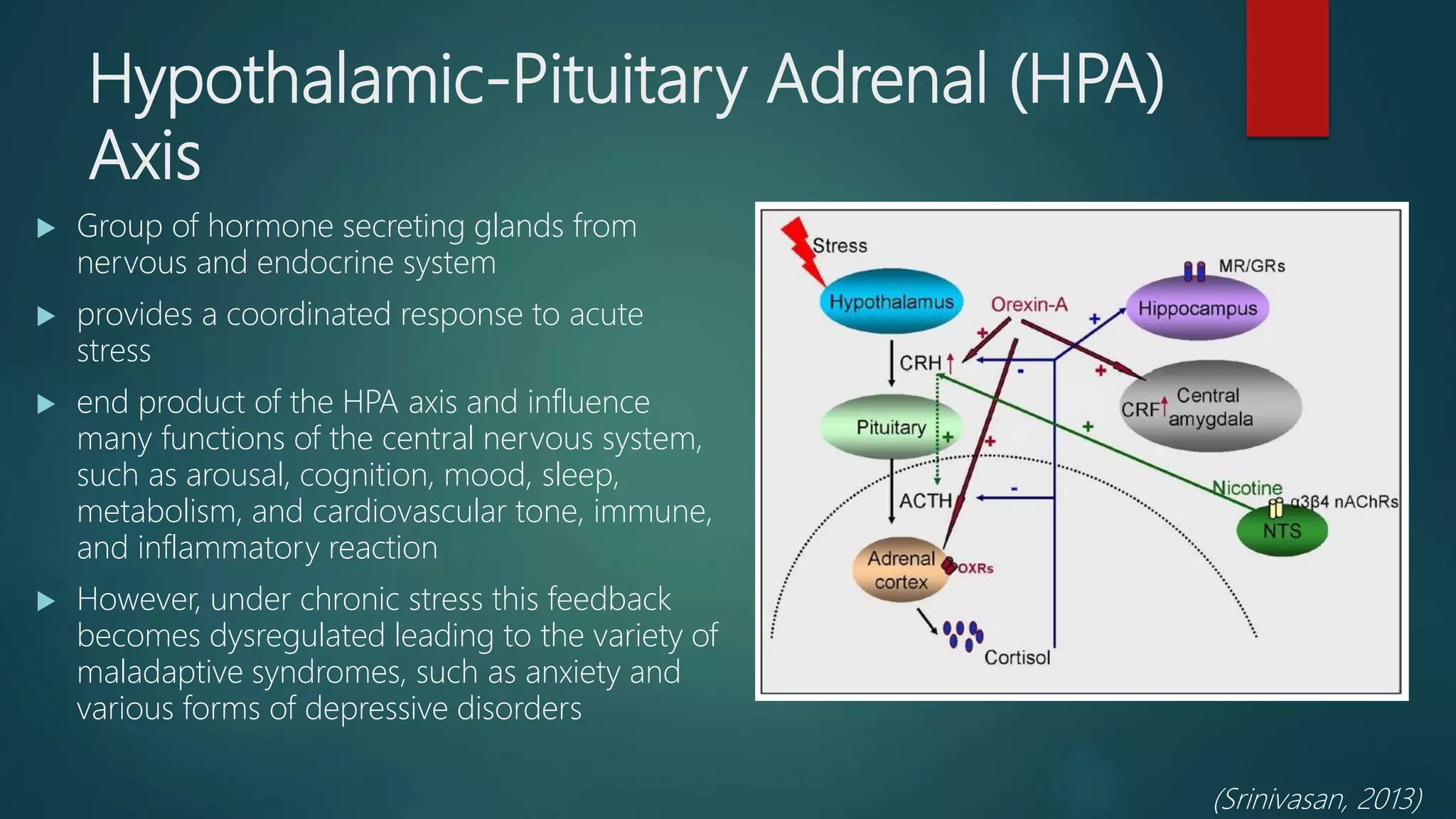
Hypothalamic-Pituitary Adrenal (HPA)
Axis
 Group of hormone secreting glands from
nervous and endocrine system
 provides a coordinated response to acute
stress
 end product of the HPA axis and influence
many functions of the central nervous system,
such as arousal, cognition, mood, sleep,
metabolism, and cardiovascular tone, immune,
and inflammatory reaction
 However, under chronic stress this feedback
becomes dysregulated leading to the variety of
maladaptive syndromes, such as anxiety and
various forms of depressive disorders
(Srinivasan, 2013)
Hyperactivation of
the Stress System
 lead to both osteoporosis and metabolic
syndrome
 Women = anxiety, depression, eating
disorders and chronic excessive exercise
 Men = decreased libido and hypofertility,
testosterone decrease
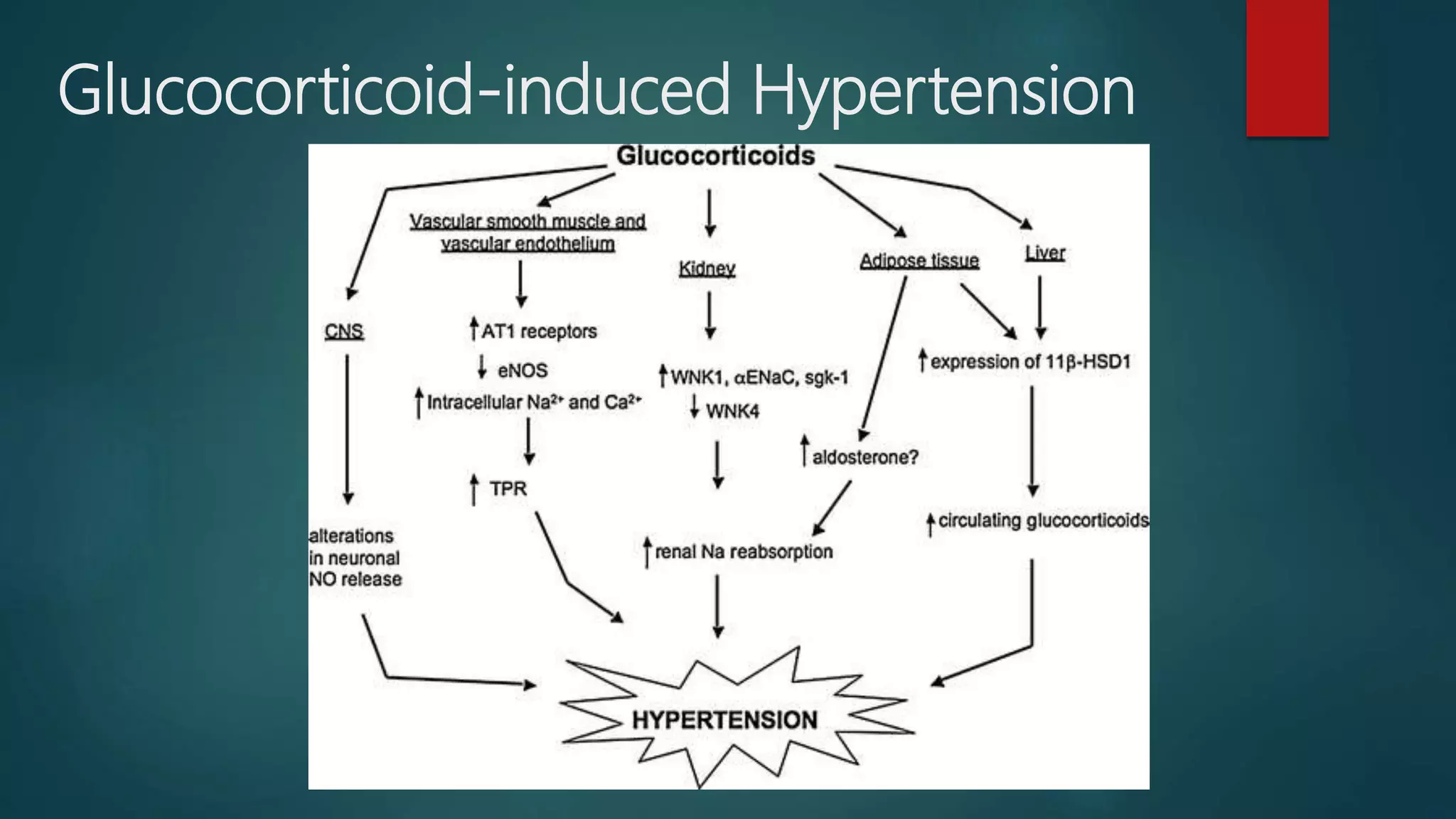
Glucocorticoid-induced Hypertension
Biological Response Model
Recognition of a
Threat to
Stress Response
Consequences of
Stress
• Stimulus
• Perception of Stressor
• Organization of biological
defense
• Biological Response
• Normal Biological Function
• Altered Biological Function
• Prepathological State
• Development of Pathology
(Sihn, 2016)
Mechanism of Stress in Humans
 Stress responses are designed to maximize the chance
of survival when encountering a stressor
 Dysregulated stress system can exert negative effects on
people’s physiological and psychological health
Stress mechanisms from environmental, physiological, and
neurological and how it affects an individual’s health and
well being
(Sihn, 2016)
Environmental Factor in Stress
 Chronic Stressors and Allostatic Load
 “Allostatic load” is the failure or exhaustion of normal physiologic
processes that occurs in response to severe, frequent, or chronic
stressors
 Stress and Stressor Diversity
 Stressor diversity expresses the degree to which the total
stressors are spread out across different stressor types
 high stressor exposure + low stressor diversity = high negative
affect and low positive affect
(Sihn, 2016)
Physiological Factors in Stress
 Telomeres
 shortening of telomeres
 Circulating Inflammatory Markers
 multiple stressors = elevated levels of inflammatory markers
(IL-6 & CRP)
 Electrodermal Activity
 autonomic nervous system = response to acute stress
 stress and cortisol patterns = hypoactivation of diurnal
cortisol
(Sihn, 2016)
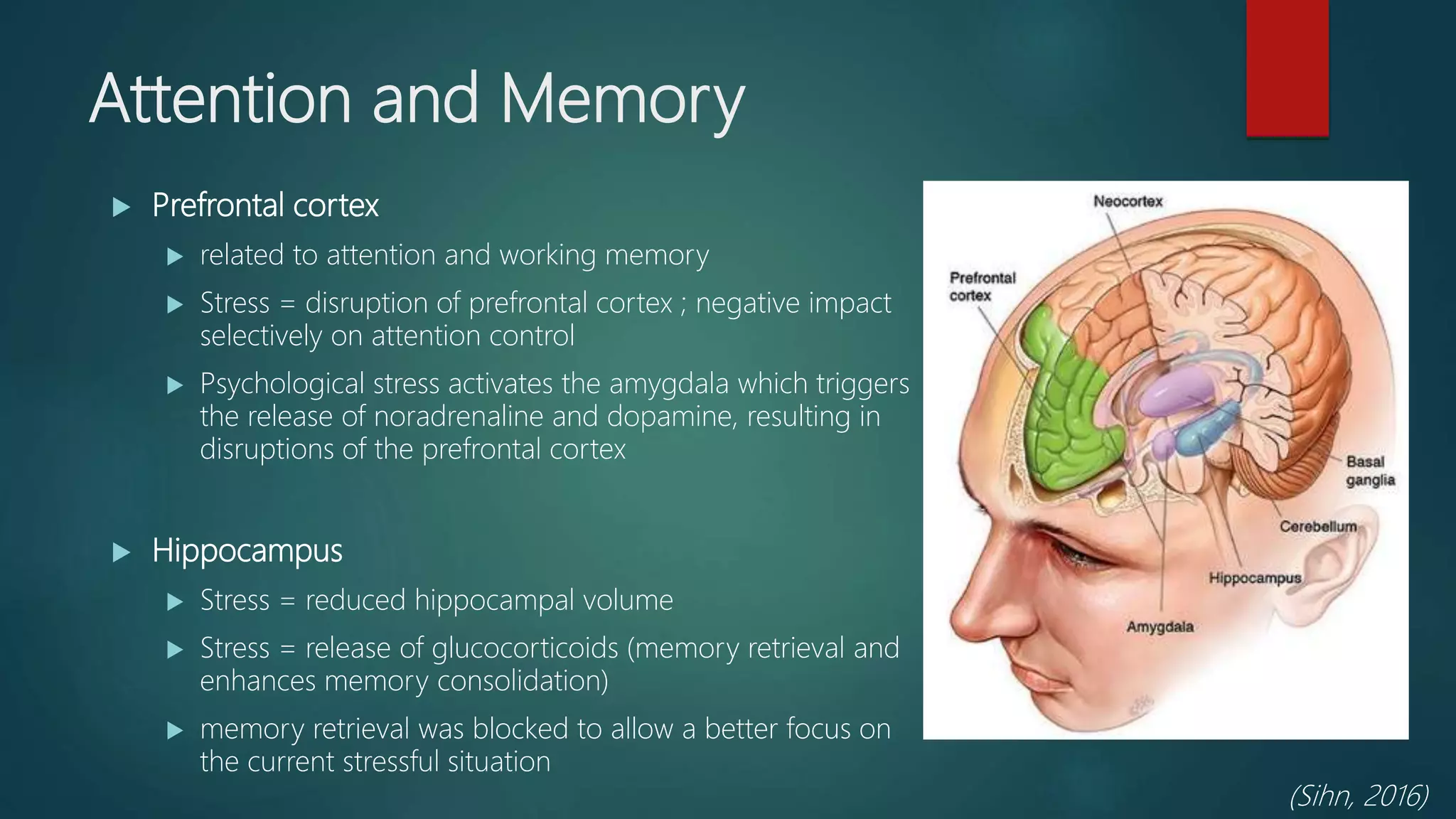
Attention and Memory
 Prefrontal cortex
 related to attention and working memory
 Stress = disruption of prefrontal cortex ; negative impact
selectively on attention control
 Psychological stress activates the amygdala which triggers
the release of noradrenaline and dopamine, resulting in
disruptions of the prefrontal cortex
 Hippocampus
 Stress = reduced hippocampal volume
 Stress = release of glucocorticoids (memory retrieval and
enhances memory consolidation)
 memory retrieval was blocked to allow a better focus on
the current stressful situation
(Sihn, 2016)
“That which does not kill us, makes us
stronger.” – Friedrich Nietzche

Stress (Molecular Mechanism)

  • 1.
  • 2.
    Stress  Biological responseelicited when an individual perceives a “threat” to its homeostasis  Part of life and is not inherently bad  All life forms evolve mechanisms to cope with stresses of their life.  Has a degree of specificity depending on the particular challenge to homeostasis and the organism’s perceptions of the stressor and ability to cope with it (Moberg, 2000) & (McEwen, 2002)
  • 3.
    Homeostasis  maintenance withinacceptable ranges of physiological variables  “Allostasis” process of achieving homeostasis through physiological or behavioral change Stressors (Moberg, 2000) ,(McEwen, 2002), (Goldstein, 2010)  It is the “threat” applied on an organism. When response truly threatens the organism’s well-being, then the animal (cell) experience “Distress”
  • 4.
    Freeze – Fight– Flight  increasing levels of threat, animals activate qualitatively different defensive modes, including freezing and active fight-or-flight reactions  freezing - behavioral inhibition accompanied by parasympathetically dominated heart rate deceleration  fight-or-flight - associated with sympathetically driven heart rate acceleration (Roelof, 2016)
  • 5.
    History Canon (1900) • Homeostasis •Fight or Flight Selye (1974) • 3 Universal Stages of Coping with a stressor Moberg (2000) • Stressors • Distress McEwen, et. al. (2002) • degree of specificity
  • 6.
    Stress cells in cultureand simple invertebrates any factors that cause cell injury heavy metals Radiation Heat exposure Reactive oxygen species Osmotic fluctuation Hormonal/molecul ar/ behavioral response higher level organisms layers of complexity Social stressors Pyscological stressors Environmental stress Physiological stress
  • 7.
    Cellular Stress Response equilibrium between the net growth rate and the net rate of cell death  stress stimulus does not go beyond a certain threshold, the cell can cope with it by mounting an appropriate protective cellular response  failure to activate or maintain a protective response results in activation of stress signaling cascades that eventually fuel into cell death pathways (Srinivasan, 2013)
  • 8.
    Heat Shock Response •One of the main prosurvival activities of cells • increase the expression of chaperone proteins = thermotolerance (Fulda,2009)
  • 9.
    DNA Damage Response DNA double strand breaks (DSBs) and single strand breaks (SSBs) are key lesions that initiate the activation of the DNA damage response  DNA duplex is more vulnerable to chemical attack or nucleases when it is single-stranded (Fulda,2009)
  • 10.
    The role ofthe glucocorticoids in developing resilience to stress and addiction Subhashini Srinivasan1, Masroor Shariff 2 and Selena E. Bartlett 2* • experiences have a profound impact on the brain, both as a target of stress and allostatic load/overload and as a determinant of physiological and behavioral response to stressors • Individuals have the capacity to learn to be resilient by developing mechanisms that protect from the maladaptive effects of stress • Glucocorticoids (GCs), cortisol in humans, are important regulators of basal and stress-related homeostasis and have been shown to modulate an array of genes in many organs and tissues
  • 11.
    Hypothalamic-Pituitary Adrenal (HPA) Axis Group of hormone secreting glands from nervous and endocrine system  provides a coordinated response to acute stress  end product of the HPA axis and influence many functions of the central nervous system, such as arousal, cognition, mood, sleep, metabolism, and cardiovascular tone, immune, and inflammatory reaction  However, under chronic stress this feedback becomes dysregulated leading to the variety of maladaptive syndromes, such as anxiety and various forms of depressive disorders (Srinivasan, 2013)
  • 12.
    Hyperactivation of the StressSystem  lead to both osteoporosis and metabolic syndrome  Women = anxiety, depression, eating disorders and chronic excessive exercise  Men = decreased libido and hypofertility, testosterone decrease
  • 13.
  • 14.
    Biological Response Model Recognitionof a Threat to Stress Response Consequences of Stress • Stimulus • Perception of Stressor • Organization of biological defense • Biological Response • Normal Biological Function • Altered Biological Function • Prepathological State • Development of Pathology (Sihn, 2016)
  • 15.
    Mechanism of Stressin Humans  Stress responses are designed to maximize the chance of survival when encountering a stressor  Dysregulated stress system can exert negative effects on people’s physiological and psychological health Stress mechanisms from environmental, physiological, and neurological and how it affects an individual’s health and well being (Sihn, 2016)
  • 16.
    Environmental Factor inStress  Chronic Stressors and Allostatic Load  “Allostatic load” is the failure or exhaustion of normal physiologic processes that occurs in response to severe, frequent, or chronic stressors  Stress and Stressor Diversity  Stressor diversity expresses the degree to which the total stressors are spread out across different stressor types  high stressor exposure + low stressor diversity = high negative affect and low positive affect (Sihn, 2016)
  • 17.
    Physiological Factors inStress  Telomeres  shortening of telomeres  Circulating Inflammatory Markers  multiple stressors = elevated levels of inflammatory markers (IL-6 & CRP)  Electrodermal Activity  autonomic nervous system = response to acute stress  stress and cortisol patterns = hypoactivation of diurnal cortisol (Sihn, 2016)
  • 18.
    Attention and Memory Prefrontal cortex  related to attention and working memory  Stress = disruption of prefrontal cortex ; negative impact selectively on attention control  Psychological stress activates the amygdala which triggers the release of noradrenaline and dopamine, resulting in disruptions of the prefrontal cortex  Hippocampus  Stress = reduced hippocampal volume  Stress = release of glucocorticoids (memory retrieval and enhances memory consolidation)  memory retrieval was blocked to allow a better focus on the current stressful situation (Sihn, 2016)
  • 19.
    “That which doesnot kill us, makes us stronger.” – Friedrich Nietzche

Editor's Notes

  • #5 Paeasympathetically – part of autonomic nervous system (rest and digest). Conserves energy Symphathetically – opposite of parasymphathetically
  • #9 initiation of the heat shock response = general protein transcription and translation is halted (alleviate the burden of misfolded proteins in the cell) transcription factors that enhance expression of protective genes are selectively activated under these conditions; these are the heat shock factors (HFFs) Inactive HSF1 is maintained in a monomeric form in the cytoplasm through interaction with Hsp90 and cochaperones When the cell is exposed to stressful conditions = accumulation of unfolded proteins which compete with HSF1 for Hsp90 binding HSF1 is released from the complex stimulating its transition from a monomer to a homotrimer that can translocate to the nucleus and bind to DNA (nuclear localize sequence : deletion allows nuclear entry) HSFs bind to upstream sequences (heat shock elements) in the promoters of target genes, leading to the expression of heat shock proteins (Hsps) Hsp90 = expressed and act intracellularly as molecular chaperones, preventing premature folding Hsp27 and Hsp70 = increase in response to environmental and physiological stressors (inducible Hsps) and are part of the heat shock response Hsp27 = regulated by phosphorylation and dynamic association/dissociation intomultimers. Hsp70 = protect cells against the induction of cell death by a variety of stresses and by different modes of cell death, including apoptosis and necrosis They achieve these effects directly, through inhibition of cell death pathways, and indirectly, through general prosurvival activities (Hsps grouped with molecular weights)
  • #10 Once DSBs are generated, ataxia telangiectasia mutated (ATM: tumor suppressor: loss of function leads to neurodegeneration, premature aging etc.) is recruited by the MRE-11-Rad50-NBS1 (MRN) complex to sites of broken DNA and phosphorylate downstream substrates(ADP-ATP) (checkpoint kinase 2 (Chk2)(tumor suppressor gene / serine-threonine kinase) and p53) P53 (tumor protein) induces transcriptional activation of different functional programs, for example, cell cycle regulatory proteins such as p21(cyclin-dependent kinase inhibitor cell cycle progression is negatively controlled / tumor suppressor protein) and pro-apoptotic factors such as CD95 (cluster of differentiate 95: ligand or receptor: protein), PUMA (p53 unregulated modulator of apoptosis), and BAX (Bcl-2-associated X protein / apoptosis regulator) ataxia telangiectasia and Rad3 related (serine/threonine protein kinase cell cycle arrest) Chk1 (downstream effector checkpoint kinase) prevents entry of damge cell into mitosis Cdc25c (cell division cycle 25c : serine/threonine/tyrosine kinases and phosphates required for steps in cell cycle) Cdc25a (cell division cycle 25a : required for progression from g1 to S phase)
  • #12 HPA Axis fundamental components includes corticotropin-releasing hormone (CRH)-secreting neurons of the paraventricular nucleus of the hypothalamus (PVN) that stimulate pituitary adrenocorticotropic hormone (ACTH) and adrenal corticosterone (CORT) secretion CRF binds to CRF receptors on the pituitary gland and release ACTH GCs exert their influence through two types of intracellular receptors the type I mineralocorticoid receptor and type II glucocorticoid receptor -Orexin-A (hypocretin produce by hyphotalamus) regulates appetite and sleep Orexins regulate autonomic func- tions, such as regulation of blood pressure and heart rate Orexins also activate the HPA axis and lead to the production of glucocorticoids and stimulate the release of CRF from the PVN of the hypothalamus and the central amygdala nicotine mediates ACTH release indirectly, nicotinic receptors on the nucleus tractus solitarius (NTS), which indirectly regulate ACTH release by acting on the PVN Negative feedback - neurons in the hypothalamus detect circulating concentrations of glucocorticoids and consequently stimulate or inhibit the release of CRH and AVP from the parvicellular neurons. Stress, whether generated by physical or emotional trauma, is also a potent stimulus to cortisol secretion and can over-ride negative-feedback effects.
  • #13 CRH: corticotropin-releasing hormone GnRH: gonadotropin-releasing hormone ACTH: adrenocorticotropic hormone (corticotrophin) LH: luteinizing hormone FSH: follicle-stimulating hormone GHRH: growth hormone releasing hormone STS: somatostatin; GH: growth hormone SmC: somatomedin C
  • #14 Angiotensin II receptor type 1 or AT1 receptor is the best characterized angiotensin receptor. It has vasopressor effects and regulates aldosterone secretion. It is an important effector controlling blood pressure and volume in the cardiovascular system Endothelial NOS (eNOS) regulate vascular tone, cellular proliferation, leukocyte adhesion, and platelet aggregation Total peripheral resistance (TPR) Vasoconstriction (decrease in blood vessel diameter) Increase TPR , whereas vasodilation (increase in diameter) decreases TPR. WNK (lysine deficient protein kinase 1) predominant role is the regulation of cation-Cl− cotransporters (CCCs). CCCs mediate ion homeostasis and modulate blood pressure by transporting ions in and out of the cell Serine/threonine-protein kinase WNK4 regulates the sodium-chloride symporter (NCC), that is uniquely expressed in the distal nephron and is sensitive to thiazide type diuretics. 11β-Hydroxysteroid dehydrogenase type 1, also known as cortisone reductase. The protein encoded by this gene is a microsomal enzyme that catalyzes the conversion of the stress hormone cortisol to the inactive metabolite cortisone. In addition, the encoded protein can catalyze the reverse reaction, the conversion of cortisone to cortisol. Renal reabsorption of sodium. reabsorption mechanisms in the nephrons of your kidneys return the water and solutes that are needed back into extracellular fluid and circulatory system. reabsorbing the substances that are needed, nephrons are able to secrete unwanted substances from the bloodstream into the filtrate