Strategic Human
Resource Management
(HRM)
By- Md Tarique Anwar
Sub- HRM & HRD
Session- 2016-18
Univ- Varsity Department of Management (VBU)
21-03-2018
15:47:21
Tarique/MBA/VBU
 A human resources management
strategy is the overall plan that leads
the implementation of specific HRM
functional areas. HRM strategies
guide personnel decisions that ensure
the best fit for the organization. All
functional areas of HRM strategies
need to match the overall business
strategy.
What Are HRM Strategies?
21-03-2018 15:47:21Tarique/MBA/VBU
Some companies may divide these strategies into
four major areas:-
 Culture
 People
 Organization
 Human resource systems
21-03-2018 15:47:21Tarique/MBA/VBU
 Top corporate executives and other leaders of the
organization affect the success or failure of the
organizational goals. HR plays a major role in the
selection of the company executives by earning the
respect of the decision-making team through
previous staffing successes and conducting
effective searches. As a business partner, HR
professionals need to take leadership roles in
making important decisions and recommending
ideas and strategies to other organizational
leaders.
21-03-2018 15:47:21Tarique/MBA/VBU
Leadership of the Organization Strategy
 Human capital talent is one of the most important
assets in a company. HRM is responsible for
forecasting future staffing needs and creating plans
for recruiting, hiring and retaining top talent. HRM
strategy includes the identification of job
competencies such as knowledge, skills and
abilities to perform each function and develops
comprehensive job descriptions that describe these
competencies and responsibilities. An additional
HRM strategy is continuous training and
development of employees.
21-03-2018 15:47:21Tarique/MBA/VBU
Talents Strategy
 According to the American Management Association, a
high-potential organization is one that has clearly defined
performance measures. Top leaders influence employees
in the importance of workplace behaviours that affect the
success of the company. HRM strategies support leaders
in the planning of activities to foster an organizational
culture where employees enjoy working and are
appreciated. In a high-performance organization,
employees are recognized for high performance levels
and creative ideas.
21-03-2018 15:47:21Tarique/MBA/VBU
High Performance Culture Strategy
 Some successful organizations attribute strategic
planning to the success with their customers and
employees. HRM strategies play an important role
in defining and implementing many of these plans.
One of the strategic tools used in retaining capital
talent is the employee satisfaction survey.
Employees are asked their opinions regarding
various policies, amenities, benefits and career
development. Conducting customer interviews is
another possible tool to determine satisfaction.
HRM plays a significant role in each of these
processes.
21-03-2018 15:47:21Tarique/MBA/VBU
Strategic Planning
 Identifying and analysing external opportunities
and threats that may be crucial to the company's
success.
 Provides a clear business strategy and vision for
the future.
 To supply competitive intelligence that may be
useful in the strategic planning process.
 To recruit, retain and motivate people.
 To develop and retain of highly competent
people.
 To ensure that people development issues are
addressed systematically.
21-03-2018 15:47:21Tarique/MBA/VBU
Benefits of Strategic HRM
 To supply information regarding the company's
internal strengths and weaknesses.
 To meet the expectations of the customers
effectively.
 To ensure high productivity.
 To ensure business surplus thorough competency
21-03-2018 15:47:21Tarique/MBA/VBU
 Barriers to successful SHRM implementation are complex. The
main reason is a lack of growth strategy or failure to implement
one. Other major barriers are summarized as follows:
 Inducing the vision and mission of the change effort.
 High resistance due to lack of cooperation from the bottom line.
 Interdepartmental conflict.
 The commitment of the entire senior management team.
 Plans that integrate internal resource with external
requirements.
 Limited time, money and the resources.
 The statuesque approach of employees.
21-03-2018 15:47:21Tarique/MBA/VBU
Barriers of Strategic HRM
 Fear of incompetency of senior level managers to take up
strategic steps.
 Diverse work-force with competitive skill sets.
 Fear towards victimisation in the wake of failures.
 Improper strategic assignments and leadership conflict
over authority.
 Ramifications for power relations.
 Vulnerability to legislative changes.
 Resistance that comes through the legitimate labour
institutions.
 Presence of an active labour union.
 Rapid structural changes.
 Economic and market pressures influenced the adoption of
strategic HRM.
 More diverse, outward looking approach.
21-03-2018 15:47:21Tarique/MBA/VBU
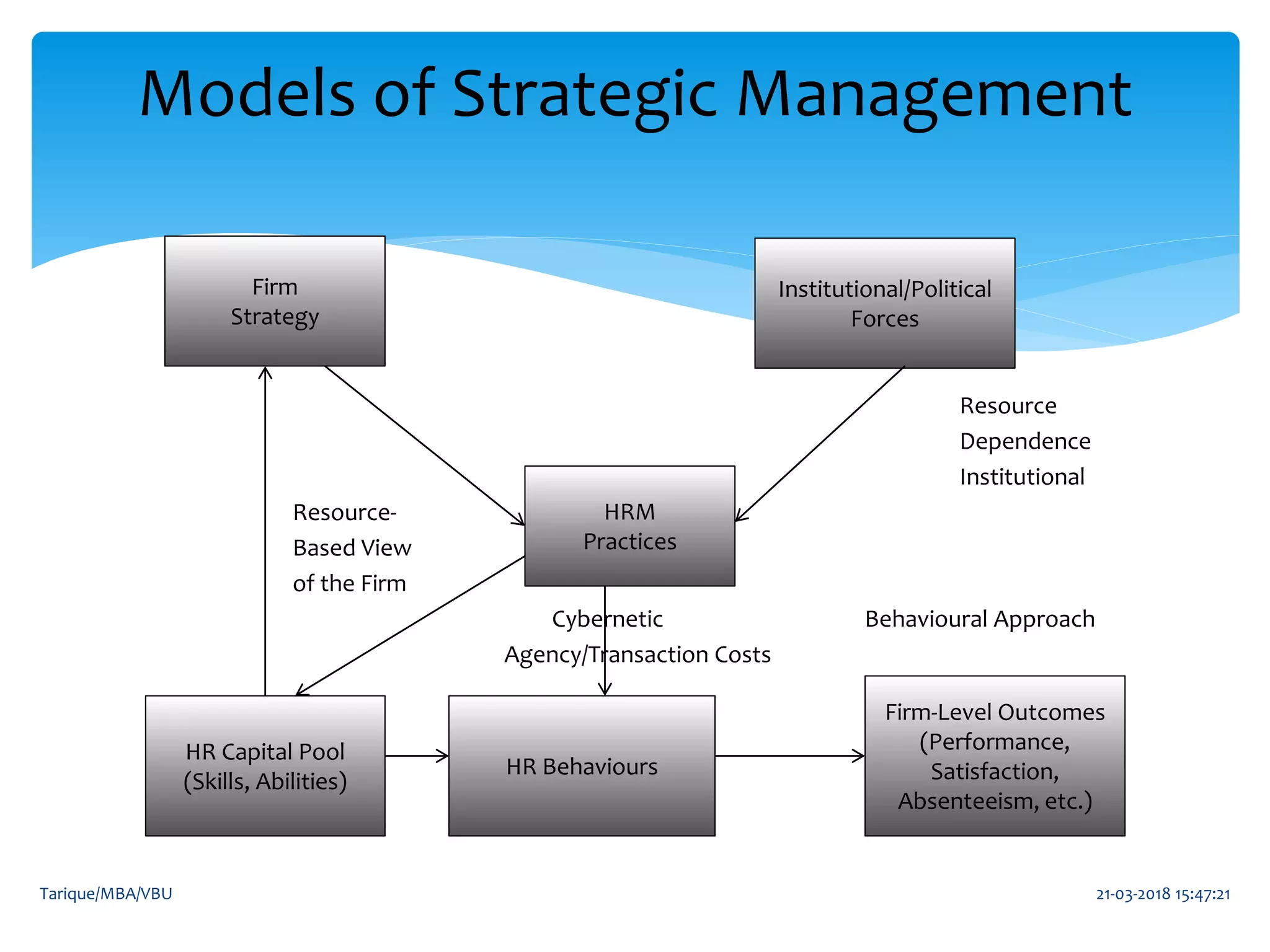
Resource
Dependence
Institutional
Resource-
Based View
of the Firm
Cybernetic Behavioural Approach
Agency/Transaction Costs
21-03-2018 15:47:21Tarique/MBA/VBU
Models of Strategic Management
HRM
Practices
Firm
Strategy
Institutional/Political
Forces
Firm-Level Outcomes
(Performance,
Satisfaction,
Absenteeism, etc.)
HR Behaviours
HR Capital Pool
(Skills, Abilities)
THANK
YOU
21-03-2018 15:47:21Tarique/MBA/VBU

Strategic human resource management (hrm)

  • 1.
    Strategic Human Resource Management (HRM) By-Md Tarique Anwar Sub- HRM & HRD Session- 2016-18 Univ- Varsity Department of Management (VBU) 21-03-2018 15:47:21 Tarique/MBA/VBU
  • 2.
     A humanresources management strategy is the overall plan that leads the implementation of specific HRM functional areas. HRM strategies guide personnel decisions that ensure the best fit for the organization. All functional areas of HRM strategies need to match the overall business strategy. What Are HRM Strategies? 21-03-2018 15:47:21Tarique/MBA/VBU
  • 3.
    Some companies maydivide these strategies into four major areas:-  Culture  People  Organization  Human resource systems 21-03-2018 15:47:21Tarique/MBA/VBU
  • 4.
     Top corporateexecutives and other leaders of the organization affect the success or failure of the organizational goals. HR plays a major role in the selection of the company executives by earning the respect of the decision-making team through previous staffing successes and conducting effective searches. As a business partner, HR professionals need to take leadership roles in making important decisions and recommending ideas and strategies to other organizational leaders. 21-03-2018 15:47:21Tarique/MBA/VBU Leadership of the Organization Strategy
  • 5.
     Human capitaltalent is one of the most important assets in a company. HRM is responsible for forecasting future staffing needs and creating plans for recruiting, hiring and retaining top talent. HRM strategy includes the identification of job competencies such as knowledge, skills and abilities to perform each function and develops comprehensive job descriptions that describe these competencies and responsibilities. An additional HRM strategy is continuous training and development of employees. 21-03-2018 15:47:21Tarique/MBA/VBU Talents Strategy
  • 6.
     According tothe American Management Association, a high-potential organization is one that has clearly defined performance measures. Top leaders influence employees in the importance of workplace behaviours that affect the success of the company. HRM strategies support leaders in the planning of activities to foster an organizational culture where employees enjoy working and are appreciated. In a high-performance organization, employees are recognized for high performance levels and creative ideas. 21-03-2018 15:47:21Tarique/MBA/VBU High Performance Culture Strategy
  • 7.
     Some successfulorganizations attribute strategic planning to the success with their customers and employees. HRM strategies play an important role in defining and implementing many of these plans. One of the strategic tools used in retaining capital talent is the employee satisfaction survey. Employees are asked their opinions regarding various policies, amenities, benefits and career development. Conducting customer interviews is another possible tool to determine satisfaction. HRM plays a significant role in each of these processes. 21-03-2018 15:47:21Tarique/MBA/VBU Strategic Planning
  • 8.
     Identifying andanalysing external opportunities and threats that may be crucial to the company's success.  Provides a clear business strategy and vision for the future.  To supply competitive intelligence that may be useful in the strategic planning process.  To recruit, retain and motivate people.  To develop and retain of highly competent people.  To ensure that people development issues are addressed systematically. 21-03-2018 15:47:21Tarique/MBA/VBU Benefits of Strategic HRM
  • 9.
     To supplyinformation regarding the company's internal strengths and weaknesses.  To meet the expectations of the customers effectively.  To ensure high productivity.  To ensure business surplus thorough competency 21-03-2018 15:47:21Tarique/MBA/VBU
  • 10.
     Barriers tosuccessful SHRM implementation are complex. The main reason is a lack of growth strategy or failure to implement one. Other major barriers are summarized as follows:  Inducing the vision and mission of the change effort.  High resistance due to lack of cooperation from the bottom line.  Interdepartmental conflict.  The commitment of the entire senior management team.  Plans that integrate internal resource with external requirements.  Limited time, money and the resources.  The statuesque approach of employees. 21-03-2018 15:47:21Tarique/MBA/VBU Barriers of Strategic HRM
  • 11.
     Fear ofincompetency of senior level managers to take up strategic steps.  Diverse work-force with competitive skill sets.  Fear towards victimisation in the wake of failures.  Improper strategic assignments and leadership conflict over authority.  Ramifications for power relations.  Vulnerability to legislative changes.  Resistance that comes through the legitimate labour institutions.  Presence of an active labour union.  Rapid structural changes.  Economic and market pressures influenced the adoption of strategic HRM.  More diverse, outward looking approach. 21-03-2018 15:47:21Tarique/MBA/VBU
  • 12.
    Resource Dependence Institutional Resource- Based View of theFirm Cybernetic Behavioural Approach Agency/Transaction Costs 21-03-2018 15:47:21Tarique/MBA/VBU Models of Strategic Management HRM Practices Firm Strategy Institutional/Political Forces Firm-Level Outcomes (Performance, Satisfaction, Absenteeism, etc.) HR Behaviours HR Capital Pool (Skills, Abilities)
  • 13.