1
Story
The
Trail
Book
2
L
ooking back on my childhood, some of
my fondest memories took place in the
garden. My nanna had the most beautiful
English cottage garden filled with wild flowers,
garden arches and rose bushes, and I remember
sitting in the grass with my favourite books for
hours. Even as an adult, I still relish the thought
of a well-presented, carefully-planned garden,
especially if it’s styled after my favourite books.
From Lewis Caroll’s tales of a secret wonderland
to L. Frank Baum’s stories of magic and tin men,
there are hundreds of years of literature filled
with history’s most spectacular and fascinating
gardens that can easily come to life in your very
own backyard.
A TROPICAL SETTING
If you’re a fan of Graeme Base’s beautiful
illustrations and can envisage yourself lazing
around in a tropical-style backyard, a relaxed
garden with lush-green foliage and floral displays
could be your perfect match. Tropical-inspired
landscapes are visually alluring, low-maintenance,
and also suit any yard size or shape.
Colourful vistas, linear pathways and bright
focal points are all essential ingredients for
this design, and compost and natural-looking
mulch can easily replicate the rainforest floor.
For maximum impact, arrange a combination of
brightly-coloured plants that have red, yellow,
orange, pink, purple or lime-green leaves
together, accompanied by an assortment of
colourful flowers, such as fragrant frangipani,
strelitzia, ornamental ginger, and dramatic
canna lilies for contrast and warmth. Pair these
with palm trees, bamboo, cycads and other
ground-dwelling foliage for a delightful, tropical-
like green canopy.
To scale your jungle-style garden down a
notch and give it more of a residential resort
feel, add some Balinese lanterns and bright-
coloured cushions.
A HOME AMONG THE GUM TREES
Drawing inspiration from Aussie children’s
classics Blinky Bill and Wombat Stew could
see your garden replicating the wonders of the
Australian bush. This type of garden is very
informal and can be applied in small or large
areas. A native garden is all about creating
natural patterns similar to those found in the
bush, and comes with an array of benefits,
including little maintenance, minimal water
requirements, and sustainability.
A native theme works well in both small and
large areas, however, a larger area will give you
more opportunity to take advantage of Australia’s
beautiful range of indigenous plants, such as
wattle, velvet rush, weeping grass and dwarf
bottlebrush. Ghost gums and MacDonnell range
cycads are also valuable additions to a bigger
space. A great way to liven up your yard is by
introducing a selection of bush tucker and edible
plants that will help your garden attract wildlife.
If a native-Australian theme is right up your
alley, opt for a simple colour palette and focus on
rounded shapes to create an open, freeform style.
AN ENGLISH ROSE
Beatrix Potter always favoured informal English
cottage gardens in her stories, so to re-create
the world of Peter Rabbit and his siblings,
Flopsy, Mopsy, and Cotton-tail, try to incorporate
a mixture of colourful and fragrant plants that
overflow from pots and garden beds.
An informal cottage garden should create an
effect similar to a vibrant woodland or field of
flowers. Ground covers, flowering annuals and
perennial flowering shrubs paired with climbers
and roses will help to create this unplanned
effect, while also ensuring your garden is
bursting with variety.
The great news is, if you’re a real green thumb,
or a lover of organic home-grown produce, an
English cottage garden pairs perfectly with a
kitchen garden or potager for growing vegetables,
herbs and fruit.
Once established, a cottage garden will require
little maintenance and will attract wildlife and
insects. This type of garden is suitable for
large spaces, but if space is at a premium, it
can also be adapted to suit a courtyard or
container garden.
SPREAD YOUR WINGS
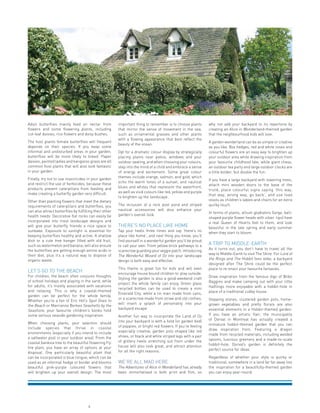
A butterfly garden is a great way to bring
yourself closer to the world from The Very
Hungry Caterpillar. If you have children, or are a
lover of insects, you will get hours of enjoyment
out of a butterfly-themed backyard.
Australia has approximately 400 species of
native butterflies, with most residing in tropical
and subtropical areas. The Queensland climate,
however, does attract a few dozen unique
butterfly species that are particularly active on
warm days in spring, summer and autumn.
Creating an environment butterflies can thrive in
can be as simple or complex as you like. You can
include native or exotic plants, or a combination
of both, and you can utilise a full backyard, or
only include one or two butterfly-friendly plants
– you just have to choose the right ones.
To attract butterflies you should provide a range of
nectar-producing plants, host plants (for females
to lay their eggs), a combination of native and
exotic plants (the majority of caterpillar species
need native plants), avoid insecticides, and focus
on blossoming flowers and bright colours.
Take a page of inspiration from your favourite childhood stories and create a
fun-filled backyard that will reignite your love for playing in the garden. To help
you reconnect with your childhood creativity, April Davis looks at how a spark
of imagination and a touch of whimsy can help you create an outdoor area that
is perfect for the whole family.
FreeImages.comGaryMcCord
3
FreeImages.comDavidBoylan
FreeImages.comCraigPitts
PhotoCourtesy:JeffHitchcock,“CozyHole”,Copyright©2012,CCBY2.0,www.flickr.com/photos/arbron
4
Adult butterflies mainly feed on nectar from
flowers and some flowering plants, including
cut-leaf daisies, rice flowers and daisy bushes.
The host plants female butterflies will frequent
depends on their species. If you keep some
informal and undisturbed areas in your garden,
butterflies will be more likely to breed. Paper
daisies, painted ladies and kangaroo grass are all
common host plants that will also look fantastic
in your garden.
Finally, try not to use insecticides in your garden
and restrict the use of herbicides, because these
products prevent caterpillars from feeding and
make creating a butterfly garden very difficult.
Other than planting flowers that meet the dietary
requirements of caterpillars and butterflies, you
can also attract butterflies by fulfilling their other
health needs. Decorative flat rocks can easily be
incorporated into most landscape designs and
will give your butterfly friends a nice space to
sunbake. Exposure to sunlight is essential for
keeping butterflies healthy and active. A shallow
dish or a cute tree hanger filled with old fruit,
such as watermelon and banana, will also ensure
the butterflies are getting enough amino acids in
their diet, plus it’s a natural way to dispose of
organic waste.
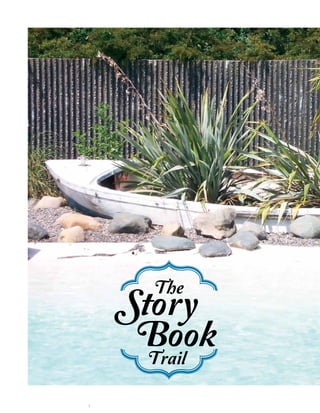
LET’S GO TO THE BEACH
For children, the beach often conjures thoughts
of school holidays and playing in the sand, while
for adults, it’s mostly associated with vacations
and relaxing. This is why a coastal-themed
garden can be perfect for the whole family.
Whether you’re a fan of Eric Hill’s Spot Goes to
the Beach or Marrianne Berkes Seashells by the
Seashore, your favourite children’s books hold
some serious seaside gardening inspiration.
When choosing plants, your selection should
include species that thrive in coastal
environments (especially if you intend to include
a saltwater pool in your outdoor area). From the
coastal banksia tree to the beautiful flowering Fiji
fire plant, you have an array of options at your
disposal. One particularly beautiful plant that
can be incorporated is blue tongue, which can be
used as an informal hedge or border and blooms
beautiful pink-purple coloured flowers that
will brighten up your overall design. The most
important thing to remember is to choose plants
that mirror the sense of movement in the sea,
such as ornamental grasses and other plants
with a flowing appearance that best reflect the
beauty of the ocean.
Opt for a dramatic colour display by strategically
placing plants near patios, windows and your
outdoor seating, and when choosing your colours,
step into the mind of a child and embrace a sense
of energy and excitement. Some great colour
themes include orange, salmon, and gold, which
echo the warm tones of a sunset, and nautical
blues and whites that represent the waterfront,
as well as vivid colours like red, yellow and purple
to brighten up the landscape.
The inclusion of a rock pool pond and striped
nautical accessories will also enhance your
garden’s overall look.
THERE’S NO PLACE LIKE HOME
Tap your heels three times and say ‘there’s no
place like home’, and next thing you know, you’ll
find yourself in a wonderful garden you’ll be proud
to call your own. From yellow brick pathways to a
scarecrow guarding your veggie patch, introducing
The Wonderful Wizard of Oz into your landscape
design is both easy and effective.
This theme is great fun for kids and will even
encourage house bound children to play outside.
Styling the garden is also a good weekend craft
project the whole family can enjoy. Green glass
recycled bottles can be used to create a mini
Emerald City, while a tin man made from cans,
or a scarecrow made from straw and old clothes,
will insert a splash of personality into your
backyard escape.
Another fun way to incorporate the Land of Oz
into your backyard is with a field (or garden bed)
of poppies, or bright red flowers. If you’re feeling
especially creative, garden pots shaped like red
shoes, or black and white striped legs with a pair
of glittery heels stretching out from under the
house will also look great, and attract attention
for all the right reasons.
WE’RE ALL MAD HERE
The Adventures of Alice in Wonderland has already
been immortalised in both print and film, so
why not add your backyard to its repertoire by
creating an Alice in Wonderland-themed garden
that the neighbourhood kids will love.
A garden wonderland can be as simple or creative
as you like. Box hedges, red and white roses and
colourful flowers are an easy way to brighten up
your outdoor area while drawing inspiration from
your favourite childhood tale, while giant chess,
an outdoor tea party and large outdoor clocks are
a little bolder, but double the fun.
If you have a large backyard with towering trees,
attach mini wooden doors to the base of the
trunk, place colourful signs saying ‘this way,
that way, wrong way, go back’, and use toad
stools as children’s tables and chairs for an extra
quirky touch.
In terms of plants, allium gladiators (large, ball-
shaped purple flower heads with silver tips) have
a real Queen of Hearts feel to them, and look
beautiful in the late spring and early summer
when they start to bloom.
A TRIP TO MIDDLE-EARTH
As it turns out, you don’t have to travel all the
way to Middle-Earth to visit The Shire. For Lord of
the Rings and The Hobbit fans alike, a backyard
designed after The Shire could be the perfect
place to re-enact your favourite fantasies.
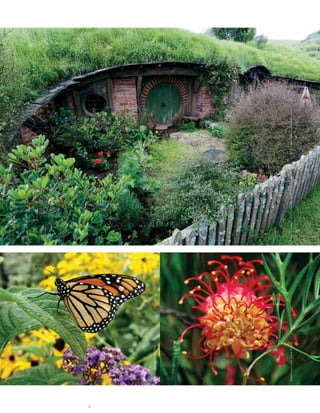
Draw inspiration from the famous digs of Bilbo
Baggins and make camping out with your little
Halflings more enjoyable with a hobbit-hole in
place of a traditional cubby house.
Stepping stones, clustered garden pots, home-
grown vegetables and pretty florals are also
essential elements in a Hobbit-themed garden.
If you have an artistic flair, the municipality
of Dorval in Montreal has actually created a
miniature hobbit-themed garden that you can
draw inspiration from. Featuring a dragon
made from recycled materials, including welded
spoons, luscious greenery and a made-to-scale
hobbit-hole, Dorval’s garden is definitely the
perfect source for ideas.
Regardless of whether your style is quirky or
traditional, somewhere in a land far far away lies
the inspiration for a beautifully-themed garden
you can enjoy year-round.
FreeImages.comMartinStickley

Story feat_QPOD13

  • 1.
  • 2.
    2 L ooking back onmy childhood, some of my fondest memories took place in the garden. My nanna had the most beautiful English cottage garden filled with wild flowers, garden arches and rose bushes, and I remember sitting in the grass with my favourite books for hours. Even as an adult, I still relish the thought of a well-presented, carefully-planned garden, especially if it’s styled after my favourite books. From Lewis Caroll’s tales of a secret wonderland to L. Frank Baum’s stories of magic and tin men, there are hundreds of years of literature filled with history’s most spectacular and fascinating gardens that can easily come to life in your very own backyard. A TROPICAL SETTING If you’re a fan of Graeme Base’s beautiful illustrations and can envisage yourself lazing around in a tropical-style backyard, a relaxed garden with lush-green foliage and floral displays could be your perfect match. Tropical-inspired landscapes are visually alluring, low-maintenance, and also suit any yard size or shape. Colourful vistas, linear pathways and bright focal points are all essential ingredients for this design, and compost and natural-looking mulch can easily replicate the rainforest floor. For maximum impact, arrange a combination of brightly-coloured plants that have red, yellow, orange, pink, purple or lime-green leaves together, accompanied by an assortment of colourful flowers, such as fragrant frangipani, strelitzia, ornamental ginger, and dramatic canna lilies for contrast and warmth. Pair these with palm trees, bamboo, cycads and other ground-dwelling foliage for a delightful, tropical- like green canopy. To scale your jungle-style garden down a notch and give it more of a residential resort feel, add some Balinese lanterns and bright- coloured cushions. A HOME AMONG THE GUM TREES Drawing inspiration from Aussie children’s classics Blinky Bill and Wombat Stew could see your garden replicating the wonders of the Australian bush. This type of garden is very informal and can be applied in small or large areas. A native garden is all about creating natural patterns similar to those found in the bush, and comes with an array of benefits, including little maintenance, minimal water requirements, and sustainability. A native theme works well in both small and large areas, however, a larger area will give you more opportunity to take advantage of Australia’s beautiful range of indigenous plants, such as wattle, velvet rush, weeping grass and dwarf bottlebrush. Ghost gums and MacDonnell range cycads are also valuable additions to a bigger space. A great way to liven up your yard is by introducing a selection of bush tucker and edible plants that will help your garden attract wildlife. If a native-Australian theme is right up your alley, opt for a simple colour palette and focus on rounded shapes to create an open, freeform style. AN ENGLISH ROSE Beatrix Potter always favoured informal English cottage gardens in her stories, so to re-create the world of Peter Rabbit and his siblings, Flopsy, Mopsy, and Cotton-tail, try to incorporate a mixture of colourful and fragrant plants that overflow from pots and garden beds. An informal cottage garden should create an effect similar to a vibrant woodland or field of flowers. Ground covers, flowering annuals and perennial flowering shrubs paired with climbers and roses will help to create this unplanned effect, while also ensuring your garden is bursting with variety. The great news is, if you’re a real green thumb, or a lover of organic home-grown produce, an English cottage garden pairs perfectly with a kitchen garden or potager for growing vegetables, herbs and fruit. Once established, a cottage garden will require little maintenance and will attract wildlife and insects. This type of garden is suitable for large spaces, but if space is at a premium, it can also be adapted to suit a courtyard or container garden. SPREAD YOUR WINGS A butterfly garden is a great way to bring yourself closer to the world from The Very Hungry Caterpillar. If you have children, or are a lover of insects, you will get hours of enjoyment out of a butterfly-themed backyard. Australia has approximately 400 species of native butterflies, with most residing in tropical and subtropical areas. The Queensland climate, however, does attract a few dozen unique butterfly species that are particularly active on warm days in spring, summer and autumn. Creating an environment butterflies can thrive in can be as simple or complex as you like. You can include native or exotic plants, or a combination of both, and you can utilise a full backyard, or only include one or two butterfly-friendly plants – you just have to choose the right ones. To attract butterflies you should provide a range of nectar-producing plants, host plants (for females to lay their eggs), a combination of native and exotic plants (the majority of caterpillar species need native plants), avoid insecticides, and focus on blossoming flowers and bright colours. Take a page of inspiration from your favourite childhood stories and create a fun-filled backyard that will reignite your love for playing in the garden. To help you reconnect with your childhood creativity, April Davis looks at how a spark of imagination and a touch of whimsy can help you create an outdoor area that is perfect for the whole family. FreeImages.comGaryMcCord
  • 3.
  • 4.
    4 Adult butterflies mainlyfeed on nectar from flowers and some flowering plants, including cut-leaf daisies, rice flowers and daisy bushes. The host plants female butterflies will frequent depends on their species. If you keep some informal and undisturbed areas in your garden, butterflies will be more likely to breed. Paper daisies, painted ladies and kangaroo grass are all common host plants that will also look fantastic in your garden. Finally, try not to use insecticides in your garden and restrict the use of herbicides, because these products prevent caterpillars from feeding and make creating a butterfly garden very difficult. Other than planting flowers that meet the dietary requirements of caterpillars and butterflies, you can also attract butterflies by fulfilling their other health needs. Decorative flat rocks can easily be incorporated into most landscape designs and will give your butterfly friends a nice space to sunbake. Exposure to sunlight is essential for keeping butterflies healthy and active. A shallow dish or a cute tree hanger filled with old fruit, such as watermelon and banana, will also ensure the butterflies are getting enough amino acids in their diet, plus it’s a natural way to dispose of organic waste. LET’S GO TO THE BEACH For children, the beach often conjures thoughts of school holidays and playing in the sand, while for adults, it’s mostly associated with vacations and relaxing. This is why a coastal-themed garden can be perfect for the whole family. Whether you’re a fan of Eric Hill’s Spot Goes to the Beach or Marrianne Berkes Seashells by the Seashore, your favourite children’s books hold some serious seaside gardening inspiration. When choosing plants, your selection should include species that thrive in coastal environments (especially if you intend to include a saltwater pool in your outdoor area). From the coastal banksia tree to the beautiful flowering Fiji fire plant, you have an array of options at your disposal. One particularly beautiful plant that can be incorporated is blue tongue, which can be used as an informal hedge or border and blooms beautiful pink-purple coloured flowers that will brighten up your overall design. The most important thing to remember is to choose plants that mirror the sense of movement in the sea, such as ornamental grasses and other plants with a flowing appearance that best reflect the beauty of the ocean. Opt for a dramatic colour display by strategically placing plants near patios, windows and your outdoor seating, and when choosing your colours, step into the mind of a child and embrace a sense of energy and excitement. Some great colour themes include orange, salmon, and gold, which echo the warm tones of a sunset, and nautical blues and whites that represent the waterfront, as well as vivid colours like red, yellow and purple to brighten up the landscape. The inclusion of a rock pool pond and striped nautical accessories will also enhance your garden’s overall look. THERE’S NO PLACE LIKE HOME Tap your heels three times and say ‘there’s no place like home’, and next thing you know, you’ll find yourself in a wonderful garden you’ll be proud to call your own. From yellow brick pathways to a scarecrow guarding your veggie patch, introducing The Wonderful Wizard of Oz into your landscape design is both easy and effective. This theme is great fun for kids and will even encourage house bound children to play outside. Styling the garden is also a good weekend craft project the whole family can enjoy. Green glass recycled bottles can be used to create a mini Emerald City, while a tin man made from cans, or a scarecrow made from straw and old clothes, will insert a splash of personality into your backyard escape. Another fun way to incorporate the Land of Oz into your backyard is with a field (or garden bed) of poppies, or bright red flowers. If you’re feeling especially creative, garden pots shaped like red shoes, or black and white striped legs with a pair of glittery heels stretching out from under the house will also look great, and attract attention for all the right reasons. WE’RE ALL MAD HERE The Adventures of Alice in Wonderland has already been immortalised in both print and film, so why not add your backyard to its repertoire by creating an Alice in Wonderland-themed garden that the neighbourhood kids will love. A garden wonderland can be as simple or creative as you like. Box hedges, red and white roses and colourful flowers are an easy way to brighten up your outdoor area while drawing inspiration from your favourite childhood tale, while giant chess, an outdoor tea party and large outdoor clocks are a little bolder, but double the fun. If you have a large backyard with towering trees, attach mini wooden doors to the base of the trunk, place colourful signs saying ‘this way, that way, wrong way, go back’, and use toad stools as children’s tables and chairs for an extra quirky touch. In terms of plants, allium gladiators (large, ball- shaped purple flower heads with silver tips) have a real Queen of Hearts feel to them, and look beautiful in the late spring and early summer when they start to bloom. A TRIP TO MIDDLE-EARTH As it turns out, you don’t have to travel all the way to Middle-Earth to visit The Shire. For Lord of the Rings and The Hobbit fans alike, a backyard designed after The Shire could be the perfect place to re-enact your favourite fantasies. Draw inspiration from the famous digs of Bilbo Baggins and make camping out with your little Halflings more enjoyable with a hobbit-hole in place of a traditional cubby house. Stepping stones, clustered garden pots, home- grown vegetables and pretty florals are also essential elements in a Hobbit-themed garden. If you have an artistic flair, the municipality of Dorval in Montreal has actually created a miniature hobbit-themed garden that you can draw inspiration from. Featuring a dragon made from recycled materials, including welded spoons, luscious greenery and a made-to-scale hobbit-hole, Dorval’s garden is definitely the perfect source for ideas. Regardless of whether your style is quirky or traditional, somewhere in a land far far away lies the inspiration for a beautifully-themed garden you can enjoy year-round. FreeImages.comMartinStickley