Statistics For Research With A Guide To Spss George Argyrous
Statistics For Research With A Guide To Spss George Argyrous
Statistics For Research With A Guide To Spss George Argyrous
Statistics For Research With A Guide To Spss George Argyrous
Statistics For Research With A Guide To Spss George Argyrous
1.
Statistics For ResearchWith A Guide To Spss
George Argyrous download
https://ebookbell.com/product/statistics-for-research-with-a-
guide-to-spss-george-argyrous-55616988
Explore and download more ebooks at ebookbell.com
2.
Here are somerecommended products that we believe you will be
interested in. You can click the link to download.
Statistics For Research With A Guide To Spss 2nd George Argyrous
https://ebookbell.com/product/statistics-for-research-with-a-guide-to-
spss-2nd-george-argyrous-1972682
Statistics For Research With A Guide To Spss 2nd Dr George Argyrous
https://ebookbell.com/product/statistics-for-research-with-a-guide-to-
spss-2nd-dr-george-argyrous-1134478
Student Study Guide With Ibm Spss Workbook For Research Methods
Statistics And Applications 2e 2nd Kathrynn A Adams
https://ebookbell.com/product/student-study-guide-with-ibm-spss-
workbook-for-research-methods-statistics-and-applications-2e-2nd-
kathrynn-a-adams-50722316
Student Study Guide 3rd Edition With Ibm Spss Workbook For Research
Methods Statistics And Applications 2nd Edition Kathrynn A Adams
https://ebookbell.com/product/student-study-guide-3rd-edition-with-
ibm-spss-workbook-for-research-methods-statistics-and-
applications-2nd-edition-kathrynn-a-adams-49480728
3.
Common Statistical MethodsFor Clinical Research With Sas Examples
Second Edition 2nd Glenn A Walker
https://ebookbell.com/product/common-statistical-methods-for-clinical-
research-with-sas-examples-second-edition-2nd-glenn-a-walker-2214250
Statistics For Research Third Edition 3rd Edition Shirley Dowdy
https://ebookbell.com/product/statistics-for-research-third-
edition-3rd-edition-shirley-dowdy-4312486
Statistics For Research In Psychology A Modern Approach Using
Estimation Rick Gurnsey
https://ebookbell.com/product/statistics-for-research-in-psychology-a-
modern-approach-using-estimation-rick-gurnsey-11798698
Using Ibm Spss Statistics For Research Methods And Social Science
Statistics 7th Edition 7th William E Wagner
https://ebookbell.com/product/using-ibm-spss-statistics-for-research-
methods-and-social-science-statistics-7th-edition-7th-william-e-
wagner-44871284
Using Ibm Spss Statistics For Research Methods And Social Science
Statistics Wagner
https://ebookbell.com/product/using-ibm-spss-statistics-for-research-
methods-and-social-science-statistics-wagner-5658284
About the author
GeorgeArgyrous has taught economics, research methods, and statistics at the University
of New South Wales since 1992, and has published articles on a wide range of topics,
including the use and abuse of statistics. He recently edited the popular text, Evidence for
Policy and Decision-Making. He has also consulted with many government agencies and
private companies on quantitative analysis, especially where it involves the use of SPSS.
George is currently working on a book addressing the problem of overwork and its
consequences, drawing on his own and others’ survey data.
This book isdedicated to Rae, Maria, and Josephine
11.
Table of contents
Preface
Part1 An introduction to statistical analysis
1 Variables and their measurement
2 Setting up an SPSS data file
Part 2 Descriptive statistics: Graphs and tables
3 The graphical description of data
4 The tabular description of data
5 Using tables to investigate the relationship between variables: Crosstabulations
6 Measures of association for crosstabulations: Nominal data
7 Measures of association for crosstabulations: Ranked data
8 Multivariate analysis of crosstabs: Elaboration
Part 3 Descriptive statistics: Numerical measures
9 Measures of central tendency
10 Measures of dispersion
11 The normal curve
12 Correlation and regression
13 Multiple regression
Multiple regression with SPSS
Part 4 Inferential statistics: Tests for a mean
14 Sampling distributions
15 Introduction to hypothesis testing and the one-sample z-test for a mean
16 The one-sample t-test for a mean
17 Inference using estimation and confidence intervals
18 The two-sample t-test for the equality of means
19 The F-test for the equality of more than two means: Analysis of variance
20 The two-dependent-samples t-test for the mean difference
12.
Part 5 Inferentialstatistics: Tests for frequency distributions
21 One-sample tests for a binomial distribution
22 One-sample tests for a multinomial distribution
23 The chi-square test for independence
24 Frequency tests for two dependent samples
Part 6 Inferential statistics: Other tests of significance
25 Rank-order tests for two or more samples
26 The t-test for a correlation coefficient
Part 7 Advanced topics
27 Statistical power
28 Generating new variables in SPSS: The Recode, Compute, and Multiple Response
commands
Appendix
Key equations
Glossary
Answers
Index
13.
Extended contents
Preface
Part 1An introduction to statistical analysis
1 Variables and their measurement
Learning objectives
The conceptualization and operationalization of variables
Scales of measurement
Levels of measurement
Univariate, bivariate, and multivariate analysis
Descriptive statistics
Exercises
2 Setting up an SPSS data file
Learning objectives
Obtaining a copy of SPSS
Alternatives to SPSS
Options for data entry in SPSS
The SPSS Data Editor
Assigning a variable name
Setting the data type
Setting the data width and decimal places
Defining variable labels
Defining value labels
Setting missing values
Setting the column format and alignment
Specifying the level of measurement
Specifying the role of each variable
Controlling the appearance of the Variable View
Shortcuts for defining variables
14.
Generating variable definitionsin SPSS
The SPSS Viewer window
Saving a data file
Data entry
Checking for incorrect values: Data cleaning
Working with a large data set
Summary
Exercises
Part 2 Descriptive statistics: Graphs and tables
3 The graphical description of data
Learning objectives
Some general principles
The SPSS Chart Builder
Pie graphs
Bar graphs
Histograms and polygons
Interpreting a univariate distribution
Graphing two variables
Common problems and misuses of graphs
Exercises
4 The tabular description of data
Learning objectives
Listed data tables
Simple frequency tables
Relative frequency tables: Percentages, proportions, and rates
Cumulative frequency tables
Class intervals
Percentiles
Frequency tables using SPSS
15.
Valid cases andmissing values
Improving the look of tables
Choosing between graphs and tables
Exercises
5 Using tables to investigate the relationship between variables: Crosstabulations
Learning objectives
Crosstabulations as descriptive statistics
Types of data suitable for crosstabulations
Crosstabulations with relative frequencies
Crosstabulations using SPSS
Interpreting a crosstabulation: The pattern and strength of a relationship
Interpreting a crosstabulation when both scales are at least ordinal
Summary
Exercises
6 Measures of association for crosstabulations: Nominal data
Learning objectives
Measures of association as descriptive statistics
Measures of association for nominal scales
Properties of lambda
Lambda using SPSS
Limitations on the use of lambda
Standardizing table frequencies
Exercises
7 Measures of association for crosstabulations: Ranked data
Learning objectives
Data considerations
Concordant pairs
Discordant pairs
Measures of association for ranked data
16.
Gamma
Somers’ d
Kendall’s tau-b
Kendall’stau-c
Measures of association using SPSS
Summary
Exercises
8 Multivariate analysis of crosstabs: Elaboration
Learning objectives
Direct relationship
Elaboration of crosstabs using SPSS
Partial gamma
Spurious or intervening relationship?
Conditional relationship
Summary
Exercises
Part 3 Descriptive statistics: Numerical measures
9 Measures of central tendency
Learning objectives
Measures of central tendency
The mode
The median
The mean
Choosing a measure of central tendency
Measures of central tendency using SPSS: Univariate analysis
Measures of central tendency using SPSS: Bivariate and multivariate analysis
Summary
Exercises
17.
10 Measures ofdispersion
Learning objectives
The range
The interquartile range
The standard deviation
Coefficient of relative variation
Index of qualitative variation
Measures of dispersion using SPSS
Summary
Exercises
11 The normal curve
Learning objectives
The normal distribution
Using normal curves to describe a distribution
z-scores
Normal curves in SPSS
Exercises
12 Correlation and regression
Learning objectives
Scatter plots
Linear regression
Pearson’s product moment correlation coefficient
Explaining variance: The coefficient of determination
Plots, correlation, and regression using SPSS
The assumptions behind regression analysis
Spearman’s rank-order correlation coefficient
Spearman’s rho using SPSS
Correlation where the independent variable is categorical: Eta
Summary
Exercises
18.
13 Multiple regression
Learningobjectives
Introduction to multiple regression
Multiple regression with SPSS
Testing for the significance of the multivariate model
Alternative methods for selecting variables in the regression model
Stepwise regression
Extending the basic regression analysis: Hierarchical regression
Extending the basic regression analysis: Adding categorical independent variables
The assumptions behind multiple regression
Exercises
Part 4 Inferential statistics: Tests for a mean
14 Sampling distributions
Learning objectives
Random samples
The sampling distribution of a sample statistic
The central limit theorem
Generating random samples using SPSS
Summary
Exercises
15 Introduction to hypothesis testing and the one-sample z-test for a mean
Learning objectives
Step 1: State the null and alternative hypotheses
Step 2: Choose the test of significance
Step 3: Describe the sample and derive the p-value
Step 4: Decide at what alpha level, if any, the result is statistically significant
Step 5: Report results
Error types in hypothesis testing
19.
What does itmean when we ‘fail to reject the null hypothesis’?
What does it mean to ‘reject the null hypothesis’?
The debate over one-tailed and two-tailed tests of significance
Summary
Appendix: Hypothesis testing using critical values of the test statistic
Exercises
16 The one-sample t-test for a mean
Learning objectives
The Student’s t-distribution
The one-sample t-test for a mean
The one-sample t-test using SPSS
Summary
Exercises
17 Inference using estimation and confidence intervals
Learning objectives
The sampling distribution of sample means
Estimation
Changing the confidence level
Changing the sample size
Estimation using SPSS
Confidence intervals and hypothesis testing
Exercises
18 The two-sample t-test for the equality of means
Learning objectives
Dependent and independent variables
The sampling distribution of the difference between two means
The two-sample t-test for the equality of means
The two-sample t-test using SPSS
Presenting the results of multiple tests
20.
Exercises
19 The F-testfor the equality of more than two means: Analysis of variance
Learning objectives
The one-way analysis of variance F-test
ANOVA using SPSS
Comparing means using general linear models
Exercises
20 The two-dependent-samples t-test for the mean difference
Learning objectives
Dependent and independent samples
The two-dependent-samples t-test for the mean difference
The two-dependent-samples t-test using SPSS
Exercises
Part 5 Inferential statistics: Tests for frequency distributions
21 One-sample tests for a binomial distribution
Learning objectives
Data considerations
The sampling distribution of sample percentages
The z-test for a binomial percentage
Estimating a population percentage
The z-test for a binomial percentage using SPSS
The runs test for randomness
The runs test using SPSS
Exercises
22 One-sample tests for a multinomial distribution
Learning objectives
The chi-square goodness-of-fit test
21.
The chi-square goodness-of-fittest using SPSS
The chi-square goodness-of-fit test for normality
Summary
Exercises
23 The chi-square test for independence
Learning objectives
The chi-square test and other tests of significance
Statistical independence
The chi-square test for independence
The distribution of chi-square
The chi-square test using SPSS
Problems with small samples
Problems with large samples
Presenting the results of multiple chi-square tests
Appendix: Hypothesis testing for two percentages
Exercises
24 Frequency tests for two dependent samples
Learning objectives
The McNemar chi-square test for change
The McNemar test using SPSS
The sign test
Summary
Exercises
Part 6 Inferential statistics: Other tests of significance
25 Rank-order tests for two or more samples
Learning objectives
Data considerations
The rank sum and mean rank as descriptive statistics
22.
The z-test forthe rank sum for two independent samples
Wilcoxon’s rank-sum z-test using SPSS
The Wilcoxon signed-ranks z-test for two dependent samples
The Wilcoxon signed-ranks test using SPSS
Other non-parametric tests for two or more samples
Appendix: The Mann–Whitney U-test
Exercises
26 The t-test for a correlation coefficient
Learning objectives
The t-test for Pearson’s correlation coefficient
Testing the significance of Pearson’s correlation coefficient using SPSS
The t-test for Spearman’s rank-order correlation coefficient
Testing the significance of Spearman’s correlation coefficient using SPSS
Testing for significance in multiple regression
Presenting results of multiple bivariate correlations
Exercises
Part 7 Advanced topics
27 Statistical power
Learning objectives
Calculating statistical power
Effect size
Prospective power analysis
Retrospective power analysis
Factors affecting statistical power
Summary
28 Generating new variables in SPSS: The Recode, Compute, and Multiple Response
commands
Learning objectives
Recoding variables
23.
Using Recode toconvert a string variable to a numeric variable
Some issues with recoding
Computing new variables
The SPSS Multiple Response command
Summary
Appendix
Table A1 Area under the standard normal curve
Table A2 Critical values for t-distributions
Table A3 Critical values for F-distributions (α = 0.05)
Table A4 Critical values for chi-square distributions
Table A5 Sampling errors for a binomial distribution (95% confidence level)
Table A6 Sampling errors for a binomial distribution (99% confidence level)
Key equations
Glossary
Answers
Index
24.
Preface
This book isaimed at students and professionals who do not have any existing knowledge
in the field of statistics. It is not unreasonable to suggest that most people who fit that
description come to statistics reluctantly, if not with hostility. It is usually regarded as ‘that
course we had to get through’. I suspect that many instructors when confronted with the
prospect of having to teach the following material also share a sense of dread.
This book will ease these problems. It is written by a non-statistician for non-
statisticians, for students who are new to the subject, and for professionals who may use
statistics occasionally in their work. It is certainly not the only book available that
attempts to do this. One might in fact respond with the statement ‘not another stats book!’
There are important respects, however, in which this book is different from the other
numerous books in the field. This book differentiates itself from other texts in the
following ways:
Communication of ideas. This book is written with the aim of communicating the basic ideas and procedures of
statistical analysis to the student and user, rather than as a technical exposition of the fine points of statistical theory.
The emphasis is on the explanation of basic concepts and especially their application to ‘real-life’ problems, using a
more conversational tone than is often the case. Such an approach may not be as precise as others in dealing with
statistical theory, but it is often the mass of technical detail that leaves readers behind and turns potential users of
statistical analysis away.
Integrated use of SPSS. This book integrates the conceptual material with the use of the main computer software
package, SPSS. The development and availability of this software have meant that for most people ‘doing stats’ equals
using a computer. The two tasks have converged. Most books have not caught up with this development and
adequately integrated the use of computer packages with statistical analysis. Some concentrate on the logic and
formulae involved in statistical analysis and the calculation ‘by hand’ of problem solutions. At best, these books have
appendices that give brief introductions and guides to computer packages, but this does not bridge the gap between the
hand calculations and the use of computer software. Other texts concentrate on SPSS and its detailed use, without
adequate discussion of the underlying statistical concepts. This book builds the use of SPSS into the text. The logic
and application of various statistical techniques are explained, and then the examples are reworked in SPSS. Readers
can link explicitly the traditional method of working through problems ‘by hand’ and working through the same
problems in SPSS. Exercises also explicitly attempt to integrate the hand calculations with the use and interpretation
of computer output.
To help readers along, a website to support this book contains the data necessary to generate the results in the
following chapters, so that all the procedures described there can be replicated. You will need your own copy of SPSS
to perform these procedures, and Chapter 2 lists a number of means by which you can obtain SPSS.
It is necessary, however, to point out that this is not a complete guide to SPSS. This book simply illustrates how
SPSS can be used to deal with the basic statistical techniques that most researchers commonly encounter. It does not
exhaust the full range of functions and options available in SPSS. For the advanced user, nothing will replace the
User’s Guide published by SPSS. But for most people engaged in research, the following text will allow them to
handle the bulk of the problems they will encounter.
For users of other statistics packages, the files are also saved in ASCII and Excel format so that they can be
imported to these programs, along with a Readme file with the data definitions. All the files, and periodic minor
updates and corrections, can be obtained at the following website:
www.uk.sagepub.com/argyrous3
Clear guide to choosing the appropriate procedures. This book is organized around the individual procedures (or sets
of procedures) needed to deal with the majority of problems people encounter when analysing quantitative data. Other
texts flood the reader with procedure after procedure, which can be overwhelming. How to choose between the
options? This book concentrates on just the most widely used techniques, and sorts through them by building the
25.
structure of thebook around these options. Entire chapters are devoted to individual tests so that the situations in
which a particular test is applied will not be confused with situations that call for other tests. Thus, after working
through the text, readers can turn to individual chapters as needed in order to address the particular problems they
encounter.
Chapters are organized around major classes of descriptive techniques. The early editions of this book were
criticized, rightly I believe, for being too rigid in their emphasis on the limits placed on analysis by levels of
measurement. When people analyse data they usually think in terms of classes of statistics first, such as central
tendency, frequency tables, or correlation. The level at which variables are measured is an important consideration,
but does not correspond to the way researchers ‘think’ about the problems they want to address. To accommodate this,
chapters have been organized into parts around the mainly used descriptive techniques, with data considerations
forming an element in the exposition of those techniques.
Reference to material available on the internet. The material now available on the internet is extensive and growing
all the time. The lack of ‘quality control’, however, can make the use of such material fraught with perils. I have
drawn on internet tools where appropriate and where I have been able to assess the quality of the information and
resources presented. I have given the address for these internet sources in the text, but the reader should be aware that
the maintenance of these sites is beyond the control of either myself or Sage.
Greater emphasis on reporting results. I have found that researchers are often at a loss as to how to communicate their
findings. I therefore have built into the five-step hypothesis testing procedure an explication of how to report findings.
Getting results is one thing, but unless these can be communicated, especially to a general audience, their importance
is lost. This strength of the text has been developed in this edition through presentation of extracts from published
research so that readers can ‘see how it is done’. Many chapters also have an exercise added that involves reviewing
the presentation of results in published works that can be downloaded from the website for the book. Reference to the
literature on statistical methods. Textbooks are always a lie. They present a field of knowledge as uncontroversial,
when in fact it is usually a terrain of hot debate. This is no less the case with statistics textbooks, including previous
incarnations of this one. Rather than continue the lie, I have introduced at various places some important points of
debate and references to the literature where those interested can pursue the debates further.
Material and examples do not require any discipline-specific knowledge. This book takes a ‘generic’ approach to
teaching statistics, so that it is of value to researchers in any field. It does not target any one disciplinary area. Its
appeal is to all researchers who need some basic understanding of quantitative methods and the use of SPSS. Some
specialized topics that are normally covered in specific fields, such as the greater interest in small sample problems in
the health sciences than in the social sciences, are not as a result covered. I have found, however, that instructors or
students can supplement the basic techniques covered in this text with such specialized topics as required, especially
given the vast amount of material now available on the internet.
Having noted the main features of this book as compared to others in the field, it is also
worth noting what this book is not. This book looks at the analysis of quantitative data,
and only the analysis of quantitative data. It makes no pretence to being a comprehensive
guide to social or health research. Issues relating to the selection of research problems, the
design of research methods, and the procedures for checking the validity and reliability of
results are not covered. Such a separation of statistics from more general considerations in
the design of research is a dangerous practice since it may give the impression that
statistical analysis is research. Nothing could be further from the truth. Statistical analysis
is one way of processing information, and not always the best. Nor is it a way of proving
anything (despite the rhetorical language it employs). At best it is evidence in an ongoing
persuasive argument. The separation of statistics from the research process in general may
in fact be responsible for the over-exalted status of statistics as a research tool.
Why, then, write a book that reinforces this separation? First, there is the simple fact
that no single book can do everything. Indeed, other books exist which detail the issues
involved in research and the place of statistical analysis in the broader research process.
Rather than duplicating such efforts, this book is meant to sit side by side with such texts
and to provide the methods of statistical analysis when required. Second, statistical
analysis is hard. It raises distinct issues and problems of its own which warrant a self-
contained treatment.
26.
For the researcheror student using this book I have included other material on the
website that supports the book, especially chapters on detailed SPSS procedures that were
too specialized for the actual text but that may be of interest. I will be adding more
material (including a list of corrections to any errors that may be discovered) over time, so
you may wish to check this site periodically for such new material.
For the instructor, I have a wealth of material available for you at your request. This
includes PowerPoint slides, Flash presentations, complete web pages for use in on-line
courses, and a database of over 500 quiz questions in a variety of on-line elearning
platforms such as Blackboard and Moodle that can be used for testing students and also
for providing tutorial exercises. These can be obtained by contacting the author at the
email address below.
In the preparation of this edition I have been greatly assisted by the comments of many
people who read the previously published versions of this book, and my thanks go to
them. I am especially grateful to the editorial support from the staff at Sage, and especially
to Richard Leigh who rescued the manuscript from many errors.
Lastly, to the reader, I welcome any comments and criticisms, which can be passed on
to me at george.argyrous@me.com
ONE
Variables and theirmeasurement
Learning objectives
At the end of this chapter you will to able to:
identify the cases of interest to a research study
identify the variables of interest to a research study
understand the issues involved in conceptualizing and operationalizing a variable
understand the difference between nominal, ordinal, and interval/ratio levels of measurement
identify the dependent and independent variables in a theoretical model
know the different classes of statistical techniques
This book helps people analyse quantitative information. Before detailing the ‘hands-on’
analysis we will explore in later chapters, this introductory chapter will discuss some of
the background conceptual issues that are precursors to statistical analysis. The most
important of these background issues is the determination of research questions.
Research Question
A research question states the aim of a research project in terms of cases of interest and the variables upon
which these cases are thought to differ.
A few examples of research questions are:
‘What is the age distribution of the students in my statistics class?’
‘Is there a relationship between the health status of the students in my statistics class and their sex?’
‘Is any relationship between the health status and the sex of students in my statistics class affected by the age of the
students?’
We begin with very clear, precisely stated, research questions such as these to guide our
research, and to ensure we do not end up with a jumble of information that does not create
any real knowledge. We need a clear research question (or questions) in mind before
undertaking statistical analysis to avoid the situation where huge amounts of data are
gathered unnecessarily and do not lead to any meaningful results. I suspect that a great
deal of the confusion associated with statistical analysis actually arises from imprecision
in the research questions that are meant to guide it. It is very difficult to select the relevant
type of analysis to undertake on a given set of data, given the many possible analyses we
could employ, if we are not certain of our objectives. If we don’t know why we are
undertaking research in the first place, then it follows that we will not know what to do
with research data once we have gathered them. Conversely, if we are clear about the
research question(s), the statistical techniques to apply follow almost as a matter of course.
Each of the research questions above identifies the entities that I wish to investigate. In
29.
each question theseentities are students in my statistics class, who are thus the units of
analysis – the cases of interest – to my study.
Case
A case is an entity that displays or possesses the traits of a variable.
In this example, as in many others, the cases are individual people. It is important to
bear in mind, however, that this is not always so. For example, if I am interested in
retention rates for high schools in a particular area, the cases will be high schools. It is
individual high schools that are ‘stamped’ with a label indicating their respective retention
rate.
In the research questions listed above, all the students in my statistics class constitute
my target population (sometimes called a universe).
Population
A population is the set of all possible cases of interest.
In determining our population of interest, we usually specify the point in time that
defines the population – am I interested in my currently enrolled statistics students, or
those who also completed my course last year? We also specify, where relevant, the
geographic region over which the population spreads.
For reasons we will investigate later, we may not be able to, or not want to, investigate
the entire population of interest. Instead we may select only a subset of the population, and
this subset is called a sample.
Sample
A sample is a set of cases that does not include every member of the population.
For example, it may be too costly or time-consuming to include every student in my study.
I may instead choose only those students in my statistics class whose last name begins
with ‘A’, and thus be only working with a sample.
Suppose that I do take this sample of students from my statistics class. I will observe
that these students differ from each other in many ways: they may differ in terms of sex,
height, age, attitude towards statistics, religious affiliation, health status, etc. In fact, there
are many ways in which the cases in my study may differ from each other, and each of
these possible expressions of difference is a variable.
Variable
A variable is a condition or quality that can differ from one case to another.
The opposite notion to a variable is a constant, which is simply a condition or quality
that does not vary among cases. The number of cents in a United States dollar is a
constant: every dollar note will always exchange for 100 cents. Most research, however, is
devoted to understanding variables – whether (and why) a variable takes on certain traits
30.
for some casesand different traits for other cases.
The conceptualization and operationalization of variables
Where do variables come from? Why do we choose to study particular variables and not
others? The choice of variables to investigate is affected by a number of complex factors,
three of which I will emphasize here.
1. Theoretical framework. Theories are ways of interpreting the world and reconciling ourselves to it, and even
though we may take for granted that a variable is worthy of research, it is in fact often a highly charged selection
process that directs one’s attention to it. We may be working within an established theoretical tradition that
considers certain variables to be central to its world-view. For example, Marxists consider ‘economic class’ to be a
variable worthy of research, whereas another theoretical perspective might consider this variable to be
uninteresting. Analysing the world in terms of economic class means not analysing it in other ways, such as social
groups. This is neither good nor bad: without a theory to order our perception of the world, research will often
become a jumble of observations that do not tie together in a meaningful way. We should, though, acknowledge
the theoretical preconceptions upon which our choice of variables is based.
2. Pre-specified research agenda. Sometimes the research question, and thereby the variables to be investigated, is
not determined by the person analysing the data. For example, a consultant may contract to undertake research
that has terms of reference set in advance by the contracting body. In such a situation the person or people actually
doing the research might have no choice over the variables to be investigated and how they are to be defined,
since they are doing work for someone else.
3. Curiosity-driven research. Sometimes we might not have a clearly defined theoretical framework to operate in,
nor clear directives from another person or body as to the key concepts to be investigated. Instead we want to
investigate a variable purely on the basis of a hunch: a loosely conceived feeling that something useful or
important might be revealed if we study a particular variable. This can be as important a reason for undertaking
research as theoretical imperatives. Indeed, when moving into a whole new area of research, into which existing
theories have not ventured, simple hunches can be fruitful motivations.
These three motivations are obviously not mutually exclusive. For example, even if
another person determines the research question, that person will almost certainly be
operating within some theoretical framework. Whatever the motivation, though, social
inquiry will initially direct us to particular variables to be investigated. At this initial stage
a variable is given a conceptual definition.
Conceptual Definition
The conceptual definition (or nominal definition) of a variable uses literal terms to specify the qualities of
a variable.
A conceptual definition is much like a dictionary definition: it provides a working
definition of the variable so that we have a general sense of what it ‘means’. For example,
I might define ‘health’ conceptually as ‘an individual’s state of well-being’.
It is clear, though, that if I now instruct researchers to go out and measure people’s
‘state of well-being’, they would leave scratching their heads. The conceptual definition of
a variable is only the beginning; we also need a set of rules and procedures – operations –
that will allow us to actually ‘observe’ a variable for individual cases. What will we look
for to identify someone’s health status? How will the researchers record how states of
well-being vary from one person to the next? This is the problem of operationalization.
31.
Operational Definition
The operationaldefinition of a variable specifies the procedures and criteria for taking a measurement of
that variable for individual cases.
A statement such as ‘a student’s health status is measured by how far in metres they can
walk without assistance in 15 minutes’ provides one operational definition of health status.
With this definition in hand I can start measuring the health status of students in my
statistics class by observing distance covered in the set time limit following the rules and
procedures laid down by this definition.
The determination of an operational definition for a variable is a major, if not the major,
source of disagreement in research. Any variable can usually be operationalized in many
different ways, and no one of these definitions may be perfect. For example,
operationalizing health status by observing a student’s ability to complete a walking task
leaves out an individual’s own subjective perception of how healthy they feel.
What criteria should be used in deciding whether a particular operational definition is
adequate? In the technical literature this is the problem of construct validity. Ideally, we
look for an operationalization that will vary when the underlying variable we think it
‘shadows’ varies. A mercury thermometer is a good instrument for measuring changes in
daily temperature because when the underlying variable (temperature) changes, the
instrument for measuring it (the height of the bar of mercury) also changes. If the
thermometer is instead full of water rather than mercury, variations in daily temperature
will not be matched by changes in the thermometer reading. Two days might be different
in temperature, without this variation being ‘picked up’ by the instrument. Coming back to
our example of health status, and relying on an operational definition that just measures
walking distance covered in a certain time, we might record two people as being equally
healthy, when in fact they differ. Imagine two people who each walk 2200 metres in 15
minutes, but one of these people cannot bend over to tie their shoelace because of a bad
back. Clearly there is variation between the two people in terms of their health – their state
of well-being. But this variation will not be recorded if we rely solely on a single measure
of walking ability.
Consider the following example to illustrate further the ‘slippage’ that can occur when
moving from a conceptual to an operational definition. A study is interested in people’s
‘criminality’. We may define criminality conceptually as ‘non-sanctioned acts of violence
against other members of society or their property’. How can a researcher identify the
pattern of variation in this variable? A number of operational definitions could be
employed:
counting a person’s number of criminal arrests from official records;
calculating the amount of time a person has spent in jail;
asking people whether they have committed crimes;
recording a person’s hair colour.
Clearly, it would be very hard to justify the last operationalization as a valid one: it is
not possible to say that two people who differ in hair colour also differ in terms of their
32.
respective criminality! Theother operational definitions seem closer to the general
concept of criminality, but each has its own problems: asking people if they have
committed a crime may not be a perfect measure because people might not be truthful
about such a touchy subject. Counting the number of times a person has been arrested is
not perfect – two people may actually have the same level of criminality, yet one might
have more recorded arrests because they are a member of a minority group that the police
target for arrest. This operationalization may thereby actually be measuring a different
variable than the one intended: the biases of police rather than ‘criminality’. Using any of
these operational definitions to measure a person’s criminality may not perfectly mirror
the result we would get if we could ‘know’ their criminality.
A number of factors affect the extent to which we can arrive at an operational definition
of a variable that has high construct validity:
1. The complexity of the concept. Some variables are not very complex: a person’s sex, for example, is determined
by generally accepted physical attributes (although even this seemingly straightforward variable can be difficult to
operationalize in specific contexts, as we shall see). However, most variables are rarely so straightforward. Health
status, for example, has a number of dimensions. At a broad level we can differentiate between physical, mental,
and emotional health; two people might be physically well, but one is an emotional wreck while the other is happy
and contented. If we operationalize health status by looking solely at the physical dimension of its expression,
important differences in this variable may not be observed. Indeed, these broad dimensions of health status –
physical, mental, and emotional – are each conceptual variables in themselves, and raise problems of
operationalization of their own. If we take physical health as our focus, we still need to think about all of its
particular forms of expression, such as the ability to walk, carry weight, percentage of body fat, etc.
2. Availability of data. We might have an operationalization that seems to capture perfectly the underlying variable
of interest. For example, we might think that number of arrests is a flawless way of ‘observing’ criminality. The
researchers, though, may not be allowed, for privacy reasons, to review police records to compile the information.
Clearly, a less than perfect operationalization will have to be employed, simply because we cannot get our hands
on the ‘ideal’ data.
3. Cost and difficulty of obtaining data. Suppose we were able to review police records and tally up the number of
arrests. The cost of doing so, though, might be prohibitive, in terms of both time and money. Similarly, we might
feel that a certain measure of water pollution is ideal for assessing river degradation, but the need to employ an
expert with sophisticated measuring equipment might bar this as an option, and instead a subjective judgement of
water ‘murkiness’ might be preferred as a quick and easy measure.
4. Ethics. Is it right to go looking at the details of an individual’s arrest record, simply to satisfy one’s own research
objectives? The police might permit it, and there might be plenty of time and money available, but does this
justify looking at a document that was not intended to be part of a research project? The problem of ethics –
knowing right from wrong – is extremely thorny, and I could not even begin to address it seriously here. It is
simply raised as an issue affecting the operationalization of variables that regularly occurs in research dealing
with the lives of people. (For those wishing to follow up on this important issue, a good starting point is R.S.
Broadhead, 1984, Human rights and human subjects: Ethics and strategies in social science research, Sociological
Inquiry, 54, pp. 107–23, and P. Spicker, 2007, The ethics of policy research, Evidence & Policy, 3:1, pp. 99–118.)
For these (and other) reasons a great deal of debate about the validity of research centres
around this problem of operationalization. In fact, many debates surrounding quantitative
research are not actually about the methods of analysis or results of the research, but rather
whether the variables have been ‘correctly’ defined and measured in the first place. Unless
the operational criteria used to measure a variable are sensitive to the way the variable
actually changes, they will generate misleading results.
Scales of measurement
33.
We have, inthe course of discussing the operationalization of variables, used the word
‘measurement’.
Measurement
Measurement (or observation) is the process of determining and recording which of the possible traits of a
variable an individual case exhibits or possesses.
To undertake the process of measurement we need to construct a scale of
measurement.
Scale of Measurement
A scale of measurement specifies a range of scores (also called points on the scale) that can be assigned to
cases during the process of measurement.
Constructing a scale of measurement involves two steps:
(i) determining the points that will make up the scale;
(ii) specifying the criteria by which individual cases will be assigned to one (and only one) point on the scale.
To illustrate these steps we can look at the way ‘sex’ is commonly measured. A scale is
set up with two points: male and female. It is then left up to each individual to assign
themselves to one of these points or the other. But if we look at each of these two steps
more closely we can see that scale construction is not such a straightforward matter, even
for a seemingly simple variable such as a person’s sex.
Take first the issue of determining the points that make up the scale. For most people
these two categories of male and female will be sufficient. But for a very small group, the
simple classification as either male or female is a violation of their sense of identity. The
issue is further complicated when the closely related variable of ‘gender’ is used as a
criterion for determining ‘sex’. Gender is a social construction that has the expressions of
(at least) masculine and feminine, which may or may not directly map onto the categories
of male or female.
Even if we accept that the categories of male and female are sufficient to capture the
possible expressions of the variable ‘sex’, the criteria for assigning people to one or the
other category can be open to debate. As we mentioned, common practice is to allow
people to self-identify as either male or female. But in particular instances, using self-
classification will cause problems. Other possible operations that can be used to assign
people to a category for sex include using their genetic structure or their physical
expressions. A practical example where this issue has had to be resolved is the
International Olympic Committee’s need to determine who can compete in male or female
competitions (see http://bit.ly/bdoHSs for the IOC’s discussion of this issue). This is also a
problem for the prison system in any country where prisoners need to be assigned to either
male or female prisons. Imagine the distress that might eventuate if someone who self-
identifies as female is placed into the male prison system on the basis of physical
appearance.
These practical problems involved in constructing a scale of measurement can be eased
if we take into account two general principles. The first principle is that the scale must
34.
capture sufficient variationto allow us to answer our research question(s). Take the
research questions that I posed at the start of this chapter regarding my statistics students. I
ask each student ‘How old were you in whole years on your last birthday?’ This produces
a scale with whole years as the points on the scale, and will yield a variety of scores for
age, given the fact that my students were born in different years. Imagine, though, that I
was teaching a class of pre-school students; measuring age with this scale will be
inadequate since most or all of the students will have been born in the same year. Using a
measurement scale for age that only registers whole years will not pick up enough
variation to help me meet my objectives; every student in the class will appear to be the
same age. I might consider, instead, using ‘number of whole months elapsed since birth’ as
the scale of measurement. Age in months will capture variation among students in a pre-
school class that age in years will miss.
This example of the age for a group of students highlights a problem when we set up a
scale to measure variation for a continuous variable that does not arise when we try to
measure a discrete variable.
Discrete Variable
A discrete variable has a finite number of values. A continuous variable can vary in quantity by
infinitesimally small degrees.
For example, the sex of students is a discrete variable, usually with only two possible
categories (male or female). Discrete variables often have a unit of measurement that
cannot be subdivided, such as the number of children per household. Other examples of
discrete variables are the number of prisoners per jail cell, the number of welfare agencies
in a district, and the number of industrial accidents in a given year.
The age of students, on the other hand, is a continuous variable. Age can conceivably
change in a gradual way from person to person, or for the same person over time. Because
of this, units that can be infinitely subdivided measure continuous variables. We may
begin by measuring age, for example, in terms of years. But a year can be divided into
months, and months into weeks, weeks into days, and so on. The only limit is exactly how
much variation in age we want to detect: years capture less variation than months, and
months less than weeks. Theoretically, with a continuous variable we can move gradually
and smoothly from one value of the variable to the next without having to jump.
Practically, though, we will always have to ‘round off’ the measurement and treat a
continuous variable as if it is discrete, and this causes the scale of measurement to ‘jump’
from one point on the scale to the next. The scale is by necessity discrete, even though the
underlying variable is continuous.
The use of a discrete measurement scale to measure age, whether we do it in years or
months, causes us to cluster cases together into groups. The points on the scale act like
centres of gravity pulling in all the slight variations around them that we do not want to
worry about. We may say that two people are each 18 years old, but they will in fact be
different in terms of age, unless they are born precisely at the same moment. But the slight
difference that exists between someone whose age is 18 years, 2 months, 5 days, 2 hours,
12 seconds… and someone whose age is 18 years, 3 months, 14 days, 7 hours, 1 second…
might be irrelevant for the research problem we are investigating and we treat them the
35.
same in termsof the variable, even though they are truly different. No measurement scale
can ever hope to capture the full variation expressed by a continuous variable. The
practical problem we face is whether the scale captures enough variation to help us answer
our research question.
The second guiding principle for constructing a scale of measurement is that a scale
must allow us to assign each case into one, and only one, of the points on the scale. This
statement actually embodies two separate principles. The first is the principle of
exclusiveness, which states that no case should have more than one value for the same
variable. For example, someone cannot be both 18 years of age and 64 years of age.
Measurement must also follow the principle of exhaustiveness, which states that every
case can be classified into a category. A scale for health status that only has ‘healthy’ and
‘very healthy’ as the points on the scale is obviously insufficient; anyone who is less than
healthy cannot be measured on this scale.
Levels of measurement
A scale of measurement allows us to collect data that give us information about the
variable we are trying to measure.
Data
Data are the measurements taken for a given variable for each case in a study.
Scales of measurement, however, do not provide the same amount of information about
the variables they try to measure. In fact, we generally talk about measurement scales
having one of four distinct levels of measurement: nominal, ordinal, interval, and ratio
(see the original formulation of this distinction by S.S. Stevens, 1946, On the theory of
scales of measurement, Science, 103:2684, pp. 677–80, for a discussion that still has much
contemporary relevance).
We speak of levels of measurement because the higher the level of measurement, the
more information we have about a variable. These levels of measurement are a
fundamental distinction in statistics, since they determine much of what we can do with
the data we gather. In fact, when considering which of the myriad of statistical techniques
we can use to analyse data, usually the first question to ask is the level at which a variable
has been measured. As we shall see, there are things we can do with data collected at the
interval level of measurement that we cannot do with data collected at the nominal level.
Nominal scales
The lowest level of measurement is a nominal scale.
Nominal
A nominal scale of measurement classifies cases into categories that have no quantitative ordering.
For example, assume I am interested in people’s religion. Operationally I define a person’s
religion as the established church to which they belong, providing the following range of
36.
categories: Muslim, Hindu,Jewish, Christian, Other.
Notice that to ensure the scale is exhaustive this nominal scale, like most nominal
scales, has a catch-all category of ‘Other’. Such a catch-all category, sometimes labelled
‘miscellaneous’ or ‘not elsewhere counted’, at the end of the scale often provides a quick
way of identifying a nominal scale of measurement.
Another easy way to detect a nominal scale is to rearrange the order in which the
categories are listed and see if the scale still ‘makes sense’. For example, either of the
following orders for listing religious denomination is valid:
The order in which the categories appear does not matter, provided the rules of exclusivity
and exhaustiveness are followed. This is because there is no sense of rank or order of
magnitude: one cannot say that a person in the ‘Christian’ category has more or less
religion than someone in the ‘Hindu’ category. In other words, a variable measured at the
nominal level varies qualitatively but not quantitatively: someone in the Christian category
is qualitatively different from someone in the Hindu category, with respect to the variable
‘Religion’, but they do not have more or less Religion.
It is important to keep this in mind, because for convenience we can assign numbers to
each category as a form of shorthand (a process that will be very useful when we later
have to enter data into SPSS). Thus I may code – assign numbers to – the categories of
religion in the following way:
These numbers, however, are simply category labels that have no quantitative meaning.
The numbers simply identify different categories, but do not express a mathematical
relationship between those categories. They are used for convenience to enter and analyse
data. I could just as easily have used the following coding scheme to assign numerical
values to each category:
Ordinal scales
An ordinal scale of measurement also categorizes cases. Thus nominal and ordinal scales
are sometimes collectively called categorical scales. However, an ordinal scale provides
additional information.
Ordinal
An ordinal scale of measurement, in addition to the function of classification, allows cases to be rank-
ordered according to measurements of the variable.
Ranking involves ordering cases in a quantitative sense, such as from ‘lowest’ to
37.
‘highest’, from ‘less’to ‘more’, or from ‘weakest’ to ‘strongest’, and is particularly
common when measuring attitude or satisfaction in opinion surveys. For example, assume
that in trying to measure age I settle on the following scale:
This scale clearly does the task of a nominal scale, which is to assign cases into
categories. In addition to this it also allows me to say that someone who is in the ‘19 to 65
years’ category is older than someone in the ‘18 years or less’ category. Put another way,
the person who is ‘19 to 65 years’ old is ranked above someone who is ‘18 years or less’.
Unlike nominal data, a case in one category is not only different than a case in another, it
is ‘higher’, or ‘stronger’, or ‘bigger’, or more ‘intense’: there is directional change.
Unlike nominal scales, we cannot rearrange the categories without the ordinal scale
becoming senseless. If I construct the scale in the following way, the orderly increase in
age as we move across the page from left to right is lost:
As with nominal data, numerical values can be assigned to the points on the scale as a
form of shorthand, but with ordinal scales these numbers also need to preserve the sense
of ranking. Thus either of the following sets of numbers can be used:
Either coding system allows the categories to be identified and ordered with respect to
each other, but the numbers themselves do not have any quantitative significance beyond
this function of ranking.
One common mistake in statistical analysis is to treat scales that allow either a ‘No’ or
‘Yes’ response as only nominal, when they are almost invariably ordinal. Consider a
question that asks participants in a study ‘Do you feel healthy?’ We can say that someone
who responds ‘Yes’ is not only different in their (perceived) health level, but they also
have a higher health level than someone who responds ‘No’. Practically any question that
offers a Yes/No response option can be interpreted in this way as being an ordinal scale.
Interval/ratio scales
Ordinal scales permit us to rank cases in terms of a variable; we can, for example, say that
one case is ‘better’ or ‘stronger’ than another. But an ordinal scale does not allow us to say
by how much a case is better or stronger when compared with another. If I use the above
age scale, I cannot say how much older or younger someone in one category is than
someone in another category. It would be misleading for me to use the second of the
coding schemes above and say that someone in the oldest group has 76 more units of age
than someone in the youngest group (i.e. 99 − 23 = 76). The distances – intervals –
between the categories are unknown. Suppose, however, we measure age in an alternative
way, by asking each person how many whole years have elapsed between birth and their
last birthday. Clearly, I can perform the task of assigning people into groups based on the
number of years. I can also perform the task of rank-ordering cases according to these
38.
measurements by indicatingwho is older or younger. Unlike nominal and ordinal scales,
however, I can also measure the amount difference in age between cases. In this
measurement scale the numbers we get do really signify a quantitative value: number of
years. It is this ability to measure the distances between points on the scale that makes this
method of observing age an interval/ratio scale.
Interval ratio
An interval scale has units measuring intervals of equal distance between values on the scale. A ratio scale
has a value of zero indicating cases where no quantity of the variable is present.
In other words, not only can we say that one case has more (or less) of the variable in
question than another, but we can also say how much more (or less). Thus someone who is
25 years old has 7 years more age than someone who is 18 years old; we can measure the
interval between them. Moreover, the intervals between points on the scale are of equal
value over its whole range, so that the difference in age between 18 and 25 years is the
same as the difference in age between 65 and 72 years.
Clearly the numbers on an interval scale do have quantitative significance. Hence these
numbers are termed the values for the variable. (In the following chapters we will also
refer to the numbers used to represent the categories of nominal and ordinal data as
‘values’ or ‘scores’, so that the terms ‘values’, ‘scores’, and ‘categories’ are used
interchangeably. For the reasons we have just outlined this is, strictly speaking, incorrect.
However, if we take note that for nominal and ordinal data such values are simply
category labels without real quantitative significance, such terminology is not too
misleading.)
Notice that an observation of 0 years represents a case that possesses no quantity of the
variable ‘age’. Such a condition is known as a true zero point and is the defining
characteristic of a ratio scale, as opposed to an interval scale. For example, heat measured
in degrees Celsius does not have a ‘true’ zero. There is a zero point, but 0°C does not
indicate a case where no heat is present – it is cold but not that cold! Instead, 0°C indicates
something else: the point at which water freezes. However, this fine distinction between
interval and ratio scales of measurement is not important for what is to follow. We can
generally perform the same statistical analyses on data collected on an interval scale that
we can on data collected on a ratio scale, and thus we speak of one interval/ratio level of
measurement.
The importance of the distinction between nominal, ordinal, and interval/ratio scales is
the amount of information about a variable that each level provides. Table 1.1 summarizes
the amount of information provided by each level of measurement and the tasks we are
thereby allowed to perform with data collected at each level. Nominal data have the least
information, ordinal data give more information because we can rank cases, and
interval/ratio data capture the most information since they allow us to measure difference.
Table 1.1 Levels of measurement
39.
Source: J.F. Healey,1993, Statistics: A Tool for Social Research, Belmont, CA: Wadsworth, p. 14.
Before concluding this discussion of levels of measurement there are two important
points to bear in mind. The first is that any given variable can be measured at different
levels, depending on its operational definition. We have seen, for example, that we can
measure age in whole years (interval/ratio), but we can also measure age in broad
groupings (ordinal). Conversely, a specific scale can provide different levels of
measurement depending on the particular variable we believe it is measuring; it can be, to
some degree, a matter of interpretation. For example, we may have a scale of job types
broken down into clerical, supervisory, and management. If we interpret this scale as
simply signifying different jobs, then it is measuring job classification and is nominal. If
we see this scale as measuring job status, however, then we can hierarchically order these
categories into an ordinal scale.
Univariate, bivariate, and multivariate analysis
We have just spent some time discussing the notion of levels of measurement because the
scale we use to measure a variable affects the kind of statistical analysis we can perform
on the data collected (as we shall see in later chapters). The other major factor involved in
determining the analysis we perform is the number of variables we want to analyse. Take,
for example, the first research question listed at the start of this chapter, which asks ‘What
is the age distribution of the students in my statistics class?’ This question is only
interested in the way that my students may differ in terms of age; age is the only variable
of interest to this question. Since it analyses differences among cases for only one
variable, such a question leads to univariate statistical analysis.
The next two questions are more complex; they are not interested in the way in which
students vary in terms of age alone. The second question links difference in age with
health status, and the third question throws the sex of students into the mix. A question
that addresses the possible relationship between two variables leads to bivariate
statistical analysis, while a question looking at the interaction among more than two
variables requires multivariate statistical analysis.
This distinction between univariate, bivariate, and multivariate analyses replicates the
way in which statistical analysis is often undertaken. In the process of doing research we
usually collect data on many variables. We may, for example, collect data on people’s
weekly income, their age, health levels, how much TV they watch, and any number of
other variables that may be of interest. We then analyse each of these variables
individually. Once we have described the distribution of each variable, we then build up a
40.
more complex pictureby linking variables together to see if there is a relationship among
them. Everyone probably has a common-sense notion of what it means for two variables
to be ‘related to’, or ‘dependent on’, each other. We know that as children grow older they
also get taller: age and height are related. We also know that as our income increases, the
amount we spend also increases: income and consumption are related. These examples
express a general concept for which we have an intuitive feel: as the value of one variable
changes, the value of the other variable also changes.
To further illustrate the concept of related variables, assume, for example, that we
believe a person’s income is somehow related to where they live. To investigate this we
collect data from a sample of people and find that people living in one town tend to have a
low income, people in a different town have a higher level of income, and people in a third
town tend to have an even higher income. These results suggest that ‘place of residence’
and ‘income level’ are somehow related. If these two variables are indeed related, then
when we compare two people and find that they live in different towns, they are also
likely to have different income levels. As a result we do not treat income as a wholly
distinct variable, but as somehow ‘connected’ to a person’s place of residence. To draw out
such a relationship in the data we collect, we use bivariate descriptive statistics that do not
just summarize the distribution of each variable separately, but rather describe the way in
which changes in the value of one variable are related to changes in the value of the other
variable.
If we do believe two variables are related we need to express this relationship in the
form of a theoretical model.
Theoretical Model
A theoretical model is an abstract depiction of the possible relationships among variables.
For example, the second research question with which I began this chapter is interested in
the relationship between the sex and health status of my students. Before analysing any
data I may collect for these variables, I need to specify the causal structure – the model –
that I believe binds these two variables together. For this example the model is easy to
depict: if there is a relationship it is because a student’s sex somehow affects the student’s
health level. It is not possible for the relationship to ‘run in the other direction’; a student’s
sex will not change as a result of a change in their health level. In this instance we say that
sex is the independent variable and health status is the dependent variable.
The variation of an independent variable affects the variation of the dependent variables
in a study. The factors that affect the distribution of the independent variable lie outside
the scope of the study.
Determining the model that characterizes any possible relationship between the
variables specified by our research question is not always so easy. Consider again the
example of income and place of residence. We can model the possible relationship
between these two variables in many different ways. The simplest way in which two
variables can be causally related is through a direct relationship, which has three possible
forms:
41.
1. One-way directrelationship with income as dependent. This models the relationship as a one-way street running
from place of residence to income (Figure 1.1). We may have a theory that argues that job and career
opportunities vary across towns and this affects the income levels of people living in those towns. In this case we
argue that there is a pattern of dependence with income as the dependent variable and place of residence as the
independent variable.
Figure 1.1 One-way direct relationship with income as dependent
2. One-way direct relationship with place of residence as dependent. Another group of social researchers may
disagree with the previous model; they come from another theoretical perspective that agrees that there is a
pattern of dependence between the two variables, but argues that it runs in the other direction. People with high
incomes can choose where they live and will move to the town with the most desirable environment. Thus place
of residence is the dependent variable and income is the independent variable (Figure 1.2).
Figure 1.2 One-way direct relationship with place of residence as dependent
3. Two-way direct relationship with place of residence and income mutually dependent. A third group of researchers
may agree that the two variables are related, but believe that both types of causality are operating so that the two
variables affect each other. In this model, it is not appropriate to characterize one variable as the independent and
the other as the dependent. Instead they are mutually dependent (Figure 1.3).
Figure 1.3 Two-way direct relationship with place of residence and income mutually dependent
The important point to remember is that we choose a model based on particular
theoretical views about the nature of the world and people’s behavior. These models may
or may not be correct. Statistical analysis cannot prove any of the types of causality
illustrated above. All it can show is some statistical relationship between observed
variables based on the data collected. The way we organize data and the interpretation we
place on the results are contingent upon these theoretical presuppositions. The same data
can tell many different stories, depending on the theoretical preconceptions of the story-
teller. For instance, we have presented the three simplest models for characterizing a
relationship between two variables.
There are more complex models that involve the relationship between three or more
variables. To explore more complex relationships would take us into the realm of
multivariate analysis – the investigation of relationships between more than two
variables, which we explore in later chapters. However, it is important to keep in mind
when interpreting bivariate results the fact that any observed relationship between two
variables may be more complicated than the simple cause-and-effect models described
above.
Descriptive statistics
We have discussed some conceptual issues that arise when we plan to gather information
about variables. The rest of this book, however, is concerned with data analysis; what do
42.
we do withmeasurements of variables once we have taken them? Usually the first task of
data analysis is the calculation of descriptive statistics.
Tolstoy’s War and Peace is a very long book. It would not be possible to do such a book
justice in any way other than to read it from cover to cover. However, this takes a lot of
time and concentration, each of which may not be readily available. If we want simply to
get the gist of the story, a shorter summary is adequate. A summary reduces the thousands
of words that make up the original book down to a few hundred, while (hopefully)
retaining some of the essence of the story. Of course, the summary will leave out a great
deal of detail, and the way the book is summarized for one purpose will be different from
the way it is summarized for another. Nevertheless, although much is lost, something is
also gained when a book so large is summarized effectively.
The same holds true with research. Most research projects will generate a wealth of
information. Presenting the results of such research in their complete form may be too
overwhelming for the reader, so that an ‘abridged version’ is needed; descriptive statistics
provide this abridged version.
Descriptive Statistics
Descriptive statistics are the numerical, graphical, and tabular techniques for organizing, analysing, and
presenting data.
The great advantage of descriptive statistics is that they make a mass of research material
easier to ‘read’. By reducing a large set of data into a few statistics, or into some picture
such as a graph or table, the results of research can be clearly and concisely presented.
Assume we conduct a survey that gathers the data for the age of 20 students in my
statistics class, and obtain the following results:
18, 21, 20, 18, 19, 18, 22, 19, 20, 18, 19, 22, 19, 20, 18, 21, 19, 18, 20, 21
This arrangement of the measurements of a variable is called a distribution. I could
present this distribution of the raw data as the results of the research, which, strictly
speaking, they are. It is not difficult to see, however, that very little information is
effectively communicated this way. It is evident that the raw data, when presented in this
‘naked form’, do not allow us to make any meaningful sense of the variable we are
investigating. It is not easy to make any sense of the way age is distributed among this
group of students.
We can, alternatively, take this set of 20 numbers and put them through a statistical
‘grinder’, which produces fewer numbers – statistics – that capture the relevant
information contained in the raw data. Descriptive statistics tease out some important
feature of the distribution that is not evident if we just present the raw scores. One such
feature we will focus on in later chapters is the notion of average. For example, we might
calculate a single figure for the ‘average’ age and present this single number as part of the
results of the research. The measure of ‘average’ chosen will certainly not capture all the
information contained in the primary data – no description ever does that – but hopefully it
will give a general notion of what the 20 cases ‘look like’ and allow some meaningful
43.
interpretation.
We have justintroduced the notion of ‘average’ as an important feature of a distribution
of scores in which we might be interested. In more technical terms this is one of many
numerical techniques for describing data since it involves the use of mathematical
formulae for making calculations from the raw data. There are also a variety of graphs
and tables in which data can be represented visually to make the information easier to
read. The chapters following Chapter 2 will explore these various methods for describing
data.
Table 1.2 Types of descriptive statistics
In all of these chapters we will see that regardless of whether we are using graphs,
tables, or numerical techniques as the descriptive statistics we are using to summarize our
data, the specific choice among these broad classes of statistics is largely determined by
the level of measurement for each variable and whether we are undertaking univariate,
bivariate, or multivariate analysis of the variables. This is why we spent some time in the
previous sections discussing these concepts. All of these various ways of describing data
are summarized in Table 1.2.
Given the array of descriptive statistics available, how do we decide which to use in a
specific research context? The considerations involved in choosing the appropriate
descriptive statistics are like those involved in drawing a map. Obviously, a map on the
scale of 1 to 1 is of no use (and difficult to fold). A good map will be on a different scale,
and identify only those landmarks that the person wanting to cover that piece of terrain
needs to know. When driving we do not want a roadmap that describes every pothole and
change of grade on the road. We instead desire something that will indicate only the major
curves, turn-offs, and distances that will affect our driving. Alternatively, a map designed
for walkers will concentrate on summarizing different terrain than one designed for
automobile drivers, since certain ways of describing information may be ideal for one task
but useless for another.
Similarly, the amount of detail to capture through the generation of descriptive statistics
cannot be decided independently of the purpose and audience for the research. Descriptive
statistics are meant to simplify – to capture the essential features of the terrain – but in so
doing they also leave out information contained in the original data. In this respect,
descriptive statistics might hide as much as they reveal. Reducing a set of 20 numbers that
represent the age for each of 20 students down to one number that reflects the average
obviously misrepresents cases that are very different from the average (as we shall see).
In other words, just as a map loses some information when summarizing a piece of
44.
geography, some informationis lost in describing data using a small set of descriptive
statistics: it is a question of whether the information lost would help to address the
research problem at hand. In other words, the choice of descriptive statistics used to
summarize research data depends on the research question we are investigating.
EXERCISES
1.1 Consider the following ways of classifying respondents to a questionnaire:
(a) Voting eligibility:
Registered voter
Unregistered but eligible to vote
Did not vote at the last election
(b) Course of enrolment:
Physics
Economics
English
Sociology
Social sciences
(c) Reason for joining the military:
Parental pressure
Career training
Conscripted
Seemed like a good idea at the time
No reason given
Do any of these scales violate the principles of measurement? If so, which ones and how?
1.2 What is the level of measurement for each of the following variables?
(a) The age in years of the youngest member of each household
(b) The colour of a person’s hair
(c) The colour of a karate belt
(d) The price of a suburban bus fare
(e) The years in which national elections were held
(f) The postcode of households
(g) People’s attitude to smoking
(h) Academic performance measured by number of marks
(i) Academic performance measured as fail or pass
(j) Place of birth, listed by country
(k) Infant mortality rate (deaths per thousand)
(l) Political party of the current Member of Parliament or Congress for your area
(m) Proximity to the sea (coastal or non-coastal)
(n) Proximity to the sea (kilometres from the nearest coastline)
45.
(o) Relative wealth(listed as ‘Poor’ through to ‘Wealthy’)
(p) The number on the back of a football player
1.3 Find an article in a journal that involves statistical analysis. What are the conceptual variables used? How are they
operationalized? Why are these variables chosen for analysis? Can you come up with alternative
operationalizations for these same variables? Justify your alternative.
1.4 For each of the following variables construct a scale of measurement:
(a) Racial prejudice
(b) Household size
(c) Height
(d) Drug use
(e) Voting preference
(f) Economic status
(g) Aggressiveness
For each operationalization state the level of measurement. Suggest alternative operationalizations that
involve different levels of measurement.
1.5 Which of the following are discrete variables and which are continuous variables?
(a) The numbers on the faces of a die
(b) The weight of a new-born baby
(c) The time at sunset
(d) The number of cars in a carpark
(e) Household water use per day
(f) Attitude to the use of nuclear power
1.6 From the website for this text (www.uk.sagepub.com/argyrous3) download the article N. Dibben and V.J.
Williamson, 2007, An exploratory survey of in-vehicle music listening, Psychology of Music, 35:4, pp. 571–89,
and answer the following questions:
(a) For the model of the relationship between music listening and driving performance, which variable is
the independent variable and which is the dependent variable?
(b) What scale is used to measure ‘driving performance’ (p. 578)? What is the level of measurement for
this scale?
(c) What are the limitations to this measure acknowledged by the authors?
46.
TWO
Setting up anSPSS data file
Learning objectives
At the end of this chapter you will be able to:
enter raw data into an SPSS data file
define the variables that make up an SPSS data file
use SPSS to extract variable definitions
save SPSS files
use SPSS for data cleaning
This chapter will introduce the most widely used statistical package for analysing data.
This is IBM SPSS Statistics (hereafter SPSS).
Obtaining a copy of SPSS
To conduct the procedures detailed in this book for yourself, using the data files available
from www.uk.sagepub.com/argyrous3, you need a copy of SPSS. At the time of printing
the latest version of SPSS was Version 19. For a brief period, versions 17 and 18 were
known as PASW Statistics, and this name may occasionally appear in some of the images
below. However, it is essentially the same program. SPSS is sold as a Base system for a
licence fee plus annual renewal charge. This Base system can be extended through the
purchase of add-on modules for an additional charge. This text will cover the functions
that are available as part of the Base so that it is relevant to all users of this program,
regardless of the configuration. Those who do have add-on modules should explore these,
however, to see if they provide alternative and better options for obtaining the statistical
results we describe in the rest of the book.
There are several options for obtaining a copy of SPSS:
1. Purchase a commercial version of SPSS. This can be done through a software retailer or on-line
(www.spss.com/software/statistics/). The initial fee is substantial, although the annual upgrade is much cheaper. A
demonstration copy can be downloaded for free from the SPSS website, but this has a limited period of use.
2. Access a site licence copy. If you belong to a large organization such as a university or public sector department,
your organization may have negotiated a site licence with SPSS for installation and use of the program. You
should check with the relevant people who manage software licences to see if you can obtain a copy of the
program through such an arrangement and what the licensing conditions include.
3. Purchase an SPSS GradPack. If you are a university or college student you may be able to purchase a GradPack
from your campus bookstore, which includes a manual and copy of the software at a much lower price than the
commercial version. As with any software you purchase, however, you should check the licensing details before
47.
purchase.
4. Purchase aStudent Version. A Student Version of the program is available at a relatively inexpensive price. This
does not have the full functionality of the commercial version or GradPack; it is limited to 1500 cases and 50
variables. However, it is suitable for most of the needs of an introductory user for non-commercial purposes.
Prentice Hall distributes SPSS Student Version through university and college bookstores around the world.
Simply present your valid student identification. If your campus bookstore does not carry SPSS Student Version,
order the software on-line at www.prenhall.com, or ask the bookstore manager to contact the local Prentice Hall
distribution office.
Alternatives to SPSS
This text details SPSS procedures for statistical analysis because it is the most widely used
statistics package (other than common spreadsheet programs such as Excel, which can be
used for complex statistical analysis but are really designed for other purposes). This text
does not use SPSS because it is the best; readers will note my frustration with this
program and its peculiarities as they read the following chapters. It is only appropriate
therefore to draw your attention to alternatives that are available and which you may
choose rather than SPSS. To assist with this, the website for this book contains all the data
files for the following examples in tab-delimited ASCII format so that they can be
imported into a wide range of alternative software. There are three broad classes of
alternatives to SPSS:
1. Other comprehensive commercial programs. There are many commercial alternatives to SPSS such as GB-Stat,
InStat, JMP, Minitab, SAS, and Stata. A full list of such packages is available at
www.statistics.com/resources/software
/commercial/fulllist.php3.
2. Free comprehensive programs. An exciting development in recent years is the amount of free statistical analysis
software available, usually produced under the open source licence. A listing of such software is available at
statpages.org/javasta2.html#Freebies. Of these, four are particularly worth mentioning. Epi Info has been
developed by the US Center for Disease Control (www.cdc.gov/epiinfo) mainly for the use of epidemiologists and
other health scientists, although researchers from other disciplines will also find this program suitable to their
needs. An open source version of Epi Info, called OpenEpi, which runs on all platforms and in a web browser, is
available from www.openepi.com. Second, the program StatCrunch (www.statcrunch.com) allows users to load,
analyse, and save results using nothing more than a standard web browser, but with much of the functionality of
SPSS (and sometimes more). Third, an extremely powerful and comprehensive open source program called R is
available for all platforms for free (www.r-project.org). At present it requires some knowledge of the R
programming language, but graphical user interfaces are being developed so that users can select commands from
a drop-down menu, a phase of development similar to that which SPSS experienced in the early 1990s. Last, a
free replacement for SPSS, called PSPP, is now available. It is an open source development available at
www.gnu.org/software/pspp/, and is designed to look and operate identically to SPSS. Installation is not very
straightforward, but once installed it provides virtually all of the SPSS functionality at no monetary cost.
3. Calculation pages for specific statistical pages. These are web pages that provide tools for conducting specific
analyses, including many that we will cover in later chapters. We will refer to some of these below, but a general
listing of these pages is available at statpages.org.
Options for data entry in SPSS
When setting up an SPSS file to undertake statistical analysis we encounter in a very
practical way many of the conceptual issues introduced in Chapter 1. Assume that in order
to answer the research questions I posed at the start of Chapter 1 I survey 200 of my
statistics students. In this hypothetical survey I am interested in three separate variables:
48.
age, sex, andhealth level. Sex is measured by classifying cases into male or female
(nominal). The survey respondents also rate their respective health level as ‘Very healthy’,
‘Healthy’, or ‘Unhealthy’ (ordinal, but with a ‘Don’t know’ option). Finally, I ask students
their respective age in whole years on their last birthday (interval/ratio). This chapter will
detail how we can record this information directly in SPSS. We will then use this data set
as an example when we learn the techniques for statistical analysis in later chapters.
In this chapter we will learn to enter data directly into a ‘blank’ file. However, there are
other means by which data can be imported into SPSS:
1. Importing data from database, spreadsheet, or statistics programs. SPSS recognizes files created by other popular
data programs such as Excel, Systat, Lotus, dBase, and SYLK. The programs and file extensions that SPSS
recognizes are listed under the File/Open/Data command; click on the Files of type: (Windows) or Enable
(Macintosh) option when the Open File box appears to see the full list. This is a convenient option for data entry
projects that involve a large team of people who are not familiar with SPSS. Data can be entered into these other
programs, which are widely available and well known, and then imported into SPSS. Thus only one copy of SPSS
needs to be purchased and located on the computer where the analysis will be conducted, with data entry
performed on these other programs and then imported into the copy of SPSS. The limitation is that data have to be
entered into these other programs in a specific way so that problems and errors are not encountered when
importing into SPSS. These problems usually involve the labels that normally appear as headings in the first row
of the data table (such as unusual characters or the labels being split across two or more rows), or the use of
unusual formats in the data block (such dates and text). These problems can sometimes be avoided by simply
copying the block of data from the other program and then pasting the data into the SPSS Data Editor and
defining the variables within SPSS using the procedures we detail below, rather than using the Import command.
2. Importing text files (*.txt). If you are not sure whether SPSS will read the ‘native’ version of the data file you
create in another program, you may be able to save the file as a tab-delimited text (ASCII) file, which is given the
extension .txt at the end of the filename. SPSS will import such a file through the File/Read Text Data command.
An Import Wizard will then appear to assist you to bring the data across.
3. Importing from data entry programs. There are many programs available that require no special knowledge of
SPSS (or any other data program) to facilitate data entry. These programs have many advantages: for example,
they often restrict the numbers that can be entered to only those that are considered valid, thus avoiding errors.
They also save the data set directly in SPSS format, or else in ASCII format that can be imported into SPSS. SPSS
has its own product called SPSS Data Entry, but other commercial services exist such as Quest
(www.dipolar.com). Similarly, some of the free programs listed above, such as Epi Info, also provide data entry
facilities, as do on-line survey programs such as LimeSurvey (www.limesurvey.org).
The SPSS Data Editor
When you launch SPSS a window first appears asking What would you like to do?
Select Type in data and then OK, which is the option for directly entering new data,
rather than opening a file that already has data. You will then see the SPSS Data Editor
window (Figure 2.1); make sure that the Data View tab at the bottom left of the window is
selected.
Note the Data Editor menu at the top of the window. We define and analyse data by
selecting commands from this menu. Usually, selecting commands from the menu will
bring up on the screen a small rectangular area called a dialog box, from which more
specialized options are available, depending on the procedure we want to undertake. By
the end of this and later chapters this way of hunting through the Data Editor menu for
the appropriate commands will be very familiar. In fact, it is very similar to many other
software applications that readers have encountered, such as word processing and
49.
spreadsheet software.
Figure 2.1The SPSS Data Editor window open on Data View
In Figure 2.1, below the Data Editor menu bar is a button bar that provides an
alternative means for activating many of the commands contained within the menu.
Generally we will concentrate on using the Data Editor menu to activate SPSS
commands, even though sometimes clicking on the relevant button on the button bar may
be quicker. We will concentrate just on the use of menu options simply to ensure that we
learn one method consistently; after some level of proficiency readers can then decide
whether selecting commands through the menu or by clicking on the buttons is preferable.
You should also observe that the cell at the top left of the page in Figure 2.1 is shaded,
indicating it is the active cell. The active cell is the cell in which any information will be
entered if I start typing and then hit the enter key on the keyboard. Any cell can be made
active simply by pointing the cursor to it and clicking the mouse. You will then notice a
heavy border around the cell on which you have just clicked, indicating that it is the active
cell.
The Data Editor window consists of two pages, indicated by the page tabs at the
bottom of the window. The first is the Data View page on which we enter the data for
each variable. The Data View is the ‘data page’ on which all the information will be
entered. Think of it as a blank table without any information typed into it. The Data View
page is made up of a series of columns and rows, which form little rectangles called cells.
Each column will contain the information for each one of the variables, and each row will
contain the information for each case. The first row of cells at the top of the columns is
shaded and contains a faint var. This row of shaded cells will contain the names of the
variables whose information is stored in each column. Similarly, the first column is shaded
and contains faint row numbers 1, 2, 3, etc.
The second page is the Variable View page on which we define the variables to be
50.
analysed. A columnin the Data View page stores data for a single variable, whereas each
row in the Variable View contains the definition for a single variable. The sequence of
variables in the columns of the Data View page corresponds with the sequence of rows in
the Variable View page: the variable that is defined in the fourth row of the Variable
View will be the fourth column in the Data View.
We can switch from the Data View page to the Variable View page in one of two ways:
Figure 2.2 Switch from Data View to Variable View by tabbing or double-clicking column head
Try both methods to see that the result will be the same: the Variable View page moves to
the front of the Data Editor window (Figure 2.3).
Each row on this page defines a single variable. There are various attributes to a
variable’s definition that are contained in the columns of the Variable View, and we
define each of these attributes for a variable by moving across these columns (Table 2.1).
Figure 2.3 The Variable View page
Table 2.1 Summary of variable definition attributes
Attribute Summary
Name A short summary label that will appear on the column heading for the variable’s data in the Data View
Type Indicates to SPSS the type of information that will be entered for that variable
Width Determines the maximum number of characters that can be entered as a datum for that variable
51.
Decimals Determines thenumber of decimal places that appear in the Data View when numeric data are entered for the
variable. Default setting is two decimal places
Label
A variable label can have up to 128 characters and has more formatting options than the variable name.
Spaces are permitted. Replaces the variable name in all output such as graphs and tables
Values Allows us to assign numerals to replace the word labels that make up categorical scales
Missing Indicates values for a variable in the data set that are to be ignored in data analysis
Columns Determines the width of the columns in the Data View
Align
Determines whether the data entered into the Data View column align to the left, centre, or right of the
column
Measure Indicates the level of measurement for the scale measuring the variable
Role Indicates the role each variable is anticipated to play in statistical models
Assigning a variable name
The first task is to give the variable a name. If we make the cell below Name in the first
row active by clicking on it, we can type in a variable name, which in this instance is sex.
There are some limitations imposed by SPSS on the names we can assign to our
variables:
A variable name can have a maximum of 64 characters made up of letters and/or numbers.
A variable name must begin with a letter.
A variable name cannot end with a period.
A variable name cannot contain blanks or special characters such as &, ?, !, ‘, *, or commas.
A variable name must be unique. No other variable in a data file can have the same name.
Given these specific limitations, there are two schemes for naming variables in SPSS.
One scheme uses sequential names indicating where on the research instrument (the
questionnaire, interview schedule, record sheet, etc.) the variable appears. An example of
this might be to name variables q1, q2, q3a, q3b, and so on, to indicate which question
number on a questionnaire generated the data for a given variable. This provides a quick
and easy way of assigning variable names and allows you to link a name directly to the
research instrument on which the data are recorded. Its disadvantage is that the individual
variable names do not give an impression of the contents of the variable.
The other variable naming scheme that is commonly adopted, and which we are using
here, is descriptive names. This is a more time-consuming method, but the individual
variable name, such as sex, gives a direct impression as to what the data in a given column
are about.
It is also possible to use a combination of these two naming schemes. For example, we
might use sequential names for the bulk of responses to a questionnaire, but also use
descriptive names for key demographic variables such as sex and age.
Whatever we choose to name a variable, this name will appear at the top of the column
for that variable in the Data View.
Setting the data type
52.
You should noticethat as soon as you enter the variable name and strike the return key,
information is also automatically entered in the subsequent cells in the first row. These are
termed default settings – things about the variable’s definition that are pre-set unless we
choose to change them.
For example, the word Numeric appears in the second column headed Type. This is the
most common form of data type, whereby numbers will be entered to indicate the category
that each case falls into. In this instance we plan to enter 1 for female and 2 for male.
Since most data are of a numeric type, SPSS sets this as the default so we don’t need to
change it. If we did want to change the data type we click on the small shaded square next
to Numeric, which appears when this cell is active. This brings up the Type dialog box in
which we can select other data types (Figure 2.4).
Figure 2.4 Setting the data Type
There are a number of other choices available for data type listed below Numeric. The
following is a brief description of some of these items (a useful feature of SPSS is the
contextual help available; if you right-click the mouse button on an item in any dialog box
for which you require more information, such as the list of data types in the Variable
Type box, a contextual help option appears which if selected will give details about that
item):
Comma. This defines a numeric variable whose values are displayed with a comma for every three places and
with a period as the decimal delimiter. Choosing Comma rather than Numeric can be useful if you wish the
values generated in tables, graphs, and statistics such as the mean, to appear formatted with a comma.
Scientific notation. A numeric variable whose values are displayed with an embedded E and a signed power-of-ten
exponent. The Data Editor accepts numeric values for such variables with or without an exponent. The exponent
can be preceded either by E or D with an optional sign, or by the sign alone.
Date. A numeric variable whose values are displayed in one of several calendar-date or clock-time formats. You
can enter dates with slashes, hyphens, periods, commas, or blank spaces as delimiters. This data type can be
useful, for example, where a person’s birth date needs to be recorded, or the date on which a survey was
completed needs to be included with the data set.
Custom currency. A numeric variable whose values are displayed in one of the custom currency formats that are
defined in the Currency tab of the Options dialog box. Defined custom currency characters cannot be used in
data entry but are displayed in this format on the Data View page.
String (also known as alphanumeric variable). Values of a string variable are not numeric, and hence not used in
calculations. They can contain any characters up to the defined length. Upper and lower case letters are
considered distinct. An example is ‘m’ and ‘f’ for male and female, respectively. This data type is often used for
53.
typing responses toopen-ended questions that may be different for each case, and therefore cannot be precoded.
Setting the data width and decimal places
The Width of the data is the maximum number of characters that can be entered as a
datum for each case. The default setting is 8, so if we had values for a variable with more
than eight digits we would need to change this. For example, if we were entering the
populations of various countries, we would not be able to include data for countries such
as the USA or China, which have populations greater than 99,999,999. We would need to
change the default data Width from 8 to a higher number such as 10. Similarly, if we
chose String as the data type so that we can enter long strings of text (such as open-ended
responses in a questionnaire) we would need to increase the Width.
The number of Decimal Places is a ‘cosmetic’ function, in that it alters the way data are
displayed once they are entered but does not affect what we can do. If we do not change
the default setting of 2 decimal places, 1 will show up as 1.00 on the Data View page.
There are two ways in which the data Width and Decimal Places settings can be
changed from the default settings:
1. In the Variable Type dialog box (Figure 2.4) that we brought up to enter the data Type we also have the option to
change the variable width and the number of decimal places.
2. Another way to change these aspects of the variable definition is in the columns headed Width and Decimals on
the Variable View page. Clicking on either of these cells produces up and down arrows on the right edge of the
cell, which can be used to change values (Figure 2.5). Alternatively, you can highlight the number 8 and type in
the desired value.
Figure 2.5 Setting the data Width
Defining variable labels
The next column is headed Label. A variable label is a longer description of the variable
(up to 120 characters) than can be included in the Name column. It also permits
formatting that is more suitable for presentation purposes, such as the use of capital letters
and spaces between words. Although the short variable name sex is fairly self-explanatory,
to get into the habit of providing variable labels we will type Sex of student in the Label
column. If we do not provide a label, any tables we generate for this variable, for example,
will be headed by ‘sex’; by providing a longer and better-formatted label, the table will
instead be headed by ‘Sex of student’, which is a much better way of presenting results.
Getting the labelling formatted correctly at the start of data analysis can avoid having to
re-edit numerous tables and graphs later.
There are a couple of tips for providing variable labels:
54.
With interval/ratio datait is very useful to include the unit of measurement in the label. Thus, even though the
variable ‘age’ does not seem to require a variable label to explain its meaning, it is useful to type ‘Age in years’
as the label for that variable.
It is often helpful to use the exact wording of a questionnaire/interview question as a variable label so that it will
be presented in any output.
Defining value labels
The Value Labels function allows us to specify our coding scheme – the way in which
responses will be transformed into ‘shorthand’ codes (numbers) that allow us to perform
statistical analysis, and especially to make data entry quicker. In SPSS the numerical codes
are called values and the actual responses are called value labels. Thus sex has two value
labels, female and male, and we link each label to a specific code number or value:
1 = female
2 = male
Instead of typing in male or female as our data, we type in the codes assigned to these
labels, and this is a much faster procedure.
With a nominal scale such as ‘sex’ the actual numerical code given to each value label
is arbitrary: we can just as easily reverse the order and assign 1 to male and 2 to female. In
fact, we could assign 3 to female and 7 to male, or any other combination of values. But,
generally, the simpler the coding scheme, the better. The procedure for defining the value
labels for sex is provided in Table 2.2 and Figure 2.6.
If you receive an error message when you click on Continue stating ‘Any pending
Add or Change operations will be lost’, it is because you did not click the Add button
after typing in a value and value label. If this happens click on OK, which will return you
to the Value Labels dialog box, and then click on Add.
Table 2.2 Assigning value labels in SPSS
SPSS command/action Comments
1 In the column headed Values click on the small
shaded square next to None
This brings up the Value Labels dialog box so that we can assign
labels
2 In the box next to Value: type 1
3 In the box next to Label: type female
You will notice that as soon as you start typing Add suddenly
darkens, whereas it was previously faint
4 Click on Add This pastes the information into the adjacent area so that 1=female.
5 Type 2 The cursor will automatically jump to the box next to Value:
6 In the box next to Label: type male
7 Click on Add 2=male will be added to the list
8 Type 3
6 In the box next to Value Label: type Did not
answer
7 Click on Add 3=Did not answer will be added to the list
8 Click on OK
exposed to twodangers, were at a loss how to escape from either.
In rapid succession three men were killed, whilst two who were
wounded shrieked aloud.
And it was now that Sergeant Sapin met the death he expected. He
had turned round, and, when it was too late to avoid the shell, he
saw it coming. 'Ah! there it is,' he simply said. There was a look, not
of terror, but of profound sadness on his little pale face, in his large
handsome eyes. His belly was ripped open, and he began to moan:
'Oh! don't leave me here! take me to the ambulance I beg of you—
take me away.'
Rochas wished to silence him, and in his brutal fashion was about to
tell him that when a man was mortally wounded he had no business
to put a couple of comrades to unnecessary trouble. Suddenly,
however, the grim lieutenant was stirred by pity, and exclaimed:
'Wait a moment, my poor fellow, till the bearers come for you.'
But the wretched man continued moaning, and began to weep,
distracted that the longed-for happiness should be fleeing away with
the flow of his blood. 'Take me away,' he begged, 'take me away.'
Thereupon Captain Beaudoin, whose excited nerves were doubtless
exasperated by this plaint, called for a couple of men to carry the
sergeant to a little wood near by, where there was a field
ambulance. Anticipating their comrades, Chouteau and Loubet at
once bounded to their feet and took up the sergeant, one holding
him under his armpits and the other by his feet. Then off they
carried him at a run. On the way, however, they felt him stiffening,
expiring in a last convulsion.
'I say,' said Loubet, 'he's dead. Let's drop him.'
But Chouteau refused to do so, exclaiming in a fury: 'Just you run
on, you lazybones. Do you think I'm such a fool as to drop him here
for the captain to call us back?'
Accordingly they went on their way with the corpse until they
reached the little wood, where they flung it at the foot of a tree.
Then they went off, and were not seen again until the evening.
57.
The firing wasnow becoming more and more violent, the battery
which the company was supporting having been reinforced by a
couple of guns; and, in the increasing uproar, fear, mad fear, at last
took possession of Maurice. At the outset he had been free from the
cold perspiration that was now issuing from every pore of his skin,
from the painful weakness that at present he felt in the pit of his
stomach, the well-nigh irresistible inclination that he experienced to
rise up and rush away shrieking. And doubtless all this was but the
result of reflection, as often happens with delicate, nervous natures.
Jean, however, was watching him, and as soon as he detected this
crisis of cowardice by the troubled wavering of his eyes, he caught
hold of him with his strong hand, and roughly prevented him from
stirring. And, in a fatherly way, he whispered insulting words in his
ear, trying to make him feel ashamed of himself, for he knew that
insults, and at times even kicks, are needed to restore some men's
courage. Others also were shivering. Pache had his eyes full of tears,
and gave vent to a gentle, involuntary plaint, like the wailing of a
little child, which he was altogether unable to restrain. And
Lapoulle's vitals were so stirred that he was taken quite ill. Several
other men were similarly distressed, and the scene which ensued led
to much hooting and jeering, the effect of which was to restore
everybody's courage.
'You wretched coward!' Jean repeated to Maurice, 'mind you don't
behave like them—I'll punch your head if you don't behave properly.'
He was in this manner warming the young fellow's heart, when all at
once, at some four hundred yards in front of them, they perceived a
dozen men in dark uniforms emerging from a little wood. At last,
then, there were the Prussians—easily recognisable by their spiked
helmets—the first Prussians they had seen within range of their
chassepots since the outset of the campaign. Other squads followed
the first one, and in front of them one could see the little clouds of
dust thrown up by the shells. Everything was very small, yet
delicately precise; the Prussians looked like so many little tin soldiers
set out in good order. However, as the shells from the French
58.
batteries rained uponthem in increasing numbers, they soon fell
back again, disappearing behind the trees.
But Captain Beaudoin's men had seen them, and fancied they could
see them still. The chassepots had gone off of their own accord.
Maurice was the first to fire. Jean, Pache, Lapoulle, all the others
followed his example. There had been no command to fire; in fact,
the captain wished to stop it, and only gave way on Rochas making
a gesture implying that it was absolutely necessary the men should
thus ease their feelings. So at last they were firing, employing those
cartridges which they had been carrying in their pouches for more
than a month past, without an opportunity of burning a single one of
them. Maurice, especially, was quite enlivened. Thus occupied, he
forgot his fright. The detonations drove away his thoughts.
Meantime, the verge of the wood remained desolate. Not a leaf was
stirring there, not a Prussian had reappeared, yet the men continued
firing at the motionless trees.
Then, all at once, having raised his head, Maurice was surprised to
see Colonel de Vineuil on his big horse, only a few paces away; both
man and beast looking as impassive as though they were of stone.
With his face to the foe, the colonel remained there, whilst the
bullets rained around him. The entire regiment must now have fallen
back to this point, other companies were lying down in neighbouring
fields, and the fusillade was spreading right along the line. And,
slightly in the rear, Maurice also saw the colours, borne aloft by the
strong arm of the sub-lieutenant, who carried them. But they were
no longer the phantom colours which the morning fog had obscured.
The gilded eagle was shining radiantly under the fierce sunbeams,
and vividly glared the silk of the three colours, despite all the
glorious wear and tear of bygone battles. Against the bright blue sky,
amid the wind of the cannonade, the flag was waving like a flag of
victory.
And now that they were fighting, why should not victory be theirs?
With desperate, maddened rage, Maurice and his comrades
continued burning their cartridges, shooting at the distant wood,
59.
where twigs andbranches were slowly and silently raining upon the
ground.
CHAPTER III
INSIDE SEDAN: NAPOLEON'S MIDNIGHT AGONY—TWO
WOMEN
Henriette was unable to sleep that night. She was worried by the
thought that her husband was at Bazeilles so near the German lines.
In vain did she repeat to herself the promise he had made her to
return at the first sign of danger; and in vain at each moment did
she pause in her work to listen, fancying she could hear him coming.
Towards ten o'clock, when it was time for her to go to bed, she
opened the window, and remained there, looking out, with her
elbow resting on the sill.
The night was very dark, and down below she could scarcely
distinguish the pavement of the Rue des Voyards, a narrow, gloomy
passage hemmed in by old houses. The only light was a smoky, star-
like lamp some distance away, in the direction of the college. And
from the depths beneath there ascended a cellar-like, saltpetrous
smell, the occasional caterwauling of some angry tom, the heavy
footfall of some soldier who had lost his way. Moreover,
unaccustomed noises resounded through Sedan behind her, sudden
gallops, continuous rumblings, which sped along like threats of
death. She listened, with her heart beating loudly, but still and ever
she failed to recognise the steps of her husband coming round the
corner.
Hours went by, and she became anxious concerning the distant
glimmers which she could espy along the country side, beyond the
ramparts. It was so dark that she had to picture the situation of the
various localities. That huge pale sheet down below was evidently
60.
the water coveringthe flooded meadows. But what was that fire
which she had seen flare up and then die away, over yonder,
doubtless on the Marfée hill? And there were other fires flaming all
along the hills, at Pont-Maugis, Noyers, and Frénois, mysterious fires
vacillating above an innumerable multitude, swarming there in the
darkness. But it was especially the extraordinary sounds which she
heard that made her start and tremble—the tramping of a people on
the march, the panting of horses, the clang of arms, quite a
chevachie passing along afar off, in the depths of that dim inferno.
Suddenly the booming of a cannon resounded, one formidable,
frightful report, followed by perfect silence. It froze all the blood in
her veins. What could it be? A signal, no doubt—a signal that some
movement had succeeded, an announcement that they were ready
over yonder, and that the sun might now rise when he pleased.
At about two in the morning Henriette, still dressed, threw herself
upon her bed, neglecting even to close the window. She was quite
overcome with fatigue and anxiety. What could be the matter with
her, that she should now be shivering with fever like that—she, as a
rule, so calm, with so light a step that one heard her no more than if
she had not existed? She slept painfully, numbed as it were, but with
a persistent consciousness of the catastrophe that weighed so
heavily in the black atmosphere. All at once, in the midst of her
uneasy slumber, the voice of the cannon was heard again; dull,
distant reports resounded; and now the firing went on regularly,
stubbornly, without cessation. She sat up on her bed shuddering.
Where was she? She no longer recognised, no longer even saw the
room, which seemed to be full of dense smoke. Then all at once she
understood that the mist rising from the neighbouring river must
have entered through the open window. Outside, the guns were now
sounding more frequently. She sprang off the bed and hastened to
the window to listen.
Four o'clock was striking from one of the steeples of Sedan. The
morning twilight was breaking, dim, undecided in the dun-coloured
mist. It was impossible to see anything; she could no longer
distinguish even the college buildings a few yards away. Where were
61.
they firing, goodheavens? Her first thought was for her brother,
Maurice, for the reports were so deadened by the fog that they
seemed to her to come from the north, right over the town. Then,
however, it appeared certain that the firing was in front of her, and
she trembled for her husband. Yes, the firing was undoubtedly at
Bazeilles. For a few moments, however, she felt reassured, for it
seemed to her, every now and then, as though the reports were,
after all, coming from her right. Perhaps they were fighting at
Donchery, where the bridge, as she was aware, had not been blown
up. And now the most frightful perplexity took possession of her—
were they firing from Donchery or from Bazeilles? It was impossible
for her to tell, there was such a continuous buzzing in her ears. At
last her anguish of mind became so acute that she felt unable to
remain waiting there any longer. She quivered with an unrestrainable
desire to know the truth at once, and throwing a shawl over her
shoulders she went out in search of information.
She hesitated for a moment as she reached the Rue des Voyards
down below, for the town still seemed so black in the opaque fog
that enveloped it. The morning twilight had not yet reached the
damp pavement between the smoky old house-fronts. The only
persons she perceived as she went along the Rue au Beurre were
two drunken Turcos with a girl, inside a low tavern where a candle
was flickering. She had to turn into the Rue Maqua to find some
animation—soldiers whose shadows glided furtively along the
footways: cowards, possibly, in search of a hiding place; together
with a big cuirassier who had lost himself, and who knocked at each
door he came to, searching for his captain; and there was also a
stream of civilians, perspiring with fear at the idea that they had so
long delayed their departure, and packing themselves closely in
carts, to see if there were still time to get to Bouillon in Belgium,
whither half of Sedan had been emigrating for two days past.
Henriette was instinctively bound for the Sub-Prefecture, where she
felt certain she would gain some information; and, to avoid being
accosted, the idea occurred to her of cutting through the side
streets. But she was unable to pass along the Rue du Four and the
62.
Rue des Laboureurs:they were blocked with cannon, endless rows
of guns, caissons, and ammunition waggons, which had been
huddled together there the day before, and seemed to have been
forgotten. There was not even a sentry mounting guard over them;
and the sight of all that gloomy, unutilised artillery, slumbering in
abandonment in the depths of those deserted by-ways, chilled
Henriette's heart. She now had to retrace her steps by way of the
Place du Collège towards the high street, where, outside the Hôtel
de l'Europe, she saw some orderlies holding horses, and waiting for
a party of field officers, whose voices resounded loudly in the
brightly illuminated dining-room. People were still more plentiful on
the Place du Rivage and the Place Turenne, where groups of anxious
townsfolk, women and children, were mingled with scared,
disbanded soldiers, going hither and thither; and she saw a general
rush swearing out of the Golden Cross Hotel and gallop off in a rage
at the risk of knocking everybody down. For a moment she seemed
to think of entering the town-hall; however she ultimately turned
into the Rue du Pont-de-Meuse to reach the Sub-Prefecture.
And never before in her eyes had Sedan presented such a tragic
aspect as that which it now wore in the dim, dirty morning twilight,
full of fog. The houses seemed to be dead; many of them were
empty, abandoned a couple of days since; and others, where fear-
fraught insomnia could be divined, remained hermetically closed.
With all those streets still half deserted, peopled merely with anxious
shadows, traversed by abrupt departures in the midst of all the
laggard soldiers who had been roaming about since the previous
day, it was a morning to make one fairly shiver. The light would
gradually increase, and by-and-by the town would be crowded,
submerged by the impending disaster; but as yet it was only half-
past five, and so far one could barely hear the cannonade, its
booming being deadened by the lofty black houses.
Henriette was acquainted with the daughter of the door-portress at
the Sub-Prefecture. Rose was the girl's name; she was a pretty,
delicate-looking, little blonde, and worked at Delaherche's factory.
When Henriette stepped into the lodge the mother was not there,
63.
but Rose greetedher with her accustomed amiability. 'Oh, my dear
lady, we can no longer keep on our legs,' said she; 'mother has had
to go and lie down a little. Just fancy, what with all the comings and
goings, we have had to remain on foot all night!'
And without waiting for any questions she rattled on and on,
feverishly excited by the many extraordinary things that she had
seen since the day before. 'The marshal has slept well,' she said.
'But that poor Emperor! No, you can't imagine how dreadfully he
suffers! Last night I went up to help give out some linen, and just as
I was passing through a room next to the dressing-room I heard
some moaning—oh! such dreadful moaning, as though somebody
was dying. It made me tremble all over; and it froze my heart when
I learned it was the Emperor. It appears he has a dreadful illness
which makes him cry out like that. He restrains himself when
anybody's there, but as soon as he's alone it masters him, and he
calls out and complains—it's enough to make your hair stand on
end.'
'Do you know where they are fighting this morning?' interrupted
Henriette.
Rose dismissed the question, however, with an impatient wave of the
hand. 'So you understand,' said she, 'I wanted to know how he was,
and I went up four or five times during the night and listened, with
my ear to the partition—and each time that I went I heard him
moaning and complaining, and he didn't cease, he didn't close his
eyes for a moment all night long, I'm sure of it. How terrible, isn't it,
to suffer like that with all the worry he has? For everything's in
confusion, a regular scramble. They all seem to have lost their
senses! The doors do nothing but bang, fresh people are always
coming. Some of them fly in a rage, and others cry. The house is
quite topsy-turvy; everything's being pillaged. I assure you I saw
some officers drinking out of the bottles last night, and some of
them even went to bed in their big boots. And after all it's the
Emperor who's the best of the lot, and who takes up the least room
in the little corner where he hides himself to moan.'
64.
Then, as Henrietterepeated her question, Rose replied: 'Where they
are fighting? It's at Bazeilles—they've been fighting there since
daybreak! A soldier on horseback came to tell the marshal, and he at
once went to the Emperor to let him know. The marshal has already
been gone some ten minutes or so, and I think the Emperor's going
to join him, for they are dressing him upstairs. I was up there just
now, and I caught sight of his valet combing and curling him, and
doing all sorts of things to his face.'
Henriette, however, now had the information she desired, and
therefore turned to go: 'Many thanks, Rose, I'm in a hurry,' she said;
whereupon the young girl, complaisantly accompanying her as far as
the street, replied: 'Oh, I'm quite at your service, Madame Weiss. I
know that one can tell you everything.'
Henriette quickly returned to her home in the Rue des Voyards. She
felt convinced that she would now find her husband there; and,
reflecting that he would be alarmed by her absence, she hastened
her steps. She raised her head as she drew near to the house,
almost fancying that she could see him leaning out of the window,
watching for her. But no, there was nobody at the window, which
was still wide open. And when she had climbed the stairs, and given
a glance into each of the three rooms, she stopped short
thunderstruck, her heart filled with anguish at only finding there that
same icy fog, deadening the incessant commotion of the cannonade.
They were still firing over yonder, and, for a moment, she returned
to the window. The morning mist still reared its impenetrable veil,
but now that she was informed she immediately realised that the
struggle was going on at Bazeilles; she could distinguish the
crackling of the mitrailleuses, and the crashing volleys of the French
batteries, replying to the distant volleys of the German ones. It
seemed, too, as though the detonations were coming nearer; the
battle was, every minute, growing more and more violent.
Why did not Weiss return? He had promised so positively that he
would come back at the first attack. Henriette's disquietude was
increasing; she pictured obstacles: the road might be cut, perhaps
65.
the shells alreadyrendered a retreat too dangerous. And perhaps,
too, an irreparable misfortune had happened. But she dismissed that
thought, sustained by hope which urged her to action. For a moment
she thought of going to Bazeilles, of starting to meet her husband.
Then she hesitated, for they might cross one another on the way,
and what would become of her if she should miss him? And how
alarmed he would be if he came home and did not find her there!
On the other hand, however, bold as it was to think of going to
Bazeilles at such a moment, it seemed to her a natural course to
follow—the proper course, indeed, for an active woman like herself,
who did whatever was requisite in her household affairs without
asking for instructions. And besides, wherever her husband was, she
ought to be there too; that was the long and short of it.
All at once, however, possessed by a fresh idea, she left the window,
saying:
'And Monsieur Delaherche—I must see.'
It had just occurred to her that the manufacturer also had spent the
night at Bazeilles, and that if he had returned he would be able to
give her some news of her husband. She swiftly went downstairs
again, and this time, instead of passing out by way of the Rue des
Voyards, she crossed the narrow yard of the house, and followed the
passage leading to the large factory buildings, whose monumental
façade overlooked the Rue Maqua. As she reached the old central
garden, now paved with stones, and retaining only a lawn girt round
with superb trees, gigantic elms of the last century, she was greatly
surprised at sight of a sentry mounting guard in front of the closed
doors of a coach-house. Then she suddenly remembered why he
was there. She had learnt the day before that the treasury chest of
the Seventh Army Corps had been deposited there, and she
experienced a singular feeling at thought of all that gold, millions of
francs, so it was said, hidden away in that coach-house, whilst they
were already killing one another over yonder.
However, at the moment when she was beginning to ascend the
servant's staircase, on her way to Gilberte's room, she met with a
66.
fresh surprise, indeedso unforeseen an encounter that she hastily
stepped down the three stairs which she had already climbed,
doubting whether she would still dare to go and knock at the door
above. A soldier, a captain, had just tripped past her as lightly as a
fleeting apparition, and yet she had had sufficient time to recognise
him, having met him at Gilberte's house at Charleville in the days
when she—Gilberte—was still Madame Maginot. Henriette took a few
steps across the courtyard, and looked up at the two lofty bedroom
windows, the shutters of which were still closed. Then, having come
to a decision, she climbed the stairs.
A friend since childhood, quite intimate with Gilberte, she
occasionally went to chat with her of a morning; and she intended,
on reaching the first landing, to knock, as was her wont, at the
dressing-room door. But she found that it had been left ajar, and she
merely had to push it open and cross the dressing-room to reach the
bedchamber, an extremely lofty apartment, from the ceiling of which
descended flowing curtains of red velvet, enveloping a large
bedstead. All was quiet in this room, the atmosphere of which was
saturated with a vague perfume of lilac; there was merely a sound of
calm breathing, and even that was so faint as to be scarcely audible.
'Gilberte!' called Henriette, gently. In the dim light that filtered
through the red curtains drawn before the windows she could see
her friend's pretty round head, which had slipped from off the pillow
and was resting on one of her bare arms, whilst all around streamed
her beautiful black hair, which had become uncoiled. 'Gilberte!'
The young woman moved, stretched herself, but did not at first open
her eyes. All at once, however, raising her head and recognising
Henriette, she exclaimed: 'Why, is it you? What o'clock is it?'
When she learnt that six was striking she felt uncomfortable, and in
order to hide it began jesting, asking whether that were a proper
time to come and awaken people. Then, at the first question
respecting her husband, she exclaimed: 'But he hasn't come home. I
hardly expect he will be here before nine o'clock. Why should he
come back so early?'
67.
And as shestill continued smiling in her sleepy torpor, Henriette had
to insist: 'But I tell you that they have been fighting at Bazeilles
since daybreak, and as I am very anxious about my husband——'
'Oh! my dear,' exclaimed Gilberte, 'there is no occasion for anxiety.
My husband is so prudent that he would have been here long ago
had there been the slightest danger. As long as you don't see him
you may be quite easy.'
Henriette was impressed by this remark. Delaherche was certainly
not the man to expose himself unnecessarily. And, thereupon,
feeling reassured, she approached the windows, drew back the
curtains, and threw the shutters open. The ruddy light from the sky
where the sun was now beginning to show itself, gilding the fog,
streamed into the room. One of the windows remained slightly open,
and now in this large, warm chamber, so close and suffocating a
moment previously, the cannon could be distinctly heard.
Sitting up, with one elbow buried in the pillow, Gilberte gazed at the
sky with her pretty, expressionless eyes. Her chemise had slipped
from one of her shoulders, and her skin looked beautifully pink and
delicate under her scattered locks of black hair. 'And so they are
fighting,' she murmured. 'Fighting so early! How ridiculous it is to
fight!'
Henriette, however, had just espied a pair of gloves, military gloves,
lying forgotten upon a side table, and at this significant discovery
she could not restrain a start. Then Gilberte flushed a deep crimson,
and drawing her friend to the side of the bed, in a confused, coaxing
way, she hid her face against her shoulder. 'I felt you must know it,
that you must have seen him,' she murmured; 'you must not judge
me too severely, darling. I have known him so long. You remember,
at Charleville, I confessed to you——.' And then, lowering her voice,
she continued, with a touch of emotion through which there stole,
however, something like a little laugh: 'You do not know how he
spoke to me when I met him again yesterday. And, only think, he
has to fight this morning, and perhaps he will be killed. What could I
do?' She had simply wished that he might be happy before he went
68.
to risk hislife for his country on the battlefield. And such was her
bird-like giddiness, that it was this which somehow made her smile,
despite all her confusion. 'Do you condemn me?' she asked.
Henriette had listened to her with a grave expression on her face.
Such things surprised her; she could not understand them.
Doubtless she herself was different. Her heart was with her husband
and her brother over yonder, where the bullets were raining. How
was it possible to slumber peacefully, or think of passion, and smile
and jest when loved ones were in peril?
'But your husband, my dear, and that young fellow too; does it not
stir your heart not to be with them?' she said. 'Think of it; they may
be brought back to you, dead, at any moment.'
With a wave of her beautiful bare arm Gilberte swiftly drove the
frightful vision away. 'Good heavens! what's that you say? How cruel
of you to spoil my morning for me like that. No, no, I won't think of
it; it is too dreadful.'
Then even Henriette could not help smiling. She remembered their
childhood, when Gilberte had been sent for the benefit of her health
to a farm near Le Chêne Populeux; her father, Commander de
Vineuil—Director of Customs at Charleville since his retirement from
the army in consequence of his wounds—having felt the more
anxious about her when he had found her coughing, as he was
haunted by the remembrance of his young wife, carried off by
phthisis a short time previously. Gilberte was then only nine years
old, but she was already a turbulent coquette, fond of juvenile
theatricals, invariably wishing to play the part of the queen, draped
in all the scraps of finery she could find, and carefully preserving the
silver paper wrapped round her chocolate in order to make crowns
and bracelets of it. And she had remained much the same when in
her twentieth year she had become the wife of M. Maginot of
Mézières, an inspector of the State forests. Mézières, which is
cramped up within its ramparts, was not to her liking; she infinitely
preferred the open, fête-enlivened life of Charleville, and continued
residing there. Her father was no longer alive and she enjoyed
69.
complete liberty, herhusband being such a perfect cipher that she in
nowise troubled herself about him. Provincial malignity had
bestowed many lovers upon her at that time, but although, by
reason of her father's old connections and her relationship to Colonel
de Vineuil, she lived amid a perfect stream of uniforms, she had
really had but one weakness, and that for Captain Beaudoin. She
was not of a perverse nature; she was simply giddy, fond of
pleasure, and, if she had erred, it certainly seemed to be because of
the irresistible need she experienced to be beautiful and gay.
'It was very wrong of you,' said Henriette, at last, with a grave look.
She might have said more, but Gilberte with one of her pretty
caressing gestures closed her mouth. And there they remained,
neither speaking any further, but linked in an affectionate embrace
albeit so dissimilar from one another. They could hear the beating of
each other's hearts, and might have realised how different was their
language—the one the heart of a woman who gave herself up to
mirth, who wasted and frittered away her life; the other a heart that
was bound up in one unique devotion, full of the great, mute
heroism of a strong and lofty soul.
'It's true; they are fighting,' Gilberte at last exclaimed. 'I must make
haste and dress.'
The detonations seemed to have been growing louder since silence
had reigned in the room. Gilberte sprang out of bed, and, unwilling
to summon her maid, asked Henriette to help her. She put on a
dress and a pair of boots, so that she might be ready either to
receive or to go out, and she was hastily dressing her hair—indeed,
had almost finished doing so—when there came a knock at the door,
and, on recognising the voice of old Madame Delaherche, she ran to
open it. 'Certainly, mother dear, you can come in,' she said, and with
her usual thoughtlessness she ushered her mother-in-law into the
room, forgetting that the gloves were still lying on the side-table.
In vain did Henriette dart forward to take and throw them behind an
arm-chair. They must have been seen by the old lady, for she
70.
stopped short asif she were stifling, as though unable to catch her
breath. But at last, after glancing around the room, she said: 'So
Madame Weiss came up to wake you. Were you able to sleep, then?'
She had evidently not come for the mere purpose of talking in that
strain. Ah! that unfortunate second marriage which her son had
insisted upon, despite all her remonstrances, which he had
contracted after twenty years of frigid matrimony with a skinny,
sulky wife! During all that time he had been so sensible and
reasonable, and then, all at once, at fifty years of age, he had been
carried away by quite a youthful desire for that pretty widow, so
frivolous and gay. She, the mother, had vowed that she would watch
over the present, and now here was the past coming back again!
But ought she to speak out? Her presence in the house nowadays
was like a silent blame, and she almost always remained in her own
room occupied with her devotions. This time, however, the wrong
was so serious that she resolved to warn her son.
'You know that Jules has not come back?' said Gilberte.
The old lady nodded. Since the beginning of the cannonade she had
felt anxious, and had been watching for her son's return. She was,
however, a brave mother. And now she remembered for what reason
she had come upstairs. 'Your uncle, the colonel,' she said to her
daughter-in-law, 'has sent us Major Bouroche with a note in pencil,
asking if we will allow an ambulance to be installed here. He knows
that we have plenty of room in the factory, and I have already
placed the drying room and the courtyard at the gentlemen's
disposal. Only, you ought to come down.'
'Oh! at once, at once!' said Henriette, stepping forward, 'we will
help.'
Gilberte herself gave signs of emotion, and became quite enraptured
with the idea of playing the nurse, which to her was a novel part.
She barely took time to fasten a strip of lace over her hair, and the
three women thereupon went down.
71.
Scarcely had theyreached the spacious porch, when, the gate being
open, they saw that a crowd had assembled in the street. A low
vehicle was slowly approaching, a kind of tilted cart drawn by one
horse, which a lieutenant of Zouaves was leading. They at once
thought that a wounded man was being brought to them.
'Yes, yes, it's here; come in!'
But they learned that they were mistaken. The wounded man lying
in the cart was Marshal MacMahon, whose left hip had been half
carried away by a splinter of a shell, and who, after a first dressing
at a gardener's little house, was now being taken to the Sub-
Prefecture. His head was bare, he was half undressed, and the gold
embroidery of his uniform was soiled with dust and blood. He did
not speak, but he had raised his head and was glancing vaguely
around him. On perceiving the three women who stood there
painfully impressed, their hands clasped at sight of the great
misfortune that was passing—the whole army struck in the person of
its commander at the very first shells fired by the foe—he made a
slight inclination of the head, smiling feebly in a paternal way. Some
of the bystanders respectfully uncovered, whilst others bustled
about, relating that General Ducrot had just been appointed
commander-in-chief. It was now half-past seven o'clock.
'And the Emperor?' asked Henriette of a bookseller who was
standing at his door near by.
'He passed about an hour ago. I followed him, and saw him go off
by the Balan gate. There's a report that a cannon ball has carried off
his head.'
At this, however, a grocer over the way became quite indignant. 'It's
all a pack of lies,' said he. 'Only brave men come to any harm.'
The cart conveying the marshal was now drawing near to the Place
du Collège, where it became lost to view amid a swelling crowd,
through which the most extraordinary rumours from the battlefield
were already circulating. The fog was at last dispersing, and the
streets were filling with sunlight.
72.
'Now, ladies, itisn't outside, but here that you are wanted,' a gruff
voice suddenly called from the courtyard.
They all three went in again, and found themselves in presence of
Major Bouroche, who had already flung his uniform in a corner and
donned a large white apron. Above all this whiteness, as yet
unspotted, that huge head of his, covered with coarse bristling hair,
that lion-like countenance was glowing with haste and energy. And
so terrible did he seem to them, that they at once became his
slaves, obedient to his beck and call, and bustling about to satisfy
him.
'We have nothing,' said he; 'give me some linen. Try and find me
some more mattresses. Show my men where the pump is.' And
thereupon they ran hither and thither, and multiplied themselves as
though they were his servants.
It was a capital idea to select the factory for an ambulance. Merely
in the drying room, a vast hall with large windows, there was ample
space to make up a hundred beds, and an adjoining shed would suit
remarkably well as an operating room. A long table had just been
placed in it; the pump was only a few steps off, and the men who
were but slightly wounded could wait on the lawn near by. And,
moreover, it was all so very pleasant with those beautiful old elms,
which spread such delightful shade around.
Bouroche had preferred to establish his quarters inside Sedan
immediately; for he foresaw the massacre, the fearful onslaught
which would eventually throw the troops into the town. He had
therefore contented himself with leaving a couple of field
ambulances with the Seventh Corps in the rear of Floing; and the
injured men, after having their wounds summarily dressed there,
were to be sent on to him. All the bearer-squads had remained with
the troops for the purpose of picking up the wounded on the field,
and the entire transport matériel—stretchers, waggons, vans—was
with them. And, on the other hand, excepting a couple of assistant
surgeons, whom he had left in charge of the field-ambulances,
Bouroche had brought with him to the factory his entire medical
73.
staff, two second-classsurgeons, and three under-assistant
surgeons, who would no doubt suffice for the operations that might
have to be performed. He also had with him three apothecaries and
a dozen infirmary attendants.
However, he did not cease fuming, for he could never do anything
otherwise than in a passionate way: 'What the deuce are you up to?
Just place those mattresses closer together! We'll lay some straw in
that corner if necessary!' he shouted.
The cannon was growling, and he knew very well that work—
waggon-loads of mangled, bleeding flesh—would be arriving at the
factory in a few moments; so with violent haste he got everything
ready in the large hall which as yet was empty. Then, other
preparations had to be made under the shed, the pharmaceutical
and dressing chests were opened and set out on a plank, with
packets of lint, rollers, compresses, linen-cloths, and fracture
bandages; whilst on another plank, beside a large pot of cerate and
a bottle of chloroform, the cases of bright steel instruments were
spread out—the probes, forceps, catlings, scissors, saws, quite an
arsenal of everything pointed and cutting, everything that searches,
opens, gashes, slices, and lops off. There was, however, a lack of
basins.
'You must have some pans or pails, or earthenware pots,' said
Bouroche; 'give us whatever you like. Of course we are not going to
smear ourselves with blood up to our eyes. And some sponges, too;
try and get me some sponges.'
Old Madame Delaherche went off at once, and returned with three
servant girls carrying all the pans she could find. Gilberte, standing
meanwhile before the instrument cases, signed to Henriette to
approach, and, with a faint shudder, showed her the terrific arsenal.
And then they remained standing there in silence, holding each
other by the hand, their grasp pregnant with all the vague terror and
anxious pity that agitated them.
'Ah! my dear, just think of having a leg or an arm cut off!'
74.
'Poor fellows!'
Bouroche hadjust placed a mattress on the long table in the shed,
and was covering it with some oilcloth, when the stamping of horses
was heard under the porch. It was the first ambulance waggon
entering the courtyard. The ten men, seated face to face in the
vehicle, were, however, only slightly wounded: a few who were
injured in the head had their foreheads bandaged, whilst each of the
others had an arm in a sling. They alighted with a little assistance,
and the inspection at once began.
Whilst Henriette was gently helping a young fellow, with a bullet in
his shoulder, to take off his capote, an operation which drew from
him many cries of pain, she noticed the number of his regiment on
his collar. 'Why, you belong to the 106th,' said she; 'are you in
Captain Beaudoin's company?'
No, he was in Captain Ravaud's, he replied; but all the same he
knew Corporal Jean Macquart, and he felt certain that the latter's
squad had not yet taken part in the fighting. This information, vague
as it was, sufficed to make the young woman quite cheerful: her
brother was alive and she would feel altogether at her ease as soon
as she had kissed her husband, whose arrival she was still every
minute expecting.
At this moment, however, as she raised her head she was
thunderstruck to see Delaherche standing in a group a few paces off,
engaged in recounting all the terrible dangers through which he had
just passed on his way back from Bazeilles. How did he happen to
be there? She had not seen him come in.
'Isn't my husband with you?' she asked.
Delaherche, however, whom his mother and wife were complaisantly
questioning, was in no hurry to answer her. 'Wait a bit,' said he, and
returning to his narrative he continued: 'I was nearly killed a score of
times between Bazeilles and Balan. There was a perfect hurricane of
bullets and shells. And I met the Emperor—oh! he was very brave—
and then I ran from Balan here——'
75.
'My husband?' askedHenriette, shaking his arm.
'Weiss? Why, he stopped there.'
'Stopped there!'
'Yes; he picked up a dead soldier's chassepot, and he's fighting!'
'Fighting, how's that?'
'Oh! he was quite mad! He wouldn't come, though I asked him over
and over again to do so, and at last, of course, I left him——'
Henriette was gazing at Delaherche with fixed, dilated eyes. A pause
ensued, during which she quietly made up her mind. 'Then I'm going
there,' she said.
Going there, indeed! But it was impossible, senseless. And again did
Delaherche talk of the bullets and shells that were sweeping the
road. Gilberte, too, again took hold of her hands, this time to detain
her; whilst old Madame Delaherche did all she could to show her
how blindly rash her project was. But with that unpretending, gentle
air of hers, she repeated: 'It is of no use talking to me; I am going.'
And she became obstinate, and would take no advice, accept
nothing but the strip of black lace that covered Gilberte's head.
Hoping that he might still convince her of her folly, Delaherche
ended by declaring that he would accompany her at least as far as
the Balan gate. However, he had just caught sight of the sentry who,
amid all the confusion occasioned by the establishment of the
ambulance, had not ceased marching slowly up and down in front of
the coach-house, where the treasure chest of the Seventh Corps was
deposited; and suddenly remembering it, and feeling anxious for its
safety, Delaherche went to glance at the coach-house door by way
of making sure that the millions were still there. Henriette,
meanwhile, turned towards the porch.
'Wait for me!' exclaimed the manufacturer. 'Upon my word you are
every bit as mad as your husband!'
76.
It so happenedthat another ambulance cart was just then arriving,
and they had to step aside to let it pass. It was a smaller vehicle
than the first, on two wheels only, and contained a couple of men
both severely wounded and lying on sacking. The first, who was
taken out with every kind of precaution, appeared to be one mass of
bleeding flesh; one of his hands was shattered, and his side had
been ripped open by a splinter of a shell. The other had his right leg
crushed. He was immediately laid up on the oilcloth, covering the
mattress on the long table, and Bouroche began to perform his first
operation, whilst his assistants and the attendants hurried hither and
thither. Meanwhile, old Madame Delaherche and Gilberte sat on the
lawn, busily rolling linen bands.
Delaherche overtook Henriette just outside. 'Now surely, my dear
Madame Weiss,' said he, 'you are not going to do anything so rash—
how can you possibly join Weiss over there? Besides, he can't be
there now, he must have come away; no doubt he's returning
through the fields. I assure you you cannot possibly get to Bazeilles.'
She did not listen to him, however; she hastened her steps and
turned into the Rue du Ménil to reach the Balan gate. It was nearly
nine o'clock, and nothing in the aspect of Sedan now suggested that
black shivering of a few hours previously, that lonesome, groping
awakening amid the dense fog. At present an oppressive sun clearly
outlined the shadows cast by the houses, and the paved streets
were obstructed by an anxious crowd through which estafettes were
continually galloping. The townsfolk clustered more particularly
around the few unarmed soldiers who had already come in from the
battle, some of them slightly wounded, others shouting and
gesticulating, in an extraordinary state of nervous excitement. And
yet the town would almost have worn its everyday aspect had it not
been for the closed shops, the lifeless house-fronts, where not a
shutter was opened; and had it not been also for the cannonade,
that incessant cannonade, that shook every stone, the roadways, the
walls, and even the slates of the house-roofs.
77.
A most unpleasantconflict was going on in the mind of Delaherche.
On the one hand was his duty as a brave man, which required that
he should not leave Henriette; on the other, his terror at the thought
of going back to Bazeilles, through the shells. All at once, just as
they were reaching the Balan gate, they were separated by a stream
of mounted officers, returning from the fight. There was quite a
crush of townsfolk near this gate, waiting for news; and in vain did
Delaherche run hither and thither, looking for the young woman; she
was gone, she must have already passed the rampart, and was
doubtless hurrying along the road. He did not allow his zeal to take
him any farther, but suddenly caught himself exclaiming: 'Ah! well,
so much the worse; it's too stupid!'
And then he began strolling through Sedan, like an inquisitive
bourgeois bent on missing none of the sights, though to tell the
truth he was now labouring under increasing disquietude. What
would be the end of it all? Would not the town suffer a great deal if
the army were beaten? Such were the questions he put to himself;
but the answers remained obscure, being almost wholly dependent
on the course that events might take. Nevertheless, he began to feel
very anxious about his factory, his house property in the Rue Maqua,
whence, by the way, he had been careful to remove all his securities,
burying them in a safe place. At last he repaired to the town-hall,
where, finding the municipal council assembled en permanence, he
lingered a long while, without, however, learning anything fresh,
except that the battle was progressing unfavourably. The army no
longer knew whom to obey—drawn back as it had been by General
Ducrot during the two hours when he had exercised the chief
command, and suddenly thrown forward again by General de
Wimpffen, who had succeeded him; and these incomprehensible
veerings, these positions which had to be reconquered after being
abandoned, the utter absence of any plan, any energetic direction,
all combined to precipitate the disaster.
Delaherche next went as far as the Sub-Prefecture to ascertain
whether the Emperor had returned. But here they could only give
him news of Marshal MacMahon, who, having had his wound, which
78.
was of butlittle gravity, dressed by a surgeon, was now lying quietly
in bed. At about eleven o'clock, however, whilst Delaherche was
again roaming the streets, he was stopped for a moment in the
Grande Rue, just in front of the Hôtel de l'Europe, by a cortège of
dusty horsemen, who were slowly walking their dejected steeds. And
at the head of the party he recognised the Emperor, who was now
returning to his quarters after spending four hours on the battlefield.
Decidedly, death had not been willing to take him. The perspiration
caused by the anguish of that long ride through the defeat, had
made the paint trickle from his cheeks, and softened the wax of his
moustaches, which were now drooping low, whilst his cadaverous
countenance expressed the painful stupor of mortal agony. An
officer, who alighted at the hotel, began to explain to a cluster of
townsfolk that they had ridden all along the little valley from La
Moncelle to Givonne, among the troops of the First Corps, whom the
Saxons had thrown back on to the right bank of the stream; and
they had returned by way of the hollow road of the Fond-de-
Givonne, which was already so obstructed that had the Emperor
desired to proceed once more to the front, he could only have done
so with very great difficulty. Besides, what would have been the
good of it?
Whilst Delaherche was listening to these particulars a violent
explosion shook the entire neighbourhood. A shell had just carried
away a chimney in the Rue Ste.-Barbe near the Keep. There was
quite a sauve-qui-peut, and women were heard shrieking. For his
own part he had drawn close to a wall, when all at once another
detonation shattered the window panes of a neighbouring house.
Matters were becoming terrible if the enemy were bombarding
Sedan, and he hastened as fast as he could to the Rue Maqua,
seized with so pressing a desire to ascertain the truth that, without
pausing for a moment, he darted up the stairs to a terrace on the
roof, whence he could overlook the town and its environs.
He almost immediately felt somewhat reassured. The fight was
being waged over the housetops. The German batteries of La Marfée
and Frénois were sweeping the plateau of Algeria beyond the town.
79.
For a momentDelaherche even became quite interested in watching
the flight of the shells, the long curved sweep of light smoke which
they left above Sedan, like a slender track of grey feathers scattered
by invisible birds. At first it seemed to him evident that the few
shells which had damaged some of the roofs around him were
simply stray projectiles. The town was not as yet being bombarded.
On a more careful inspection, however, it occurred to him that these
shells must have been aimed in reply to the infrequent shots fired by
the guns of Sedan itself. He then turned round and began to
examine the citadel on the northern side—a formidable, complicated
mass of fortifications, huge pieces of blackened wall, green patches
of glacis, a swarming of geometrical bastions, prominent among
which were the threatening angles of three gigantic horn-works, Les
Ecossais, Le Grand Jardin, and La Rochette; whilst on the west, like
a Cyclopean prolongation of the defences, came the fort of Nassau,
followed by that of the Palatinate, above the suburb of Le Ménil. This
survey left him a melancholy impression, however. All these works
were enormous, yet how child-like! Of what possible use were they
nowadays, when artillery could so easily send projectiles flying from
one horizon to the other? Moreover, they were not armed, they had
neither the guns, nor the ammunition, nor the men that were
needed to turn them to account. Barely three weeks had elapsed
since the Governor had begun to organise a national guard, formed
of volunteer citizens, for the purpose of working the few guns that
were in a serviceable condition. It thus happened that three cannon
were firing from the Palatinate fort, and perhaps half a dozen from
the Paris gate. As, however, the ammunition was limited to seven or
eight charges per gun, it was necessary to husband it, so that a shot
was only fired every half-hour or so, and then simply for honour's
sake; for the projectiles did not carry the required distance, but fell
in the meadows just in front, for which reason the enemy's
disdainful batteries merely replied at long intervals, and as though
out of charity.
It was those batteries of the foe that interested Delaherche. His
keen eyes were exploring the slopes of the Marfée hill, when he
80.
suddenly remembered thathe had a telescope which, by way of
amusement, he had in former times often pointed on the environs
from that very terrace. He fetched it and set it in position, and whilst
he was taking his bearings, slowly moving the instrument so that the
fields, trees, and houses passed in turn before him, his eyes fell on
the same cluster of uniforms, grouped at the corner of a pine wood,
above the great battery of Frénois, that Weiss had faintly espied
from Bazeilles. Delaherche, however, thanks to the magnifying
power of his telescope could have counted the officers of this staff,
so plainly did he see them. Some were reclining on the grass, others
stood up, grouped together, and in advance of them was one man,
all by himself, lean and slim, in a uniform free from all showiness,
but whom he instinctively divined to be the master. It was, indeed,
the King of Prussia, barely half an inch high, like one of those
diminutive tin soldiers that children play with. Delaherche only
became quite certain of it later on; still, from that moment he
scarcely took his eyes off that tiny little fellow whose face, the size
of a pin's head, appeared simply like a pale spot under the vast blue
heavens.
It was not yet noon; the King was verifying the mathematical,
inexorable march of his armies since nine o'clock. They were ever
pressing onward and onward, following the routes traced out for
them, completing the circle, and raising, step by step, around Sedan
their wall of men and iron. That on the left, which had proceeded by
way of the level plain of Donchery, was still debouching from the
defile of St. Albert, passing beyond St. Menges, and beginning to
reach Fleigneux; and in the rear of his Eleventh Corps, hotly
grappling with General Douay's troops, the King could distinctly see
the stealthy advance of his Fifth Corps, which, under cover of the
woods, was making for the Calvary of Illy. And meantime batteries
were being added to batteries, the line of thundering guns was
incessantly being prolonged, and the entire horizon was gradually
becoming one belt of flames. The army on the right hand henceforth
occupied the whole valley of the Givonne; the Twelfth German Corps
had seized La Moncelle, and the Guard had just passed through
81.
Daigny, and wasalready ascending the banks of the stream, also
marching upon the Calvary of Illy, after compelling General Ducrot to
fall back behind the wood of La Garenne. One more effort and the
Crown Princes of Prussia and Saxony would join hands over yonder,
amid those bare fields on the very verge of the forest of the
Ardennes. South of Sedan one could no longer perceive Bazeilles; it
had disappeared in the smoke of the burning houses, in the dun-
coloured dust of a furious struggle.
And the King was tranquilly looking on, waiting as he had waited
since the early morning. One, two, perhaps three hours must still
elapse: it was merely a question of time, one wheel was impelling
another, the pounding machine was at work, and would complete its
task. The battlefield was now contracting under the infinite expanse
of sunny sky; all the furious mêlée of black specks was tumbling and
settling closer and closer around Sedan. In the town some window
panes were aglow; it seemed as though a house were burning on
the left, near the Faubourg de la Cassine. Far around, however, in
the once more deserted fields, towards Donchery and towards
Carignan, there was a warm, luminous peacefulness that stretched
in the powerful noontide glow over the clear waters of the Meuse,
over the trees so pleased with life, the large fertile expanses of
arable land, and the broad emerald meadows.
The King, in a few words, had just asked for some information. He
wished to know every move that was made, hold in his hand, as it
were, the human dust that he commanded on that colossal
chessboard. On his right a flight of swallows, frightened by the
cannonade, rose whirling, ascended to a great height, and vanished
southward.
CHAPTER IV
A WOMAN'S HEROISM—THE HORRORS OF BAZEILLES
82.
Henriette was atfirst able to walk rapidly along the road leading to
Balan. It was barely more than nine o'clock, and for some distance
the broad paved highway, edged with houses and gardens, was still
free; though towards the village it was becoming more and more
obstructed by the flight of the inhabitants and the movements of the
troops. At each fresh stream of the crowd that she encountered, she
pressed close against the walls, or glided hither and thither,
invariably contriving to pass on, no matter what obstacles there
might be. And slight of figure as she was, unobtrusive, too, in her
dark dress, with her beautiful fair hair and her little pale face half-
hidden by Gilberte's black lace fichu, she escaped the notice of those
she met; and nothing was able to stay her light and silent steps.
At Balan, however, she found the road barred by a regiment of
Marine Infantry—a compact mass of men who were waiting for
orders, under the shelter of some large trees which hid them from
the enemy. She rose on tip-toe, but the column was of such length
that she could not even see the end of it. Nevertheless, she tried to
slip by, seeking to make herself even smaller than she was. Elbows
pushed her back, however; the butt-ends of guns digged her in the
sides, and when she had taken a score of steps, loud shouts and
protests rose up around her. A captain turned his head and angrily
demanded: 'Here! woman, are you mad? Where are you going?'
'I am going to Bazeilles.'
'What! to Bazeilles?'
A general roar of laughter ensued. The men pointed her out to one
another, and jested. The captain, whom her answer had also
enlivened, exclaimed: 'Well, if you are going to Bazeilles you ought
to take us with you, little one! We were there just now, and I hope
we are going to return there. But I warn you that it's warm.'
'I am going to Bazeilles to join my husband,' declared Henriette in a
gentle voice, her pale blue eyes retaining their expression of quiet
decision.
83.
At this themen ceased laughing; and an old sergeant extricated her
from the ranks and compelled her to retrace her steps. 'You can see
very well, my poor child,' said he, 'that it is impossible for you to
pass. It isn't a woman's place to be at Bazeilles just now. You'll find
your husband again later on. Come, be reasonable!'
She had to give way, and step back to the rear of the column; and
there she remained standing, at each minute rising upon tip-toe to
look along the road; for she was stubbornly bent upon resuming her
journey as soon as this became possible. From the talk around her
she derived some knowledge of the situation. Several officers were
bitterly complaining of the orders to retreat which had caused them
to abandon Bazeilles at a quarter-past eight that morning, when
General Ducrot on succeeding the marshal had resolved to
concentrate the entire army upon the plateau of Illy. The worst was
that the First Corps in surrendering the valley of the Givonne to the
Germans, had fallen back too soon, so that the Twelfth Corps,
already hotly attacked in front, had also been overlapped on the left.
And, now that General de Wimpffen had succeeded General Ducrot,
the original plan was again in the ascendant, and orders were
coming to reconquer Bazeilles at any cost, and to throw the
Bavarians into the Meuse. Was it not really idiotic, however, that
they should have had to abandon this position, and now have to
reconquer it when it was in possession of the enemy? They were
quite willing to give their lives, but not for the mere fun of doing so.
All at once there was a great rush of men and horses, and General
de Wimpffen galloped up, erect in his stirrups, his face aglow and his
voice greatly excited as he shouted: 'We cannot fall back, my lads; it
would be the end of everything. If we must retreat we will retire on
Carignan and not on Mézières. But we will win! You beat them this
morning, and you will beat them again!'
Then away he galloped, going off by a road that ascended towards
La Moncelle; and the rumour spread that he had just had a violent
discussion with General Ducrot, during which each had upheld his
own plan and attacked the other's; one declaring that a retreat on
84.
Mézières had beenan impossibility since the night before, whilst the
other predicted that if they did not now retire to the plateau of Illy
the entire army would be surrounded before evening. And they also
accused one another of knowing neither the district nor the real
state of the troops. The worst was, that both of them were in the
right.
For a moment or so, pressing as was Henriette's desire to go
forward, her attention had been diverted from her purpose. She had
just recognised some fugitives from Bazeilles stranded by the
roadside—a family of poor weavers, the husband, the wife and their
three girls, the eldest of whom was only nine years old. They were
so overcome, so utterly distracted by weariness and despair, that
they had been able to go no farther, but had sunk down against a
wall. 'Ah! my dear lady,' said the woman to Henriette, 'we have
nothing left. Our house, you know, was on the Place de l'Eglise. A
shell set it on fire, and I don't know how the children and we two
didn't leave our lives there.'
At this remembrance the three little girls again began sobbing and
shrieking, whilst the mother, with the gestures of one deranged,
gave a few particulars of their disaster: 'I saw the loom burn like a
faggot of dry wood,' said she; 'the bed, the furniture flamed up
faster than straw—and there was the clock too; yes, the clock which
I didn't even have time to carry away with me.'
'Thunder!' swore the man, with his eyes full of big tear-drops, 'what
on earth will become of us?'
To tranquillise them, Henriette replied in a voice that quivered
slightly: 'At all events, you are together; neither of you has come to
any harm, and you have your little girls with you too. You must not
complain.'
Then she began to question them, anxious to know what was taking
place at Bazeilles, whether they had seen her husband there, and
what had been the condition of her house at the time they came
away. In their shivering fright, however, they gave contradictory
85.
answers. No, theyhad not seen Monsieur Weiss. But at this, one of
the little girls declared that she had seen him; he was lying on the
footway, said she, with a big hole in his head. Her father thereupon
gave her a smack to teach her not to tell such stories, for a story it
was, undoubtedly. As for the house, that must have been standing
when they came away; in fact, they now remembered noticing, as
they passed it, that the door and the windows were all carefully
closed, as if nobody were there. Besides, at that time, the Bavarians
were only in possession of the Place de l'Eglise, and they had to
conquer the village, street by street, house by house. Since then,
however, they must have made no little progress, and at the present
time, no doubt, all Bazeilles was on fire.[27] And the wretched couple
continued talking of all these things with fumbling gestures of fear,
evoking the whole frightful vision of flaming roofs, flowing blood,
and corpses strewing the ground.
'And my husband?' repeated Henriette.
They no longer answered her, however; they were sobbing, with
their hands before their eyes. And she remained there consumed by
atrocious anxiety, but erect and without weakening, merely a faint
quiver causing her lips to tremble. What ought she to believe? In
vain did she repeat that the child must have been mistaken; still and
ever she seemed to see her husband lying across the road with a
bullet in his head. Then, too, she was disquieted on thinking of the
house where, so it seemed, every shutter was closed. Why was that?
Was he no longer there? All at once a conviction that he was dead
froze her heart to the core. Perhaps, though, he was only wounded,
and at this thought her urgent longing to go there and be with him
seized hold of her once more, and so imperiously that she would
again have tried to make her way through the ranks of the soldiers
had not the bugles at that moment sounded the advance.
Many of the young fellows gathered together here had come from
Toulon, Rochefort, or Brest, barely drilled, without ever having fired
a shot in their lives, and yet they had been fighting since the
morning as bravely and as stoutly as veterans. They, who had
86.
marched so badlyfrom Rheims to Mouzon, weighed down by the
unwonted task, were proving themselves the best disciplined, the
most fraternally united of all the troops—linked together in presence
of the enemy by a solid bond of duty and abnegation. The bugles
had merely to sound and they were returning to the fight, marching
once more to the attack despite all the anger that swelled their
veins. Thrice had they been promised the support of a division which
did not come, and they felt that they were being abandoned,
sacrificed. To send them back to Bazeilles, like this, after making
them evacuate the village, was equivalent indeed to asking each one
of them for his life. And they all knew it, and they all gave their lives
without a thought of revolting. The ranks closed up, and they
advanced beyond the trees that screened them, to find themselves
once more among the bullets and the shells.
Henriette gave a deep sigh of relief. So at last they were marching!
She followed, hoping to reach Bazeilles in company with the troops,
and quite prepared to run, should they, on their side, do so. But they
had already halted again. The enemy's projectiles were now fairly
raining around them, and to reoccupy Bazeilles each yard of the road
had to be conquered, the lanes, houses, and gardens recaptured
both on the right and on the left. The men in the first ranks had
opened fire, and they now only advanced by fits and starts, long
minutes being consumed in overcoming the slightest obstacles. And
Henriette soon realised that she would never get there if she
continued remaining in the rear waiting for victory. So she made up
her mind, and threw herself between two hedges on the right hand,
taking a path that descended towards the meadows.
Her project now was to get to Bazeilles by way of those vast
pasture-lands skirting the Meuse. But she had no very distinct idea
how she should manage this, and all at once she found her way
barred by a little sea of still water. It was the inundation, the
defensive lake formed by flooding the low ground, which she had
altogether forgotten. For a moment she thought of retracing her
steps; then, skirting the edge of the water, at the risk of leaving her
shoes in the mud, she continued on her way through the drenched
87.
grass, in whichshe sank up to her ankles. This was practicable for a
hundred yards or so; but she was then confronted by a garden wall.
The ground descended at this spot, and the water washing the wall
was quite six feet in depth. So it was impossible to pass that way.
She clenched her little fists, and had to put forth all her strength to
bear up against this crushing disappointment and refrain from
bursting into tears. However, when the first shock was over, she
skirted the inclosure and found a lane running along between some
scattered houses. And she now thought herself saved, for she was
acquainted with that labyrinth, those bits of tangled paths whose
skein, perplexing though it was, ended at last at the village.
So far there had been no shells to impede her progress, but all at
once, with her blood curdling and her face very pale, she stopped
short amid the deafening thunderclap of a frightful explosion, the
blast of which enveloped her. A projectile had just burst a few yards
ahead. She looked round and examined the heights on the left bank
of the river, where the smoke of the German batteries was ascending
to the sky; then realising whence the shell had come, she once more
started off, with her eyes fixed upon the horizon, watching for the
projectiles so as to avoid them. Despite the mad temerity of her
journey she retained great sang-froid, all the brave tranquillity that
her little housewife's soul was capable of showing. Her desire was to
escape death, to find her husband, and bring him away that they
might yet live together and be happy. The shells were now falling
without a pause, and she glided along close to the walls, threw
herself behind border-stones, and took advantage of every nook that
afforded the slightest shelter. But at last there came an open space,
a stretch of broken-up road which was already covered with
splinters; and she was waiting at the corner of a shed, when all at
once, level with the ground, she espied a child's inquisitive face
peeping out of a hole. It was a little boy some ten years old,
barefooted, and wearing simply a shirt and a pair of tattered
trousers—some ragamuffin of the roads whom the battle was greatly
amusing. His narrow black eyes were sparkling with delight, and at
each detonation he gleefully exclaimed: 'Oh! how funny they are!
88.
Don't move, there'sanother one coming! Boum! Didn't that one
make a row? Don't move! Don't move!' And, for his own part, he
would dive into his hole, reappear raising his wren-like head, and
then dive again each time a projectile fell.[28]
Henriette now remarked that the shells were coming from the Liry
hill, and that the batteries of Pont-Maugis and Noyers were firing
only on Balan. She could distinctly perceive the smoke of each
discharge, and almost immediately afterwards she heard the hissing
of the shell, followed by the detonation. A short pause must have
occurred in the firing, for at last she could only see some light
vapour which was slowly dispersing.
'They must be drinking a glass,' said the youngster; 'make haste,
give me your hand; we'll get off.'
He took her hand and forced her to follow him, and bending low
they both galloped, side by side, across the open space. At its
farther extremity, as they were throwing themselves for shelter
behind a rick, they glanced round and saw another shell arrive,
which fell right upon the shed, at the very spot where they had been
waiting a moment before. The crash was frightful, the shed itself fell
in a heap to the ground.
At this spectacle the urchin danced with senseless delight,
considering it extremely funny. 'Bravo! there's a smash! All the same,
it was time we crossed!'
And now Henriette, for a second time, came upon impassable
obstacles—garden walls with never a lane between them. Her little
companion, however, kept on laughing, and declared that it was
easy enough to pass if one chose to do so. Climbing on to the
coping of a wall he assisted her over, and they jumped down into a
kitchen garden among beds of beans and peas. There were walls all
round, and in order to get out again they had to pass through a
gardener's low house. Whistling and swinging his arms, the lad went
on ahead, showing no surprise at anything he saw. He opened a
door, found himself in a room, and made his way into another one,
89.
where an oldwoman, probably the only living creature who had
remained in the place, was standing near a table with a look of
stupor. She gazed at these two strangers who were thus passing
through her house; but she did not say a word to them, nor did they
speak to her. Once out of the house they found themselves in a lane
which for a moment they were able to follow. Then, however, came
other obstacles, and for half a mile or more, according to the
chances of the road they contrived to make for themselves, it was
frequently necessary to climb over walls or creep through gaps in
hedges, and pass out by cart-shed doors, or ground-floor windows,
by way of taking a short cut. They could hear dogs howling, and
once they were almost knocked down by a cow, which was fleeing at
a mad gallop. However, they must have been getting nigh, for a
smell of fire was wafted to them, and large stretches of ruddy smoke
were every minute veiling the sun, like light, wavy fragments of
crape.
All at once, however, the urchin stopped, and, confronting Henriette,
inquired: 'I say, Madame, pray where are you going like that?'
'You can see very well. I'm going to Bazeilles.'
He whistled and burst into a shrill laugh, like a scapegrace playing
the truant from school, and having a fine time of it: 'To Bazeilles!
Oh! that's not my direction. I'm going another way. Good day.'
And thereupon he turned on his heels and went off as he had come,
and she never knew where he had sprung from or whither he went.
She had found him in a hole, and she lost sight of him round a
corner, and never set eyes upon him again.
Henriette experienced a singular sensation of fear when she once
more found herself alone. No doubt that puny child had scarcely
been of any protection, but his chatter had diverted her thoughts.
And now she, who was naturally so brave, had begun to tremble.
The shells were no longer falling, the Germans had ceased firing on
Bazeilles, no doubt for fear of killing their own men, who were
masters of the village. But for a few minutes already she had heard
90.
the whistling ofbullets, that blue-bottle kind of buzzing which she
had been told about, and recognised. So confused were all the
noises of the rageful fight afar off, so violent was the universal
clamour, that she could not distinguish the crackling of the fusillade.
All at once, whilst she was turning the corner of a house, a dull thud
resounding near her ear abruptly arrested her steps. A bullet had
chipped some plaster from the corner of the house-front, and she
turned very pale. Then, before she had time to ask herself if she
would have sufficient courage to persevere, it seemed to her as
though she were struck on the forehead by a blow from a hammer,
and she fell on both knees, half stunned. A second bullet, in
ricochetting, had grazed her forehead just above the left eyebrow,
badly bruising it, and carrying away a strip of skin. And when she
withdrew her hands which she had raised to her forehead, she found
them red with blood. Beneath her fingers, however, she had felt her
skull intact, quite firm; and to encourage herself she repeated aloud:
'It is nothing, it is nothing. Come, I am surely not frightened; no, I
am not frightened.'
And 'twas true; she picked herself up, and henceforth walked on
among the bullets with the indifference of one detached from
herself, who has ceased to reason and gives her life. And she no
longer even sought to protect herself, but went straight before her
with her head erect, hastening her steps only because of her desire
to reach her destination. The projectiles were falling and flattening
around her, and she narrowly missed being killed a score of times
without apparently being aware of it. Her lightsome haste, her silent
feminine activeness seemed to assist her as it were, to render her so
slight and so agile amid the peril that she escaped it. At last she had
arrived at Bazeilles, and she at once cut across a field of lucern to
reach the high road which passes through the village. Just as she
was turning into it, on her right hand, a couple of hundred paces
away, she recognised her house, which was burning, the flames not
showing in the brilliant sunlight, but the roof already half fallen in,
and the windows vomiting big whirling coils of black smoke. Then a
gallop carried her along; she ran breathlessly.
91.
Welcome to ourwebsite – the perfect destination for book lovers and
knowledge seekers. We believe that every book holds a new world,
offering opportunities for learning, discovery, and personal growth.
That’s why we are dedicated to bringing you a diverse collection of
books, ranging from classic literature and specialized publications to
self-development guides and children's books.
More than just a book-buying platform, we strive to be a bridge
connecting you with timeless cultural and intellectual values. With an
elegant, user-friendly interface and a smart search system, you can
quickly find the books that best suit your interests. Additionally,
our special promotions and home delivery services help you save time
and fully enjoy the joy of reading.
Join us on a journey of knowledge exploration, passion nurturing, and
personal growth every day!
ebookbell.com
















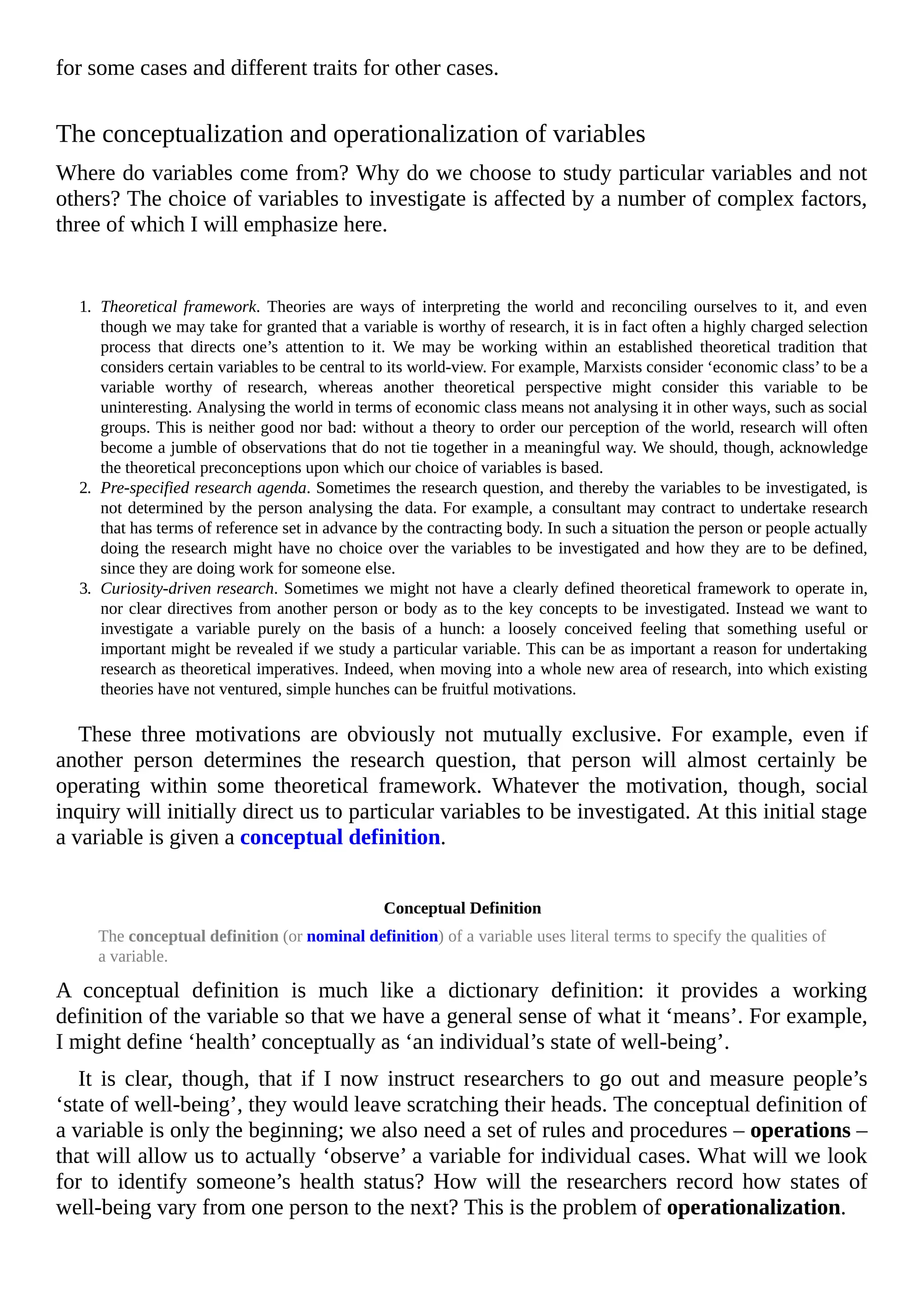


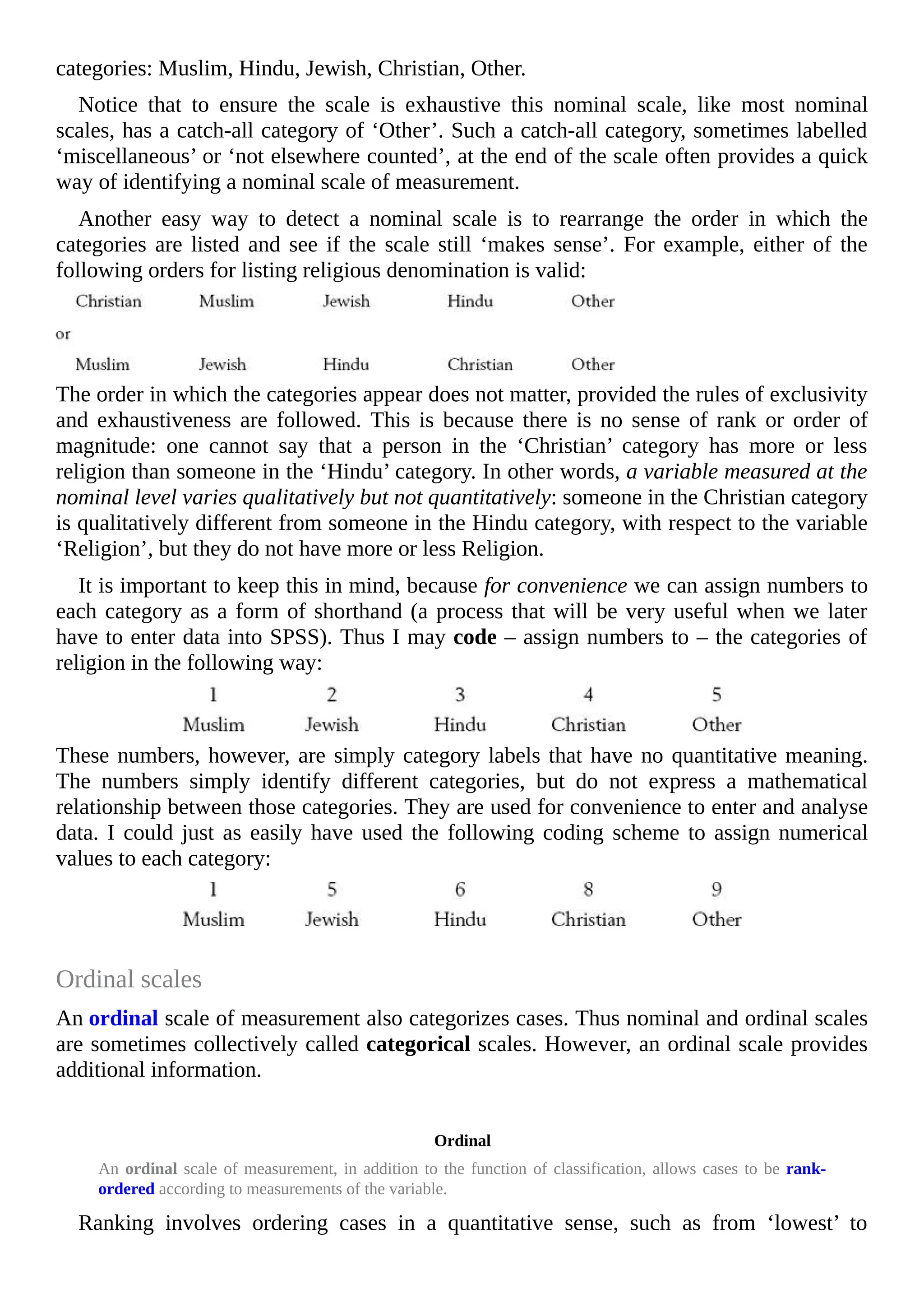
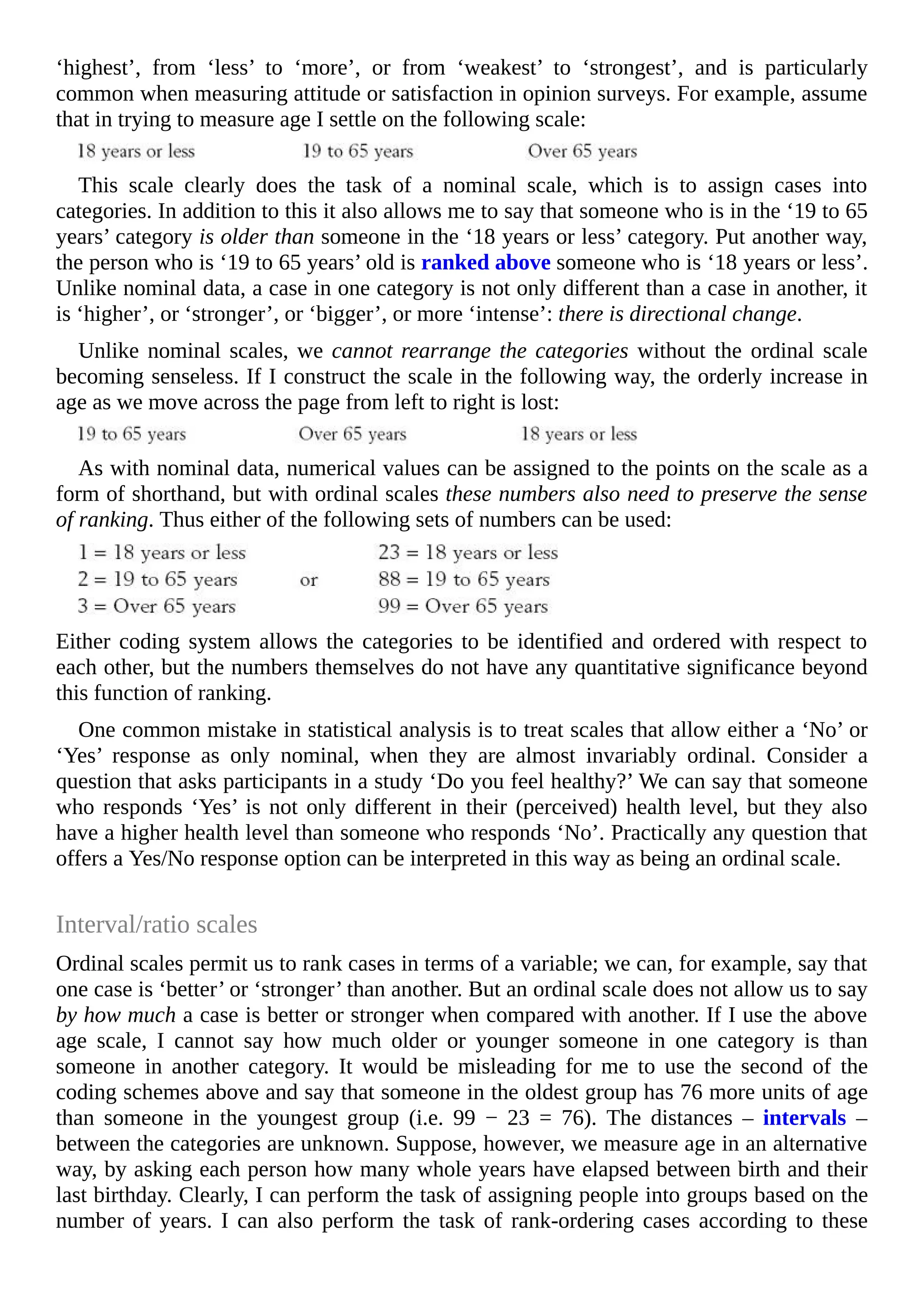
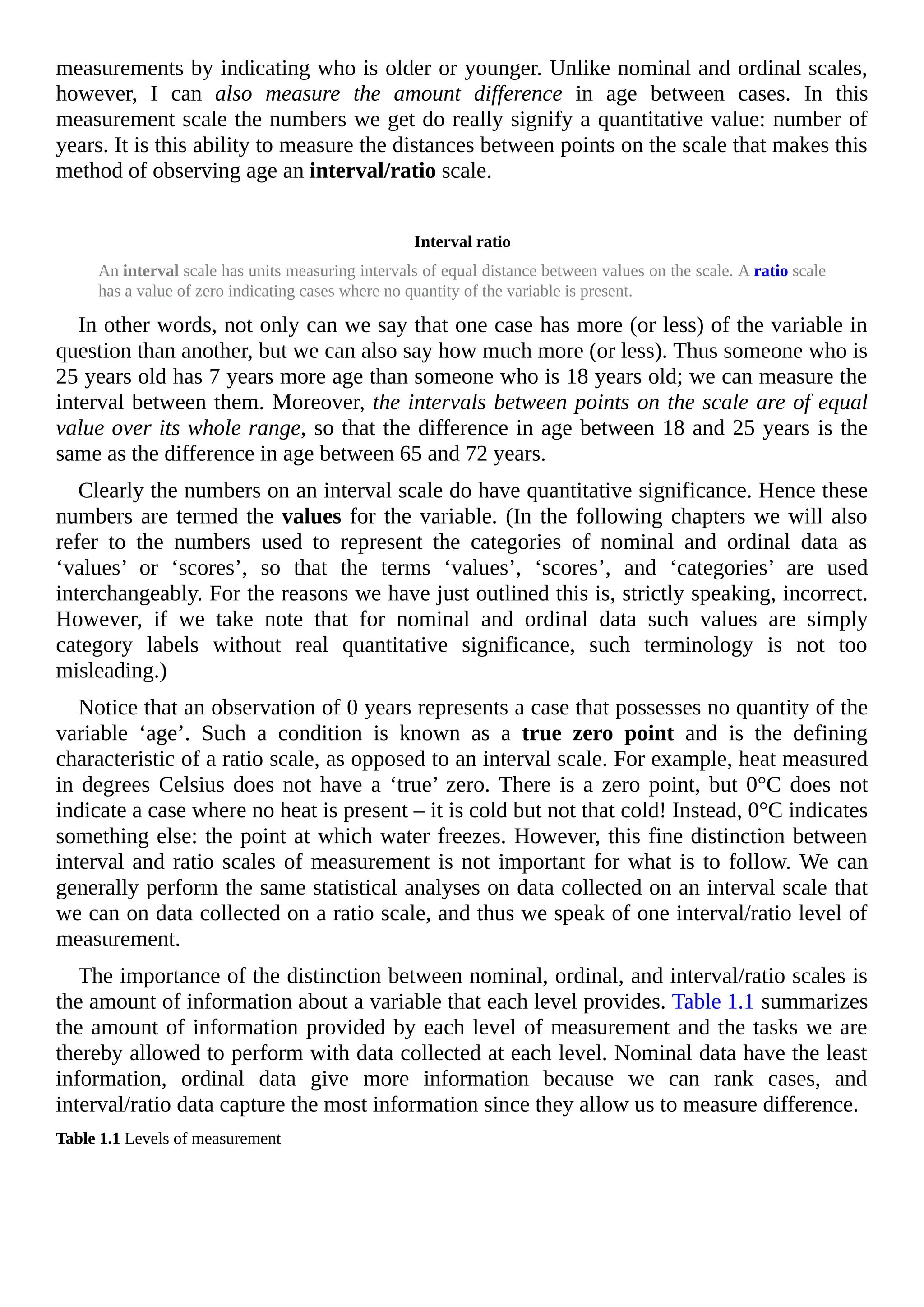
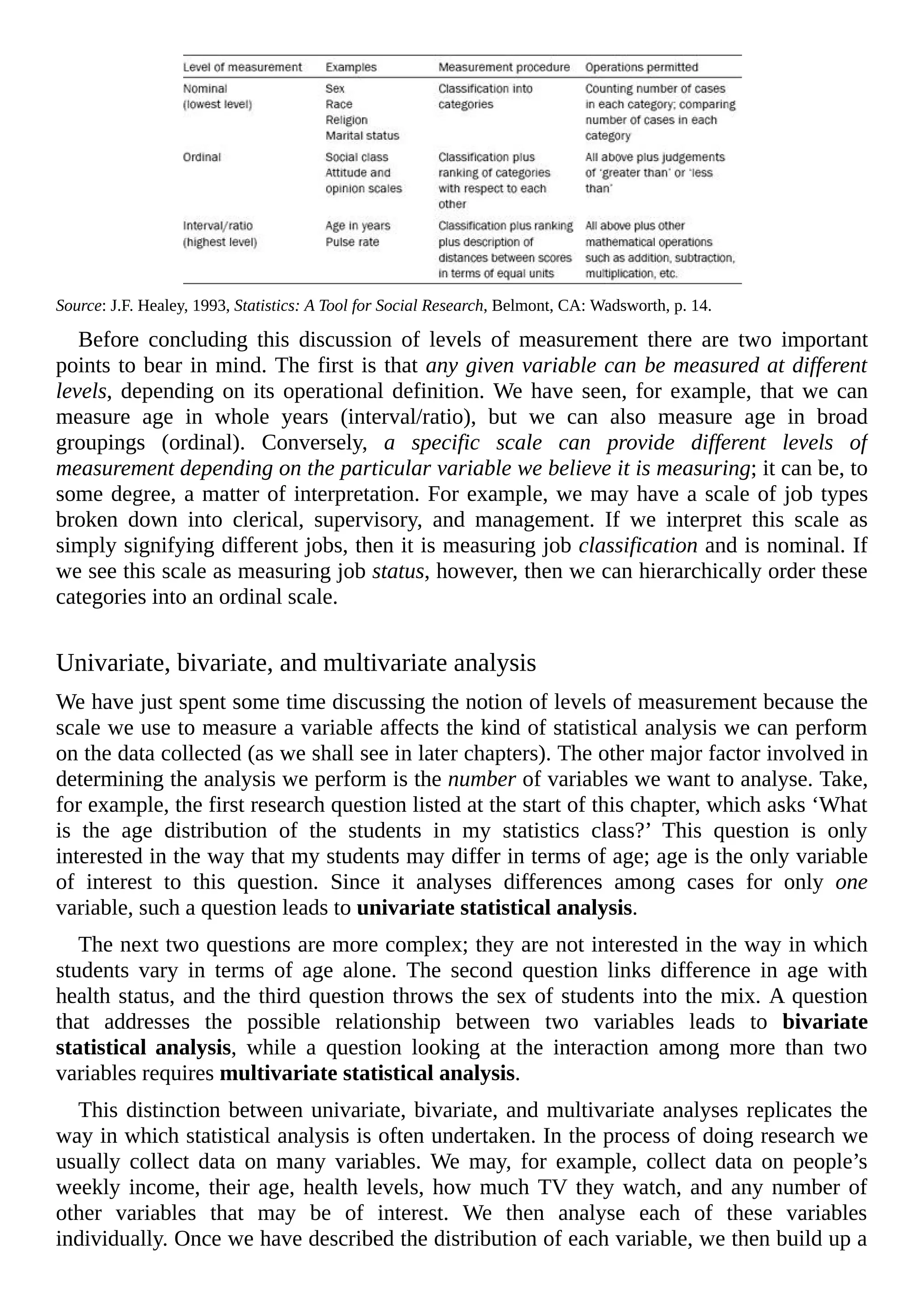






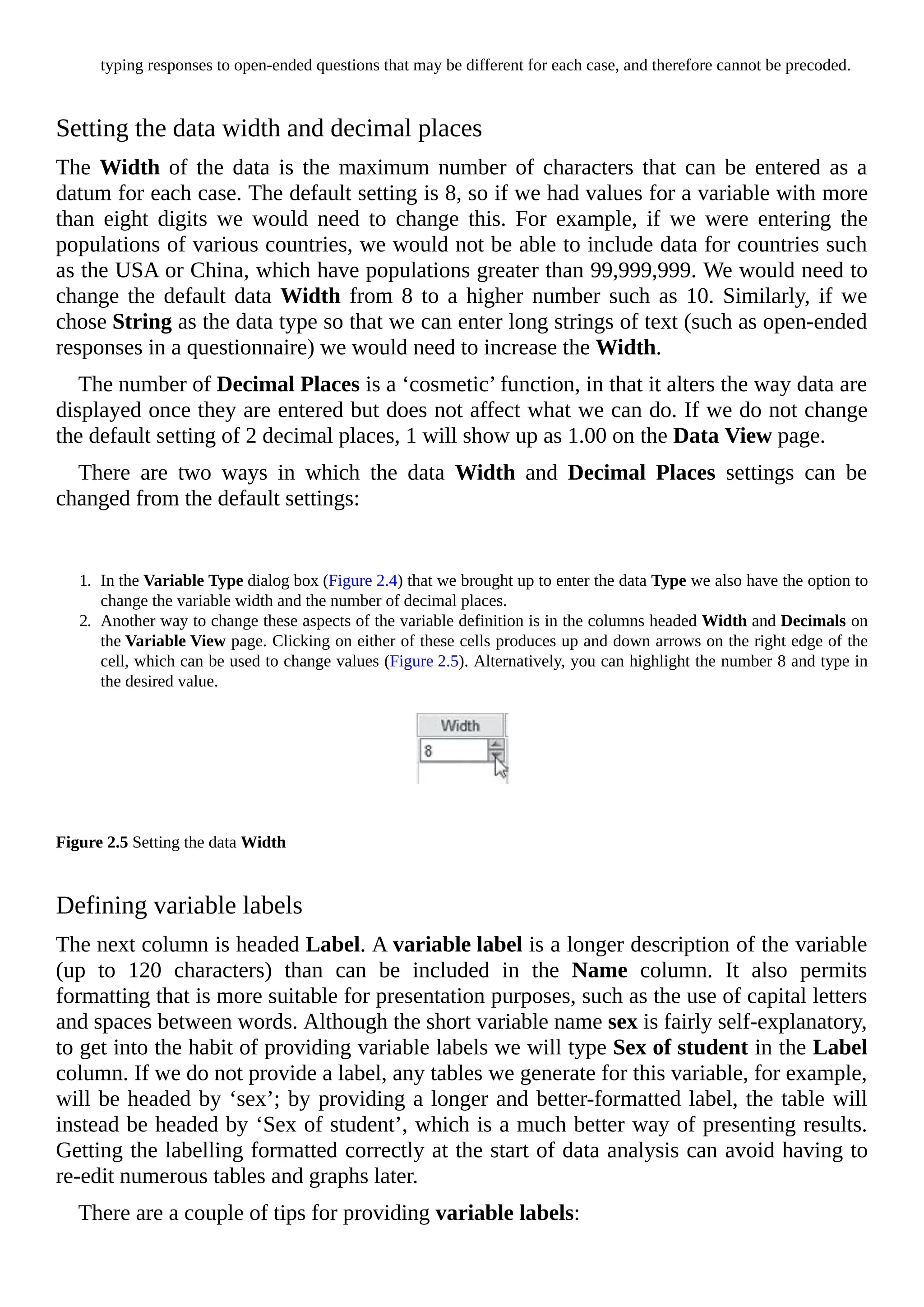
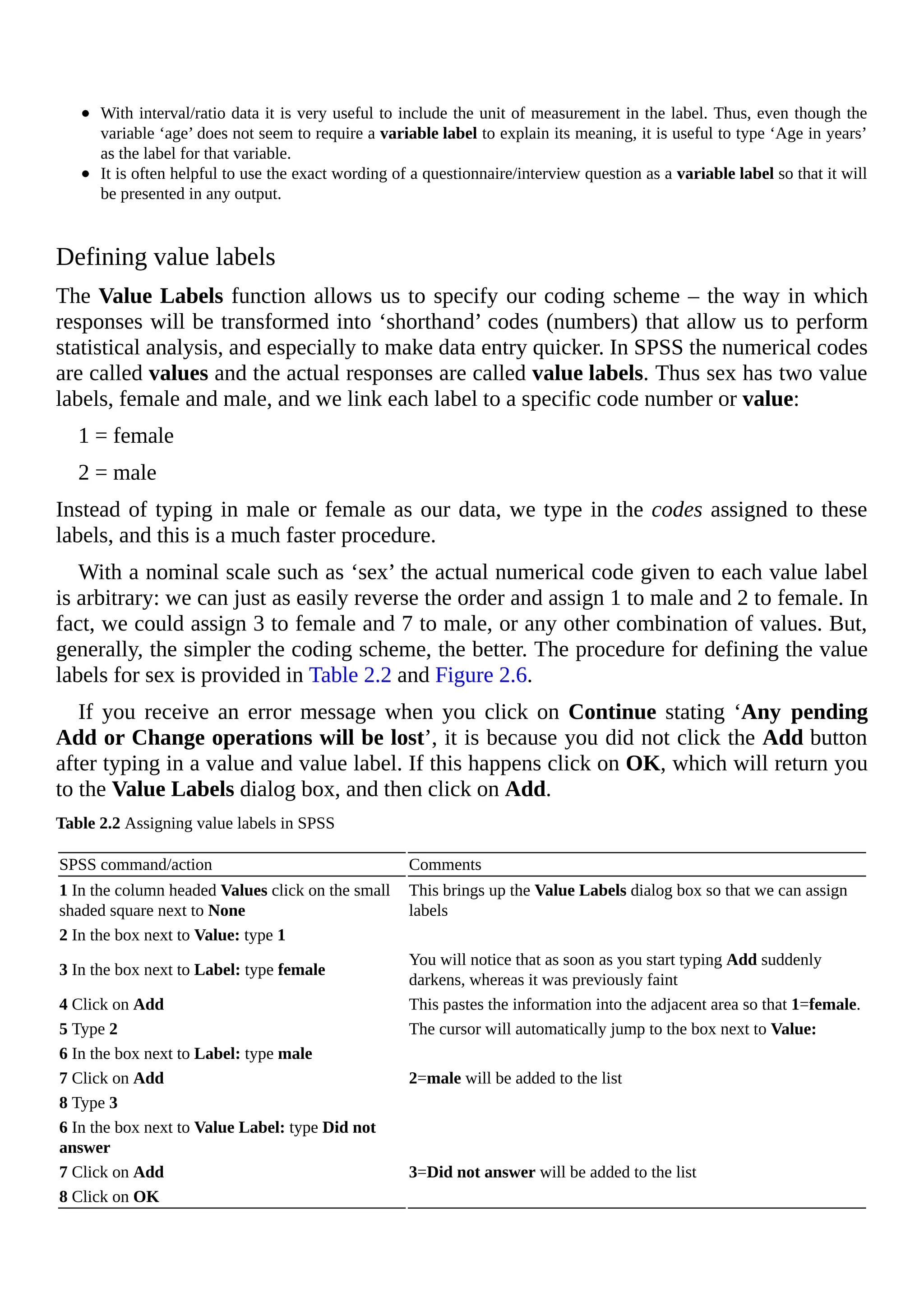













![answers. No, they had not seen Monsieur Weiss. But at this, one of
the little girls declared that she had seen him; he was lying on the
footway, said she, with a big hole in his head. Her father thereupon
gave her a smack to teach her not to tell such stories, for a story it
was, undoubtedly. As for the house, that must have been standing
when they came away; in fact, they now remembered noticing, as
they passed it, that the door and the windows were all carefully
closed, as if nobody were there. Besides, at that time, the Bavarians
were only in possession of the Place de l'Eglise, and they had to
conquer the village, street by street, house by house. Since then,
however, they must have made no little progress, and at the present
time, no doubt, all Bazeilles was on fire.[27] And the wretched couple
continued talking of all these things with fumbling gestures of fear,
evoking the whole frightful vision of flaming roofs, flowing blood,
and corpses strewing the ground.
'And my husband?' repeated Henriette.
They no longer answered her, however; they were sobbing, with
their hands before their eyes. And she remained there consumed by
atrocious anxiety, but erect and without weakening, merely a faint
quiver causing her lips to tremble. What ought she to believe? In
vain did she repeat that the child must have been mistaken; still and
ever she seemed to see her husband lying across the road with a
bullet in his head. Then, too, she was disquieted on thinking of the
house where, so it seemed, every shutter was closed. Why was that?
Was he no longer there? All at once a conviction that he was dead
froze her heart to the core. Perhaps, though, he was only wounded,
and at this thought her urgent longing to go there and be with him
seized hold of her once more, and so imperiously that she would
again have tried to make her way through the ranks of the soldiers
had not the bugles at that moment sounded the advance.
Many of the young fellows gathered together here had come from
Toulon, Rochefort, or Brest, barely drilled, without ever having fired
a shot in their lives, and yet they had been fighting since the
morning as bravely and as stoutly as veterans. They, who had](https://image.slidesharecdn.com/27808494-250521113634-face859a/75/Statistics-For-Research-With-A-Guide-To-Spss-George-Argyrous-85-2048.jpg)


![Don't move, there's another one coming! Boum! Didn't that one
make a row? Don't move! Don't move!' And, for his own part, he
would dive into his hole, reappear raising his wren-like head, and
then dive again each time a projectile fell.[28]
Henriette now remarked that the shells were coming from the Liry
hill, and that the batteries of Pont-Maugis and Noyers were firing
only on Balan. She could distinctly perceive the smoke of each
discharge, and almost immediately afterwards she heard the hissing
of the shell, followed by the detonation. A short pause must have
occurred in the firing, for at last she could only see some light
vapour which was slowly dispersing.
'They must be drinking a glass,' said the youngster; 'make haste,
give me your hand; we'll get off.'
He took her hand and forced her to follow him, and bending low
they both galloped, side by side, across the open space. At its
farther extremity, as they were throwing themselves for shelter
behind a rick, they glanced round and saw another shell arrive,
which fell right upon the shed, at the very spot where they had been
waiting a moment before. The crash was frightful, the shed itself fell
in a heap to the ground.
At this spectacle the urchin danced with senseless delight,
considering it extremely funny. 'Bravo! there's a smash! All the same,
it was time we crossed!'
And now Henriette, for a second time, came upon impassable
obstacles—garden walls with never a lane between them. Her little
companion, however, kept on laughing, and declared that it was
easy enough to pass if one chose to do so. Climbing on to the
coping of a wall he assisted her over, and they jumped down into a
kitchen garden among beds of beans and peas. There were walls all
round, and in order to get out again they had to pass through a
gardener's low house. Whistling and swinging his arms, the lad went
on ahead, showing no surprise at anything he saw. He opened a
door, found himself in a room, and made his way into another one,](https://image.slidesharecdn.com/27808494-250521113634-face859a/75/Statistics-For-Research-With-A-Guide-To-Spss-George-Argyrous-88-2048.jpg)


