© 2015 The American Road & Transportation Builders Association (ARTBA). All rights reserved. No part of this document may be reproduced or
transmitted in any form or by any means, electronic, mechanical, photocopying, recording, or otherwise, without prior written permission of
ARTBA.
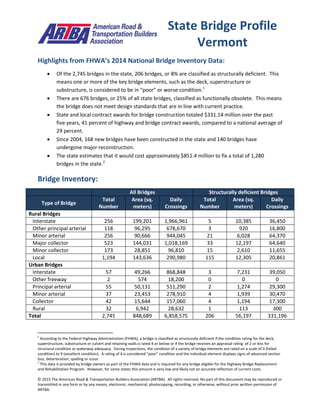
Highlights from FHWA’s 2014 National Bridge Inventory Data:
 Of the 2,745 bridges in the state, 206 bridges, or 8% are classified as structurally deficient. This
means one or more of the key bridge elements, such as the deck, superstructure or
substructure, is considered to be in “poor” or worse condition.1
 There are 676 bridges, or 25% of all state bridges, classified as functionally obsolete. This means
the bridge does not meet design standards that are in line with current practice.
 State and local contract awards for bridge construction totaled $331.14 million over the past
five years, 41 percent of highway and bridge contract awards, compared to a national average of
29 percent.
 Since 2004, 168 new bridges have been constructed in the state and 140 bridges have
undergone major reconstruction.
 The state estimates that it would cost approximately $851.4 million to fix a total of 1,280
bridges in the state.2
Bridge Inventory:
All Bridges Structurally deficient Bridges
Type of Bridge
Total
Number
Area (sq.
meters)
Daily
Crossings
Total
Number
Area (sq.
meters)
Daily
Crossings
Rural Bridges
Interstate 256 199,201 1,966,961 5 10,385 36,450
Other principal arterial 118 96,295 678,670 3 920 16,800
Minor arterial 256 90,666 944,045 21 6,028 64,370
Major collector 523 144,031 1,018,169 33 12,197 64,640
Minor collector 173 28,851 96,810 15 2,610 11,655
Local 1,194 143,636 290,980 115 12,305 20,861
Urban Bridges
Interstate 57 49,266 868,848 3 7,231 39,050
Other freeway 2 574 18,200 0 0 0
Principal arterial 55 50,131 511,290 2 1,274 29,300
Minor arterial 37 23,453 278,910 4 1,939 30,470
Collector 42 15,644 157,060 4 1,194 17,300
Rural 32 6,942 28,632 1 113 300
Total 2,745 848,689 6,858,575 206 56,197 331,196
1
According to the Federal Highway Administration (FHWA), a bridge is classified as structurally deficient if the condition rating for the deck,
superstructure, substructure or culvert and retaining walls is rated 4 or below or if the bridge receives an appraisal rating of 2 or less for
structural condition or waterway adequacy. During inspections, the condition of a variety of bridge elements are rated on a scale of 0 (failed
condition) to 9 (excellent condition). A rating of 4 is considered “poor” condition and the individual element displays signs of advanced section
loss, deterioration, spalling or scour.
2
This data is provided by bridge owners as part of the FHWA data and is required for any bridge eligible for the Highway Bridge Replacement
and Rehabilitation Program. However, for some states this amount is very low and likely not an accurate reflection of current costs.
State Bridge Profile
Vermont
© 2015 The American Road & Transportation Builders Association (ARTBA). All rights reserved. No part of this document may be reproduced or
transmitted in any form or by any means, electronic, mechanical, photocopying, recording, or otherwise, without prior written permission of
ARTBA.
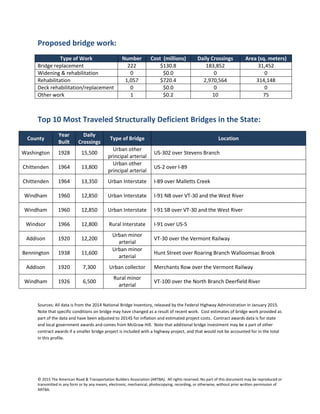
Proposed bridge work:
Type of Work Number Cost (millions) Daily Crossings Area (sq. meters)
Bridge replacement 222 $130.8 183,852 31,452
Widening & rehabilitation 0 $0.0 0 0
Rehabilitation 1,057 $720.4 2,970,564 314,148
Deck rehabilitation/replacement 0 $0.0 0 0
Other work 1 $0.2 10 75
Top 10 Most Traveled Structurally Deficient Bridges in the State:
County
Year
Built
Daily
Crossings
Type of Bridge Location
Washington 1928 15,500
Urban other
principal arterial
US-302 over Stevens Branch
Chittenden 1964 13,800
Urban other
principal arterial
US-2 over I-89
Chittenden 1964 13,350 Urban Interstate I-89 over Malletts Creek
Windham 1960 12,850 Urban Interstate I-91 NB over VT-30 and the West River
Windham 1960 12,850 Urban Interstate I-91 SB over VT-30 and the West River
Windsor 1966 12,800 Rural Interstate I-91 over US-5
Addison 1920 12,200
Urban minor
arterial
VT-30 over the Vermont Railway
Bennington 1938 11,600
Urban minor
arterial
Hunt Street over Roaring Branch Walloomsac Brook
Addison 1920 7,300 Urban collector Merchants Row over the Vermont Railway
Windham 1926 6,500
Rural minor
arterial
VT-100 over the North Branch Deerfield River
Sources: All data is from the 2014 National Bridge Inventory, released by the Federal Highway Administration in January 2015.
Note that specific conditions on bridge may have changed as a result of recent work. Cost estimates of bridge work provided as
part of the data and have been adjusted to 2014$ for inflation and estimated project costs. Contract awards data is for state
and local government awards and comes from McGraw Hill. Note that additional bridge investment may be a part of other
contract awards if a smaller bridge project is included with a highway project, and that would not be accounted for in the total
in this profile.

State Bridge Profile Vermont 2014

  • 1.
    © 2015 TheAmerican Road & Transportation Builders Association (ARTBA). All rights reserved. No part of this document may be reproduced or transmitted in any form or by any means, electronic, mechanical, photocopying, recording, or otherwise, without prior written permission of ARTBA. Highlights from FHWA’s 2014 National Bridge Inventory Data:  Of the 2,745 bridges in the state, 206 bridges, or 8% are classified as structurally deficient. This means one or more of the key bridge elements, such as the deck, superstructure or substructure, is considered to be in “poor” or worse condition.1  There are 676 bridges, or 25% of all state bridges, classified as functionally obsolete. This means the bridge does not meet design standards that are in line with current practice.  State and local contract awards for bridge construction totaled $331.14 million over the past five years, 41 percent of highway and bridge contract awards, compared to a national average of 29 percent.  Since 2004, 168 new bridges have been constructed in the state and 140 bridges have undergone major reconstruction.  The state estimates that it would cost approximately $851.4 million to fix a total of 1,280 bridges in the state.2 Bridge Inventory: All Bridges Structurally deficient Bridges Type of Bridge Total Number Area (sq. meters) Daily Crossings Total Number Area (sq. meters) Daily Crossings Rural Bridges Interstate 256 199,201 1,966,961 5 10,385 36,450 Other principal arterial 118 96,295 678,670 3 920 16,800 Minor arterial 256 90,666 944,045 21 6,028 64,370 Major collector 523 144,031 1,018,169 33 12,197 64,640 Minor collector 173 28,851 96,810 15 2,610 11,655 Local 1,194 143,636 290,980 115 12,305 20,861 Urban Bridges Interstate 57 49,266 868,848 3 7,231 39,050 Other freeway 2 574 18,200 0 0 0 Principal arterial 55 50,131 511,290 2 1,274 29,300 Minor arterial 37 23,453 278,910 4 1,939 30,470 Collector 42 15,644 157,060 4 1,194 17,300 Rural 32 6,942 28,632 1 113 300 Total 2,745 848,689 6,858,575 206 56,197 331,196 1 According to the Federal Highway Administration (FHWA), a bridge is classified as structurally deficient if the condition rating for the deck, superstructure, substructure or culvert and retaining walls is rated 4 or below or if the bridge receives an appraisal rating of 2 or less for structural condition or waterway adequacy. During inspections, the condition of a variety of bridge elements are rated on a scale of 0 (failed condition) to 9 (excellent condition). A rating of 4 is considered “poor” condition and the individual element displays signs of advanced section loss, deterioration, spalling or scour. 2 This data is provided by bridge owners as part of the FHWA data and is required for any bridge eligible for the Highway Bridge Replacement and Rehabilitation Program. However, for some states this amount is very low and likely not an accurate reflection of current costs. State Bridge Profile Vermont
  • 2.
    © 2015 TheAmerican Road & Transportation Builders Association (ARTBA). All rights reserved. No part of this document may be reproduced or transmitted in any form or by any means, electronic, mechanical, photocopying, recording, or otherwise, without prior written permission of ARTBA. Proposed bridge work: Type of Work Number Cost (millions) Daily Crossings Area (sq. meters) Bridge replacement 222 $130.8 183,852 31,452 Widening & rehabilitation 0 $0.0 0 0 Rehabilitation 1,057 $720.4 2,970,564 314,148 Deck rehabilitation/replacement 0 $0.0 0 0 Other work 1 $0.2 10 75 Top 10 Most Traveled Structurally Deficient Bridges in the State: County Year Built Daily Crossings Type of Bridge Location Washington 1928 15,500 Urban other principal arterial US-302 over Stevens Branch Chittenden 1964 13,800 Urban other principal arterial US-2 over I-89 Chittenden 1964 13,350 Urban Interstate I-89 over Malletts Creek Windham 1960 12,850 Urban Interstate I-91 NB over VT-30 and the West River Windham 1960 12,850 Urban Interstate I-91 SB over VT-30 and the West River Windsor 1966 12,800 Rural Interstate I-91 over US-5 Addison 1920 12,200 Urban minor arterial VT-30 over the Vermont Railway Bennington 1938 11,600 Urban minor arterial Hunt Street over Roaring Branch Walloomsac Brook Addison 1920 7,300 Urban collector Merchants Row over the Vermont Railway Windham 1926 6,500 Rural minor arterial VT-100 over the North Branch Deerfield River Sources: All data is from the 2014 National Bridge Inventory, released by the Federal Highway Administration in January 2015. Note that specific conditions on bridge may have changed as a result of recent work. Cost estimates of bridge work provided as part of the data and have been adjusted to 2014$ for inflation and estimated project costs. Contract awards data is for state and local government awards and comes from McGraw Hill. Note that additional bridge investment may be a part of other contract awards if a smaller bridge project is included with a highway project, and that would not be accounted for in the total in this profile.