WHY SUCCESSFUL STARTUPS ARE LIKE ROWING 
How getting up early and sitting 
backwards can prepare you for startups 
Daniel Stevenson 
daniel@fast-traction.com
First, let’s get one thing straight 
Not all rowing is created equal 
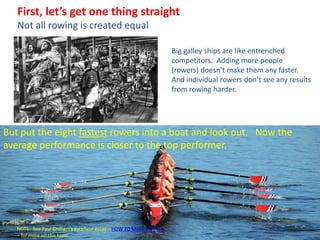
Big galley ships are like entrenched 
competitors. Adding more people 
(rowers) doesn’t make them any faster. 
And individual rowers don’t see any results 
from rowing harder. 
But put the eight fastest rowers into a boat and look out. Now the 
average performance is closer to the top performer. 
NOTE: See Paul Graham’s excellent essay – HOW TO MAKE WEALTH 
– for more on this topic.
Recruiting is like team 
tryouts 
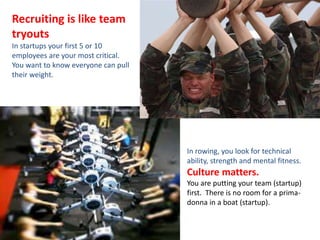
In startups your first 5 or 10 
employees are your most critical. 
You want to know everyone can pull 
their weight. 
In rowing, you look for technical 
ability, strength and mental fitness. 
Culture matters. 
You are putting your team (startup) 
first. There is no room for a prima-donna 
in a boat (startup).
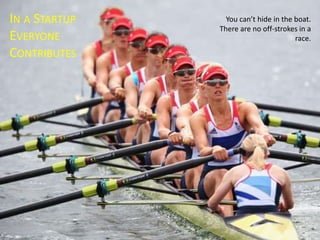
IN A STARTUP 
EVERYONE 
CONTRIBUTES 
You can’t hide in the boat. 
There are no off-strokes in a 
race.
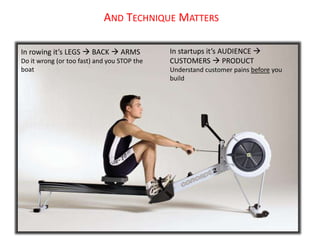
AND TECHNIQUE MATTERS 
In rowing it’s LEGS  BACK  ARMS 
Do it wrong (or too fast) and you STOP the 
boat 
In startups it’s AUDIENCE  
CUSTOMERS  PRODUCT 
Understand customer pains before you 
build
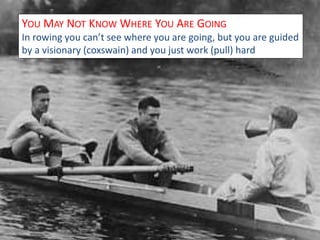
YOU MAY NOT KNOWWHERE YOU ARE GOING 
In rowing you can’t see where you are going, but you are guided 
by a visionary (coxswain) and you just work (pull) hard
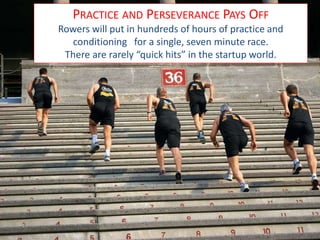
PRACTICE AND PERSEVERANCE PAYS OFF 
Rowers will put in hundreds of hours of practice and 
conditioning for a single, seven minute race. 
There are rarely “quick hits” in the startup world.
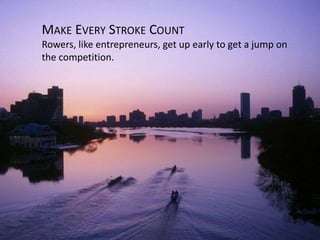
MAKE EVERY STROKE COUNT 
Rowers, like entrepreneurs, get up early to get a jump on 
the competition.
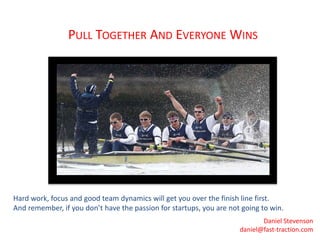
PULL TOGETHER AND EVERYONE WINS 
Hard work, focus and good team dynamics will get you over the finish line first. 
And remember, if you don’t have the passion for startups, you are not going to win. 
Daniel Stevenson 
daniel@fast-traction.com

Startups are like rowing

  • 1.
    WHY SUCCESSFUL STARTUPSARE LIKE ROWING How getting up early and sitting backwards can prepare you for startups Daniel Stevenson daniel@fast-traction.com
  • 2.
    First, let’s getone thing straight Not all rowing is created equal Big galley ships are like entrenched competitors. Adding more people (rowers) doesn’t make them any faster. And individual rowers don’t see any results from rowing harder. But put the eight fastest rowers into a boat and look out. Now the average performance is closer to the top performer. NOTE: See Paul Graham’s excellent essay – HOW TO MAKE WEALTH – for more on this topic.
  • 3.
    Recruiting is liketeam tryouts In startups your first 5 or 10 employees are your most critical. You want to know everyone can pull their weight. In rowing, you look for technical ability, strength and mental fitness. Culture matters. You are putting your team (startup) first. There is no room for a prima-donna in a boat (startup).
  • 4.
    IN A STARTUP EVERYONE CONTRIBUTES You can’t hide in the boat. There are no off-strokes in a race.
  • 5.
    AND TECHNIQUE MATTERS In rowing it’s LEGS  BACK  ARMS Do it wrong (or too fast) and you STOP the boat In startups it’s AUDIENCE  CUSTOMERS  PRODUCT Understand customer pains before you build
  • 6.
    YOU MAY NOTKNOWWHERE YOU ARE GOING In rowing you can’t see where you are going, but you are guided by a visionary (coxswain) and you just work (pull) hard
  • 7.
    PRACTICE AND PERSEVERANCEPAYS OFF Rowers will put in hundreds of hours of practice and conditioning for a single, seven minute race. There are rarely “quick hits” in the startup world.
  • 8.
    MAKE EVERY STROKECOUNT Rowers, like entrepreneurs, get up early to get a jump on the competition.
  • 9.
    PULL TOGETHER ANDEVERYONE WINS Hard work, focus and good team dynamics will get you over the finish line first. And remember, if you don’t have the passion for startups, you are not going to win. Daniel Stevenson daniel@fast-traction.com

Editor's Notes

  • #3 2 things keep the speed of the galley down – a) individual rowers don’t see any result from rowing harder, and b) in a group of a thousand people, the average rower is likely to be pretty average. Take the 8 best rowers and put them in a boat, and look out!