Leveraging SBIR/STTR funding for your
early-stage technology development
1) SBIR/STTR basics – what they are, who and what is right for
this type of funding
2) Why these programs should be part of your financing tactics
for your business and best practices for successfully
competing for this funding
Ann Peterson
Program Director
ann.peterson@montana.edu
MontanaInnovation
Ecosystem
Montana has an extensive and highly collaborative
innovation ecosystem supporting high-tech development
• Montana Bioscience Alliance
• Montana Bioscience Cluster Initiative
• Lab and university partnerships
• Accelerators
• Broad local and state support fostering economic
development
• MonTec and future incubator spaces
• Montana Innovation Partnership powered by MSU
TechLink Center
 45% success rate for MTIP clients
submitting SBIR/STTR applications
 Montana ranks #13 among all states
and territories for number of
SBIR/STTR awards per capita.
2
montanainnovationpartnership.org
3
Montana’s source for free
SBIR/STTR technical
assistance through the
Federal and State Technology
(FAST) Partnership Program
Funded by:
SBIR 101
What is SBIR and who is right for it?
4
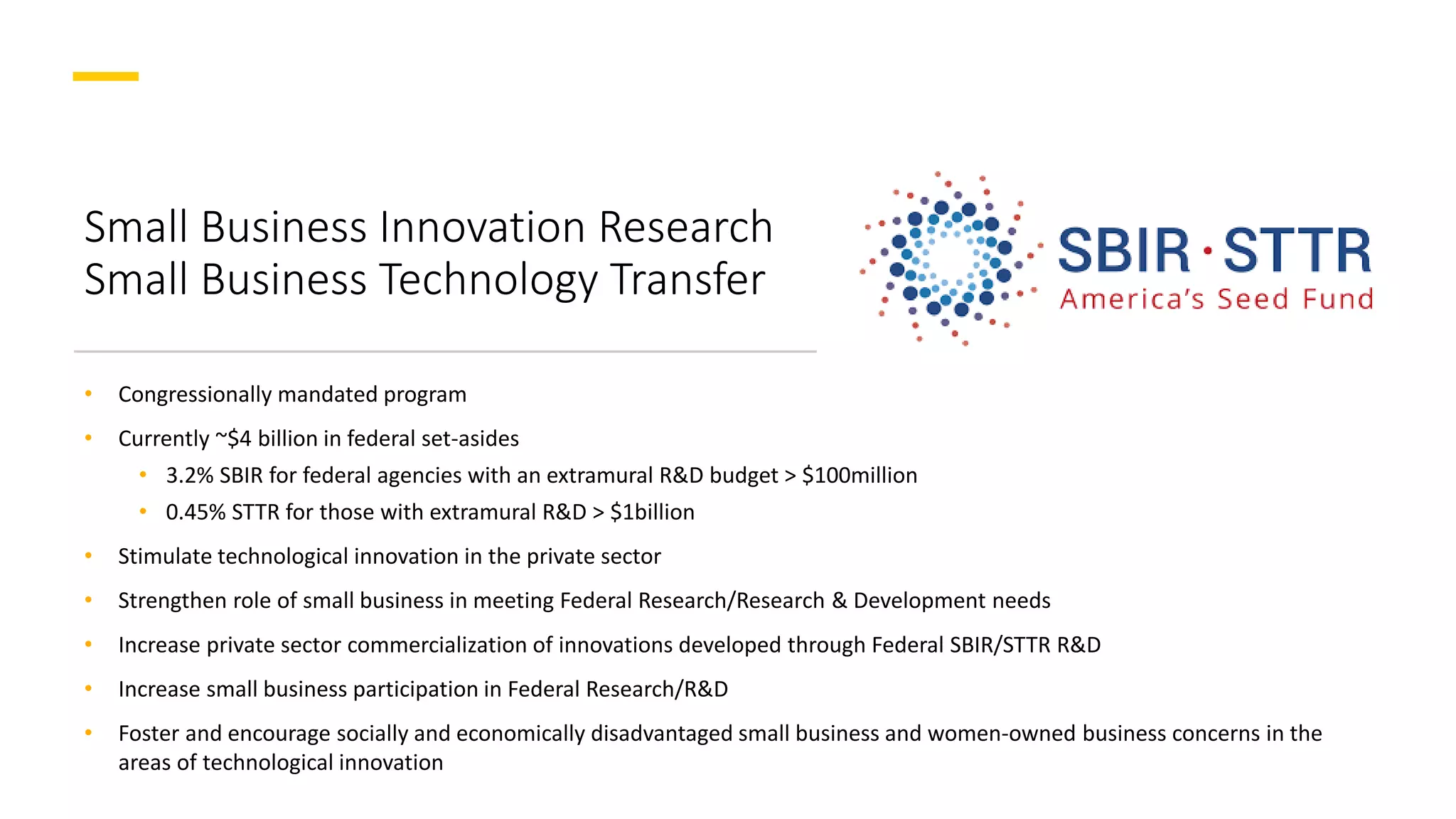
Small Business Innovation Research
Small Business Technology Transfer
• Congressionally mandated program
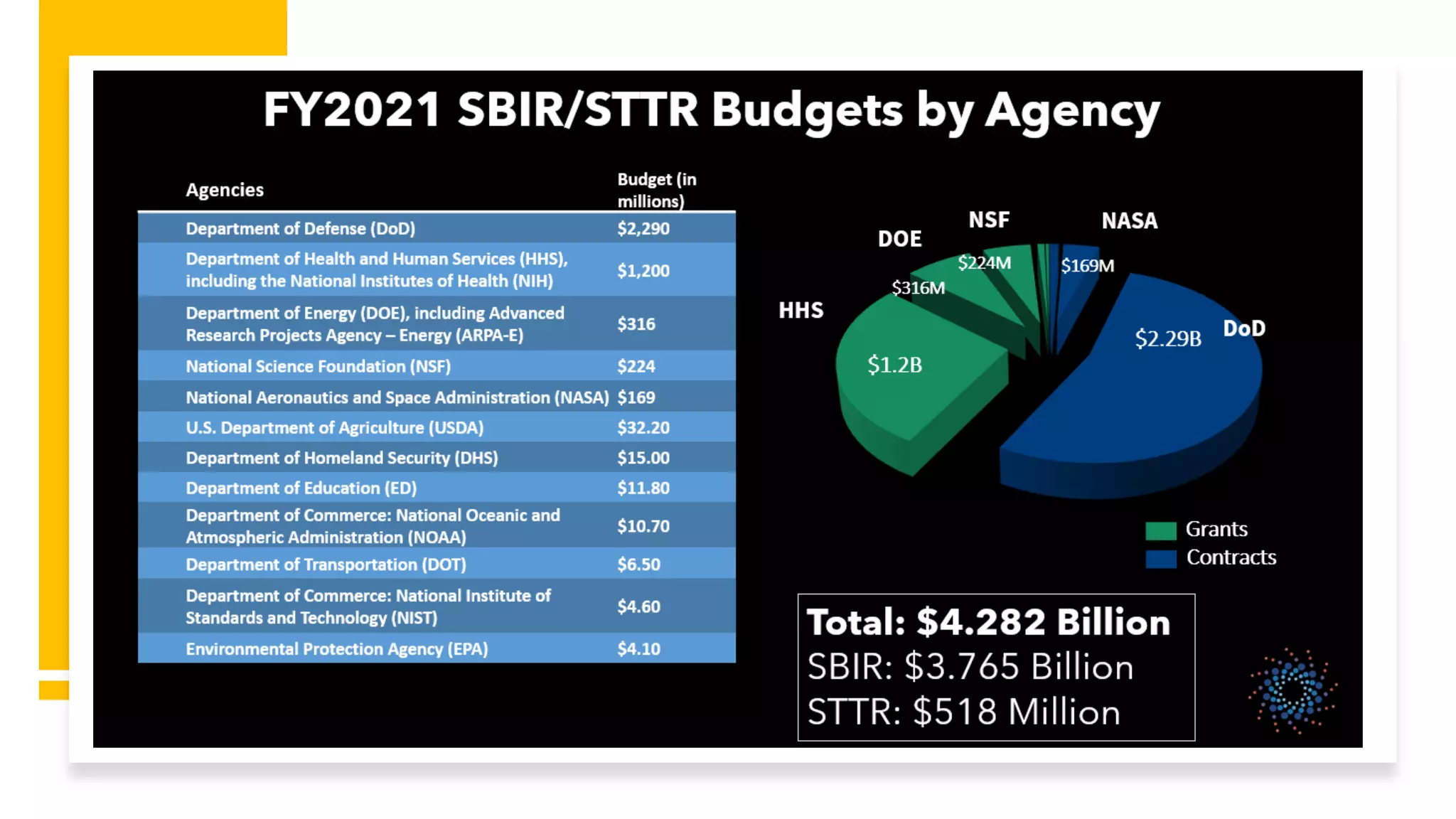
• Currently ~$4 billion in federal set-asides
• 3.2% SBIR for federal agencies with an extramural R&D budget > $100million
• 0.45% STTR for those with extramural R&D > $1billion
• Stimulate technological innovation in the private sector
• Strengthen role of small business in meeting Federal Research/Research & Development needs
• Increase private sector commercialization of innovations developed through Federal SBIR/STTR R&D
• Increase small business participation in Federal Research/R&D
• Foster and encourage socially and economically disadvantaged small business and women-owned business concerns in the
areas of technological innovation
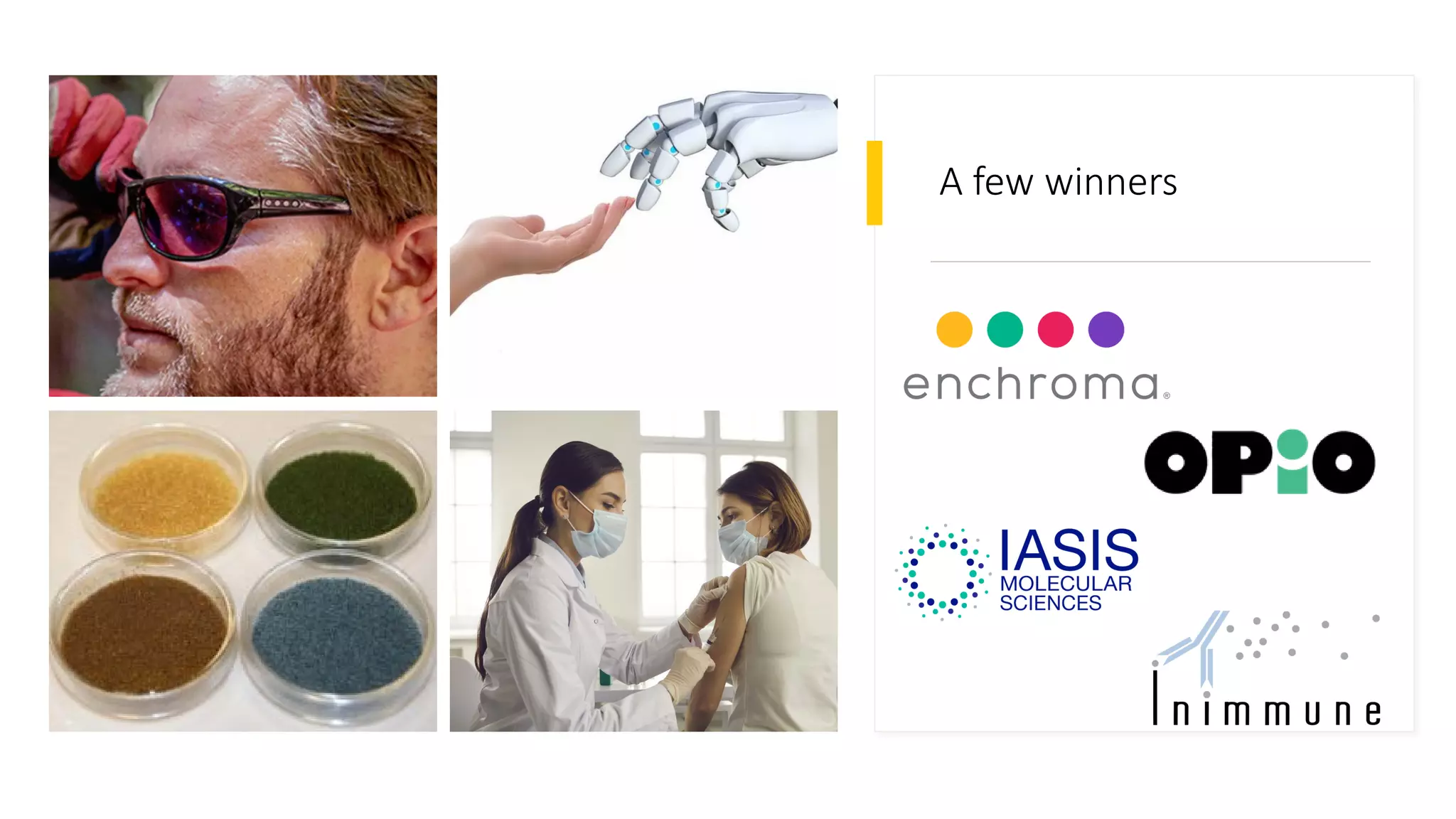
A few winners
Why consider
SBIR/STTR
 Non-dilutive seed funding for early-
stage applied translational r&d and
prototype development
 Clarity on your product
development plans and initial go-to-
market strategies
 De-risks for later investors
 Intellectual property and data rights
protection for 20 years *
 Direct follow-on Phase III awards –
no need for further competition
* See § 8(b)(4) of the SBIR/STTR Policy Directive
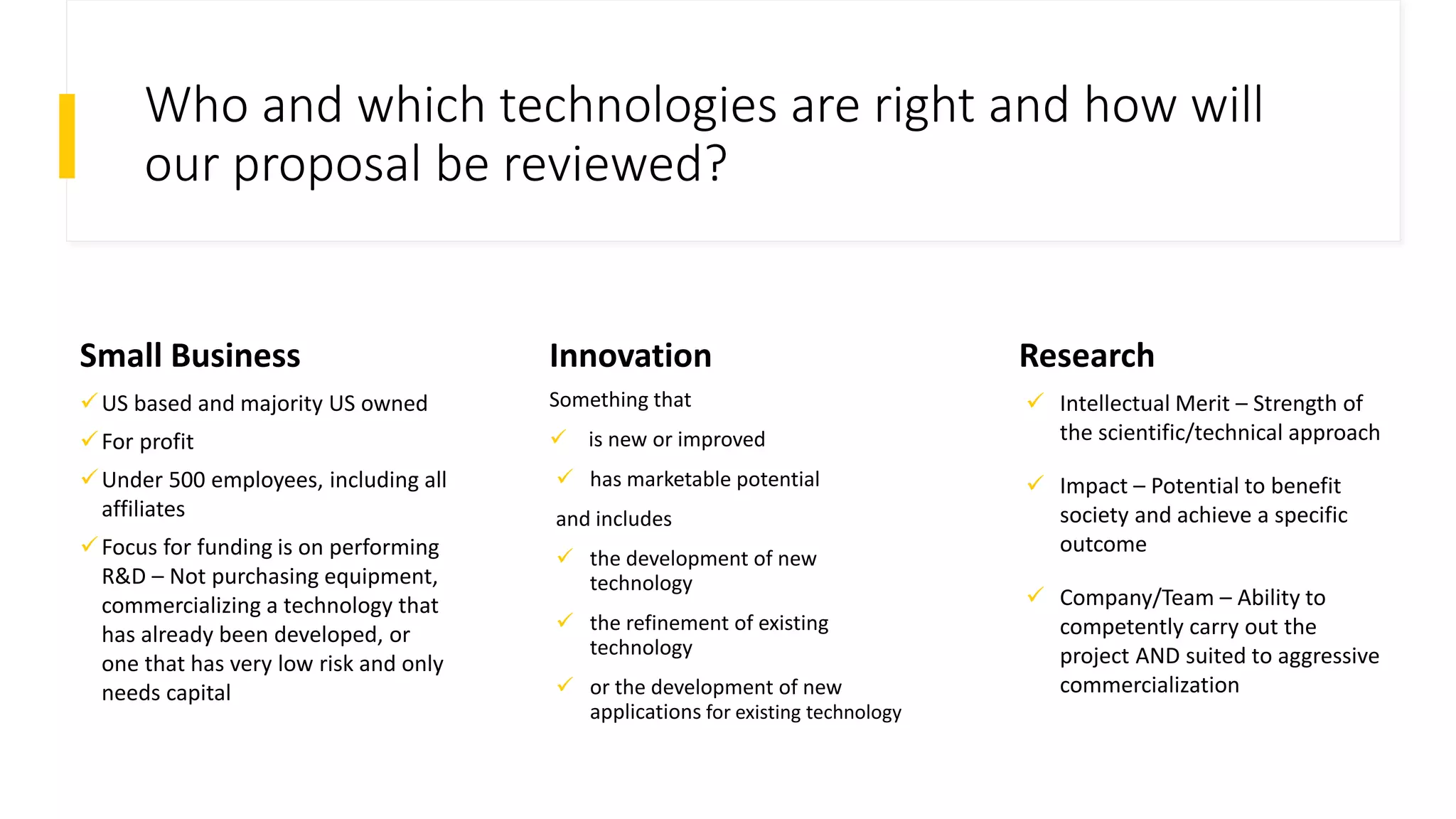
Who and which technologies are right and how will
our proposal be reviewed?
Small Business Innovation
Something that
 is new or improved
 has marketable potential
and includes
 the development of new
technology
 the refinement of existing
technology
 or the development of new
applications for existing technology
Research
 Intellectual Merit – Strength of
the scientific/technical approach
 Impact – Potential to benefit
society and achieve a specific
outcome
 Company/Team – Ability to
competently carry out the
project AND suited to aggressive
commercialization
US based and majority US owned
For profit
Under 500 employees, including all
affiliates
Focus for funding is on performing
R&D – Not purchasing equipment,
commercializing a technology that
has already been developed, or
one that has very low risk and only
needs capital
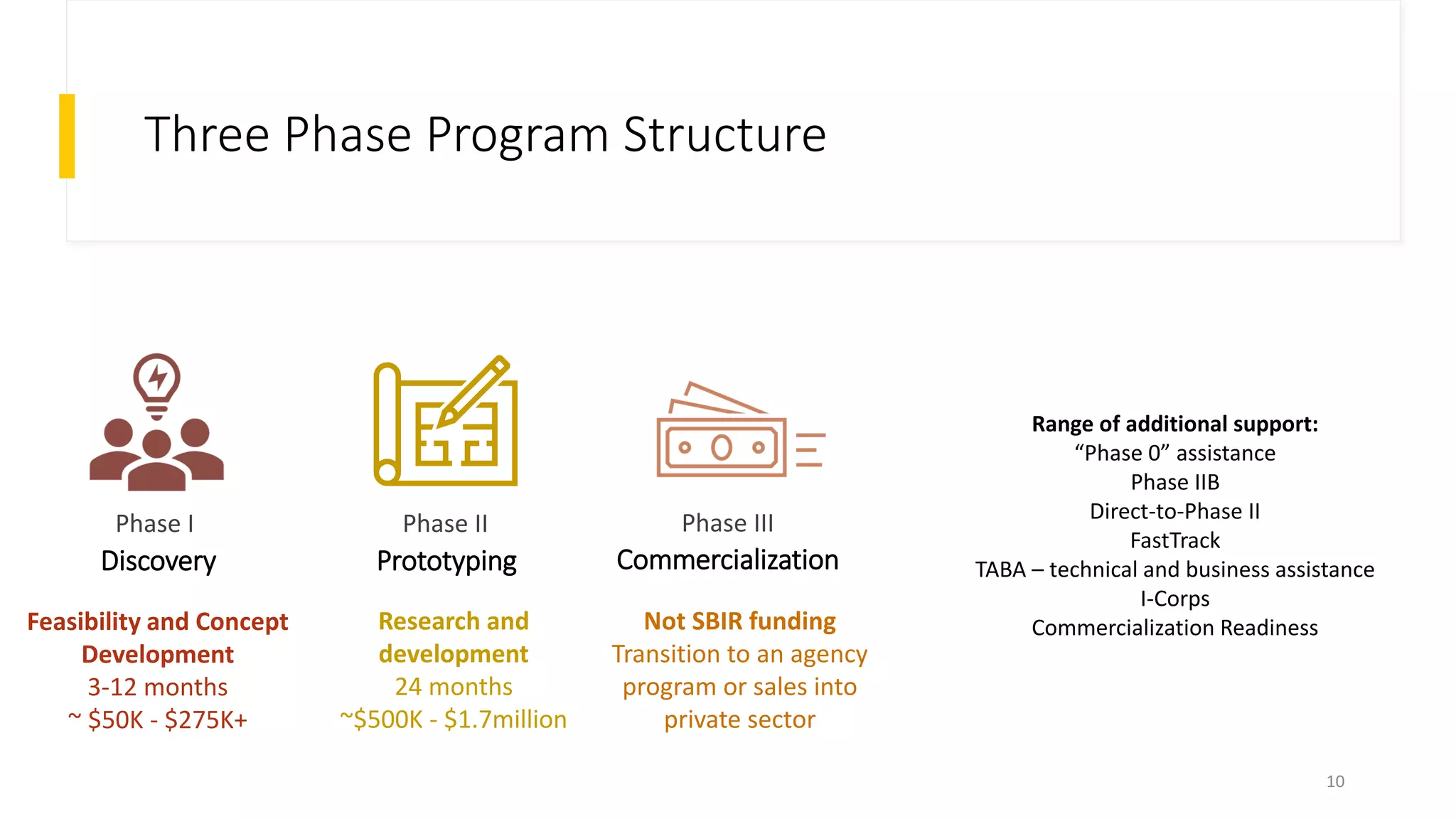
Three Phase Program Structure
10
Commercialization
Discovery Prototyping
Phase I Phase II Phase III
Feasibility and Concept
Development
3-12 months
~ $50K - $275K+
Research and
development
24 months
~$500K - $1.7million
Not SBIR funding
Transition to an agency
program or sales into
private sector
Range of additional support:
“Phase 0” assistance
Phase IIB
Direct-to-Phase II
FastTrack
TABA – technical and business assistance
I-Corps
Commercialization Readiness
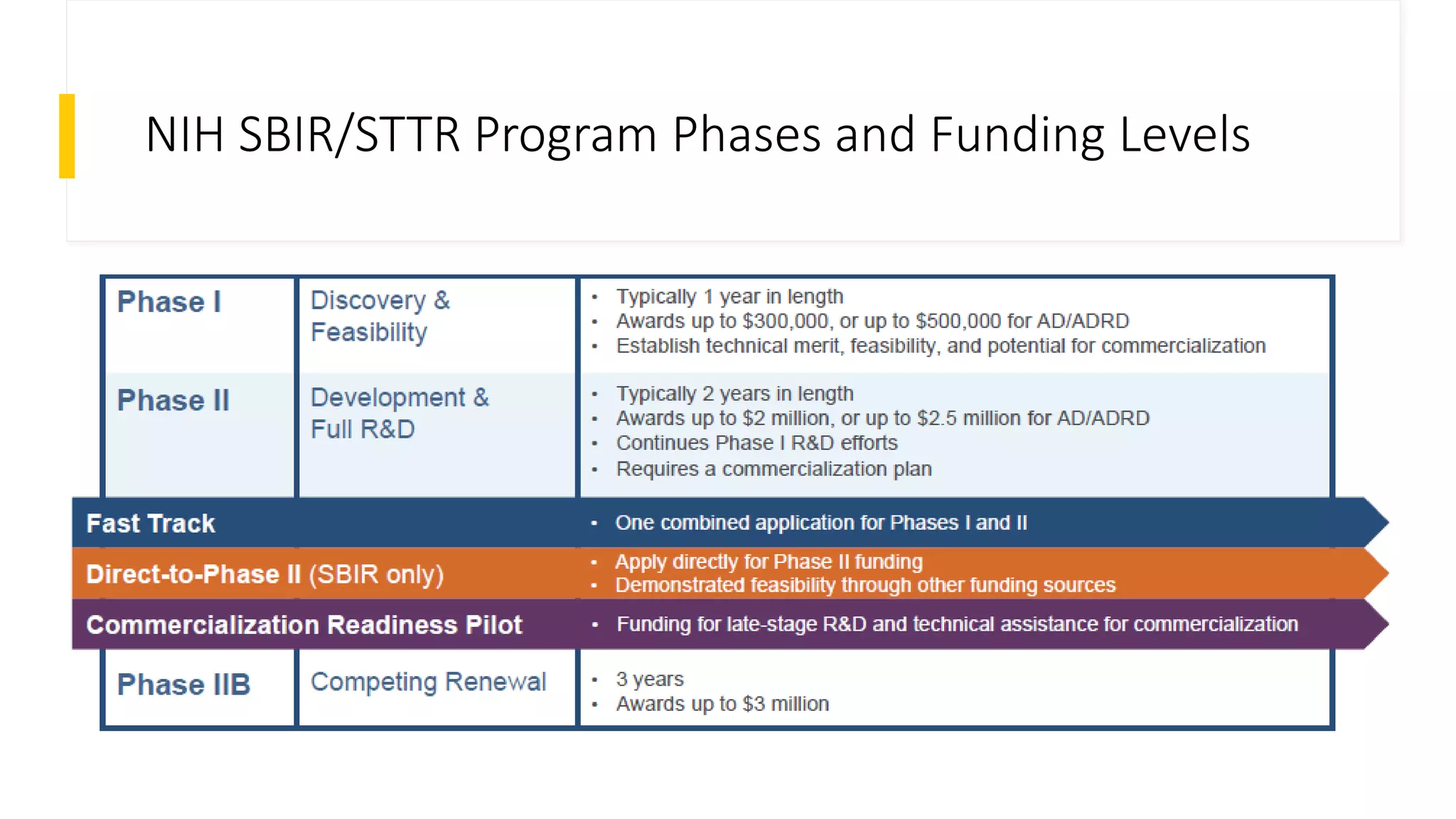
NIH SBIR/STTR Program Phases and Funding Levels
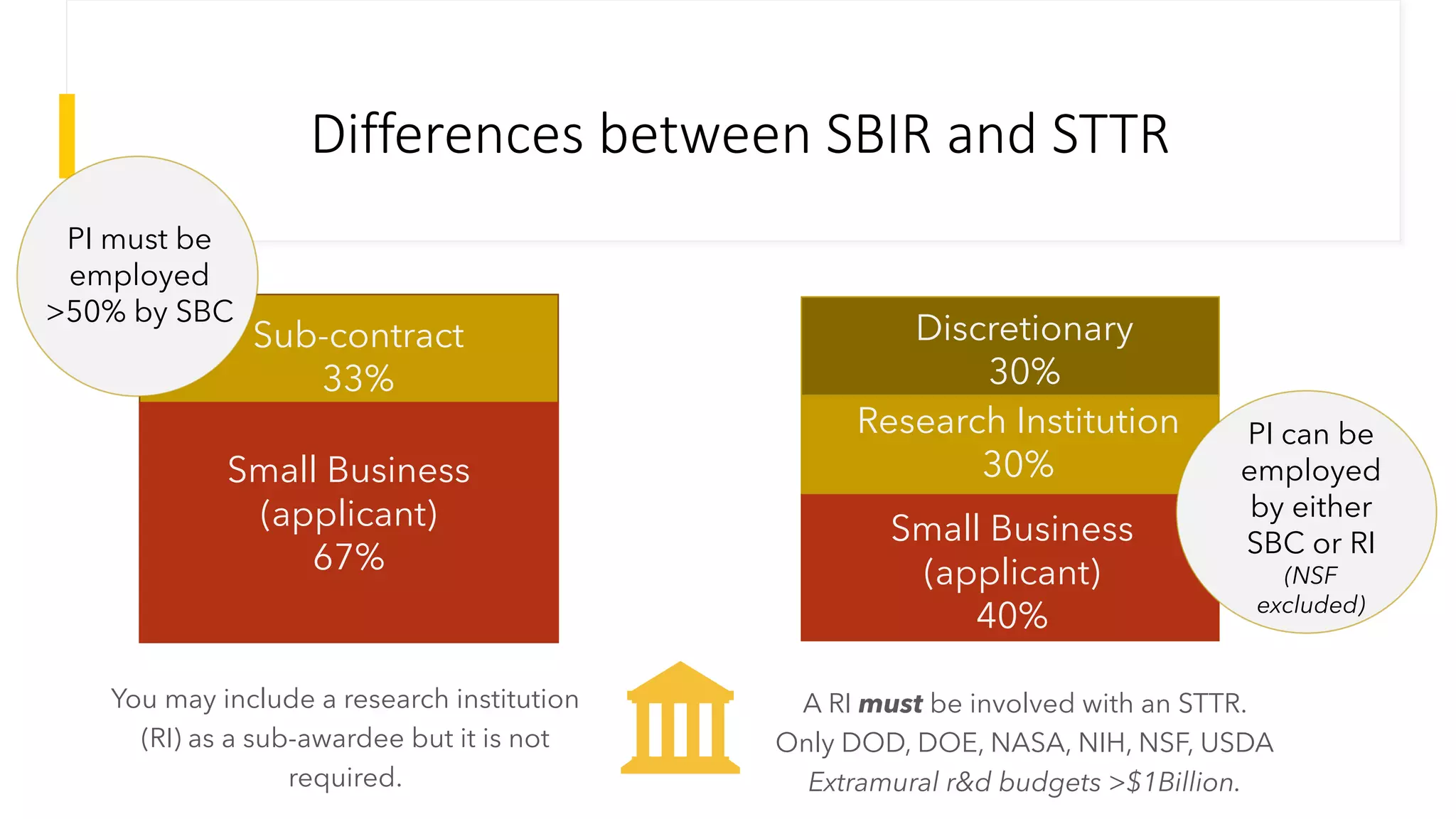
Differences between SBIR and STTR
SBIR STTR
Small Business
(applicant)
67%
Sub-contract
33%
Discretionary
30%
Research Institution
30%
Small Business
(applicant)
40%
PI must be
employed
>50% by SBC
PI can be
employed
by either
SBC or RI
(NSF
excluded)
A RI must be involved with an STTR.
Only DOD, DOE, NASA, NIH, NSF, USDA
Extramural r&d budgets >$1Billion.
You may include a research institution
(RI) as a sub-awardee but it is not
required.
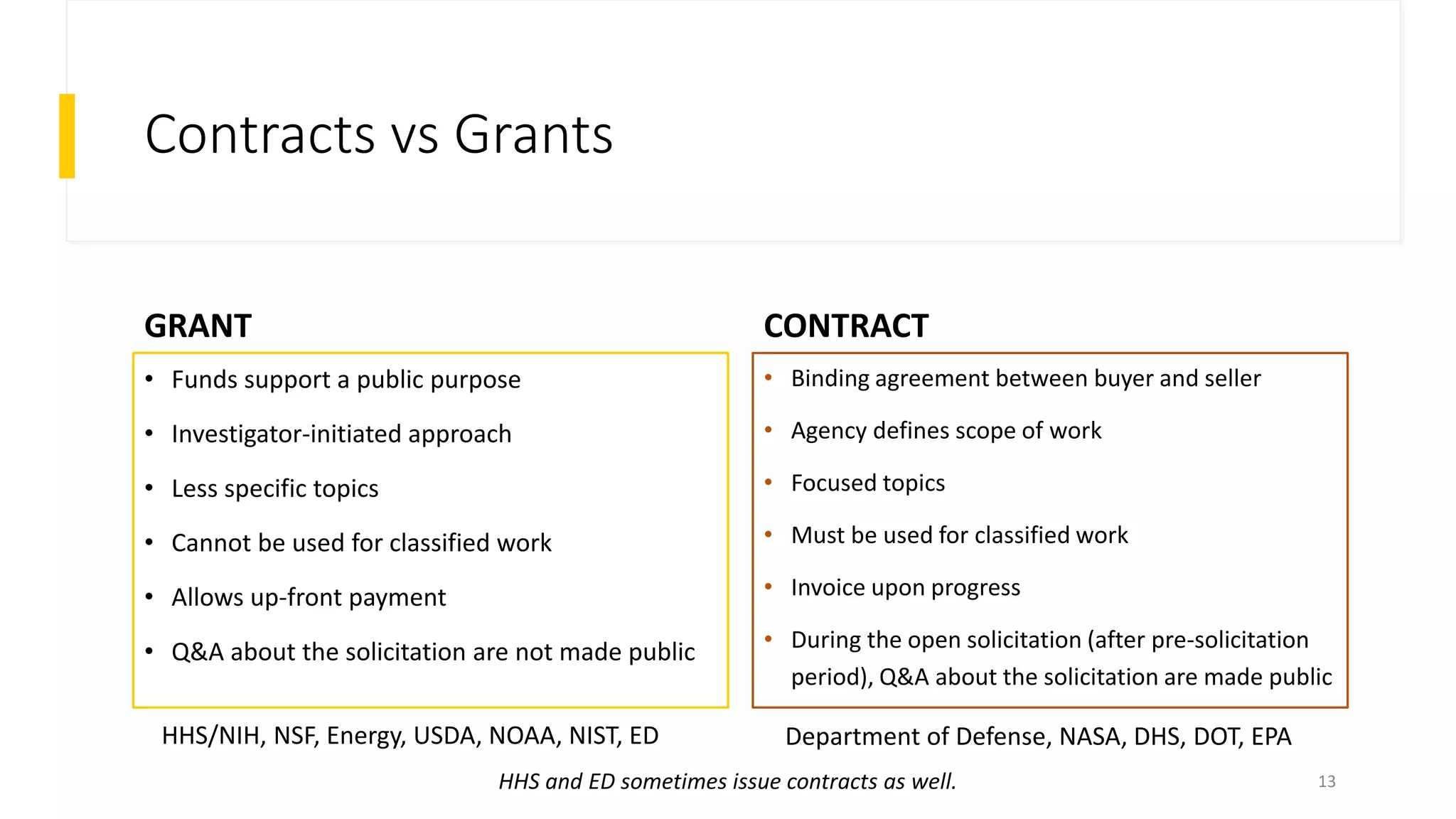
Contracts vs Grants
GRANT
• Funds support a public purpose
• Investigator-initiated approach
• Less specific topics
• Cannot be used for classified work
• Allows up-front payment
• Q&A about the solicitation are not made public
CONTRACT
• Binding agreement between buyer and seller
• Agency defines scope of work
• Focused topics
• Must be used for classified work
• Invoice upon progress
• During the open solicitation (after pre-solicitation
period), Q&A about the solicitation are made public
13
HHS/NIH, NSF, Energy, USDA, NOAA, NIST, ED Department of Defense, NASA, DHS, DOT, EPA
HHS and ED sometimes issue contracts as well.
Let’s go!
Pursuing SBIR/STTR for your business
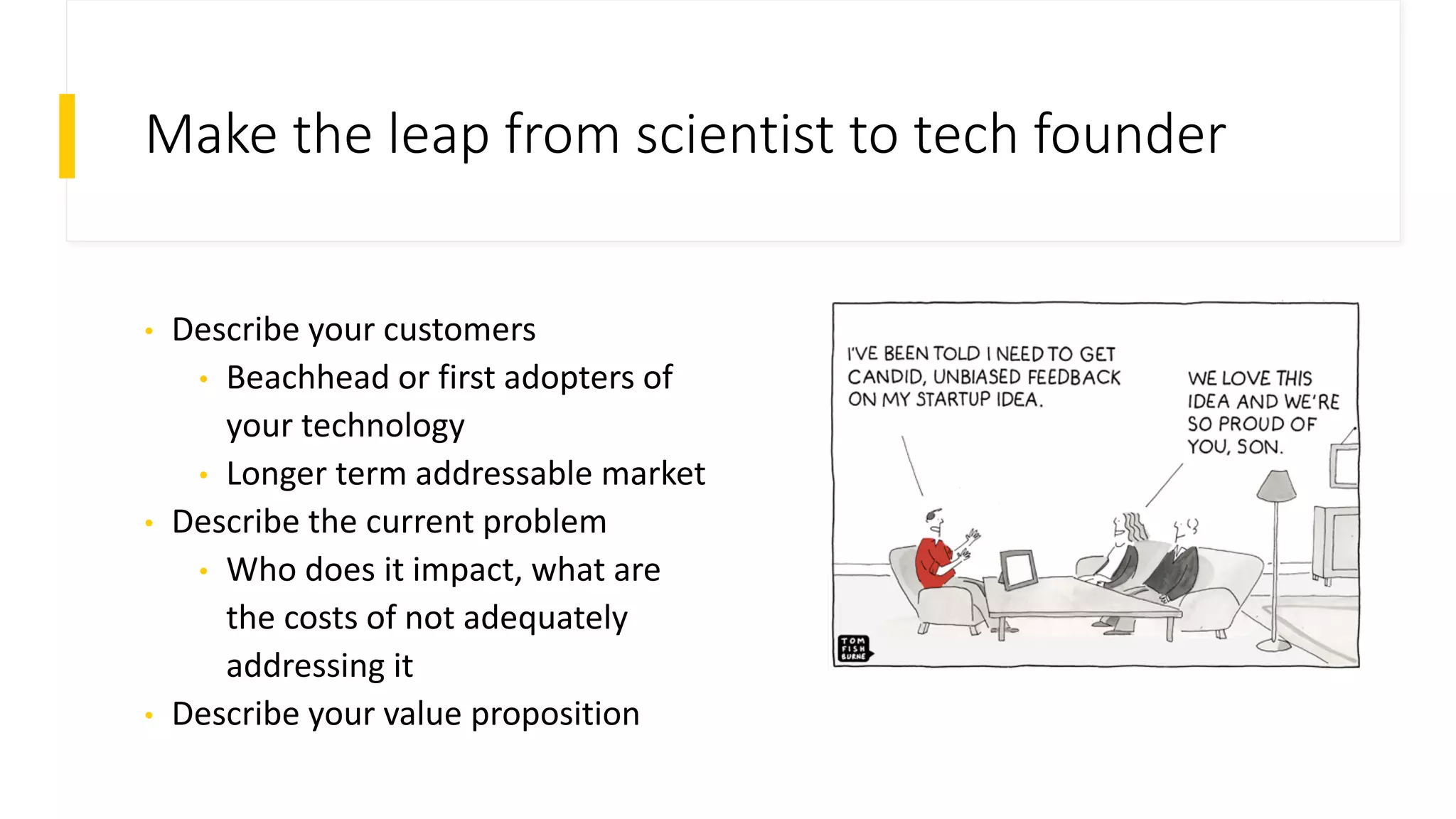
Make the leap from scientist to tech founder
• Describe your customers
• Beachhead or first adopters of
your technology
• Longer term addressable market
• Describe the current problem
• Who does it impact, what are
the costs of not adequately
addressing it
• Describe your value proposition
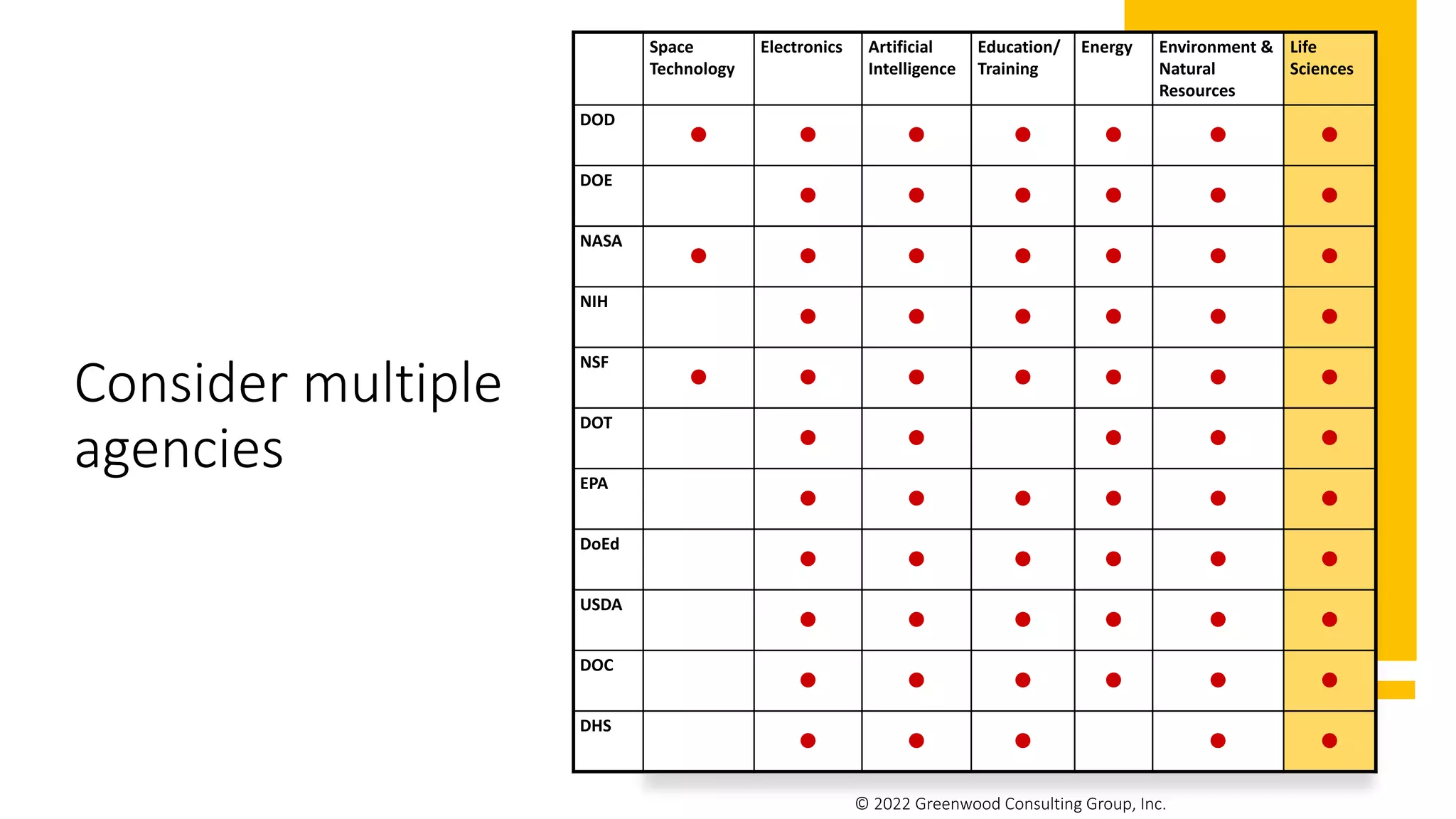
Consider multiple
agencies
Space
Technology
Electronics Artificial
Intelligence
Education/
Training
Energy Environment &
Natural
Resources
Life
Sciences
DOD
• • • • • • •
DOE
• • • • • •
NASA
• • • • • • •
NIH
• • • • • •
NSF
• • • • • • •
DOT
• • • • •
EPA
• • • • • •
DoEd
• • • • • •
USDA
• • • • • •
DOC
• • • • • •
DHS
• • • • •
© 2022 Greenwood Consulting Group, Inc.
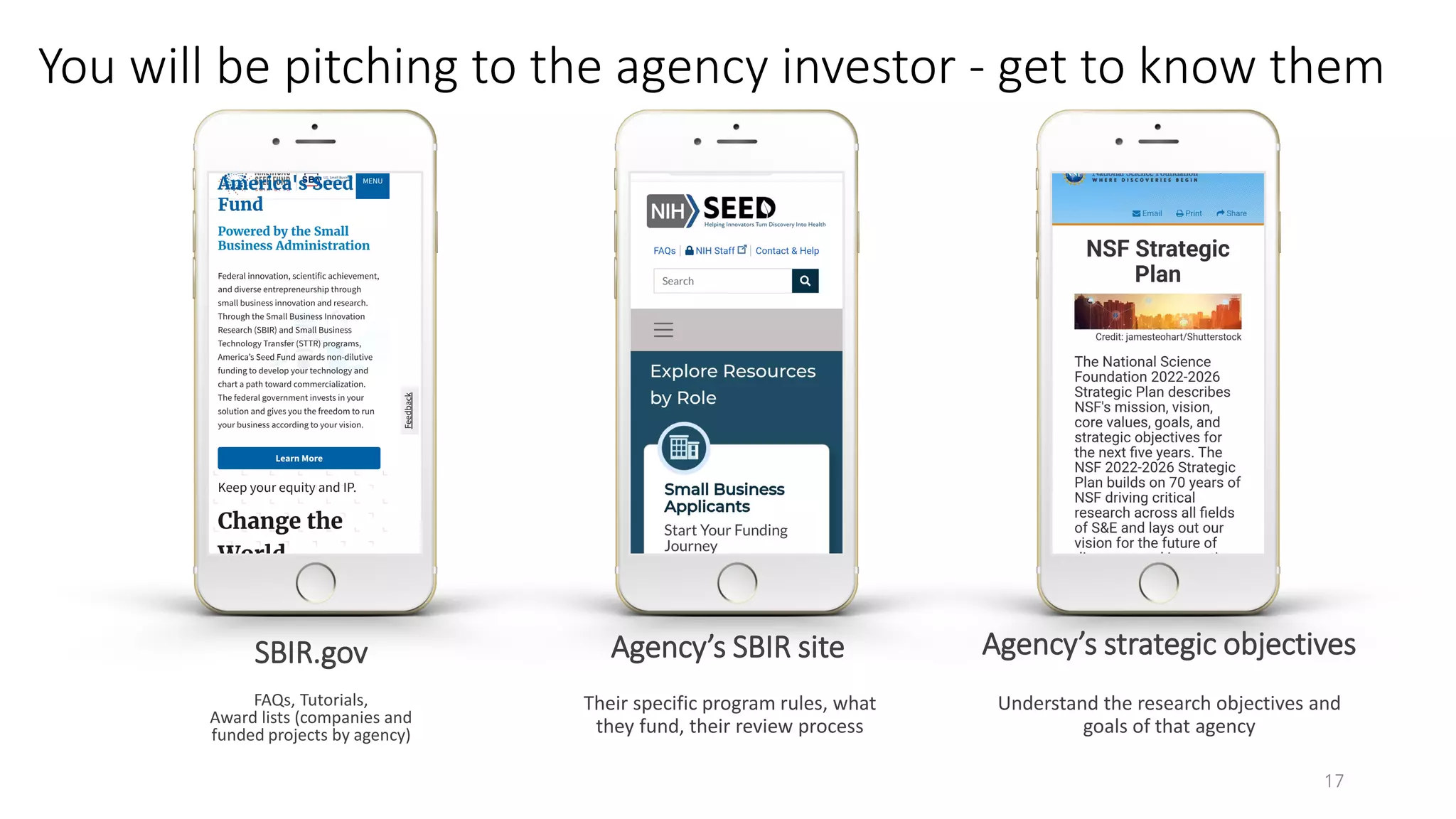
You will be pitching to the agency investor - get to know them
17
FAQs, Tutorials,
Award lists (companies and
funded projects by agency)
SBIR.gov
Their specific program rules, what
they fund, their review process
Agency’s SBIR site
Understand the research objectives and
goals of that agency
Agency’s strategic objectives
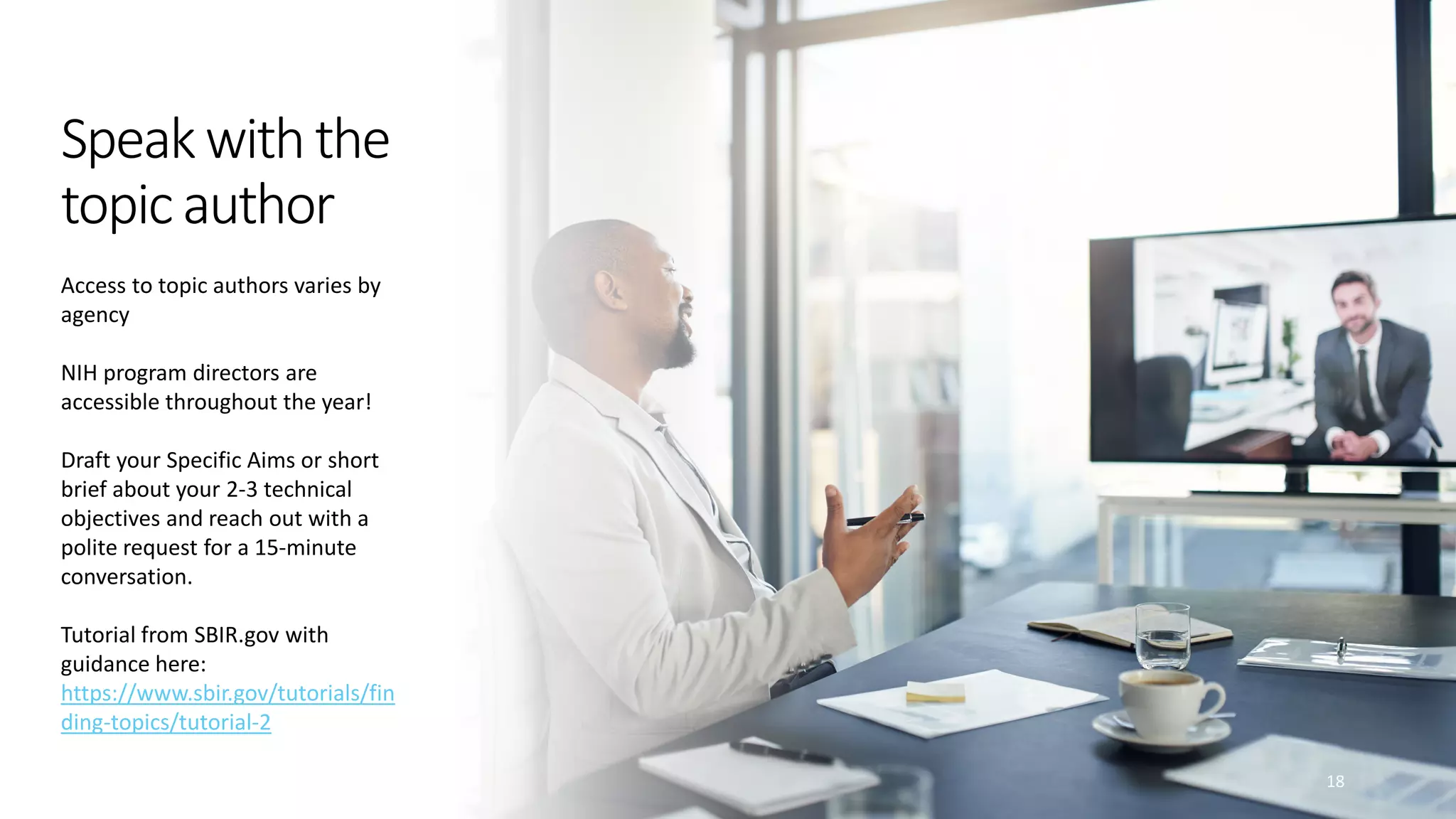
Speakwiththe
topicauthor
18
Access to topic authors varies by
agency
NIH program directors are
accessible throughout the year!
Draft your Specific Aims or short
brief about your 2-3 technical
objectives and reach out with a
polite request for a 15-minute
conversation.
Tutorial from SBIR.gov with
guidance here:
https://www.sbir.gov/tutorials/fin
ding-topics/tutorial-2
Define clear
technical
objectives,
follow
instructions,
andorganize
yourproposal
preparation
process
19
Builda Stellar
Team!
20
Individuals who will help
you:
 Protect your intellectual
property
 Craft sound sales and
business strategies
 Provide specialized
technical expertise
 Comply with government
accounting requirements
Leverage your
ecosystemforbusiness
andtechnicalsupport
• SBA programs like FAST and Small
Business Development Corporations
(SBDCs)
• Procurement Technical Assistance
Centers (PTACs)
• Manufacturing Extension Partnerships
• State Commerce and Economic
Development offices
• Angel and VC network
• Regional accelerators and incubators
• Universities
• Industry Alliances
21
Thank you!
Ann Peterson
406.994.7788
ann.peterson@montana.edu
22
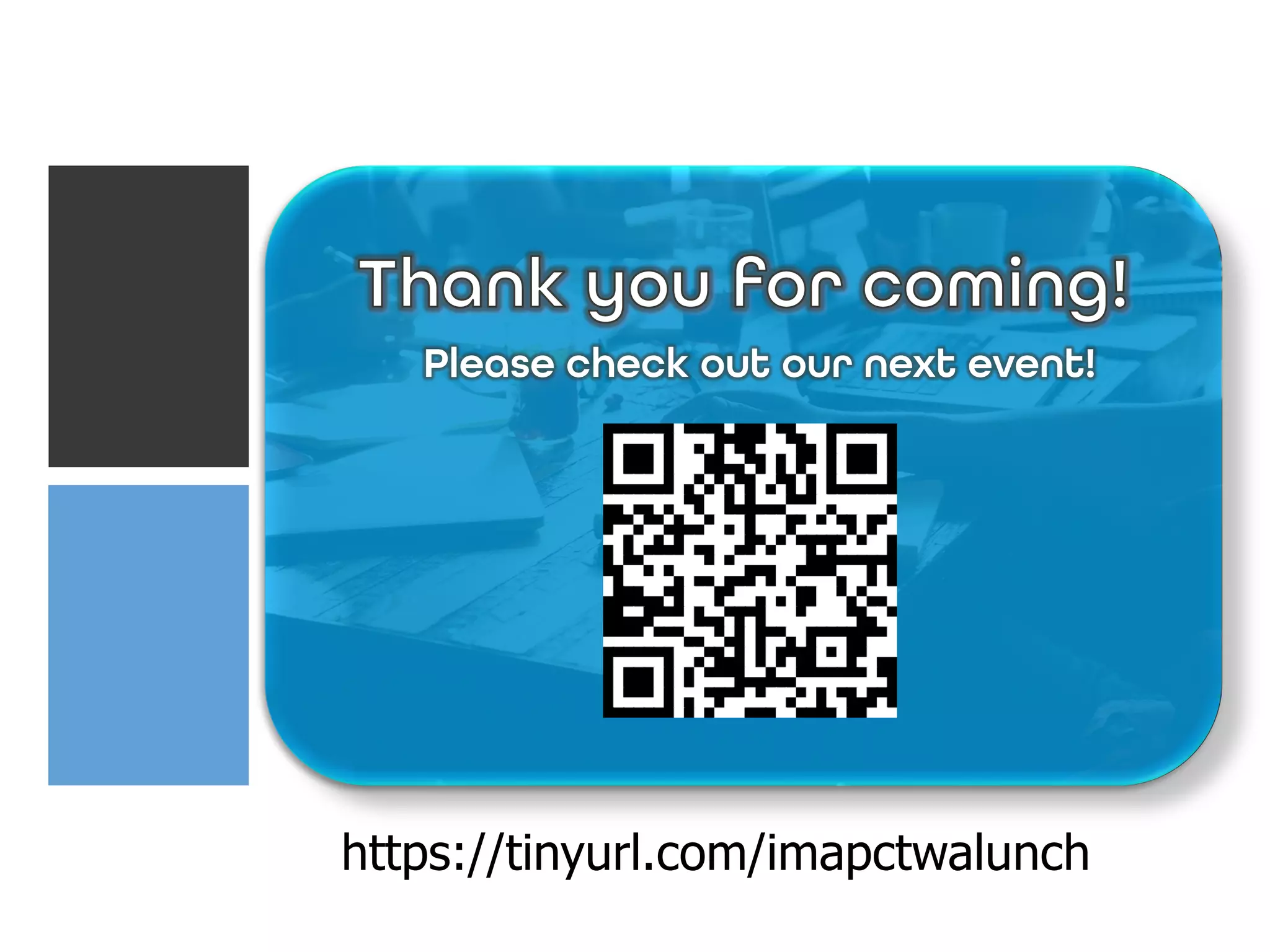
Please check out our next event!
https://tinyurl.com/imapctwalunch

Startup Advisor Lunch & Learn: SBIR/STTR Applications

  • 2.
    Leveraging SBIR/STTR fundingfor your early-stage technology development 1) SBIR/STTR basics – what they are, who and what is right for this type of funding 2) Why these programs should be part of your financing tactics for your business and best practices for successfully competing for this funding Ann Peterson Program Director ann.peterson@montana.edu
  • 3.
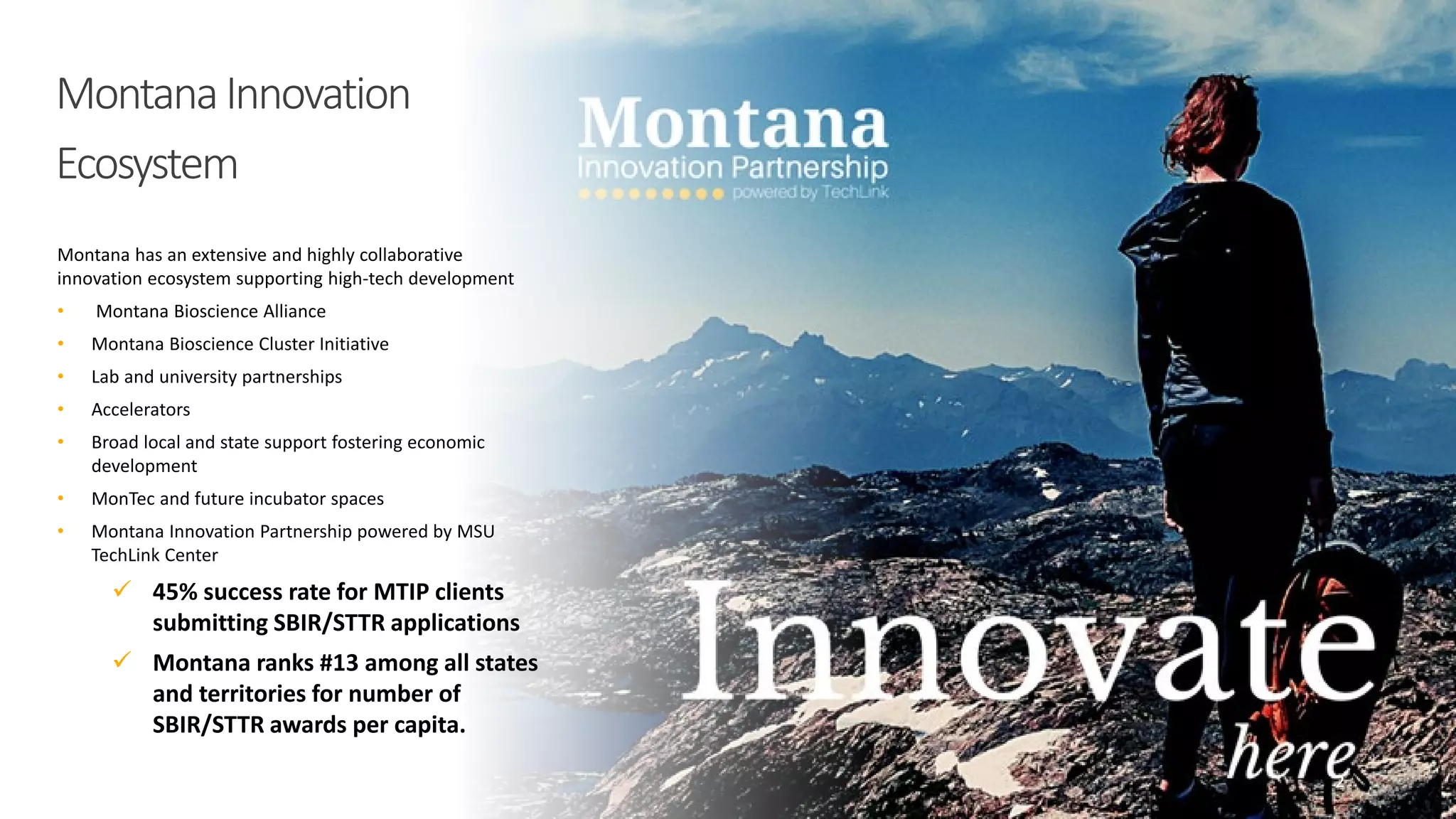
    MontanaInnovation Ecosystem Montana has anextensive and highly collaborative innovation ecosystem supporting high-tech development • Montana Bioscience Alliance • Montana Bioscience Cluster Initiative • Lab and university partnerships • Accelerators • Broad local and state support fostering economic development • MonTec and future incubator spaces • Montana Innovation Partnership powered by MSU TechLink Center  45% success rate for MTIP clients submitting SBIR/STTR applications  Montana ranks #13 among all states and territories for number of SBIR/STTR awards per capita. 2
  • 4.
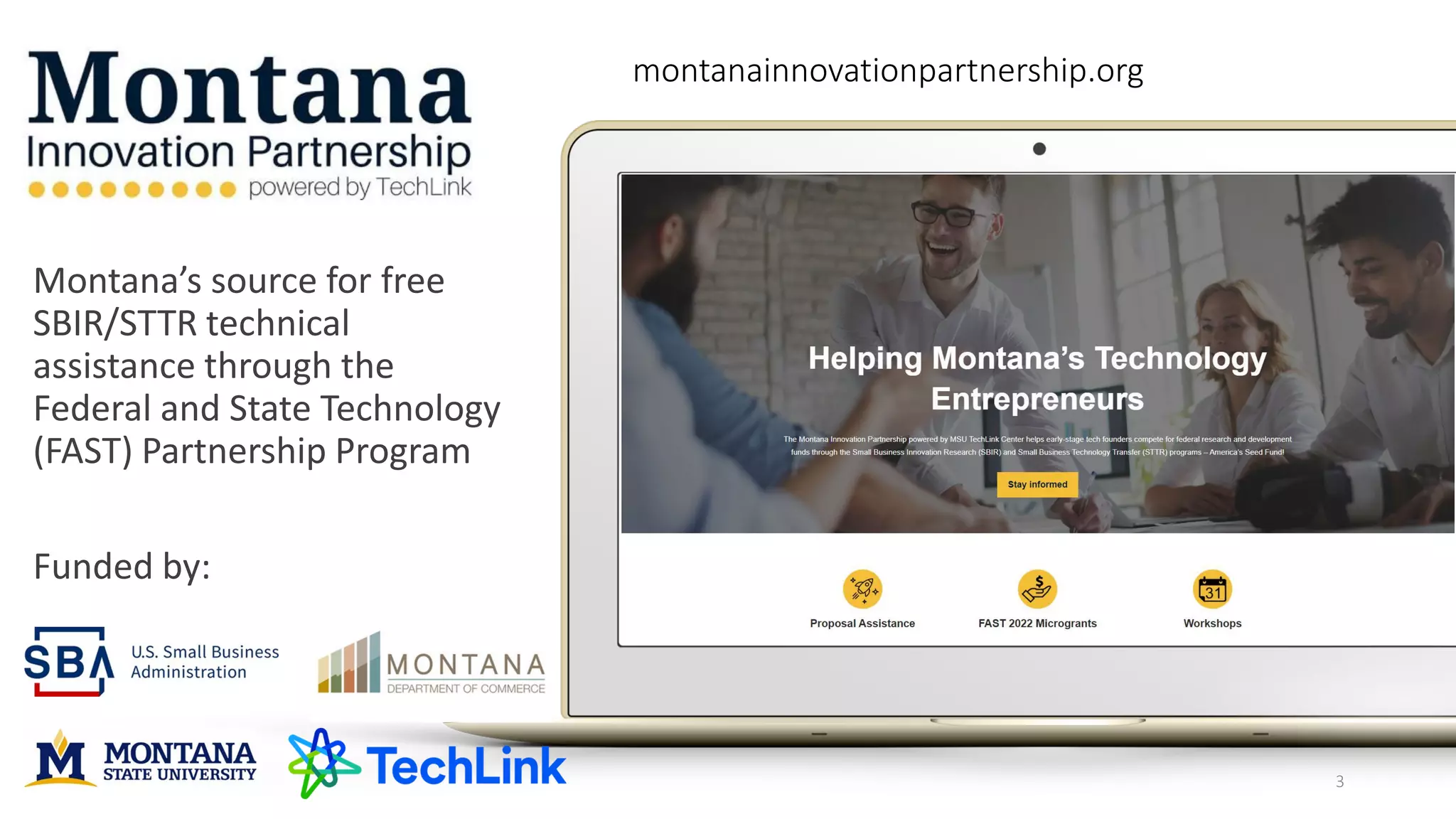
    montanainnovationpartnership.org 3 Montana’s source forfree SBIR/STTR technical assistance through the Federal and State Technology (FAST) Partnership Program Funded by:
  • 5.
    SBIR 101 What isSBIR and who is right for it? 4
  • 6.
    Small Business InnovationResearch Small Business Technology Transfer • Congressionally mandated program • Currently ~$4 billion in federal set-asides • 3.2% SBIR for federal agencies with an extramural R&D budget > $100million • 0.45% STTR for those with extramural R&D > $1billion • Stimulate technological innovation in the private sector • Strengthen role of small business in meeting Federal Research/Research & Development needs • Increase private sector commercialization of innovations developed through Federal SBIR/STTR R&D • Increase small business participation in Federal Research/R&D • Foster and encourage socially and economically disadvantaged small business and women-owned business concerns in the areas of technological innovation
  • 8.
  • 9.
    Why consider SBIR/STTR  Non-dilutiveseed funding for early- stage applied translational r&d and prototype development  Clarity on your product development plans and initial go-to- market strategies  De-risks for later investors  Intellectual property and data rights protection for 20 years *  Direct follow-on Phase III awards – no need for further competition * See § 8(b)(4) of the SBIR/STTR Policy Directive
  • 10.
    Who and whichtechnologies are right and how will our proposal be reviewed? Small Business Innovation Something that  is new or improved  has marketable potential and includes  the development of new technology  the refinement of existing technology  or the development of new applications for existing technology Research  Intellectual Merit – Strength of the scientific/technical approach  Impact – Potential to benefit society and achieve a specific outcome  Company/Team – Ability to competently carry out the project AND suited to aggressive commercialization US based and majority US owned For profit Under 500 employees, including all affiliates Focus for funding is on performing R&D – Not purchasing equipment, commercializing a technology that has already been developed, or one that has very low risk and only needs capital
  • 11.
    Three Phase ProgramStructure 10 Commercialization Discovery Prototyping Phase I Phase II Phase III Feasibility and Concept Development 3-12 months ~ $50K - $275K+ Research and development 24 months ~$500K - $1.7million Not SBIR funding Transition to an agency program or sales into private sector Range of additional support: “Phase 0” assistance Phase IIB Direct-to-Phase II FastTrack TABA – technical and business assistance I-Corps Commercialization Readiness
  • 12.
    NIH SBIR/STTR ProgramPhases and Funding Levels
  • 13.
    Differences between SBIRand STTR SBIR STTR Small Business (applicant) 67% Sub-contract 33% Discretionary 30% Research Institution 30% Small Business (applicant) 40% PI must be employed >50% by SBC PI can be employed by either SBC or RI (NSF excluded) A RI must be involved with an STTR. Only DOD, DOE, NASA, NIH, NSF, USDA Extramural r&d budgets >$1Billion. You may include a research institution (RI) as a sub-awardee but it is not required.
  • 14.
    Contracts vs Grants GRANT •Funds support a public purpose • Investigator-initiated approach • Less specific topics • Cannot be used for classified work • Allows up-front payment • Q&A about the solicitation are not made public CONTRACT • Binding agreement between buyer and seller • Agency defines scope of work • Focused topics • Must be used for classified work • Invoice upon progress • During the open solicitation (after pre-solicitation period), Q&A about the solicitation are made public 13 HHS/NIH, NSF, Energy, USDA, NOAA, NIST, ED Department of Defense, NASA, DHS, DOT, EPA HHS and ED sometimes issue contracts as well.
  • 15.
  • 16.
    Make the leapfrom scientist to tech founder • Describe your customers • Beachhead or first adopters of your technology • Longer term addressable market • Describe the current problem • Who does it impact, what are the costs of not adequately addressing it • Describe your value proposition
  • 17.
    Consider multiple agencies Space Technology Electronics Artificial Intelligence Education/ Training EnergyEnvironment & Natural Resources Life Sciences DOD • • • • • • • DOE • • • • • • NASA • • • • • • • NIH • • • • • • NSF • • • • • • • DOT • • • • • EPA • • • • • • DoEd • • • • • • USDA • • • • • • DOC • • • • • • DHS • • • • • © 2022 Greenwood Consulting Group, Inc.
  • 18.
    You will bepitching to the agency investor - get to know them 17 FAQs, Tutorials, Award lists (companies and funded projects by agency) SBIR.gov Their specific program rules, what they fund, their review process Agency’s SBIR site Understand the research objectives and goals of that agency Agency’s strategic objectives
  • 19.
    Speakwiththe topicauthor 18 Access to topicauthors varies by agency NIH program directors are accessible throughout the year! Draft your Specific Aims or short brief about your 2-3 technical objectives and reach out with a polite request for a 15-minute conversation. Tutorial from SBIR.gov with guidance here: https://www.sbir.gov/tutorials/fin ding-topics/tutorial-2
  • 20.
  • 21.
    Builda Stellar Team! 20 Individuals whowill help you:  Protect your intellectual property  Craft sound sales and business strategies  Provide specialized technical expertise  Comply with government accounting requirements
  • 22.
    Leverage your ecosystemforbusiness andtechnicalsupport • SBAprograms like FAST and Small Business Development Corporations (SBDCs) • Procurement Technical Assistance Centers (PTACs) • Manufacturing Extension Partnerships • State Commerce and Economic Development offices • Angel and VC network • Regional accelerators and incubators • Universities • Industry Alliances 21
  • 23.
  • 24.
    Please check outour next event! https://tinyurl.com/imapctwalunch