4/8/2011


        Irrigation System Spring Start Up

The greatest threat to system start up is water
hammer.

Acceleration of water through empty pipes
can cause:
         • pipe breakage
         • fitting breakage
         • sprinkler damage


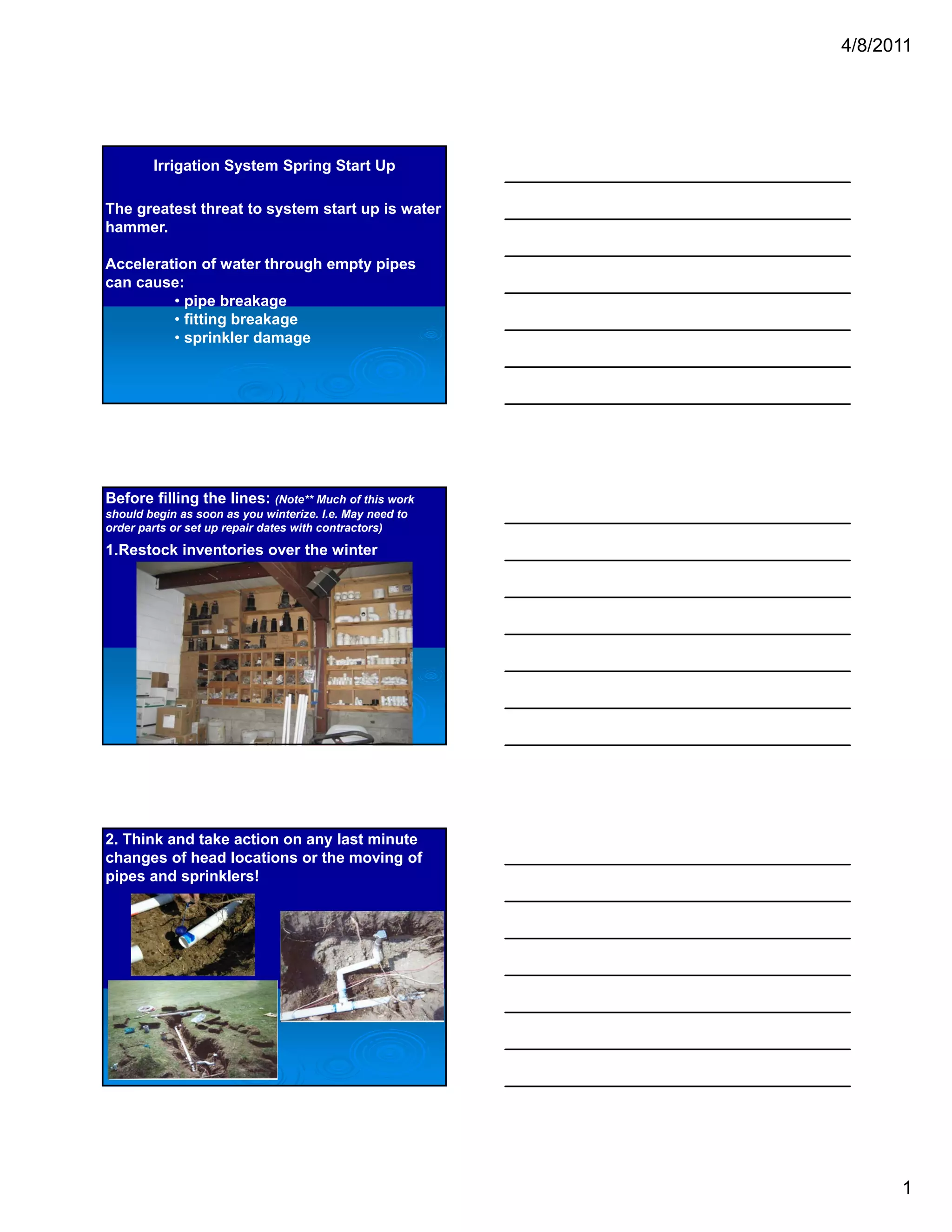
Before filling the lines: (Note** Much of this work
should begin as soon as you winterize. I.e. May need to
order parts or set up repair dates with contractors)

1.Restock inventories over the winter


2. Think and take action on any last minute
changes of head locations or the moving of
pipes and sprinklers!


                                                                1
4/8/2011


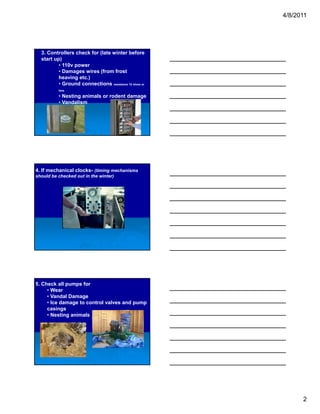
  3. Controllers check for (late winter before
  start up)
          • 110v power
          • Damages wires (from frost
          heaving etc.)
          • Ground connections resistance 10 ohms or
          less

          • Nesting animals or rodent damage
          • Vandalism


4. If mechanical clocks- (timing mechanisms
should be checked out in the winter)


5. Check all pumps for
     • Wear
     • Vandal Damage
     • Ice damage to control valves and pump
     casings
     • Nesting animals


                                                             2
4/8/2011


6. General components
       • Broken or raised heads from frost
       • Broken valve boxes
       • Broken or exposed pipes i.e.
       bridge or river crossings


7. Turn on the Water slowly
• Reduces water hammer
• Pressure surges through rapid filling of a
pipe can exceed 15 times the regular
operating pressure.
• When water moves through a pipe and
reaches a sprinkler it abruptly stops or slows
because water escapes at about 20% that of
air.
• TAKE YOUR TIME figure at least two days for
filling the lines


•Turn on and check system early in the
season before demand is to high for irrigation
requirements but not to early to risk freezing!
•Place quick couplers around property (a few
high points) for air to escape. Can also turn
on a few heads
•Once main lines are full start turning on tees,
greens, isolation valves.
•Patrol for leaks throughout system


                                                         3
4/8/2011


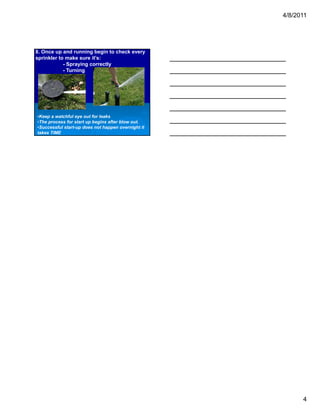
8. Once up and running begin to check every
sprinkler to make sure it’s:
            - Spraying correctly
            - Turning


•Keep a watchful eye out for leaks
•The process for start up begins after blow out.
•Successful start-up does not happen overnight it
takes TIME


                                                          4

Start up

  • 1.
    4/8/2011 Irrigation System Spring Start Up The greatest threat to system start up is water hammer. Acceleration of water through empty pipes can cause: • pipe breakage • fitting breakage • sprinkler damage Before filling the lines: (Note** Much of this work should begin as soon as you winterize. I.e. May need to order parts or set up repair dates with contractors) 1.Restock inventories over the winter 2. Think and take action on any last minute changes of head locations or the moving of pipes and sprinklers! 1
  • 2.
    4/8/2011 3.Controllers check for (late winter before start up) • 110v power • Damages wires (from frost heaving etc.) • Ground connections resistance 10 ohms or less • Nesting animals or rodent damage • Vandalism 4. If mechanical clocks- (timing mechanisms should be checked out in the winter) 5. Check all pumps for • Wear • Vandal Damage • Ice damage to control valves and pump casings • Nesting animals 2
  • 3.
    4/8/2011 6. General components • Broken or raised heads from frost • Broken valve boxes • Broken or exposed pipes i.e. bridge or river crossings 7. Turn on the Water slowly • Reduces water hammer • Pressure surges through rapid filling of a pipe can exceed 15 times the regular operating pressure. • When water moves through a pipe and reaches a sprinkler it abruptly stops or slows because water escapes at about 20% that of air. • TAKE YOUR TIME figure at least two days for filling the lines •Turn on and check system early in the season before demand is to high for irrigation requirements but not to early to risk freezing! •Place quick couplers around property (a few high points) for air to escape. Can also turn on a few heads •Once main lines are full start turning on tees, greens, isolation valves. •Patrol for leaks throughout system 3
  • 4.
    4/8/2011 8. Once upand running begin to check every sprinkler to make sure it’s: - Spraying correctly - Turning •Keep a watchful eye out for leaks •The process for start up begins after blow out. •Successful start-up does not happen overnight it takes TIME 4