Stage Five Book Publishing AAUP Presentation Joseph J. Esposito CEO GiantChair June 18, 2010
Hope is the thing with feathers --Emily Dickinson
Topics What is sustainability? The place of innovation Tracking four key properties The 5-stage typology Red herrings
What is Sustainability, Anyway? Is the current situation worth sustaining? Sustainability and the status quo Where is scholarly publishing going? Create a picture of the future, and paint yourself in
The Place of Innovation Looks to the future Aligns a publisher with trends in the industry Permits a publisher to get in on the ground floor The “inevitability factor”
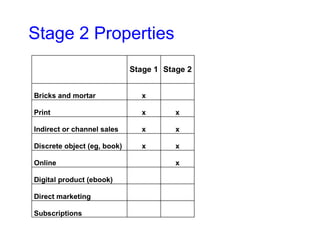
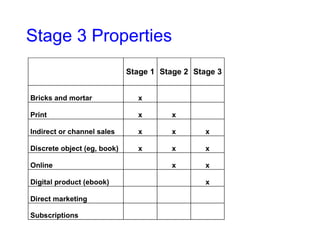
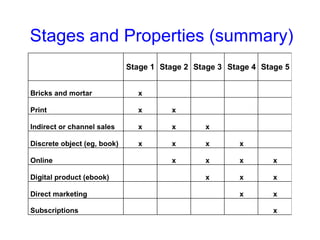
Tracking 4 Key Properties Venue  (where are books sold?) Medium  (is the book in print or digital?) Sales channels  (is the book sold through middlemen or directly to consumers?) Nature of offering  (is the book sold by itself or as part of a broader marketing program?)
Stage 1 Book Publishing The traditional model Sold in bricks-and-mortar bookshops and to libraries Print books Sold through various resellers Each book is a discrete entity For virtually all publishers, whether scholarly or commercial, this is still the primary way books are published and sold
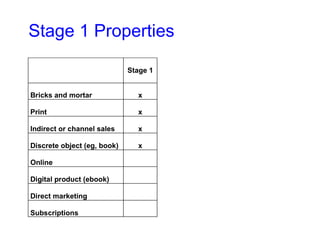
Stage 1 Properties
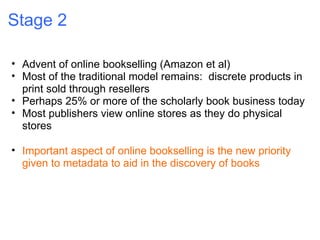
Stage 2 Advent of online bookselling (Amazon et al) Most of the traditional model remains:  discrete products in print sold through resellers Perhaps 25% or more of the scholarly book business today Most publishers view online stores as they do physical stores Important aspect of online bookselling is the new priority given to metadata to aid in the discovery of books
Stage 2 Properties
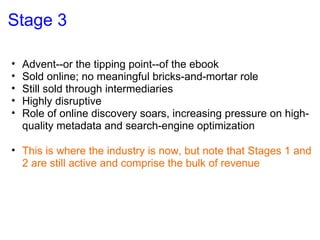
Stage 3 Advent--or the tipping point--of the ebook Sold online; no meaningful bricks-and-mortar role Still sold through intermediaries Highly disruptive Role of online discovery soars, increasing pressure on high-quality metadata and search-engine optimization This is where the industry is now, but note that Stages 1 and 2 are still active and comprise the bulk of revenue
Stage 3 Properties
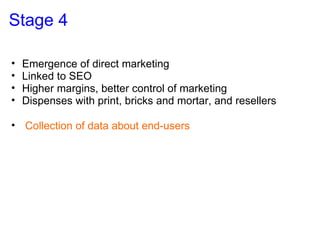
Stage 4 Emergence of direct marketing Linked to SEO Higher margins, better control of marketing Dispenses with print, bricks and mortar, and resellers   Collection of data about end-users
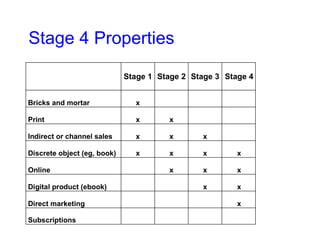
Stage 4 Properties
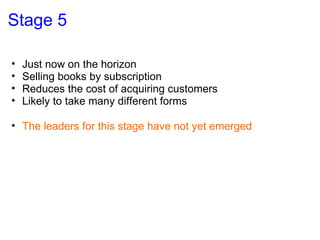
Stage 5 Just now on the horizon Selling books by subscription Reduces the cost of acquiring customers Likely to take many different forms The leaders for this stage have not yet emerged
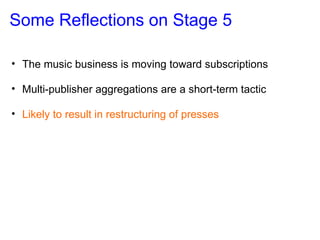
Some Reflections on Stage 5  The music business is moving toward subscriptions Multi-publisher aggregations are a short-term tactic Likely to result in restructuring of presses
Stages and Properties (summary)
And that has made all the difference --Robert Frost

Joseph Esposito: Stage Five Publishing

  • 1.
    Stage Five BookPublishing AAUP Presentation Joseph J. Esposito CEO GiantChair June 18, 2010
  • 2.
    Hope is thething with feathers --Emily Dickinson
  • 3.
    Topics What issustainability? The place of innovation Tracking four key properties The 5-stage typology Red herrings
  • 4.
    What is Sustainability,Anyway? Is the current situation worth sustaining? Sustainability and the status quo Where is scholarly publishing going? Create a picture of the future, and paint yourself in
  • 5.
    The Place ofInnovation Looks to the future Aligns a publisher with trends in the industry Permits a publisher to get in on the ground floor The “inevitability factor”
  • 6.
    Tracking 4 KeyProperties Venue (where are books sold?) Medium (is the book in print or digital?) Sales channels (is the book sold through middlemen or directly to consumers?) Nature of offering (is the book sold by itself or as part of a broader marketing program?)
  • 7.
    Stage 1 BookPublishing The traditional model Sold in bricks-and-mortar bookshops and to libraries Print books Sold through various resellers Each book is a discrete entity For virtually all publishers, whether scholarly or commercial, this is still the primary way books are published and sold
  • 8.
  • 9.
    Stage 2 Adventof online bookselling (Amazon et al) Most of the traditional model remains:  discrete products in print sold through resellers Perhaps 25% or more of the scholarly book business today Most publishers view online stores as they do physical stores Important aspect of online bookselling is the new priority given to metadata to aid in the discovery of books
  • 10.
  • 11.
    Stage 3 Advent--orthe tipping point--of the ebook Sold online; no meaningful bricks-and-mortar role Still sold through intermediaries Highly disruptive Role of online discovery soars, increasing pressure on high-quality metadata and search-engine optimization This is where the industry is now, but note that Stages 1 and 2 are still active and comprise the bulk of revenue
  • 12.
  • 13.
    Stage 4 Emergenceof direct marketing Linked to SEO Higher margins, better control of marketing Dispenses with print, bricks and mortar, and resellers   Collection of data about end-users
  • 14.
  • 15.
    Stage 5 Justnow on the horizon Selling books by subscription Reduces the cost of acquiring customers Likely to take many different forms The leaders for this stage have not yet emerged
  • 16.
    Some Reflections onStage 5 The music business is moving toward subscriptions Multi-publisher aggregations are a short-term tactic Likely to result in restructuring of presses
  • 17.
  • 18.
    And that hasmade all the difference --Robert Frost