“
“
2011 will clearly be the year of the e-book.
    Bloomsbury’s founder & chief executive Nigel Newton.
“  I expect e-books to be the fastest-growing
             segment that publishing has ever seen.
                                                            “
                          Brian Murray, CEO of Harper Collins


“   The e-book sector’s performance in 2010 clearly shows
    that digital publishing is growing at an impressive rate in “
    whichever part of the sector you choose to look.

                Richard Mollett CEO of the Publishers Association
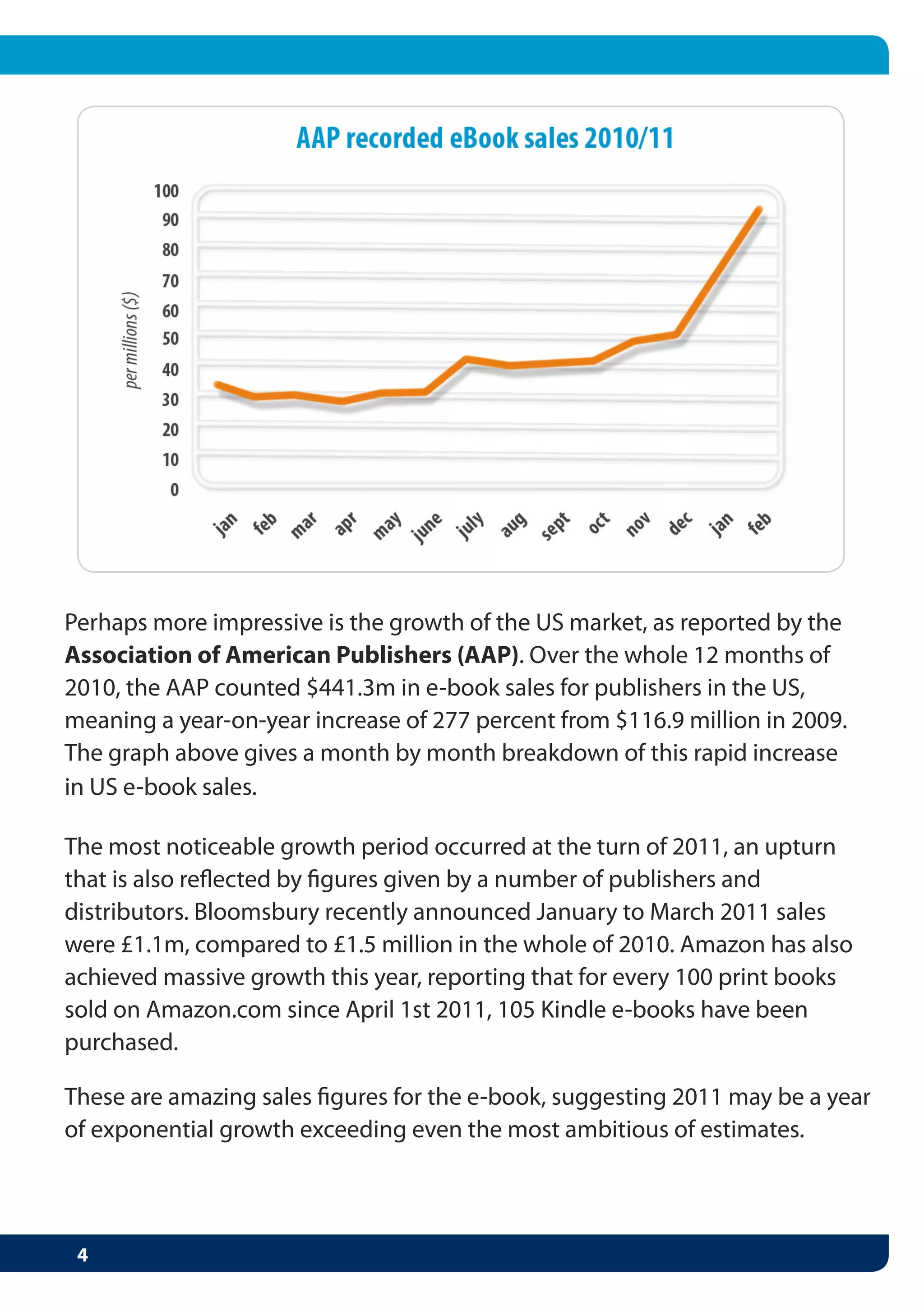
Perhaps more impressive is the growth of the US market, as reported by the
Association of American Publishers (AAP). Over the whole 12 months of
2010, the AAP counted $441.3m in e-book sales for publishers in the US,
meaning a year-on-year increase of 277 percent from $116.9 million in 2009.
The graph above gives a month by month breakdown of this rapid increase
in US e-book sales.

The most noticeable growth period occurred at the turn of 2011, an upturn
that is also reflected by figures given by a number of publishers and
distributors. Bloomsbury recently announced January to March 2011 sales
were £1.1m, compared to £1.5 million in the whole of 2010. Amazon has also
achieved massive growth this year, reporting that for every 100 print books
sold on Amazon.com since April 1st 2011, 105 Kindle e-books have been
purchased.

These are amazing sales figures for the e-book, suggesting 2011 may be a year
of exponential growth exceeding even the most ambitious of estimates.


 4
“   Publishers need to take digital seriously, they must make it
    the new default for publishing, preparing for a day in which
    physical book publishing is an adjunct activity that supports
                                   “
    the digital publishing business.

                              James McQuivey, Forrester Research
“
Technology is putting e-reading devices into consumers’ hands;
                                                       “
we are starting to see the rapid growth of digital sales.

                  Richard Mollett CEO, The Publishers Association
“
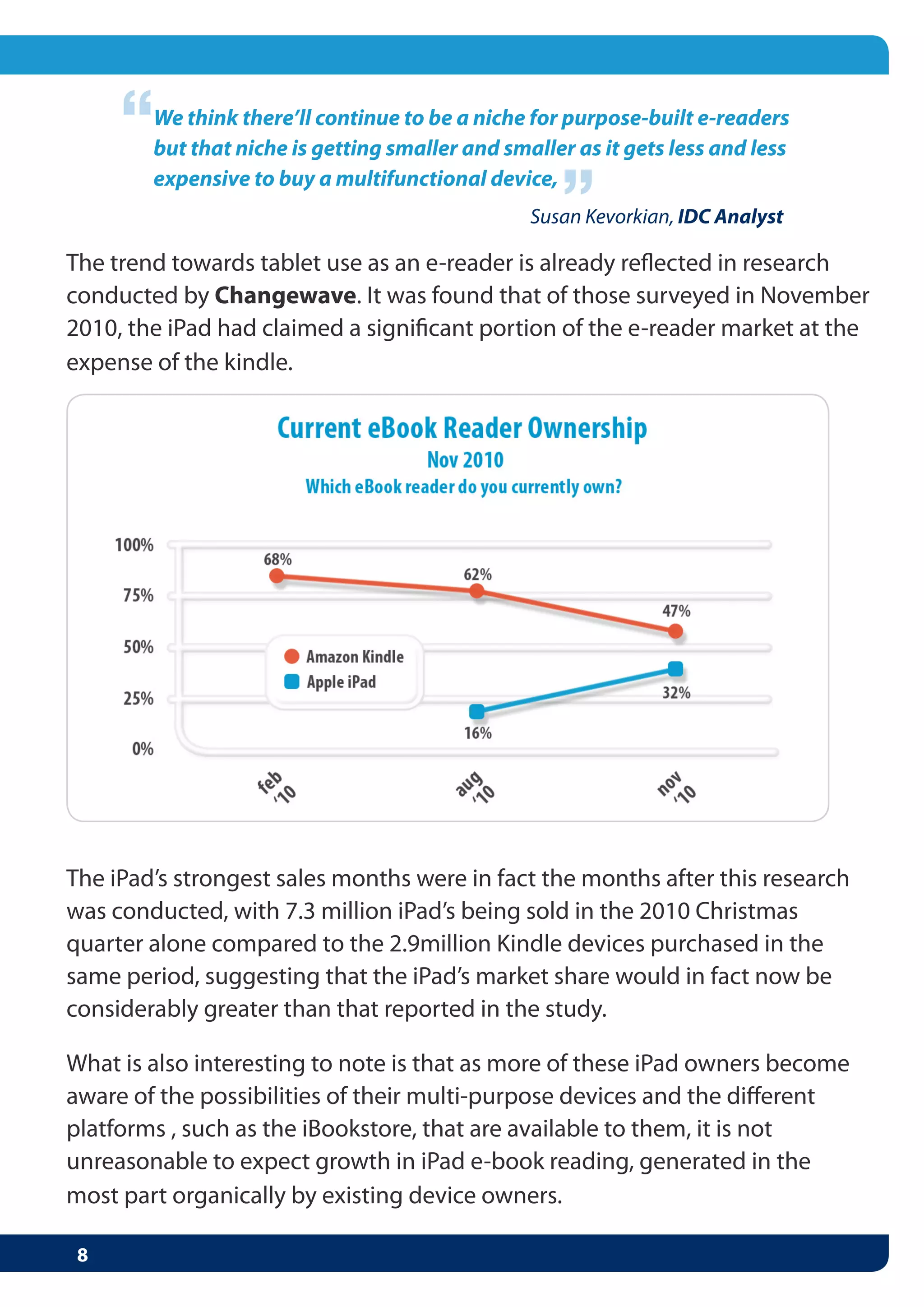
We think there’ll continue to be a niche for purpose-built e-readers
                                            “
but that niche is getting smaller and smaller as it gets less and less
expensive to buy a multifunctional device,
                                         Susan Kevorkian, IDC Analyst
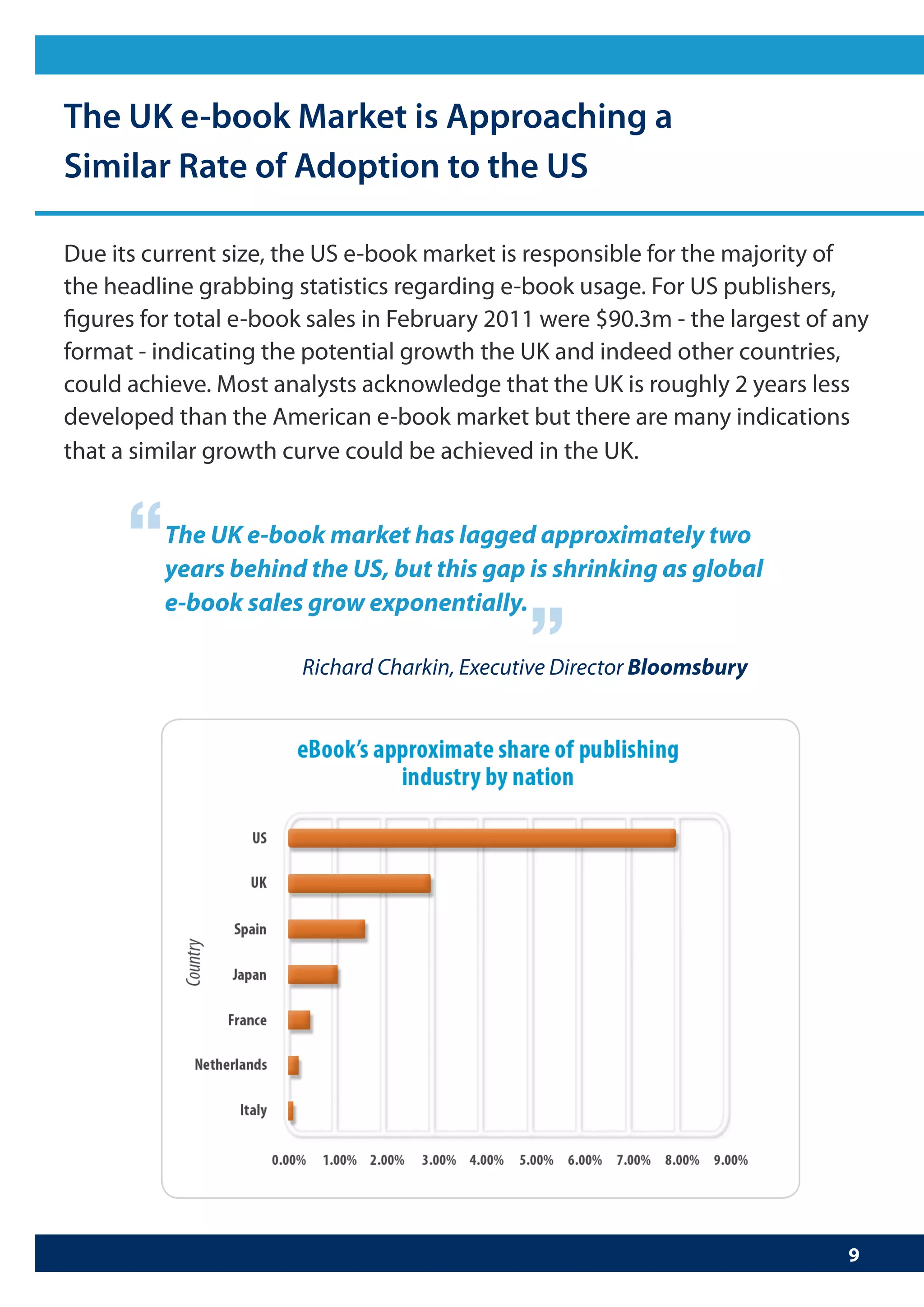
“   The UK e-book market has lagged approximately two
    years behind the US, but this gap is shrinking as global
                                       “
    e-book sales grow exponentially.

                Richard Charkin, Executive Director Bloomsbury
• Penguin announced their sales had doubled
  in the first three month of 2011 when
  compared year on year to 2010.

• 5% of Hachette UK’s trade sales in the first
  quarter of 2011 were e-books

• The Random House Group has exceeded 2
  million e-book sales in 2011, meaning sales
  have increased 10 fold year-on-year.

• UK Kindle titles outsell hardbacks at a rate of
  more than 2 to 1 in the Amazon store.
E-books Have Stimulated the Rise of the Self-Publisher


The e-book revolution has not only changed the way people read books,
it has also had an enormous bearing on how content is published.
In the past, traditional print publishing houses have dominated sales and
distribution of titles. Generally it was assumed that these companies held the key
to the success or failure of a written book. This dynamic however, has been upset
greatly by a growing number of writers who bypass these publishing houses and
submit their work to e-bookstores, thus eliminating the high infrastructure costs of
a print product.


   “   There are dozens of “indie” authors who are selling thousands of
       e-books a month without a print version.
                                                    “
                                              Simon Owens, thenextweb.com


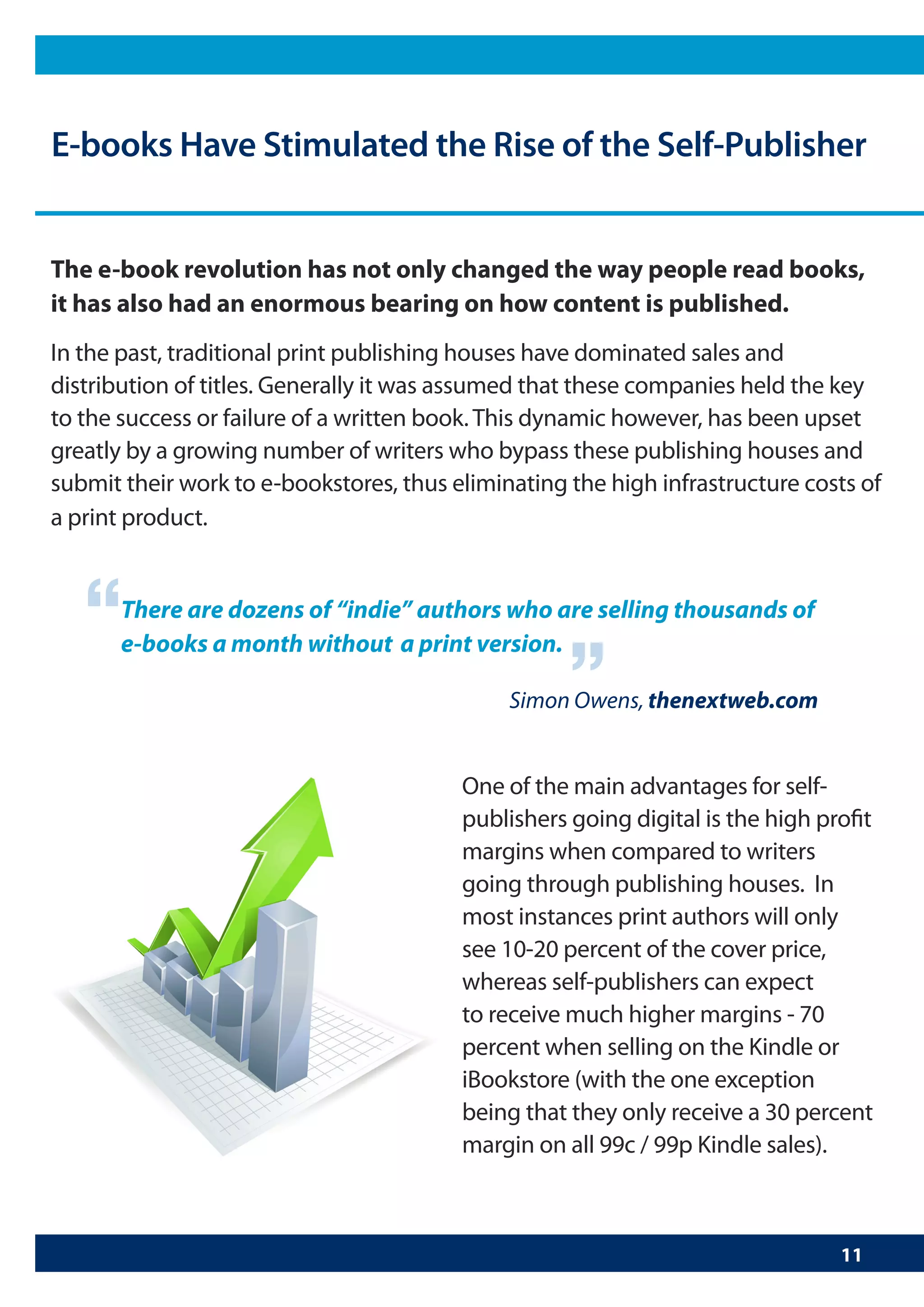
                                         One of the main advantages for self-
                                         publishers going digital is the high profit
                                         margins when compared to writers
                                         going through publishing houses. In
                                         most instances print authors will only
                                         see 10-20 percent of the cover price,
                                         whereas self-publishers can expect
                                         to receive much higher margins - 70
                                         percent when selling on the Kindle or
                                         iBookstore (with the one exception
                                         being that they only receive a 30 percent
                                         margin on all 99c / 99p Kindle sales).


                                                                                11
“
If [publishers] wanted my three-book vampire series, a quarter
of a million dollars wouldn’t even do it, because I can make more
                                        “
than that in a year on those three books.

                                 Tina Folsom, Self-published author
“
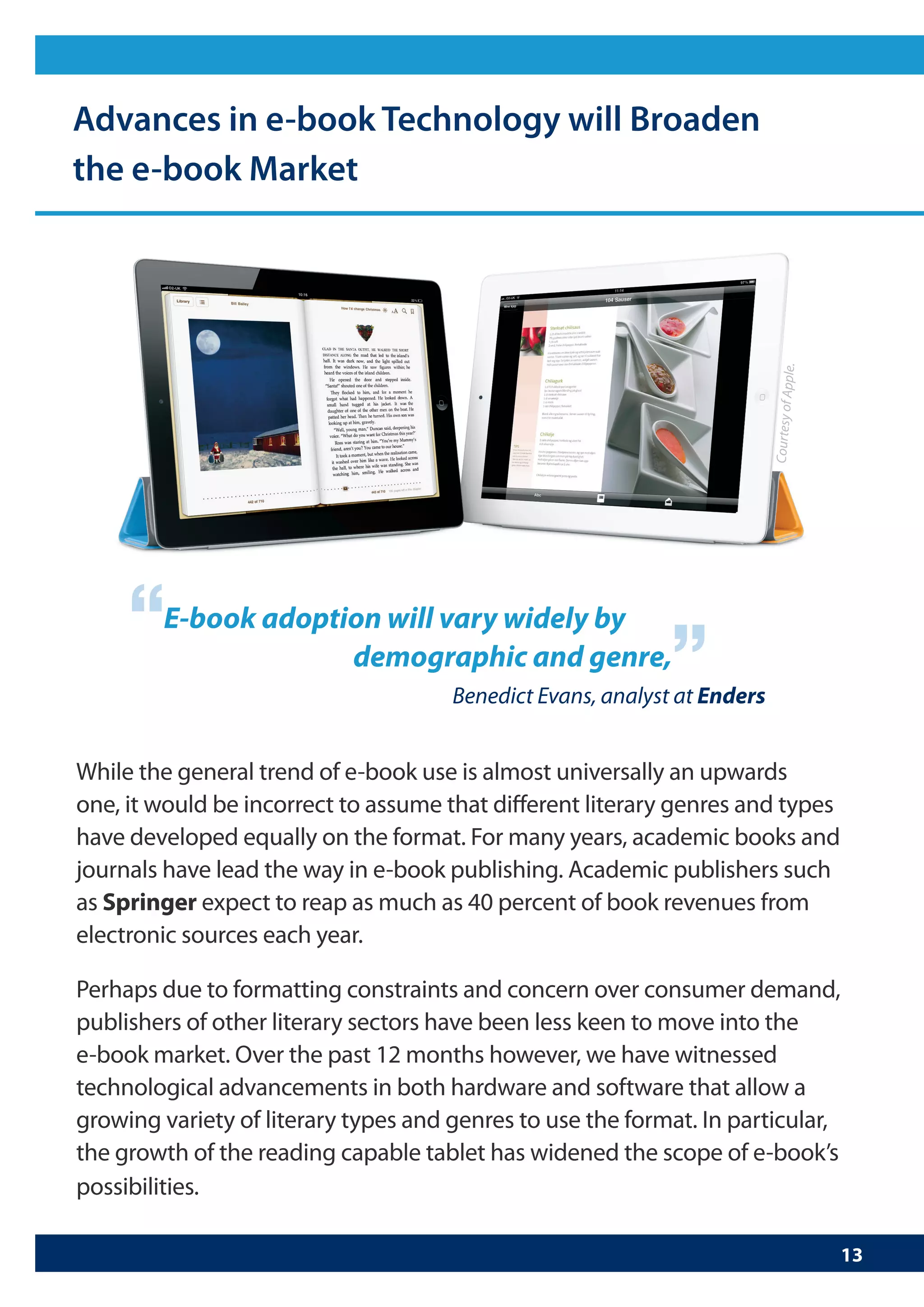
E-book adoption will vary widely by
                                          “
             demographic and genre,
                   Benedict Evans, analyst at Enders
“
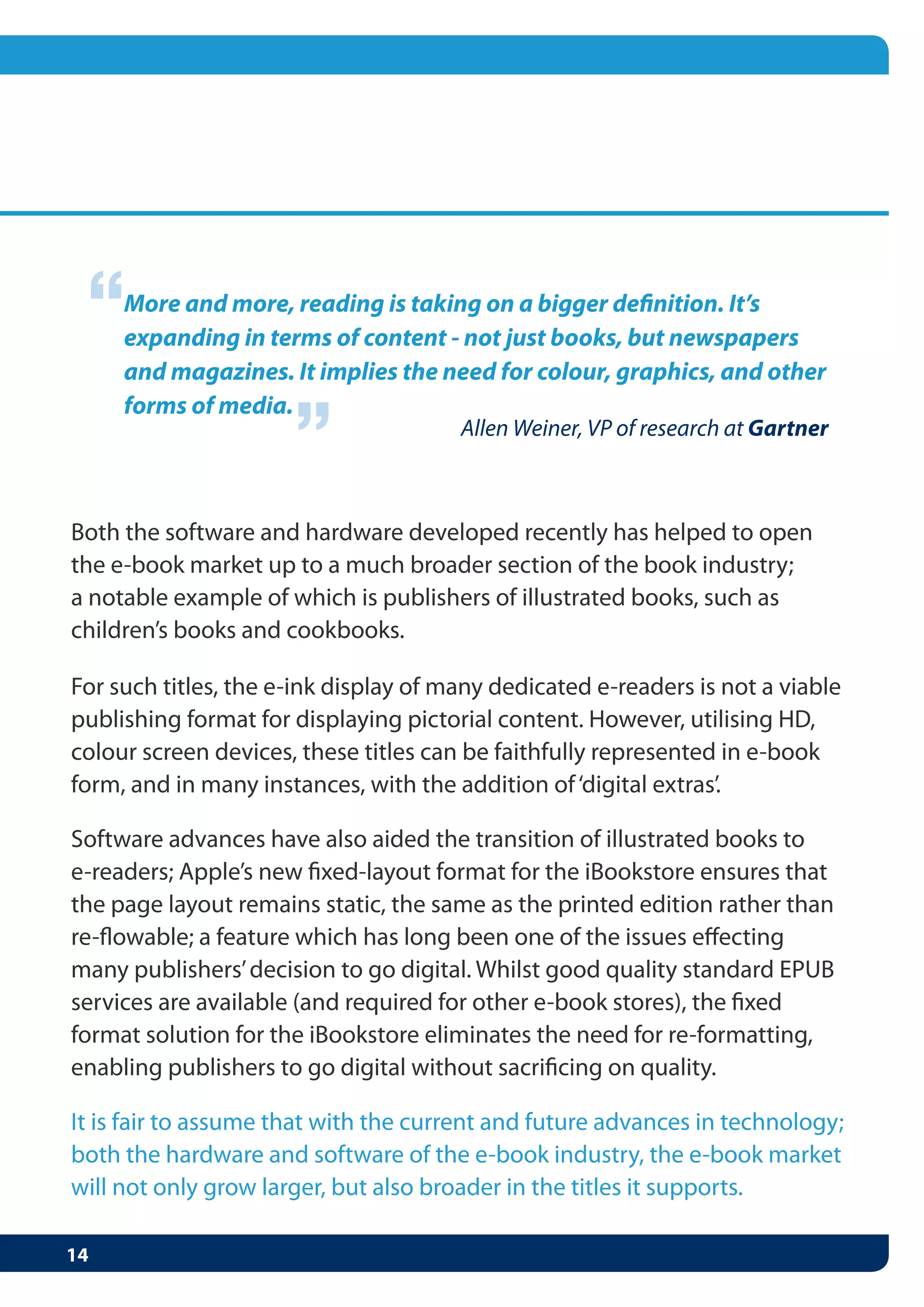
More and more, reading is taking on a bigger definition. It’s
expanding in terms of content - not just books, but newspapers
and magazines. It implies the need for colour, graphics, and other
               “
forms of media.
                               Allen Weiner, VP of research at Gartner
“   The promise of having another platform where books
    can be discovered is still true today. The potential [of the
                              “
    iBookstore] is enormous.
                     Brian Murray, CEO of HarperCollins Publishers
Books whitepaper final

Books whitepaper final

  • 2.
    “ “ 2011 will clearlybe the year of the e-book. Bloomsbury’s founder & chief executive Nigel Newton.
  • 4.
    “ Iexpect e-books to be the fastest-growing segment that publishing has ever seen. “ Brian Murray, CEO of Harper Collins “ The e-book sector’s performance in 2010 clearly shows that digital publishing is growing at an impressive rate in “ whichever part of the sector you choose to look. Richard Mollett CEO of the Publishers Association
  • 5.
    Perhaps more impressiveis the growth of the US market, as reported by the Association of American Publishers (AAP). Over the whole 12 months of 2010, the AAP counted $441.3m in e-book sales for publishers in the US, meaning a year-on-year increase of 277 percent from $116.9 million in 2009. The graph above gives a month by month breakdown of this rapid increase in US e-book sales. The most noticeable growth period occurred at the turn of 2011, an upturn that is also reflected by figures given by a number of publishers and distributors. Bloomsbury recently announced January to March 2011 sales were £1.1m, compared to £1.5 million in the whole of 2010. Amazon has also achieved massive growth this year, reporting that for every 100 print books sold on Amazon.com since April 1st 2011, 105 Kindle e-books have been purchased. These are amazing sales figures for the e-book, suggesting 2011 may be a year of exponential growth exceeding even the most ambitious of estimates. 4
  • 6.
    Publishers need to take digital seriously, they must make it the new default for publishing, preparing for a day in which physical book publishing is an adjunct activity that supports “ the digital publishing business. James McQuivey, Forrester Research
  • 8.
    “ Technology is puttinge-reading devices into consumers’ hands; “ we are starting to see the rapid growth of digital sales. Richard Mollett CEO, The Publishers Association
  • 9.
    “ We think there’llcontinue to be a niche for purpose-built e-readers “ but that niche is getting smaller and smaller as it gets less and less expensive to buy a multifunctional device, Susan Kevorkian, IDC Analyst
  • 10.
    The UK e-book market has lagged approximately two years behind the US, but this gap is shrinking as global “ e-book sales grow exponentially. Richard Charkin, Executive Director Bloomsbury
  • 11.
    • Penguin announcedtheir sales had doubled in the first three month of 2011 when compared year on year to 2010. • 5% of Hachette UK’s trade sales in the first quarter of 2011 were e-books • The Random House Group has exceeded 2 million e-book sales in 2011, meaning sales have increased 10 fold year-on-year. • UK Kindle titles outsell hardbacks at a rate of more than 2 to 1 in the Amazon store.
  • 12.
    E-books Have Stimulatedthe Rise of the Self-Publisher The e-book revolution has not only changed the way people read books, it has also had an enormous bearing on how content is published. In the past, traditional print publishing houses have dominated sales and distribution of titles. Generally it was assumed that these companies held the key to the success or failure of a written book. This dynamic however, has been upset greatly by a growing number of writers who bypass these publishing houses and submit their work to e-bookstores, thus eliminating the high infrastructure costs of a print product. “ There are dozens of “indie” authors who are selling thousands of e-books a month without a print version. “ Simon Owens, thenextweb.com One of the main advantages for self- publishers going digital is the high profit margins when compared to writers going through publishing houses. In most instances print authors will only see 10-20 percent of the cover price, whereas self-publishers can expect to receive much higher margins - 70 percent when selling on the Kindle or iBookstore (with the one exception being that they only receive a 30 percent margin on all 99c / 99p Kindle sales). 11
  • 13.
    “ If [publishers] wantedmy three-book vampire series, a quarter of a million dollars wouldn’t even do it, because I can make more “ than that in a year on those three books. Tina Folsom, Self-published author
  • 14.
    “ E-book adoption willvary widely by “ demographic and genre, Benedict Evans, analyst at Enders
  • 15.
    “ More and more,reading is taking on a bigger definition. It’s expanding in terms of content - not just books, but newspapers and magazines. It implies the need for colour, graphics, and other “ forms of media. Allen Weiner, VP of research at Gartner
  • 17.
    The promise of having another platform where books can be discovered is still true today. The potential [of the “ iBookstore] is enormous. Brian Murray, CEO of HarperCollins Publishers