St Austell
Brewery
Sanna Soomro
Introduction
 St Austell Brewery has been brewing beer
and real ale in Cornwall since 1851 and runs
over 170 of the most popular pubs in the
South West.
 In 2001 the brewery celebrated its 150th
Anniversary.
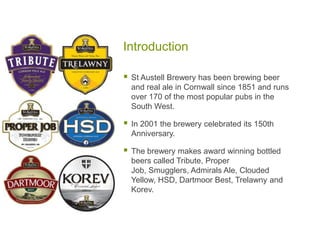
 The brewery makes award winning bottled
beers called Tribute, Proper
Job, Smugglers, Admirals Ale, Clouded
Yellow, HSD, Dartmoor Best, Trelawny and
Korev.
Visitor Centre (1)
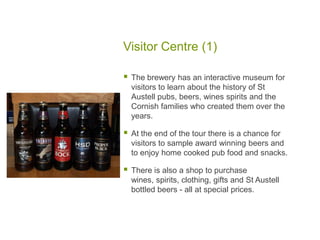
 The brewery has an interactive museum for
visitors to learn about the history of St
Austell pubs, beers, wines spirits and the
Cornish families who created them over the
years.
 At the end of the tour there is a chance for
visitors to sample award winning beers and
to enjoy home cooked pub food and snacks.
 There is also a shop to purchase
wines, spirits, clothing, gifts and St Austell
bottled beers - all at special prices.
Visitor Centre (2)
 The visitor centre is also available for
wedding bookings for up to 150 guests; the
brewery can provide food and drink.
 The centre is only 10 minutes from the town
centre and is available to hire for
conferences, business meetings, workshops
and seminars.
 The Visitor Centre won a Silver award in the
Green Tourism Business Scheme.
Problems (1)
 Due peak seasons there has been localised
traffic congestion because of popularity with
visitors.
 There is pressure on land to provide more
parking space for visitors.
 Most people travel to the brewery by car so
there is an increased risk of people drinking
and driving after sampling the beers
Problems (2)
 If business continues to flourish larger lorries
may be needed to transport the goods. This
could lead to local road damage and place
extra strain on local council budgets to fix
roads damaged by larger lorries/vans.
Strain on local services, e.g. rubbish
collection/sewage
 Increased day visitors or large groups of
wedding/ conference guests creates waste
which needs to be collected.
Benefits (1)
 St Austell Brewery is the 2nd largest private
employer in Cornwall with a workforce of
around 1,000 people. The brewery is family
owned and likes to employ local people. This
means that wages earned are likely to be
spent on local goods and services. This
increases the chances of the multiplier effect
happening.
 St Austell Brewery is the South West’s largest
wholesaler of wines, spirits, minerals, lagers
and beers and serves over 3000
pubs, hotels, bars, clubs and restaurants in the
South West of England. Tertiary jobs will be
created e.g. drivers to transport the
beer, cleaners, bar staff, waiters. Quaternary
jobs will be created e.g. marketing , advertising
and website design.
Benefits (2)
 Turnover has grown by 7% to over 100 million
pounds. This success might lead to further
investment and future economic benefits.
 Profits before tax were 9.7 million last year.
The company could use the money to diversify
and make new products eg beer tasting
peanuts, alcohol free wine/beer.
 St Austell Brewery runs the St Austell Brewery
Charitable Trust which has donated over
£300,000 to local good causes since it was
founded in 2003. Local charities e.g. children's
hospices benefit. This improves quality of life
for vulnerable people in the area.
Benefits (3)
 St Austell Brewery has a pro-active
environmental policy and is committed to
reducing the company’s carbon footprint by
30%. This suggests that food products for bar
food and the food in the visitor centre are
sourced locally. This boosts local farms and
food-processing companies. Less traffic on the
road as goods only have to transported from
local places.
 The Visitor Centre at the brewery won a Silver
award in the Green Tourism Business Scheme
and because it is advertised as just one of
several local attractions so local tourism could
be boosted.
Benefits (4)
 The Company is an active member of the
community and sponsors may local sports in
the South West, particularly rugby and
rowing. Local community spirit grows, this
could extend possibilities for local people
using each others trades and skills.
 Exports have increased by 37% and the
brewery now exports to 20 countries. This
will create tertiary jobs e.g. transporting the
goods to docks. This could strengthen trade
relationship with other countries and who
might want to invest in the local area.
Multiplier Effect
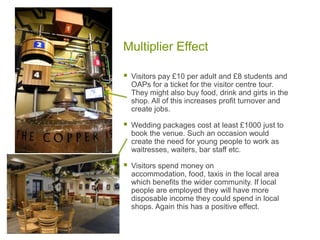
 Visitors pay £10 per adult and £8 students and
OAPs for a ticket for the visitor centre tour.
They might also buy food, drink and girts in the
shop. All of this increases profit turnover and
create jobs.
 Wedding packages cost at least £1000 just to
book the venue. Such an occasion would
create the need for young people to work as
waitresses, waiters, bar staff etc.
 Visitors spend money on
accommodation, food, taxis in the local area
which benefits the wider community. If local
people are employed they will have more
disposable income they could spend in local
shops. Again this has a positive effect.

St Austell Brewery

  • 1.
  • 2.
    Introduction  St AustellBrewery has been brewing beer and real ale in Cornwall since 1851 and runs over 170 of the most popular pubs in the South West.  In 2001 the brewery celebrated its 150th Anniversary.  The brewery makes award winning bottled beers called Tribute, Proper Job, Smugglers, Admirals Ale, Clouded Yellow, HSD, Dartmoor Best, Trelawny and Korev.
  • 3.
    Visitor Centre (1) The brewery has an interactive museum for visitors to learn about the history of St Austell pubs, beers, wines spirits and the Cornish families who created them over the years.  At the end of the tour there is a chance for visitors to sample award winning beers and to enjoy home cooked pub food and snacks.  There is also a shop to purchase wines, spirits, clothing, gifts and St Austell bottled beers - all at special prices.
  • 4.
    Visitor Centre (2) The visitor centre is also available for wedding bookings for up to 150 guests; the brewery can provide food and drink.  The centre is only 10 minutes from the town centre and is available to hire for conferences, business meetings, workshops and seminars.  The Visitor Centre won a Silver award in the Green Tourism Business Scheme.
  • 5.
    Problems (1)  Duepeak seasons there has been localised traffic congestion because of popularity with visitors.  There is pressure on land to provide more parking space for visitors.  Most people travel to the brewery by car so there is an increased risk of people drinking and driving after sampling the beers
  • 6.
    Problems (2)  Ifbusiness continues to flourish larger lorries may be needed to transport the goods. This could lead to local road damage and place extra strain on local council budgets to fix roads damaged by larger lorries/vans. Strain on local services, e.g. rubbish collection/sewage  Increased day visitors or large groups of wedding/ conference guests creates waste which needs to be collected.
  • 7.
    Benefits (1)  StAustell Brewery is the 2nd largest private employer in Cornwall with a workforce of around 1,000 people. The brewery is family owned and likes to employ local people. This means that wages earned are likely to be spent on local goods and services. This increases the chances of the multiplier effect happening.  St Austell Brewery is the South West’s largest wholesaler of wines, spirits, minerals, lagers and beers and serves over 3000 pubs, hotels, bars, clubs and restaurants in the South West of England. Tertiary jobs will be created e.g. drivers to transport the beer, cleaners, bar staff, waiters. Quaternary jobs will be created e.g. marketing , advertising and website design.
  • 8.
    Benefits (2)  Turnoverhas grown by 7% to over 100 million pounds. This success might lead to further investment and future economic benefits.  Profits before tax were 9.7 million last year. The company could use the money to diversify and make new products eg beer tasting peanuts, alcohol free wine/beer.  St Austell Brewery runs the St Austell Brewery Charitable Trust which has donated over £300,000 to local good causes since it was founded in 2003. Local charities e.g. children's hospices benefit. This improves quality of life for vulnerable people in the area.
  • 9.
    Benefits (3)  StAustell Brewery has a pro-active environmental policy and is committed to reducing the company’s carbon footprint by 30%. This suggests that food products for bar food and the food in the visitor centre are sourced locally. This boosts local farms and food-processing companies. Less traffic on the road as goods only have to transported from local places.  The Visitor Centre at the brewery won a Silver award in the Green Tourism Business Scheme and because it is advertised as just one of several local attractions so local tourism could be boosted.
  • 10.
    Benefits (4)  TheCompany is an active member of the community and sponsors may local sports in the South West, particularly rugby and rowing. Local community spirit grows, this could extend possibilities for local people using each others trades and skills.  Exports have increased by 37% and the brewery now exports to 20 countries. This will create tertiary jobs e.g. transporting the goods to docks. This could strengthen trade relationship with other countries and who might want to invest in the local area.
  • 11.
    Multiplier Effect  Visitorspay £10 per adult and £8 students and OAPs for a ticket for the visitor centre tour. They might also buy food, drink and girts in the shop. All of this increases profit turnover and create jobs.  Wedding packages cost at least £1000 just to book the venue. Such an occasion would create the need for young people to work as waitresses, waiters, bar staff etc.  Visitors spend money on accommodation, food, taxis in the local area which benefits the wider community. If local people are employed they will have more disposable income they could spend in local shops. Again this has a positive effect.