Chanda Rana, MPT
Rehabilitation In charge
Spinal Injury Rehabilitation Centre
Sanga, Nepal
2
Overview
 Definition - SI vs. SCI
 Developing country- ~fatal.
 Resource limitations.
 Mass casualty vs. normal situation
 SCI management
3
Aim of Treatment
 To prevent further injury
 To prevent complications
4
The spinal column
5
 Small bones called vertebrae
 Begins in the neck and ends at tailbone.
 Backbone surrounds and protect the
spinal cord.
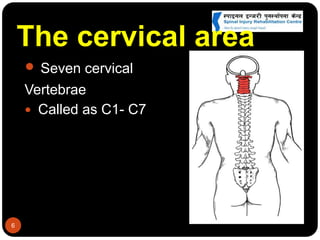
The cervical area
6
 Seven cervical
Vertebrae
 Called as C1- C7
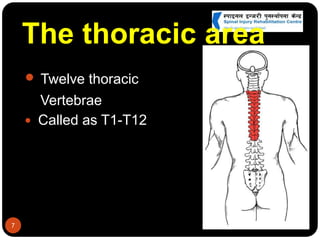
The thoracic area
7
 Twelve thoracic
Vertebrae
 Called as T1-T12
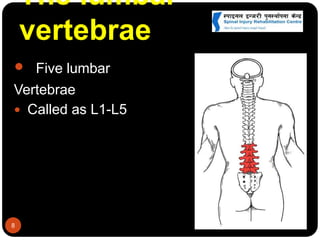
The lumbar
vertebrae
8
 Five lumbar
Vertebrae
 Called as L1-L5
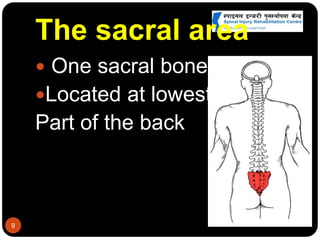
The sacral area
9
 One sacral bone
Located at lowest
Part of the back
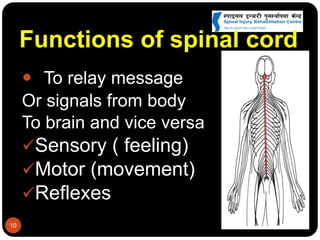
Functions of spinal cord
10
 To relay message
Or signals from body
To brain and vice versa
Sensory ( feeling)
Motor (movement)
Reflexes
SCI
 An insult to spinal cord resulting in a
change, either temporary or permanent in
its normal motor, sensory or autonomic
function.
International Standard for Neurological Classification
of Spinal Cord Injury (ISNCSCI)
11
How is it different from other
injuries??
 Lack of inherent ability of neurons to
regenerate effectively for functional
improvement.
12
Determinants of degree of
disability
 Site of injury
 Completeness of injury
13
Epidemiology
 Month
Most - July and least -February
 Day
 Saturday
 During daylight hours.
 Marital status
Single
14
Epidem…
 Gender
Males >4 times females
 Age 16-30 years
 Older Higher mortality
 Divorce
15
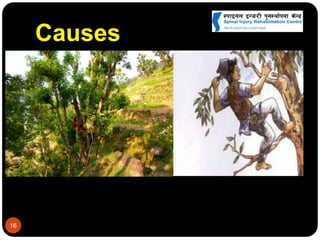
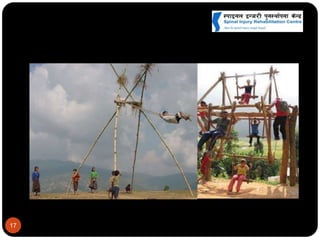
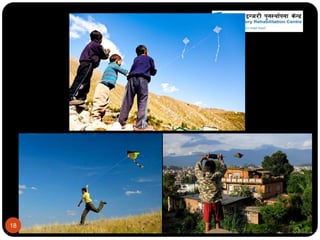
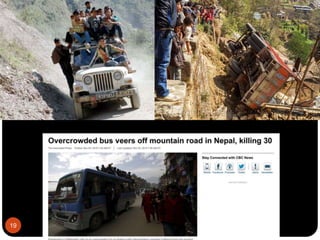
Causes
16
17
18
19
Principles of
Care
Aggressive and rapid
20
Principle
 Establish SI
 Immediate care
 Identify other injuries
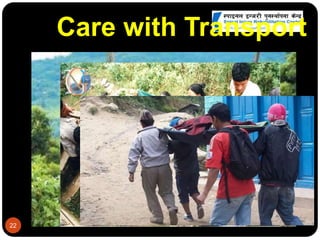
 Care with transport
 Prevention of complications
21
22
Care with Transport
Clinical Evaluation-
Symptoms
Weakness of limbs
Retention/ incontinence
↓Sensation
Radicular pain/ tingling
Neck/Back pain
23
Clinical Evaluations-
Signs
 ‘Step- off’ deformity
 Sphincters
 Reflexes
24
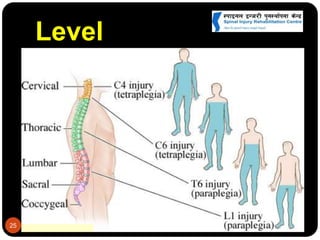
Level
25
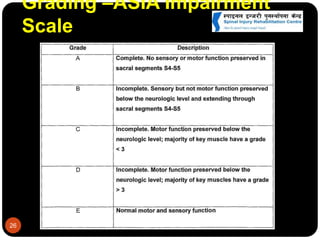
Grading –ASIA Impairment
Scale
26
Definitive Care
 Acute care
 Specific
27
SCI Management
 Most expensive as compared to any other
alignment.
 Requires prolong hospitalization and life
long follow up
 Requires a multidisciplinary team
approach.
28
SCI Management…..
 Comprehensive rehabilitation
 Pre discharge planning
 Community inclusion
 Life long follow up
 Prevention of complications
29
30
Conclusions
 Protocol with defined role of different
providers.
 Minimize neuro deterioration.
 Decrease complications.
31
32

Spinal Injury Overview

Editor's Notes

  • #15 Not included in these counts are those who are not seen in a hospital or emergency department, or those who receive no care.