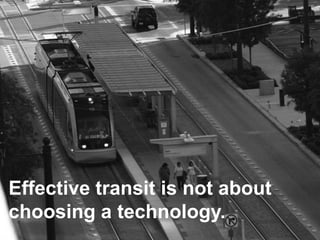
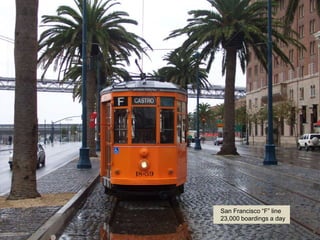
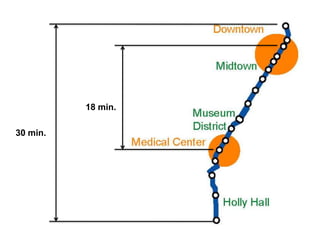
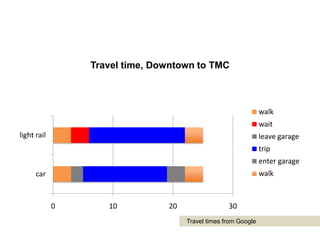
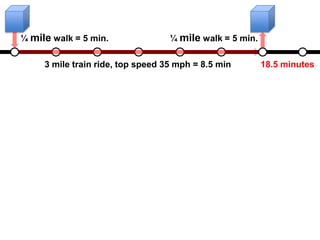
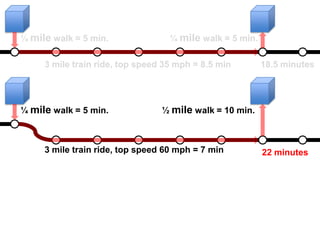
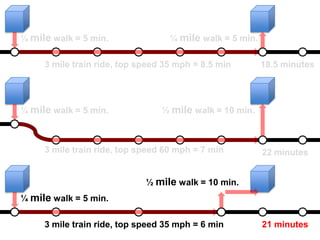
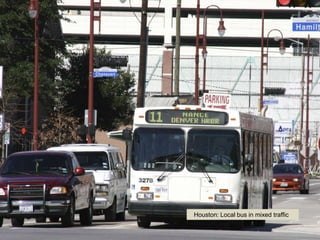
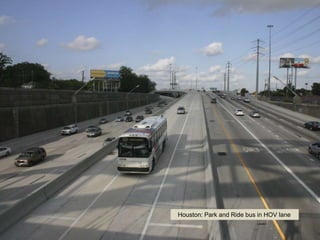
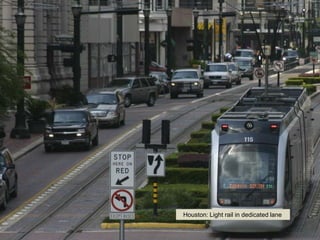
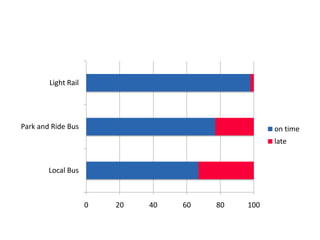
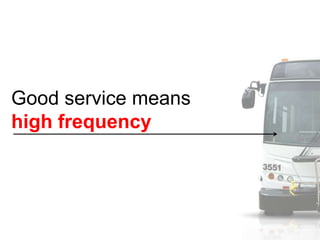
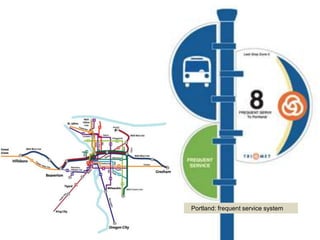
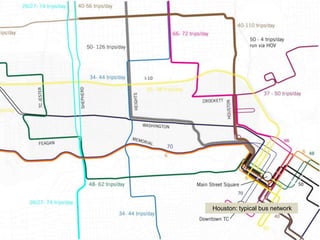
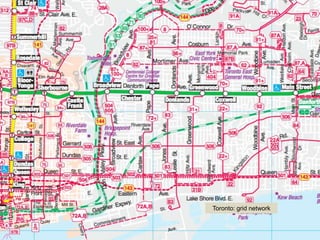
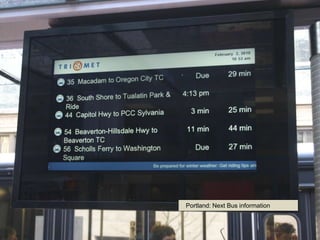
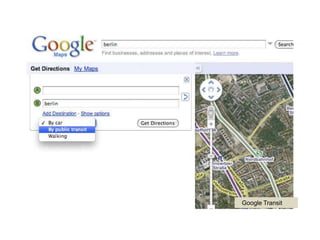
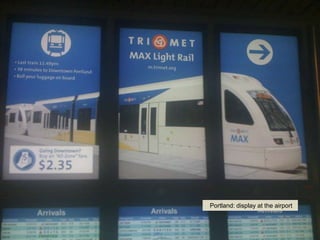
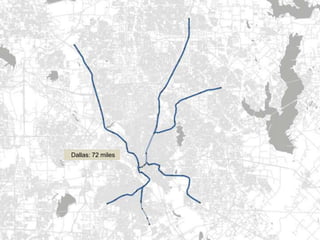
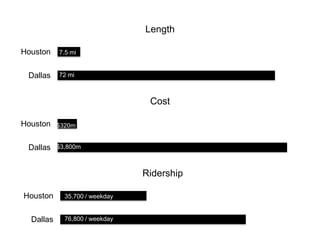
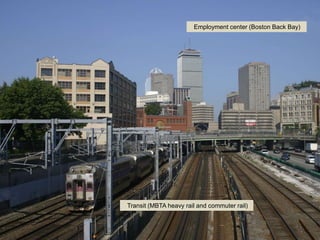
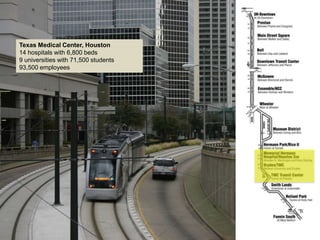
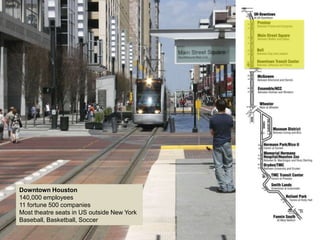
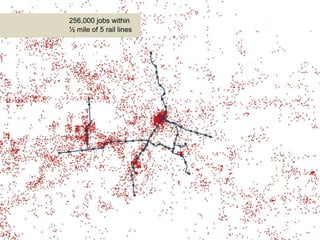
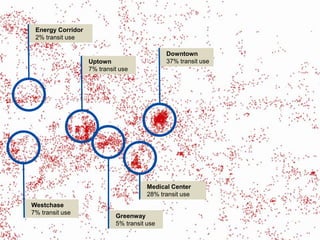
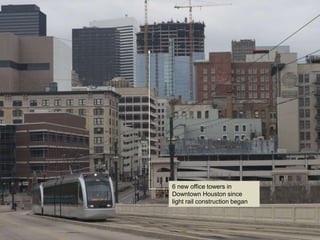
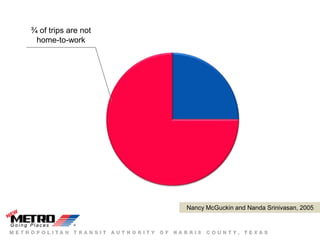
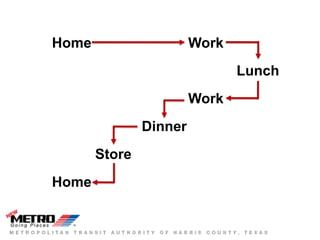
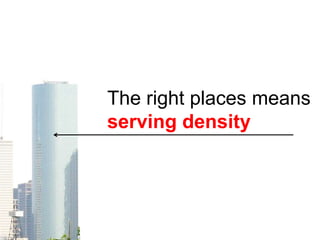
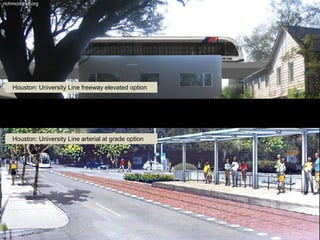
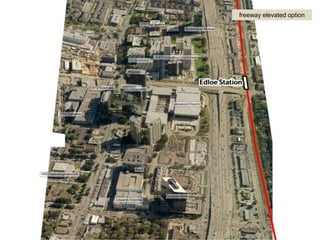
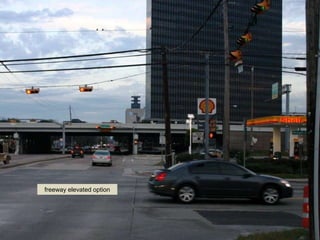
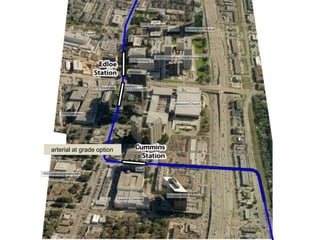
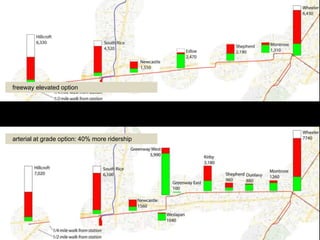
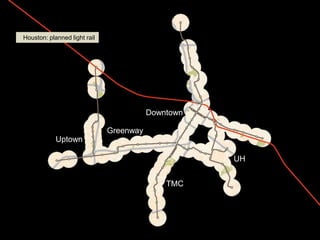
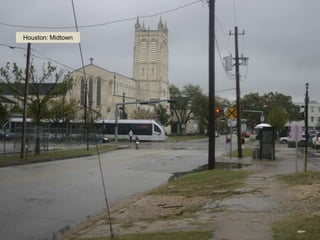
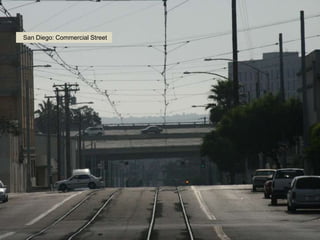
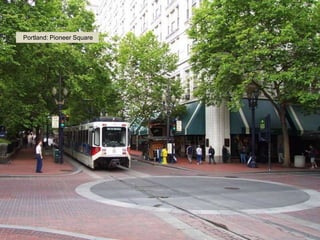
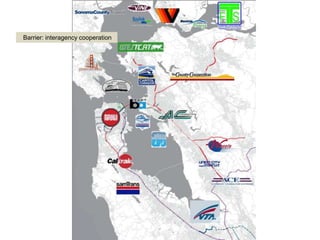
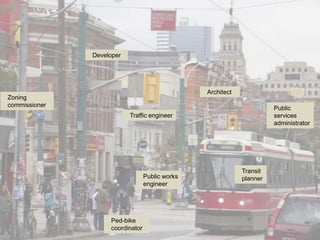
This document discusses factors that contribute to effective public transit systems. Effective transit prioritizes high frequency service on simple routes that connect major employment and activity centers. It emphasizes reliable and competitive trip times through dedicated lanes, priority signaling, and station placement in walkable areas near the centers of destinations. Good information and easy transfers also improve customer experience. While technology choices are less important than service quality, light rail can attract more riders and development when lines are placed along arterial streets rather than elevated above freeways. Overall, transit works best when government agencies cooperate to implement frequent, direct services linking high-density mixed-use areas through pedestrian-friendly infrastructure.