1
Sphingolipids
2
♦ Sphingolipids
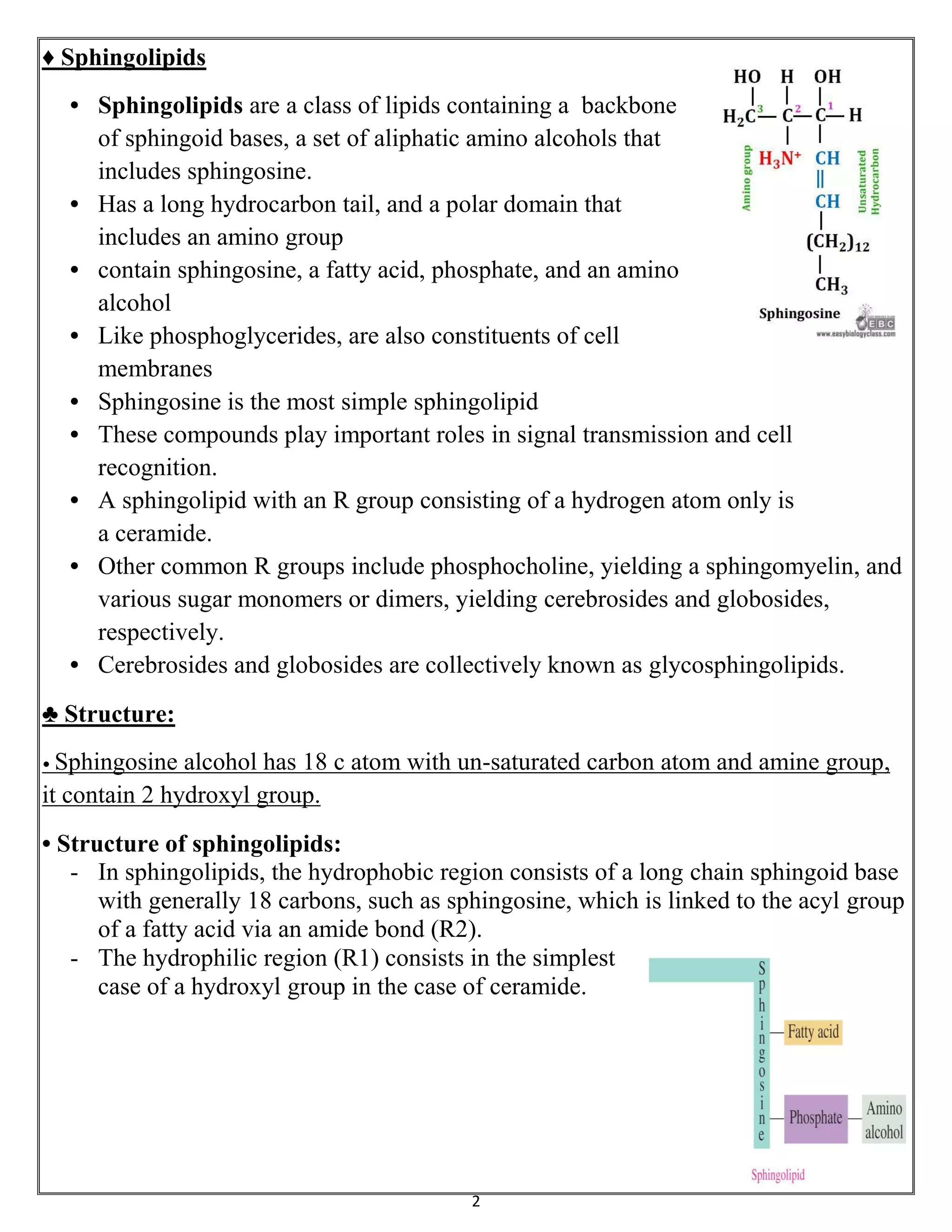
• Sphingolipids are a class of lipids containing a backbone
of sphingoid bases, a set of aliphatic amino alcohols that
includes sphingosine.
• Has a long hydrocarbon tail, and a polar domain that
includes an amino group
• contain sphingosine, a fatty acid, phosphate, and an amino
alcohol
• Like phosphoglycerides, are also constituents of cell
membranes
• Sphingosine is the most simple sphingolipid
• These compounds play important roles in signal transmission and cell
recognition.
• A sphingolipid with an R group consisting of a hydrogen atom only is
a ceramide.
• Other common R groups include phosphocholine, yielding a sphingomyelin, and
various sugar monomers or dimers, yielding cerebrosides and globosides,
respectively.
• Cerebrosides and globosides are collectively known as glycosphingolipids.
♣ Structure:
• Sphingosine alcohol has 18 c atom with un-saturated carbon atom and amine group,
it contain 2 hydroxyl group.
• Structure of sphingolipids:
- In sphingolipids, the hydrophobic region consists of a long chain sphingoid base
with generally 18 carbons, such as sphingosine, which is linked to the acyl group
of a fatty acid via an amide bond (R2).
- The hydrophilic region (R1) consists in the simplest
case of a hydroxyl group in the case of ceramide.
3
♦ ceramide:
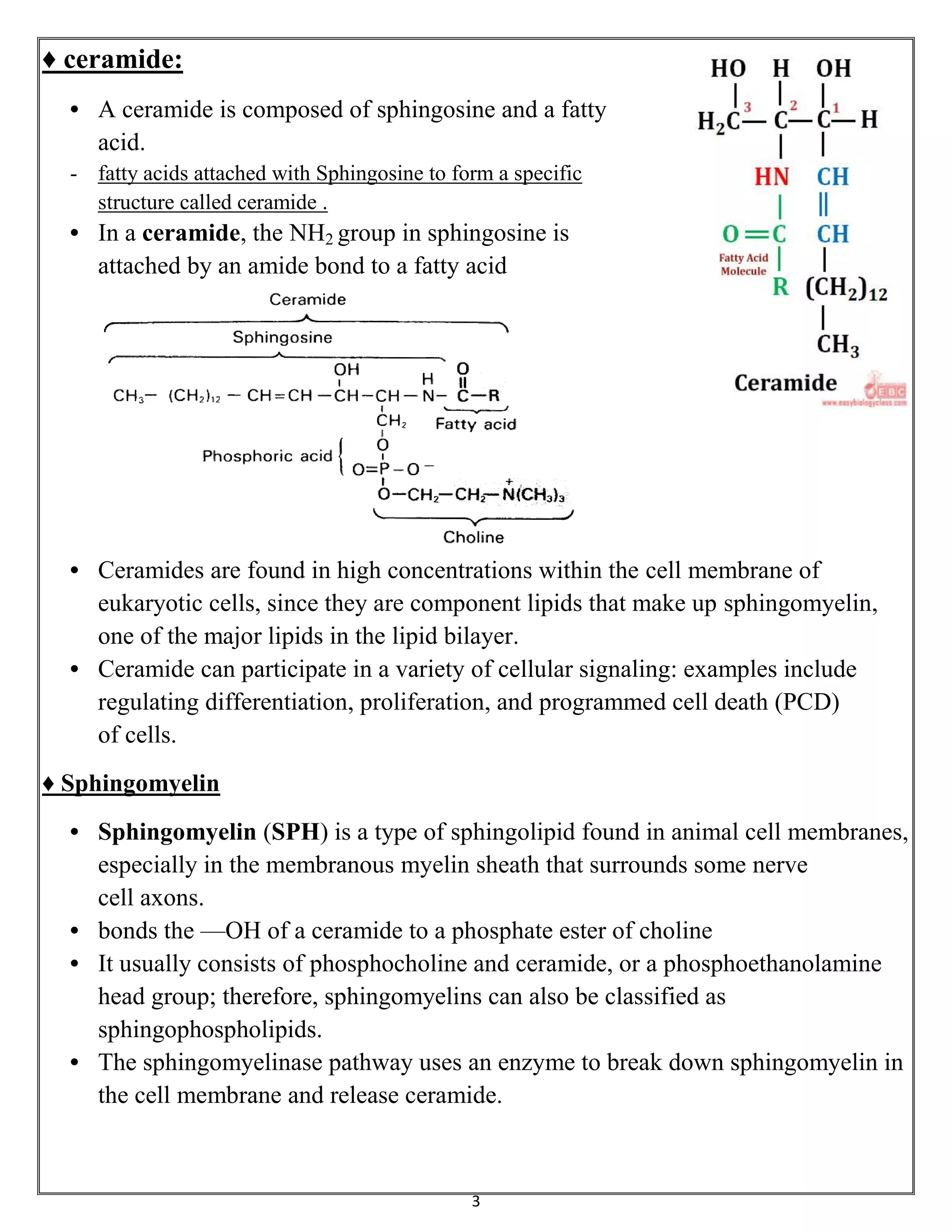
• A ceramide is composed of sphingosine and a fatty
acid.
- fatty acids attached with Sphingosine to form a specific
structure called ceramide .
• In a ceramide, the NH2 group in sphingosine is
attached by an amide bond to a fatty acid
• Ceramides are found in high concentrations within the cell membrane of
eukaryotic cells, since they are component lipids that make up sphingomyelin,
one of the major lipids in the lipid bilayer.
• Ceramide can participate in a variety of cellular signaling: examples include
regulating differentiation, proliferation, and programmed cell death (PCD)
of cells.
♦ Sphingomyelin
• Sphingomyelin (SPH) is a type of sphingolipid found in animal cell membranes,
especially in the membranous myelin sheath that surrounds some nerve
cell axons.
• bonds the —OH of a ceramide to a phosphate ester of choline
• It usually consists of phosphocholine and ceramide, or a phosphoethanolamine
head group; therefore, sphingomyelins can also be classified as
sphingophospholipids.
• The sphingomyelinase pathway uses an enzyme to break down sphingomyelin in
the cell membrane and release ceramide.
4
• It is a ubiquitous component of animal cell membranes, where it is by far the
most abundant sphingolipid.
• It can comprise as much as 50% of the lipids in certain tissues, though it is
usually lower in concentration than phosphatidylcholine
• Sphingomyelins contain phosphocholine or phosphoethanolamine as their polar
head group and are therefore classified along with glycerophospholipids as
phospholipids.
• Sphingomyelins are present in the plasma membranes of animal cells and are
especially prominent in myelin, a membranous sheath that surrounds and
insulates the axons of some neurons—thus the name "sphingomyelins".
5
♦ glycolipids
• Glycolipids are lipids with a carbohydrate attached by
a glycosidic bond or covalently bonded.
• Their role is to maintain the stability of the cell
membrane and to facilitate cellularrecognition, which is
crucial to the immune response and in the connections that
allow cells to connect to one another to form tissues.
• Glycolipids are found on the surface of all eukaryoticcell membranes, where they
extend from the phospholipid bilayer into the extracellular environment.
• The essential feature of a glycolipid is the presence of
a monosaccharide or oligosaccharide bound to a lipid moiety.
• The most common lipids in cellular membranes are glycerolipids and sphingolipids,
which have glycerol or a sphingosine backbones, respectively.
• Fatty acids are connected to this backbone, so that the lipid as a whole has a polar
head and a non-polar tail.
• The lipid bilayer of the cell membrane consists of two layers of lipids, with the inner
and outer surfaces of the membrane made up of the polar head groups, and the inner
part of the membrane made up of the non-polar fatty acid tails.
• There are different types of glycolipids: cerebrosides, gangliosides,
Lactosylceramides.
6
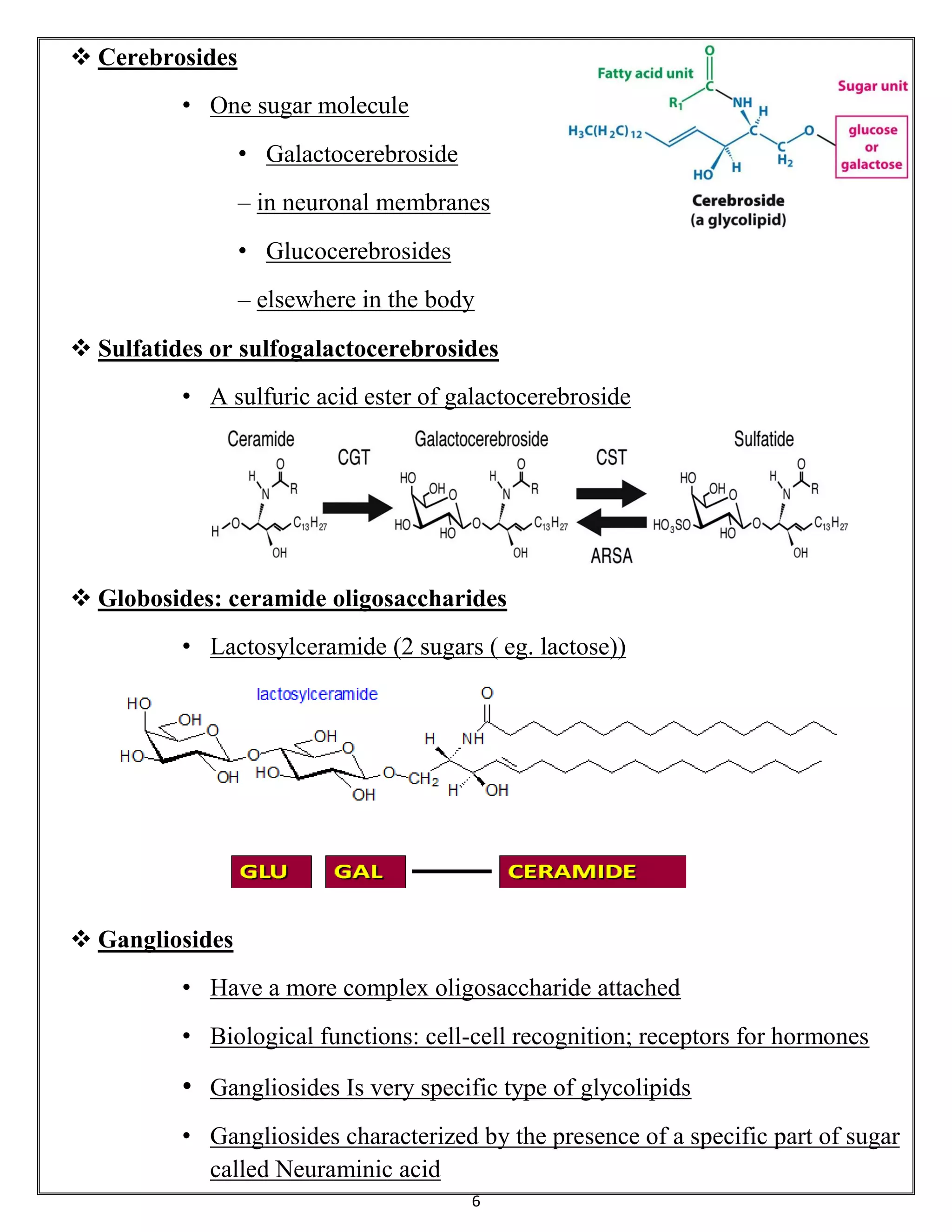
 Cerebrosides
• One sugar molecule
• Galactocerebroside
– in neuronal membranes
• Glucocerebrosides
– elsewhere in the body
 Sulfatides or sulfogalactocerebrosides
• A sulfuric acid ester of galactocerebroside
 Globosides: ceramide oligosaccharides
• Lactosylceramide (2 sugars ( eg. lactose))
 Gangliosides
• Have a more complex oligosaccharide attached
• Biological functions: cell-cell recognition; receptors for hormones
• Gangliosides Is very specific type of glycolipids
• Gangliosides characterized by the presence of a specific part of sugar
called Neuraminic acid
7
♦ Sulfolipids:
 also called sulfatides or cerebroside sulfates
 contained in brain lipids
 sulfate esters of cerebrosides
 present in low levels in liver, lung, kidney, spleen, skeletal muscle and heart
function is not established
◘ Gangliosides
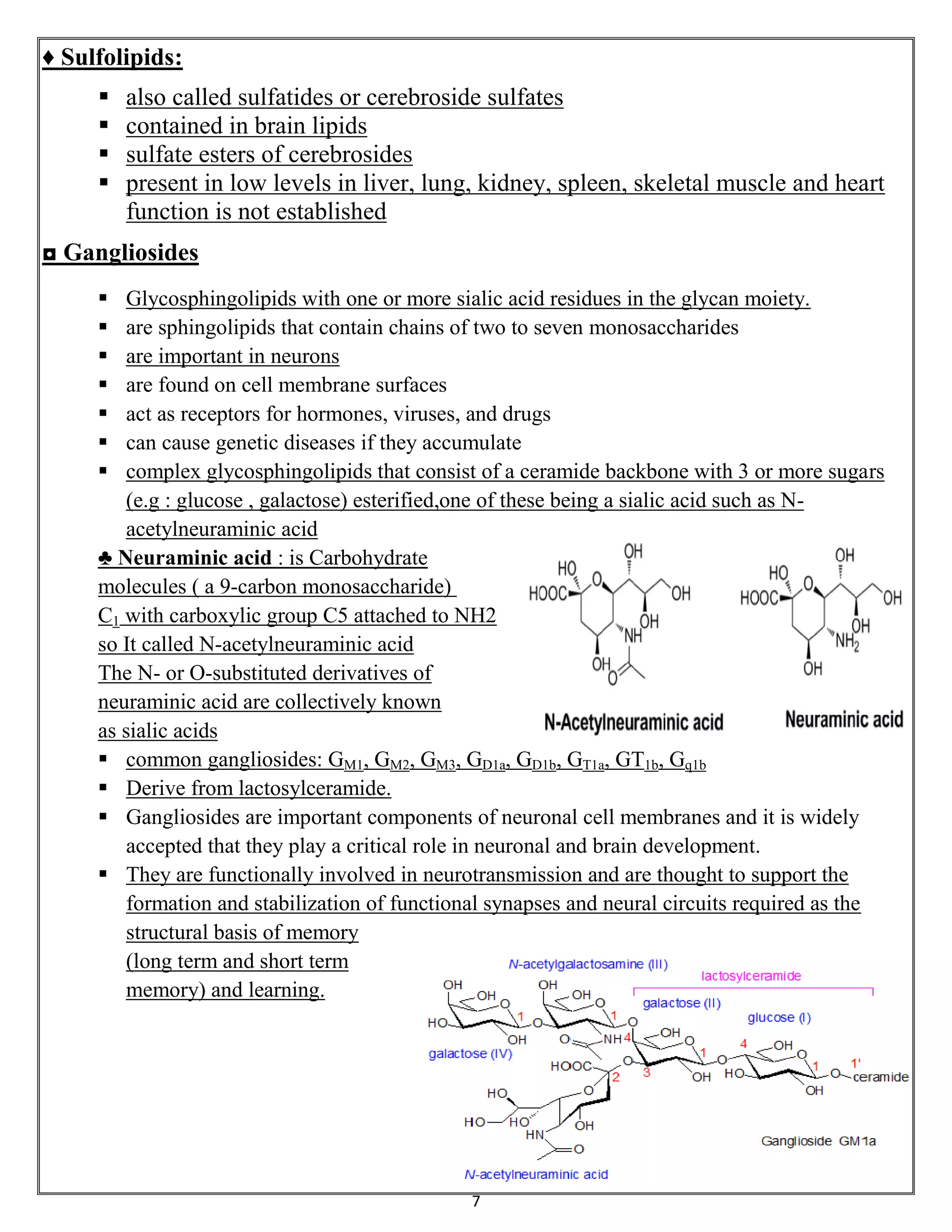
 Glycosphingolipids with one or more sialic acid residues in the glycan moiety.
 are sphingolipids that contain chains of two to seven monosaccharides
 are important in neurons
 are found on cell membrane surfaces
 act as receptors for hormones, viruses, and drugs
 can cause genetic diseases if they accumulate
 complex glycosphingolipids that consist of a ceramide backbone with 3 or more sugars
(e.g : glucose , galactose) esterified,one of these being a sialic acid such as N-
acetylneuraminic acid
♣ Neuraminic acid : is Carbohydrate
molecules ( a 9-carbon monosaccharide)
C1 with carboxylic group C5 attached to NH2
so It called N-acetylneuraminic acid
The N- or O-substituted derivatives of
neuraminic acid are collectively known
as sialic acids
 common gangliosides: GM1, GM2, GM3, GD1a, GD1b, GT1a, GT1b, Gq1b
 Derive from lactosylceramide.
 Gangliosides are important components of neuronal cell membranes and it is widely
accepted that they play a critical role in neuronal and brain development.
 They are functionally involved in neurotransmission and are thought to support the
formation and stabilization of functional synapses and neural circuits required as the
structural basis of memory
(long term and short term
memory) and learning.
8
GANGLIOSIDES
1. Structure and Occurrence
• The name ganglioside was first applied by the German scientist in 1942 to lipids
newly isolated from ganglion cells of brain.
• They were shown to be oligoglycosylceramides derived from lactosylceramide
and containing a sialic acid residue such as N-acetylneuraminic acid (‘NANA’ or
‘SA’ or Neu5Ac).
• Less often the sialic acid component is N-glycolyl-neuraminic acid (Neu5Gc), or
a Neu5Ac analogue in which the amine group is replaced by OH.
• These are joined via α-glycosidic linkages to one or more of the monosaccharide
units, i.e. via the hydroxyl group on position 2, or to another sialic acid residue.
• O-Acetylation or lactonization of the sialic acid residue adds to the potential
complexity.
• The polar head groups of the lipids carry a net-negative charge at pH 7.0 and
they are acidic.
♣ NeuAc & NeuGc :
• NeuAc is the biosynthetic precursor of NeuGc, which is a component of
gangliosides from most animal species, including mice, horse, sheep and goats.
• NeuGc is not synthesised in humans, although it is present in other primates such
as the great apes, and indeed anti-NeuGc antibodies are produced in humans by
the injection of NeuGc-
containing
glycoconjugates.
9
• The absence of a number of relevant genes, both for sialo-lipids and peptides, in
humans suggests that this may have been a major biochemical branch-point in
human evolution.
• However, some NeuGc is obtained from the diet and may be incorporated into
human gangliosides to a limited extent.
 Gangliosides Can amount to 6% of the weight of lipids from brain, where they
constitute 10 to 12% of the total lipid content (20-25% of the outer layer) of
neuronal membranes, for example.
• Aside from this, they occur at low levels (1-2%) in all animal tissues, where like
the neutral oligoglycosphingolipids they are concentrated in the outer leaflet of
the plasma membrane in 'rafts'.
• Those in milk, which are derived from the apical plasma membrane of secretory
cells of the mammary gland, may be of nutritional importance for the newborn,
but they are poorly characterized and quantified in foods in general.
• Gangliosides are not found out with the animal kingdom.
‫م‬‫م‬‫ك‬‫ن‬‫ي‬‫ج‬‫ي‬‫ي‬‫ق‬‫و‬‫ل‬‫ك‬‫ا‬‫ش‬‫ر‬‫ح‬‫ل‬‫ي‬‫ا‬‫ل‬Structure‫ب‬‫ت‬‫ا‬‫ع‬‫ا‬‫ل‬GM1‫ي‬‫ك‬‫و‬‫ن‬‫م‬‫ر‬‫س‬‫و‬‫م‬‫و‬‫ا‬‫ن‬‫ت‬‫ت‬‫ش‬‫ر‬‫ح‬‫ه‬‫و‬‫ت‬‫ش‬‫ر‬‫ح‬‫ك‬‫ل‬bonds
‫م‬‫ت‬‫ص‬‫ل‬‫ه‬‫م‬‫ع‬‫ا‬‫ل‬‫ت‬‫ا‬‫ن‬‫ي‬‫ه‬‫ف‬‫ي‬‫ن‬‫و‬‫ه‬‫ك‬‫ذ‬‫ا‬
10
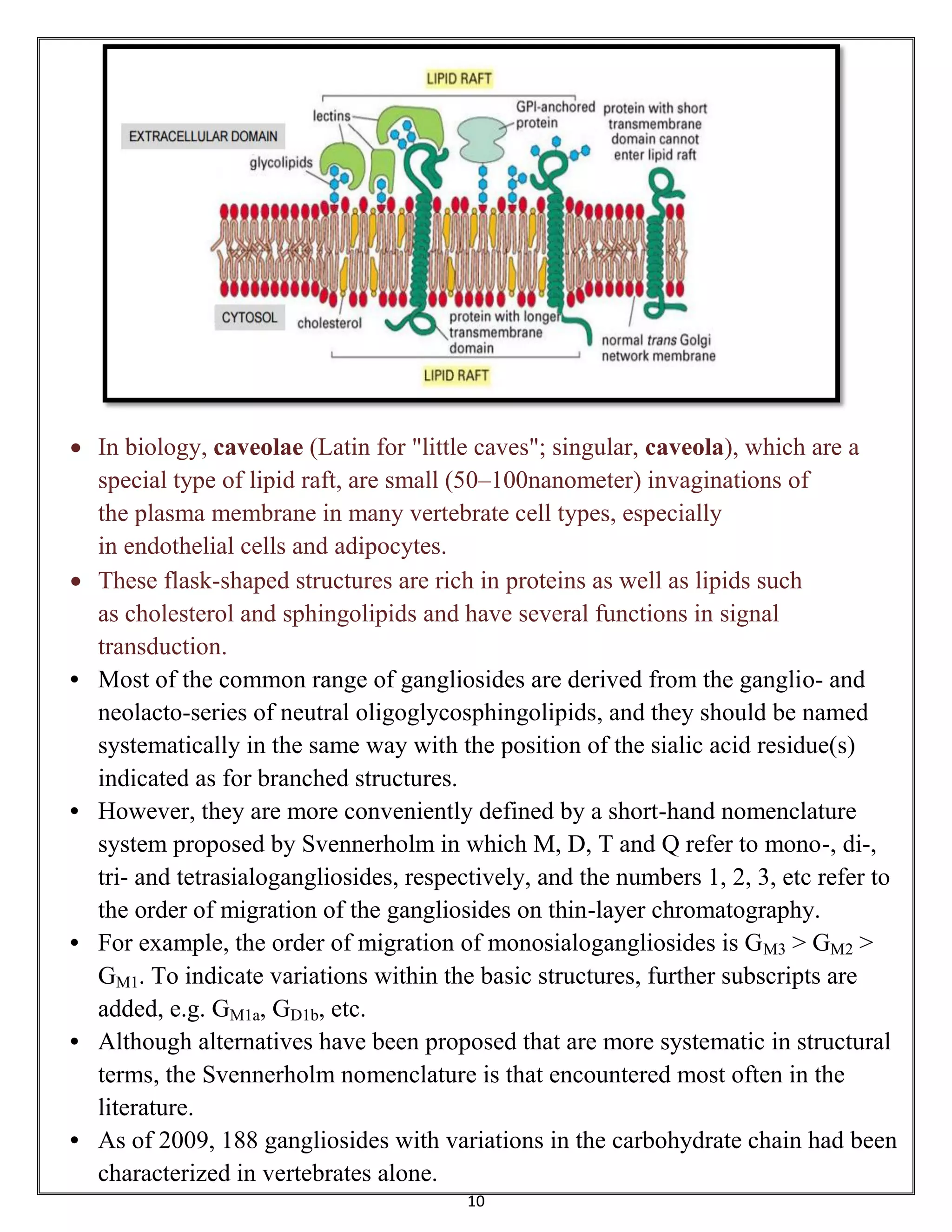
 In biology, caveolae (Latin for "little caves"; singular, caveola), which are a
special type of lipid raft, are small (50–100nanometer) invaginations of
the plasma membrane in many vertebrate cell types, especially
in endothelial cells and adipocytes.
 These flask-shaped structures are rich in proteins as well as lipids such
as cholesterol and sphingolipids and have several functions in signal
transduction.
• Most of the common range of gangliosides are derived from the ganglio- and
neolacto-series of neutral oligoglycosphingolipids, and they should be named
systematically in the same way with the position of the sialic acid residue(s)
indicated as for branched structures.
• However, they are more conveniently defined by a short-hand nomenclature
system proposed by Svennerholm in which M, D, T and Q refer to mono-, di-,
tri- and tetrasialogangliosides, respectively, and the numbers 1, 2, 3, etc refer to
the order of migration of the gangliosides on thin-layer chromatography.
• For example, the order of migration of monosialogangliosides is GM3 > GM2 >
GM1. To indicate variations within the basic structures, further subscripts are
added, e.g. GM1a, GD1b, etc.
• Although alternatives have been proposed that are more systematic in structural
terms, the Svennerholm nomenclature is that encountered most often in the
literature.
• As of 2009, 188 gangliosides with variations in the carbohydrate chain had been
characterized in vertebrates alone.
11
♦ Ganglioside nomenclature
• letter G refers to the name ganglioside
• the subscripts M, D, T and Q indicate mono-, di-, tri, and quatra(tetra)-sialic-
containing gangliosides
• the numerical subscripts 1, 2, and 3 designate the carbohydrate sequence
attached to ceramide
Numerical subscripts:
• 1. Gal-GalNAc-Gal-Glc-ceramide
• 2. GalNAc-Gal-Glc-ceramide
• 3. Gal-Glc-ceramide
12
The Svennerholm nomenclature
13
 A de-N-acetylated form of ganglioside GD3 has been detected in human
melanoma tumors.
 In addition, O-acetylation or lactonization of the sialic acid residue adds to the
potential complexity.
 Gangliosides containing O-acetylated sialic acids occur in certain tumours, for
example, while 9-OAc-GD3 is found in the retina and cerebellum of adult rats,
but not other brain regions.
 It is possible that they are even more widespread, but they are missed when
gangliosides are isolated after treatment with mild alkali, a common analytical
practice.
 A further complexity is the occurrence of gangliosides with sulfate groups,
which have been isolated from human, mouse and monkey kidney cells.
 Gangliosides with glycosyl inositol-phosphoceramide structures have been
isolated from marine invertebrates, while KDN-containing gangliosides are
minor components of egg, ovarian fluid, sperm and testis of fish and of some
mammalian tissues.
 In general, the ceramide structures of gangliosides tend to be relatively simple.
 Sphingosine is usually the main sphingoid base, accompanied by the C20
analogue in gangliosides of the central nervous system mainly.
 Stearic acid (18:0) can be 80 to 90% of the fatty acid constituents, accompanied
by small amounts of 16:0, 20:0 and 22:0, but with little or no polyunsaturated or
2-hydroxy acids, other than in some exceptional circumstances (e.g. some
carcinomas).
 The nature of the ceramide component is relevant to the biological function of
gangliosides, and changing the fatty acid component to α-linolenic acid by
synthetic means alters the biological activity of gangliosides dramatically in
vitro.
 However, it is the carbohydrate moiety that has the primary importance for most
of their functions.
 At least five further sialyltransferases are known to operate to produce more
complex gangliosides, each using CMP-SA to transfer the sialic acid residue to
the oligosaccharide chain.
14
 An alternative theory with some supporting evidence proposes that a
multiglycosyl-transferase complex is responsible for the synthesis of each
individual ganglioside rather than a series of individual enzymes.
 Finally, the gangliosides are transferred to the external leaflet of the plasma
membrane by a transport system involving vesicle formation.
 Further sialization of each of the series illustrated occurs to give an increasingly
complex range of products.
 There is also an ‘asialo’-series of gangliosides that commences with addition of a
sialic acid moiety to the terminal galactose unit of Gal-GalNAc-Gal-Glu-Cer.
15
Complex gangliosides
• Gangliosides with at least 2 sialic acid residues linked to LacCer (b- and c-series).
2. Biosynthesis (Anabolism)
 There is evidence that the pool of glucosylceramide and thence of
lactosylceramide that is utilized for ganglioside biosynthesis is different from
that for neutral oligoglycosylceramides.
 This may explain some of the differences in the fatty acid and sphingoid base
components between the two groups.
 Thereafter, the pathways for the biosynthesis of the common series of
gangliosides of the ganglio-series, for example, involve sequential activities of
sialyltransferases and glycosyltransferases for the three main a-, b- and c-
series of gangliosides.
 The required enzymes are bound to the membranes of the Golgi apparatus, in a
sequence that corresponds to the order of addition of the various carbohydrate
components.
16
 The sialyltransferase that catalyses the synthesis of the relatively simple
ganglioside GM3 is located in the cis-region of the Golgi, while those that
catalyse the terminal steps of ganglioside synthesis are located in the distal or
trans-Golgi region.
 The GM3 synthase in particular, which catalyses the transfer of NeuAc from
cytidine monophosphate (CMP)-NeuAc onto the terminal galactose residue of
lactosylceramide, has a unique specificity.
 It is believed that gangliosides (especially GM3) also have a structural role and
are segregated together with other sphingolipids and cholesterol into raft micro-
domains, where the very large surface area occupied by the oligosaccharide
chain imparts a strong positive curvature to the membrane.
17
18
Catabolism
 The presence of a distinctive sialidase that differs from the lysosomal enzymes
in raft-like regions of the plasma membrane may bring about a change in
composition the cell surface gangliosides, causing a shift from poly-sialylated
species involving a decrease of GM3 and formation of GM2, then GM1 and
eventually lactosylceramide.
 This may have consequences for important cellular events, such as neuronal
differentiation and apoptosis.
 Conversely, sialylation may occur in some neuronal membranes, increasing the
proportions of poly-sialylated species.
 The principles of catabolism of glycolipids in general are dealing with
monoglycosylceramides.
 In relation to gangliosides, sialidases and exoglycohydrolases remove individual
sialic acid and sugar residues sequentially from the non-reducing terminal unit
with the formation of ceramide, which is eventually split into long-chain base
and fatty acids by ceramidases.
 This degradation occurs through the endocytosis-endosome-lysosome pathway
with a requirement for an acidic pH inside the organelle.
 In addition to the sialidases and exoglycohydrolases, the various reactions
require effector molecules, termed ‘sphingolipid activator proteins‘, including
saposins and the specific GM2-activator protein.
 This process constitutes a salvage mechanism that is important to the overall
cellular economy since a high proportion of the various hydrolysis products are
re-cycled for glycolipid biosynthesis.
 By generating ceramide and sphingosine, it may also be relevant to the
regulatory and signalling functions of these lipids.
 The brain contains as much as 20 to 500 times more gangliosides than most non-
neural tissues, with three times as much in grey than white matter.
 As the brain develops, there is an increase in the content of gangliosides and in
their degree of sialylation.
 There are large differences between species and tissues.
 For example, during embryogenesis and the postnatal period in the human
central nervous system, the total amount of gangliosides increases approximately
threefold while that of GM1 and GD1a increases 12 to 15-fold.
19
 During the same period the hemato-series gangliosides, GM3, GD3, and 9-OAc-
GD3 are the predominant ganglioside species, but they are present in much lower
amounts in adults and then in some areas of the brain only.
 The main gangliosides of adult human brain are GM1, GD1a, GD1b and GT1, while
GM3 is found mainly in the extraneural tissues.
 In addition, the nature and concentrations of the fatty acid and sphingoid base
constituents change markedly, and for example, the ratio of C20/C18-sphingosine
in ganglioside GD1a of cerebellum was found to increases 16-fold between 8-day-
old and 2-year-old rats.
 In mouse brain, the total amount of gangliosides is almost 8-fold greater in adults
than in embryos, with a similar shift in composition from simple to more
complex gangliosides, governed mainly by changes in the expression level and
activity of the glycosyltransferases.
 Cell–cell interactions occur by sialoglycans on one cell binding to
complementary binding proteins (lectins) on adjacent cells, bringing about cell–
cell adhesion and enabling regulation of intracellular signalling pathways.
 Thus, in experimental systems, gangliosides have been shown to be cell-type
specific antigens that control growth and differentiation of cells.
 In particular, they have key functions in the immune defense systems.
 They act as receptors of interferon, epidermal growth factor, nerve growth factor
and insulin and in this way may regulate cell signalling.
 Intact gangliosides inhibit growth by rendering cells less sensitive to stimulation
by epidermal growth factor, but removal of the N-acetyl group of sialic acid
enhances this reaction and stimulates growth.
20
• The way of synthesis of gangliosides (Anabolism), is completely reversible by
degradation (Catabolism)
21
Gangliosides and Disease
 As with the neutral oligoglycosylceramides, a number of unpleasant lipidoses
have been identified involving storage of excessive amounts of gangliosides in
tissues because of failures in the catabolic mechanism.
 The most important of these is Tay-Sachs disease disease (and the similar
Sandhoff disease), a fatal genetic disorder found mainly in Jewish populations in
which harmful quantities of ganglioside GM2 accumulate in the nerve cells in the
brain and other tissues.
 As infants with the most common form of the disease develop, the nerve cells
become distended and a relentless deterioration of mental and physical abilities
occurs.
 The condition is caused by insufficient activity of a specific enzyme, β-N-
acetylhexosaminidase, which catalyses the degradation of gangliosides.
 In addition, a generalized gangliosidosis has been characterized in which
ganglioside GM1 accumulates in the nervous system leading to mental retardation
and enlargement of the liver.
 The condition is a consequence of a deficiency of the lysosomal β-galactosidase
enzyme, which hydrolyses the terminal β-galactosyl residues from GM1
ganglioside, glycoproteins and glycosaminoglycans.
♣ Lipid storage diseases
• also known as sphingolipidoses
• genetically acquired
• due to the deficiency or absence of a catabolic enzyme
• examples:
• Tay Sachs disease
• Gaucher’s disease
• Niemann-Pick disease
• Fabry’s disease
22
Genetic defects in ganglioside metabolism
♣ Tay-Sachs disease
• a fatal disease which is due to the deficiency of hexosaminidase A activity
• accumulation of ganglioside GM2 in the brain of infants
• mental retardation, blindness, inability to swallow
• a “cherry red “ spot develops on the macula (back of the the eyes)
• Tay-Sachs children usually die by age 5 and often sooner
Genetic defects in globoside metabolism
♣ Fabry’s disease:
• Accumulation of ceramide trihexoside in kidneys of patients who are
deficient in lysosomal a-galactosidase A sometimes referred to as
ceramide trihexosidase
• Skin rash, kidney failure, pains in the lower extremities
• Now treated with enzyme replacement therapy: agalsidase beta
(Fabrazyme)
23
Genetic defects in cerebroside metabolism
♣ Krabbe’s disease:
• Also known as globoid leukodystrophy
• Increased amount of galactocerebroside in the white matter of the
brain
• Caused by a deficiency in the lysosomal enzyme galactocerebrosidase
• Gaucher’s disease:
• Caused by a deficiency of lysosomal glucocerebrosidase
• Increase content of glucocerebroside in the spleen and liver
• Erosion of long bones and pelvis
• Enzyme replacement therapy is available for the Type I disease
(Imiglucerase or Cerezyme)
• Also miglustat (Zavesca) – an oral drug which inhibits the enzyme
glucosylceramide synthase, an essential enzyme for the synthesis of
most glycosphingolipids
Genetic defects in ganglioside metabolism
♣ Metachromatic leukodystrophy
• accumulation of sulfogalactocerebroside (sulfatide) in the central
nervous system of patient having a deficiency of a specific sulfatase
• mental retardation, nerves stain yellowish-brown with cresyl violet
dye (metachromasia)
♣ Generalized gangliosidosis
• accumulation of ganglioside GM1
• deficiency of GM1 ganglioside: b-galactosidase
• mental retardation, liver enlargement, skeletal involvement
24
♣ Niemann-Pick disease
• principal storage substance: sphingomyelin which accumulates in
reticuloendothelial cells
• enzyme deficiency: sphingomyelinase
• liver and spleen enlargement, mental retardation
Blood groups
◘ Main functions of gangliosides :
• Essential compounds of the plasma membrane cells.
• participate to lipid rafts formation.
• Targets for pathogens and toxins.
• Implicate in several autoimmune diseases e.g: Guillian-Barre Syndrum (GBS)
• Interact with the extracellular matrix.
• Regulate RTKs activation and signaling.
• Implicate in cell proliferation, adhesion and migration.
• Implicate in tumor aggressiveness and metastasis
‫م‬‫ن‬‫ص‬1‫ل‬7‫ا‬‫ل‬‫ل‬‫ي‬‫ت‬‫ح‬‫ت‬‫ه‬‫خ‬‫ط‬‫ه‬‫و‬‫ا‬‫ل‬‫ل‬‫ي‬‫ف‬‫ي‬‫ا‬‫ل‬‫د‬‫ا‬‫ت‬‫ا‬‫ب‬‫ت‬‫ا‬‫ع‬‫ا‬‫ل‬‫د‬‫ك‬‫ت‬‫و‬‫ر‬‫و‬‫ا‬‫ي‬diagram‫ع‬‫ل‬‫ي‬‫ه‬‫ا‬‫ط‬‫ا‬‫ر‬‫ا‬‫س‬‫و‬‫د‬‫ه‬‫و‬‫ا‬‫ل‬‫ل‬‫ي‬‫ع‬‫ل‬‫ي‬‫ن‬‫ا‬‫ل‬‫و‬
‫م‬‫ش‬‫ع‬‫ل‬‫ي‬‫ه‬‫ي‬‫ب‬‫ق‬‫ي‬‫ز‬‫ي‬‫ا‬‫د‬‫ه‬‫ل‬‫ل‬‫ت‬‫و‬‫ض‬‫ي‬‫ح‬..‫م‬‫ن‬‫ص‬7‫ل‬24‫ك‬‫ل‬‫ح‬‫ا‬‫ج‬‫ه‬‫ع‬‫ل‬‫ي‬‫ن‬‫ا‬‫و‬‫ك‬‫ل‬‫ا‬‫ل‬diagrams

Sphingolipids ceramide Sphingomyelin glycolipids Gangliosides Sulfolipids The Svennerholm nomenclature

  • 1.
  • 2.
    2 ♦ Sphingolipids • Sphingolipidsare a class of lipids containing a backbone of sphingoid bases, a set of aliphatic amino alcohols that includes sphingosine. • Has a long hydrocarbon tail, and a polar domain that includes an amino group • contain sphingosine, a fatty acid, phosphate, and an amino alcohol • Like phosphoglycerides, are also constituents of cell membranes • Sphingosine is the most simple sphingolipid • These compounds play important roles in signal transmission and cell recognition. • A sphingolipid with an R group consisting of a hydrogen atom only is a ceramide. • Other common R groups include phosphocholine, yielding a sphingomyelin, and various sugar monomers or dimers, yielding cerebrosides and globosides, respectively. • Cerebrosides and globosides are collectively known as glycosphingolipids. ♣ Structure: • Sphingosine alcohol has 18 c atom with un-saturated carbon atom and amine group, it contain 2 hydroxyl group. • Structure of sphingolipids: - In sphingolipids, the hydrophobic region consists of a long chain sphingoid base with generally 18 carbons, such as sphingosine, which is linked to the acyl group of a fatty acid via an amide bond (R2). - The hydrophilic region (R1) consists in the simplest case of a hydroxyl group in the case of ceramide.
  • 3.
    3 ♦ ceramide: • Aceramide is composed of sphingosine and a fatty acid. - fatty acids attached with Sphingosine to form a specific structure called ceramide . • In a ceramide, the NH2 group in sphingosine is attached by an amide bond to a fatty acid • Ceramides are found in high concentrations within the cell membrane of eukaryotic cells, since they are component lipids that make up sphingomyelin, one of the major lipids in the lipid bilayer. • Ceramide can participate in a variety of cellular signaling: examples include regulating differentiation, proliferation, and programmed cell death (PCD) of cells. ♦ Sphingomyelin • Sphingomyelin (SPH) is a type of sphingolipid found in animal cell membranes, especially in the membranous myelin sheath that surrounds some nerve cell axons. • bonds the —OH of a ceramide to a phosphate ester of choline • It usually consists of phosphocholine and ceramide, or a phosphoethanolamine head group; therefore, sphingomyelins can also be classified as sphingophospholipids. • The sphingomyelinase pathway uses an enzyme to break down sphingomyelin in the cell membrane and release ceramide.
  • 4.
    4 • It isa ubiquitous component of animal cell membranes, where it is by far the most abundant sphingolipid. • It can comprise as much as 50% of the lipids in certain tissues, though it is usually lower in concentration than phosphatidylcholine • Sphingomyelins contain phosphocholine or phosphoethanolamine as their polar head group and are therefore classified along with glycerophospholipids as phospholipids. • Sphingomyelins are present in the plasma membranes of animal cells and are especially prominent in myelin, a membranous sheath that surrounds and insulates the axons of some neurons—thus the name "sphingomyelins".
  • 5.
    5 ♦ glycolipids • Glycolipidsare lipids with a carbohydrate attached by a glycosidic bond or covalently bonded. • Their role is to maintain the stability of the cell membrane and to facilitate cellularrecognition, which is crucial to the immune response and in the connections that allow cells to connect to one another to form tissues. • Glycolipids are found on the surface of all eukaryoticcell membranes, where they extend from the phospholipid bilayer into the extracellular environment. • The essential feature of a glycolipid is the presence of a monosaccharide or oligosaccharide bound to a lipid moiety. • The most common lipids in cellular membranes are glycerolipids and sphingolipids, which have glycerol or a sphingosine backbones, respectively. • Fatty acids are connected to this backbone, so that the lipid as a whole has a polar head and a non-polar tail. • The lipid bilayer of the cell membrane consists of two layers of lipids, with the inner and outer surfaces of the membrane made up of the polar head groups, and the inner part of the membrane made up of the non-polar fatty acid tails. • There are different types of glycolipids: cerebrosides, gangliosides, Lactosylceramides.
  • 6.
    6  Cerebrosides • Onesugar molecule • Galactocerebroside – in neuronal membranes • Glucocerebrosides – elsewhere in the body  Sulfatides or sulfogalactocerebrosides • A sulfuric acid ester of galactocerebroside  Globosides: ceramide oligosaccharides • Lactosylceramide (2 sugars ( eg. lactose))  Gangliosides • Have a more complex oligosaccharide attached • Biological functions: cell-cell recognition; receptors for hormones • Gangliosides Is very specific type of glycolipids • Gangliosides characterized by the presence of a specific part of sugar called Neuraminic acid
  • 7.
    7 ♦ Sulfolipids:  alsocalled sulfatides or cerebroside sulfates  contained in brain lipids  sulfate esters of cerebrosides  present in low levels in liver, lung, kidney, spleen, skeletal muscle and heart function is not established ◘ Gangliosides  Glycosphingolipids with one or more sialic acid residues in the glycan moiety.  are sphingolipids that contain chains of two to seven monosaccharides  are important in neurons  are found on cell membrane surfaces  act as receptors for hormones, viruses, and drugs  can cause genetic diseases if they accumulate  complex glycosphingolipids that consist of a ceramide backbone with 3 or more sugars (e.g : glucose , galactose) esterified,one of these being a sialic acid such as N- acetylneuraminic acid ♣ Neuraminic acid : is Carbohydrate molecules ( a 9-carbon monosaccharide) C1 with carboxylic group C5 attached to NH2 so It called N-acetylneuraminic acid The N- or O-substituted derivatives of neuraminic acid are collectively known as sialic acids  common gangliosides: GM1, GM2, GM3, GD1a, GD1b, GT1a, GT1b, Gq1b  Derive from lactosylceramide.  Gangliosides are important components of neuronal cell membranes and it is widely accepted that they play a critical role in neuronal and brain development.  They are functionally involved in neurotransmission and are thought to support the formation and stabilization of functional synapses and neural circuits required as the structural basis of memory (long term and short term memory) and learning.
  • 8.
    8 GANGLIOSIDES 1. Structure andOccurrence • The name ganglioside was first applied by the German scientist in 1942 to lipids newly isolated from ganglion cells of brain. • They were shown to be oligoglycosylceramides derived from lactosylceramide and containing a sialic acid residue such as N-acetylneuraminic acid (‘NANA’ or ‘SA’ or Neu5Ac). • Less often the sialic acid component is N-glycolyl-neuraminic acid (Neu5Gc), or a Neu5Ac analogue in which the amine group is replaced by OH. • These are joined via α-glycosidic linkages to one or more of the monosaccharide units, i.e. via the hydroxyl group on position 2, or to another sialic acid residue. • O-Acetylation or lactonization of the sialic acid residue adds to the potential complexity. • The polar head groups of the lipids carry a net-negative charge at pH 7.0 and they are acidic. ♣ NeuAc & NeuGc : • NeuAc is the biosynthetic precursor of NeuGc, which is a component of gangliosides from most animal species, including mice, horse, sheep and goats. • NeuGc is not synthesised in humans, although it is present in other primates such as the great apes, and indeed anti-NeuGc antibodies are produced in humans by the injection of NeuGc- containing glycoconjugates.
  • 9.
    9 • The absenceof a number of relevant genes, both for sialo-lipids and peptides, in humans suggests that this may have been a major biochemical branch-point in human evolution. • However, some NeuGc is obtained from the diet and may be incorporated into human gangliosides to a limited extent.  Gangliosides Can amount to 6% of the weight of lipids from brain, where they constitute 10 to 12% of the total lipid content (20-25% of the outer layer) of neuronal membranes, for example. • Aside from this, they occur at low levels (1-2%) in all animal tissues, where like the neutral oligoglycosphingolipids they are concentrated in the outer leaflet of the plasma membrane in 'rafts'. • Those in milk, which are derived from the apical plasma membrane of secretory cells of the mammary gland, may be of nutritional importance for the newborn, but they are poorly characterized and quantified in foods in general. • Gangliosides are not found out with the animal kingdom. ‫م‬‫م‬‫ك‬‫ن‬‫ي‬‫ج‬‫ي‬‫ي‬‫ق‬‫و‬‫ل‬‫ك‬‫ا‬‫ش‬‫ر‬‫ح‬‫ل‬‫ي‬‫ا‬‫ل‬Structure‫ب‬‫ت‬‫ا‬‫ع‬‫ا‬‫ل‬GM1‫ي‬‫ك‬‫و‬‫ن‬‫م‬‫ر‬‫س‬‫و‬‫م‬‫و‬‫ا‬‫ن‬‫ت‬‫ت‬‫ش‬‫ر‬‫ح‬‫ه‬‫و‬‫ت‬‫ش‬‫ر‬‫ح‬‫ك‬‫ل‬bonds ‫م‬‫ت‬‫ص‬‫ل‬‫ه‬‫م‬‫ع‬‫ا‬‫ل‬‫ت‬‫ا‬‫ن‬‫ي‬‫ه‬‫ف‬‫ي‬‫ن‬‫و‬‫ه‬‫ك‬‫ذ‬‫ا‬
  • 10.
    10  In biology,caveolae (Latin for "little caves"; singular, caveola), which are a special type of lipid raft, are small (50–100nanometer) invaginations of the plasma membrane in many vertebrate cell types, especially in endothelial cells and adipocytes.  These flask-shaped structures are rich in proteins as well as lipids such as cholesterol and sphingolipids and have several functions in signal transduction. • Most of the common range of gangliosides are derived from the ganglio- and neolacto-series of neutral oligoglycosphingolipids, and they should be named systematically in the same way with the position of the sialic acid residue(s) indicated as for branched structures. • However, they are more conveniently defined by a short-hand nomenclature system proposed by Svennerholm in which M, D, T and Q refer to mono-, di-, tri- and tetrasialogangliosides, respectively, and the numbers 1, 2, 3, etc refer to the order of migration of the gangliosides on thin-layer chromatography. • For example, the order of migration of monosialogangliosides is GM3 > GM2 > GM1. To indicate variations within the basic structures, further subscripts are added, e.g. GM1a, GD1b, etc. • Although alternatives have been proposed that are more systematic in structural terms, the Svennerholm nomenclature is that encountered most often in the literature. • As of 2009, 188 gangliosides with variations in the carbohydrate chain had been characterized in vertebrates alone.
  • 11.
    11 ♦ Ganglioside nomenclature •letter G refers to the name ganglioside • the subscripts M, D, T and Q indicate mono-, di-, tri, and quatra(tetra)-sialic- containing gangliosides • the numerical subscripts 1, 2, and 3 designate the carbohydrate sequence attached to ceramide Numerical subscripts: • 1. Gal-GalNAc-Gal-Glc-ceramide • 2. GalNAc-Gal-Glc-ceramide • 3. Gal-Glc-ceramide
  • 12.
  • 13.
    13  A de-N-acetylatedform of ganglioside GD3 has been detected in human melanoma tumors.  In addition, O-acetylation or lactonization of the sialic acid residue adds to the potential complexity.  Gangliosides containing O-acetylated sialic acids occur in certain tumours, for example, while 9-OAc-GD3 is found in the retina and cerebellum of adult rats, but not other brain regions.  It is possible that they are even more widespread, but they are missed when gangliosides are isolated after treatment with mild alkali, a common analytical practice.  A further complexity is the occurrence of gangliosides with sulfate groups, which have been isolated from human, mouse and monkey kidney cells.  Gangliosides with glycosyl inositol-phosphoceramide structures have been isolated from marine invertebrates, while KDN-containing gangliosides are minor components of egg, ovarian fluid, sperm and testis of fish and of some mammalian tissues.  In general, the ceramide structures of gangliosides tend to be relatively simple.  Sphingosine is usually the main sphingoid base, accompanied by the C20 analogue in gangliosides of the central nervous system mainly.  Stearic acid (18:0) can be 80 to 90% of the fatty acid constituents, accompanied by small amounts of 16:0, 20:0 and 22:0, but with little or no polyunsaturated or 2-hydroxy acids, other than in some exceptional circumstances (e.g. some carcinomas).  The nature of the ceramide component is relevant to the biological function of gangliosides, and changing the fatty acid component to α-linolenic acid by synthetic means alters the biological activity of gangliosides dramatically in vitro.  However, it is the carbohydrate moiety that has the primary importance for most of their functions.  At least five further sialyltransferases are known to operate to produce more complex gangliosides, each using CMP-SA to transfer the sialic acid residue to the oligosaccharide chain.
  • 14.
    14  An alternativetheory with some supporting evidence proposes that a multiglycosyl-transferase complex is responsible for the synthesis of each individual ganglioside rather than a series of individual enzymes.  Finally, the gangliosides are transferred to the external leaflet of the plasma membrane by a transport system involving vesicle formation.  Further sialization of each of the series illustrated occurs to give an increasingly complex range of products.  There is also an ‘asialo’-series of gangliosides that commences with addition of a sialic acid moiety to the terminal galactose unit of Gal-GalNAc-Gal-Glu-Cer.
  • 15.
    15 Complex gangliosides • Gangliosideswith at least 2 sialic acid residues linked to LacCer (b- and c-series). 2. Biosynthesis (Anabolism)  There is evidence that the pool of glucosylceramide and thence of lactosylceramide that is utilized for ganglioside biosynthesis is different from that for neutral oligoglycosylceramides.  This may explain some of the differences in the fatty acid and sphingoid base components between the two groups.  Thereafter, the pathways for the biosynthesis of the common series of gangliosides of the ganglio-series, for example, involve sequential activities of sialyltransferases and glycosyltransferases for the three main a-, b- and c- series of gangliosides.  The required enzymes are bound to the membranes of the Golgi apparatus, in a sequence that corresponds to the order of addition of the various carbohydrate components.
  • 16.
    16  The sialyltransferasethat catalyses the synthesis of the relatively simple ganglioside GM3 is located in the cis-region of the Golgi, while those that catalyse the terminal steps of ganglioside synthesis are located in the distal or trans-Golgi region.  The GM3 synthase in particular, which catalyses the transfer of NeuAc from cytidine monophosphate (CMP)-NeuAc onto the terminal galactose residue of lactosylceramide, has a unique specificity.  It is believed that gangliosides (especially GM3) also have a structural role and are segregated together with other sphingolipids and cholesterol into raft micro- domains, where the very large surface area occupied by the oligosaccharide chain imparts a strong positive curvature to the membrane.
  • 17.
  • 18.
    18 Catabolism  The presenceof a distinctive sialidase that differs from the lysosomal enzymes in raft-like regions of the plasma membrane may bring about a change in composition the cell surface gangliosides, causing a shift from poly-sialylated species involving a decrease of GM3 and formation of GM2, then GM1 and eventually lactosylceramide.  This may have consequences for important cellular events, such as neuronal differentiation and apoptosis.  Conversely, sialylation may occur in some neuronal membranes, increasing the proportions of poly-sialylated species.  The principles of catabolism of glycolipids in general are dealing with monoglycosylceramides.  In relation to gangliosides, sialidases and exoglycohydrolases remove individual sialic acid and sugar residues sequentially from the non-reducing terminal unit with the formation of ceramide, which is eventually split into long-chain base and fatty acids by ceramidases.  This degradation occurs through the endocytosis-endosome-lysosome pathway with a requirement for an acidic pH inside the organelle.  In addition to the sialidases and exoglycohydrolases, the various reactions require effector molecules, termed ‘sphingolipid activator proteins‘, including saposins and the specific GM2-activator protein.  This process constitutes a salvage mechanism that is important to the overall cellular economy since a high proportion of the various hydrolysis products are re-cycled for glycolipid biosynthesis.  By generating ceramide and sphingosine, it may also be relevant to the regulatory and signalling functions of these lipids.  The brain contains as much as 20 to 500 times more gangliosides than most non- neural tissues, with three times as much in grey than white matter.  As the brain develops, there is an increase in the content of gangliosides and in their degree of sialylation.  There are large differences between species and tissues.  For example, during embryogenesis and the postnatal period in the human central nervous system, the total amount of gangliosides increases approximately threefold while that of GM1 and GD1a increases 12 to 15-fold.
  • 19.
    19  During thesame period the hemato-series gangliosides, GM3, GD3, and 9-OAc- GD3 are the predominant ganglioside species, but they are present in much lower amounts in adults and then in some areas of the brain only.  The main gangliosides of adult human brain are GM1, GD1a, GD1b and GT1, while GM3 is found mainly in the extraneural tissues.  In addition, the nature and concentrations of the fatty acid and sphingoid base constituents change markedly, and for example, the ratio of C20/C18-sphingosine in ganglioside GD1a of cerebellum was found to increases 16-fold between 8-day- old and 2-year-old rats.  In mouse brain, the total amount of gangliosides is almost 8-fold greater in adults than in embryos, with a similar shift in composition from simple to more complex gangliosides, governed mainly by changes in the expression level and activity of the glycosyltransferases.  Cell–cell interactions occur by sialoglycans on one cell binding to complementary binding proteins (lectins) on adjacent cells, bringing about cell– cell adhesion and enabling regulation of intracellular signalling pathways.  Thus, in experimental systems, gangliosides have been shown to be cell-type specific antigens that control growth and differentiation of cells.  In particular, they have key functions in the immune defense systems.  They act as receptors of interferon, epidermal growth factor, nerve growth factor and insulin and in this way may regulate cell signalling.  Intact gangliosides inhibit growth by rendering cells less sensitive to stimulation by epidermal growth factor, but removal of the N-acetyl group of sialic acid enhances this reaction and stimulates growth.
  • 20.
    20 • The wayof synthesis of gangliosides (Anabolism), is completely reversible by degradation (Catabolism)
  • 21.
    21 Gangliosides and Disease As with the neutral oligoglycosylceramides, a number of unpleasant lipidoses have been identified involving storage of excessive amounts of gangliosides in tissues because of failures in the catabolic mechanism.  The most important of these is Tay-Sachs disease disease (and the similar Sandhoff disease), a fatal genetic disorder found mainly in Jewish populations in which harmful quantities of ganglioside GM2 accumulate in the nerve cells in the brain and other tissues.  As infants with the most common form of the disease develop, the nerve cells become distended and a relentless deterioration of mental and physical abilities occurs.  The condition is caused by insufficient activity of a specific enzyme, β-N- acetylhexosaminidase, which catalyses the degradation of gangliosides.  In addition, a generalized gangliosidosis has been characterized in which ganglioside GM1 accumulates in the nervous system leading to mental retardation and enlargement of the liver.  The condition is a consequence of a deficiency of the lysosomal β-galactosidase enzyme, which hydrolyses the terminal β-galactosyl residues from GM1 ganglioside, glycoproteins and glycosaminoglycans. ♣ Lipid storage diseases • also known as sphingolipidoses • genetically acquired • due to the deficiency or absence of a catabolic enzyme • examples: • Tay Sachs disease • Gaucher’s disease • Niemann-Pick disease • Fabry’s disease
  • 22.
    22 Genetic defects inganglioside metabolism ♣ Tay-Sachs disease • a fatal disease which is due to the deficiency of hexosaminidase A activity • accumulation of ganglioside GM2 in the brain of infants • mental retardation, blindness, inability to swallow • a “cherry red “ spot develops on the macula (back of the the eyes) • Tay-Sachs children usually die by age 5 and often sooner Genetic defects in globoside metabolism ♣ Fabry’s disease: • Accumulation of ceramide trihexoside in kidneys of patients who are deficient in lysosomal a-galactosidase A sometimes referred to as ceramide trihexosidase • Skin rash, kidney failure, pains in the lower extremities • Now treated with enzyme replacement therapy: agalsidase beta (Fabrazyme)
  • 23.
    23 Genetic defects incerebroside metabolism ♣ Krabbe’s disease: • Also known as globoid leukodystrophy • Increased amount of galactocerebroside in the white matter of the brain • Caused by a deficiency in the lysosomal enzyme galactocerebrosidase • Gaucher’s disease: • Caused by a deficiency of lysosomal glucocerebrosidase • Increase content of glucocerebroside in the spleen and liver • Erosion of long bones and pelvis • Enzyme replacement therapy is available for the Type I disease (Imiglucerase or Cerezyme) • Also miglustat (Zavesca) – an oral drug which inhibits the enzyme glucosylceramide synthase, an essential enzyme for the synthesis of most glycosphingolipids Genetic defects in ganglioside metabolism ♣ Metachromatic leukodystrophy • accumulation of sulfogalactocerebroside (sulfatide) in the central nervous system of patient having a deficiency of a specific sulfatase • mental retardation, nerves stain yellowish-brown with cresyl violet dye (metachromasia) ♣ Generalized gangliosidosis • accumulation of ganglioside GM1 • deficiency of GM1 ganglioside: b-galactosidase • mental retardation, liver enlargement, skeletal involvement
  • 24.
    24 ♣ Niemann-Pick disease •principal storage substance: sphingomyelin which accumulates in reticuloendothelial cells • enzyme deficiency: sphingomyelinase • liver and spleen enlargement, mental retardation Blood groups ◘ Main functions of gangliosides : • Essential compounds of the plasma membrane cells. • participate to lipid rafts formation. • Targets for pathogens and toxins. • Implicate in several autoimmune diseases e.g: Guillian-Barre Syndrum (GBS) • Interact with the extracellular matrix. • Regulate RTKs activation and signaling. • Implicate in cell proliferation, adhesion and migration. • Implicate in tumor aggressiveness and metastasis ‫م‬‫ن‬‫ص‬1‫ل‬7‫ا‬‫ل‬‫ل‬‫ي‬‫ت‬‫ح‬‫ت‬‫ه‬‫خ‬‫ط‬‫ه‬‫و‬‫ا‬‫ل‬‫ل‬‫ي‬‫ف‬‫ي‬‫ا‬‫ل‬‫د‬‫ا‬‫ت‬‫ا‬‫ب‬‫ت‬‫ا‬‫ع‬‫ا‬‫ل‬‫د‬‫ك‬‫ت‬‫و‬‫ر‬‫و‬‫ا‬‫ي‬diagram‫ع‬‫ل‬‫ي‬‫ه‬‫ا‬‫ط‬‫ا‬‫ر‬‫ا‬‫س‬‫و‬‫د‬‫ه‬‫و‬‫ا‬‫ل‬‫ل‬‫ي‬‫ع‬‫ل‬‫ي‬‫ن‬‫ا‬‫ل‬‫و‬ ‫م‬‫ش‬‫ع‬‫ل‬‫ي‬‫ه‬‫ي‬‫ب‬‫ق‬‫ي‬‫ز‬‫ي‬‫ا‬‫د‬‫ه‬‫ل‬‫ل‬‫ت‬‫و‬‫ض‬‫ي‬‫ح‬..‫م‬‫ن‬‫ص‬7‫ل‬24‫ك‬‫ل‬‫ح‬‫ا‬‫ج‬‫ه‬‫ع‬‫ل‬‫ي‬‫ن‬‫ا‬‫و‬‫ك‬‫ل‬‫ا‬‫ل‬diagrams