Phospholipids,
Glycerophospholipids,
Sphingomyelin,
Glycolipids
PRESENTED BY: AYESHA KABEER
Phospholipids are:
• major constituents of all cell membranes
• components of bile
• anchor some proteins in membranes
• signal mediators
• components of lipoproteins
Structure of phospholipids
• Phospholipids have two fatty acids that help form a diacylglycerol. The third
carbon of the glycerol backbone is also occupied by a modified phosphate
group However, just a phosphate group attached to a diacylglycerol does
not qualify as a phospholipid.This would be considered a phosphatidate or
phosphatidic acid (diacylglycerol 3-phosphate), the precursor to
phospholipids. Toqualify as a phospholipid, the phosphate group should be
modified by an alcohol. Phosphatidylcholine and phosphatidylserine are
examples of two important phospholipids that are found in plasma
membranes.
Phospholipid
Properties of phospholipids
• Phospholipids are amphipathic molecules
• Head group = alcohol attached via phosphodiester linkage
to either:
• diacylglycerol (glycerophospholipid) or
• sphingosine (sphingophospholipid = sphingomyelin).
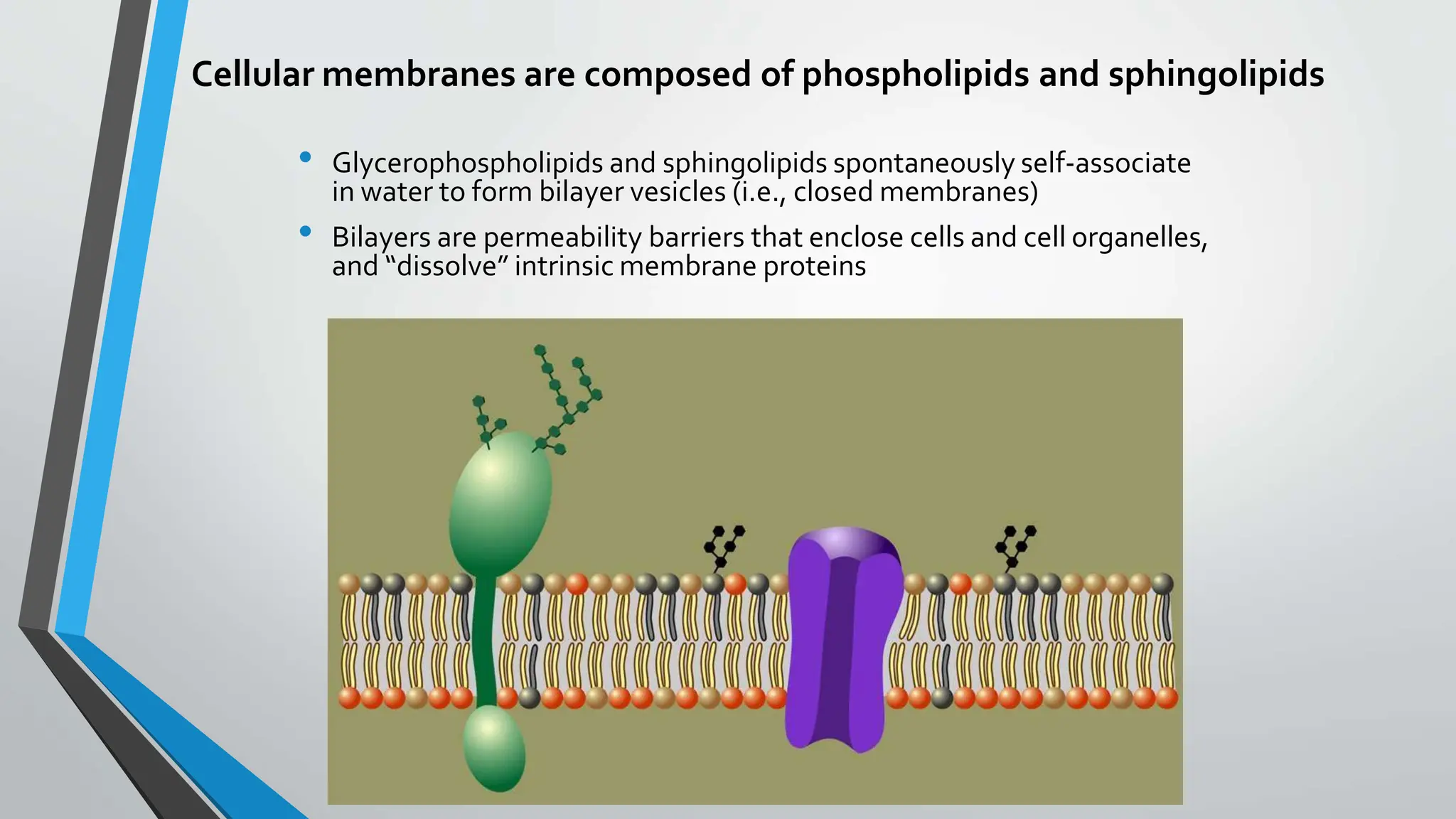
Cellular membranes are composed of phospholipids and sphingolipids
• Glycerophospholipids and sphingolipids spontaneously self-associate
in water to form bilayer vesicles (i.e., closed membranes)
• Bilayers are permeability barriers that enclose cells and cell organelles,
and “dissolve” intrinsic membrane proteins
Glycerophospholipids
• Glycerophospholipids are the main class of phospholipids
• They are the main lipid component of cell membranes, and
are important in the cell’s semipermeability
• They also interact with triacylglycerols and cholesterol to
increase their solubility in the blood
• These abilities of glycerophospholipids are due to their
amphipathic nature, with a polar head group and nonpolar
tails
Glycerol
PO4
Amino
alcohol
Fatty acid
Fatty acid
• Glycerophospholipids are similar to triacylglycerols, but have one ester
bond replaced with an amino alcohol phosphate ester.i.e.
Glycerophospholipid
Each
glycerophospholipid
includes
polar
a region:
glycerol, carbonyl O
of fatty acids, Pi, & the
polar head group (X)
non-polar hydrocarbon
1 2
tails of fatty acids (R , R ).
O
O
O
H2C O C R2
R1 C O CH
H2C O P O X
O
glycerophospholipid
polar
non-polar
"kink" due to
double bond
Structure of a Glycerophospholipid
Lecithins andCephalins
• Glycerophospholipids can be classified based on the amino alcohol
group
• Two common types are lecithins (which contain choline) and
cephalins (which contain ethanolamine)
• Lecithins and cephalins are highly abundant in brain and nerve
tissues, and are also found in egg yolks, wheat germ and yeast
Phosphatidylinositol, with inositol as polar head
group, is one glycerophospholipid.
In addition to being a membrane lipid,
phosphatidylinositol has roles in cell signaling.
O
R1 C O CH
O
O
H2C O C R2
O
OH
H
OH
H
H OH
H
H2C O P O
H
OH
OH
H
phosphatidyl-
inositol
The other one is cardiolipin. Cardiolipin is
found in mitochondrial membrane.
Sphingomyelin
• Sphingomyelins are phospholipids that are based on the 18-
carbon amino alcohol sphingosine, instead of on glycerol
• A fatty acid is linked to the amine group by an amide bond, and
an amino alcohol phosphate ester is linked to the bottom
hydroxyl group (the top hydroxyl group remains free)
• Sphingomyelin is the main component of the myelin sheath of
nerve cells
H2C
OH
CH3
OH
H
C CH
NH CH
O C HC
R (CH2)12
ceramide
OH
H
H2C C CH
CH3
HC
H3N+ CH
OH
(CH2 )12
sphingosine
In the more complex sphingolipids, a
polar “head group" is esterified to the
terminal hydroxyl of the sphingosine
moiety of the ceramide.
The amino group of sphingosine can
form an amide bond with a fatty acid
carboxyl, to yield a ceramide.
Sphingomyelin, with a phosphocholine head group, is
similar in size and shape to the glycerophospholipid
phosphatidyl choline.
Sphingomyelin has
a phosphocholine or
phosphethanolamine
head group.
Sphingomyelins are
common constituent
of plasma
membranes.
H2C
H
C
O
CH
CH3
OH
NH CH
C HC
R (CH2 )12
P O
O
C C O
N+
CH3
H2 H2
H3C
Sphingomyelin
CH3
phosphocholine
sphingosine
O
fatty acid

Glycolipids(glycosphingolipids)
• Glycolipids are sphingolipids that have one or more
monosaccharides linked by glycosidic bonds to the bottom
hydroxyl of the sphingosine.
• In contrast to sphingomyelin they do not have a
phosphocholine group.
Types of Glycolipids(glycosphingolipids)
• Cerebrosides have a single monosaccharide (usually galactose)
- they are usually present at the cell surface, and are involved in
cellular recognition and immunity
Types of Glycolipids(glycosphingolipids)
• Gangliosides have two or more monosaccharides, usually
glucose and galactose
- they are abundant in the cell membranes of neurons
- they act at the cell surface as receptors for hormones
Functions of glycolipids

biochemXX.pptx

  • 1.
  • 2.
    Phospholipids are: • majorconstituents of all cell membranes • components of bile • anchor some proteins in membranes • signal mediators • components of lipoproteins
  • 3.
    Structure of phospholipids •Phospholipids have two fatty acids that help form a diacylglycerol. The third carbon of the glycerol backbone is also occupied by a modified phosphate group However, just a phosphate group attached to a diacylglycerol does not qualify as a phospholipid.This would be considered a phosphatidate or phosphatidic acid (diacylglycerol 3-phosphate), the precursor to phospholipids. Toqualify as a phospholipid, the phosphate group should be modified by an alcohol. Phosphatidylcholine and phosphatidylserine are examples of two important phospholipids that are found in plasma membranes.
  • 4.
  • 5.
    Properties of phospholipids •Phospholipids are amphipathic molecules • Head group = alcohol attached via phosphodiester linkage to either: • diacylglycerol (glycerophospholipid) or • sphingosine (sphingophospholipid = sphingomyelin).
  • 6.
    Cellular membranes arecomposed of phospholipids and sphingolipids • Glycerophospholipids and sphingolipids spontaneously self-associate in water to form bilayer vesicles (i.e., closed membranes) • Bilayers are permeability barriers that enclose cells and cell organelles, and “dissolve” intrinsic membrane proteins
  • 7.
    Glycerophospholipids • Glycerophospholipids arethe main class of phospholipids • They are the main lipid component of cell membranes, and are important in the cell’s semipermeability • They also interact with triacylglycerols and cholesterol to increase their solubility in the blood • These abilities of glycerophospholipids are due to their amphipathic nature, with a polar head group and nonpolar tails Glycerol PO4 Amino alcohol Fatty acid Fatty acid
  • 8.
    • Glycerophospholipids aresimilar to triacylglycerols, but have one ester bond replaced with an amino alcohol phosphate ester.i.e. Glycerophospholipid
  • 9.
    Each glycerophospholipid includes polar a region: glycerol, carbonylO of fatty acids, Pi, & the polar head group (X) non-polar hydrocarbon 1 2 tails of fatty acids (R , R ). O O O H2C O C R2 R1 C O CH H2C O P O X O glycerophospholipid polar non-polar "kink" due to double bond
  • 10.
    Structure of aGlycerophospholipid
  • 11.
    Lecithins andCephalins • Glycerophospholipidscan be classified based on the amino alcohol group • Two common types are lecithins (which contain choline) and cephalins (which contain ethanolamine) • Lecithins and cephalins are highly abundant in brain and nerve tissues, and are also found in egg yolks, wheat germ and yeast
  • 12.
    Phosphatidylinositol, with inositolas polar head group, is one glycerophospholipid. In addition to being a membrane lipid, phosphatidylinositol has roles in cell signaling. O R1 C O CH O O H2C O C R2 O OH H OH H H OH H H2C O P O H OH OH H phosphatidyl- inositol
  • 13.
    The other oneis cardiolipin. Cardiolipin is found in mitochondrial membrane.
  • 14.
    Sphingomyelin • Sphingomyelins arephospholipids that are based on the 18- carbon amino alcohol sphingosine, instead of on glycerol • A fatty acid is linked to the amine group by an amide bond, and an amino alcohol phosphate ester is linked to the bottom hydroxyl group (the top hydroxyl group remains free) • Sphingomyelin is the main component of the myelin sheath of nerve cells
  • 15.
    H2C OH CH3 OH H C CH NH CH OC HC R (CH2)12 ceramide OH H H2C C CH CH3 HC H3N+ CH OH (CH2 )12 sphingosine In the more complex sphingolipids, a polar “head group" is esterified to the terminal hydroxyl of the sphingosine moiety of the ceramide. The amino group of sphingosine can form an amide bond with a fatty acid carboxyl, to yield a ceramide.
  • 16.
    Sphingomyelin, with aphosphocholine head group, is similar in size and shape to the glycerophospholipid phosphatidyl choline. Sphingomyelin has a phosphocholine or phosphethanolamine head group. Sphingomyelins are common constituent of plasma membranes. H2C H C O CH CH3 OH NH CH C HC R (CH2 )12 P O O C C O N+ CH3 H2 H2 H3C Sphingomyelin CH3 phosphocholine sphingosine O fatty acid 
  • 17.
    Glycolipids(glycosphingolipids) • Glycolipids aresphingolipids that have one or more monosaccharides linked by glycosidic bonds to the bottom hydroxyl of the sphingosine. • In contrast to sphingomyelin they do not have a phosphocholine group.
  • 18.
    Types of Glycolipids(glycosphingolipids) •Cerebrosides have a single monosaccharide (usually galactose) - they are usually present at the cell surface, and are involved in cellular recognition and immunity
  • 19.
    Types of Glycolipids(glycosphingolipids) •Gangliosides have two or more monosaccharides, usually glucose and galactose - they are abundant in the cell membranes of neurons - they act at the cell surface as receptors for hormones
  • 20.