SPHINGOLIPIDS

Andrés Mauricio Muñoz Moreno
SURCOLOMBIAN UNIVERSITY
         Medicine
            2009
• They are located in plasma membrane
• Have structural function
• Serve as sites of adherence of
  extracellular proteins
• Important function in cellular physiology


• Current as second messengers


• They are part of lipids rafts


• Sphingosine is the most simple sphingolipid


• Ceramide is precursor of many molecules
STRUCTURE
    • Long – chain base
      (Sphingosine)


    • Fatty acid of variable
      length bind to C2 of
      long – chain base


    • Various pollar´s head
      bind to C1 of long –
      chain base
METABOLISM
Generation of Ceramide (principal precursor
 of metabolites) follow this pathway


• De novo synthesis


• Membrane Sphingomyelin degradation
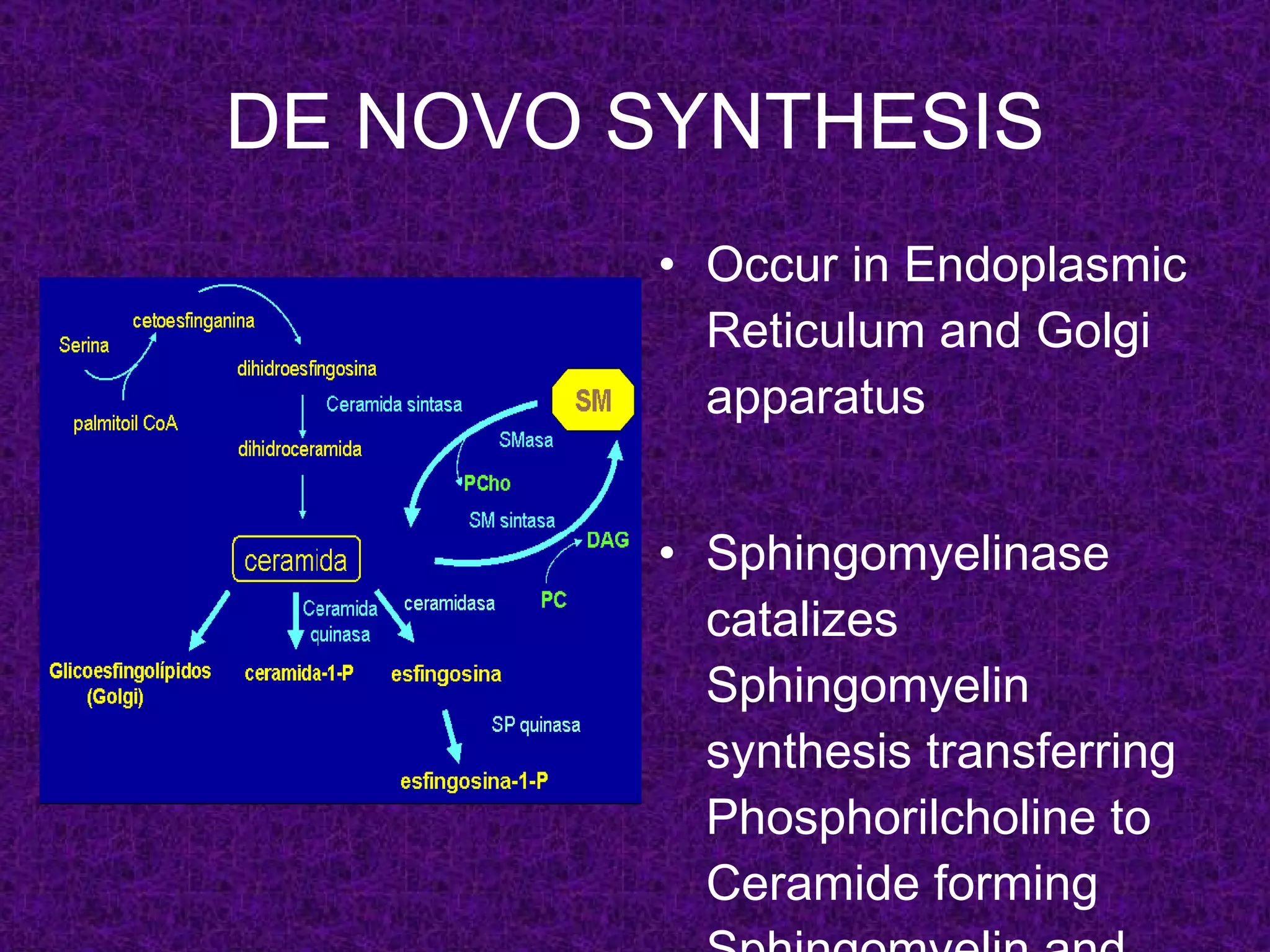
DE NOVO SYNTHESIS
        • Occur in Endoplasmic
          Reticulum and Golgi
          apparatus


        • Sphingomyelinase
          catalizes
          Sphingomyelin
          synthesis transferring
          Phosphorilcholine to
          Ceramide forming
SPHINGOMYELINE
 DEGRADATION
       • Catalyzed by
         Sphingomyelinase
         enzyme (SMasa)


       • It is the principal
         pathway for
         Ceramide`s
         production
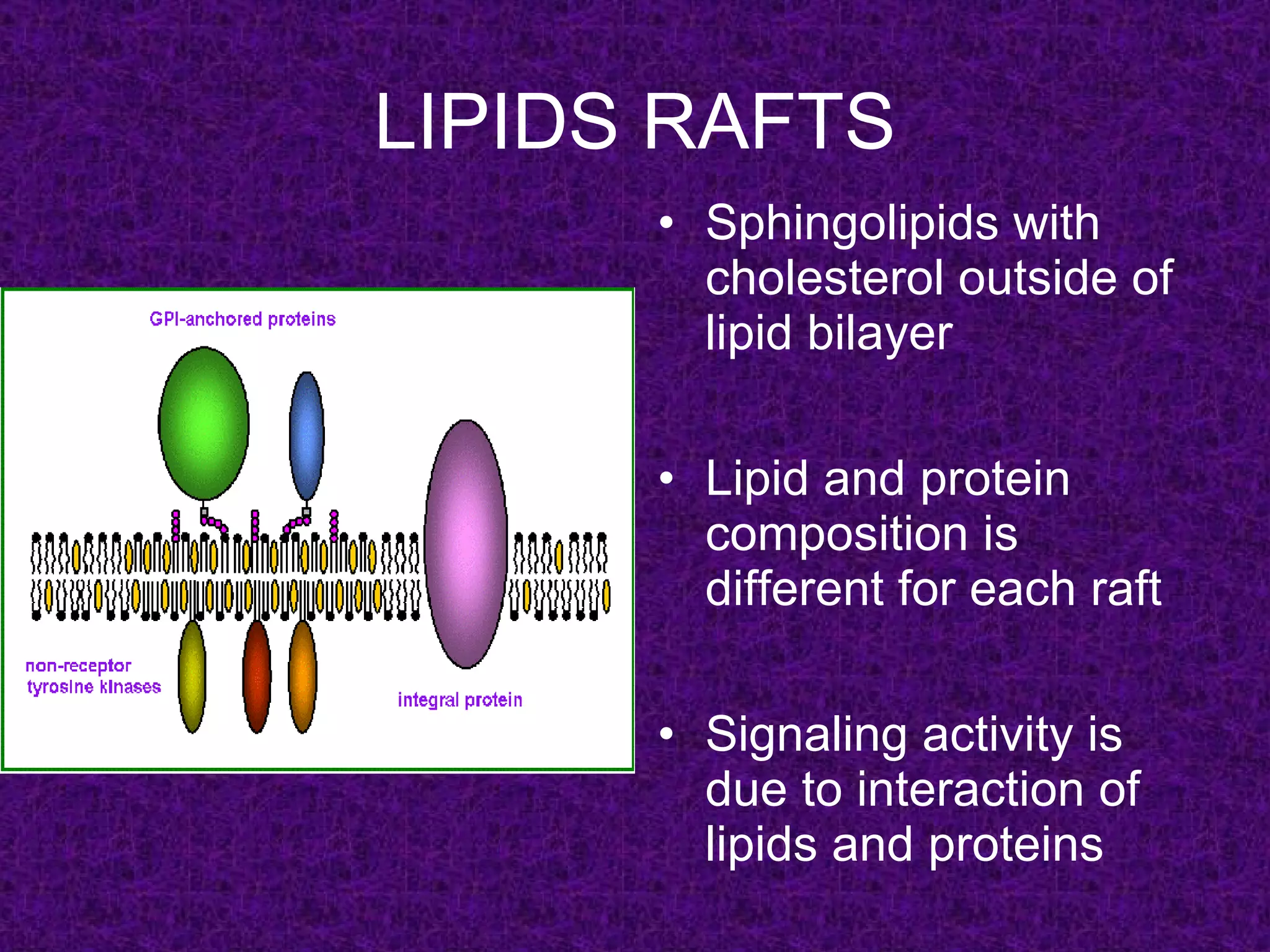
LIPIDS RAFTS
      • Sphingolipids with
        cholesterol outside of
        lipid bilayer

      • Lipid and protein
        composition is
        different for each raft

      • Signaling activity is
        due to interaction of
        lipids and proteins
• The caveolaes are rafts specialized of invaginated shape
  than regulates receptor activity (tyrosin kinase, growth factor
  receptor etc)


• Allow entry of various biological entities to cell (virus,
  hormones, bacteria etc)
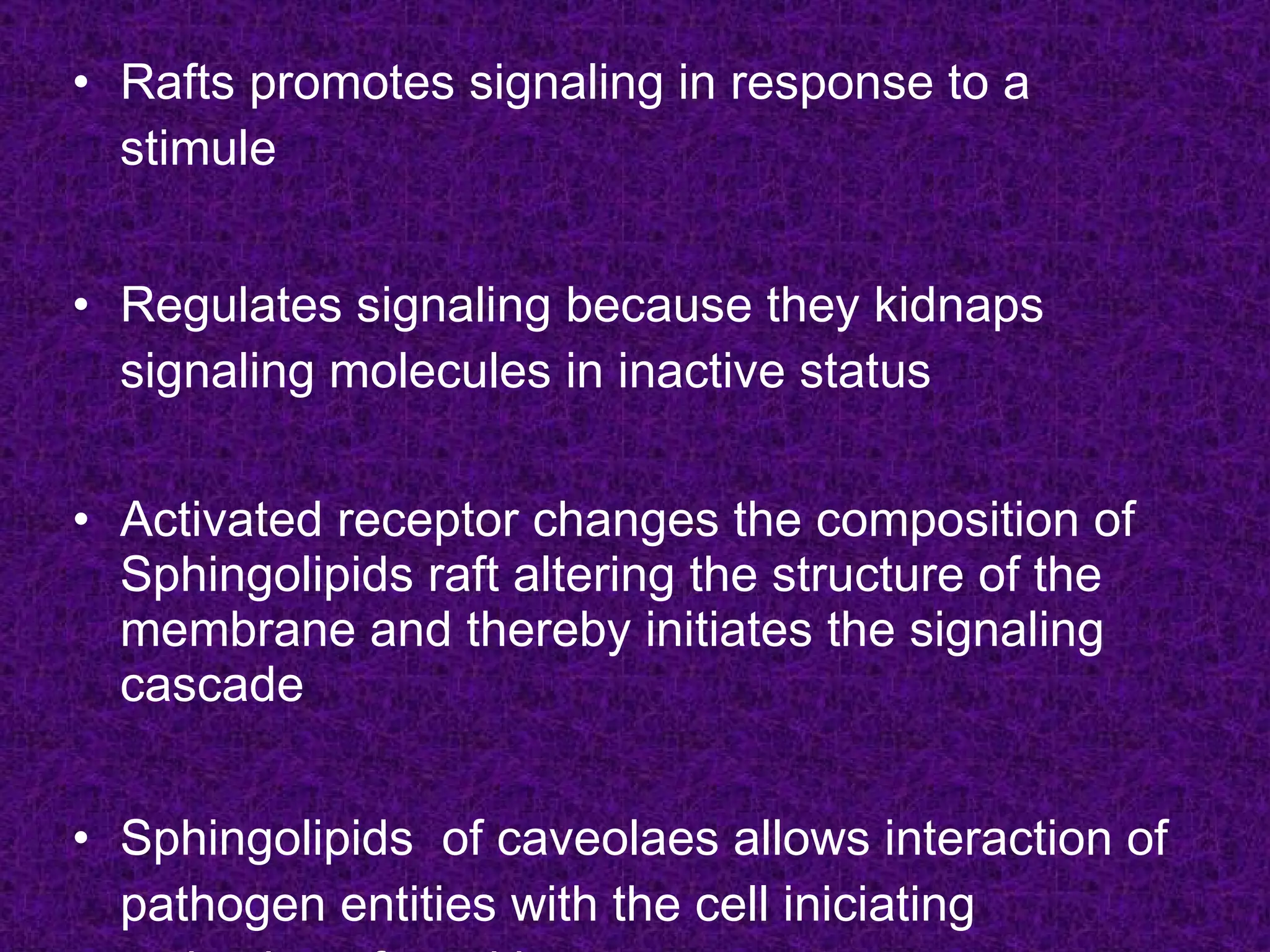
• Rafts promotes signaling in response to a
  stimule


• Regulates signaling because they kidnaps
  signaling molecules in inactive status


• Activated receptor changes the composition of
  Sphingolipids raft altering the structure of the
  membrane and thereby initiates the signaling
  cascade


• Sphingolipids of caveolaes allows interaction of
  pathogen entities with the cell iniciating
SIGNALING
       APOPTOSIS                              MITOSIS
                                      • Esfingosina 1 fosfato
• Ceramida
                                      • Ceramida 1 fosfato
   Balance between Ceramide and his metabolites is important for cellular
                          survival regulation
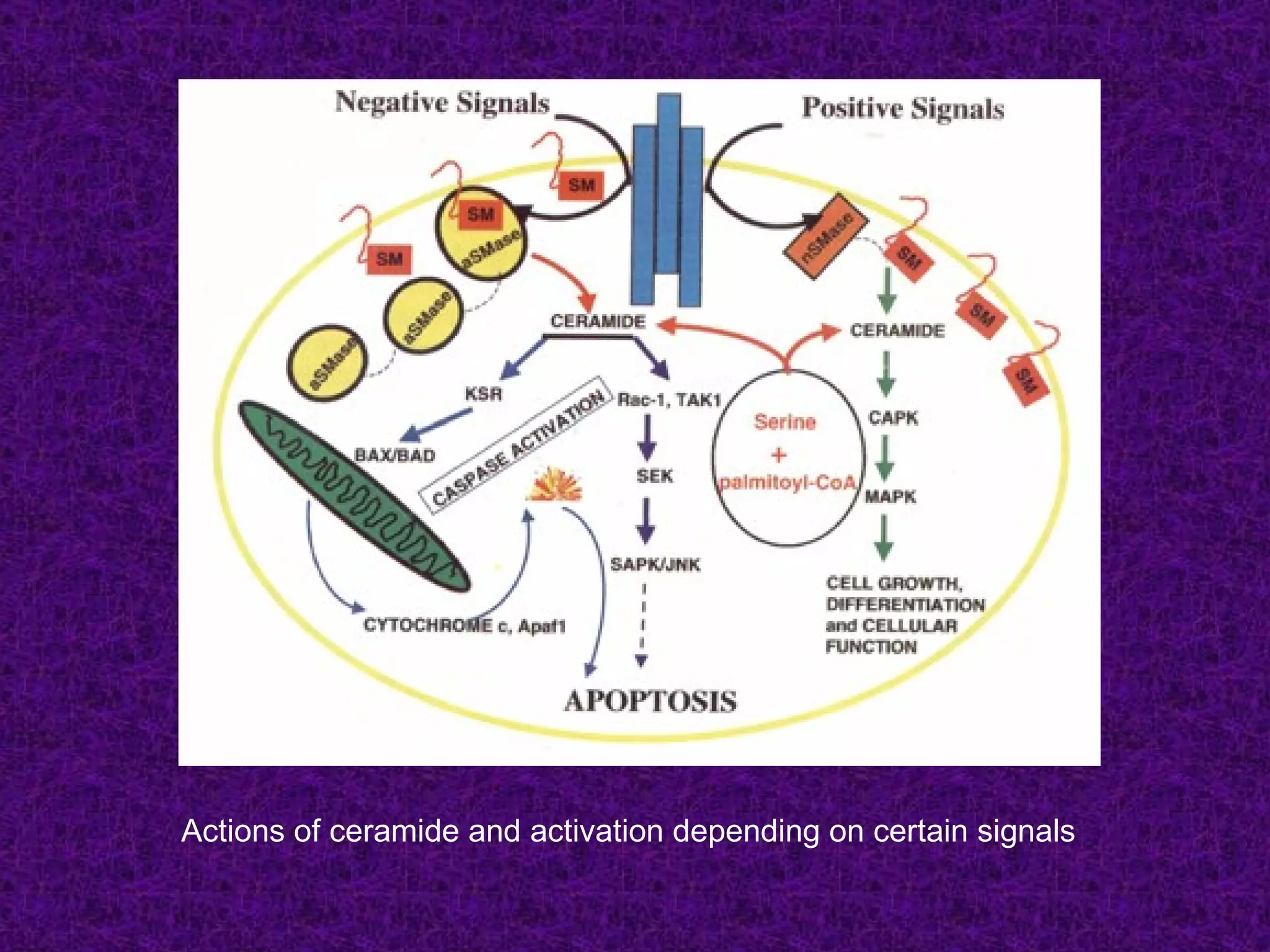
CERAMIDE`S ACTION
Ceramide acts as second messenger, is
 formated by:
• Activation of cell dead receptors
• Gamma and UV radiation
• Hypoxia
• Deprivation of growth factors
• Thermic shock
• Pharmacs
Proteins activated by Ceramide
Actions of ceramide and activation depending on certain signals
• CAPK: Ras suppressor kinase

• PKCζ: Active the NF-кB survival pathway

• JNK: His activation produces apoptosis

• PP1: Bad phosphorilation, producing apoptosis

• PP2A: Bcl-2 dephosphorilation, becoming in apoptotic
  molecule doing permeable mitochondrial membrane

• Ceramide can produce oxidative stress by ON
  synthetase and antioxidantes enzymes desregulation
CERAMIDAE 1 PHOSPHATE
         ACTION
C1P is produced by a Ceramide kinase ATP-ligand. This
  C1P is implicated in inflammatory responses, apoptosis
  inhibition and cell survival.

• Current in the araquidónic acid release

• Acid sphingomyelinase inhibition, this decrese
  ceramide`s levels inhibiting apoptosis

• PI3K/PKB pathway activation, increasing cell survival
Acid and neutral sphingomyelinase pathway
SPHINGOSINE 1
PHOSPHATE ACTION
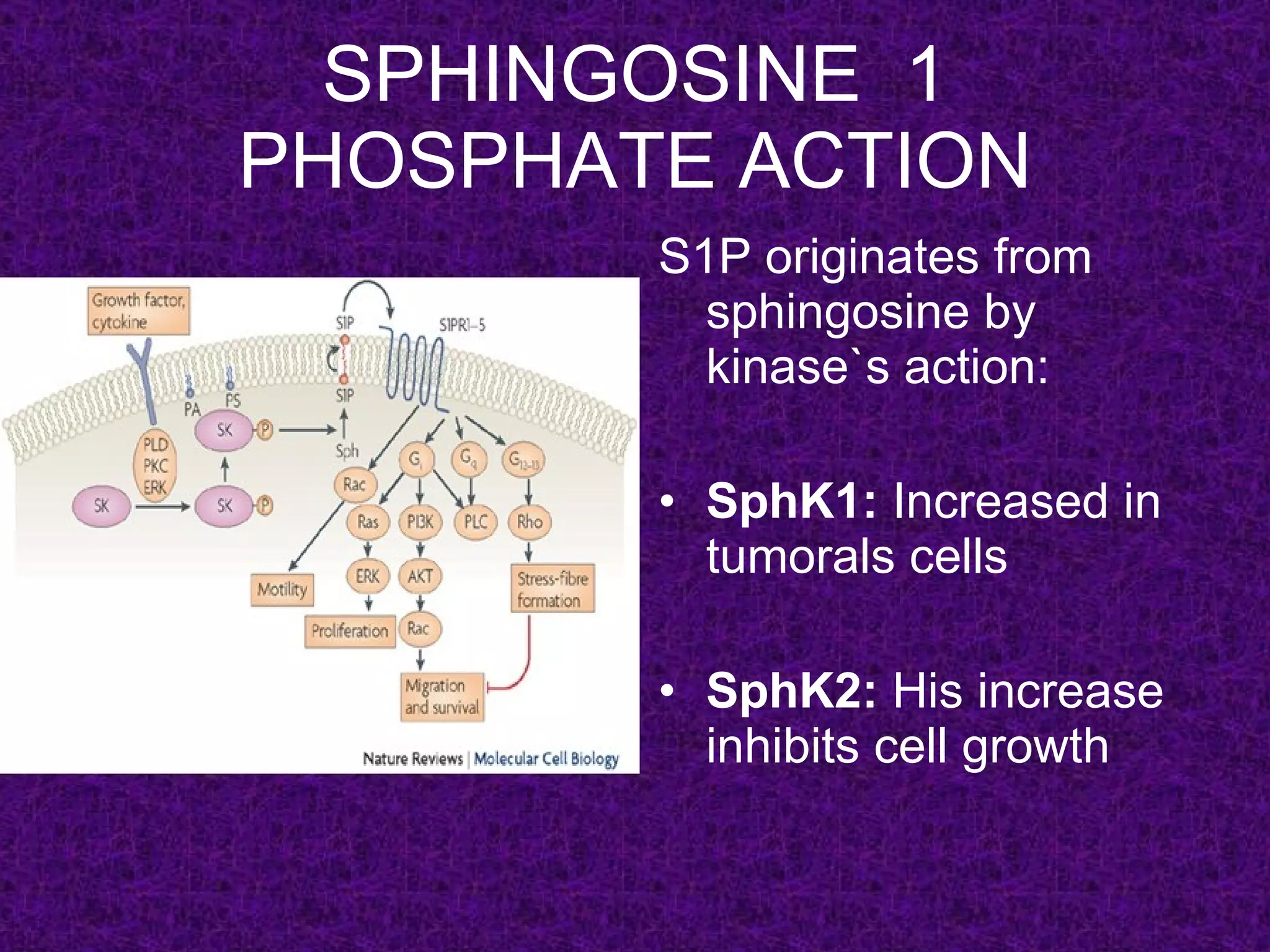
        S1P originates from
          sphingosine by
          kinase`s action:

        • SphK1: Increased in
          tumorals cells

        • SphK2: His increase
          inhibits cell growth
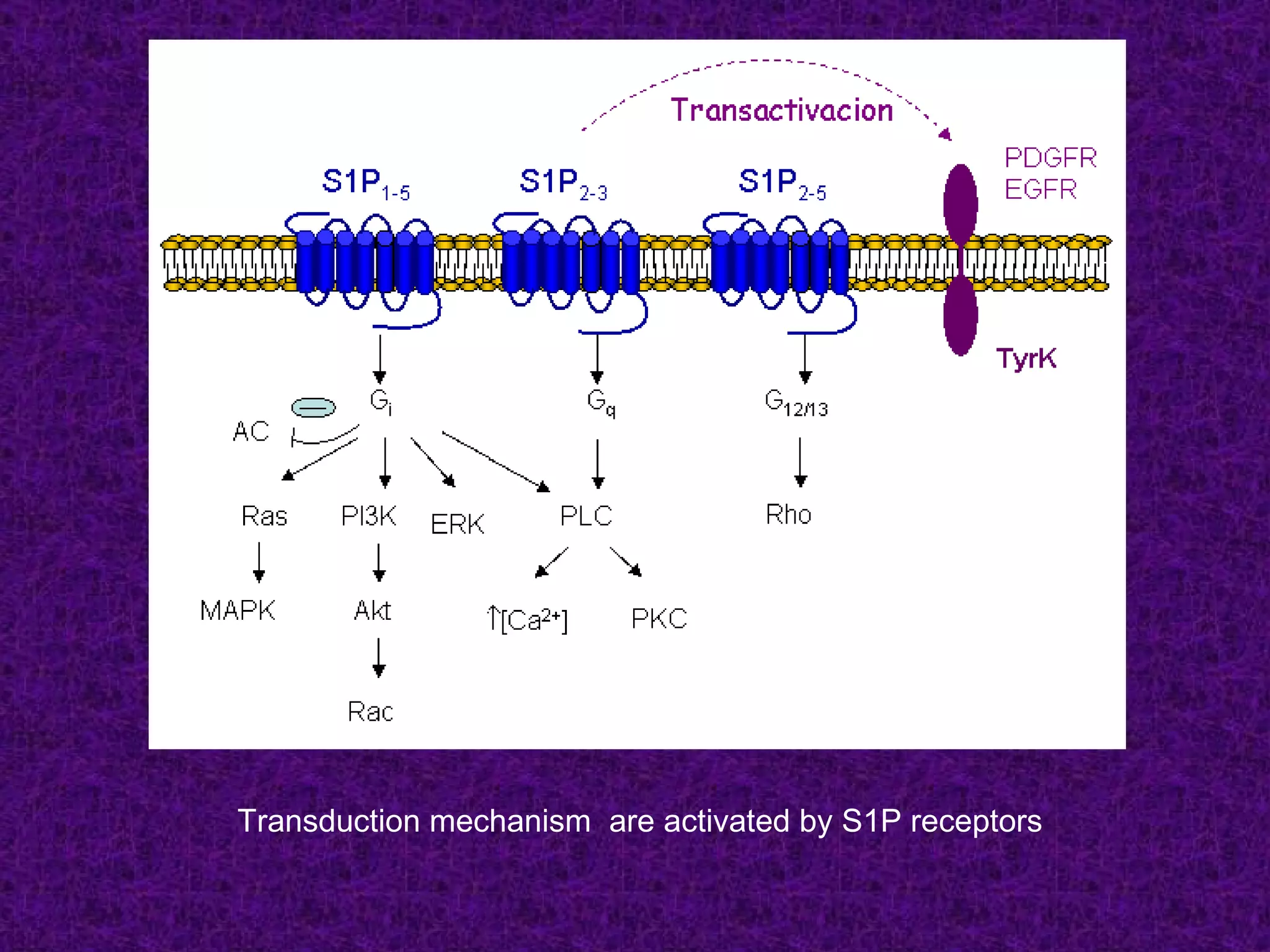
Transduction mechanism are activated by S1P receptors
S1P can act as second messenger or act in extracellular
  surface by transporters who carry from intracellular to
  extracellular space

• 5 S1P receptors are linked to various kind of G protein
  (S1P1-5)

• Receptors linked to G12/13 protein activate the Rho
  GTPasa than regulates cytoskeleton and cell motility

• Receptors linked to Gq protein coupling to
  Phospholipase C increasing intracellular calcium

• Receptors linked to Gi protein regulate the PI3K/Akt and
  Ras/ERK pathways
GANGLIOSIDES
      • Glycosphingolipids
        than contain sialic
        acid residues (NANA)

      • Are the 25% of lipids
        in outside of neural
        membrane

      • There are 188
        differents kinds of
        gangliosides
Gangliosides synthesis
• Glycosphingolipids precursors of gangliosides into the
  Golgi apparatus and wrapped in reactions of
  glycotransferases and sialotransferases


• Extraneural primary gangliosides in vertebrates is GM3


• A sialidase different from the Golgi apparatus is located
  in the plasma membrane where it changes the
  composition of gangliosides in surface


• Myelinic maintenance and neural regeneration functions


• Cerebral primary gangliosides are GM1, GD1a, GD1b y
  GT1
GANGLIOSIDES AND
          DISEASE
• Certain types of gangliosides found in
  cancer cells and not in healthy tissue

• GM3 has therapeutic applications to
  promote apoptosis of tumor cells by
  suppressing the phosphorylation of
  receptors for growth hormone in her
  surface

• GD1a promote proliferation and tumoral
  cells metastasis
• Gullain – Barré syndrome there are
  gangliosides antibodies

• GM1 disorder in the Alzheimer disease
  cause β amyloid protein accumulation in
  brain

• Damages in metabólicas pathways for
  gangliosides are involved in Huntington`s
  disease

• In childhood epylepsia there is mutation in
  Sialotransferase gen
CEREBROSIDE S
      • Monohexoses
        Ceramides

      • They are primary in
        brain, but too in
        spleen and
        erythrocytes
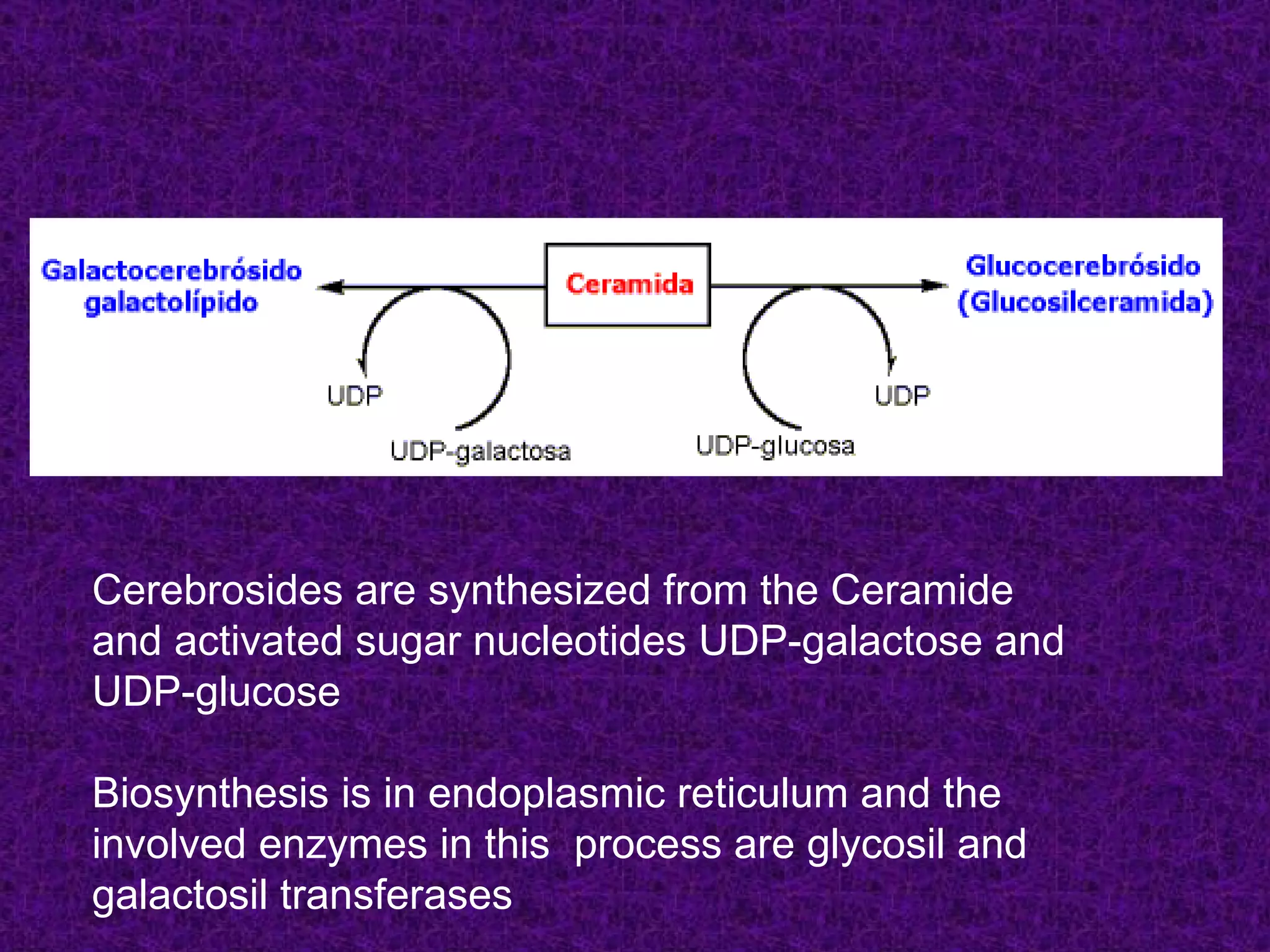
Cerebrosides are synthesized from the Ceramide
and activated sugar nucleotides UDP-galactose and
UDP-glucose

Biosynthesis is in endoplasmic reticulum and the
involved enzymes in this process are glycosil and
galactosil transferases
• Promote the increase of body temperature
  to form networks compact hydrogen
  bridges with other cerebrosides

• Increased cerebrosides in liver, spleen,
  bone marrow and lungs causing Gaucher
  disease due to defects in the enzyme
  glycocerebrosidase
REVIEW
•   http://www.tdx.cbuc.es/TESIS_UV/AVAILABLE/TDX-0608109-141934//FER
    RER.pdf
•   http://www.lipidlibrary.co.uk/Lipids/introsph/index.htm
•   http://www2.uah.es/dianas/00101001_sanchez.pdf
•   http://lh5.ggpht.com/_FLe5Kbctaeg/SjJlj1VjSDI/AAAAAAAACQM/7QxWIlXP
    zsk/Sphingosine1phosphate2_thumb14.jpg
•   http://www.cell-research.com/images/99photo/1-1.jpg

Sphingolipids

  • 1.
    SPHINGOLIPIDS Andrés Mauricio MuñozMoreno SURCOLOMBIAN UNIVERSITY Medicine 2009
  • 2.
    • They arelocated in plasma membrane • Have structural function • Serve as sites of adherence of extracellular proteins
  • 3.
    • Important functionin cellular physiology • Current as second messengers • They are part of lipids rafts • Sphingosine is the most simple sphingolipid • Ceramide is precursor of many molecules
  • 4.
    STRUCTURE • Long – chain base (Sphingosine) • Fatty acid of variable length bind to C2 of long – chain base • Various pollar´s head bind to C1 of long – chain base
  • 5.
    METABOLISM Generation of Ceramide(principal precursor of metabolites) follow this pathway • De novo synthesis • Membrane Sphingomyelin degradation
  • 6.
    DE NOVO SYNTHESIS • Occur in Endoplasmic Reticulum and Golgi apparatus • Sphingomyelinase catalizes Sphingomyelin synthesis transferring Phosphorilcholine to Ceramide forming
  • 7.
    SPHINGOMYELINE DEGRADATION • Catalyzed by Sphingomyelinase enzyme (SMasa) • It is the principal pathway for Ceramide`s production
  • 8.
    LIPIDS RAFTS • Sphingolipids with cholesterol outside of lipid bilayer • Lipid and protein composition is different for each raft • Signaling activity is due to interaction of lipids and proteins
  • 9.
    • The caveolaesare rafts specialized of invaginated shape than regulates receptor activity (tyrosin kinase, growth factor receptor etc) • Allow entry of various biological entities to cell (virus, hormones, bacteria etc)
  • 10.
    • Rafts promotessignaling in response to a stimule • Regulates signaling because they kidnaps signaling molecules in inactive status • Activated receptor changes the composition of Sphingolipids raft altering the structure of the membrane and thereby initiates the signaling cascade • Sphingolipids of caveolaes allows interaction of pathogen entities with the cell iniciating
  • 11.
    SIGNALING APOPTOSIS MITOSIS • Esfingosina 1 fosfato • Ceramida • Ceramida 1 fosfato Balance between Ceramide and his metabolites is important for cellular survival regulation
  • 12.
    CERAMIDE`S ACTION Ceramide actsas second messenger, is formated by: • Activation of cell dead receptors • Gamma and UV radiation • Hypoxia • Deprivation of growth factors • Thermic shock • Pharmacs
  • 13.
  • 14.
    Actions of ceramideand activation depending on certain signals
  • 15.
    • CAPK: Rassuppressor kinase • PKCζ: Active the NF-кB survival pathway • JNK: His activation produces apoptosis • PP1: Bad phosphorilation, producing apoptosis • PP2A: Bcl-2 dephosphorilation, becoming in apoptotic molecule doing permeable mitochondrial membrane • Ceramide can produce oxidative stress by ON synthetase and antioxidantes enzymes desregulation
  • 16.
    CERAMIDAE 1 PHOSPHATE ACTION C1P is produced by a Ceramide kinase ATP-ligand. This C1P is implicated in inflammatory responses, apoptosis inhibition and cell survival. • Current in the araquidónic acid release • Acid sphingomyelinase inhibition, this decrese ceramide`s levels inhibiting apoptosis • PI3K/PKB pathway activation, increasing cell survival
  • 17.
    Acid and neutralsphingomyelinase pathway
  • 18.
    SPHINGOSINE 1 PHOSPHATE ACTION S1P originates from sphingosine by kinase`s action: • SphK1: Increased in tumorals cells • SphK2: His increase inhibits cell growth
  • 19.
    Transduction mechanism areactivated by S1P receptors
  • 20.
    S1P can actas second messenger or act in extracellular surface by transporters who carry from intracellular to extracellular space • 5 S1P receptors are linked to various kind of G protein (S1P1-5) • Receptors linked to G12/13 protein activate the Rho GTPasa than regulates cytoskeleton and cell motility • Receptors linked to Gq protein coupling to Phospholipase C increasing intracellular calcium • Receptors linked to Gi protein regulate the PI3K/Akt and Ras/ERK pathways
  • 21.
    GANGLIOSIDES • Glycosphingolipids than contain sialic acid residues (NANA) • Are the 25% of lipids in outside of neural membrane • There are 188 differents kinds of gangliosides
  • 22.
  • 23.
    • Glycosphingolipids precursorsof gangliosides into the Golgi apparatus and wrapped in reactions of glycotransferases and sialotransferases • Extraneural primary gangliosides in vertebrates is GM3 • A sialidase different from the Golgi apparatus is located in the plasma membrane where it changes the composition of gangliosides in surface • Myelinic maintenance and neural regeneration functions • Cerebral primary gangliosides are GM1, GD1a, GD1b y GT1
  • 24.
    GANGLIOSIDES AND DISEASE • Certain types of gangliosides found in cancer cells and not in healthy tissue • GM3 has therapeutic applications to promote apoptosis of tumor cells by suppressing the phosphorylation of receptors for growth hormone in her surface • GD1a promote proliferation and tumoral cells metastasis
  • 25.
    • Gullain –Barré syndrome there are gangliosides antibodies • GM1 disorder in the Alzheimer disease cause β amyloid protein accumulation in brain • Damages in metabólicas pathways for gangliosides are involved in Huntington`s disease • In childhood epylepsia there is mutation in Sialotransferase gen
  • 26.
    CEREBROSIDE S • Monohexoses Ceramides • They are primary in brain, but too in spleen and erythrocytes
  • 27.
    Cerebrosides are synthesizedfrom the Ceramide and activated sugar nucleotides UDP-galactose and UDP-glucose Biosynthesis is in endoplasmic reticulum and the involved enzymes in this process are glycosil and galactosil transferases
  • 28.
    • Promote theincrease of body temperature to form networks compact hydrogen bridges with other cerebrosides • Increased cerebrosides in liver, spleen, bone marrow and lungs causing Gaucher disease due to defects in the enzyme glycocerebrosidase
  • 29.
    REVIEW • http://www.tdx.cbuc.es/TESIS_UV/AVAILABLE/TDX-0608109-141934//FER RER.pdf • http://www.lipidlibrary.co.uk/Lipids/introsph/index.htm • http://www2.uah.es/dianas/00101001_sanchez.pdf • http://lh5.ggpht.com/_FLe5Kbctaeg/SjJlj1VjSDI/AAAAAAAACQM/7QxWIlXP zsk/Sphingosine1phosphate2_thumb14.jpg • http://www.cell-research.com/images/99photo/1-1.jpg