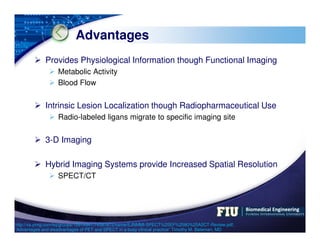
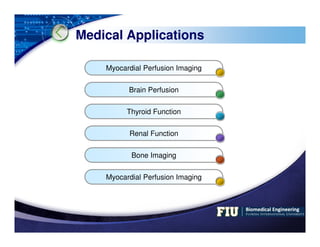
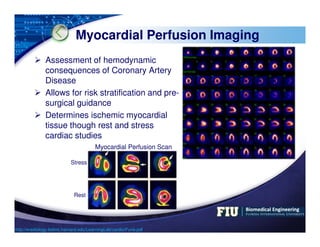
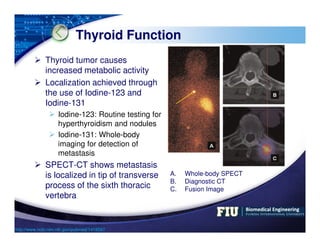
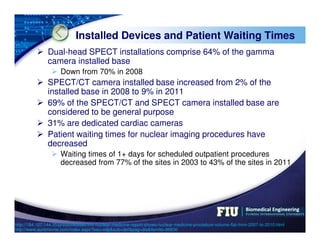
SPECT imaging provides functional information through imaging metabolic activity and blood flow using radiopharmaceuticals and gamma camera detection. While it has advantages like 3D imaging and use in assessing organ function, it also has disadvantages like radiation exposure, long scan times, and reliance on radiopharmaceutical supply. Modern SPECT systems provide hybrid SPECT/CT imaging from major manufacturers at costs of $100,000-400,000. Over 17 million nuclear medicine procedures are performed annually in the US, primarily for cardiac imaging, with dual-head SPECT and SPECT/CT use increasing.