SOLUTIONS FOR
OBSESSIVE-COMPULSIVE
DISORDER (OCD)
ORGANIZATION: EMOTION OF LIFE
INTRODUCTION
• Obsessive-Compulsive Disorder (OCD) is a complex mental health
condition that involves intrusive thoughts (obsessions) and
repetitive behaviors (compulsions).
• While medications are available, non-medication approaches
provide effective ways to manage symptoms and improve quality of
life.
• This presentation explores psychological interventions, behavioral
techniques, mindfulness, lifestyle changes, and the importance of
strong support systems.
UNDERSTANDING OCD – THE
COGNITIVE-BEHAVIORAL MODEL
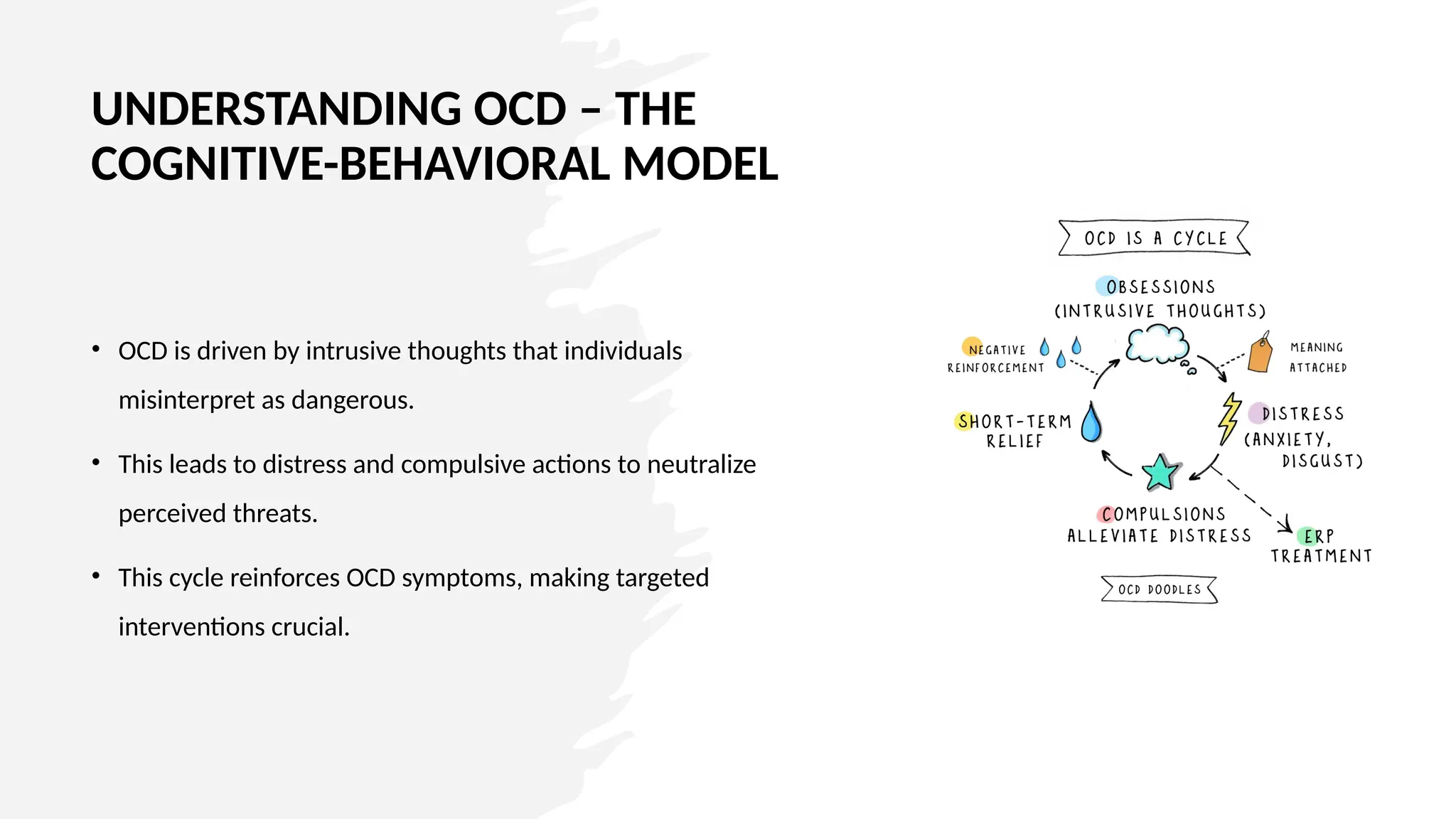
• OCD is driven by intrusive thoughts that individuals
misinterpret as dangerous.
• This leads to distress and compulsive actions to neutralize
perceived threats.
• This cycle reinforces OCD symptoms, making targeted
interventions crucial.
COGNITIVE-BEHAVIORAL
THERAPY (CBT) FOR OCD
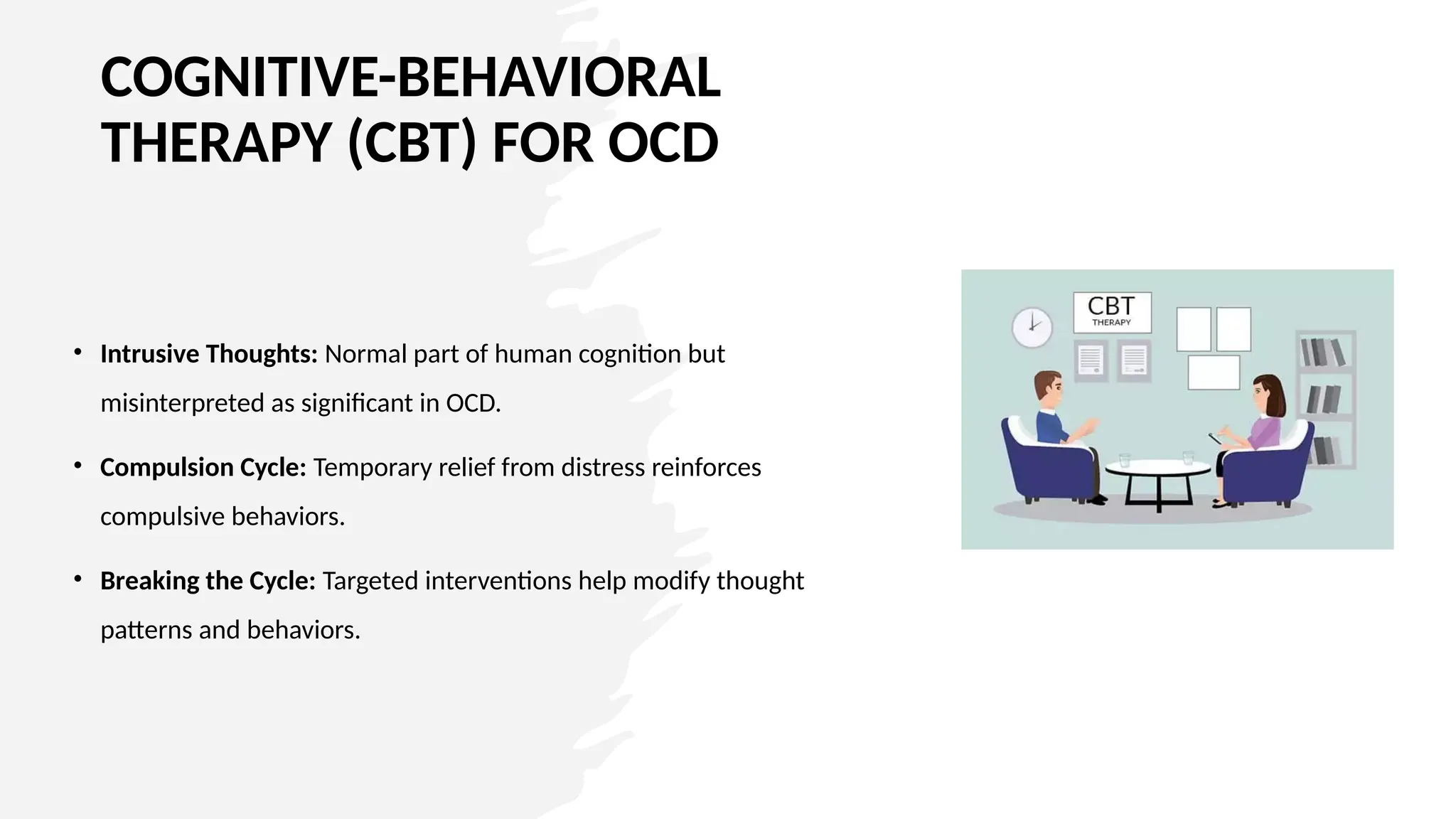
• Intrusive Thoughts: Normal part of human cognition but
misinterpreted as significant in OCD.
• Compulsion Cycle: Temporary relief from distress reinforces
compulsive behaviors.
• Breaking the Cycle: Targeted interventions help modify thought
patterns and behaviors.
COGNITIVE-BEHAVIORAL
THERAPY (CBT)
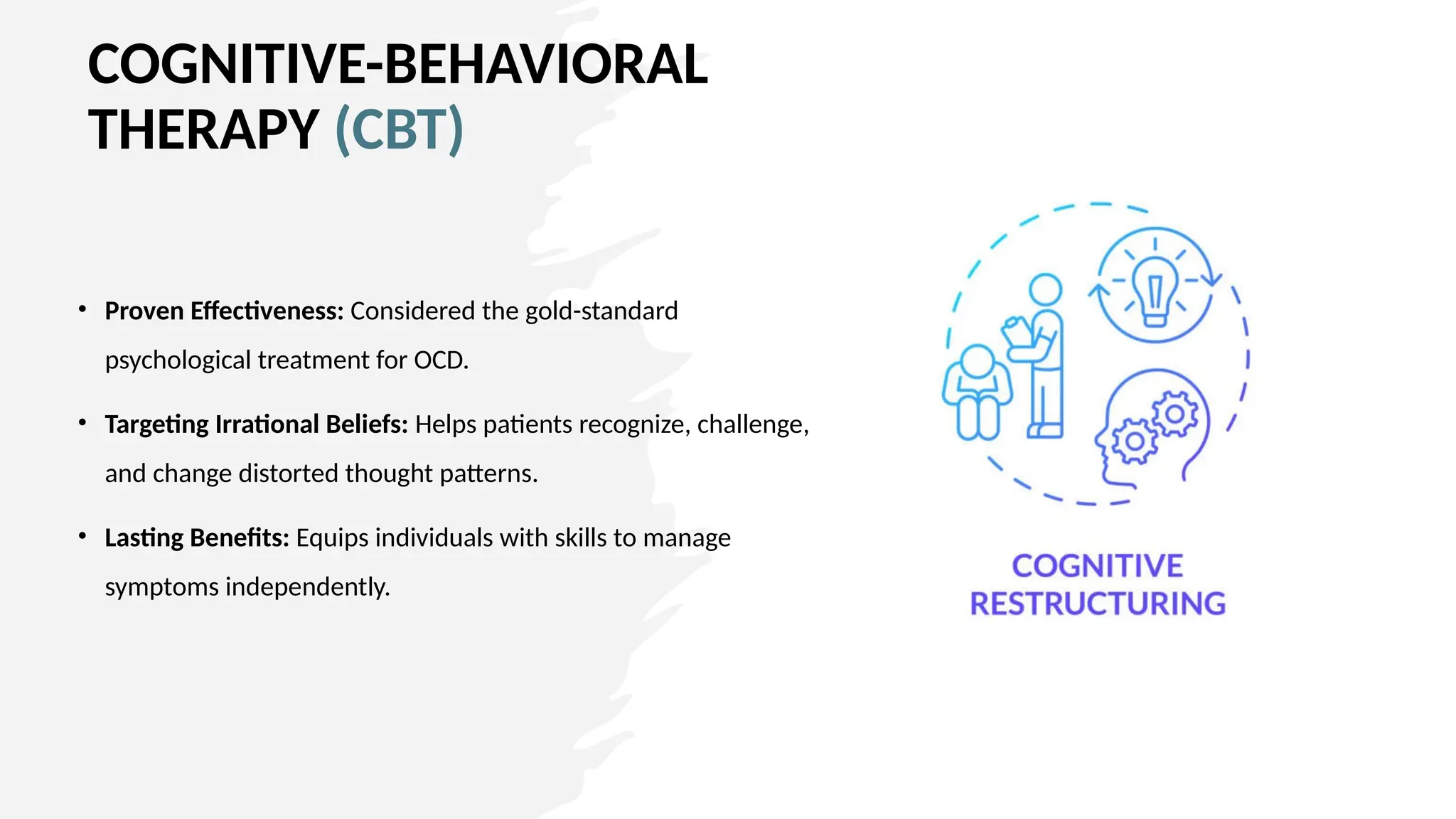
• Proven Effectiveness: Considered the gold-standard
psychological treatment for OCD.
• Targeting Irrational Beliefs: Helps patients recognize, challenge,
and change distorted thought patterns.
• Lasting Benefits: Equips individuals with skills to manage
symptoms independently.
COGNITIVE RESTRUCTURING
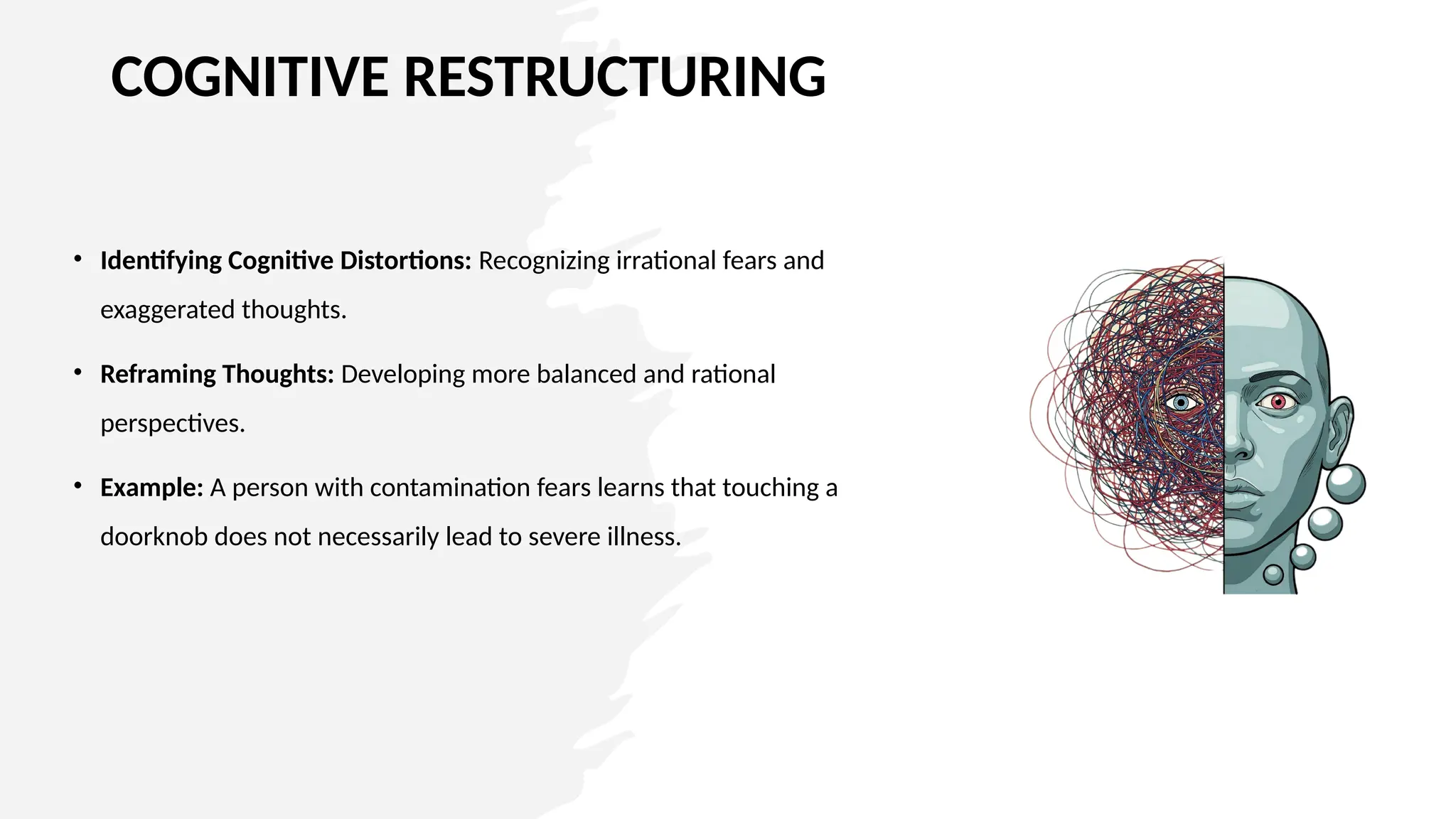
• Identifying Cognitive Distortions: Recognizing irrational fears and
exaggerated thoughts.
• Reframing Thoughts: Developing more balanced and rational
perspectives.
• Example: A person with contamination fears learns that touching a
doorknob does not necessarily lead to severe illness.
BEHAVIORAL EXPERIMENTS IN CBT
• Testing Fears in Real Life: Engaging in controlled situations to
challenge OCD beliefs.
• Observing Outcomes: Learning that feared consequences are
unlikely or manageable.
• Example: A person with checking compulsions leaves home
without repeatedly verifying that appliances are off.
EXPOSURE AND RESPONSE
PREVENTION (ERP)
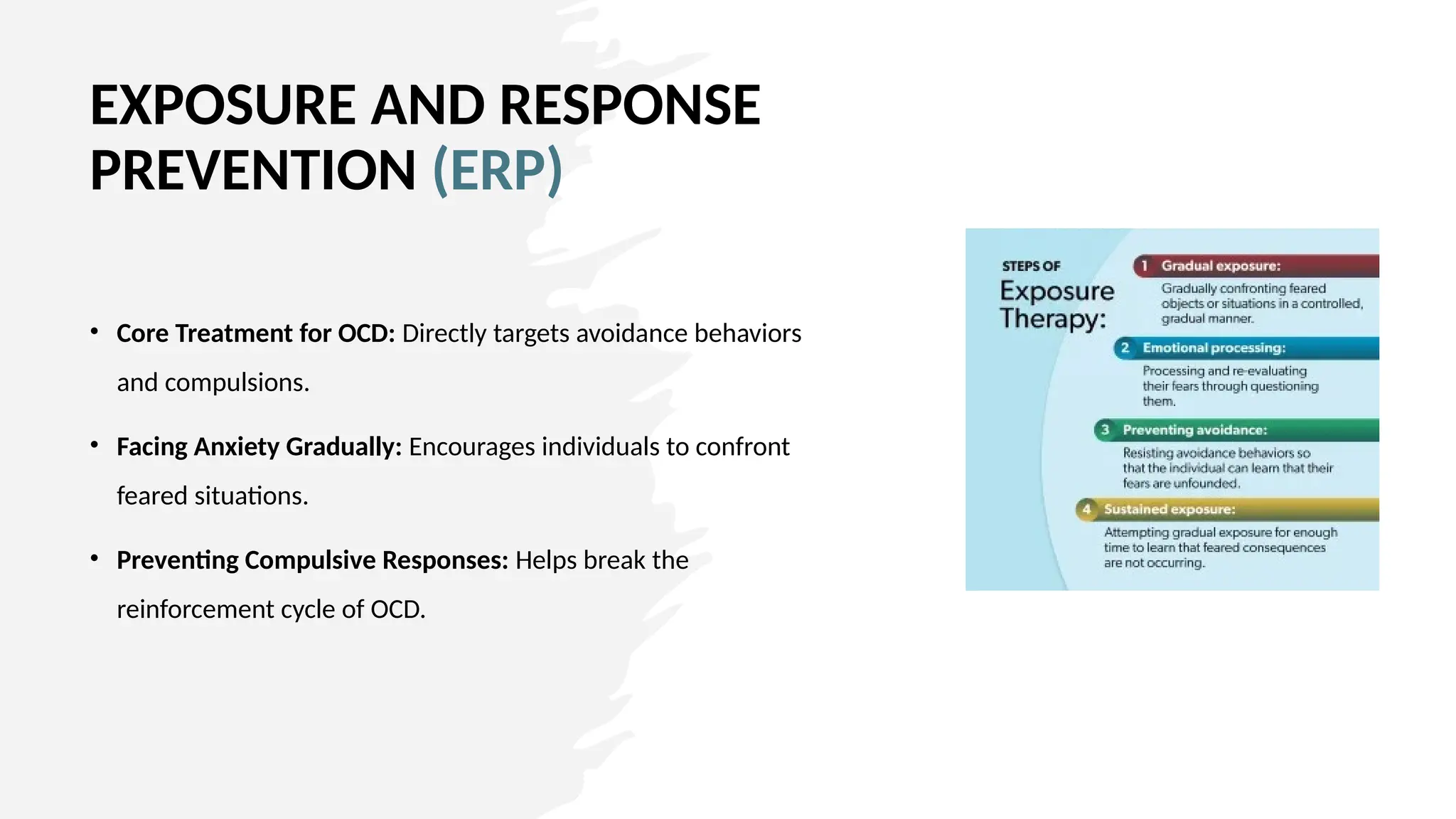
• Core Treatment for OCD: Directly targets avoidance behaviors
and compulsions.
• Facing Anxiety Gradually: Encourages individuals to confront
feared situations.
• Preventing Compulsive Responses: Helps break the
reinforcement cycle of OCD.
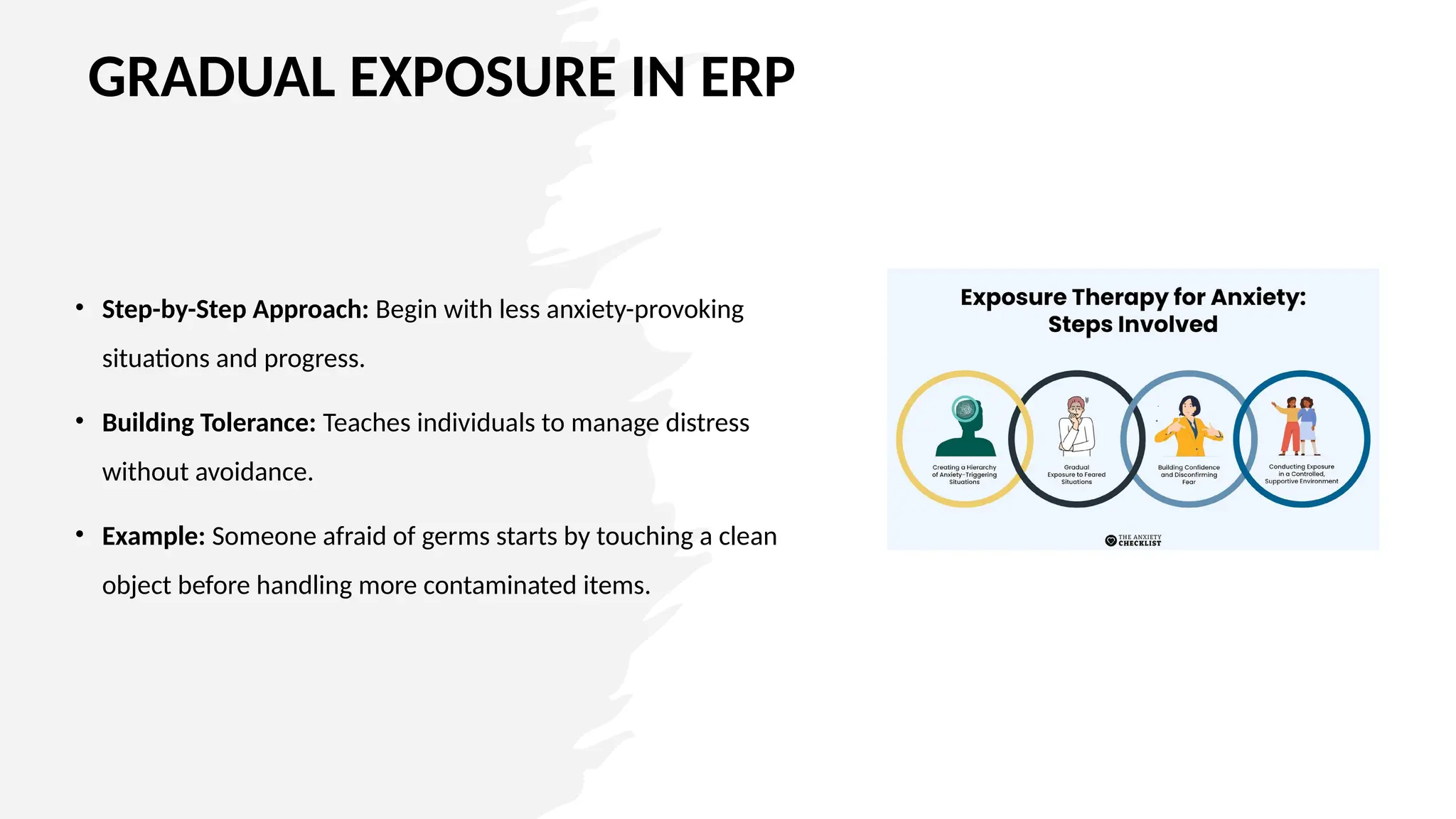
GRADUAL EXPOSURE IN ERP
• Step-by-Step Approach: Begin with less anxiety-provoking
situations and progress.
• Building Tolerance: Teaches individuals to manage distress
without avoidance.
• Example: Someone afraid of germs starts by touching a clean
object before handling more contaminated items.
RESPONSE PREVENTION
TECHNIQUES
• Resisting Compulsions: Patients delay or refrain from rituals to reduce
dependence.
• Reducing Anxiety Over Time: Exposure allows natural decline in distress.
• Example: A person with compulsive handwashing waits longer before washing
or reduces frequency.
ACCEPTANCE AND
COMMITMENT THERAPY (ACT)
• Accepting Thoughts Instead of Fighting Them: Helps individuals
avoid struggling with intrusive thoughts.
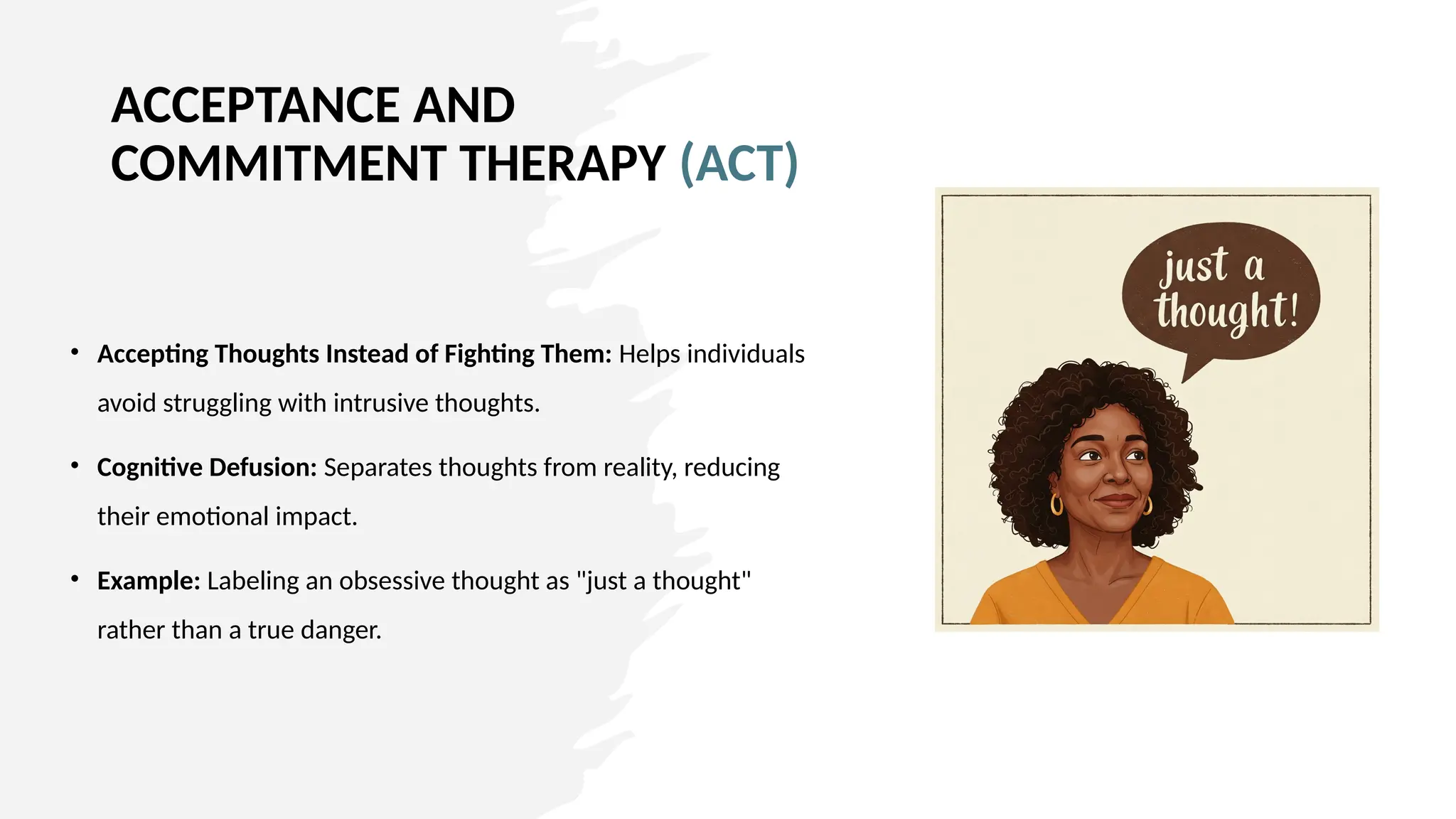
• Cognitive Defusion: Separates thoughts from reality, reducing
their emotional impact.
• Example: Labeling an obsessive thought as "just a thought"
rather than a true danger.
Behavioral Strategies and
Habit Reversal Training (HRT)
• Recognizing Triggers: Identifying cues that lead to compulsions.
• Replacing Behaviors: Engaging in alternative responses to
compulsive urges.
• Example: A person who compulsively picks their skin practices
squeezing a stress ball instead.
LIFESTYLE
MODIFICATIONS
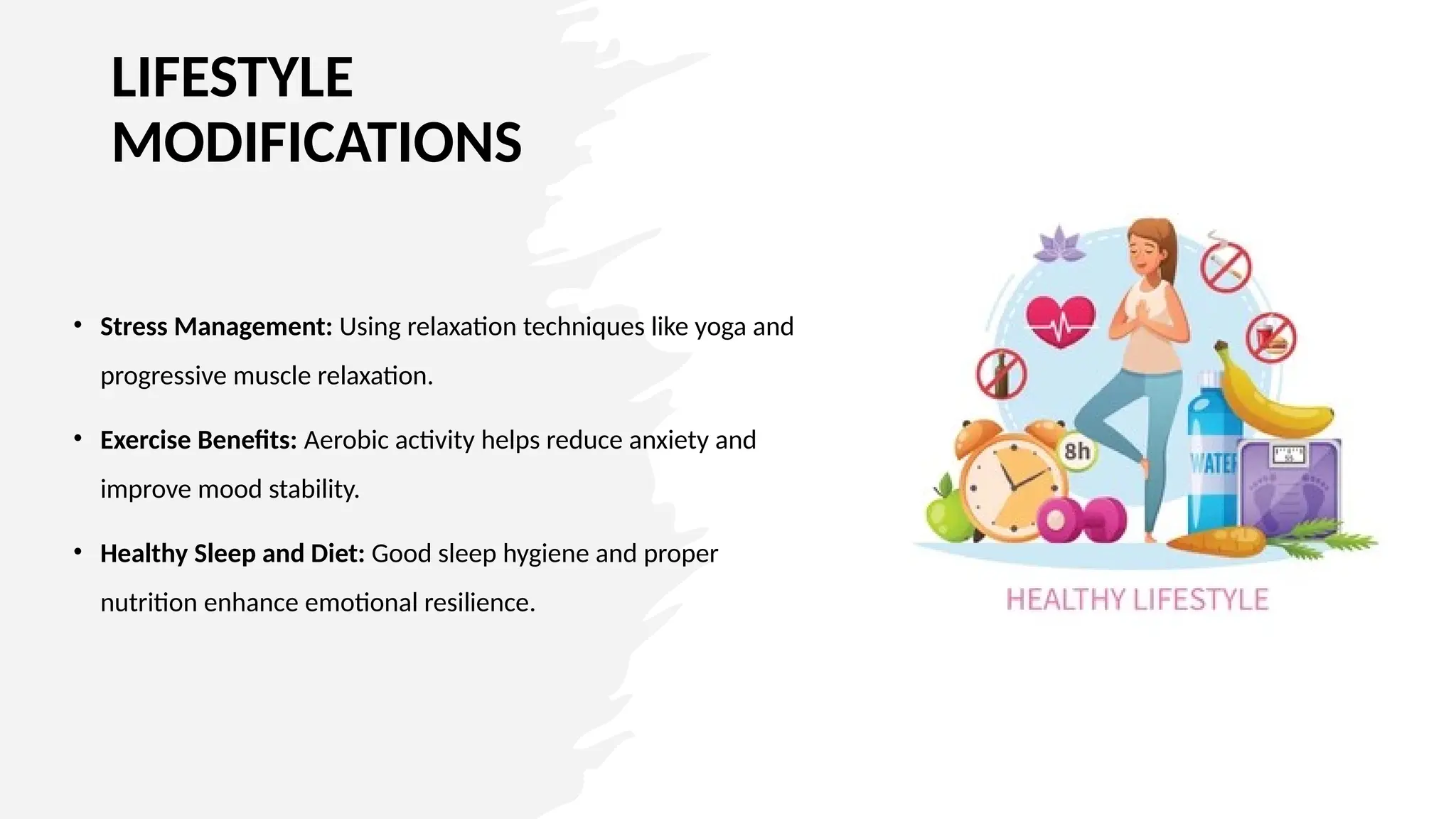
• Stress Management: Using relaxation techniques like yoga and
progressive muscle relaxation.
• Exercise Benefits: Aerobic activity helps reduce anxiety and
improve mood stability.
• Healthy Sleep and Diet: Good sleep hygiene and proper
nutrition enhance emotional resilience.
IMPORTANCE OF A
SUPPORT SYSTEM
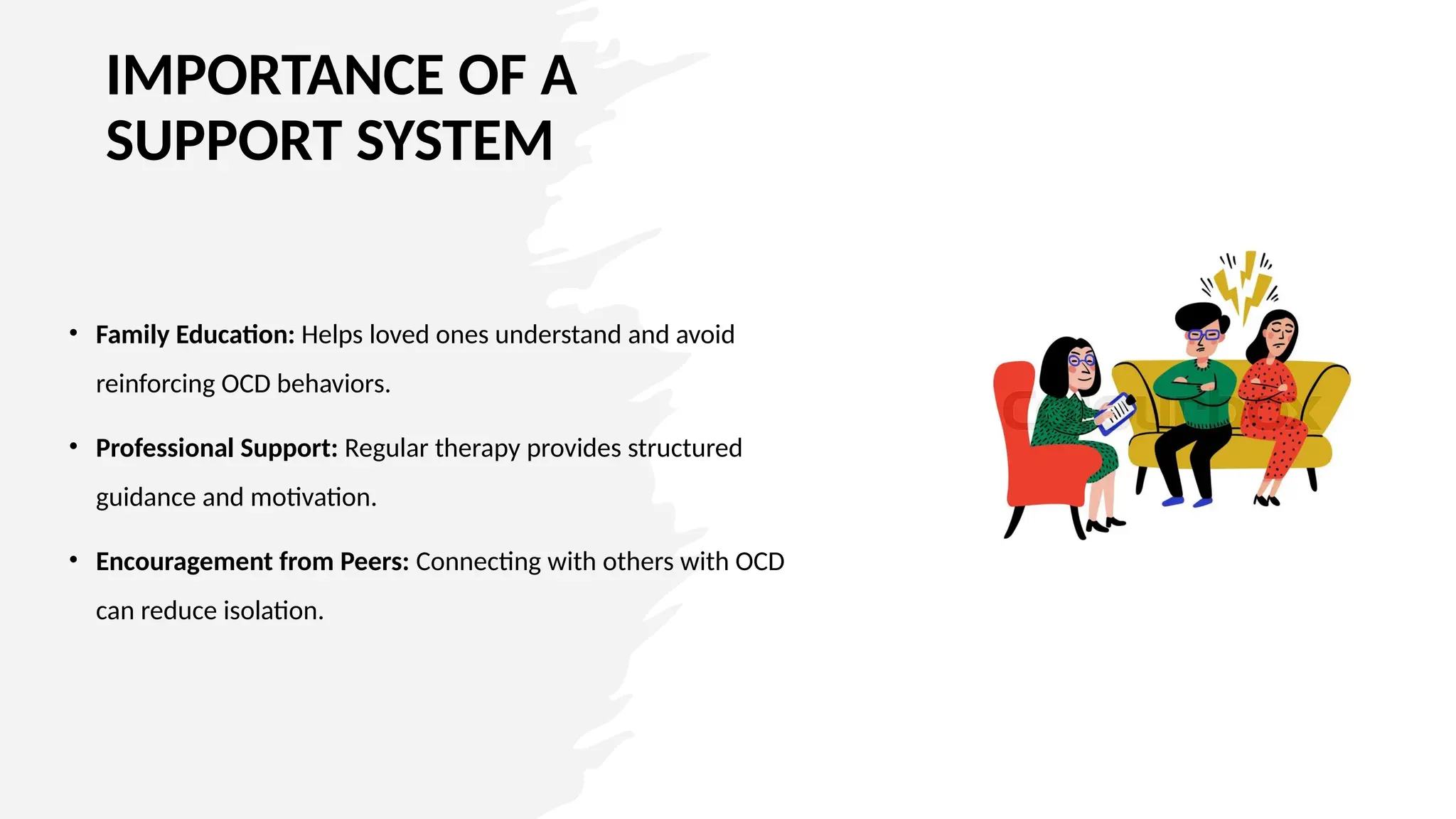
• Family Education: Helps loved ones understand and avoid
reinforcing OCD behaviors.
• Professional Support: Regular therapy provides structured
guidance and motivation.
• Encouragement from Peers: Connecting with others with OCD
can reduce isolation.
GROUP THERAPY
AND PEER SUPPORT
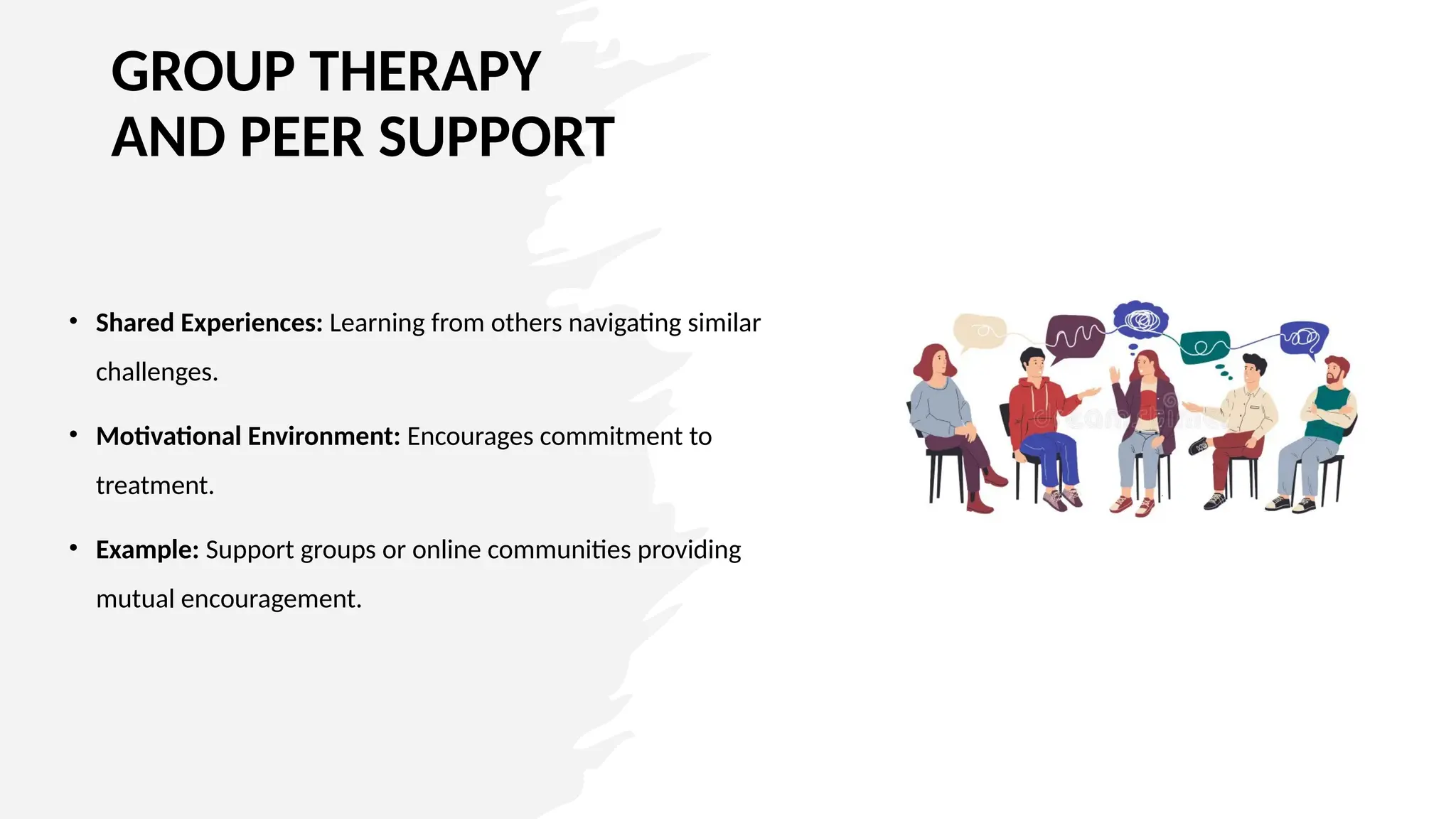
• Shared Experiences: Learning from others navigating similar
challenges.
• Motivational Environment: Encourages commitment to
treatment.
• Example: Support groups or online communities providing
mutual encouragement.
INTEGRATING STRATEGIES
FOR LONG-TERM SUCCESS
• Combining Interventions: Using multiple strategies enhances
effectiveness.
• Daily Practice Matters: Regular application strengthens
resilience.
• Example: Combining CBT, mindfulness, and lifestyle
modifications for a holistic approach.
CONCLUSION
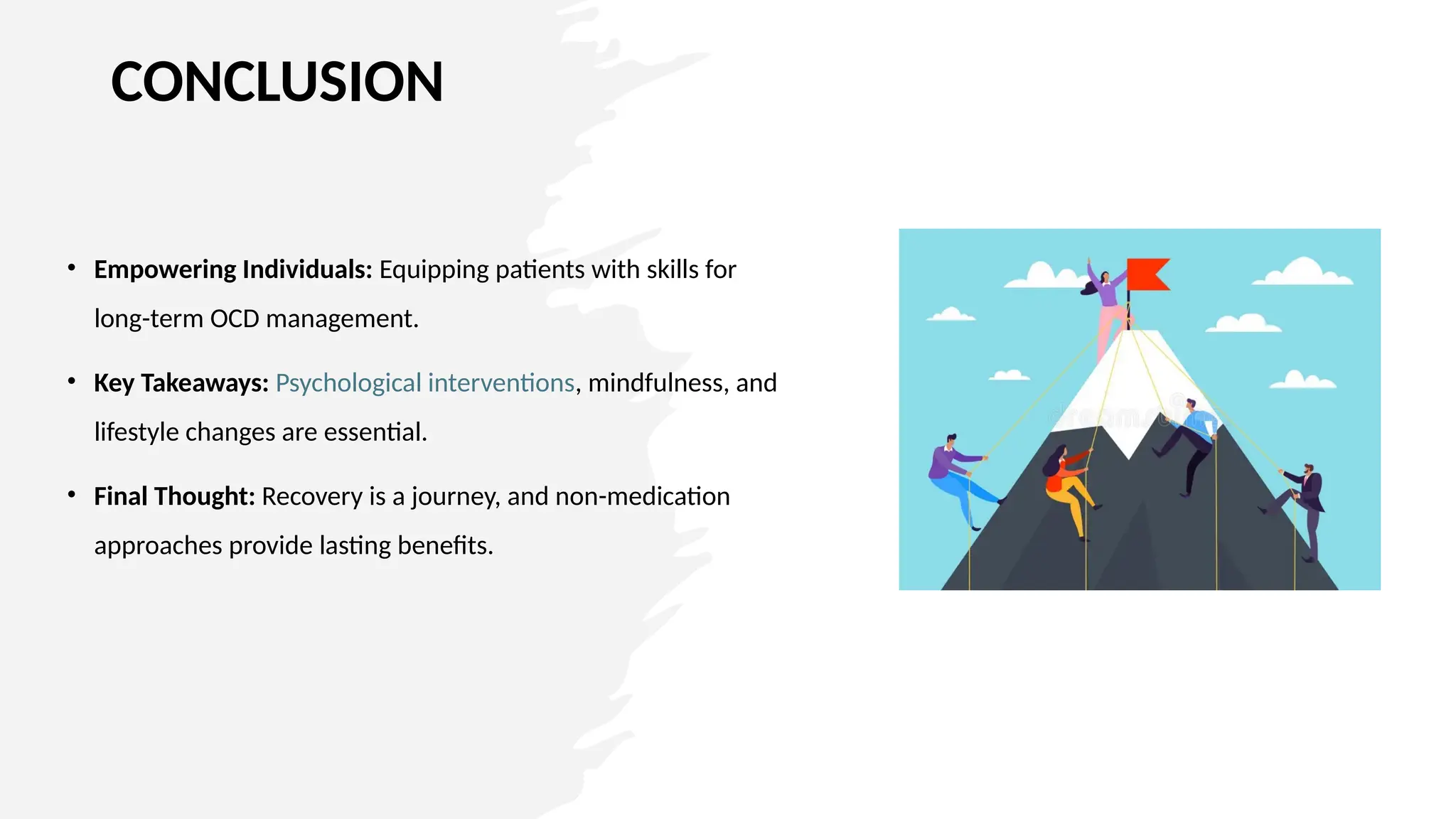
• Empowering Individuals: Equipping patients with skills for
long-term OCD management.
• Key Takeaways: Psychological interventions, mindfulness, and
lifestyle changes are essential.
• Final Thought: Recovery is a journey, and non-medication
approaches provide lasting benefits.
If you or your loved one is struggling with
OCD and seeking recover, please reach
out to us by calling 9368503416 or visit
our website at
www.emotionoflifeindia.com

SOLUTIONS FOR OBSESSIVE COMPULSIVE DISORDER

  • 1.
  • 2.
    INTRODUCTION • Obsessive-Compulsive Disorder(OCD) is a complex mental health condition that involves intrusive thoughts (obsessions) and repetitive behaviors (compulsions). • While medications are available, non-medication approaches provide effective ways to manage symptoms and improve quality of life. • This presentation explores psychological interventions, behavioral techniques, mindfulness, lifestyle changes, and the importance of strong support systems.
  • 3.
    UNDERSTANDING OCD –THE COGNITIVE-BEHAVIORAL MODEL • OCD is driven by intrusive thoughts that individuals misinterpret as dangerous. • This leads to distress and compulsive actions to neutralize perceived threats. • This cycle reinforces OCD symptoms, making targeted interventions crucial.
  • 4.
    COGNITIVE-BEHAVIORAL THERAPY (CBT) FOROCD • Intrusive Thoughts: Normal part of human cognition but misinterpreted as significant in OCD. • Compulsion Cycle: Temporary relief from distress reinforces compulsive behaviors. • Breaking the Cycle: Targeted interventions help modify thought patterns and behaviors.
  • 5.
    COGNITIVE-BEHAVIORAL THERAPY (CBT) • ProvenEffectiveness: Considered the gold-standard psychological treatment for OCD. • Targeting Irrational Beliefs: Helps patients recognize, challenge, and change distorted thought patterns. • Lasting Benefits: Equips individuals with skills to manage symptoms independently.
  • 6.
    COGNITIVE RESTRUCTURING • IdentifyingCognitive Distortions: Recognizing irrational fears and exaggerated thoughts. • Reframing Thoughts: Developing more balanced and rational perspectives. • Example: A person with contamination fears learns that touching a doorknob does not necessarily lead to severe illness.
  • 7.
    BEHAVIORAL EXPERIMENTS INCBT • Testing Fears in Real Life: Engaging in controlled situations to challenge OCD beliefs. • Observing Outcomes: Learning that feared consequences are unlikely or manageable. • Example: A person with checking compulsions leaves home without repeatedly verifying that appliances are off.
  • 8.
    EXPOSURE AND RESPONSE PREVENTION(ERP) • Core Treatment for OCD: Directly targets avoidance behaviors and compulsions. • Facing Anxiety Gradually: Encourages individuals to confront feared situations. • Preventing Compulsive Responses: Helps break the reinforcement cycle of OCD.
  • 9.
    GRADUAL EXPOSURE INERP • Step-by-Step Approach: Begin with less anxiety-provoking situations and progress. • Building Tolerance: Teaches individuals to manage distress without avoidance. • Example: Someone afraid of germs starts by touching a clean object before handling more contaminated items.
  • 10.
    RESPONSE PREVENTION TECHNIQUES • ResistingCompulsions: Patients delay or refrain from rituals to reduce dependence. • Reducing Anxiety Over Time: Exposure allows natural decline in distress. • Example: A person with compulsive handwashing waits longer before washing or reduces frequency.
  • 11.
    ACCEPTANCE AND COMMITMENT THERAPY(ACT) • Accepting Thoughts Instead of Fighting Them: Helps individuals avoid struggling with intrusive thoughts. • Cognitive Defusion: Separates thoughts from reality, reducing their emotional impact. • Example: Labeling an obsessive thought as "just a thought" rather than a true danger.
  • 12.
    Behavioral Strategies and HabitReversal Training (HRT) • Recognizing Triggers: Identifying cues that lead to compulsions. • Replacing Behaviors: Engaging in alternative responses to compulsive urges. • Example: A person who compulsively picks their skin practices squeezing a stress ball instead.
  • 13.
    LIFESTYLE MODIFICATIONS • Stress Management:Using relaxation techniques like yoga and progressive muscle relaxation. • Exercise Benefits: Aerobic activity helps reduce anxiety and improve mood stability. • Healthy Sleep and Diet: Good sleep hygiene and proper nutrition enhance emotional resilience.
  • 14.
    IMPORTANCE OF A SUPPORTSYSTEM • Family Education: Helps loved ones understand and avoid reinforcing OCD behaviors. • Professional Support: Regular therapy provides structured guidance and motivation. • Encouragement from Peers: Connecting with others with OCD can reduce isolation.
  • 15.
    GROUP THERAPY AND PEERSUPPORT • Shared Experiences: Learning from others navigating similar challenges. • Motivational Environment: Encourages commitment to treatment. • Example: Support groups or online communities providing mutual encouragement.
  • 16.
    INTEGRATING STRATEGIES FOR LONG-TERMSUCCESS • Combining Interventions: Using multiple strategies enhances effectiveness. • Daily Practice Matters: Regular application strengthens resilience. • Example: Combining CBT, mindfulness, and lifestyle modifications for a holistic approach.
  • 17.
    CONCLUSION • Empowering Individuals:Equipping patients with skills for long-term OCD management. • Key Takeaways: Psychological interventions, mindfulness, and lifestyle changes are essential. • Final Thought: Recovery is a journey, and non-medication approaches provide lasting benefits.
  • 18.
    If you oryour loved one is struggling with OCD and seeking recover, please reach out to us by calling 9368503416 or visit our website at www.emotionoflifeindia.com