Cognitive Behaviour Therapy for OCD
AIMS AND OBJECTIVES UNDERSTANDING THE PURPOSE,
PROCESS & PROGRESS
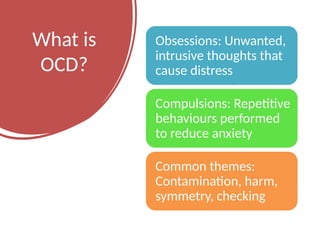
What is
OCD?
Obsessions: Unwanted,
intrusive thoughts that
cause distress
Compulsions: Repetitive
behaviours performed
to reduce anxiety
Common themes:
Contamination, harm,
symmetry, checking
How OCD
Affects
Life
• Disrupts daily activities
• Impacts relationships and
work/study
• Leads to exhaustion and
avoidance behaviours
Introduction
to CBT
• It is Structured, goal-
oriented therapy.
• It Focuses on present
thoughts, feelings, and
behaviours.
• It supports recovery in
different types of mental
health issues.
Why CBT
for OCD?
• Helps break the obsession-compulsion
cycle andTargets unhelpful thought
patterns.
• Builds coping and problem-solving skills
Cognitive Behavioural Therapy helps
individuals interrupt the cycle between
obsessive thoughts and compulsive
behaviours. It focuses on identifying and
challenging unhelpful thinking patterns
that fuel anxiety and distress. Through
this process, individuals develop
practical problem-solving skills that
support long-term recovery and
emotional resilience.
The CBT
Model
In OCD, intrusive thoughts often trigger
intense emotional responses, which then
lead to repetitive behaviours aimed at
reducing distress. These patterns are usually
maintained by, unhelpful beliefs that make
the thoughts seem threatening. Cognitive
Behavioural Therapy works to break this cycle
by helping individuals understand the
connection between their thoughts, feelings,
and actions, and by guiding them to
challenge and change these beliefs in a
healthier way.
What is
ERP?
Exposure and Response Prevention (ERP)
is a key part of CBT for OCD. It involves
gradually facing situations or thoughts
that cause anxiety without performing the
usual compulsive behaviours. Over time,
this repeated exposure helps reduce fear
and teaches the individual that they can
tolerate distress without relying on rituals
for relief.
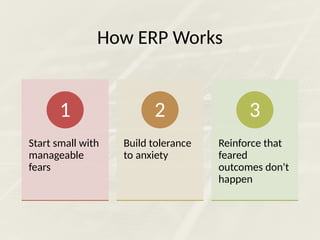
How ERP Works
Start small with
manageable
fears
1
Build tolerance
to anxiety
2
Reinforce that
feared
outcomes don't
happen
3
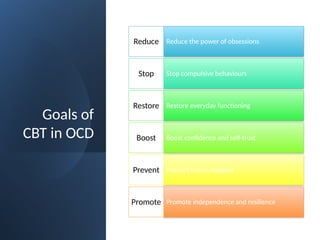
Goals of
CBT in OCD
Reduce the power of obsessions
Reduce
Stop compulsive behaviours
Stop
Restore everyday functioning
Restore
Boost confidence and self-trust
Boost
Prevent future relapses
Prevent
Promote independence and resilience
Promote
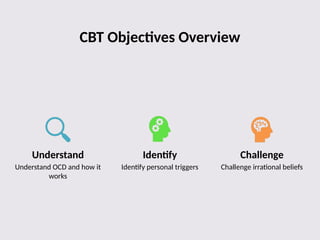
CBT Objectives Overview
Understand
Understand OCD and how it
works
Identify
Identify personal triggers
Challenge
Challenge irrational beliefs
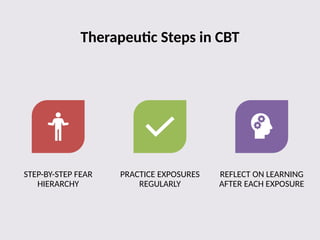
Therapeutic Steps in CBT
STEP-BY-STEP FEAR
HIERARCHY
PRACTICE EXPOSURES
REGULARLY
REFLECT ON LEARNING
AFTER EACH EXPOSURE
Case Study: Rohan’s OCD
Rohan experienced distressing intrusive thoughts related to harming
others, even though he never acted on them. Out of fear, he began
avoiding sharp objects and distanced himself from people. This
pattern of avoidance significantly disrupted his everyday life, making
it difficult for him to function normally in social and academic
settings.
Rohan’s Recovery through CBT
Through therapy, Rohan came to understand that having a
disturbing thought doesn’t mean he will act on it. With the help of
Exposure and Response Prevention (ERP), he gradually confronted
his fears without avoiding them. Over time, this approach helped
him rebuild his confidence and return to a more balanced and
functional daily life.
Support During CBT
Including trusted family members or friends in the recovery journey
can be highly beneficial. When loved ones understand how the
therapy works, it not only helps reduce stigma but also creates a
more supportive environment. Their encouragement can strengthen
the individual’s motivation and commitment to the therapeutic
process.
Tips for CBT Success
• Start early
• Stay committed to therapy
• Trust the process and your therapist
Common Challenges in CBT
During the early stages of therapy, it’s common for anxiety levels to
temporarily increase as individuals begin facing their fears. Under
stress, old habits of avoidance might resurface. However, occasional
setbacks or relapses are a natural part of the recovery process and
can be managed with continued support and consistent practice of
therapeutic strategies.
Benefits of CBT for OCD
Cognitive Behavioural Therapy helps lower levels of fear and
anxiety associated with OCD. As individuals progress in
treatment, they often experience a significant improvement in
their overall well-being and daily functioning. Most importantly,
CBT equips them with the tools and confidence needed to
handle their symptoms independently, fostering long-term
resilience and self-management.
Thank You Emotion of Life invites you to share your thoughts, your
experiences and questions.

CBT FOR OCD TREATMENT WITHOUT MEDICATION

  • 1.
    Cognitive Behaviour Therapyfor OCD AIMS AND OBJECTIVES UNDERSTANDING THE PURPOSE, PROCESS & PROGRESS
  • 2.
    What is OCD? Obsessions: Unwanted, intrusivethoughts that cause distress Compulsions: Repetitive behaviours performed to reduce anxiety Common themes: Contamination, harm, symmetry, checking
  • 3.
    How OCD Affects Life • Disruptsdaily activities • Impacts relationships and work/study • Leads to exhaustion and avoidance behaviours
  • 4.
    Introduction to CBT • Itis Structured, goal- oriented therapy. • It Focuses on present thoughts, feelings, and behaviours. • It supports recovery in different types of mental health issues.
  • 5.
    Why CBT for OCD? •Helps break the obsession-compulsion cycle andTargets unhelpful thought patterns. • Builds coping and problem-solving skills Cognitive Behavioural Therapy helps individuals interrupt the cycle between obsessive thoughts and compulsive behaviours. It focuses on identifying and challenging unhelpful thinking patterns that fuel anxiety and distress. Through this process, individuals develop practical problem-solving skills that support long-term recovery and emotional resilience.
  • 6.
    The CBT Model In OCD,intrusive thoughts often trigger intense emotional responses, which then lead to repetitive behaviours aimed at reducing distress. These patterns are usually maintained by, unhelpful beliefs that make the thoughts seem threatening. Cognitive Behavioural Therapy works to break this cycle by helping individuals understand the connection between their thoughts, feelings, and actions, and by guiding them to challenge and change these beliefs in a healthier way.
  • 7.
    What is ERP? Exposure andResponse Prevention (ERP) is a key part of CBT for OCD. It involves gradually facing situations or thoughts that cause anxiety without performing the usual compulsive behaviours. Over time, this repeated exposure helps reduce fear and teaches the individual that they can tolerate distress without relying on rituals for relief.
  • 8.
    How ERP Works Startsmall with manageable fears 1 Build tolerance to anxiety 2 Reinforce that feared outcomes don't happen 3
  • 9.
    Goals of CBT inOCD Reduce the power of obsessions Reduce Stop compulsive behaviours Stop Restore everyday functioning Restore Boost confidence and self-trust Boost Prevent future relapses Prevent Promote independence and resilience Promote
  • 10.
    CBT Objectives Overview Understand UnderstandOCD and how it works Identify Identify personal triggers Challenge Challenge irrational beliefs
  • 11.
    Therapeutic Steps inCBT STEP-BY-STEP FEAR HIERARCHY PRACTICE EXPOSURES REGULARLY REFLECT ON LEARNING AFTER EACH EXPOSURE
  • 12.
    Case Study: Rohan’sOCD Rohan experienced distressing intrusive thoughts related to harming others, even though he never acted on them. Out of fear, he began avoiding sharp objects and distanced himself from people. This pattern of avoidance significantly disrupted his everyday life, making it difficult for him to function normally in social and academic settings.
  • 13.
    Rohan’s Recovery throughCBT Through therapy, Rohan came to understand that having a disturbing thought doesn’t mean he will act on it. With the help of Exposure and Response Prevention (ERP), he gradually confronted his fears without avoiding them. Over time, this approach helped him rebuild his confidence and return to a more balanced and functional daily life.
  • 14.
    Support During CBT Includingtrusted family members or friends in the recovery journey can be highly beneficial. When loved ones understand how the therapy works, it not only helps reduce stigma but also creates a more supportive environment. Their encouragement can strengthen the individual’s motivation and commitment to the therapeutic process.
  • 15.
    Tips for CBTSuccess • Start early • Stay committed to therapy • Trust the process and your therapist
  • 16.
    Common Challenges inCBT During the early stages of therapy, it’s common for anxiety levels to temporarily increase as individuals begin facing their fears. Under stress, old habits of avoidance might resurface. However, occasional setbacks or relapses are a natural part of the recovery process and can be managed with continued support and consistent practice of therapeutic strategies.
  • 17.
    Benefits of CBTfor OCD Cognitive Behavioural Therapy helps lower levels of fear and anxiety associated with OCD. As individuals progress in treatment, they often experience a significant improvement in their overall well-being and daily functioning. Most importantly, CBT equips them with the tools and confidence needed to handle their symptoms independently, fostering long-term resilience and self-management.
  • 18.
    Thank You Emotionof Life invites you to share your thoughts, your experiences and questions.