Solar Energy vs. Traditional Energy:
Why Go Solar?
1300 345 365 www.solarjunction.com.au
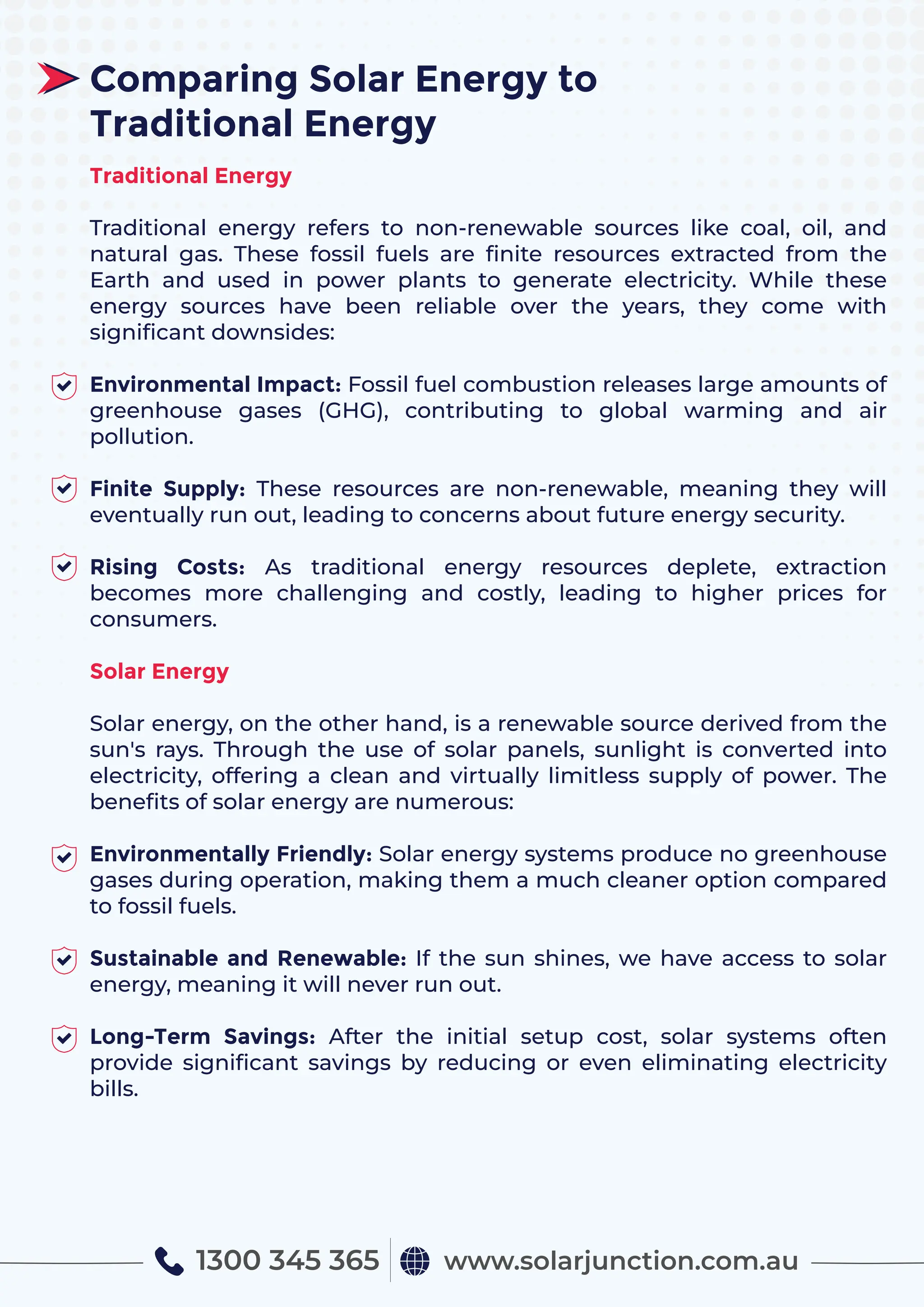
As the world shifts towards more sustainable energy solutions, the
debate between solar energy vs traditional energy becomes increasingly
relevant. Traditional energy sources, such as coal, oil, and natural gas,
have powered our lives for over a century, but they come with
environmental, financial, and political costs.
Solar energy, on the other hand, offers a cleaner, renewable alternative
that continues to grow in popularity due to its numerous benefits.
In this blog, we'll explore the differences between solar energy and
traditional energy and highlight why switching to solar power is a smart,
forward-thinking choice for both individuals and businesses.
1300 345 365 www.solarjunction.com.au
Comparing Solar Energy to
Traditional Energy
Traditional Energy
Traditional energy refers to non-renewable sources like coal, oil, and
natural gas. These fossil fuels are finite resources extracted from the
Earth and used in power plants to generate electricity. While these
energy sources have been reliable over the years, they come with
significant downsides:
Environmental Impact: Fossil fuel combustion releases large amounts of
greenhouse gases (GHG), contributing to global warming and air
pollution.
Finite Supply: These resources are non-renewable, meaning they will
eventually run out, leading to concerns about future energy security.
Rising Costs: As traditional energy resources deplete, extraction
becomes more challenging and costly, leading to higher prices for
consumers.
Solar Energy
Solar energy, on the other hand, is a renewable source derived from the
sun's rays. Through the use of solar panels, sunlight is converted into
electricity, offering a clean and virtually limitless supply of power. The
benefits of solar energy are numerous:
Environmentally Friendly: Solar energy systems produce no greenhouse
gases during operation, making them a much cleaner option compared
to fossil fuels.
Sustainable and Renewable: If the sun shines, we have access to solar
energy, meaning it will never run out.
Long-Term Savings: After the initial setup cost, solar systems often
provide significant savings by reducing or even eliminating electricity
bills.
To Know More About
Solar Energy vs. Traditional Energy
CLICK HERE
follow on
1300 345 365
admin@solarjunction.com.au | www.www.solarjunction.com.au
Environmental Impact
One of the most compelling reasons to choose solar energy over
traditional energy is the positive impact on the environment.
Burning fossil fuels releases harmful pollutants into the atmosphere,
contributing to climate change, smog, and other forms of environmental
degradation.
Greenhouse Gas Emissions: Traditional energy sources, particularly coal
and oil, are major contributors to GHG emissions, which trap heat in the
atmosphere and lead to global warming. In contrast, solar energy
produces zero emissions during operation.
Air and Water Pollution: Fossil fuel extraction and use can result in air and
water pollution. Mining, drilling, and fracking can contaminate water
supplies, and burning fossil fuels releases harmful particles into the air.
Solar energy eliminates these risks, providing a clean, safe energy source.
Land and Habitat Destruction: Fossil fuel extraction often leads to habitat
destruction, deforestation, and soil degradation. Solar farms, by
comparison, can be installed in a way that minimizes land use and
environmental disruption.

Solar Energy vs. Traditional Energy: Why Go Solar?

  • 1.
    Solar Energy vs.Traditional Energy: Why Go Solar? 1300 345 365 www.solarjunction.com.au As the world shifts towards more sustainable energy solutions, the debate between solar energy vs traditional energy becomes increasingly relevant. Traditional energy sources, such as coal, oil, and natural gas, have powered our lives for over a century, but they come with environmental, financial, and political costs. Solar energy, on the other hand, offers a cleaner, renewable alternative that continues to grow in popularity due to its numerous benefits. In this blog, we'll explore the differences between solar energy and traditional energy and highlight why switching to solar power is a smart, forward-thinking choice for both individuals and businesses.
  • 2.
    1300 345 365www.solarjunction.com.au Comparing Solar Energy to Traditional Energy Traditional Energy Traditional energy refers to non-renewable sources like coal, oil, and natural gas. These fossil fuels are finite resources extracted from the Earth and used in power plants to generate electricity. While these energy sources have been reliable over the years, they come with significant downsides: Environmental Impact: Fossil fuel combustion releases large amounts of greenhouse gases (GHG), contributing to global warming and air pollution. Finite Supply: These resources are non-renewable, meaning they will eventually run out, leading to concerns about future energy security. Rising Costs: As traditional energy resources deplete, extraction becomes more challenging and costly, leading to higher prices for consumers. Solar Energy Solar energy, on the other hand, is a renewable source derived from the sun's rays. Through the use of solar panels, sunlight is converted into electricity, offering a clean and virtually limitless supply of power. The benefits of solar energy are numerous: Environmentally Friendly: Solar energy systems produce no greenhouse gases during operation, making them a much cleaner option compared to fossil fuels. Sustainable and Renewable: If the sun shines, we have access to solar energy, meaning it will never run out. Long-Term Savings: After the initial setup cost, solar systems often provide significant savings by reducing or even eliminating electricity bills.
  • 3.
    To Know MoreAbout Solar Energy vs. Traditional Energy CLICK HERE follow on 1300 345 365 admin@solarjunction.com.au | www.www.solarjunction.com.au Environmental Impact One of the most compelling reasons to choose solar energy over traditional energy is the positive impact on the environment. Burning fossil fuels releases harmful pollutants into the atmosphere, contributing to climate change, smog, and other forms of environmental degradation. Greenhouse Gas Emissions: Traditional energy sources, particularly coal and oil, are major contributors to GHG emissions, which trap heat in the atmosphere and lead to global warming. In contrast, solar energy produces zero emissions during operation. Air and Water Pollution: Fossil fuel extraction and use can result in air and water pollution. Mining, drilling, and fracking can contaminate water supplies, and burning fossil fuels releases harmful particles into the air. Solar energy eliminates these risks, providing a clean, safe energy source. Land and Habitat Destruction: Fossil fuel extraction often leads to habitat destruction, deforestation, and soil degradation. Solar farms, by comparison, can be installed in a way that minimizes land use and environmental disruption.