Faculty: PG Dept. of Library & Information Science
T. M. Bhagalpur University, Bhagalpur, Bihar
GYAN-LIS-CLASSES
by
Er. Dev Kumar (Thakur)
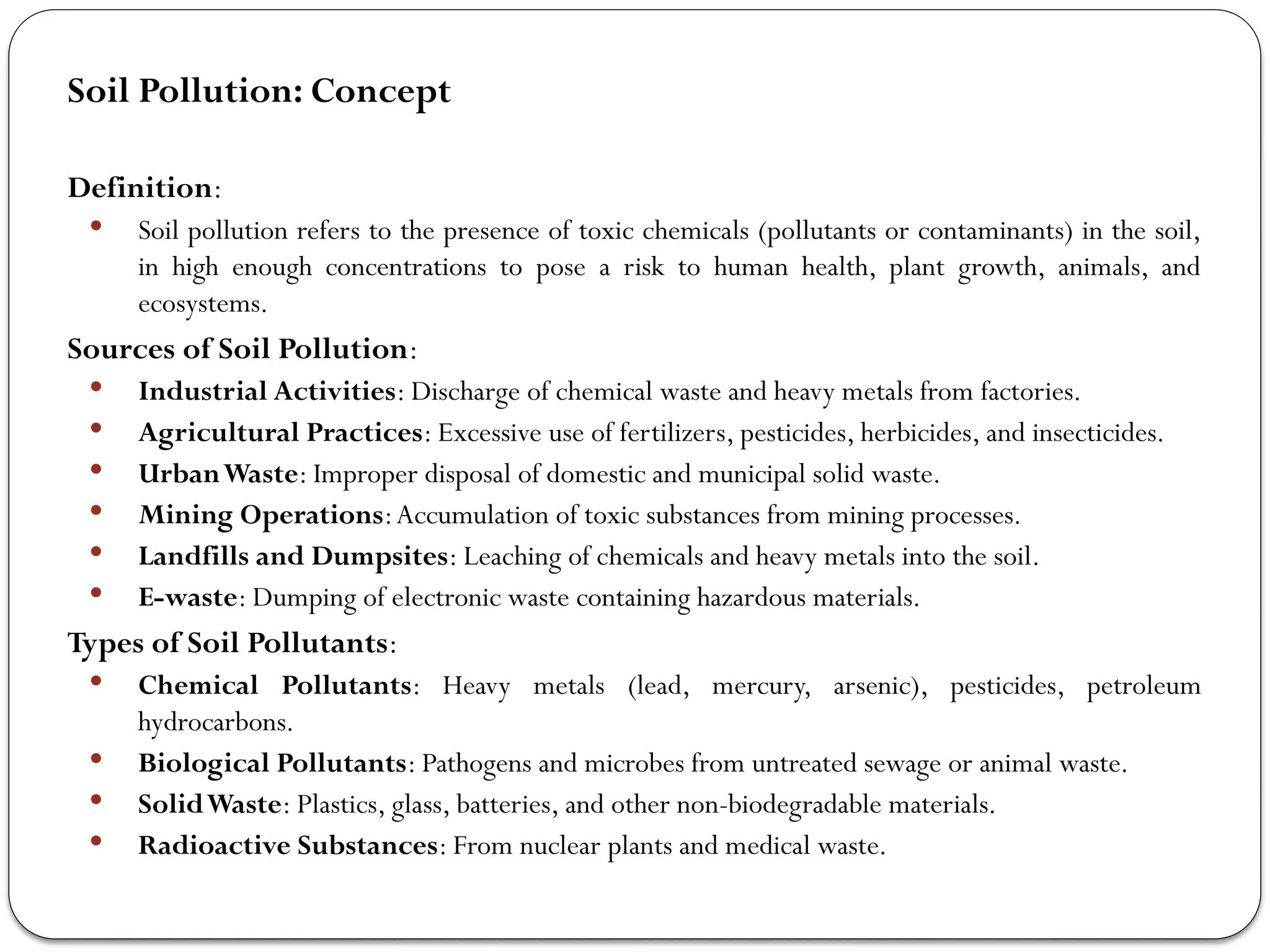
Soil Pollution: Concept
Definition:
 Soil pollution refers to the presence of toxic chemicals (pollutants or contaminants) in the soil,
in high enough concentrations to pose a risk to human health, plant growth, animals, and
ecosystems.
Sources of Soil Pollution:
 Industrial Activities: Discharge of chemical waste and heavy metals from factories.
 Agricultural Practices: Excessive use of fertilizers, pesticides, herbicides, and insecticides.
 UrbanWaste: Improper disposal of domestic and municipal solid waste.
 Mining Operations:Accumulation of toxic substances from mining processes.
 Landfills and Dumpsites: Leaching of chemicals and heavy metals into the soil.
 E-waste: Dumping of electronic waste containing hazardous materials.
Types of Soil Pollutants:
 Chemical Pollutants: Heavy metals (lead, mercury, arsenic), pesticides, petroleum
hydrocarbons.
 Biological Pollutants: Pathogens and microbes from untreated sewage or animal waste.
 SolidWaste: Plastics, glass, batteries, and other non-biodegradable materials.
 Radioactive Substances: From nuclear plants and medical waste.
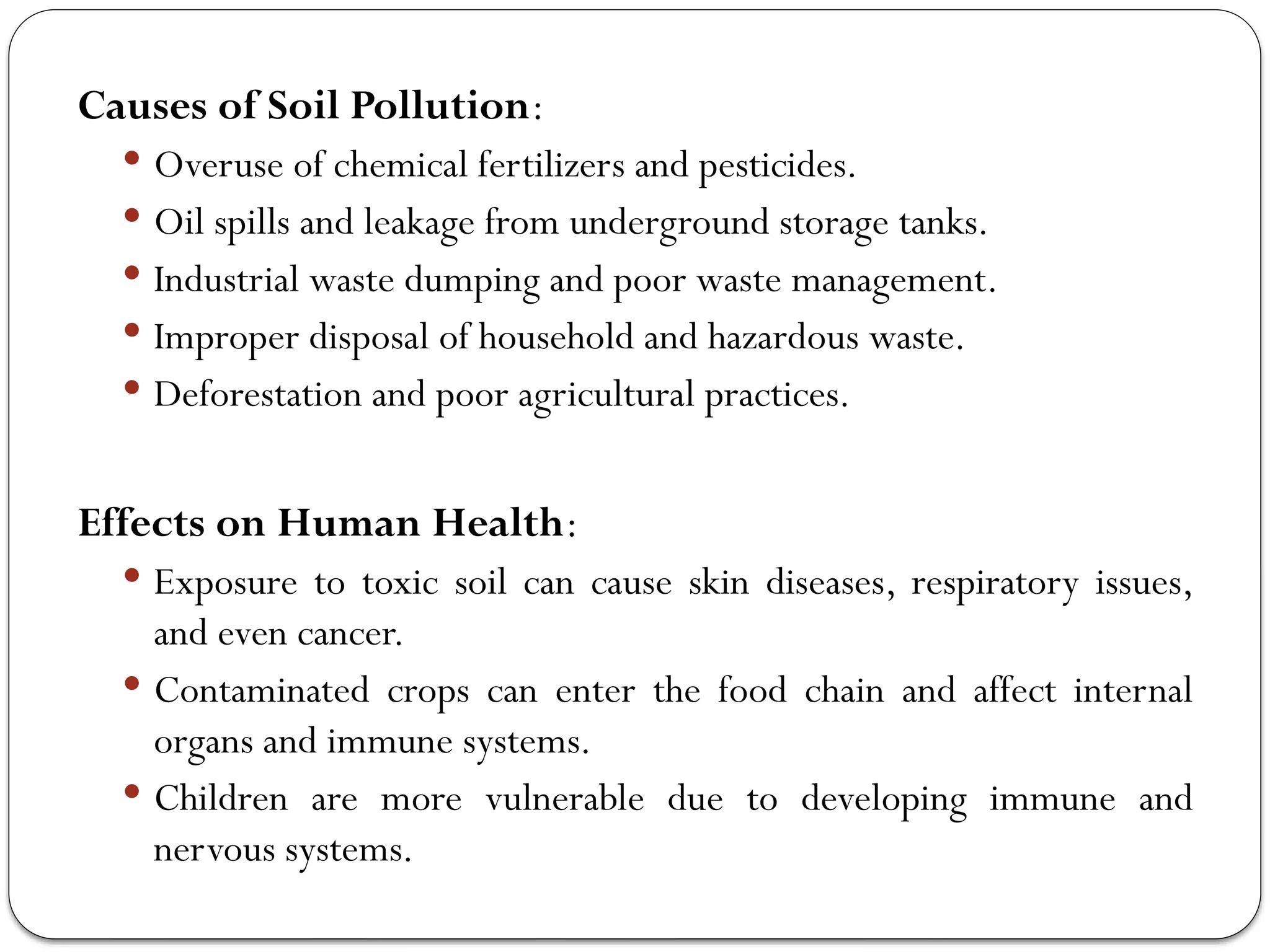
Causes of Soil Pollution:
 Overuse of chemical fertilizers and pesticides.
 Oil spills and leakage from underground storage tanks.
 Industrial waste dumping and poor waste management.
 Improper disposal of household and hazardous waste.
 Deforestation and poor agricultural practices.
Effects on Human Health:
 Exposure to toxic soil can cause skin diseases, respiratory issues,
and even cancer.
 Contaminated crops can enter the food chain and affect internal
organs and immune systems.
 Children are more vulnerable due to developing immune and
nervous systems.
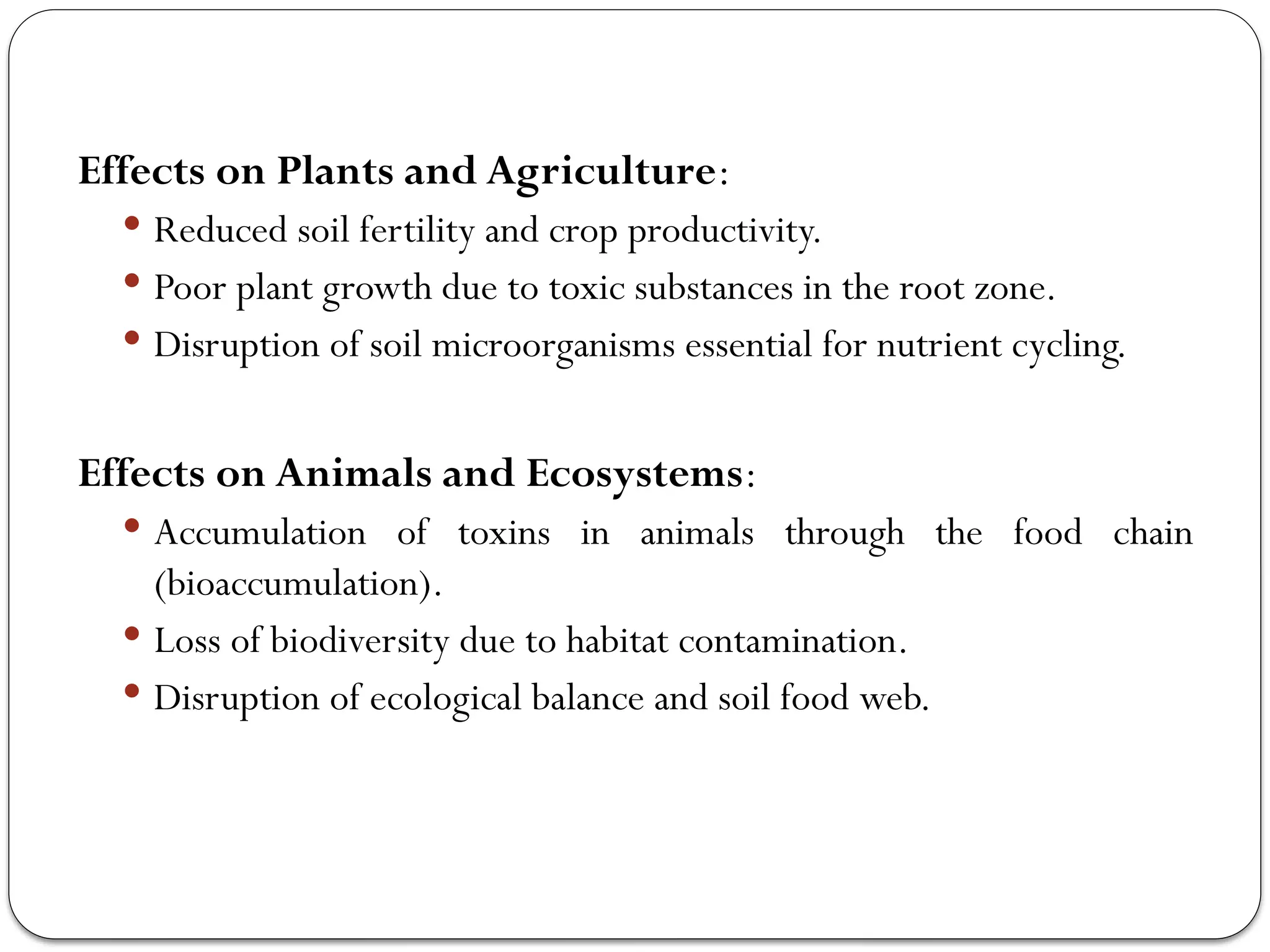
Effects on Plants and Agriculture:
 Reduced soil fertility and crop productivity.
 Poor plant growth due to toxic substances in the root zone.
 Disruption of soil microorganisms essential for nutrient cycling.
Effects on Animals and Ecosystems:
 Accumulation of toxins in animals through the food chain
(bioaccumulation).
 Loss of biodiversity due to habitat contamination.
 Disruption of ecological balance and soil food web.
Indicators of Soil Pollution:
 Decreased fertility and poor crop yield.
 Changes in soil color, texture, and smell.
 Presence of foreign materials like plastics or oily patches.
 Decline in soil microbial activity.
Prevention and Control Measures:
 Organic Farming: Reduces chemical use and improves soil health.
 Proper Waste Disposal: Treating and managing industrial and
household waste responsibly.
 Soil Remediation: Techniques like bioremediation,
phytoremediation, and soil washing.
 Regulations and Monitoring: Enforcing environmental protection
laws.
 Public Awareness: Educating people on safe agricultural and disposal
practices.
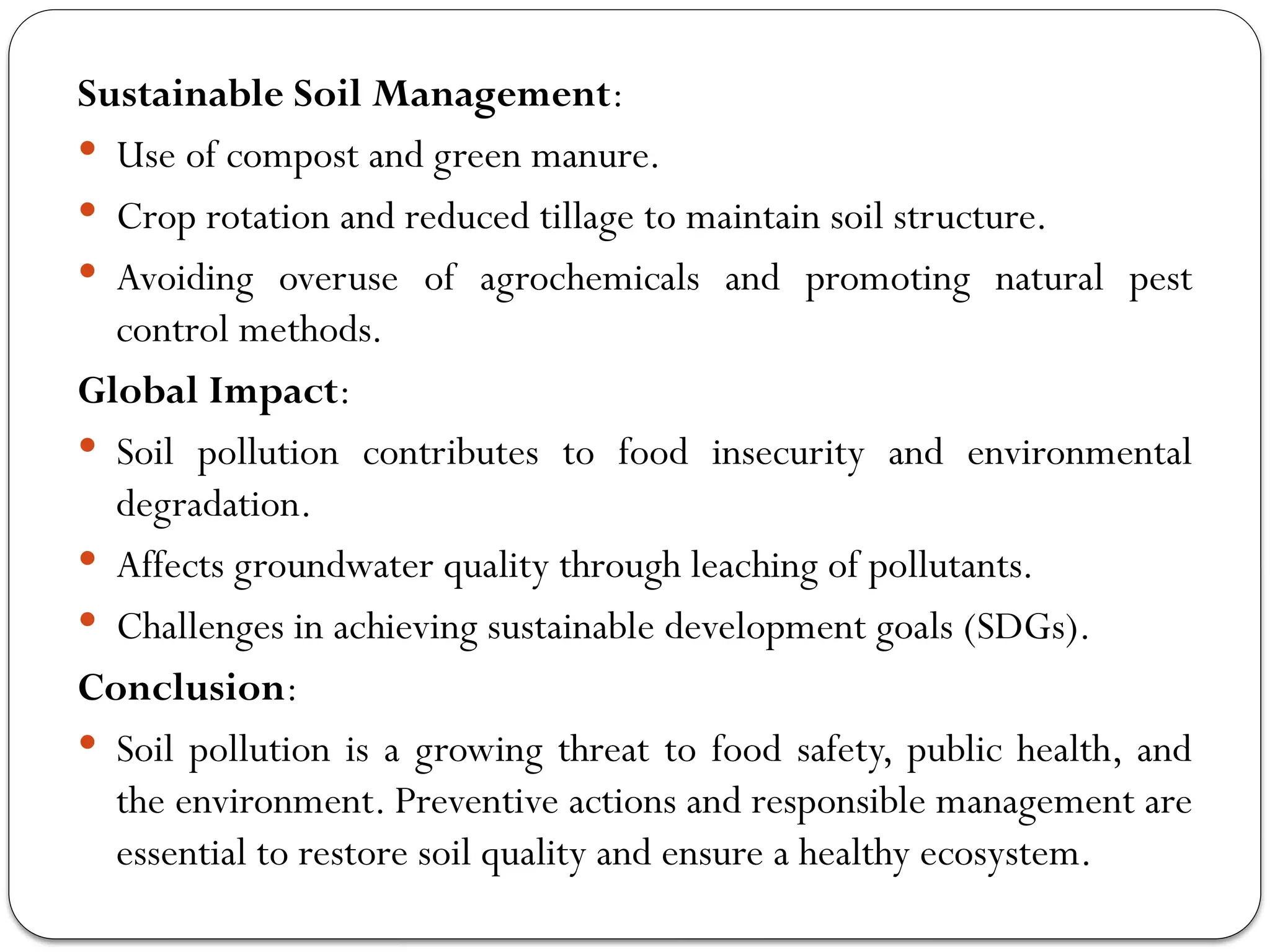
Sustainable Soil Management:
 Use of compost and green manure.
 Crop rotation and reduced tillage to maintain soil structure.
 Avoiding overuse of agrochemicals and promoting natural pest
control methods.
Global Impact:
 Soil pollution contributes to food insecurity and environmental
degradation.
 Affects groundwater quality through leaching of pollutants.
 Challenges in achieving sustainable development goals (SDGs).
Conclusion:
 Soil pollution is a growing threat to food safety, public health, and
the environment. Preventive actions and responsible management are
essential to restore soil quality and ensure a healthy ecosystem.
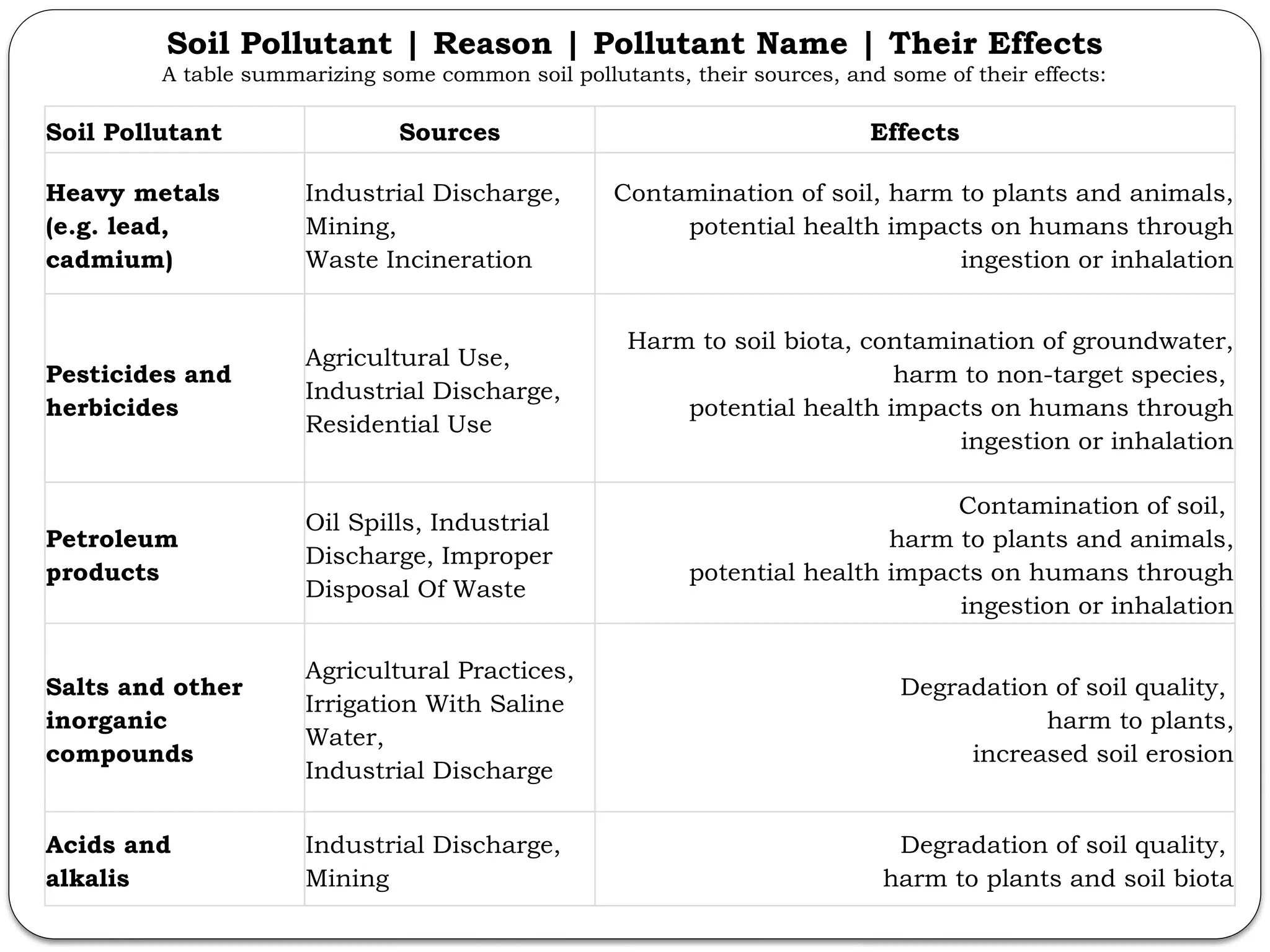
Soil Pollutant Sources Effects
Heavy metals
(e.g. lead,
cadmium)
Industrial Discharge,
Mining,
Waste Incineration
Contamination of soil, harm to plants and animals,
potential health impacts on humans through
ingestion or inhalation
Pesticides and
herbicides
Agricultural Use,
Industrial Discharge,
Residential Use
Harm to soil biota, contamination of groundwater,
harm to non-target species,
potential health impacts on humans through
ingestion or inhalation
Petroleum
products
Oil Spills, Industrial
Discharge, Improper
Disposal Of Waste
Contamination of soil,
harm to plants and animals,
potential health impacts on humans through
ingestion or inhalation
Salts and other
inorganic
compounds
Agricultural Practices,
Irrigation With Saline
Water,
Industrial Discharge
Degradation of soil quality,
harm to plants,
increased soil erosion
Acids and
alkalis
Industrial Discharge,
Mining
Degradation of soil quality,
harm to plants and soil biota
Soil Pollutant | Reason | Pollutant Name | Their Effects
A table summarizing some common soil pollutants, their sources, and some of their effects:
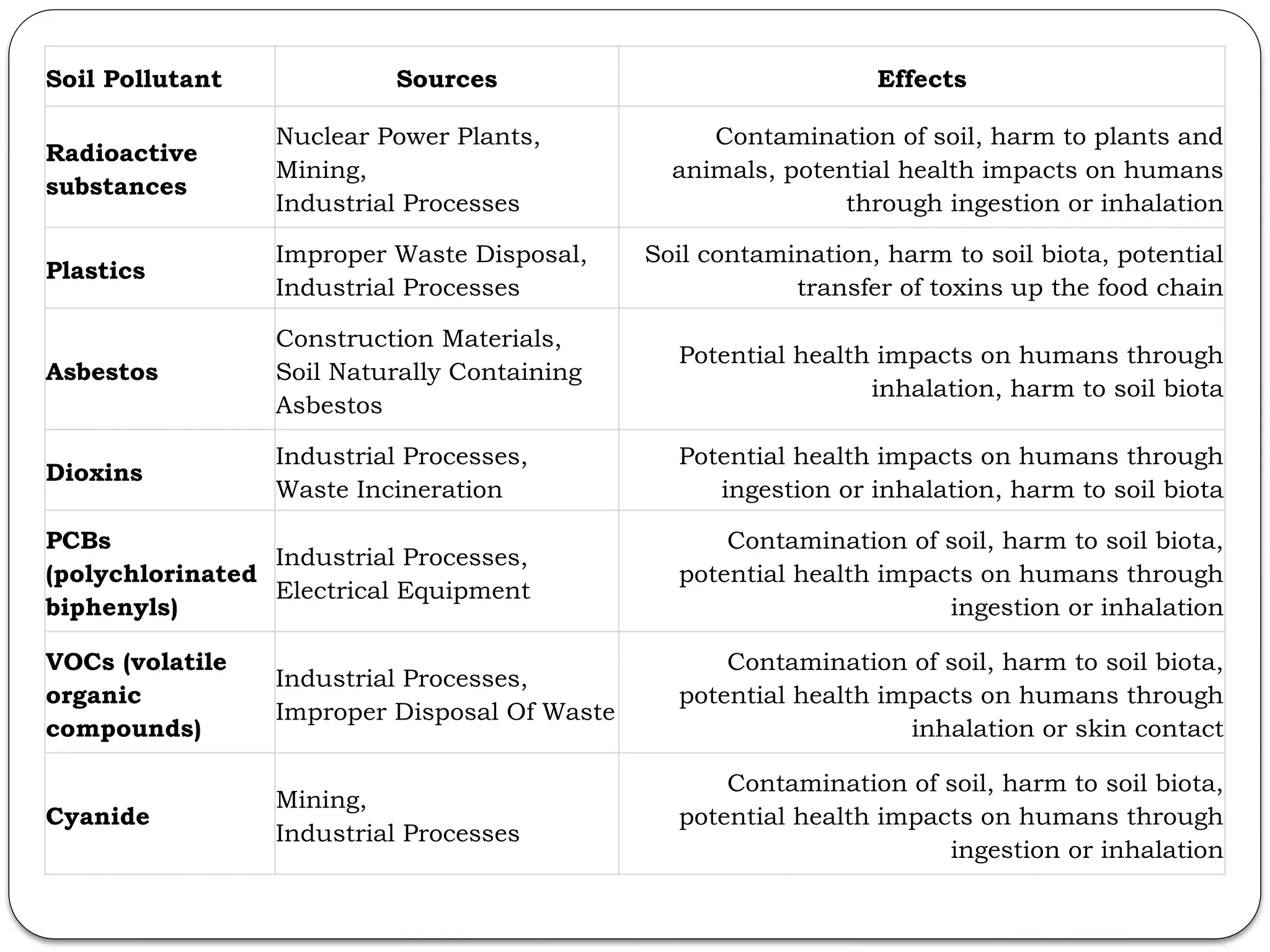
Soil Pollutant Sources Effects
Radioactive
substances
Nuclear Power Plants,
Mining,
Industrial Processes
Contamination of soil, harm to plants and
animals, potential health impacts on humans
through ingestion or inhalation
Plastics
Improper Waste Disposal,
Industrial Processes
Soil contamination, harm to soil biota, potential
transfer of toxins up the food chain
Asbestos
Construction Materials,
Soil Naturally Containing
Asbestos
Potential health impacts on humans through
inhalation, harm to soil biota
Dioxins
Industrial Processes,
Waste Incineration
Potential health impacts on humans through
ingestion or inhalation, harm to soil biota
PCBs
(polychlorinated
biphenyls)
Industrial Processes,
Electrical Equipment
Contamination of soil, harm to soil biota,
potential health impacts on humans through
ingestion or inhalation
VOCs (volatile
organic
compounds)
Industrial Processes,
Improper Disposal Of Waste
Contamination of soil, harm to soil biota,
potential health impacts on humans through
inhalation or skin contact
Cyanide
Mining,
Industrial Processes
Contamination of soil, harm to soil biota,
potential health impacts on humans through
ingestion or inhalation
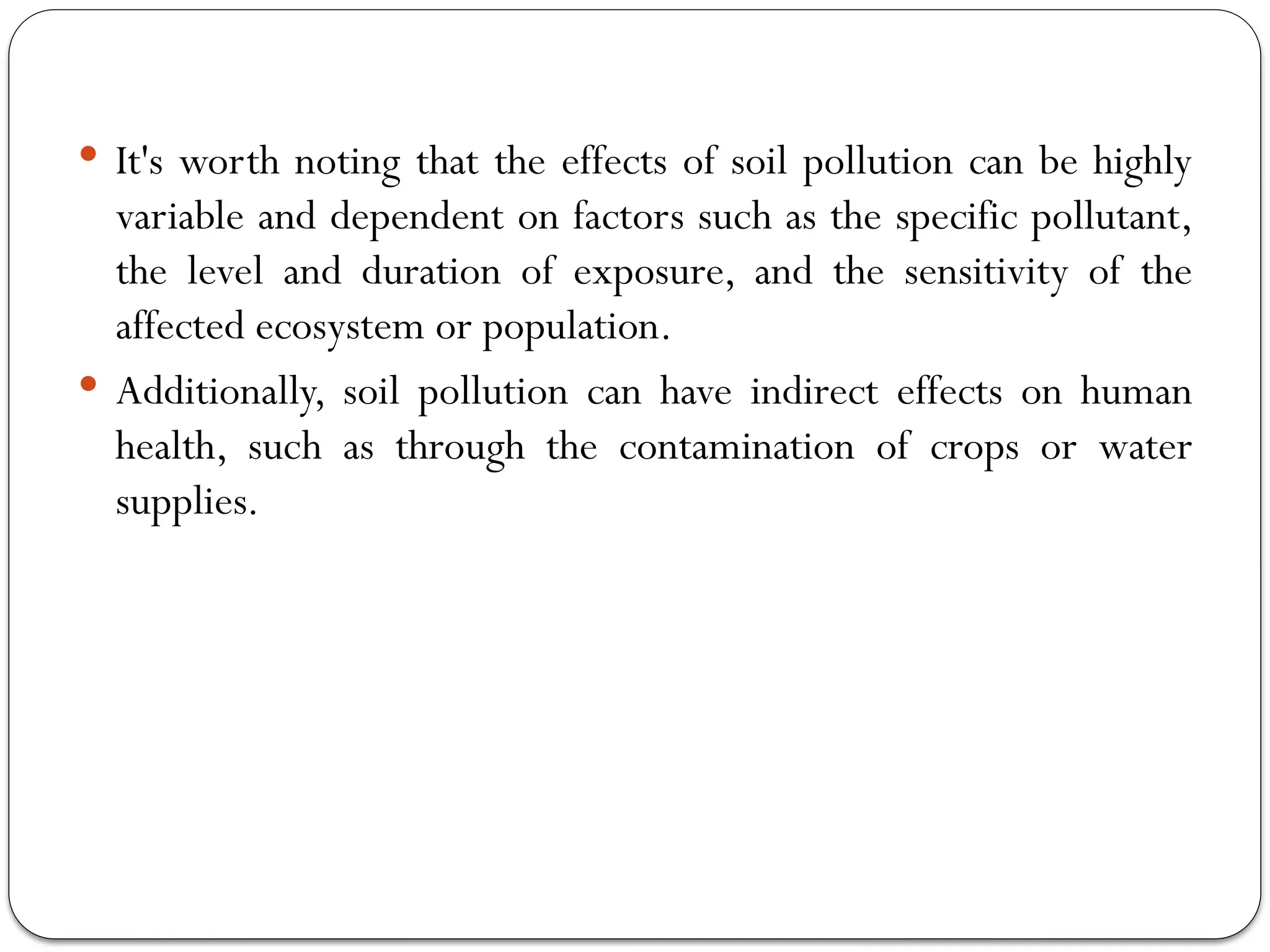
 It's worth noting that the effects of soil pollution can be highly
variable and dependent on factors such as the specific pollutant,
the level and duration of exposure, and the sensitivity of the
affected ecosystem or population.
 Additionally, soil pollution can have indirect effects on human
health, such as through the contamination of crops or water
supplies.
ThankYou
Er. Dev Kumar

35_Soil Pollutant Reason Pollutant Name Their Effects_GYAN-LIS-CLASSES

  • 1.
    Faculty: PG Dept.of Library & Information Science T. M. Bhagalpur University, Bhagalpur, Bihar GYAN-LIS-CLASSES by Er. Dev Kumar (Thakur)
  • 2.
    Soil Pollution: Concept Definition: Soil pollution refers to the presence of toxic chemicals (pollutants or contaminants) in the soil, in high enough concentrations to pose a risk to human health, plant growth, animals, and ecosystems. Sources of Soil Pollution:  Industrial Activities: Discharge of chemical waste and heavy metals from factories.  Agricultural Practices: Excessive use of fertilizers, pesticides, herbicides, and insecticides.  UrbanWaste: Improper disposal of domestic and municipal solid waste.  Mining Operations:Accumulation of toxic substances from mining processes.  Landfills and Dumpsites: Leaching of chemicals and heavy metals into the soil.  E-waste: Dumping of electronic waste containing hazardous materials. Types of Soil Pollutants:  Chemical Pollutants: Heavy metals (lead, mercury, arsenic), pesticides, petroleum hydrocarbons.  Biological Pollutants: Pathogens and microbes from untreated sewage or animal waste.  SolidWaste: Plastics, glass, batteries, and other non-biodegradable materials.  Radioactive Substances: From nuclear plants and medical waste.
  • 3.
    Causes of SoilPollution:  Overuse of chemical fertilizers and pesticides.  Oil spills and leakage from underground storage tanks.  Industrial waste dumping and poor waste management.  Improper disposal of household and hazardous waste.  Deforestation and poor agricultural practices. Effects on Human Health:  Exposure to toxic soil can cause skin diseases, respiratory issues, and even cancer.  Contaminated crops can enter the food chain and affect internal organs and immune systems.  Children are more vulnerable due to developing immune and nervous systems.
  • 4.
    Effects on Plantsand Agriculture:  Reduced soil fertility and crop productivity.  Poor plant growth due to toxic substances in the root zone.  Disruption of soil microorganisms essential for nutrient cycling. Effects on Animals and Ecosystems:  Accumulation of toxins in animals through the food chain (bioaccumulation).  Loss of biodiversity due to habitat contamination.  Disruption of ecological balance and soil food web.
  • 5.
    Indicators of SoilPollution:  Decreased fertility and poor crop yield.  Changes in soil color, texture, and smell.  Presence of foreign materials like plastics or oily patches.  Decline in soil microbial activity. Prevention and Control Measures:  Organic Farming: Reduces chemical use and improves soil health.  Proper Waste Disposal: Treating and managing industrial and household waste responsibly.  Soil Remediation: Techniques like bioremediation, phytoremediation, and soil washing.  Regulations and Monitoring: Enforcing environmental protection laws.  Public Awareness: Educating people on safe agricultural and disposal practices.
  • 6.
    Sustainable Soil Management: Use of compost and green manure.  Crop rotation and reduced tillage to maintain soil structure.  Avoiding overuse of agrochemicals and promoting natural pest control methods. Global Impact:  Soil pollution contributes to food insecurity and environmental degradation.  Affects groundwater quality through leaching of pollutants.  Challenges in achieving sustainable development goals (SDGs). Conclusion:  Soil pollution is a growing threat to food safety, public health, and the environment. Preventive actions and responsible management are essential to restore soil quality and ensure a healthy ecosystem.
  • 7.
    Soil Pollutant SourcesEffects Heavy metals (e.g. lead, cadmium) Industrial Discharge, Mining, Waste Incineration Contamination of soil, harm to plants and animals, potential health impacts on humans through ingestion or inhalation Pesticides and herbicides Agricultural Use, Industrial Discharge, Residential Use Harm to soil biota, contamination of groundwater, harm to non-target species, potential health impacts on humans through ingestion or inhalation Petroleum products Oil Spills, Industrial Discharge, Improper Disposal Of Waste Contamination of soil, harm to plants and animals, potential health impacts on humans through ingestion or inhalation Salts and other inorganic compounds Agricultural Practices, Irrigation With Saline Water, Industrial Discharge Degradation of soil quality, harm to plants, increased soil erosion Acids and alkalis Industrial Discharge, Mining Degradation of soil quality, harm to plants and soil biota Soil Pollutant | Reason | Pollutant Name | Their Effects A table summarizing some common soil pollutants, their sources, and some of their effects:
  • 8.
    Soil Pollutant SourcesEffects Radioactive substances Nuclear Power Plants, Mining, Industrial Processes Contamination of soil, harm to plants and animals, potential health impacts on humans through ingestion or inhalation Plastics Improper Waste Disposal, Industrial Processes Soil contamination, harm to soil biota, potential transfer of toxins up the food chain Asbestos Construction Materials, Soil Naturally Containing Asbestos Potential health impacts on humans through inhalation, harm to soil biota Dioxins Industrial Processes, Waste Incineration Potential health impacts on humans through ingestion or inhalation, harm to soil biota PCBs (polychlorinated biphenyls) Industrial Processes, Electrical Equipment Contamination of soil, harm to soil biota, potential health impacts on humans through ingestion or inhalation VOCs (volatile organic compounds) Industrial Processes, Improper Disposal Of Waste Contamination of soil, harm to soil biota, potential health impacts on humans through inhalation or skin contact Cyanide Mining, Industrial Processes Contamination of soil, harm to soil biota, potential health impacts on humans through ingestion or inhalation
  • 9.
     It's worthnoting that the effects of soil pollution can be highly variable and dependent on factors such as the specific pollutant, the level and duration of exposure, and the sensitivity of the affected ecosystem or population.  Additionally, soil pollution can have indirect effects on human health, such as through the contamination of crops or water supplies.
  • 10.