Storyboarding – Then & NowRobert Grashuis, Chief Visualization Officer
“68% of projects fail, run late, or are OVER budget.”- The Standish Group, 2009 Chaos Summary Report“70% of REWORK is attributed to correcting requirements errors.” - Meta Group“30% of project costs are REWORK .”- Forrester Research
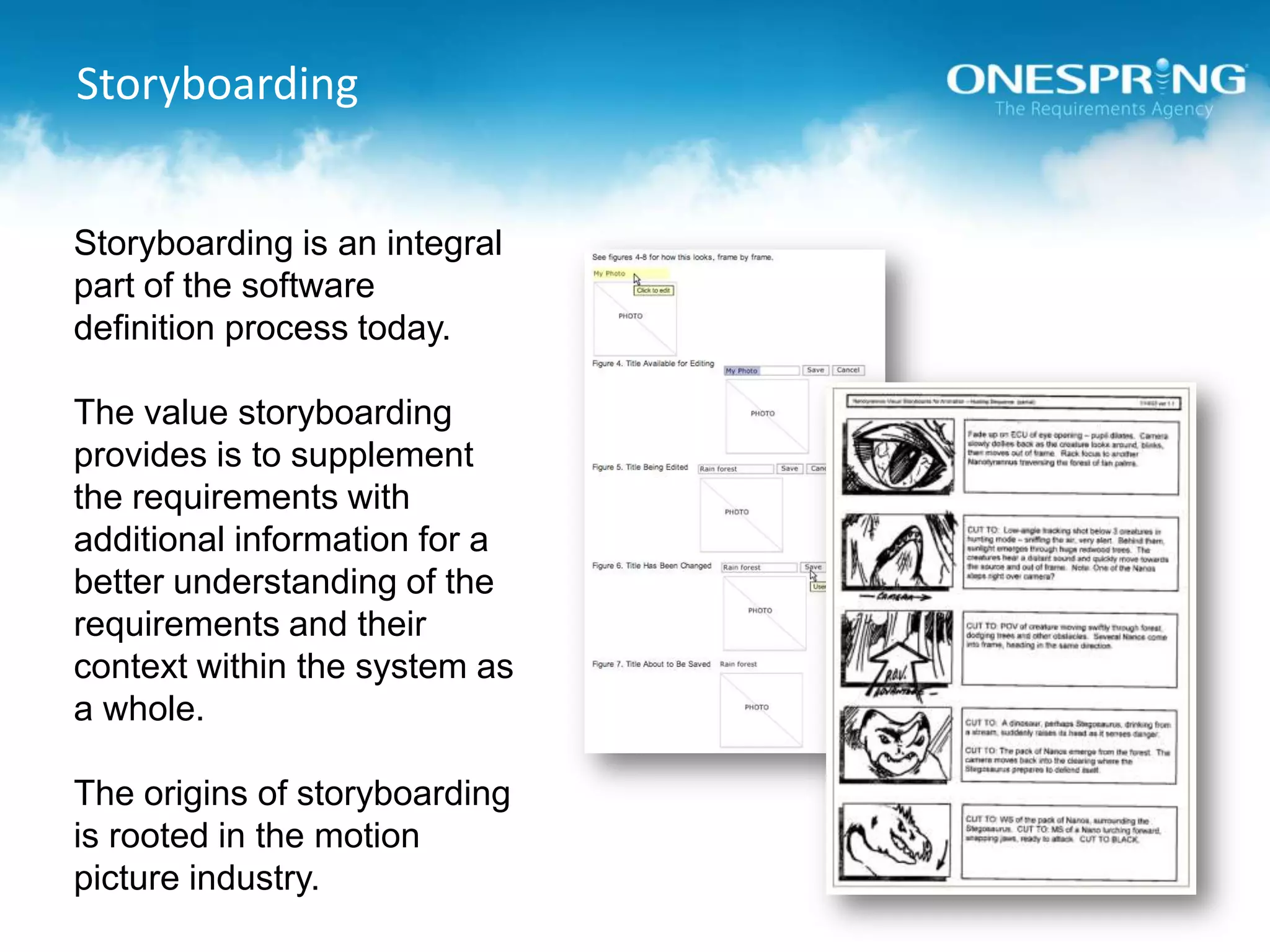
StoryboardingStoryboarding is an integral part of the software definition process today.The value storyboarding provides is to supplement the requirements with additional information for a better understanding of the requirements and their context within the system as a whole.The origins of storyboarding is rooted in the motion picture industry.
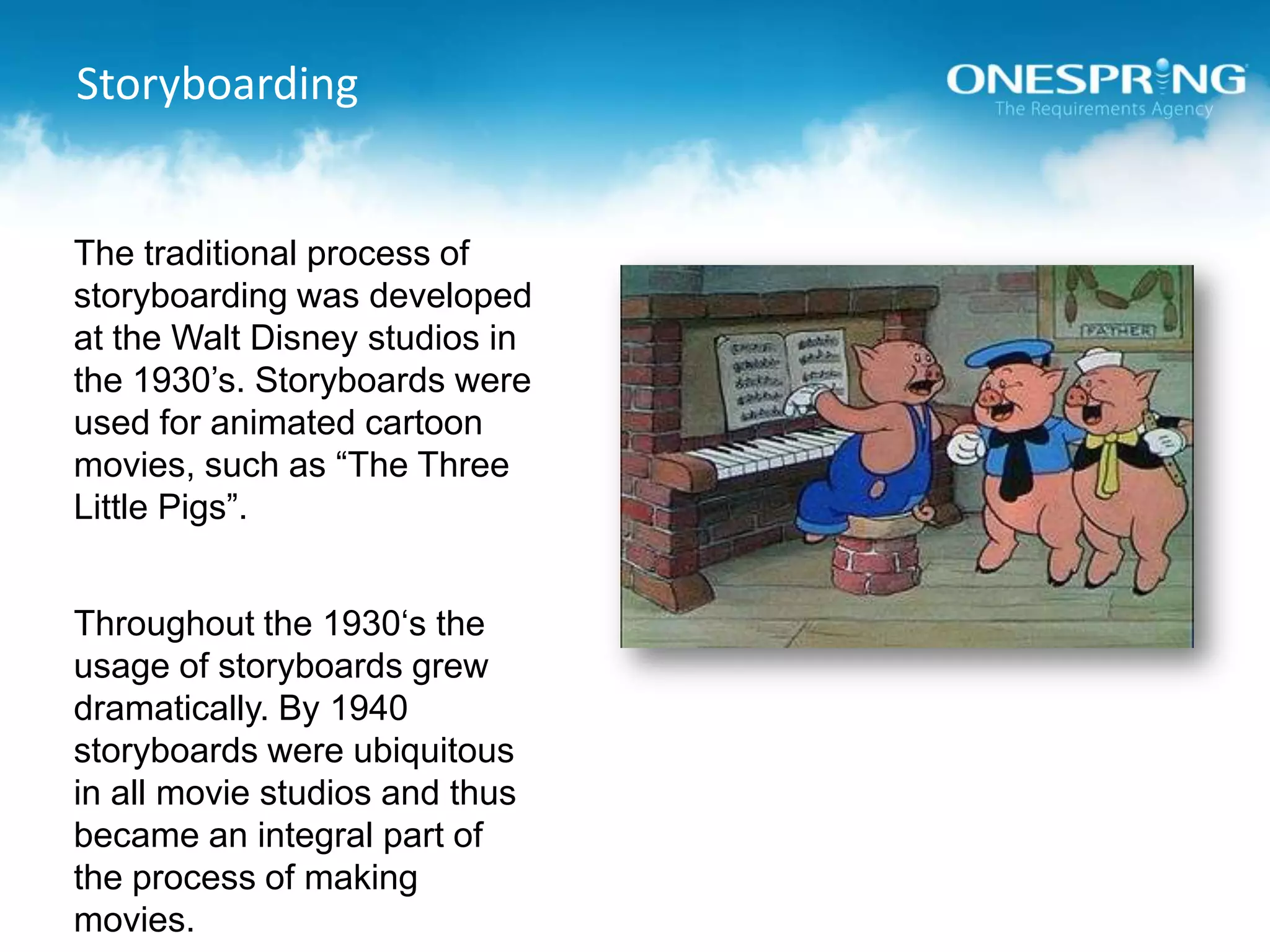
StoryboardingThe traditional process of storyboarding was developed at the Walt Disney studios in the 1930’s. Storyboards were used for animated cartoon movies, such as “The Three Little Pigs”. Throughout the 1930‘s the usage of storyboards grew dramatically. By 1940 storyboards were ubiquitous in all movie studios and thus became an integral part of the process of making movies.
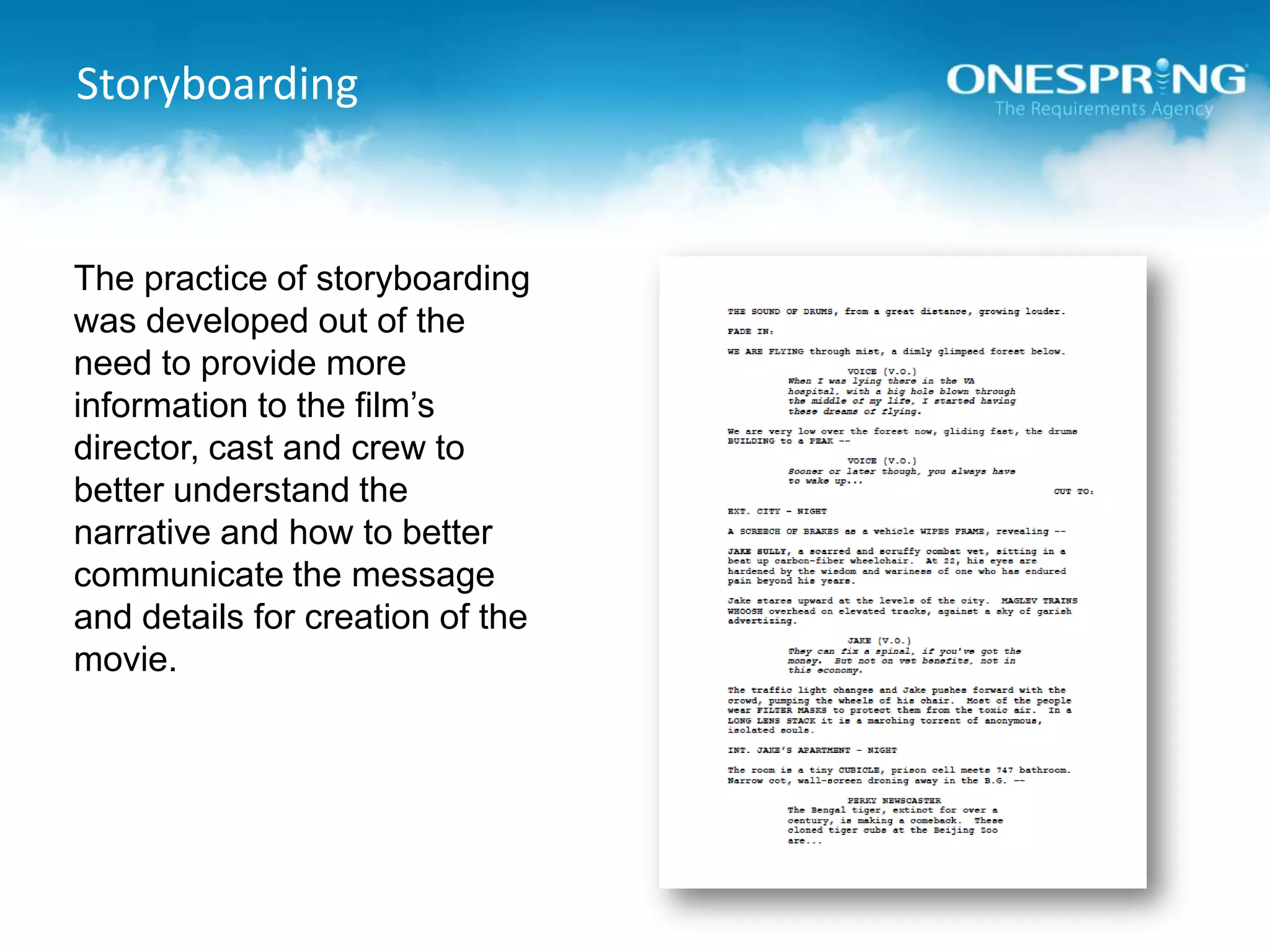
StoryboardingThe practice of storyboarding was developed out of the need to provide more information to the film’s director, cast and crew to better understand the narrative and how to better communicate the message and details for creation of the movie.
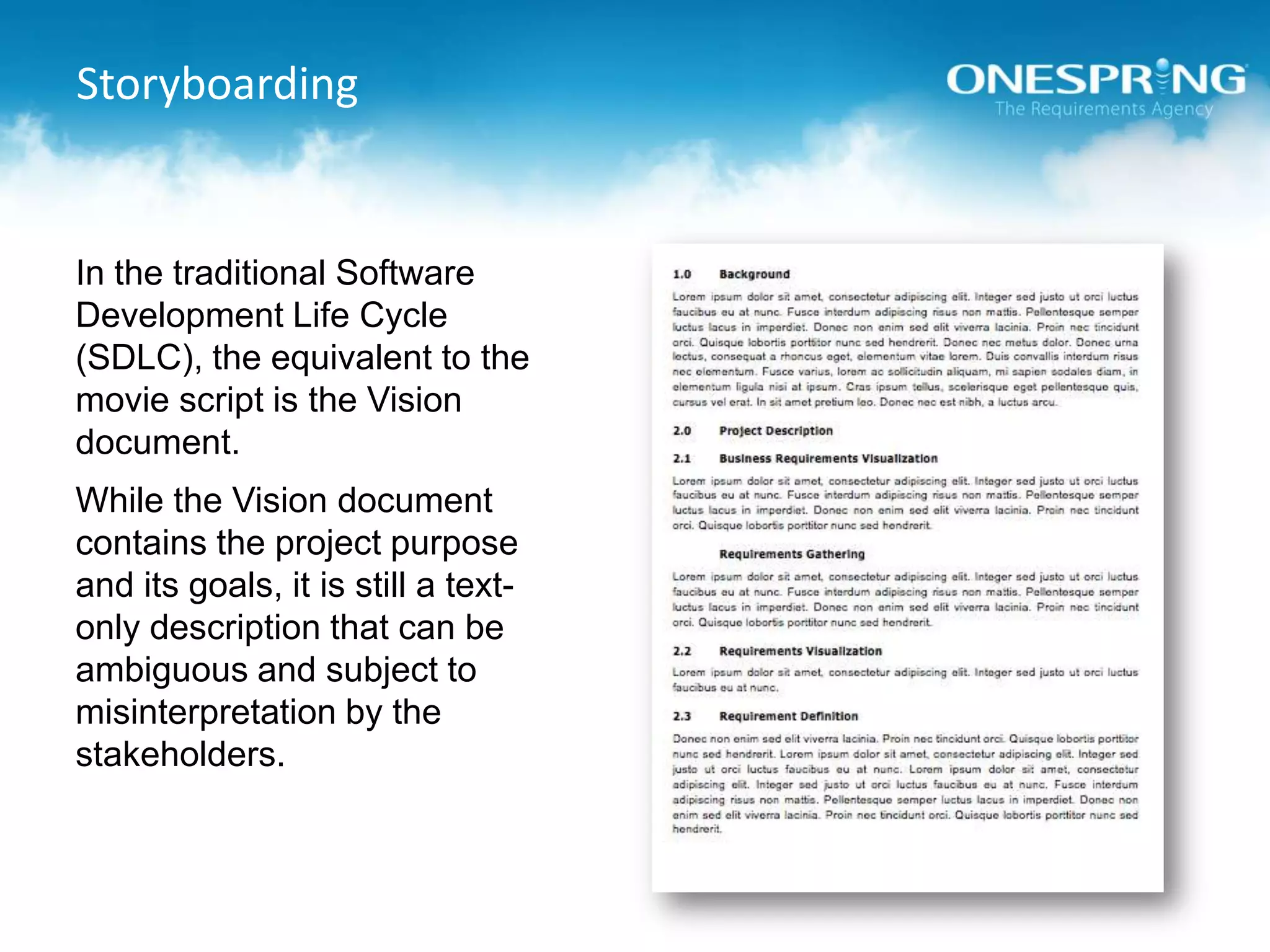
StoryboardingIn the traditional Software Development Life Cycle (SDLC), the equivalent to the movie script is the Vision document.While the Vision document contains the project purpose and its goals, it is still a text-only description that can be ambiguous and subject to misinterpretation by the stakeholders.
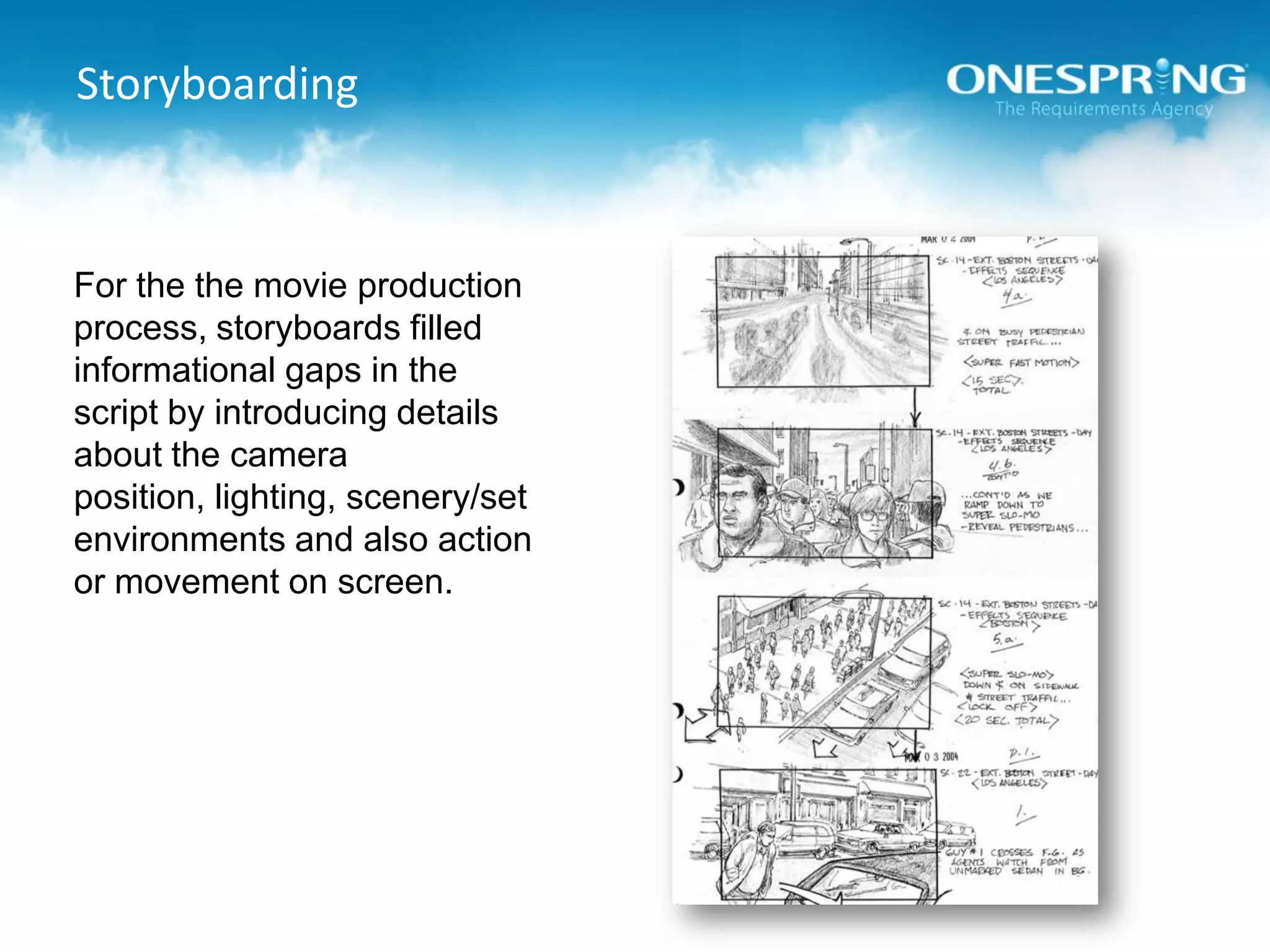
StoryboardingFor the the movie production process, storyboards filled informational gaps in the script by introducing details about the camera position, lighting, scenery/set environments and also action or movement on screen.
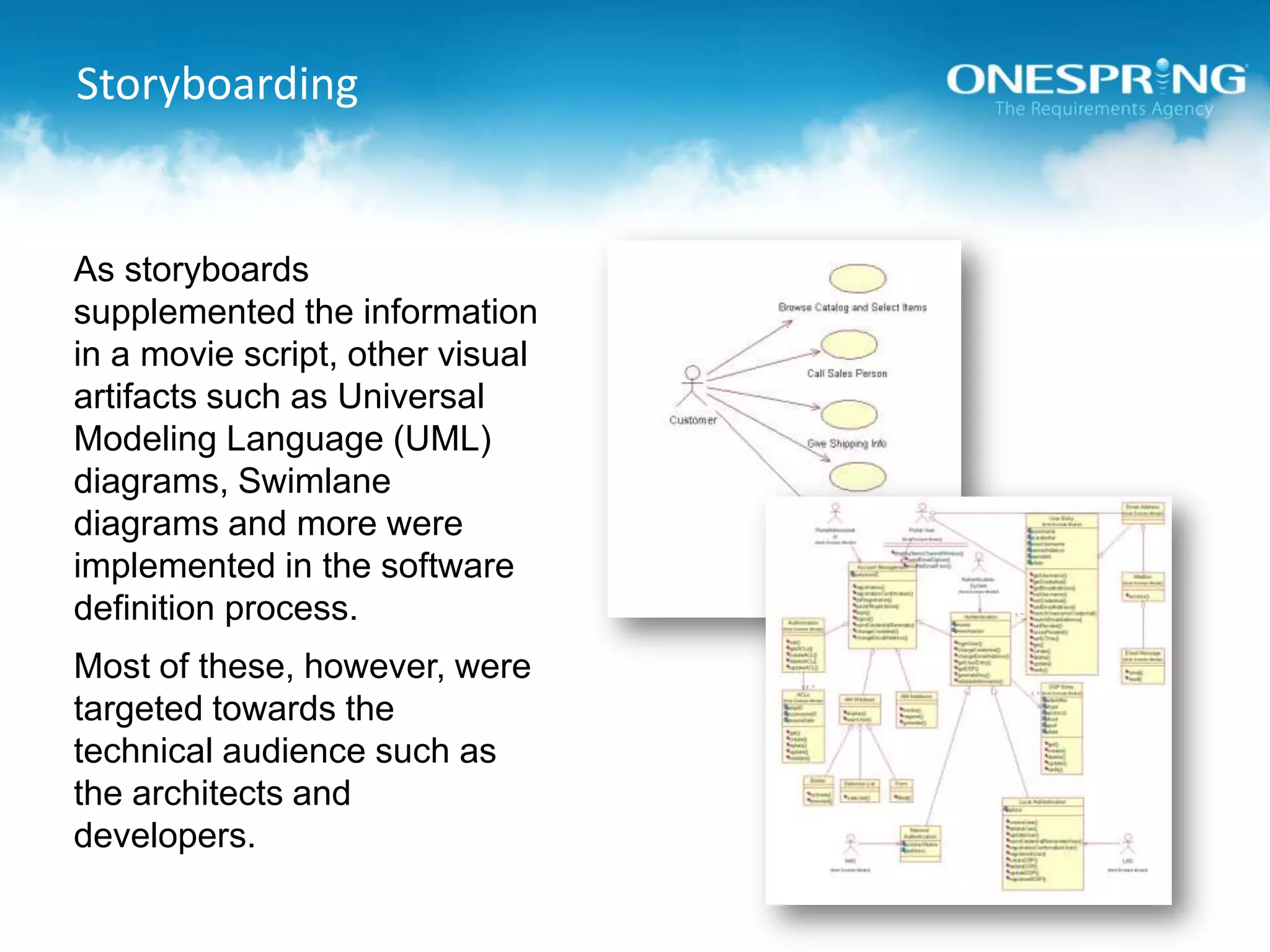
StoryboardingAs storyboards supplemented the information in a movie script, other visual artifacts such as Universal Modeling Language (UML) diagrams, Swimlane diagrams and more were implemented in the software definition process.Most of these, however, were targeted towards the technical audience such as the architects and developers.
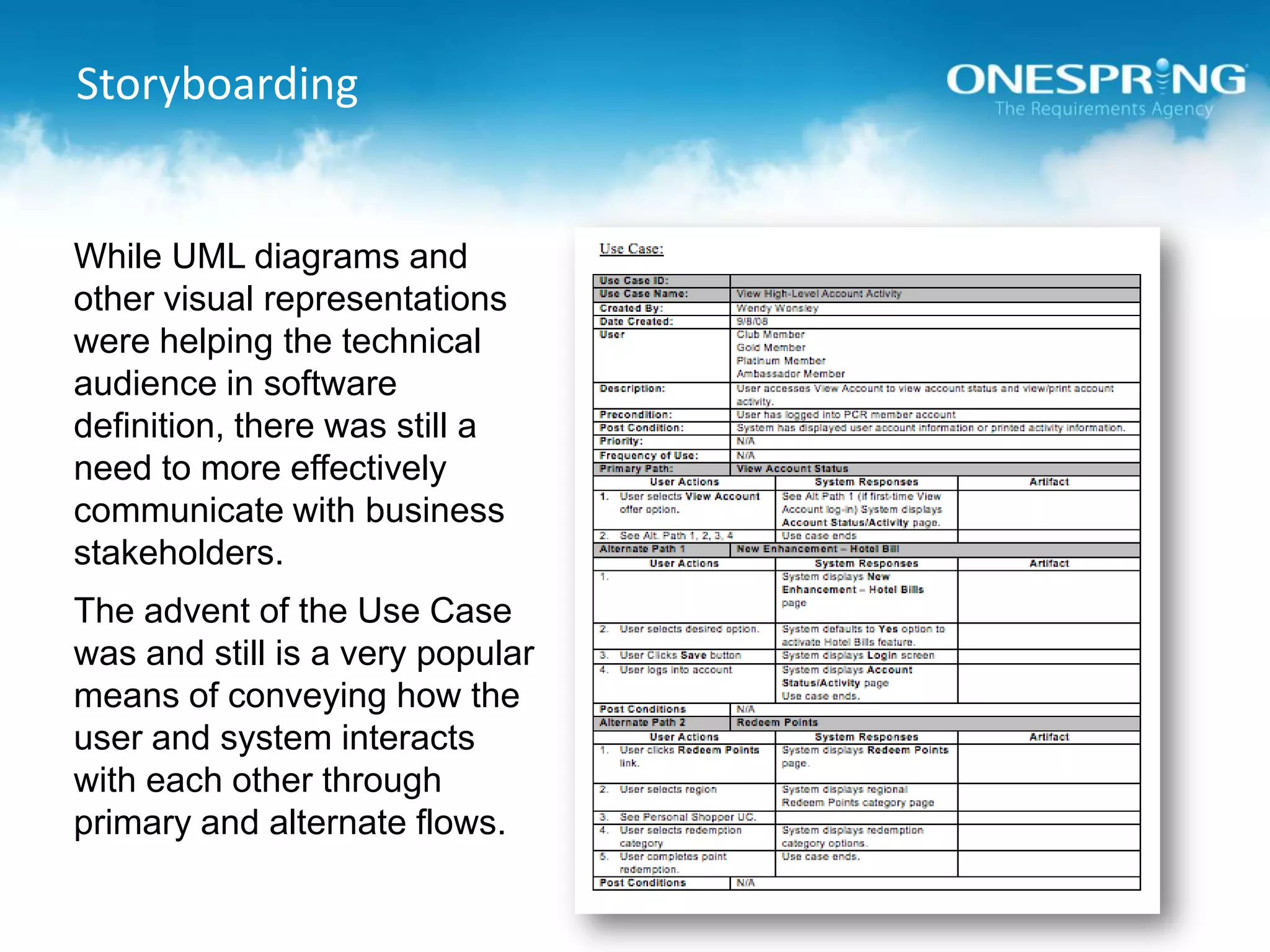
StoryboardingWhile UML diagrams and other visual representations were helping the technical audience in software definition, there was still a need to more effectively communicate with business stakeholders.The advent of the Use Case was and still is a very popular means of conveying how the user and system interacts with each other through primary and alternate flows.
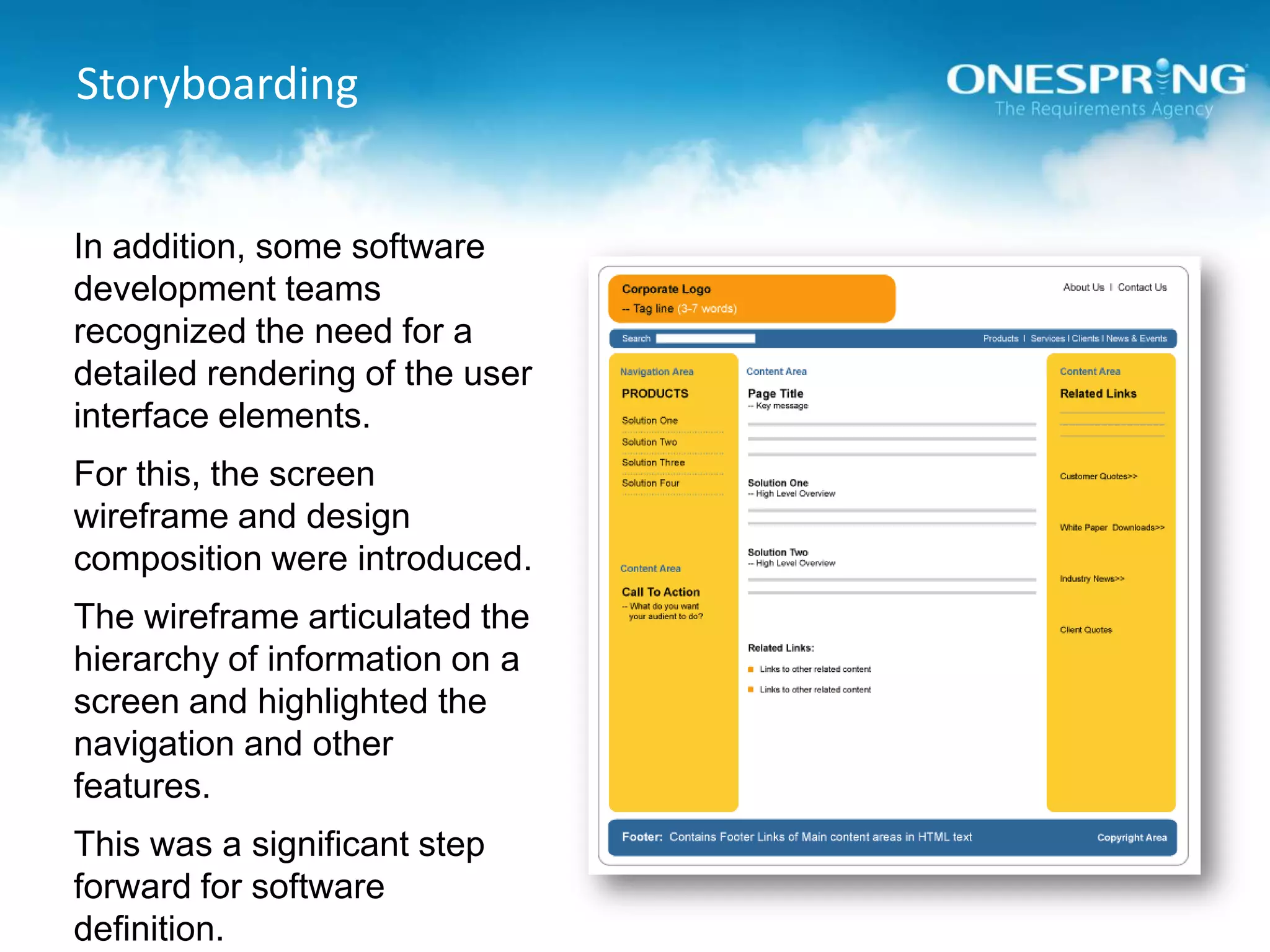
StoryboardingIn addition, some software development teams recognized the need for a detailed rendering of the user interface elements.For this, the screen wireframe and design composition were introduced.The wireframe articulated the hierarchy of information on a screen and highlighted the navigation and other features.This was a significant step forward for software definition.
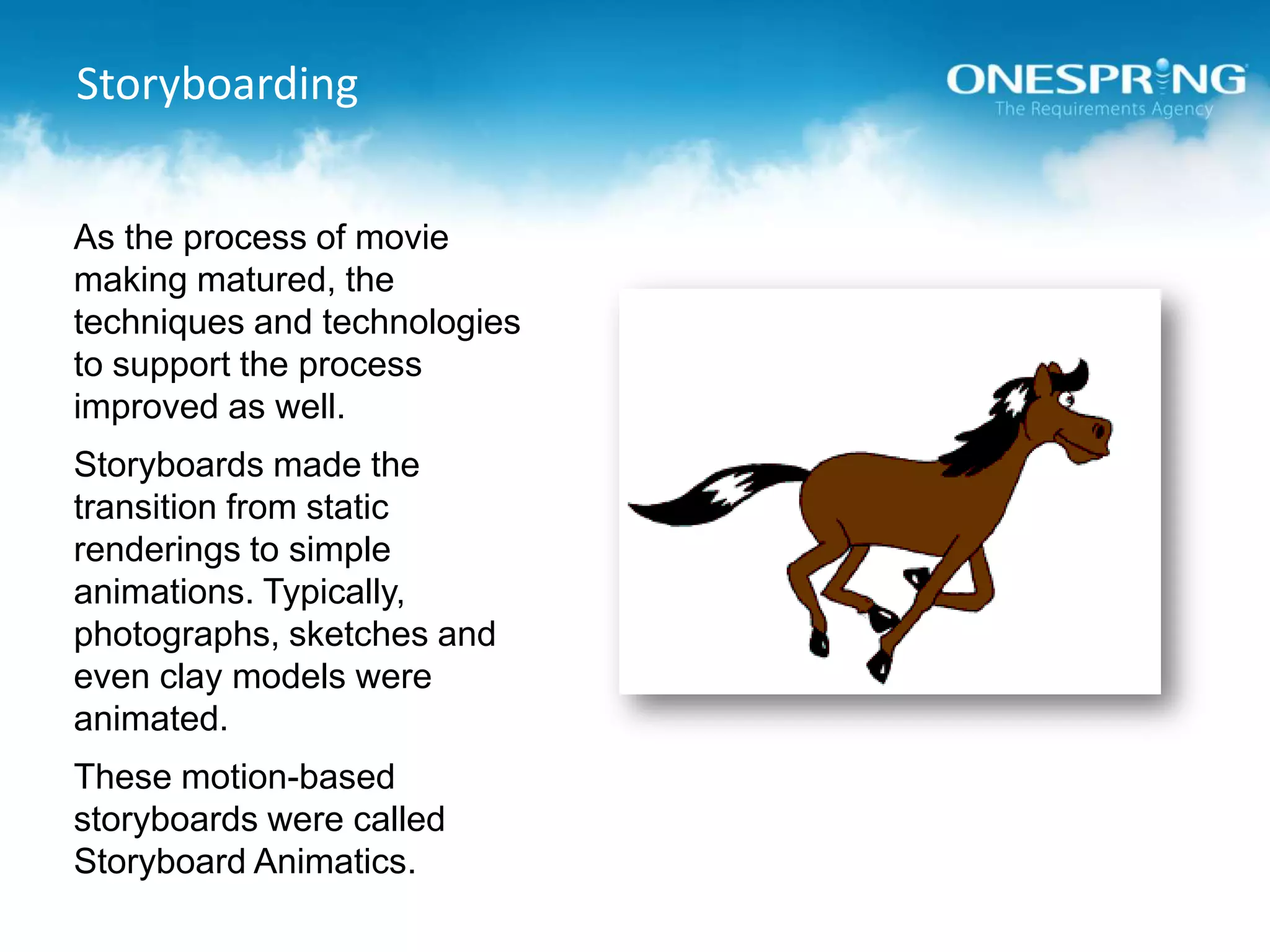
StoryboardingAs the process of movie making matured, the techniques and technologies to support the process improved as well.Storyboards made the transition from static renderings to simple animations. Typically, photographs, sketches and even clay models were animated.These motion-based storyboards were called Storyboard Animatics.
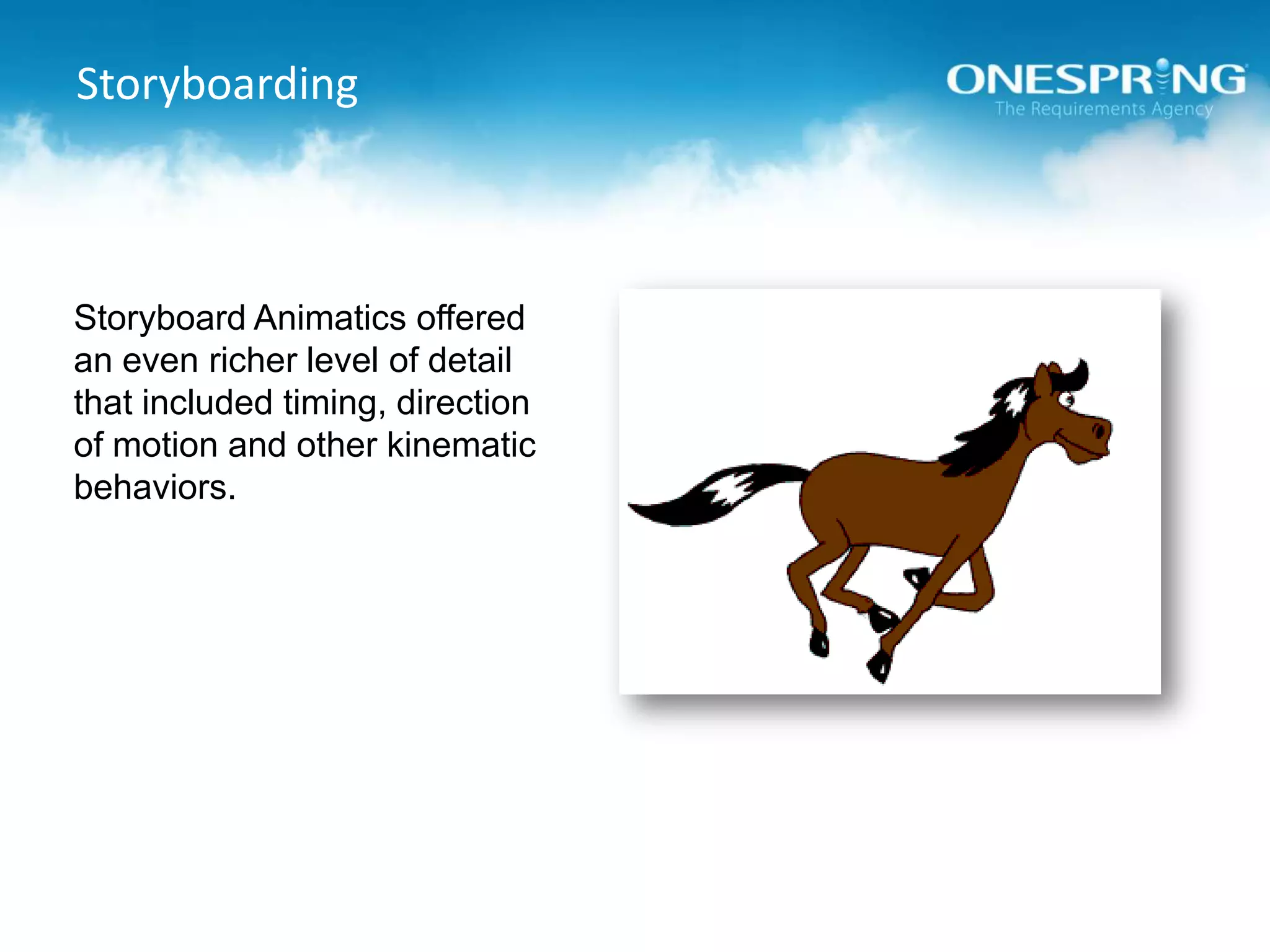
StoryboardingStoryboard Animatics offered an even richer level of detail that included timing, direction of motion and other kinematic behaviors.
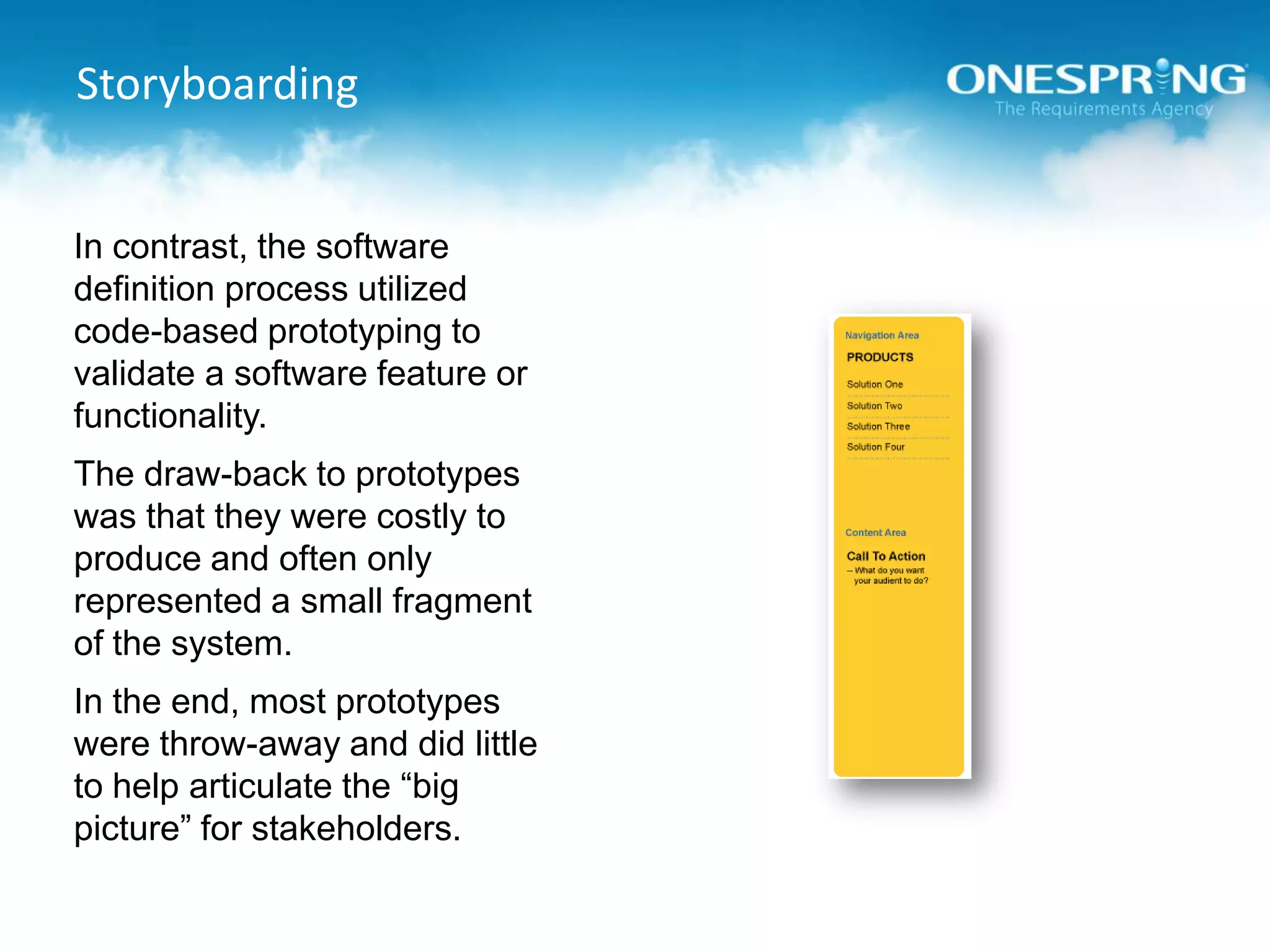
StoryboardingIn contrast, the software definition process utilized code-based prototyping to validate a software feature or functionality.The draw-back to prototypes was that they were costly to produce and often only represented a small fragment of the system.In the end, most prototypes were throw-away and did little to help articulate the “big picture” for stakeholders.
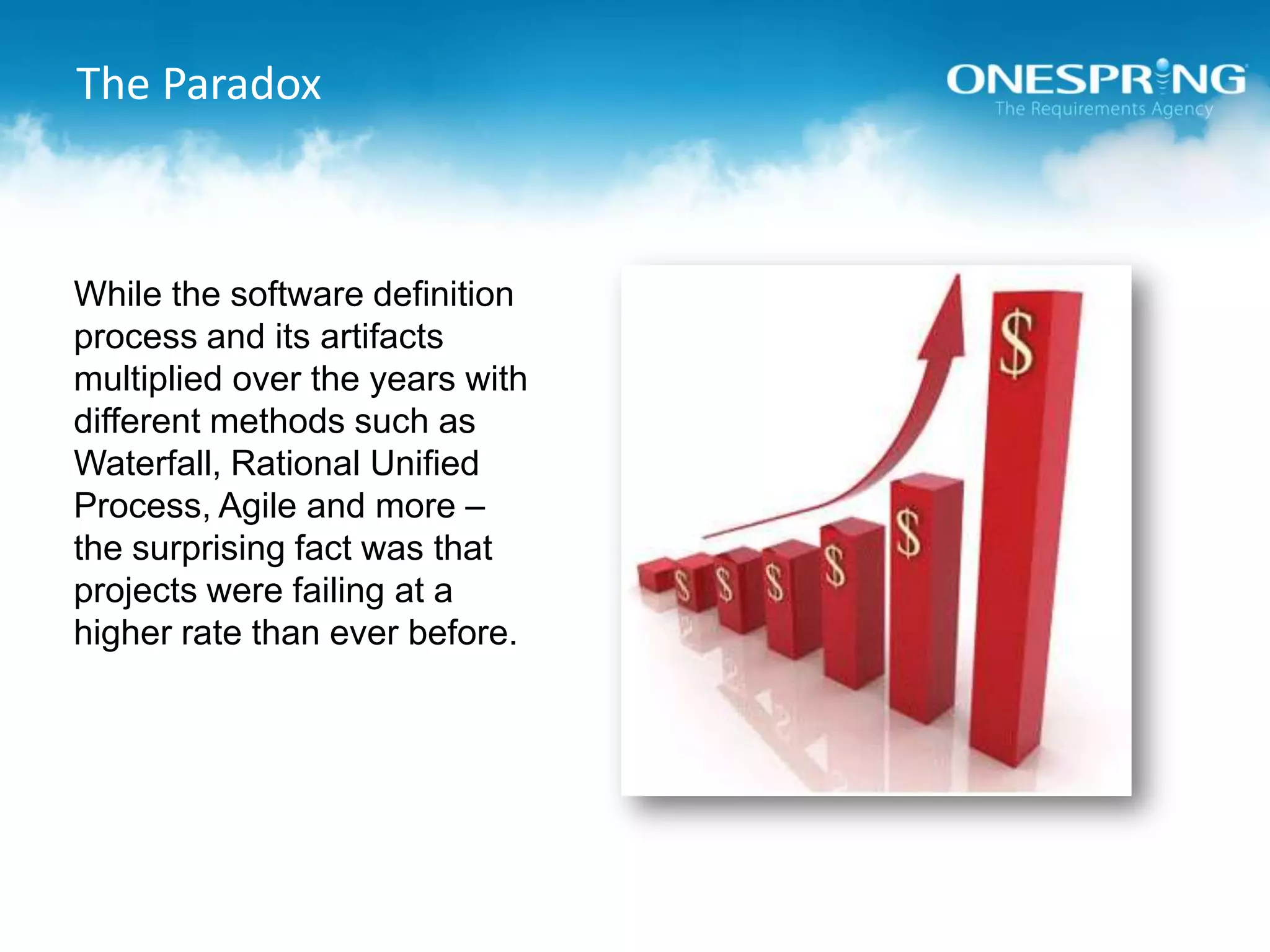
The ParadoxWhile the software definition process and its artifacts multiplied over the years with different methods such as Waterfall, Rational Unified Process, Agile and more – the surprising fact was that projects were failing at a higher rate than ever before.
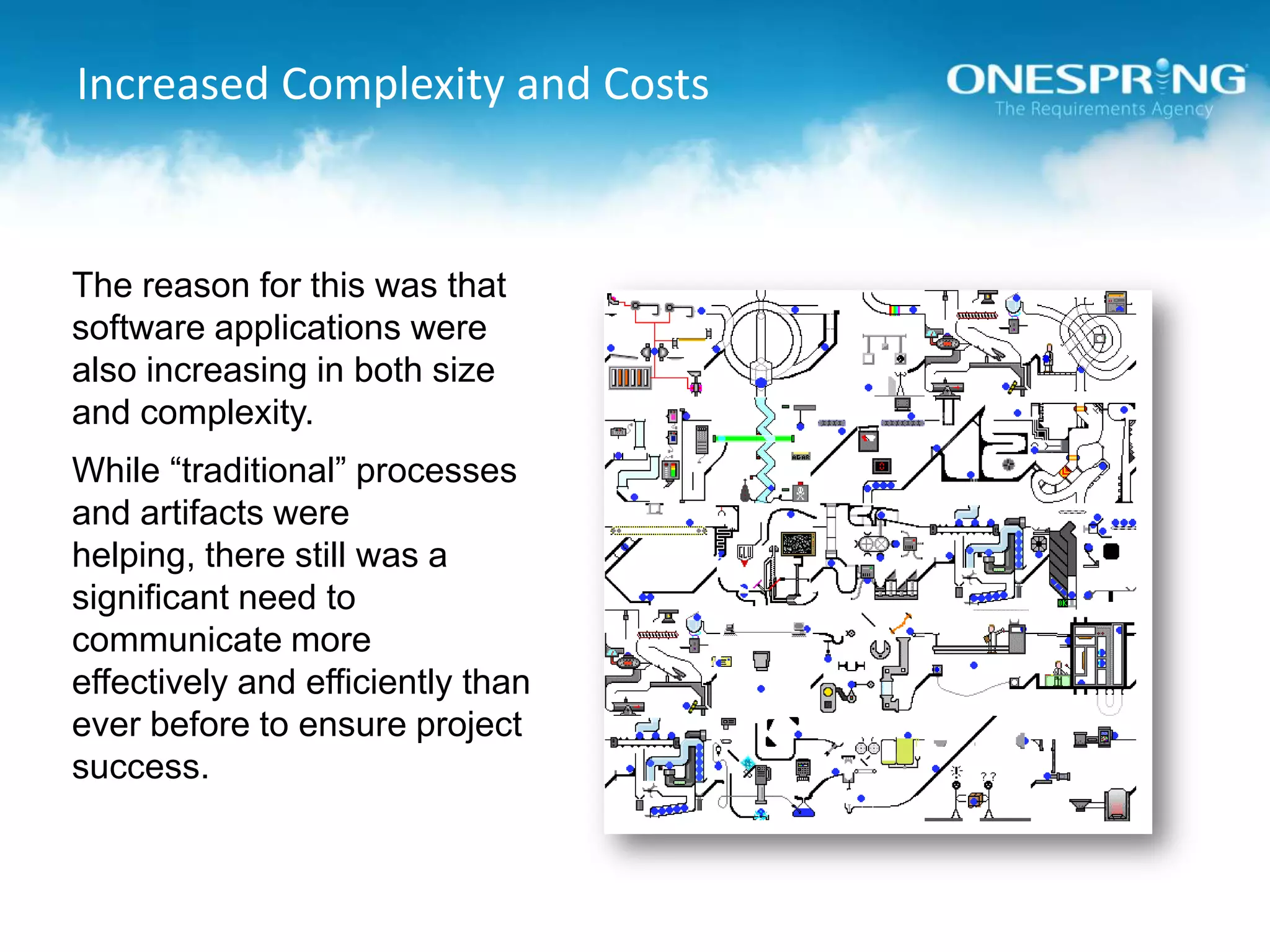
Increased Complexity and CostsThe reason for this was that software applications were also increasing in both size and complexity.While “traditional” processes and artifacts were helping, there still was a significant need to communicate more effectively and efficiently than ever before to ensure project success.
Consumer DemandThe motion picture industry was experiencing the same dilemma.Audiences were more savvy and demanding more from entertainment. With the bar raised, filmmakers also needed to improve their process and tools to more effectively create their art.
Storyboarding to PrevisualizationWith the advent of increased computing power at lower costs, the process of storyboarding made another leap forward.Storyboard animatics made the transition from simple animated photos to computer generated imagery.This next advance was labeled Previsualization.
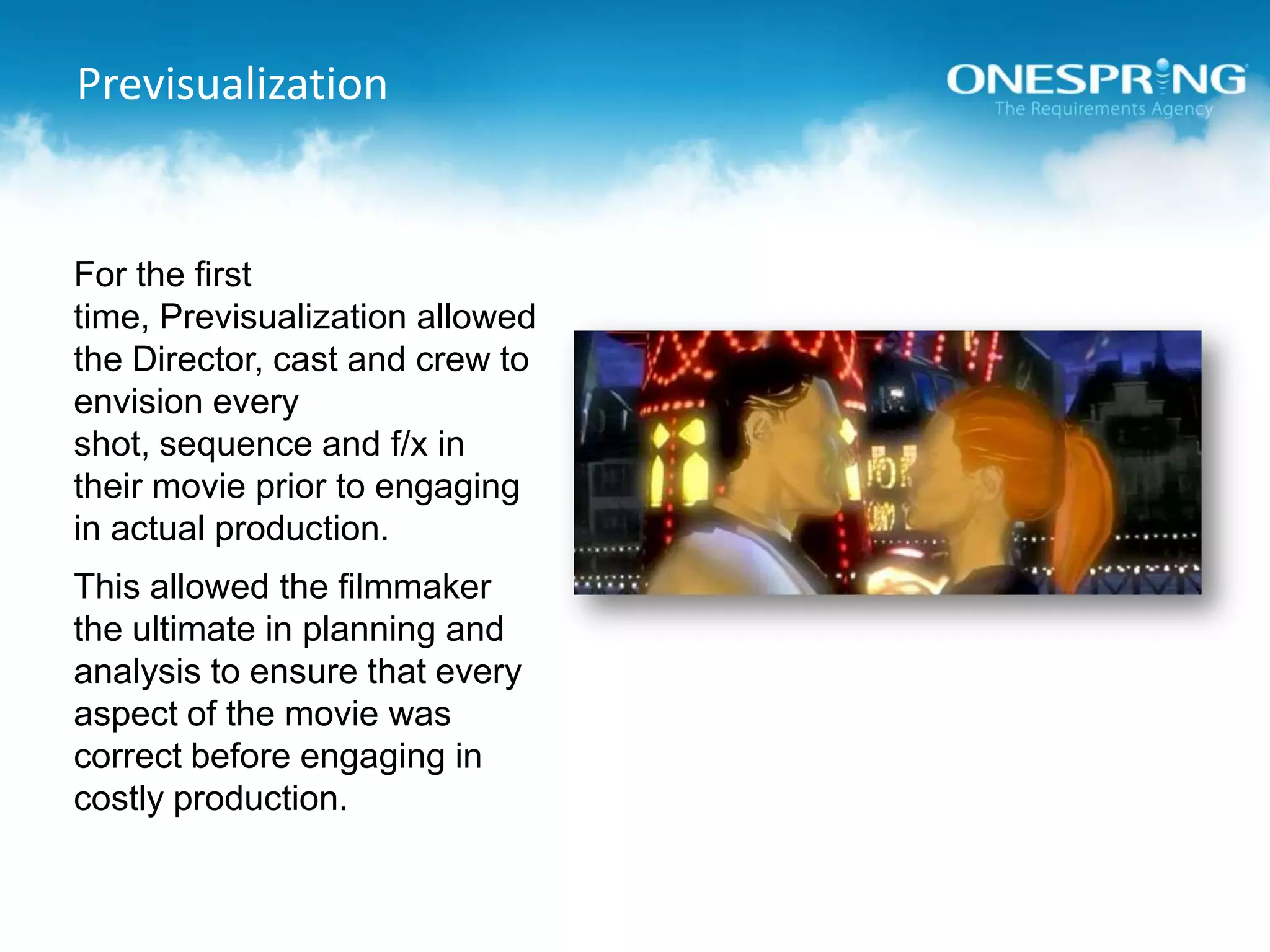
PrevisualizationFor the first time, Previsualization allowed the Director, cast and crew to envision every shot, sequence and f/x in their movie prior to engaging in actual production.This allowed the filmmaker the ultimate in planning and analysis to ensure that every aspect of the movie was correct before engaging in costly production.
Previsualization – The Movie
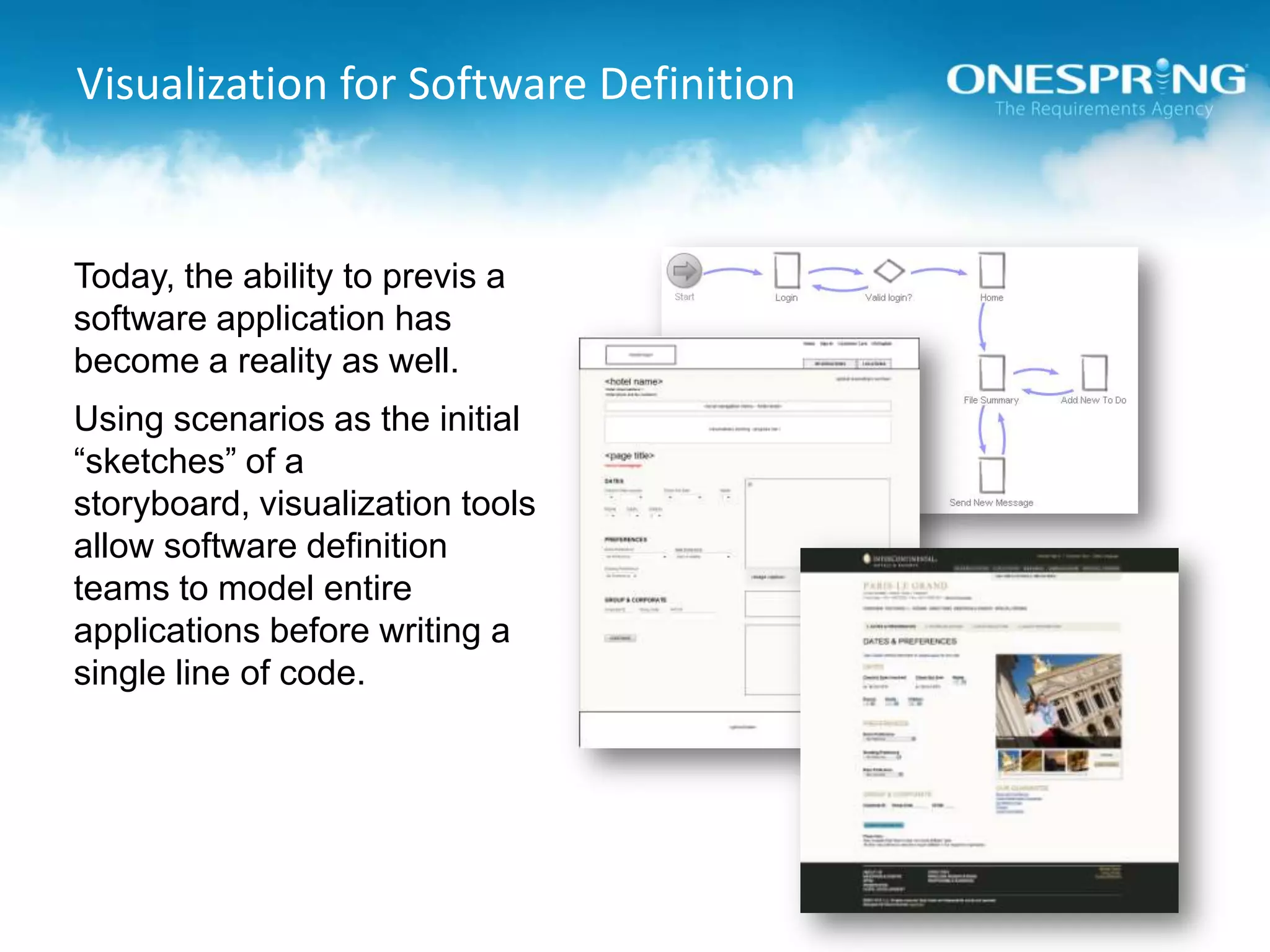
Visualization for Software DefinitionToday, the ability to previs a software application has become a reality as well.Using scenarios as the initial “sketches” of a storyboard, visualization tools allow software definition teams to model entire applications before writing a single line of code.
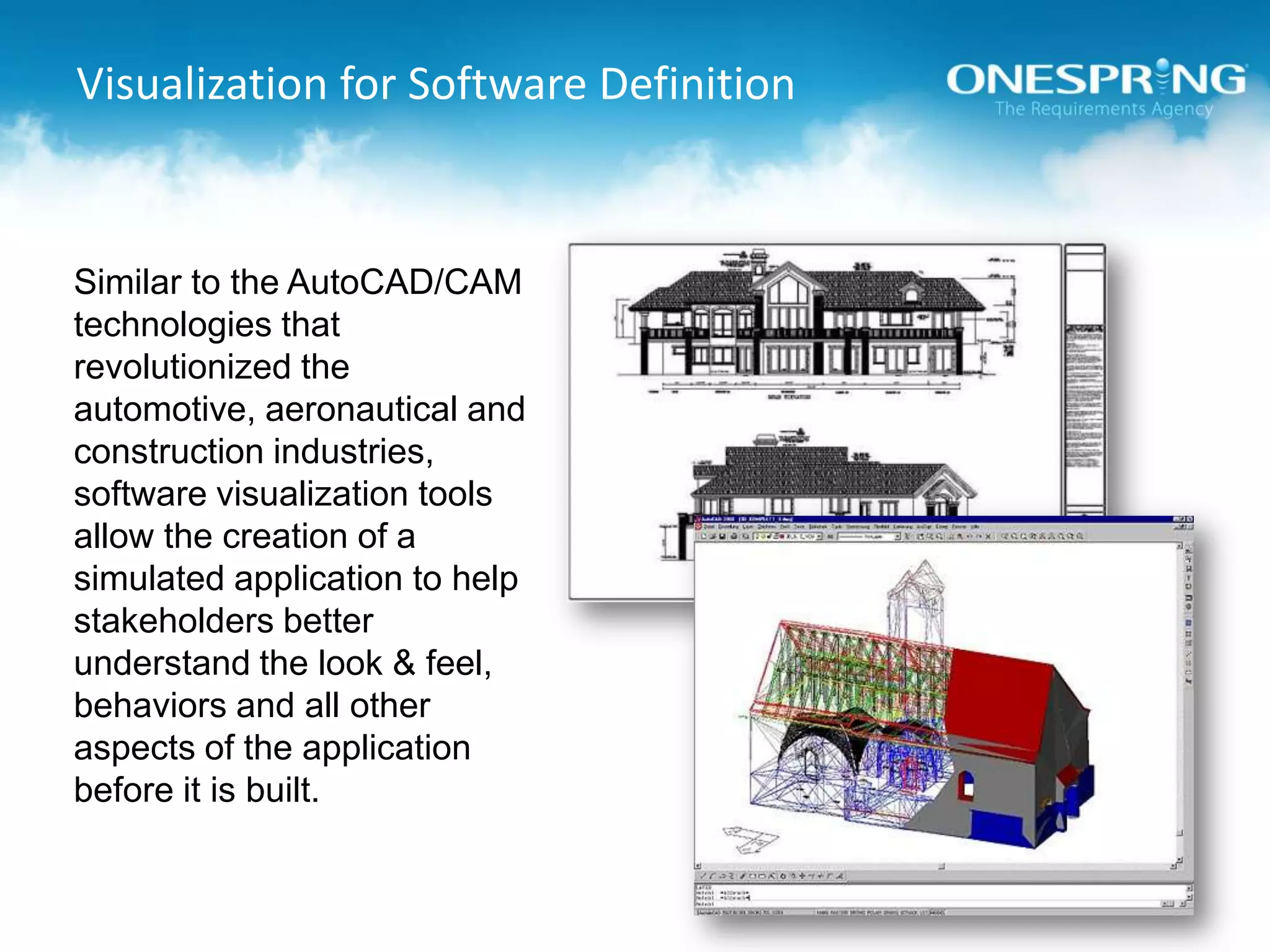
Visualization for Software DefinitionSimilar to the AutoCAD/CAM technologies that revolutionized the automotive, aeronautical and construction industries, software visualization tools allow the creation of a simulated application to help stakeholders better understand the look & feel, behaviors and all other aspects of the application before it is built.
Visualization – People & ProcessAs visualization has “closed the communications gap” for filmmakers, it is providing the same benefits to software application development.With these new capabilities, both the people and process involved in application visualization are evolving as well.As the first requirements agency, OneSpring is a pioneer in visualization for software definition.
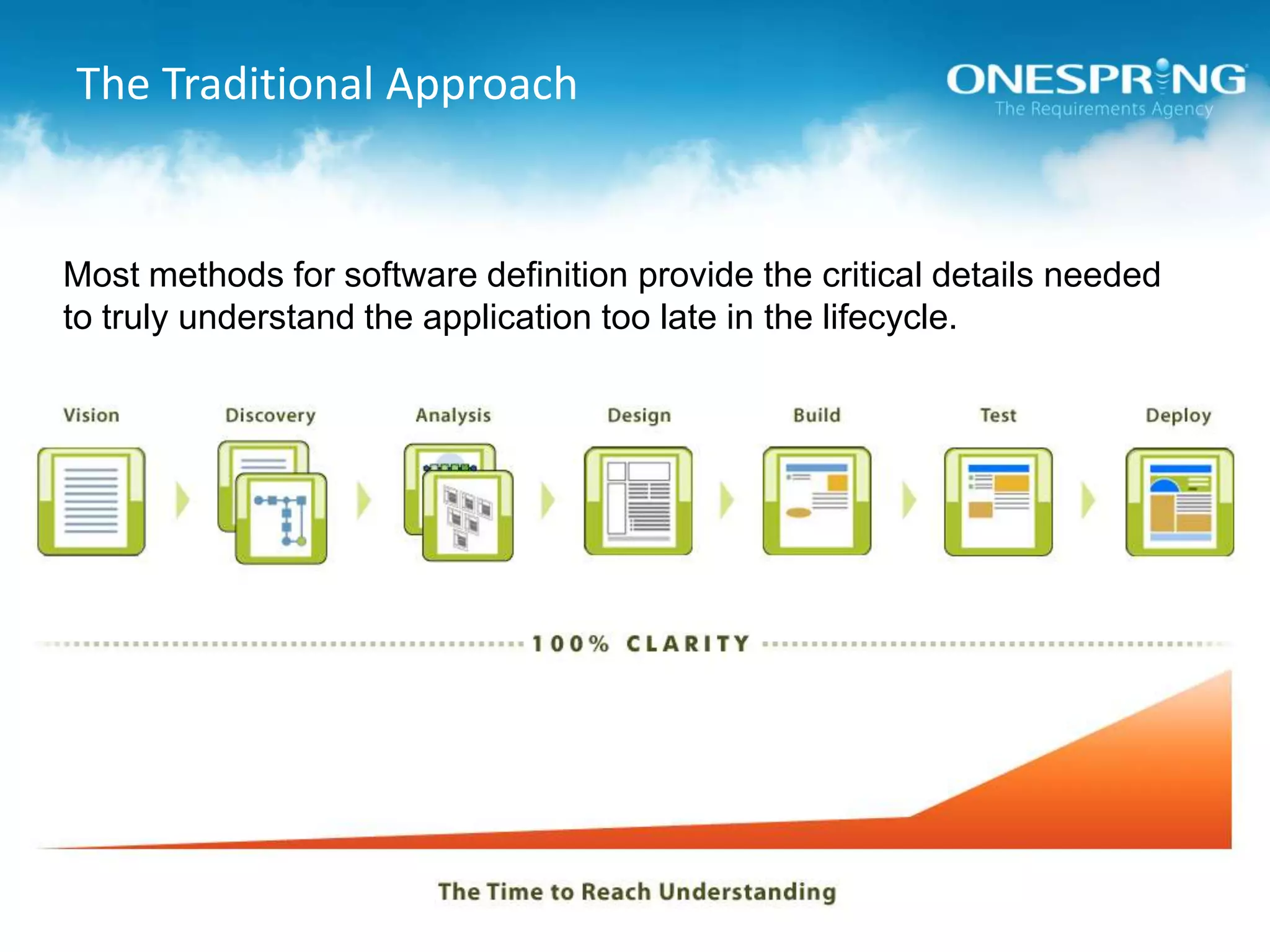
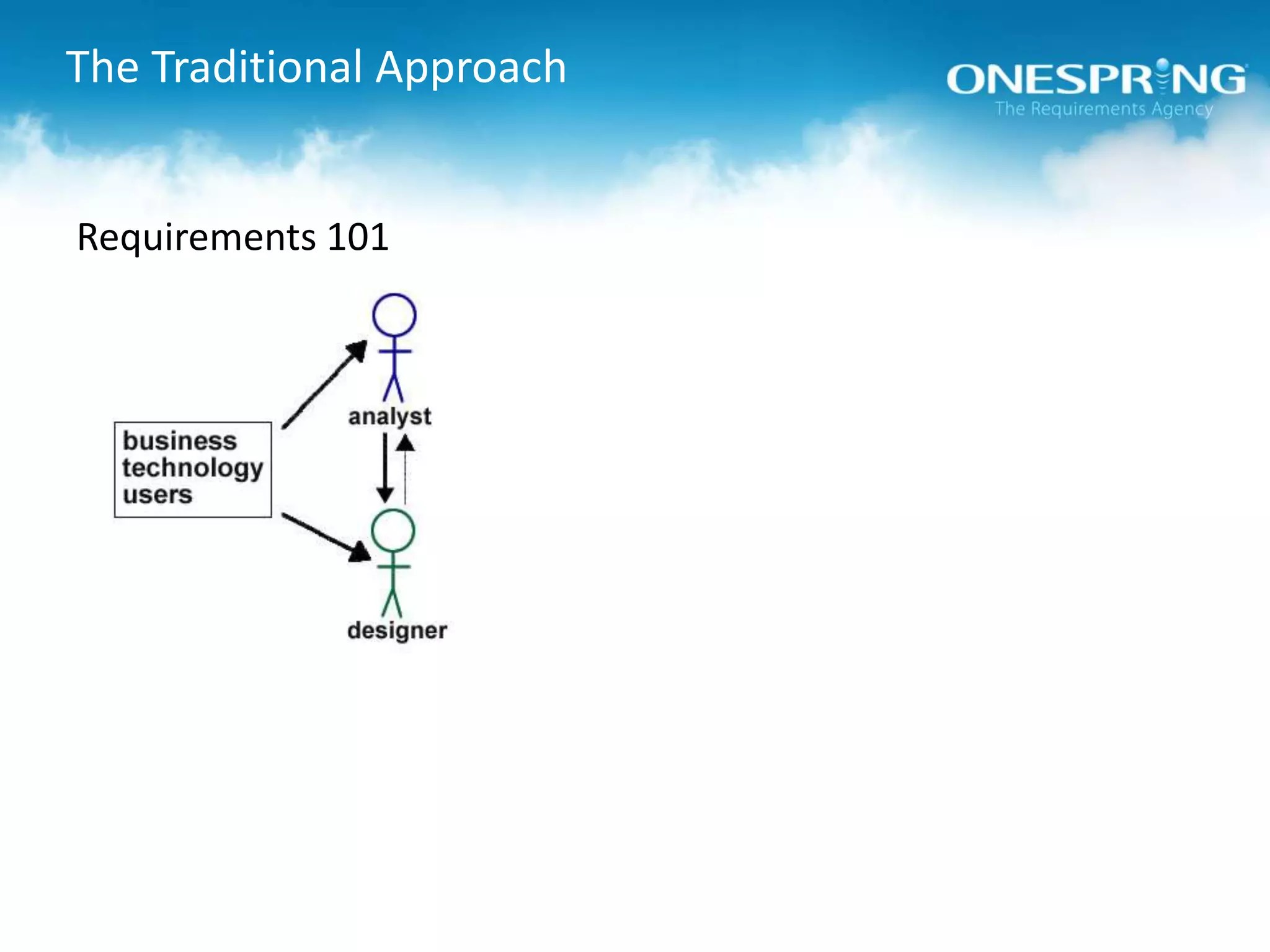
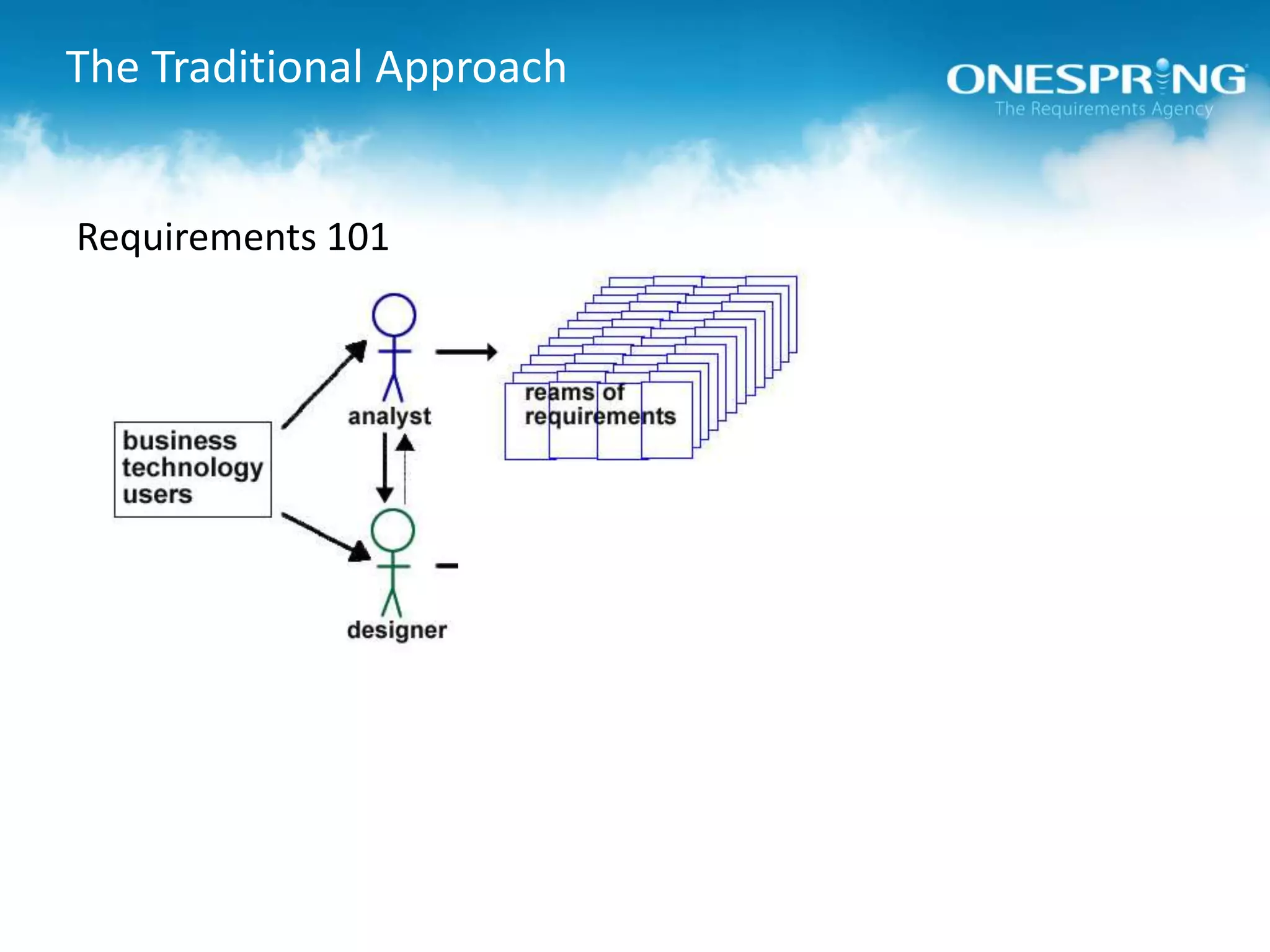
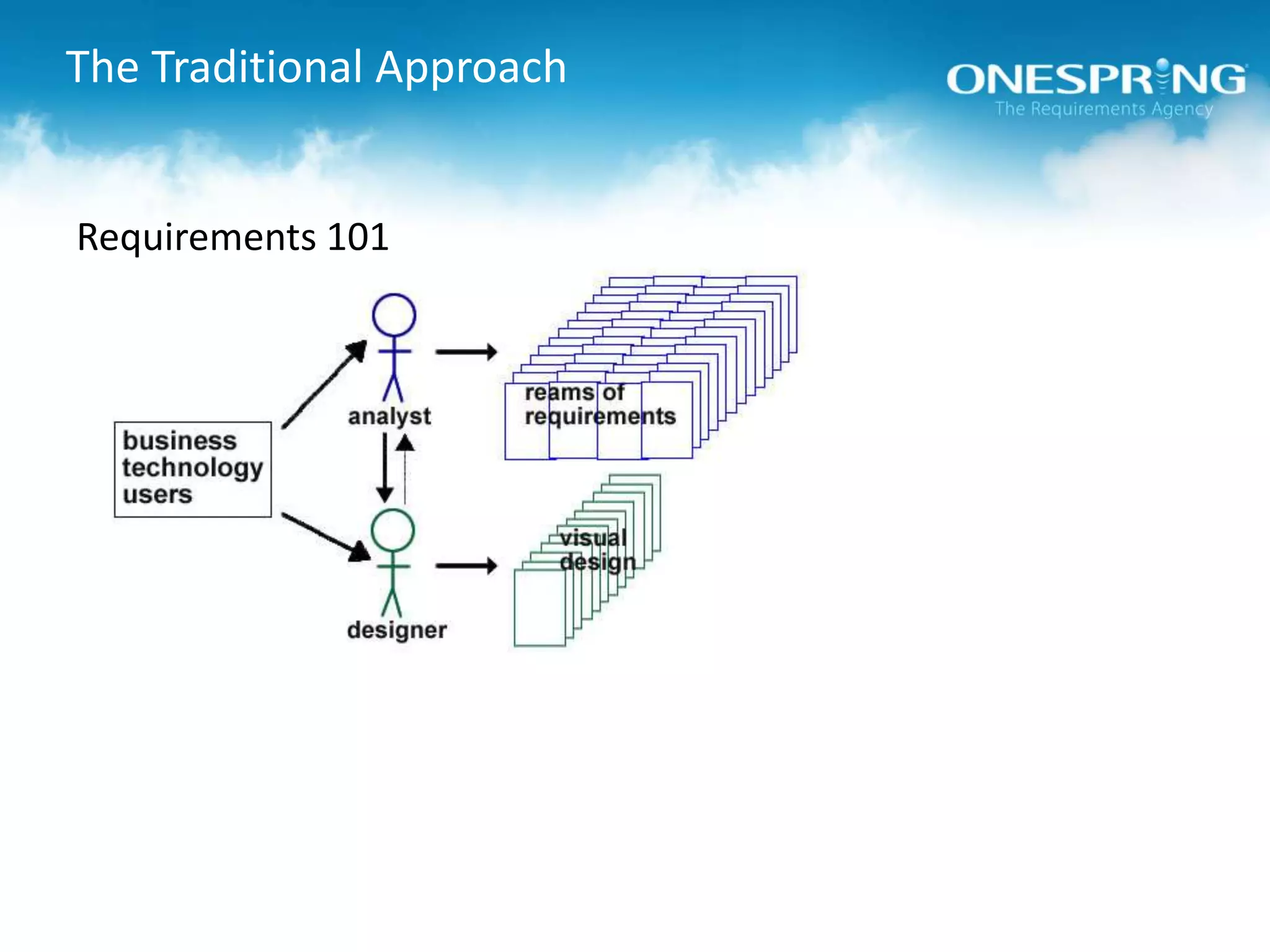
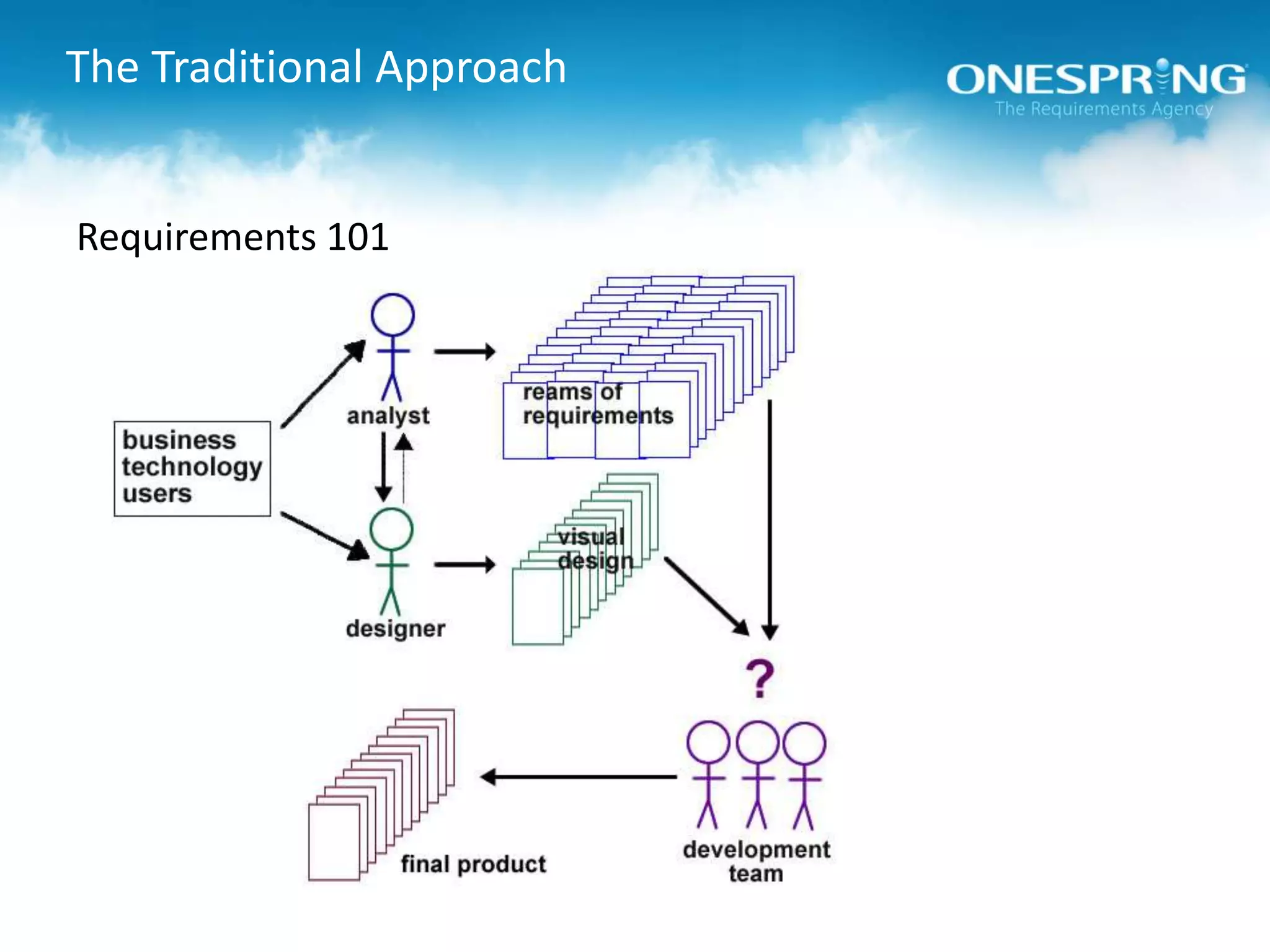
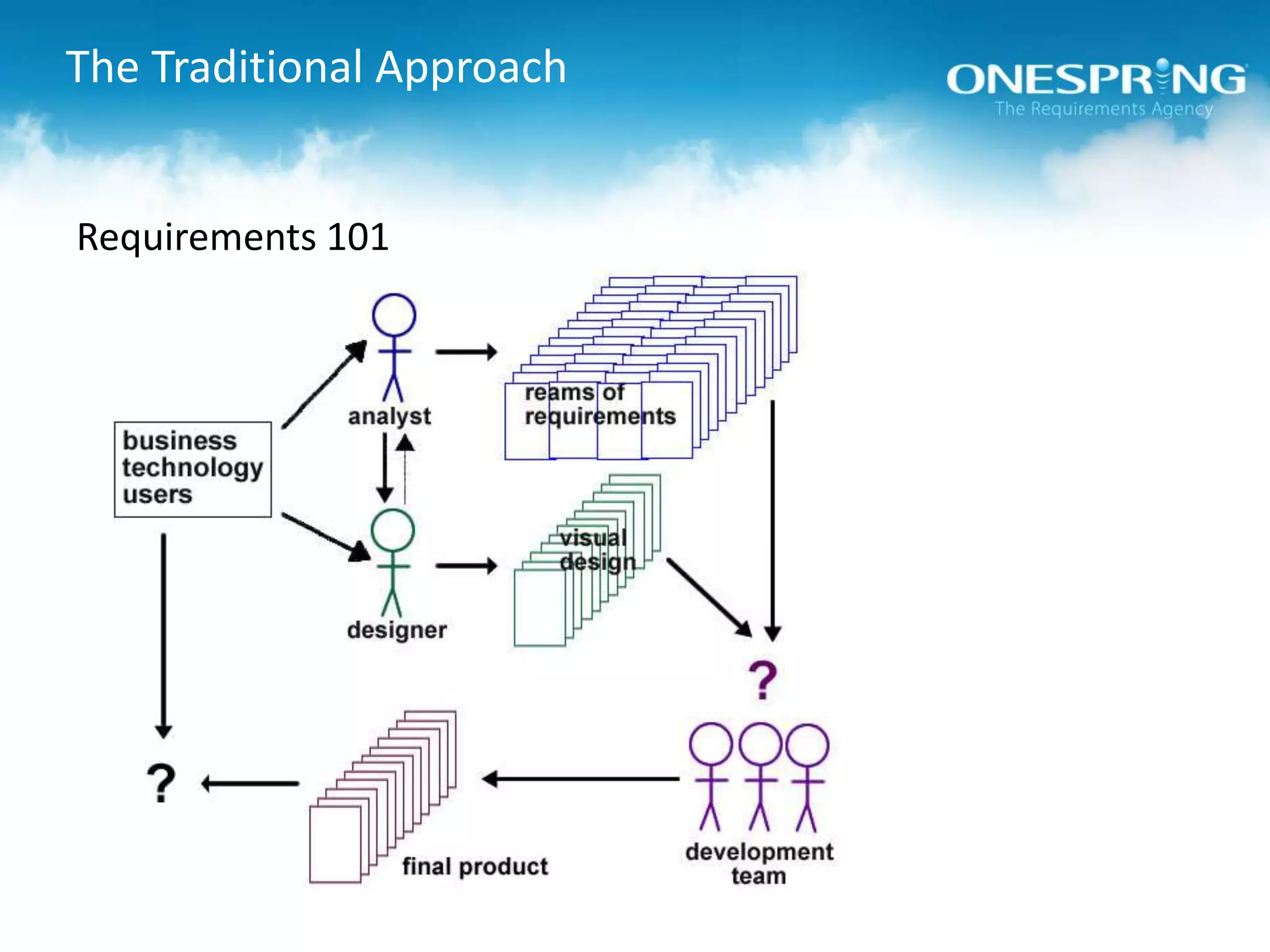
The Traditional ApproachMost methods for software definition provide the critical details needed to truly understand the application too late in the lifecycle.
The Traditional ApproachRequirements 101The old way:
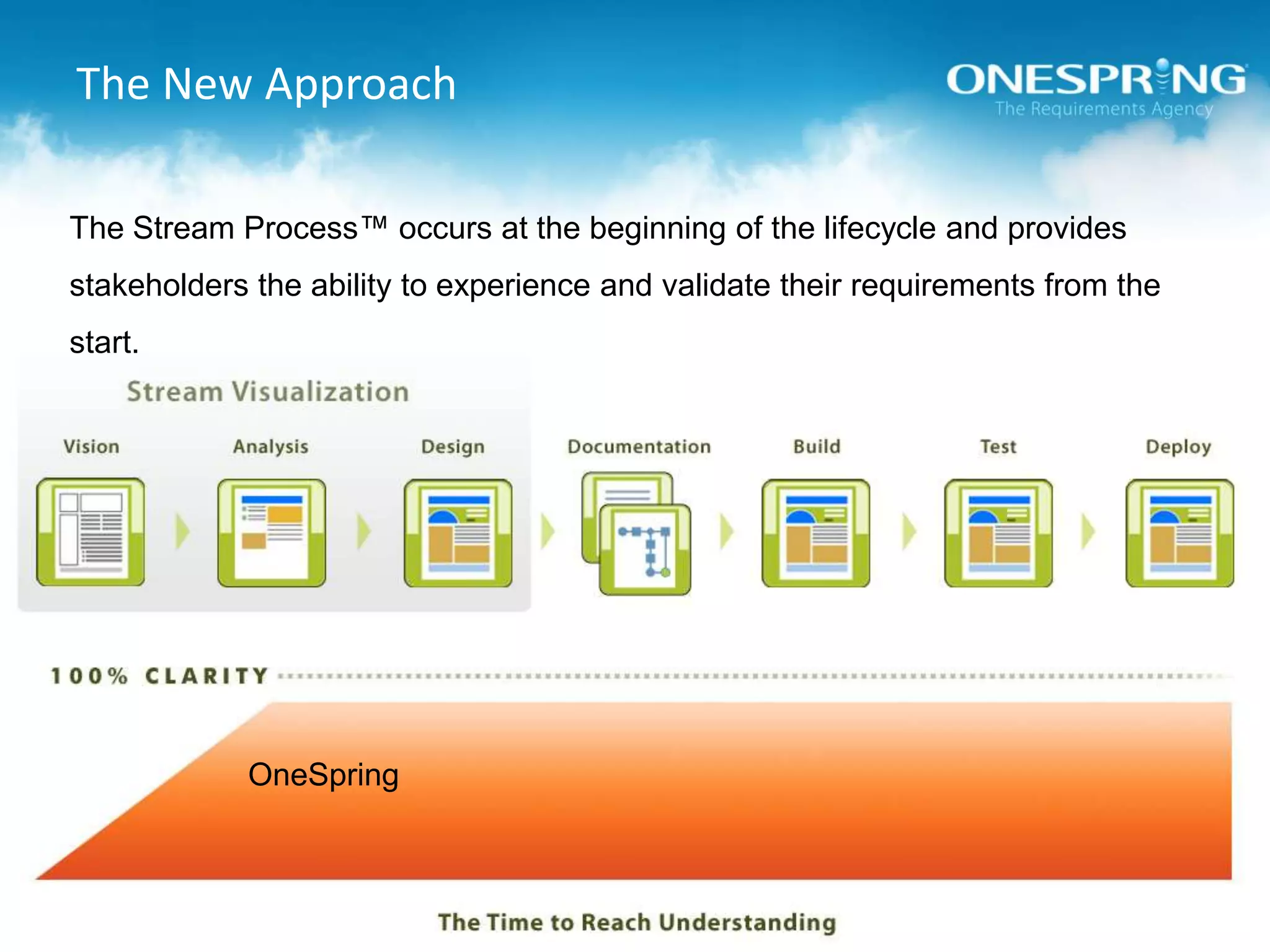
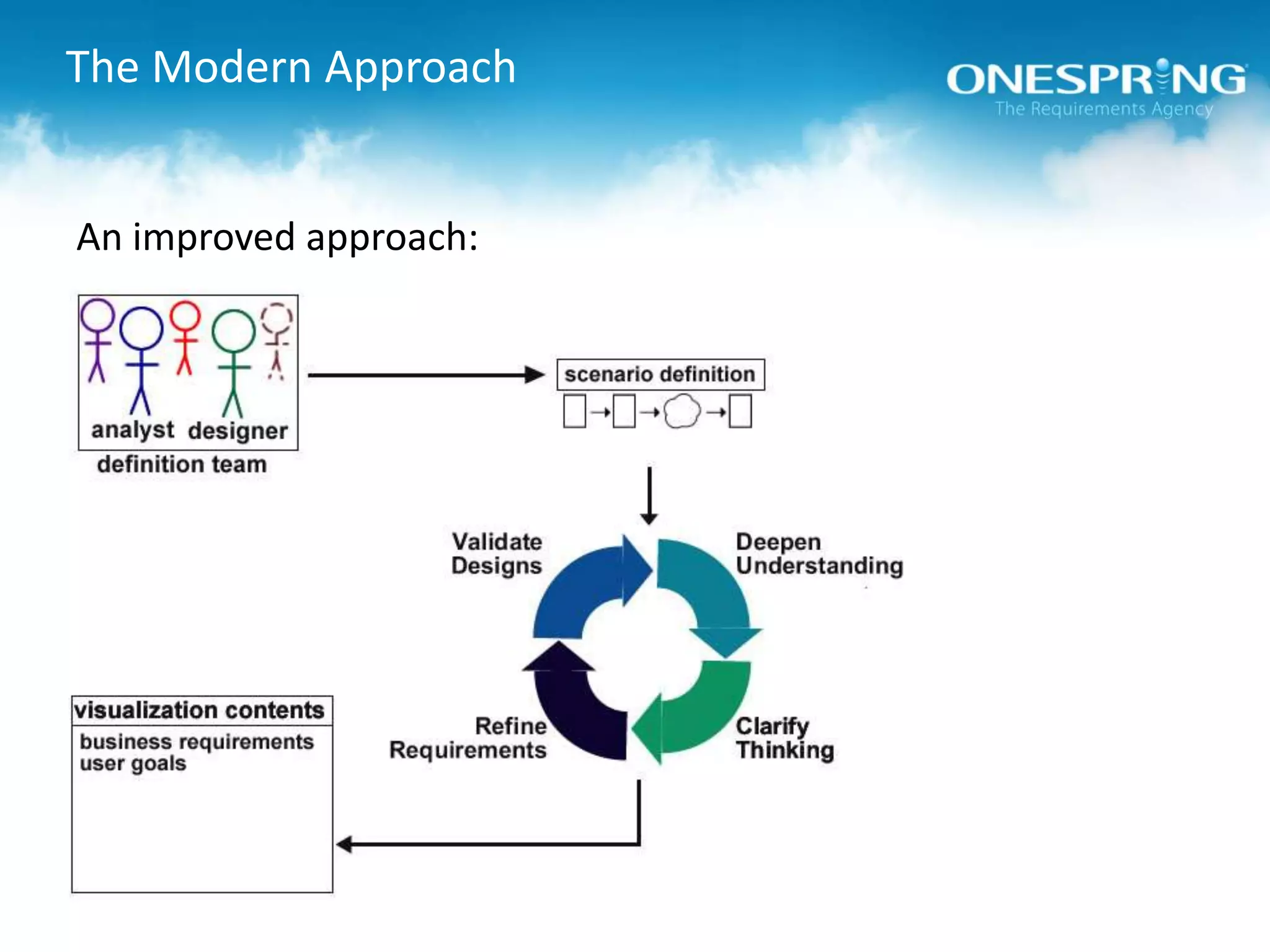
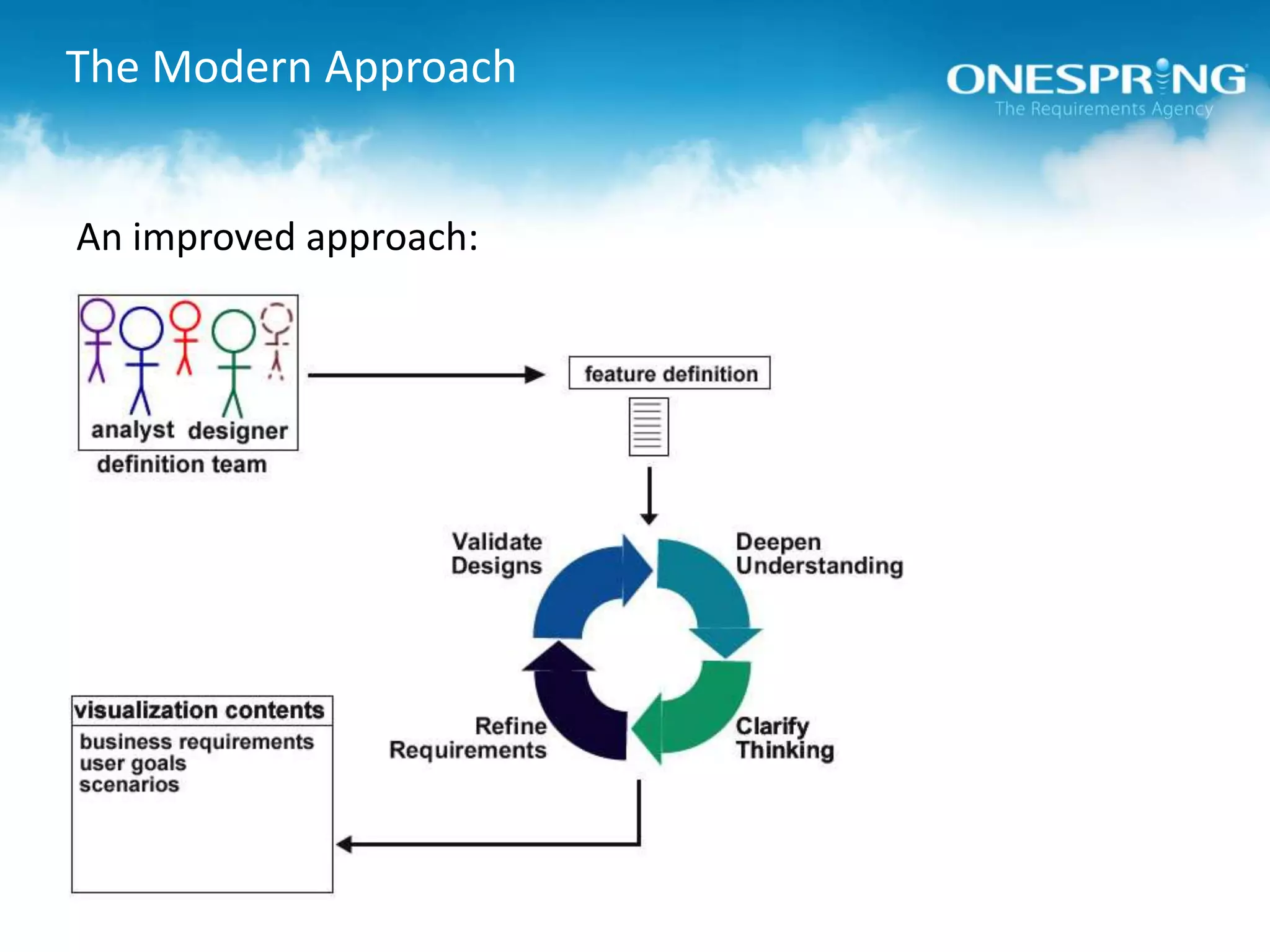
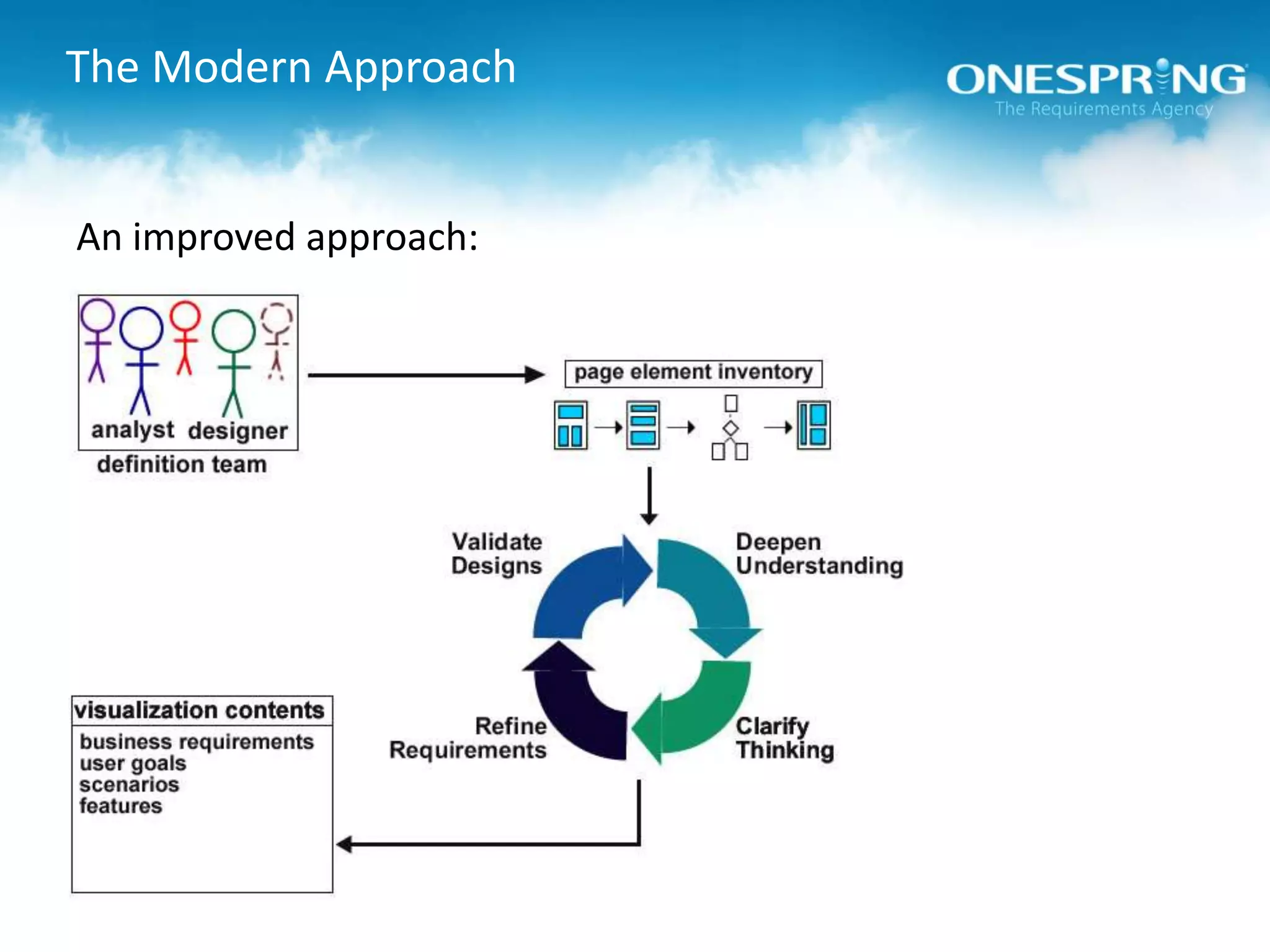
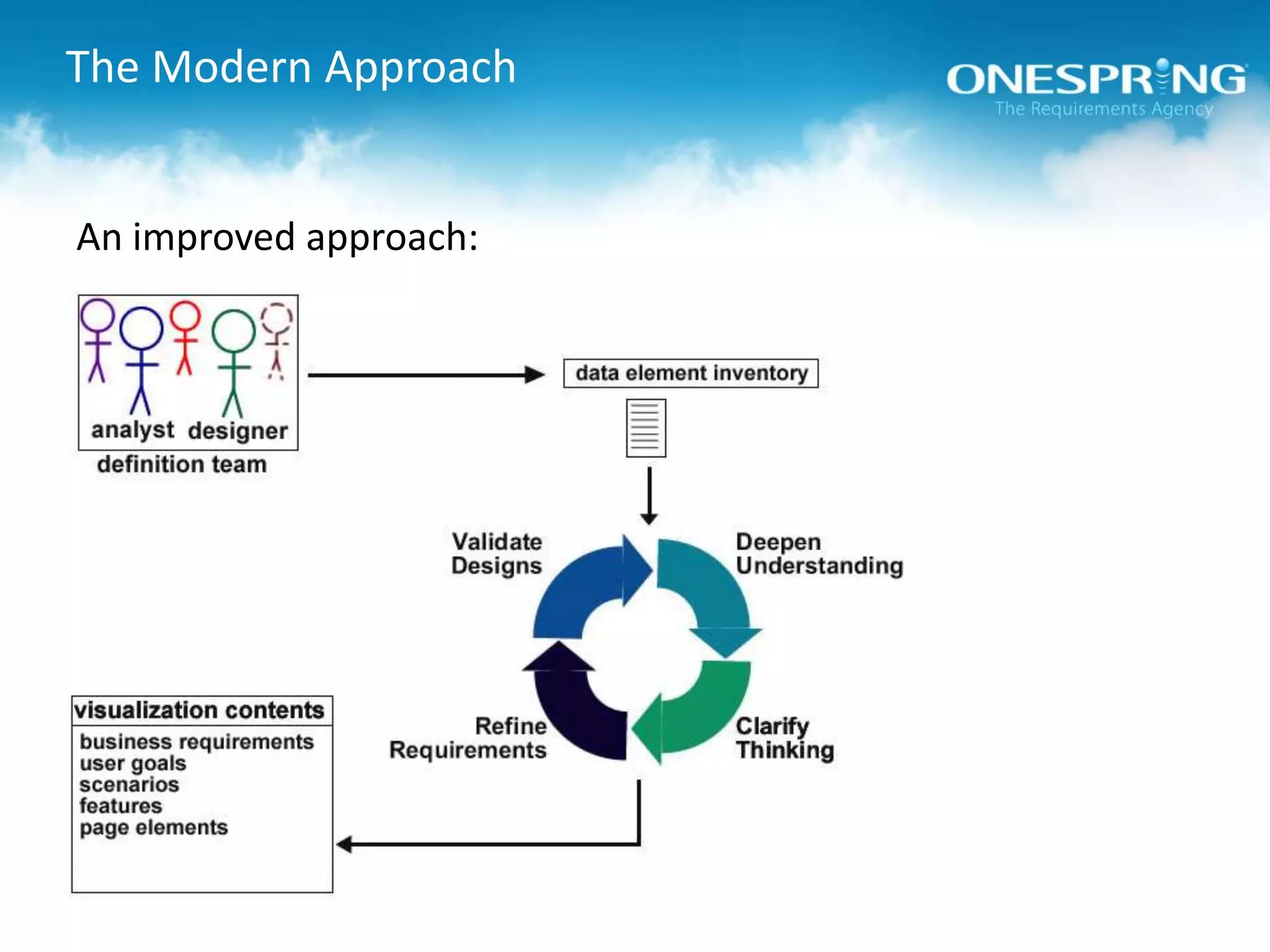
The Stream Process™ occurs at the beginning of the lifecycle and provides stakeholders the ability to experience and validate their requirements from the start.OneSpringThe New Approach
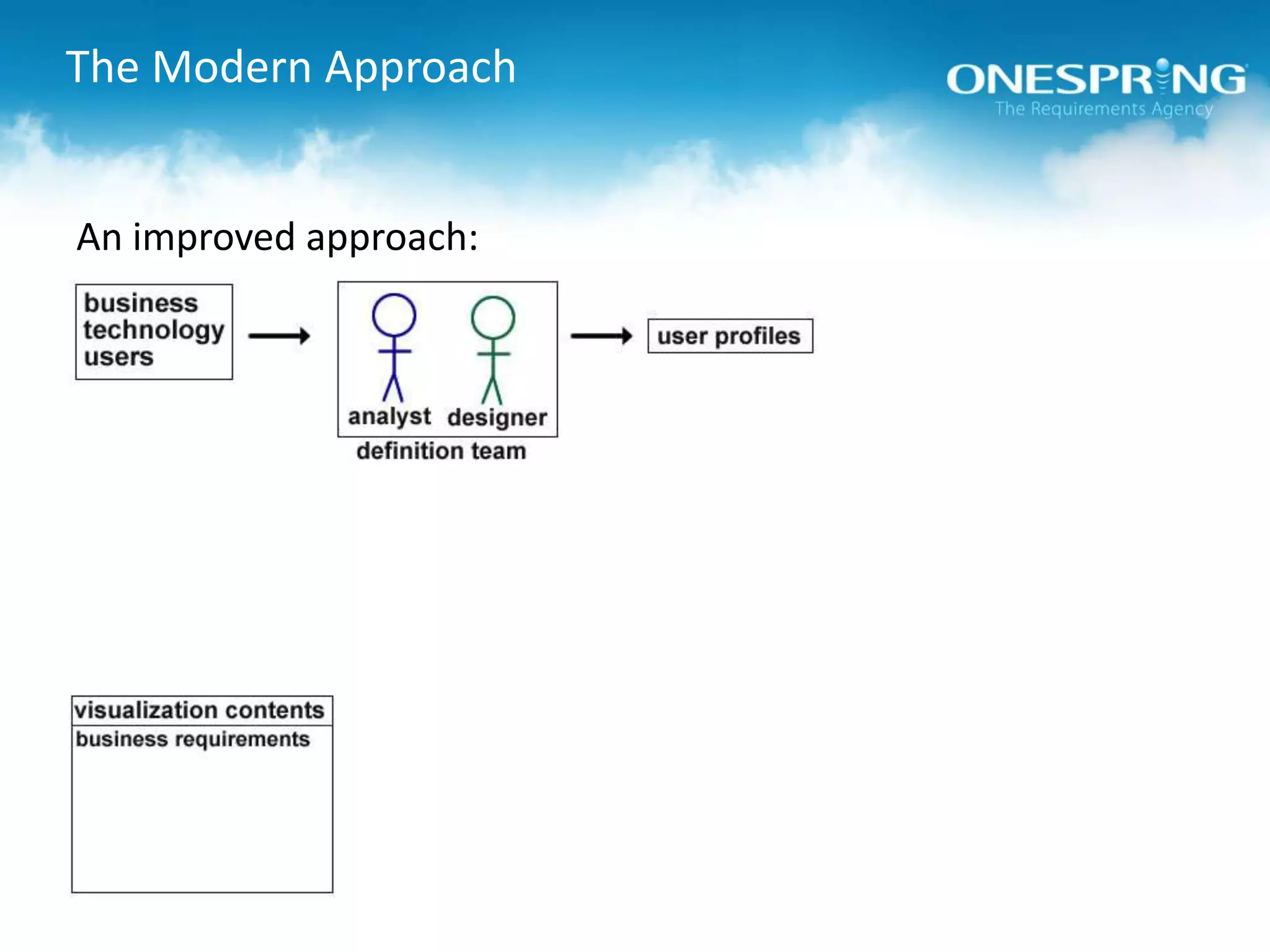
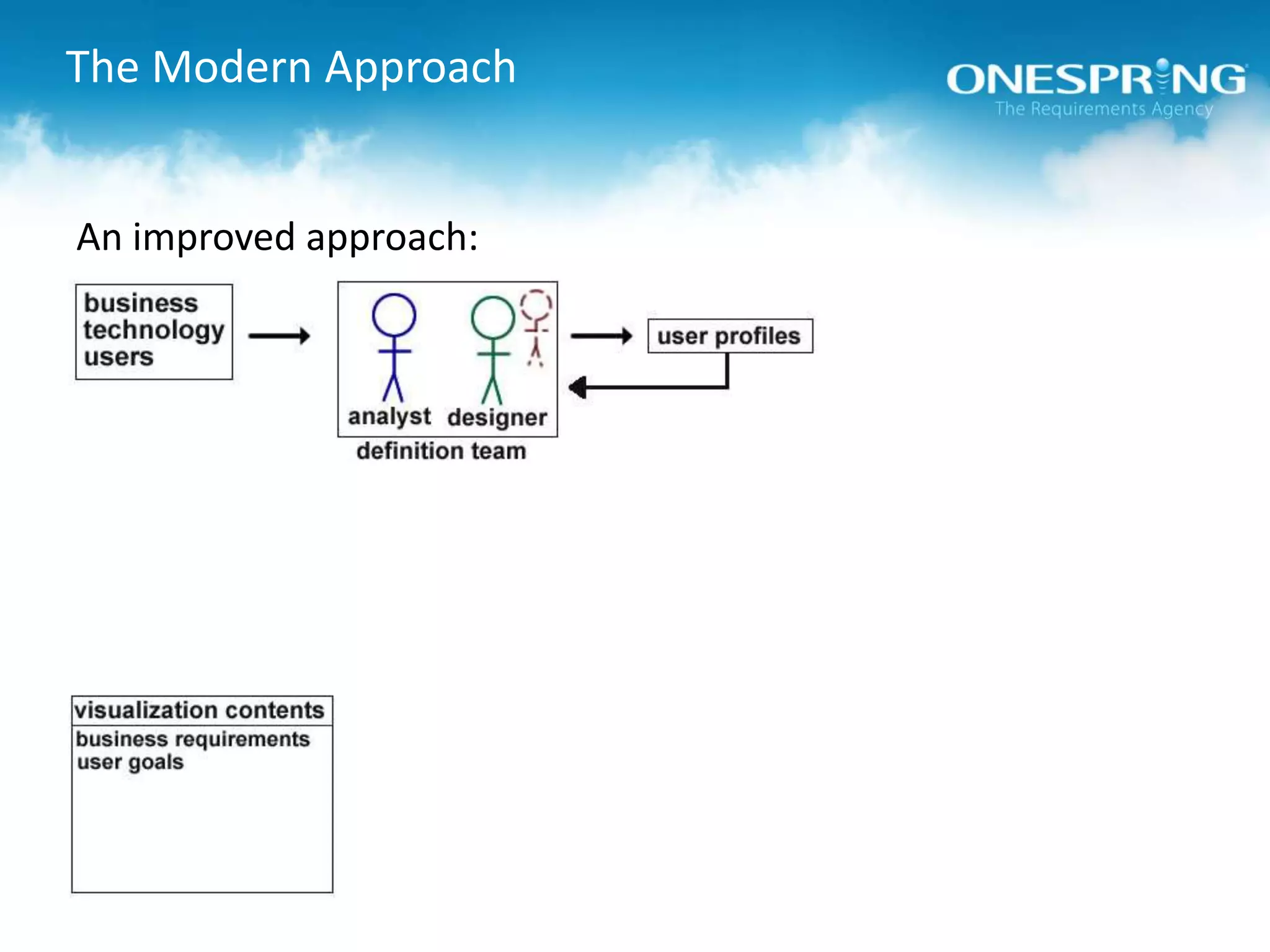
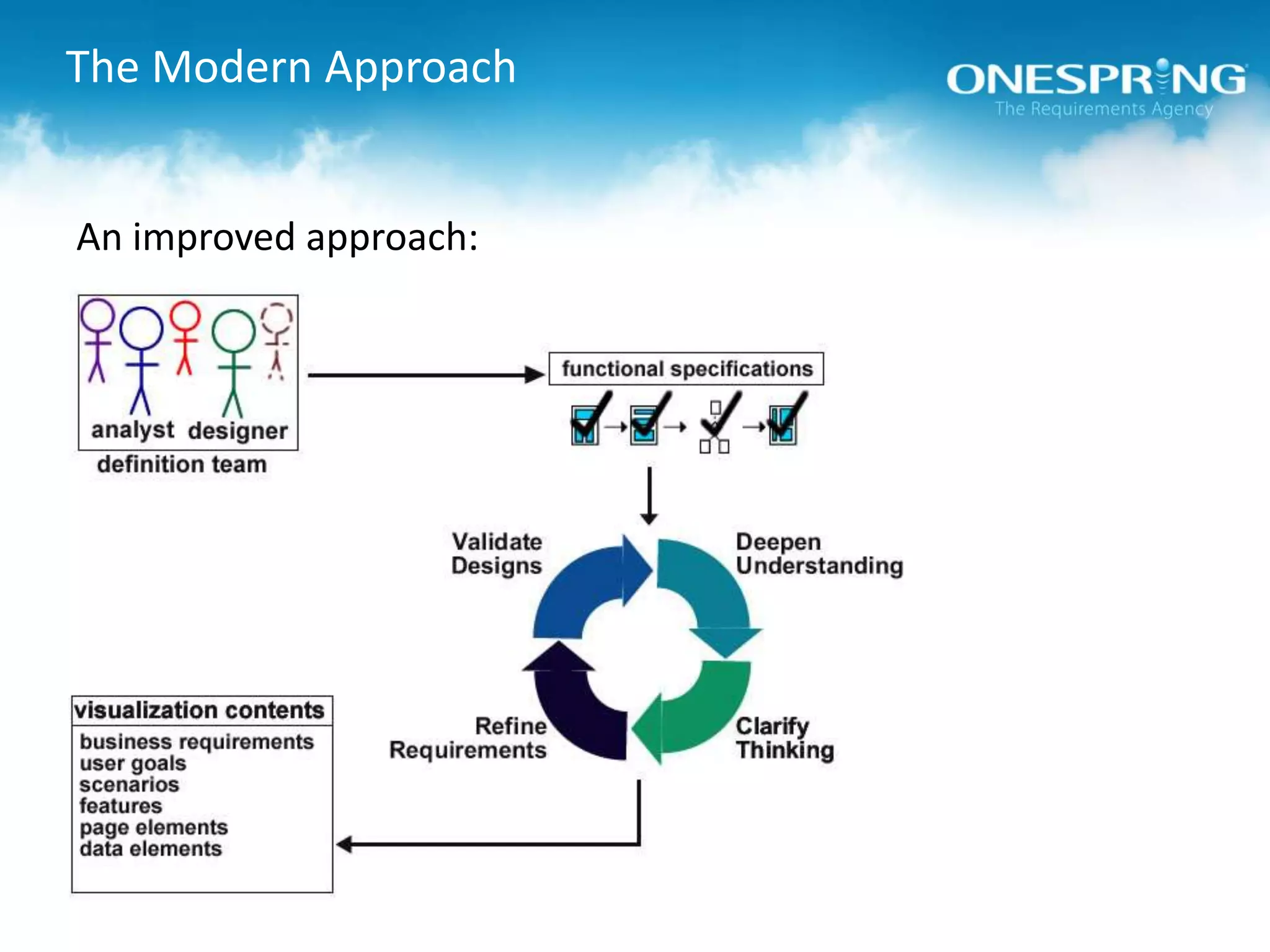
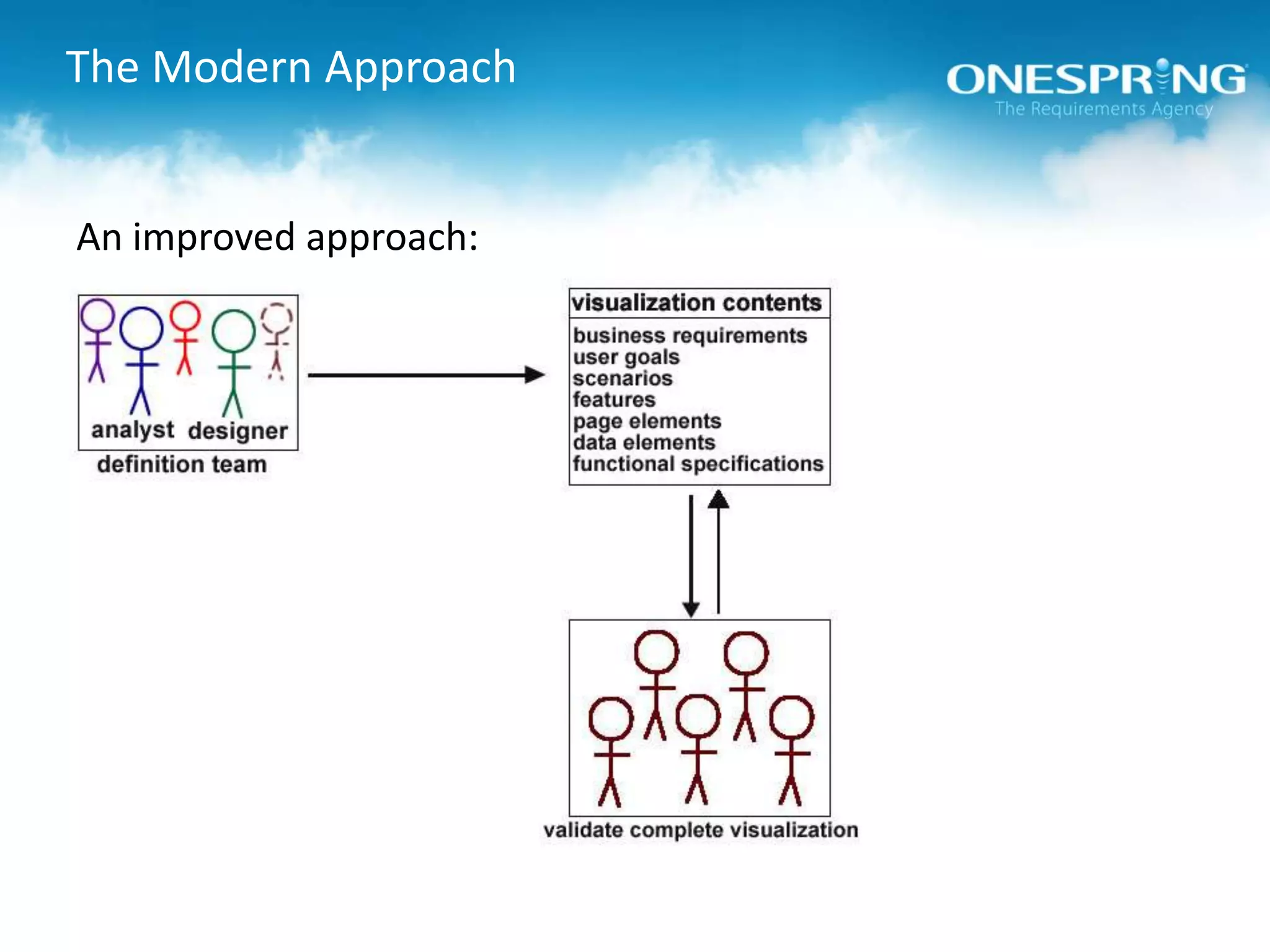
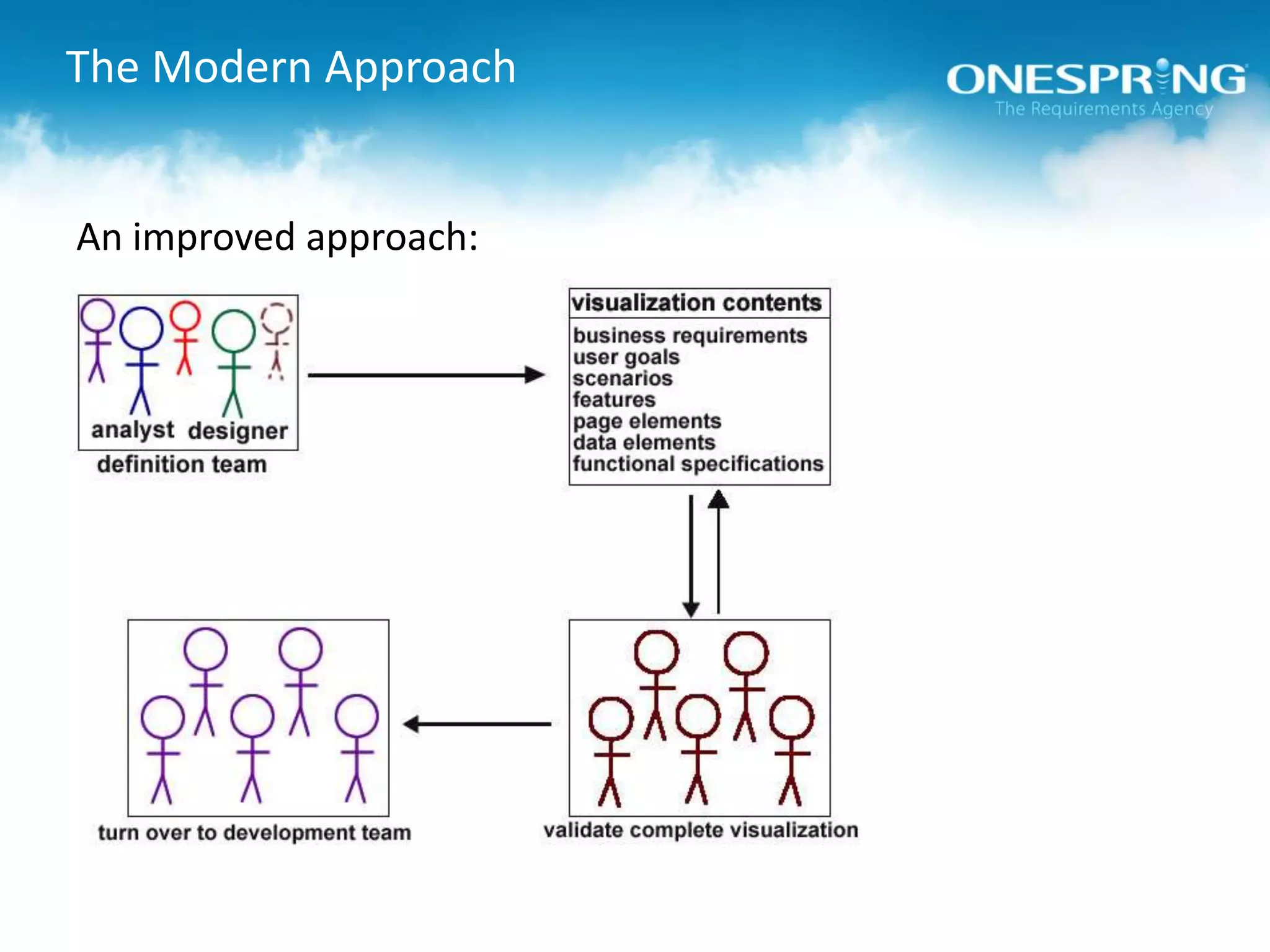
The Modern ApproachAn improved approach:
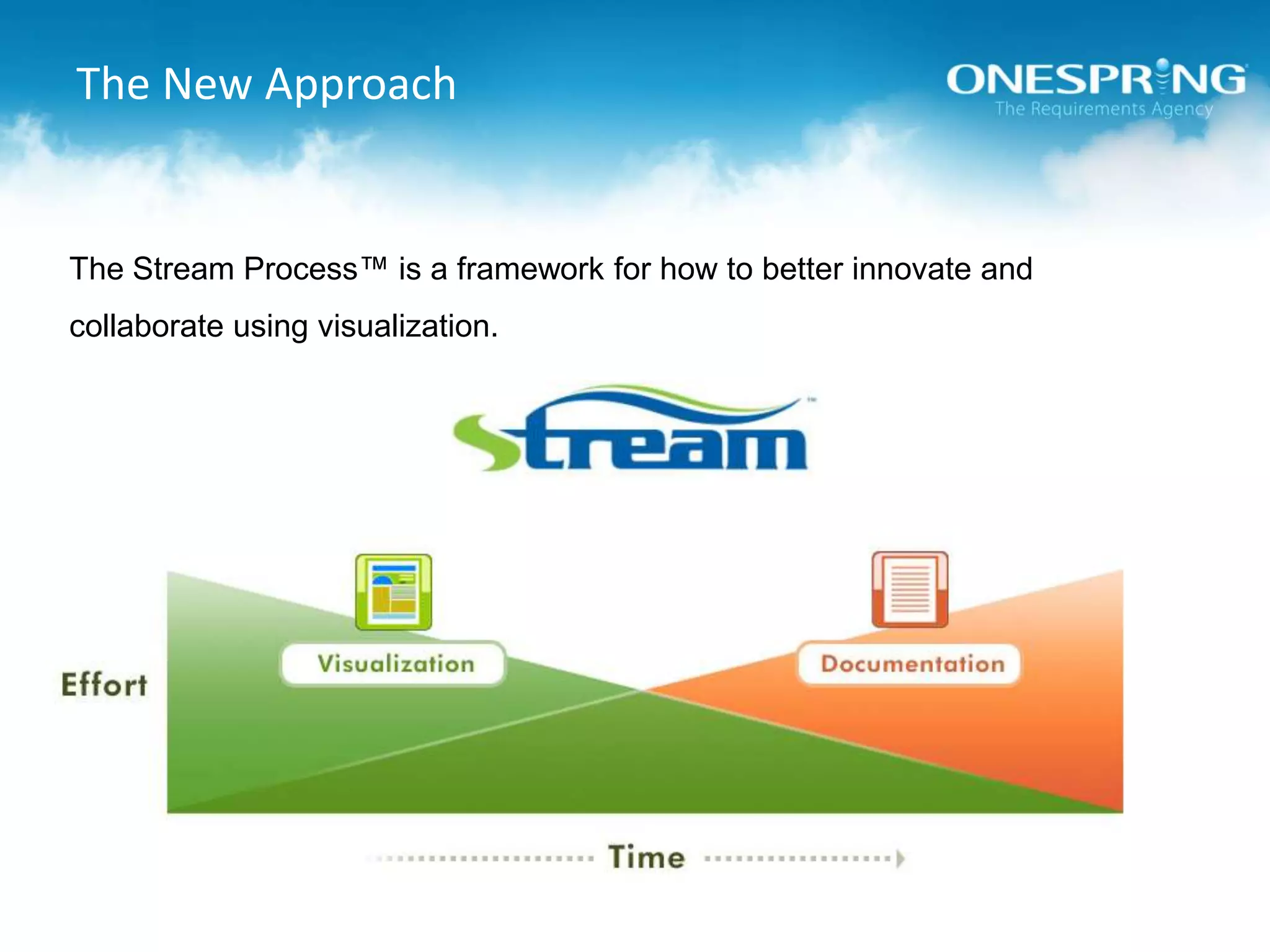
The Stream Process™ is a framework for how to better innovate and collaborate using visualization.  The New Approach
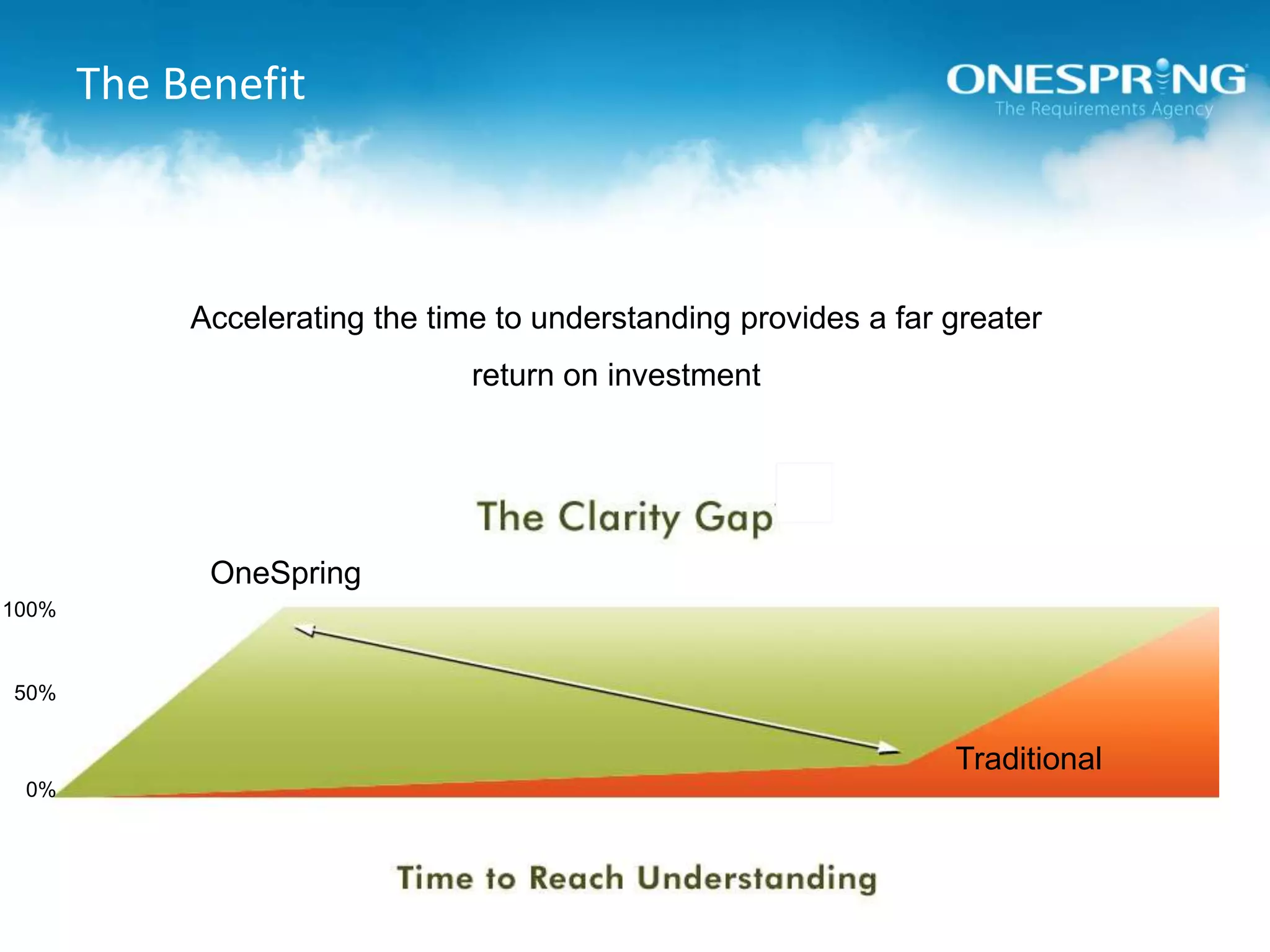
Accelerating the time to understanding provides a far greater return on investmentOneSpring100%50%Traditional0%The Benefit
Thank you!For more information on how previsualization can help you make the most of your software projects, visit www.onespring.net, email clarity@onespring.net or call us toll-free, 1-888-472-1840.

Software Visualization - Lessons from the Motion Picture Industry.

  • 1.
    Storyboarding – Then& NowRobert Grashuis, Chief Visualization Officer
  • 2.
    “68% of projectsfail, run late, or are OVER budget.”- The Standish Group, 2009 Chaos Summary Report“70% of REWORK is attributed to correcting requirements errors.” - Meta Group“30% of project costs are REWORK .”- Forrester Research
  • 4.
    StoryboardingStoryboarding is anintegral part of the software definition process today.The value storyboarding provides is to supplement the requirements with additional information for a better understanding of the requirements and their context within the system as a whole.The origins of storyboarding is rooted in the motion picture industry.
  • 5.
    StoryboardingThe traditional processof storyboarding was developed at the Walt Disney studios in the 1930’s. Storyboards were used for animated cartoon movies, such as “The Three Little Pigs”. Throughout the 1930‘s the usage of storyboards grew dramatically. By 1940 storyboards were ubiquitous in all movie studios and thus became an integral part of the process of making movies.
  • 6.
    StoryboardingThe practice ofstoryboarding was developed out of the need to provide more information to the film’s director, cast and crew to better understand the narrative and how to better communicate the message and details for creation of the movie.
  • 7.
    StoryboardingIn the traditionalSoftware Development Life Cycle (SDLC), the equivalent to the movie script is the Vision document.While the Vision document contains the project purpose and its goals, it is still a text-only description that can be ambiguous and subject to misinterpretation by the stakeholders.
  • 8.
    StoryboardingFor the themovie production process, storyboards filled informational gaps in the script by introducing details about the camera position, lighting, scenery/set environments and also action or movement on screen.
  • 9.
    StoryboardingAs storyboards supplementedthe information in a movie script, other visual artifacts such as Universal Modeling Language (UML) diagrams, Swimlane diagrams and more were implemented in the software definition process.Most of these, however, were targeted towards the technical audience such as the architects and developers.
  • 10.
    StoryboardingWhile UML diagramsand other visual representations were helping the technical audience in software definition, there was still a need to more effectively communicate with business stakeholders.The advent of the Use Case was and still is a very popular means of conveying how the user and system interacts with each other through primary and alternate flows.
  • 11.
    StoryboardingIn addition, somesoftware development teams recognized the need for a detailed rendering of the user interface elements.For this, the screen wireframe and design composition were introduced.The wireframe articulated the hierarchy of information on a screen and highlighted the navigation and other features.This was a significant step forward for software definition.
  • 12.
    StoryboardingAs the processof movie making matured, the techniques and technologies to support the process improved as well.Storyboards made the transition from static renderings to simple animations. Typically, photographs, sketches and even clay models were animated.These motion-based storyboards were called Storyboard Animatics.
  • 13.
    StoryboardingStoryboard Animatics offeredan even richer level of detail that included timing, direction of motion and other kinematic behaviors.
  • 14.
    StoryboardingIn contrast, thesoftware definition process utilized code-based prototyping to validate a software feature or functionality.The draw-back to prototypes was that they were costly to produce and often only represented a small fragment of the system.In the end, most prototypes were throw-away and did little to help articulate the “big picture” for stakeholders.
  • 15.
    The ParadoxWhile thesoftware definition process and its artifacts multiplied over the years with different methods such as Waterfall, Rational Unified Process, Agile and more – the surprising fact was that projects were failing at a higher rate than ever before.
  • 16.
    Increased Complexity andCostsThe reason for this was that software applications were also increasing in both size and complexity.While “traditional” processes and artifacts were helping, there still was a significant need to communicate more effectively and efficiently than ever before to ensure project success.
  • 17.
    Consumer DemandThe motionpicture industry was experiencing the same dilemma.Audiences were more savvy and demanding more from entertainment. With the bar raised, filmmakers also needed to improve their process and tools to more effectively create their art.
  • 18.
    Storyboarding to PrevisualizationWiththe advent of increased computing power at lower costs, the process of storyboarding made another leap forward.Storyboard animatics made the transition from simple animated photos to computer generated imagery.This next advance was labeled Previsualization.
  • 19.
    PrevisualizationFor the firsttime, Previsualization allowed the Director, cast and crew to envision every shot, sequence and f/x in their movie prior to engaging in actual production.This allowed the filmmaker the ultimate in planning and analysis to ensure that every aspect of the movie was correct before engaging in costly production.
  • 20.
  • 21.
    Visualization for SoftwareDefinitionToday, the ability to previs a software application has become a reality as well.Using scenarios as the initial “sketches” of a storyboard, visualization tools allow software definition teams to model entire applications before writing a single line of code.
  • 22.
    Visualization for SoftwareDefinitionSimilar to the AutoCAD/CAM technologies that revolutionized the automotive, aeronautical and construction industries, software visualization tools allow the creation of a simulated application to help stakeholders better understand the look & feel, behaviors and all other aspects of the application before it is built.
  • 23.
    Visualization – People& ProcessAs visualization has “closed the communications gap” for filmmakers, it is providing the same benefits to software application development.With these new capabilities, both the people and process involved in application visualization are evolving as well.As the first requirements agency, OneSpring is a pioneer in visualization for software definition.
  • 24.
    The Traditional ApproachMostmethods for software definition provide the critical details needed to truly understand the application too late in the lifecycle.
  • 25.
  • 26.
  • 27.
  • 28.
  • 29.
  • 30.
    The Stream Process™occurs at the beginning of the lifecycle and provides stakeholders the ability to experience and validate their requirements from the start.OneSpringThe New Approach
  • 31.
    The Modern ApproachAnimproved approach:
  • 32.
    The Modern ApproachAnimproved approach:
  • 33.
    The Modern ApproachAnimproved approach:
  • 34.
    The Modern ApproachAnimproved approach:
  • 35.
    The Modern ApproachAnimproved approach:
  • 36.
    The Modern ApproachAnimproved approach:
  • 37.
    The Modern ApproachAnimproved approach:
  • 38.
    The Modern ApproachAnimproved approach:
  • 39.
    The Modern ApproachAnimproved approach:
  • 40.
    The Stream Process™is a framework for how to better innovate and collaborate using visualization. The New Approach
  • 41.
    Accelerating the timeto understanding provides a far greater return on investmentOneSpring100%50%Traditional0%The Benefit
  • 42.
    Thank you!For moreinformation on how previsualization can help you make the most of your software projects, visit www.onespring.net, email clarity@onespring.net or call us toll-free, 1-888-472-1840.