Software Engineering Plan &
Methodology Recommendation
Team !404
Zhongwu Shi, Lan Liu,
Mia Zheng, Yi Chi Chan,
Dhatri Misra
“Meerkat”
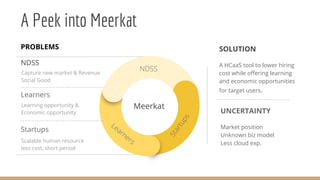
A Peek into Meerkat
Scalable human resource
less cost, short period
Startups
NDSS
Learners
Startups
Learning opportunity &
Economic opportunity
Learners
Capture new market & Revenue
Social Good
NDSS
Meerkat
SOLUTION
A HCaaS tool to lower hiring
cost while offering learning
and economic opportunities
for target users.
UNCERTAINTY
Market position
Unknown biz model
Less cloud exp.
PROBLEMS
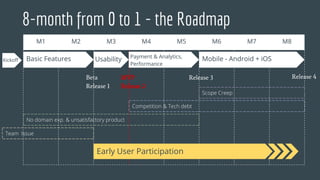
M1 M2 M3 M4 M5 M6 M7 M8
8-month from 0 to 1 - the Roadmap
Kickoff Basic Features
Beta
Release 1
Early User Participation
Usability Payment & Analytics,
Performance
Mobile - Android + iOS
MVP
Release 2
Release 3 Release 4
No domain exp. & unsatisfactory product
Team Issue
Competition & Tech debt
Scope Creep
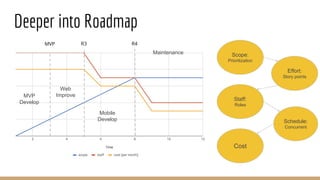
Deeper into Roadmap
Scope:
Prioritization
Effort:
Story points
Staff:
Roles
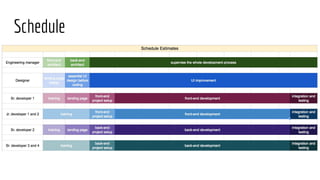
Schedule:
Concurrent
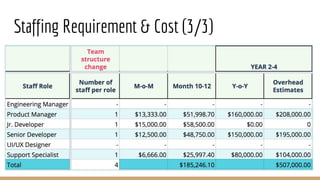
Cost
Web
ImproveMVP
Develop
Maintenance
Mobile
Develop
R3 R4MVP
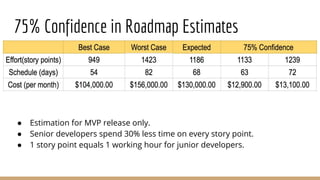
75% Confidence in Roadmap Estimates
● Estimation for MVP release only.
● Senior developers spend 30% less time on every story point.
● 1 story point equals 1 working hour for junior developers.
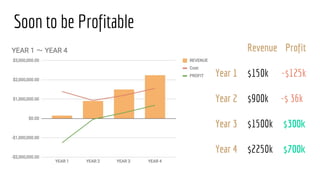
Soon to be Profitable
Revenue Profit
Year 1 $150k -$125k
Year 2 $900k -$ 36k
Year 3 $1500k $300k
Year 4 $2250k $700k
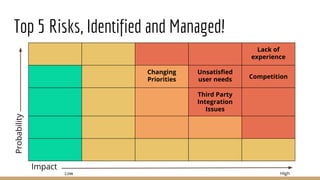
Top 5 Risks, Identified and Managed!
Lack of
experience
Changing
Priorities
Unsatisfied
user needs Competition
Third Party
Integration
Issues
Impact
Probability
Low High
“Details create the
big picture”
- Sanford I. Weill
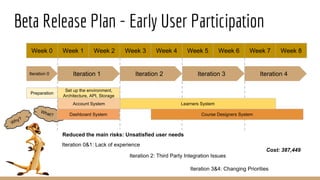
Beta Release Plan - Early User Participation
Why?
What?
Reduced the main risks: Unsatisfied user needs
Iteration 2: Third Party Integration Issues
Iteration 0&1: Lack of experience
Iteration 0
Week 0 Week 1 Week 2 Week 3 Week 4 Week 5 Week 6 Week 7 Week 8
Iteration 1 Iteration 2 Iteration 3 Iteration 4
Preparation
Set up the environment,
Architecture, API, Storage
Account System Learners System
Dashboard System
Iteration 3&4: Changing Priorities
Cost: 387,449
Course Designers System
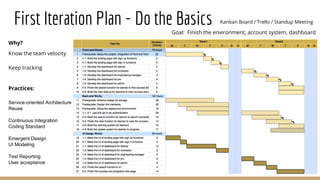
First Iteration Plan - Do the Basics
Practices:
Service-oriented Architecture
Reuse
Continuous Integration
Coding Standard
Emergent Design
UI Modeling
Test Reporting
User acceptance
Why?
Goal: Finish the environment, account system, dashboard
Know the team velocity
Keep tracking
Kanban Board / Trello / Standup Meeting
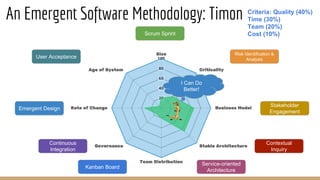
An Emergent Software Methodology: Timon
Scrum Sprint
Kanban Board
Service-oriented
Architecture
Emergent Design
Continuous
Integration
User Acceptance
Risk Identification &
Analysis
Stakeholder
Engagement
Contextual
Inquiry
Criteria: Quality (40%)
Time (30%)
Team (20%)
Cost (10%)
I Can Do
Better!
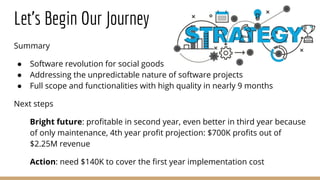
Let’s Begin Our Journey
Summary
● Software revolution for social goods
● Addressing the unpredictable nature of software projects
● Full scope and functionalities with high quality in nearly 9 months
Next steps
Bright future: profitable in second year, even better in third year because
of only maintenance, 4th year profit projection: $700K profits out of
$2.25M revenue
Action: need $140K to cover the first year implementation cost
Backup Slides
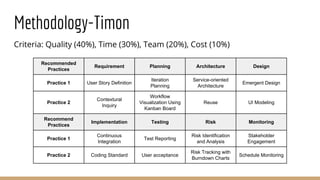
Methodology-Timon
Criteria: Quality (40%), Time (30%), Team (20%), Cost (10%)
Recommended
Practices
Requirement Planning Architecture Design
Practice 1 User Story Definition
Iteration
Planning
Service-oriented
Architecture
Emergent Design
Practice 2
Contextural
Inquiry
Workflow
Visualization Using
Kanban Board
Reuse UI Modeling
Recommend
Practices
Implementation Testing Risk Monitoring
Practice 1
Continuous
Integration
Test Reporting
Risk Identification
and Analysis
Stakeholder
Engagement
Practice 2 Coding Standard User acceptance
Risk Tracking with
Burndown Charts
Schedule Monitoring
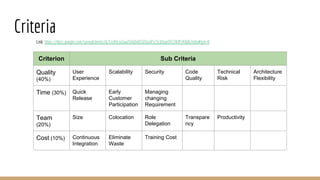
Criteria
Criterion Sub Criteria
Quality
(40%)
User
Experience
Scalability Security Code
Quality
Technical
Risk
Architecture
Flexibility
Time (30%) Quick
Release
Early
Customer
Participation
Managing
changing
Requirement
Team
(20%)
Size Colocation Role
Delegation
Transpare
ncy
Productivity
Cost (10%) Continuous
Integration
Eliminate
Waste
Training Cost
Link: https://docs.google.com/spreadsheets/d/1isRkcysGw2UIxQofEGfUqsR5cSCdUupOV1TK9FJ48dk/edit#gid=0
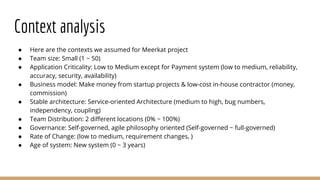
Context analysis
● Here are the contexts we assumed for Meerkat project
● Team size: Small (1 ~ 50)
● Application Criticality: Low to Medium except for Payment system (low to medium, reliability,
accuracy, security, availability)
● Business model: Make money from startup projects & low-cost in-house contractor (money,
commission)
● Stable architecture: Service-oriented Architecture (medium to high, bug numbers,
independency, coupling)
● Team Distribution: 2 different locations (0% ~ 100%)
● Governance: Self-governed, agile philosophy oriented (Self-governed ~ full-governed)
● Rate of Change: (low to medium, requirement changes, )
● Age of system: New system (0 ~ 3 years)
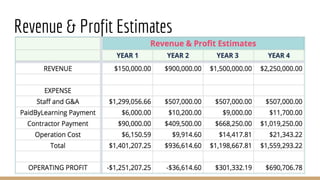
Revenue & Profit Estimates
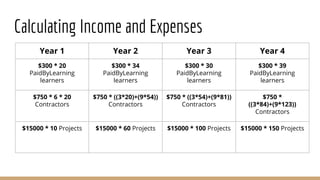
Calculating Income and Expenses
Year 1 Year 2 Year 3 Year 4
$300 * 20
PaidByLearning
learners
$300 * 34
PaidByLearning
learners
$300 * 30
PaidByLearning
learners
$300 * 39
PaidByLearning
learners
$750 * 6 * 20
Contractors
$750 * ((3*20)+(9*54))
Contractors
$750 * ((3*54)+(9*81))
Contractors
$750 *
((3*84)+(9*123))
Contractors
$15000 * 10 Projects $15000 * 60 Projects $15000 * 100 Projects $15000 * 150 Projects
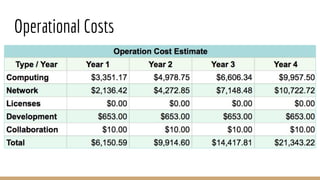
Operational Costs
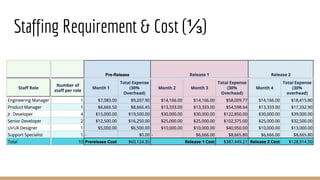
Staffing Requirement & Cost (⅓)
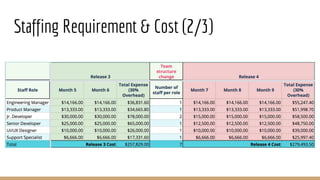
Staffing Requirement & Cost (2/3)
Staffing Requirement & Cost (3/3)
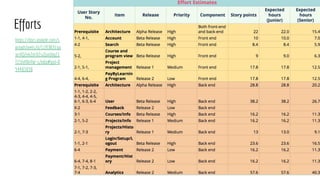
Efforts
https://docs.google.com/s
preadsheets/d/11fCBEELqo
JerXQ2ekZdrO2siZpxUbq21
T15hH9k4W-s/edit#gid=8
54483830
Schedule
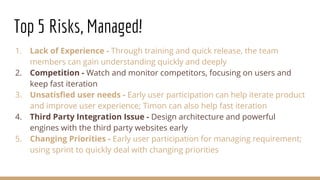
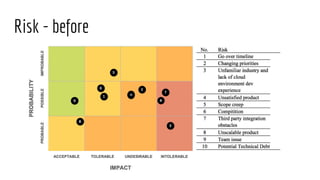
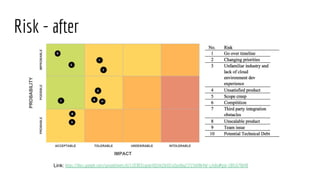
Top 5 Risks, Managed!
1. Lack of Experience - Through training and quick release, the team
members can gain understanding quickly and deeply
2. Competition - Watch and monitor competitors, focusing on users and
keep fast iteration
3. Unsatisfied user needs - Early user participation can help iterate product
and improve user experience; Timon can also help fast iteration
4. Third Party Integration Issue - Design architecture and powerful
engines with the third party websites early
5. Changing Priorities - Early user participation for managing requirement;
using sprint to quickly deal with changing priorities
Risk - before
Risk - after
Link: https://docs.google.com/spreadsheets/d/11fCBEELqoJerXQ2ekZdrO2siZpxUbq21T15hH9k4W-s/edit#gid=1091679640
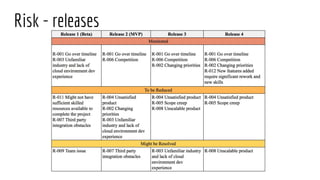
Risk - releases
RoadMap
https://docs.google.com/spreadsheets/d/11fCBEELqoJerXQ2ekZdrO2siZpxUbq21T15hH9k4W-s/edit#gid=2115810721

Software Engineering Plan & Methodology Recommendation

  • 1.
    Software Engineering Plan& Methodology Recommendation Team !404 Zhongwu Shi, Lan Liu, Mia Zheng, Yi Chi Chan, Dhatri Misra “Meerkat”
  • 2.
    A Peek intoMeerkat Scalable human resource less cost, short period Startups NDSS Learners Startups Learning opportunity & Economic opportunity Learners Capture new market & Revenue Social Good NDSS Meerkat SOLUTION A HCaaS tool to lower hiring cost while offering learning and economic opportunities for target users. UNCERTAINTY Market position Unknown biz model Less cloud exp. PROBLEMS
  • 3.
    M1 M2 M3M4 M5 M6 M7 M8 8-month from 0 to 1 - the Roadmap Kickoff Basic Features Beta Release 1 Early User Participation Usability Payment & Analytics, Performance Mobile - Android + iOS MVP Release 2 Release 3 Release 4 No domain exp. & unsatisfactory product Team Issue Competition & Tech debt Scope Creep
  • 4.
    Deeper into Roadmap Scope: Prioritization Effort: Storypoints Staff: Roles Schedule: Concurrent Cost Web ImproveMVP Develop Maintenance Mobile Develop R3 R4MVP
  • 5.
    75% Confidence inRoadmap Estimates ● Estimation for MVP release only. ● Senior developers spend 30% less time on every story point. ● 1 story point equals 1 working hour for junior developers.
  • 6.
    Soon to beProfitable Revenue Profit Year 1 $150k -$125k Year 2 $900k -$ 36k Year 3 $1500k $300k Year 4 $2250k $700k
  • 7.
    Top 5 Risks,Identified and Managed! Lack of experience Changing Priorities Unsatisfied user needs Competition Third Party Integration Issues Impact Probability Low High
  • 8.
    “Details create the bigpicture” - Sanford I. Weill
  • 9.
    Beta Release Plan- Early User Participation Why? What? Reduced the main risks: Unsatisfied user needs Iteration 2: Third Party Integration Issues Iteration 0&1: Lack of experience Iteration 0 Week 0 Week 1 Week 2 Week 3 Week 4 Week 5 Week 6 Week 7 Week 8 Iteration 1 Iteration 2 Iteration 3 Iteration 4 Preparation Set up the environment, Architecture, API, Storage Account System Learners System Dashboard System Iteration 3&4: Changing Priorities Cost: 387,449 Course Designers System
  • 10.
    First Iteration Plan- Do the Basics Practices: Service-oriented Architecture Reuse Continuous Integration Coding Standard Emergent Design UI Modeling Test Reporting User acceptance Why? Goal: Finish the environment, account system, dashboard Know the team velocity Keep tracking Kanban Board / Trello / Standup Meeting
  • 11.
    An Emergent SoftwareMethodology: Timon Scrum Sprint Kanban Board Service-oriented Architecture Emergent Design Continuous Integration User Acceptance Risk Identification & Analysis Stakeholder Engagement Contextual Inquiry Criteria: Quality (40%) Time (30%) Team (20%) Cost (10%) I Can Do Better!
  • 12.
    Let’s Begin OurJourney Summary ● Software revolution for social goods ● Addressing the unpredictable nature of software projects ● Full scope and functionalities with high quality in nearly 9 months Next steps Bright future: profitable in second year, even better in third year because of only maintenance, 4th year profit projection: $700K profits out of $2.25M revenue Action: need $140K to cover the first year implementation cost
  • 13.
  • 14.
    Methodology-Timon Criteria: Quality (40%),Time (30%), Team (20%), Cost (10%) Recommended Practices Requirement Planning Architecture Design Practice 1 User Story Definition Iteration Planning Service-oriented Architecture Emergent Design Practice 2 Contextural Inquiry Workflow Visualization Using Kanban Board Reuse UI Modeling Recommend Practices Implementation Testing Risk Monitoring Practice 1 Continuous Integration Test Reporting Risk Identification and Analysis Stakeholder Engagement Practice 2 Coding Standard User acceptance Risk Tracking with Burndown Charts Schedule Monitoring
  • 15.
    Criteria Criterion Sub Criteria Quality (40%) User Experience ScalabilitySecurity Code Quality Technical Risk Architecture Flexibility Time (30%) Quick Release Early Customer Participation Managing changing Requirement Team (20%) Size Colocation Role Delegation Transpare ncy Productivity Cost (10%) Continuous Integration Eliminate Waste Training Cost Link: https://docs.google.com/spreadsheets/d/1isRkcysGw2UIxQofEGfUqsR5cSCdUupOV1TK9FJ48dk/edit#gid=0
  • 16.
    Context analysis ● Hereare the contexts we assumed for Meerkat project ● Team size: Small (1 ~ 50) ● Application Criticality: Low to Medium except for Payment system (low to medium, reliability, accuracy, security, availability) ● Business model: Make money from startup projects & low-cost in-house contractor (money, commission) ● Stable architecture: Service-oriented Architecture (medium to high, bug numbers, independency, coupling) ● Team Distribution: 2 different locations (0% ~ 100%) ● Governance: Self-governed, agile philosophy oriented (Self-governed ~ full-governed) ● Rate of Change: (low to medium, requirement changes, ) ● Age of system: New system (0 ~ 3 years)
  • 17.
  • 18.
    Calculating Income andExpenses Year 1 Year 2 Year 3 Year 4 $300 * 20 PaidByLearning learners $300 * 34 PaidByLearning learners $300 * 30 PaidByLearning learners $300 * 39 PaidByLearning learners $750 * 6 * 20 Contractors $750 * ((3*20)+(9*54)) Contractors $750 * ((3*54)+(9*81)) Contractors $750 * ((3*84)+(9*123)) Contractors $15000 * 10 Projects $15000 * 60 Projects $15000 * 100 Projects $15000 * 150 Projects
  • 19.
  • 20.
  • 21.
  • 22.
  • 23.
  • 24.
  • 25.
    Top 5 Risks,Managed! 1. Lack of Experience - Through training and quick release, the team members can gain understanding quickly and deeply 2. Competition - Watch and monitor competitors, focusing on users and keep fast iteration 3. Unsatisfied user needs - Early user participation can help iterate product and improve user experience; Timon can also help fast iteration 4. Third Party Integration Issue - Design architecture and powerful engines with the third party websites early 5. Changing Priorities - Early user participation for managing requirement; using sprint to quickly deal with changing priorities
  • 26.
  • 27.
    Risk - after Link:https://docs.google.com/spreadsheets/d/11fCBEELqoJerXQ2ekZdrO2siZpxUbq21T15hH9k4W-s/edit#gid=1091679640
  • 28.
  • 29.