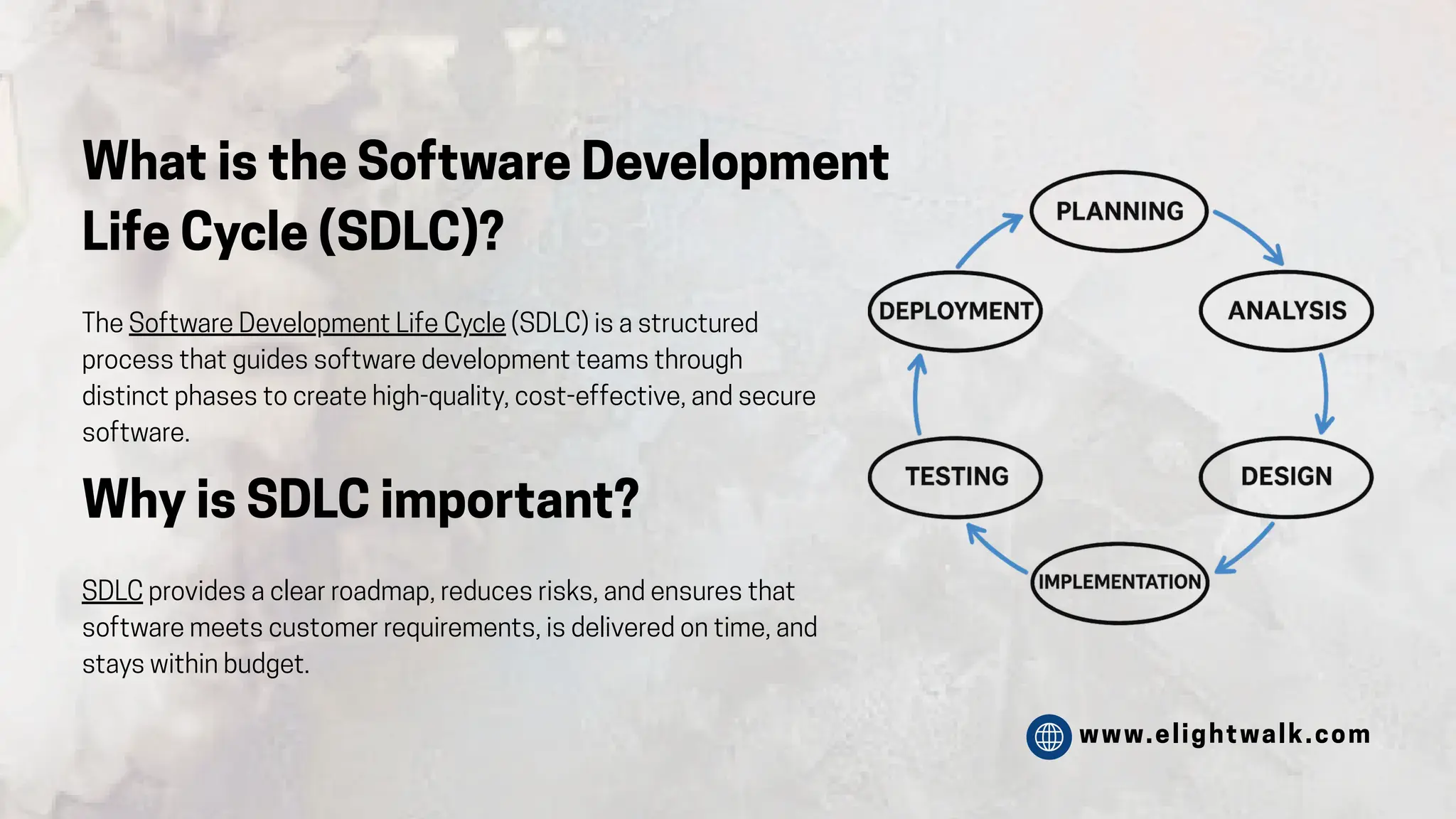
The Software Development Life Cycle (SDLC) is a structured process that guides software development teams through distinct phases to create high-quality, cost-effective, and secure software.
www.elightwalk.com
What is theSoftware Development
Life Cycle (SDLC)?
The Software Development Life Cycle (SDLC) is a structured
process that guides software development teams through
distinct phases to create high-quality, cost-effective, and secure
software.
Why is SDLC important?
SDLC provides a clear roadmap, reduces risks, and ensures that
software meets customer requirements, is delivered on time, and
stays within budget.
3.
www.elightwalk.com
Why SDLC MethodologiesMatter
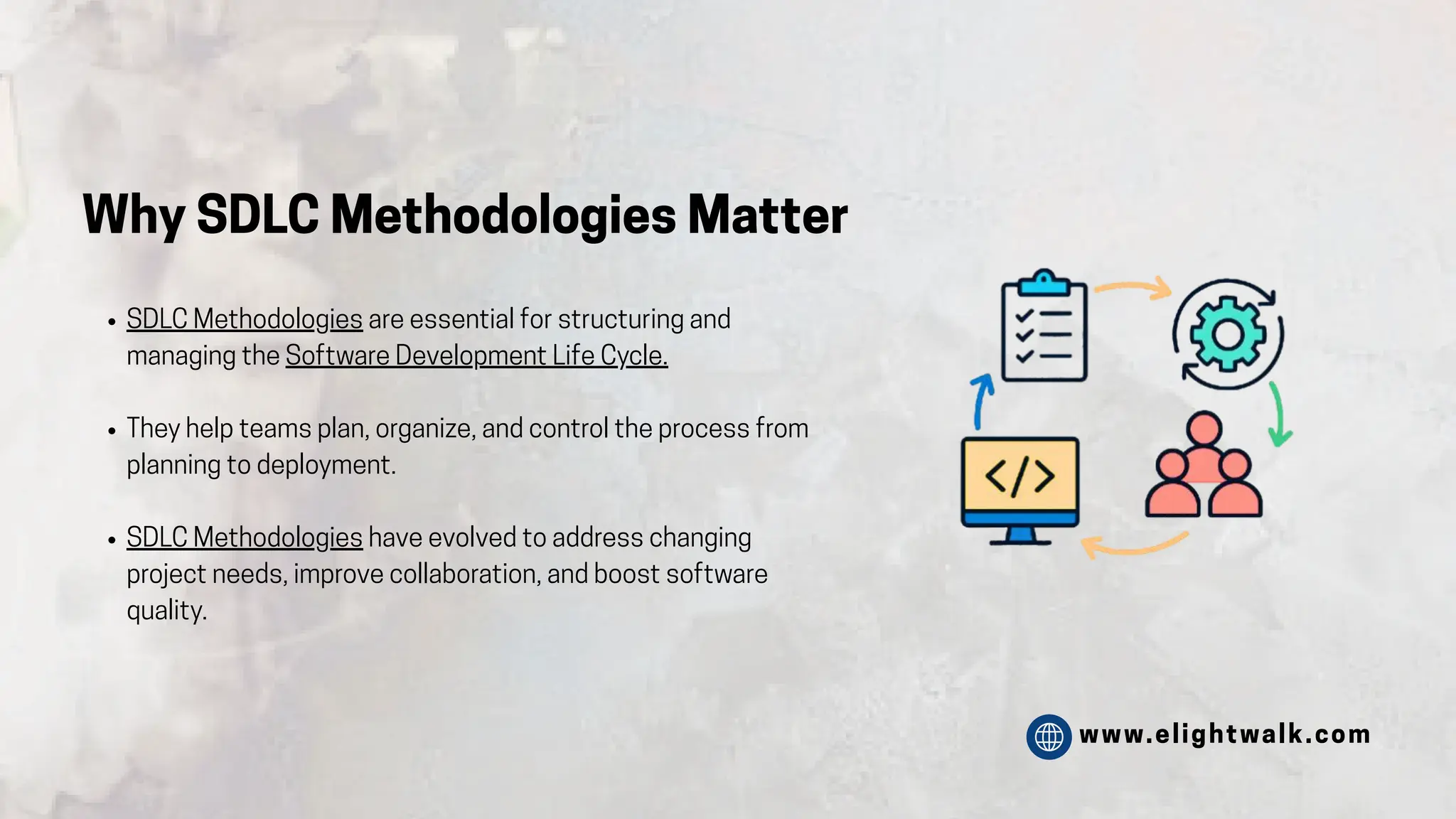
SDLC Methodologies are essential for structuring and
managing the Software Development Life Cycle.
They help teams plan, organize, and control the process from
planning to deployment.
SDLC Methodologies have evolved to address changing
project needs, improve collaboration, and boost software
quality.
4.
www.elightwalk.com
Traditional SDLC Methodologies
WaterfallModel:
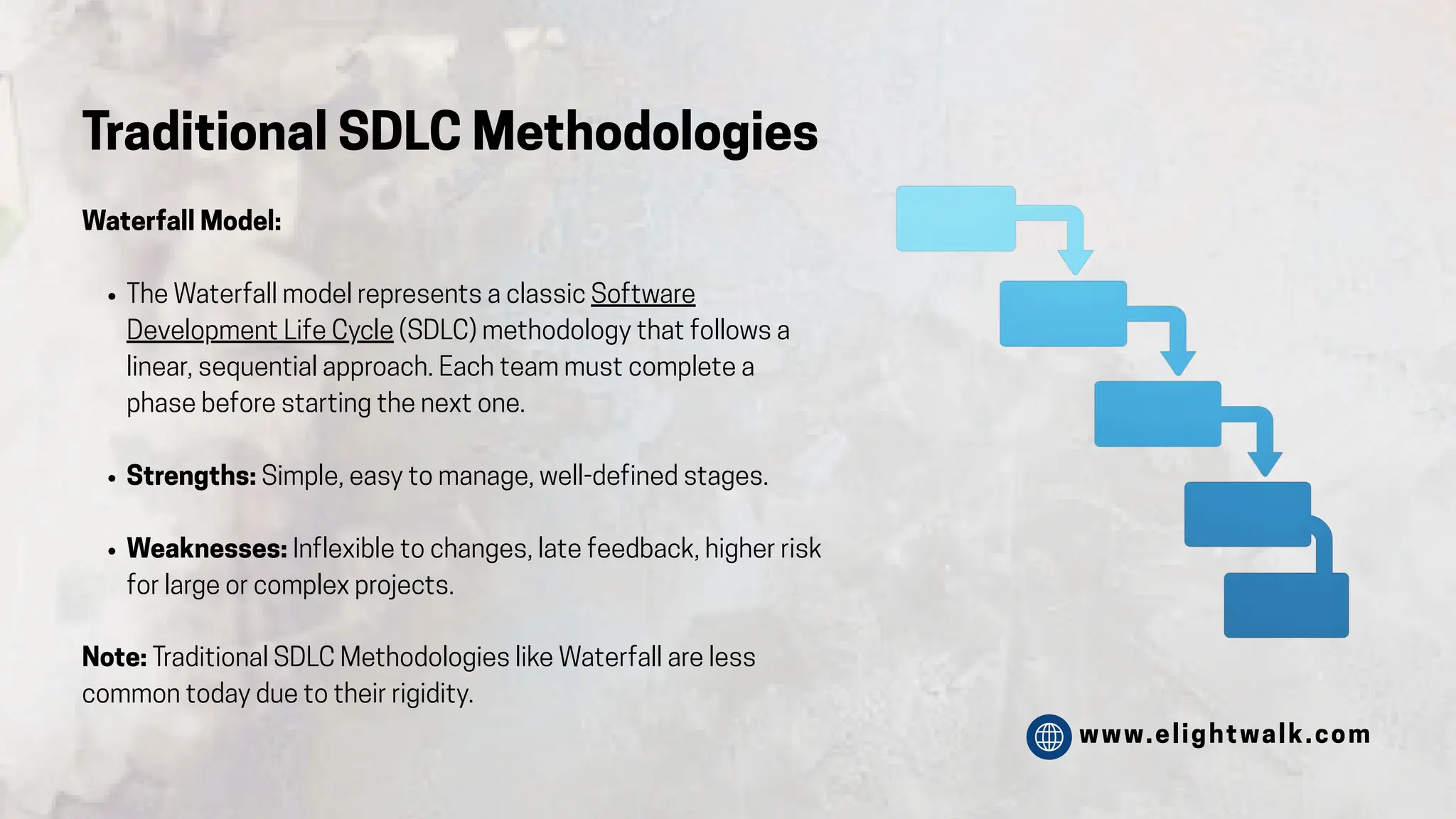
The Waterfall model represents a classic Software
Development Life Cycle (SDLC) methodology that follows a
linear, sequential approach. Each team must complete a
phase before starting the next one.
Strengths: Simple, easy to manage, well-defined stages.
Weaknesses: Inflexible to changes, late feedback, higher risk
for large or complex projects.
Note: Traditional SDLC Methodologies like Waterfall are less
common today due to their rigidity.
5.
www.elightwalk.com
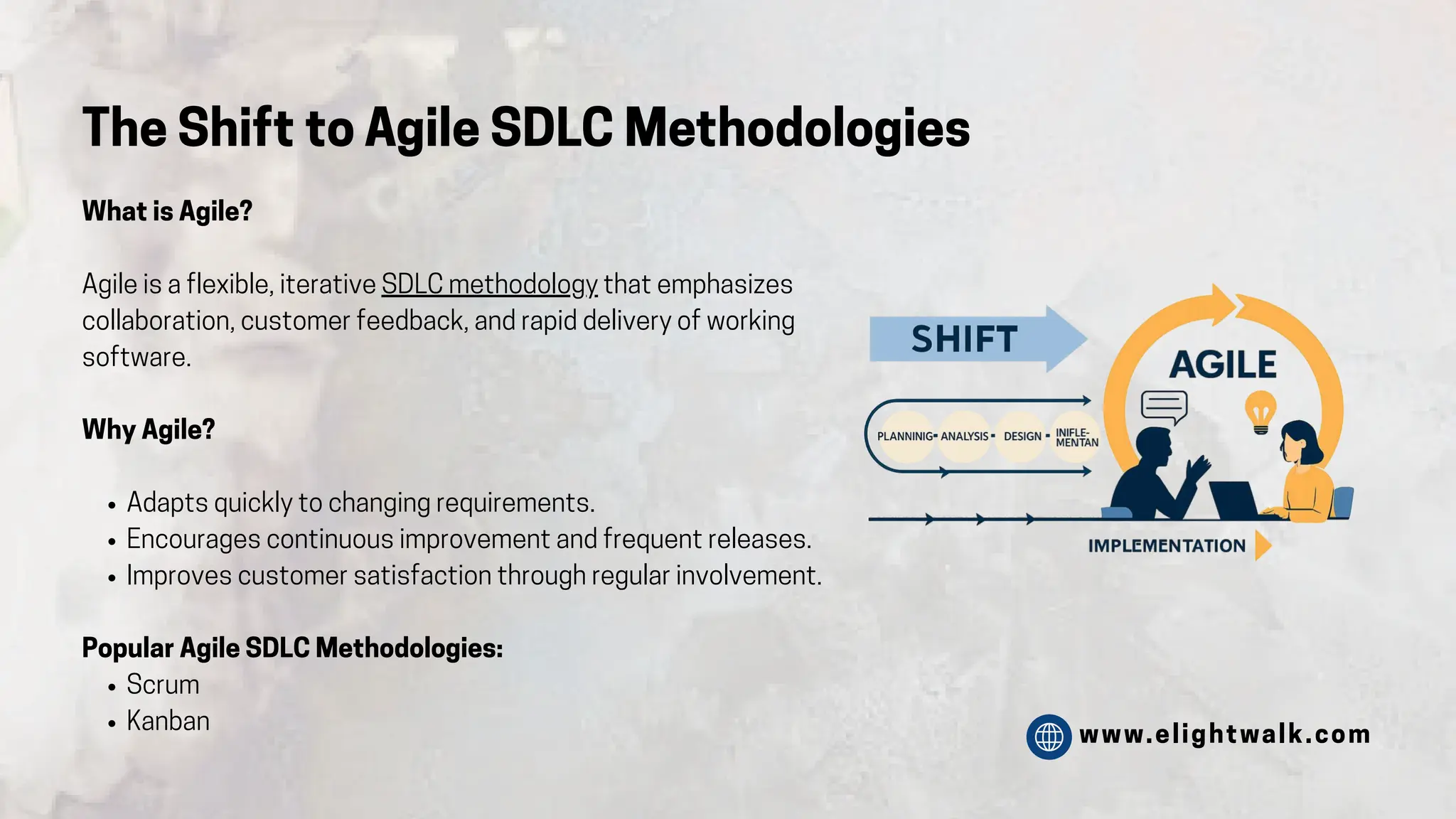
What is Agile?
Agileis a flexible, iterative SDLC methodology that emphasizes
collaboration, customer feedback, and rapid delivery of working
software.
Why Agile?
Adapts quickly to changing requirements.
Encourages continuous improvement and frequent releases.
Improves customer satisfaction through regular involvement.
Popular Agile SDLC Methodologies:
Scrum
Kanban
The Shift to Agile SDLC Methodologies
6.
www.elightwalk.com
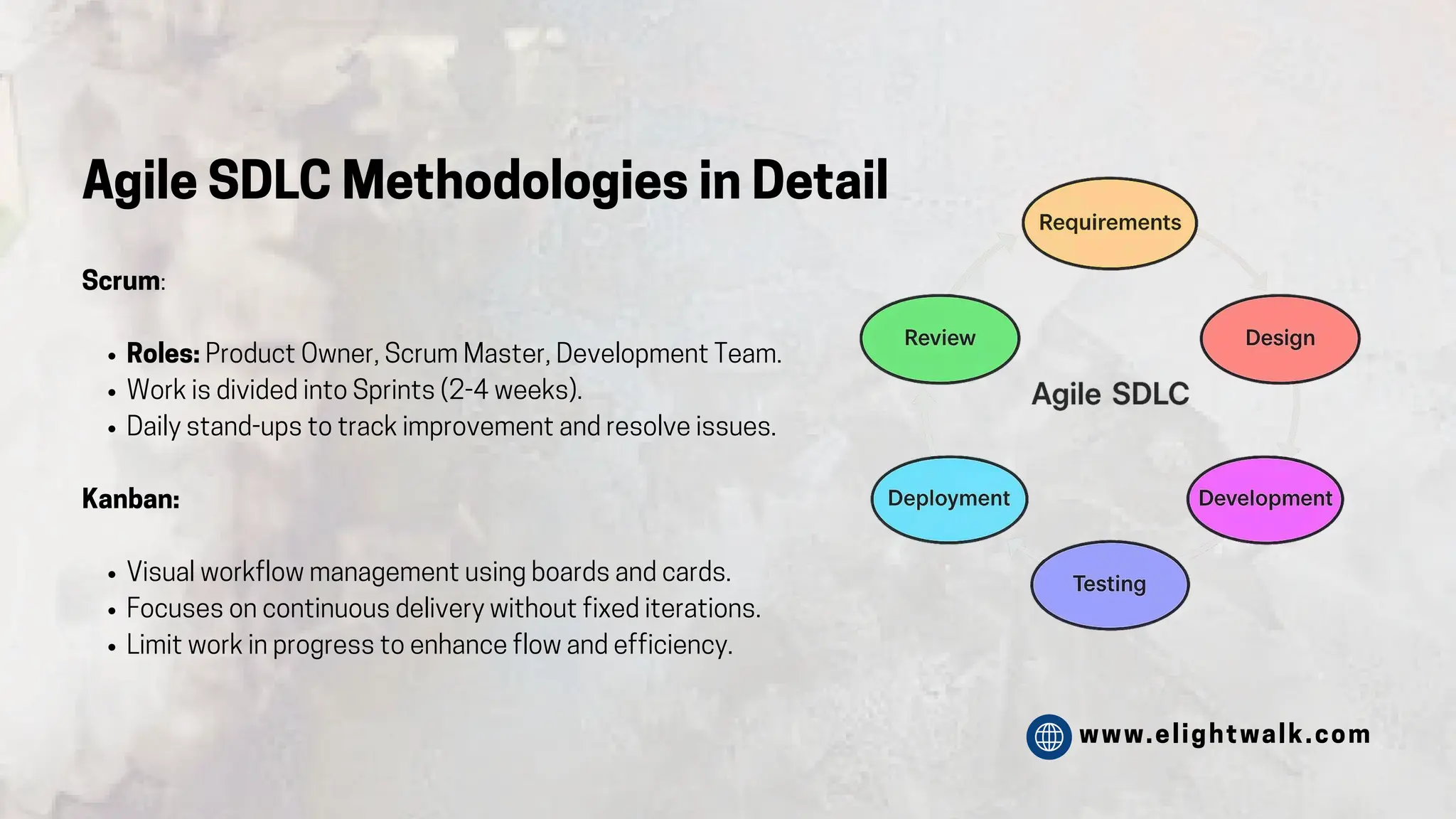
Agile SDLC Methodologiesin Detail
Scrum:
Roles: Product Owner, Scrum Master, Development Team.
Work is divided into Sprints (2-4 weeks).
Daily stand-ups to track improvement and resolve issues.
Kanban:
Visual workflow management using boards and cards.
Focuses on continuous delivery without fixed iterations.
Limit work in progress to enhance flow and efficiency.
7.
www.elightwalk.com
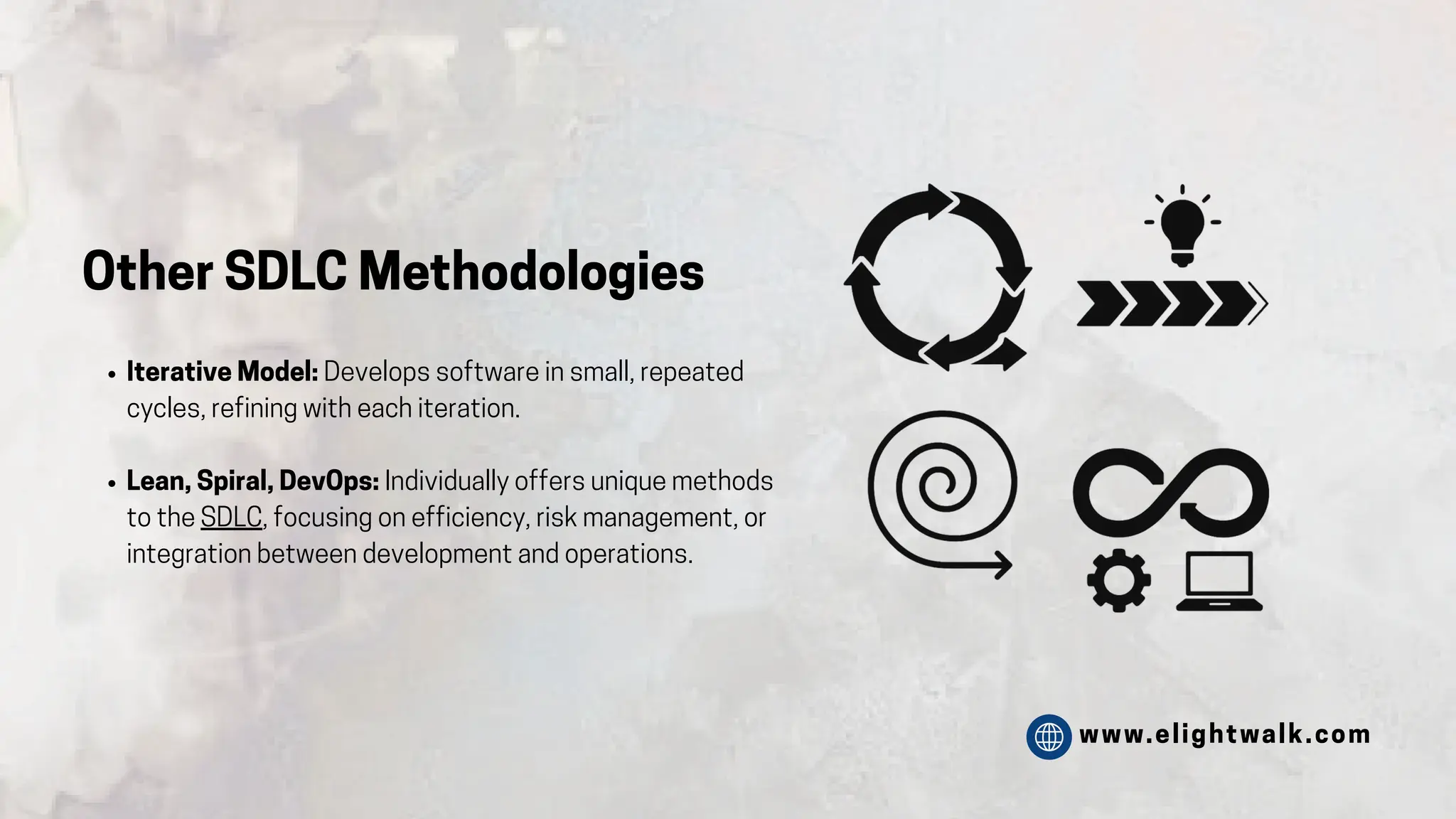
Other SDLC Methodologies
IterativeModel: Develops software in small, repeated
cycles, refining with each iteration.
Lean, Spiral, DevOps: Individually offers unique methods
to the SDLC, focusing on efficiency, risk management, or
integration between development and operations.
8.
www.elightwalk.com
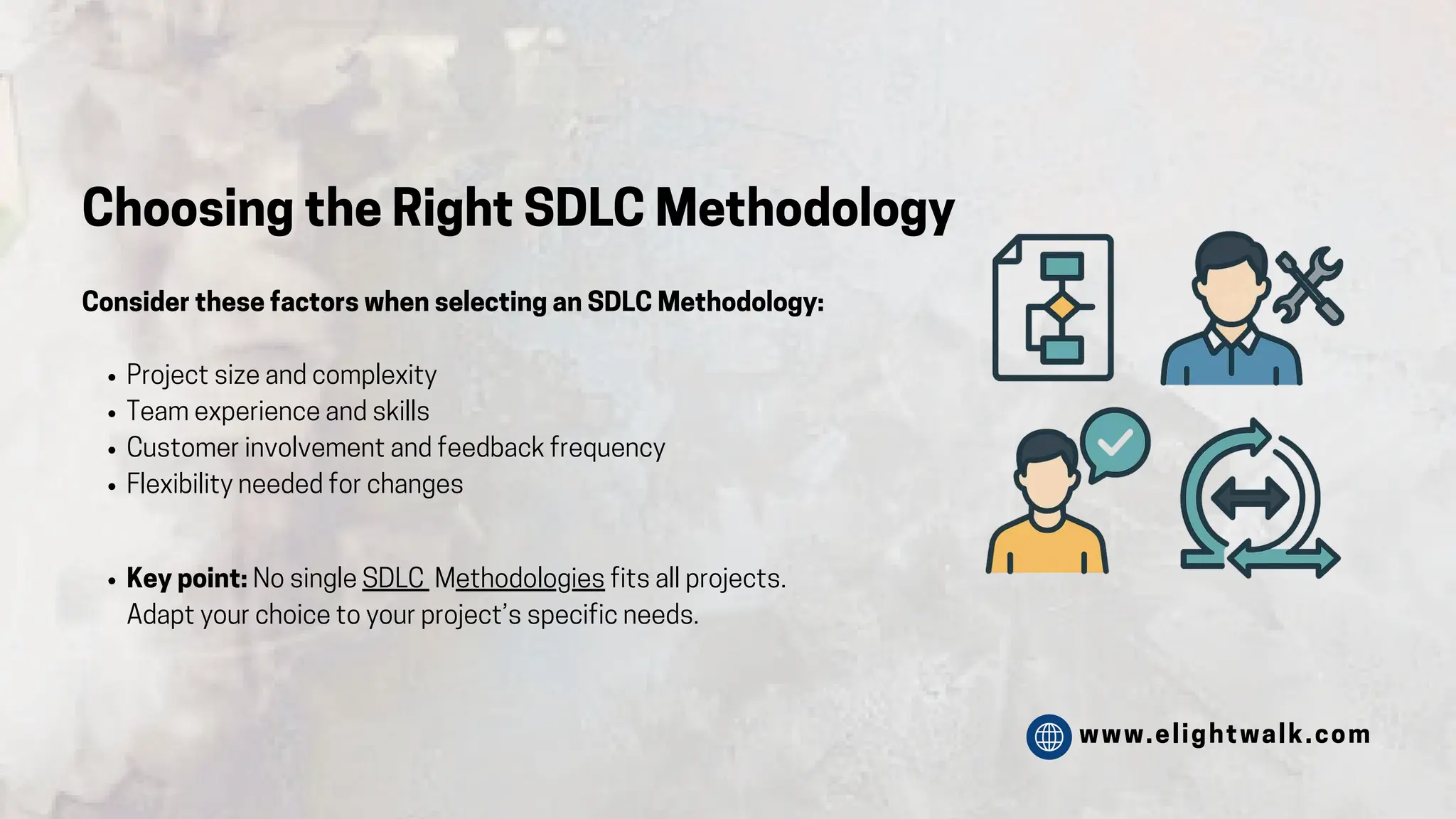
Choosing the RightSDLC Methodology
Consider these factors when selecting an SDLC Methodology:
Project size and complexity
Team experience and skills
Customer involvement and feedback frequency
Flexibility needed for changes
Key point: No single SDLC Methodologies fits all projects.
Adapt your choice to your project’s specific needs.
9.
www.elightwalk.com
Summary & Takeaways
TheSoftware Development Life Cycle (SDLC) is crucial for
organized and efficient software development.
Modern SDLC Methodologies like Agile offer flexibility and
customer focus.
The SDLC landscape is evolving—stay adaptable and
choose the right methodology for your needs.
10.
www.elightwalk.com
References & FurtherReading
Blog Source: Software Development Life Cycle - elightwalk.com
Virtasant: SDLC Methodologies
AWS: What is SDLC?
IBM: What is the Software Development Life Cycle?
Atlassian: What is SDLC?
Michael Page: Top 7 SDLC Methodologies



![Understanding the Software Development Lifecycle [SDLC] | A Comprehensive Guide](https://cdn.slidesharecdn.com/ss_thumbnails/sdlcguide-230525115720-1a136623-thumbnail.jpg?width=640&height=640&fit=bounds)


![Coded Agents – with UiPath SDK + LangGraph [Virtual Hands-on Workshop]](https://cdn.slidesharecdn.com/ss_thumbnails/codedagentsdeck-251215155422-5497c599-thumbnail.jpg?width=640&height=640&fit=bounds)


