Copy rights & Intellectual property
Intellectual Property  The term Intellectual Property reflects the  idea that its subject matter is the product  of the mind or the intellect.  E.g. computer  program  WIPO  Encouraging creativity and innovation
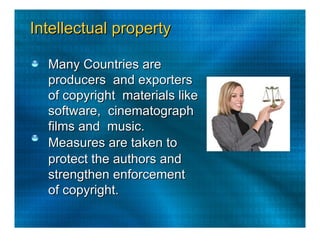
Intellectual property  Many Countries are producers  and exporters of copyright  materials like software,  cinematograph films and  music.  Measures are taken to  protect the authors and  strengthen enforcement  of copyright.
What is Software Piracy?  Software Piracy or counterfeiting is defined as  the illegal copying of software combined with  unauthorised duplication of genuine trademarks  and documents  Software Copying  Generally, licenses for one or a few copies of a  computer package / programme may be  purchased for a business or in a workplace. As,  requirements increase, illegal copies are made  from one of the licensed programmes and  installed in other computers.  In addition, office software is often illegally copied  into the home computer of an employee or vice-versa.
Network Piracy  Software piracy often occurs on computer  networks when a software program is  accessed by more users than what a  license permits. Many network user  organisations fail to realise this as a  violation of copyright law  E.g., ERP software is sold usually on per-  user license basis  If more users are using the same package  then user organization should pay license  fees to the software vendor.
Internet Piracy  With the advent of internet and the  increasing use of internet, the software  piracy has grown dramatically in recent  years. Through Internet, programs are  uploaded to bulletin board systems or  commercial on-line services which, in turn,  can be downloaded or sent via electronic  mail to individuals who may  not hold a  license to use these software.
Computer hardware resellers  The sellers of computer software particularly the  unauthorised retailers are also involved in selling  pirated softwares. They simply copy the original  (licensed) softwares into floppy discs or  in CD  ROMs and sell them to the end users or install  them in users' hardware.  Computer dealers more particularly, the  unauthorised hardware suppliers who assemble  components and sell computers to the users with  software already installed.  Unfortunately, in most of the cases these  computers are loaded with  unlicensed  softwares . In such cases, unless a license and  software manuals are provided with the sale, it is  likely that programs have been  illegally copied.
IT Industry  The computer software perhaps is the fastest  growing industry in India. The sector is growing  at an annual compound growth rate of over 50  per cent during the recent years  Do not mix up the software service with the  software package export  Perhaps, software companies are happy in  exporting mainly the services since they do not have  to worry much about the copyright piracy as has  been taking place in the packaged software
Shareware / Free software  Open source  The licenses for most software are  designed to take away your freedom to  share and change it.  By contrast, the GNU General Public  Licenses are intended to guarantee your  freedom to share and change free  software--to make sure the software is  free for all its users.

Chapter 7 Copy Rights And Intellectual Property

  • 1.
    Copy rights &Intellectual property
  • 2.
    Intellectual Property The term Intellectual Property reflects the idea that its subject matter is the product of the mind or the intellect. E.g. computer program WIPO Encouraging creativity and innovation
  • 3.
    Intellectual property Many Countries are producers and exporters of copyright materials like software, cinematograph films and music. Measures are taken to protect the authors and strengthen enforcement of copyright.
  • 4.
    What is SoftwarePiracy? Software Piracy or counterfeiting is defined as the illegal copying of software combined with unauthorised duplication of genuine trademarks and documents Software Copying Generally, licenses for one or a few copies of a computer package / programme may be purchased for a business or in a workplace. As, requirements increase, illegal copies are made from one of the licensed programmes and installed in other computers. In addition, office software is often illegally copied into the home computer of an employee or vice-versa.
  • 5.
    Network Piracy Software piracy often occurs on computer networks when a software program is accessed by more users than what a license permits. Many network user organisations fail to realise this as a violation of copyright law E.g., ERP software is sold usually on per- user license basis If more users are using the same package then user organization should pay license fees to the software vendor.
  • 6.
    Internet Piracy With the advent of internet and the increasing use of internet, the software piracy has grown dramatically in recent years. Through Internet, programs are uploaded to bulletin board systems or commercial on-line services which, in turn, can be downloaded or sent via electronic mail to individuals who may not hold a license to use these software.
  • 7.
    Computer hardware resellers The sellers of computer software particularly the unauthorised retailers are also involved in selling pirated softwares. They simply copy the original (licensed) softwares into floppy discs or in CD ROMs and sell them to the end users or install them in users' hardware. Computer dealers more particularly, the unauthorised hardware suppliers who assemble components and sell computers to the users with software already installed. Unfortunately, in most of the cases these computers are loaded with unlicensed softwares . In such cases, unless a license and software manuals are provided with the sale, it is likely that programs have been illegally copied.
  • 8.
    IT Industry The computer software perhaps is the fastest growing industry in India. The sector is growing at an annual compound growth rate of over 50 per cent during the recent years Do not mix up the software service with the software package export Perhaps, software companies are happy in exporting mainly the services since they do not have to worry much about the copyright piracy as has been taking place in the packaged software
  • 9.
    Shareware / Freesoftware Open source The licenses for most software are designed to take away your freedom to share and change it. By contrast, the GNU General Public Licenses are intended to guarantee your freedom to share and change free software--to make sure the software is free for all its users.