Submitted By :-Divyam Arora
VII-A
Submitted To :-Mrs. Richa
What is Social Networking?
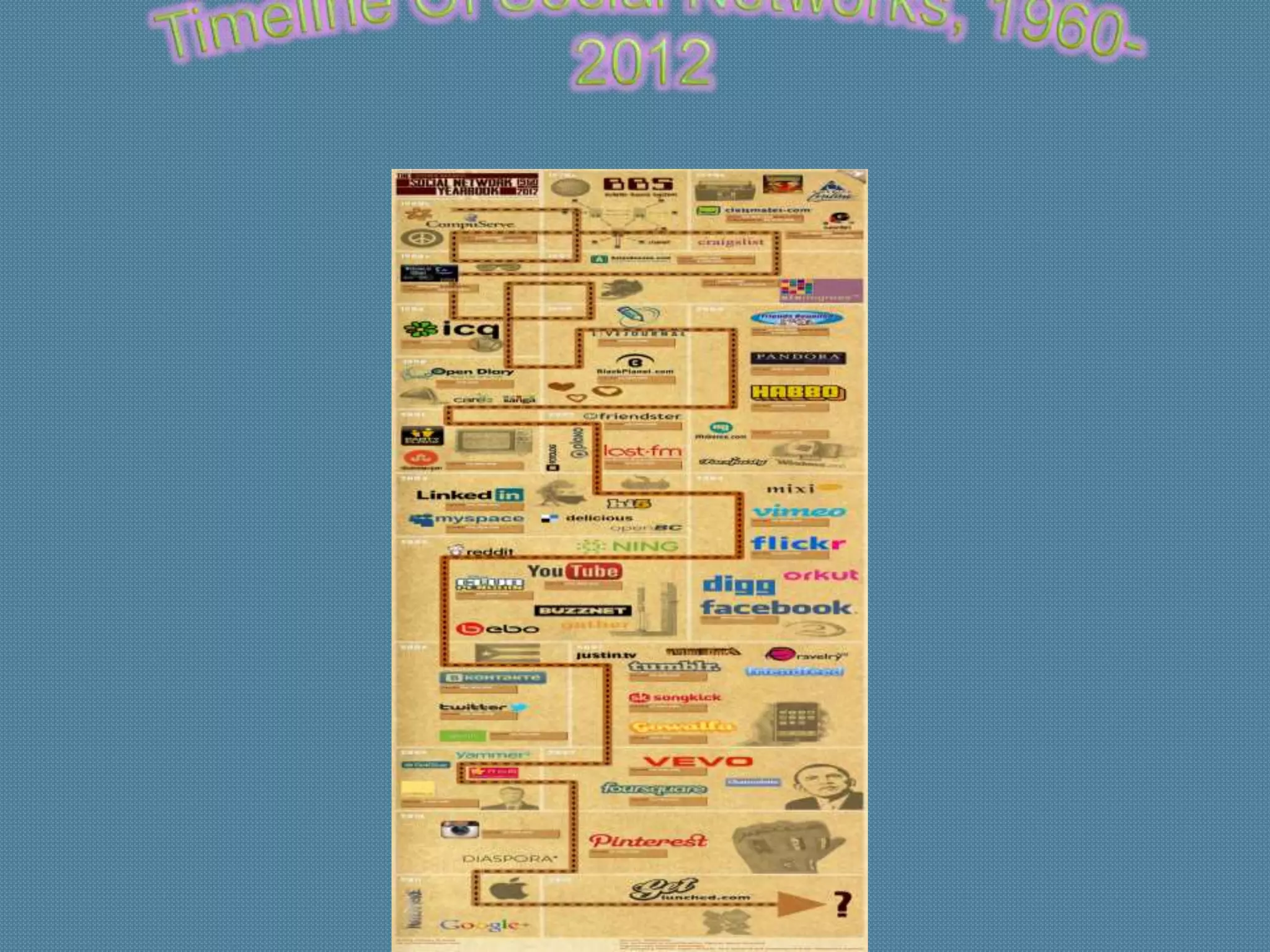
Brief History of Social Networking Sites
The Timeline of Social Networking, 1960-2012
Some Popular Networking Sites
Advantages
Disadvantages
A social networking service is a platform to
build social networks or social relations among people
who share interests, activities, backgrounds or real-life
connections. Most social network services are web-
based and provide means for users to interact over the
Internet, such as e-mail and instant messaging. They
are varied and they incorporate new information and
communication tools. It usually means an individual-
centered service. They allow users to share ideas,
pictures, posts, activities, events, interests, videos with
people in their network.
In 1997, the first social networking site was
created, SixDegrees.com. SixDegrees was the
first modern social network. It allowed users to
create a profile and to become friends with
other users. While the site is no longer
functional, at one time it was actually quite
popular and had around a million members at
its peak. In 2000 it was purchased for $125
million and in 2001 it was shut down.
1.Social networking helps people stay in touch that might not do it otherwise.
2. Social networking can be used to help advertise goods and services.
3. Social networking can provide an extremely accessible medium for self expression to
those with access to computer technology.
4. Social networking can help families torn apart by war, divorce, etc. stay in touch
easier and quicker than by some other means.
5. Social networking can be a powerful engine for job searches.
6. Social networking can leverage political power for groups that might not otherwise
have access.
7. Social networking can be used to counteract terrorism and organized crime.
8. Social networking can be used to find dating partners in a fractured society where
healthy meeting places are limited.
9. Social networking can be used to memorialize and honor dead persons to keep
memories and history that would otherwise fade alive.
10. Social networking can be used to get difficult personal issues out of the closet in
front of others so they can be examined and evaluated, and people in trouble can
garner support from their friends.
1. Social networking takes time away from other activities and can take over from real time
interaction.
2. Social networking formats set up expectations of importance for certain types of
communication at the expense of other types. Pictures and phrases on a wall can take the
place of phone calls and face to face time with family and friends.
3. Social networking magnifies the gap between people who have access to computer
technology and those that don't, exacerbating other social inequities.
4. Social networking can compromise privacy in a big way.
5. Social networking can force changes in public policy which can either be a good thing or
a bad thing depending on whose ox is gored. Employers can now make access to private
social networking history a condition of hiring. Lawmakers may want to change that to
prevent discrimination.
6. Social networking can be used to destabilize governments and to advance terrorism.
7. Social networking can be used to promote organized crime.
8. Social networking can become a venue for bullying.
9. Social networking can be a vector for simplifying language, thereby limiting concept
development and expression.
10. Social networking can leave an indelible personal history that keeps a person who has
grown past a bad time from moving on freely.
Social networking

Social networking

  • 1.
    Submitted By :-DivyamArora VII-A Submitted To :-Mrs. Richa
  • 2.
    What is SocialNetworking? Brief History of Social Networking Sites The Timeline of Social Networking, 1960-2012 Some Popular Networking Sites Advantages Disadvantages
  • 3.
    A social networkingservice is a platform to build social networks or social relations among people who share interests, activities, backgrounds or real-life connections. Most social network services are web- based and provide means for users to interact over the Internet, such as e-mail and instant messaging. They are varied and they incorporate new information and communication tools. It usually means an individual- centered service. They allow users to share ideas, pictures, posts, activities, events, interests, videos with people in their network.
  • 4.
    In 1997, thefirst social networking site was created, SixDegrees.com. SixDegrees was the first modern social network. It allowed users to create a profile and to become friends with other users. While the site is no longer functional, at one time it was actually quite popular and had around a million members at its peak. In 2000 it was purchased for $125 million and in 2001 it was shut down.
  • 7.
    1.Social networking helpspeople stay in touch that might not do it otherwise. 2. Social networking can be used to help advertise goods and services. 3. Social networking can provide an extremely accessible medium for self expression to those with access to computer technology. 4. Social networking can help families torn apart by war, divorce, etc. stay in touch easier and quicker than by some other means. 5. Social networking can be a powerful engine for job searches. 6. Social networking can leverage political power for groups that might not otherwise have access. 7. Social networking can be used to counteract terrorism and organized crime. 8. Social networking can be used to find dating partners in a fractured society where healthy meeting places are limited. 9. Social networking can be used to memorialize and honor dead persons to keep memories and history that would otherwise fade alive. 10. Social networking can be used to get difficult personal issues out of the closet in front of others so they can be examined and evaluated, and people in trouble can garner support from their friends.
  • 8.
    1. Social networkingtakes time away from other activities and can take over from real time interaction. 2. Social networking formats set up expectations of importance for certain types of communication at the expense of other types. Pictures and phrases on a wall can take the place of phone calls and face to face time with family and friends. 3. Social networking magnifies the gap between people who have access to computer technology and those that don't, exacerbating other social inequities. 4. Social networking can compromise privacy in a big way. 5. Social networking can force changes in public policy which can either be a good thing or a bad thing depending on whose ox is gored. Employers can now make access to private social networking history a condition of hiring. Lawmakers may want to change that to prevent discrimination. 6. Social networking can be used to destabilize governments and to advance terrorism. 7. Social networking can be used to promote organized crime. 8. Social networking can become a venue for bullying. 9. Social networking can be a vector for simplifying language, thereby limiting concept development and expression. 10. Social networking can leave an indelible personal history that keeps a person who has grown past a bad time from moving on freely.