   Social media as a new
    medium of communication
   Images projected through
    social media can be viewed
    by anyone
   Teenagers as an untargeted
    but direct audience
   Social Media creating social
    norms
   Cyber bullying
   Instagram & Photoshop
    creating false perception of
    reality
   Retailers use Photoshop to
    enhance images targeted to
    youth
   Various companies
    acknowledge distorted
    perception on reality
 Social media users with smart phones,
  check their smart phones 34 times a day
  on average
 Their social media use typically lasts for
  30 seconds and are repeated within 10
  minutes of the first check.
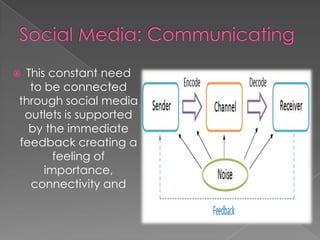
This constant need
  to be connected
through social media
 outlets is supported
  by the immediate
feedback creating a
       feeling of
     importance,
  connectivity and
CHANNEL


          CHANNEL


          CHANNEL


MESSAGE
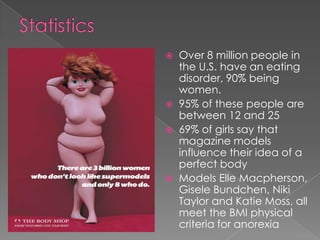
   Over 8 million people in
    the U.S. have an eating
    disorder, 90% being
    women.
   95% of these people are
    between 12 and 25
   69% of girls say that
    magazine models
    influence their idea of a
    perfect body
   Models Elle Macpherson,
    Gisele Bundchen, Niki
    Taylor and Katie Moss, all
    meet the BMI physical
    criteria for anorexia
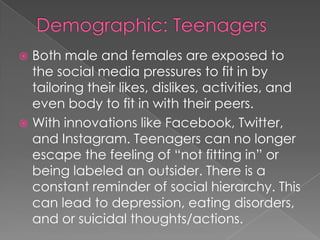
 Both male and females are exposed to
  the social media pressures to fit in by
  tailoring their likes, dislikes, activities, and
  even body to fit in with their peers.
 With innovations like Facebook, Twitter,
  and Instagram. Teenagers can no longer
  escape the feeling of “not fitting in” or
  being labeled an outsider. There is a
  constant reminder of social hierarchy. This
  can lead to depression, eating disorders,
  and or suicidal thoughts/actions.
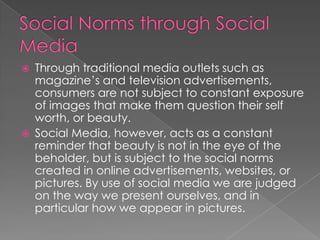
   Through traditional media outlets such as
    magazine’s and television advertisements,
    consumers are not subject to constant exposure
    of images that make them question their self
    worth, or beauty.
   Social Media, however, acts as a constant
    reminder that beauty is not in the eye of the
    beholder, but is subject to the social norms
    created in online advertisements, websites, or
    pictures. By use of social media we are judged
    on the way we present ourselves, and in
    particular how we appear in pictures.
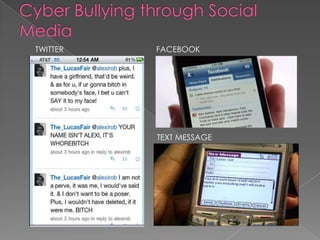
 By using technology, which is not limited
  to social media sites and can include
  text and e-mail, bullies can target victims
  in a manner where they do not have to
  be the direct aggressor.
 By bullying through a channel that does
  not involve face to face confrontation,
  the victim appears emotionless,
  providing slightly delayed feedback,
  allowing the bully to become
  unsympathetic to their victim.
TWITTER   FACEBOOK


          TEXT MESSAGE
Victoria’s Secret   Dove
http://www.youtube.com/watch
?v=bseHFrdTm8k
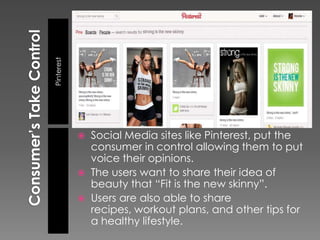
Pinterest


               Social Media sites like Pinterest, put the
                consumer in control allowing them to put
                voice their opinions.
               The users want to share their idea of
                beauty that “Fit is the new skinny”.
               Users are also able to share
                recipes, workout plans, and other tips for
                a healthy lifestyle.
 http://www.cnn.com/2011/HEALTH/07/2
  8/ep.smartphone.obsessed.cohen/index
  .html
 http://kidshealth.org/parent/positive/talk
  /cyberbullying.html
 http://www.sheridanmedia.com/files/im
  age/cyber_bullying_Medium.jpg
 http://www.communicationstudies.com/
  body-image-and-the-media-
  infographic-video

Social media project

  • 2.
    Social media as a new medium of communication  Images projected through social media can be viewed by anyone  Teenagers as an untargeted but direct audience  Social Media creating social norms  Cyber bullying  Instagram & Photoshop creating false perception of reality  Retailers use Photoshop to enhance images targeted to youth  Various companies acknowledge distorted perception on reality
  • 3.
     Social mediausers with smart phones, check their smart phones 34 times a day on average  Their social media use typically lasts for 30 seconds and are repeated within 10 minutes of the first check.
  • 4.
    This constant need to be connected through social media outlets is supported by the immediate feedback creating a feeling of importance, connectivity and
  • 5.
    CHANNEL CHANNEL CHANNEL MESSAGE
  • 6.
    Over 8 million people in the U.S. have an eating disorder, 90% being women.  95% of these people are between 12 and 25  69% of girls say that magazine models influence their idea of a perfect body  Models Elle Macpherson, Gisele Bundchen, Niki Taylor and Katie Moss, all meet the BMI physical criteria for anorexia
  • 7.
     Both maleand females are exposed to the social media pressures to fit in by tailoring their likes, dislikes, activities, and even body to fit in with their peers.  With innovations like Facebook, Twitter, and Instagram. Teenagers can no longer escape the feeling of “not fitting in” or being labeled an outsider. There is a constant reminder of social hierarchy. This can lead to depression, eating disorders, and or suicidal thoughts/actions.
  • 8.
    Through traditional media outlets such as magazine’s and television advertisements, consumers are not subject to constant exposure of images that make them question their self worth, or beauty.  Social Media, however, acts as a constant reminder that beauty is not in the eye of the beholder, but is subject to the social norms created in online advertisements, websites, or pictures. By use of social media we are judged on the way we present ourselves, and in particular how we appear in pictures.
  • 9.
     By usingtechnology, which is not limited to social media sites and can include text and e-mail, bullies can target victims in a manner where they do not have to be the direct aggressor.  By bullying through a channel that does not involve face to face confrontation, the victim appears emotionless, providing slightly delayed feedback, allowing the bully to become unsympathetic to their victim.
  • 11.
    TWITTER FACEBOOK TEXT MESSAGE
  • 13.
  • 14.
  • 16.
    Pinterest  Social Media sites like Pinterest, put the consumer in control allowing them to put voice their opinions.  The users want to share their idea of beauty that “Fit is the new skinny”.  Users are also able to share recipes, workout plans, and other tips for a healthy lifestyle.
  • 17.
     http://www.cnn.com/2011/HEALTH/07/2 8/ep.smartphone.obsessed.cohen/index .html  http://kidshealth.org/parent/positive/talk /cyberbullying.html  http://www.sheridanmedia.com/files/im age/cyber_bullying_Medium.jpg  http://www.communicationstudies.com/ body-image-and-the-media- infographic-video