


Source:The Human Face of Big Data
Social Listening
IBC: Social Media Manager
Kasper Risbjerg
Social Business Manager, IBM
@kasperrisbjerg
risbjerg@dk.ibm.com
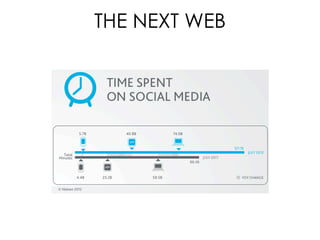
THE NEXT WEB
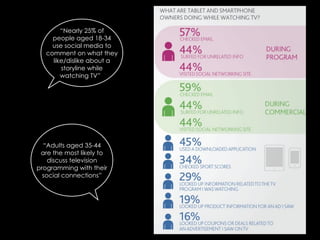
“Nearly 25% of
people aged 18-34
use social media to
comment on what they
like/dislike about a
storyline while
watching TV”
“Adults aged 35-44
are the most likely to
discuss television
programming with their
social connections”
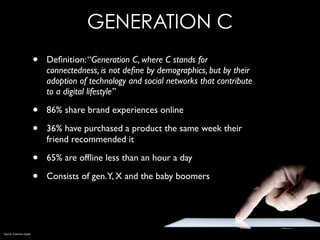
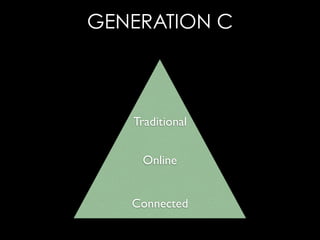
GENERATION C
• Definition:“Generation C, where C stands for
connectedness, is not define by demographics, but by their
adoption of technology and social networks that contribute
to a digital lifestyle”
• 86% share brand experiences online
• 36% have purchased a product the same week their
friend recommended it
• 65% are offline less than an hour a day
• Consists of gen.Y, X and the baby boomers
Source: Edelman Digital
Online
GENERATION C
Connected
Traditional
Online
GENERATION C
Connected
Traditional
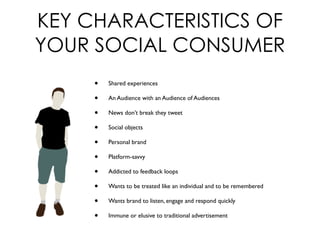
KEY CHARACTERISTICS OF
YOUR SOCIAL CONSUMER
• Shared experiences
• An Audience with an Audience of Audiences
• News don’t break they tweet
• Social objects
• Personal brand
• Platform-savvy
• Addicted to feedback loops
• Wants to be treated like an individual and to be remembered
• Wants brand to listen, engage and respond quickly
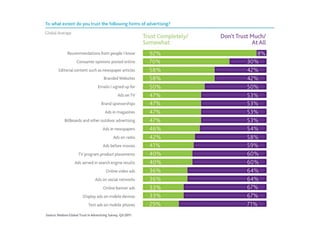
• Immune or elusive to traditional advertisement
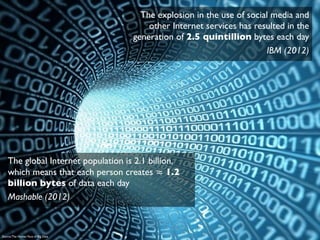
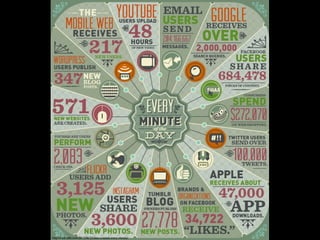
The explosion in the use of social media and
other Internet services has resulted in the
generation of 2.5 quintillion bytes each day
IBM (2012)
Source:The Human Face of Big Data
The global Internet population is 2.1 billion,
which means that each person creates ≈ 1.2
billion bytes of data each day
Mashable (2012)
http://mashable.com/2012/06/22/data-created-every-minute/
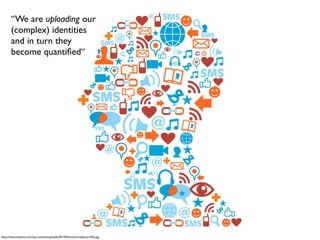
“We are uploading our
(complex) identities
and in turn they
become quantified“
http://www.newsits.com/wp-content/uploads/2013/02/social-media-profile.jpg
Source:The Thinker by Betina La Plante
“If I could only make
the noise from the
open, unfiltered
social media
channels
actionable...”
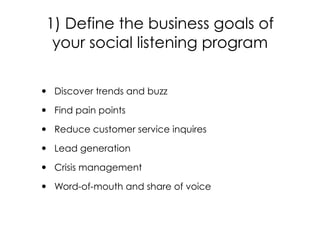
1. Define the business goals of your social listening
program
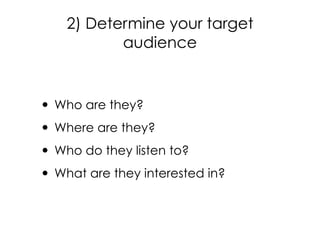
2. Determine your target audience
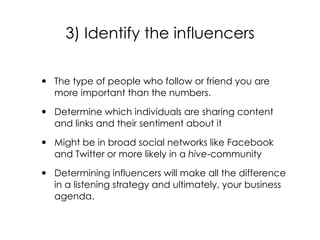
3. Identify the influencers
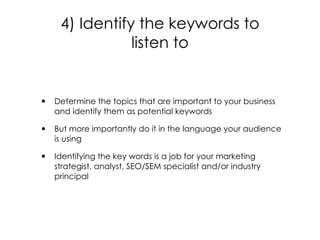
4. Identify the keywords to listen to
5. Find a tool
6. Create a reporting flow that aligns with your
business goals
Social Listening Strategy
• Discover trends and buzz
• Find pain points
• Reduce customer service inquires
• Lead generation
• Crisis management
• Word-of-mouth and share of voice
1) Define the business goals of
your social listening program
• Who are they?
• Where are they?
• Who do they listen to?
• What are they interested in?
2) Determine your target
audience
• The type of people who follow or friend you are
more important than the numbers.
• Determine which individuals are sharing content
and links and their sentiment about it
• Might be in broad social networks like Facebook
and Twitter or more likely in a hive-community
• Determining influencers will make all the difference
in a listening strategy and ultimately, your business
agenda.
3) Identify the influencers
• Determine the topics that are important to your business
and identify them as potential keywords
• But more importantly do it in the language your audience
is using
• Identifying the key words is a job for your marketing
strategist, analyst, SEO/SEM specialist and/or industry
principal
4) Identify the keywords to
listen to
• Based on the previous steps you should have an idea of how detailed your
listening needs to be in order to provide the value you need
• Low-cost vs. high-cost
• Evaluation of a tool should be around
• Channel Capture
• Twitter firehose access
• Workflow functionality
• Full-text versus content snippets
• Mention categorization/tagging
• Historical data
• Spam prevention
5) Find a tool
• Social media aggregator (Radian6, Sysomos etc.)
• Owned media insights (Facebook, LinkedIn etc.)
• Engagement tools (Hootsuite, Falcon Social etc.)
• Web and search analytics (Google etc.)
5) Find a tool... or better a
toolbox
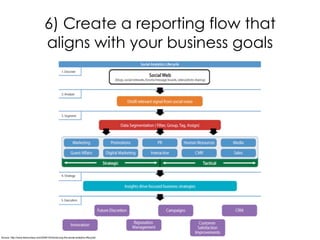
6) Create a reporting flow that
aligns with your business goals
Srouce: http://www.kenburbary.com/2009/10/introducing-the-social-analytics-lifecycle/
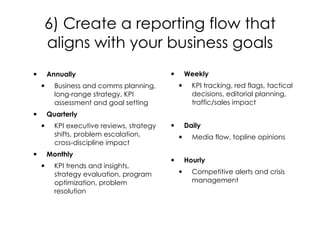
6) Create a reporting flow that
aligns with your business goals
• Annually
• Business and comms planning,
long-range strategy, KPI
assessment and goal setting
• Quarterly
• KPI executive reviews, strategy
shifts, problem escalation,
cross-discipline impact
• Monthly
• KPI trends and insights,
strategy evaluation, program
optimization, problem
resolution
• Weekly
• KPI tracking, red flags, tactical
decisions, editorial planning,
traffic/sales impact
• Daily
• Media flow, topline opinions
• Hourly
• Competitive alerts and crisis
management
6) Create a reporting flow that
aligns with your business goals
• Typical points in a report
• What are people saying about your brand
• Where people are talking about your brand
• When people are talking about your brand
• Who is talking about your brand
• Why people are talking about your brand
•Market research
•Evaluating competitors
•Understanding consumers
•Brand management
•PR crisis management
Use Cases
Source: http://appshopper.com/business/falcon-social
•Market research
•Evaluating competitors
•Understanding consumers
•Brand management
•PR crisis management
Use Cases
• Looking to understand how visible your brand is in
comparison to your competitors.
• Looking for a gap in the market – what do consumers want
that isn’t being delivered, by you or your competitors?
• What your customers like and dislike about your brand/
products.
• What a certain type of people (mothers, teenagers, car
enthusiasts, etc) think about specific topics/brands/
products
• But what’s wrong with traditional market research?
Market research
Source: http://econsultancy.com/dk/blog/62145-using-social-media-monitoring-for-market-research
• How are they interacting with customers and prospects?
• What kind of marketing campaigns are they running?
• Where are they getting PR?
• What is their brand messaging?
• How much do people talk about them? What are the key
topics?
• What causes spikes in conversation about them?
• How does customer perception of you differ from perception of
them?
• Which keywords are they associated with?
Market research:
Evaluating competitors
• Independent, candid opinions.
• Large samples.
• Ability to experiment based on what you are finding.
• A searchable record of conversations.
• Automatic analysis of the topics, common keywords and
sentiment of conversation.
• When looking at the data, editorialize. Automation is great, but
human eyes are critical.
• Look at other data sets such as illness patterns against weather
patterns.
Market research:
Understanding consumers
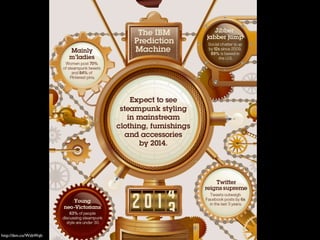
http://ibm.co/WzbWqh
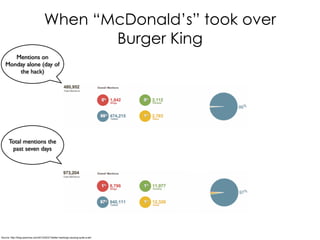
Source: http://blog.sysomos.com/2013/02/21/twitter-hackings-causing-quite-a-stir/
Mentions on
Monday alone (day of
the hack)
Total mentions the
past seven days
When “McDonald’s” took over
Burger King
When “McDonald’s” took over
Burger King
Source: http://blog.sysomos.com/2013/02/21/twitter-hackings-causing-quite-a-stir/
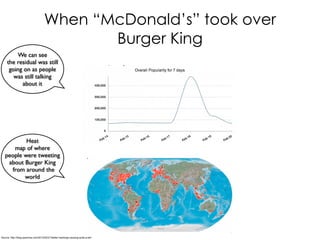
We can see
the residual was still
going on as people
was still talking
about it
Heat
map of where
people were tweeting
about Burger King
from around the
world
When “McDonald’s” took over
Burger King
Source: http://blog.sysomos.com/2013/02/21/twitter-hackings-causing-quite-a-stir/
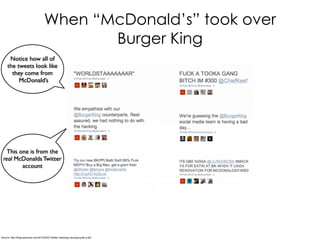
Notice how all of
the tweets look like
they come from
McDonald’s
This one is from the
real McDonalds Twitter
account
When “McDonald’s” took over
Burger King
Source: http://blog.sysomos.com/2013/02/21/twitter-hackings-causing-quite-a-stir/
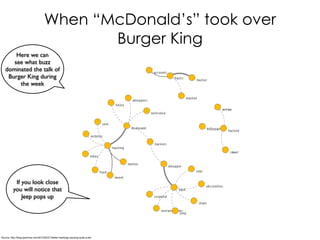
Here we can
see what buzz
dominated the talk of
Burger King during
the week
If you look close
you will notice that
Jeep pops up
When “McDonald’s” took over
Burger King
Source: http://blog.sysomos.com/2013/02/21/twitter-hackings-causing-quite-a-stir/
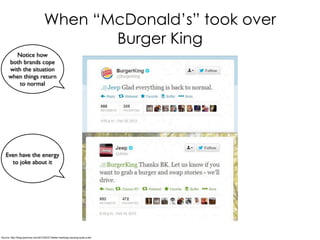
Notice how
both brands cope
with the situation
when things return
to normal
Even have the energy
to joke about it
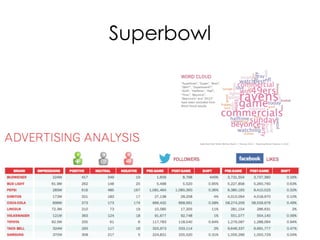
Superbowl
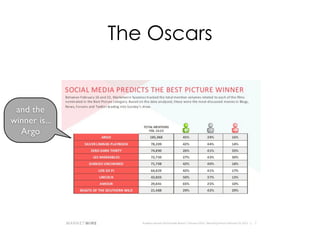
The Oscars
and the
winner is...
Argo
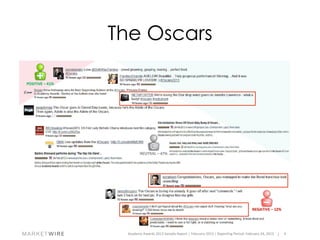
The Oscars
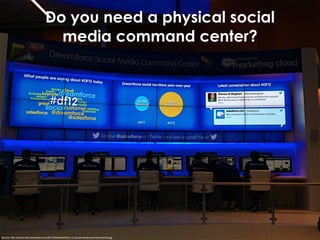
Do you need a physical social
media command center?
Source: http://durrios.files.wordpress.com/2012/09/dreamforce-12-social-media-command-center.jpg
Source: http://s3.amazonaws.com/cuttings/backgrounds/3283/Screen%20Shot%202012-01-12%20at%201%2033%2002%20PM.png
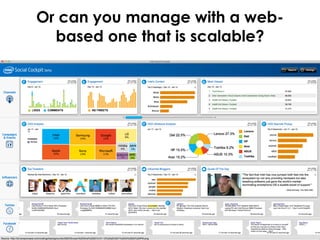
Or can you manage with a web-
based one that is scalable?
Source: http://0.tqn.com/d/sportsmedicine/1/0/4/6/bicycle_crunch_250.jpg
Source: http://www.newdayag.com/SiteFiles/103692/Content/SunRise.jpg
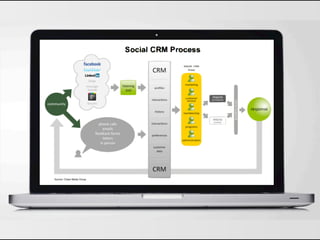
SOCIAL CRM
“We’ve moved from the transaction to the interaction with
customers, though we haven’t eliminated the transaction – or the
data associated with it... Social CRM focuses on engaging the
customer in a collaborative conversation in order to provide mutually
beneficial value in a trusted and transparent business environment.
It’s (i.e. Social CRM is) the company’s response to the customer’s
ownership of the conversation.”
- Paul Greenberg,“the Godfather of CRM”
Source: Chess Media Group
Thank you
8
Connect with me on
Twitter: @kasperrisbjerg
LinkedIn: linkedin.com/in/
kasperrisbjerg/
Website: kasperrisbjerg.dk
Email: risbjerg@dk.ibm.com

Social Listening

  • 1.
    Source:The Human Faceof Big Data Social Listening IBC: Social Media Manager Kasper Risbjerg Social Business Manager, IBM @kasperrisbjerg risbjerg@dk.ibm.com
  • 2.
  • 5.
    “Nearly 25% of peopleaged 18-34 use social media to comment on what they like/dislike about a storyline while watching TV” “Adults aged 35-44 are the most likely to discuss television programming with their social connections”
  • 7.
    GENERATION C • Definition:“GenerationC, where C stands for connectedness, is not define by demographics, but by their adoption of technology and social networks that contribute to a digital lifestyle” • 86% share brand experiences online • 36% have purchased a product the same week their friend recommended it • 65% are offline less than an hour a day • Consists of gen.Y, X and the baby boomers Source: Edelman Digital
  • 8.
  • 9.
  • 10.
    KEY CHARACTERISTICS OF YOURSOCIAL CONSUMER • Shared experiences • An Audience with an Audience of Audiences • News don’t break they tweet • Social objects • Personal brand • Platform-savvy • Addicted to feedback loops • Wants to be treated like an individual and to be remembered • Wants brand to listen, engage and respond quickly • Immune or elusive to traditional advertisement
  • 12.
    The explosion inthe use of social media and other Internet services has resulted in the generation of 2.5 quintillion bytes each day IBM (2012) Source:The Human Face of Big Data The global Internet population is 2.1 billion, which means that each person creates ≈ 1.2 billion bytes of data each day Mashable (2012)
  • 13.
  • 14.
    “We are uploadingour (complex) identities and in turn they become quantified“ http://www.newsits.com/wp-content/uploads/2013/02/social-media-profile.jpg
  • 15.
    Source:The Thinker byBetina La Plante “If I could only make the noise from the open, unfiltered social media channels actionable...”
  • 16.
    1. Define thebusiness goals of your social listening program 2. Determine your target audience 3. Identify the influencers 4. Identify the keywords to listen to 5. Find a tool 6. Create a reporting flow that aligns with your business goals Social Listening Strategy
  • 17.
    • Discover trendsand buzz • Find pain points • Reduce customer service inquires • Lead generation • Crisis management • Word-of-mouth and share of voice 1) Define the business goals of your social listening program
  • 18.
    • Who arethey? • Where are they? • Who do they listen to? • What are they interested in? 2) Determine your target audience
  • 19.
    • The typeof people who follow or friend you are more important than the numbers. • Determine which individuals are sharing content and links and their sentiment about it • Might be in broad social networks like Facebook and Twitter or more likely in a hive-community • Determining influencers will make all the difference in a listening strategy and ultimately, your business agenda. 3) Identify the influencers
  • 20.
    • Determine thetopics that are important to your business and identify them as potential keywords • But more importantly do it in the language your audience is using • Identifying the key words is a job for your marketing strategist, analyst, SEO/SEM specialist and/or industry principal 4) Identify the keywords to listen to
  • 21.
    • Based onthe previous steps you should have an idea of how detailed your listening needs to be in order to provide the value you need • Low-cost vs. high-cost • Evaluation of a tool should be around • Channel Capture • Twitter firehose access • Workflow functionality • Full-text versus content snippets • Mention categorization/tagging • Historical data • Spam prevention 5) Find a tool
  • 22.
    • Social mediaaggregator (Radian6, Sysomos etc.) • Owned media insights (Facebook, LinkedIn etc.) • Engagement tools (Hootsuite, Falcon Social etc.) • Web and search analytics (Google etc.) 5) Find a tool... or better a toolbox
  • 23.
    6) Create areporting flow that aligns with your business goals Srouce: http://www.kenburbary.com/2009/10/introducing-the-social-analytics-lifecycle/
  • 24.
    6) Create areporting flow that aligns with your business goals • Annually • Business and comms planning, long-range strategy, KPI assessment and goal setting • Quarterly • KPI executive reviews, strategy shifts, problem escalation, cross-discipline impact • Monthly • KPI trends and insights, strategy evaluation, program optimization, problem resolution • Weekly • KPI tracking, red flags, tactical decisions, editorial planning, traffic/sales impact • Daily • Media flow, topline opinions • Hourly • Competitive alerts and crisis management
  • 25.
    6) Create areporting flow that aligns with your business goals • Typical points in a report • What are people saying about your brand • Where people are talking about your brand • When people are talking about your brand • Who is talking about your brand • Why people are talking about your brand
  • 26.
    •Market research •Evaluating competitors •Understandingconsumers •Brand management •PR crisis management Use Cases
  • 27.
  • 28.
    •Market research •Evaluating competitors •Understandingconsumers •Brand management •PR crisis management Use Cases
  • 29.
    • Looking tounderstand how visible your brand is in comparison to your competitors. • Looking for a gap in the market – what do consumers want that isn’t being delivered, by you or your competitors? • What your customers like and dislike about your brand/ products. • What a certain type of people (mothers, teenagers, car enthusiasts, etc) think about specific topics/brands/ products • But what’s wrong with traditional market research? Market research Source: http://econsultancy.com/dk/blog/62145-using-social-media-monitoring-for-market-research
  • 30.
    • How arethey interacting with customers and prospects? • What kind of marketing campaigns are they running? • Where are they getting PR? • What is their brand messaging? • How much do people talk about them? What are the key topics? • What causes spikes in conversation about them? • How does customer perception of you differ from perception of them? • Which keywords are they associated with? Market research: Evaluating competitors
  • 31.
    • Independent, candidopinions. • Large samples. • Ability to experiment based on what you are finding. • A searchable record of conversations. • Automatic analysis of the topics, common keywords and sentiment of conversation. • When looking at the data, editorialize. Automation is great, but human eyes are critical. • Look at other data sets such as illness patterns against weather patterns. Market research: Understanding consumers
  • 32.
  • 33.
    Source: http://blog.sysomos.com/2013/02/21/twitter-hackings-causing-quite-a-stir/ Mentions on Mondayalone (day of the hack) Total mentions the past seven days When “McDonald’s” took over Burger King
  • 34.
    When “McDonald’s” tookover Burger King Source: http://blog.sysomos.com/2013/02/21/twitter-hackings-causing-quite-a-stir/ We can see the residual was still going on as people was still talking about it Heat map of where people were tweeting about Burger King from around the world
  • 35.
    When “McDonald’s” tookover Burger King Source: http://blog.sysomos.com/2013/02/21/twitter-hackings-causing-quite-a-stir/ Notice how all of the tweets look like they come from McDonald’s This one is from the real McDonalds Twitter account
  • 36.
    When “McDonald’s” tookover Burger King Source: http://blog.sysomos.com/2013/02/21/twitter-hackings-causing-quite-a-stir/ Here we can see what buzz dominated the talk of Burger King during the week If you look close you will notice that Jeep pops up
  • 37.
    When “McDonald’s” tookover Burger King Source: http://blog.sysomos.com/2013/02/21/twitter-hackings-causing-quite-a-stir/ Notice how both brands cope with the situation when things return to normal Even have the energy to joke about it
  • 38.
  • 39.
  • 40.
  • 41.
    Do you needa physical social media command center? Source: http://durrios.files.wordpress.com/2012/09/dreamforce-12-social-media-command-center.jpg
  • 42.
  • 43.
  • 44.
  • 45.
    SOCIAL CRM “We’ve movedfrom the transaction to the interaction with customers, though we haven’t eliminated the transaction – or the data associated with it... Social CRM focuses on engaging the customer in a collaborative conversation in order to provide mutually beneficial value in a trusted and transparent business environment. It’s (i.e. Social CRM is) the company’s response to the customer’s ownership of the conversation.” - Paul Greenberg,“the Godfather of CRM”
  • 46.
  • 47.
    Thank you 8 Connect withme on Twitter: @kasperrisbjerg LinkedIn: linkedin.com/in/ kasperrisbjerg/ Website: kasperrisbjerg.dk Email: risbjerg@dk.ibm.com