Oracle SOA and OSB Course Content
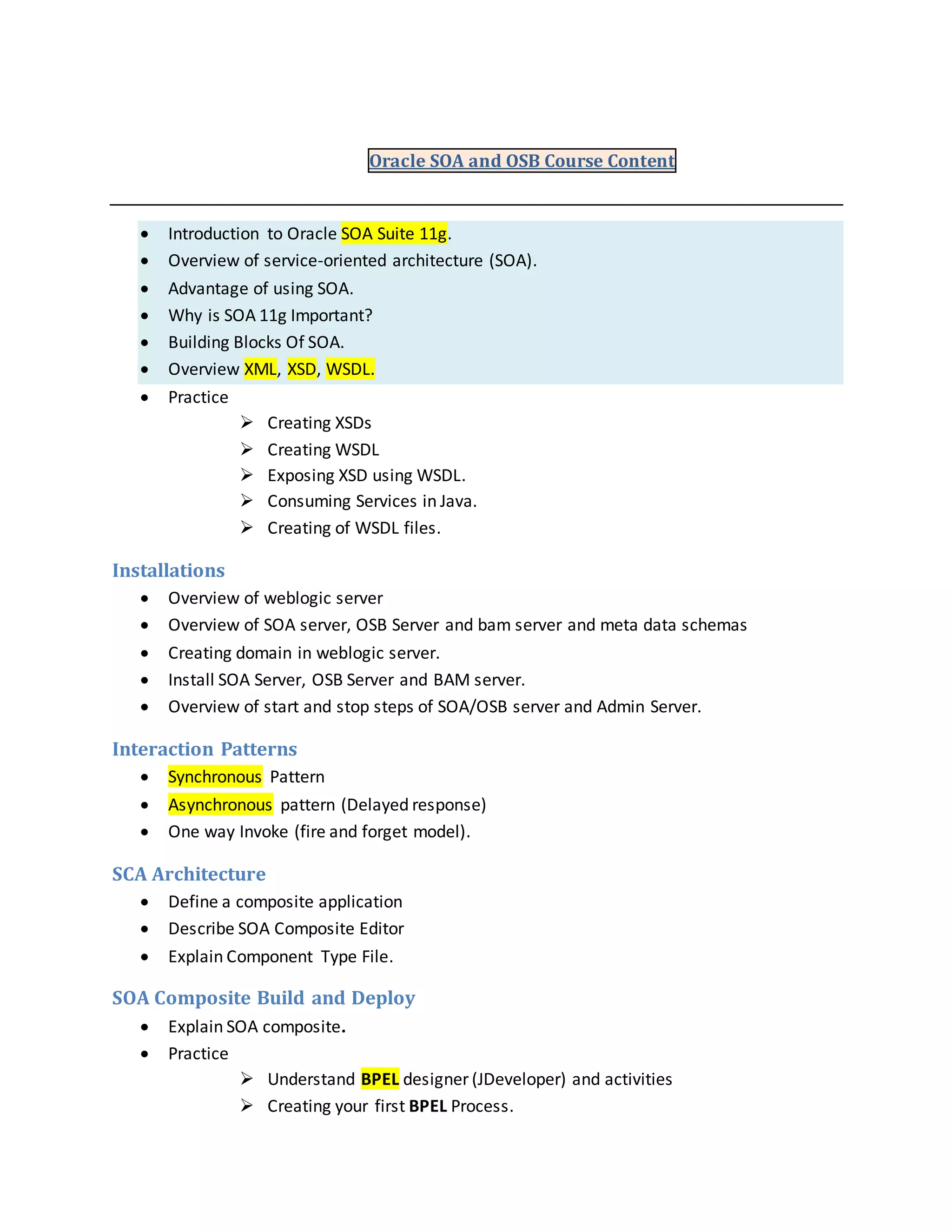
 Introduction to Oracle SOA Suite 11g.
 Overview of service-oriented architecture (SOA).
 Advantage of using SOA.
 Why is SOA 11g Important?
 Building Blocks Of SOA.
 Overview XML, XSD, WSDL.
 Practice
 Creating XSDs
 Creating WSDL
 Exposing XSD using WSDL.
 Consuming Services in Java.
 Creating of WSDL files.
Installations
 Overview of weblogic server
 Overview of SOA server, OSB Server and bam server and meta data schemas
 Creating domain in weblogic server.
 Install SOA Server, OSB Server and BAM server.
 Overview of start and stop steps of SOA/OSB server and Admin Server.
Interaction Patterns
 Synchronous Pattern
 Asynchronous pattern (Delayed response)
 One way Invoke (fire and forget model).
SCA Architecture
 Define a composite application
 Describe SOA Composite Editor
 Explain Component Type File.
SOA Composite Build and Deploy
 Explain SOA composite.
 Practice
 Understand BPEL designer (JDeveloper) and activities
 Creating your first BPEL Process.
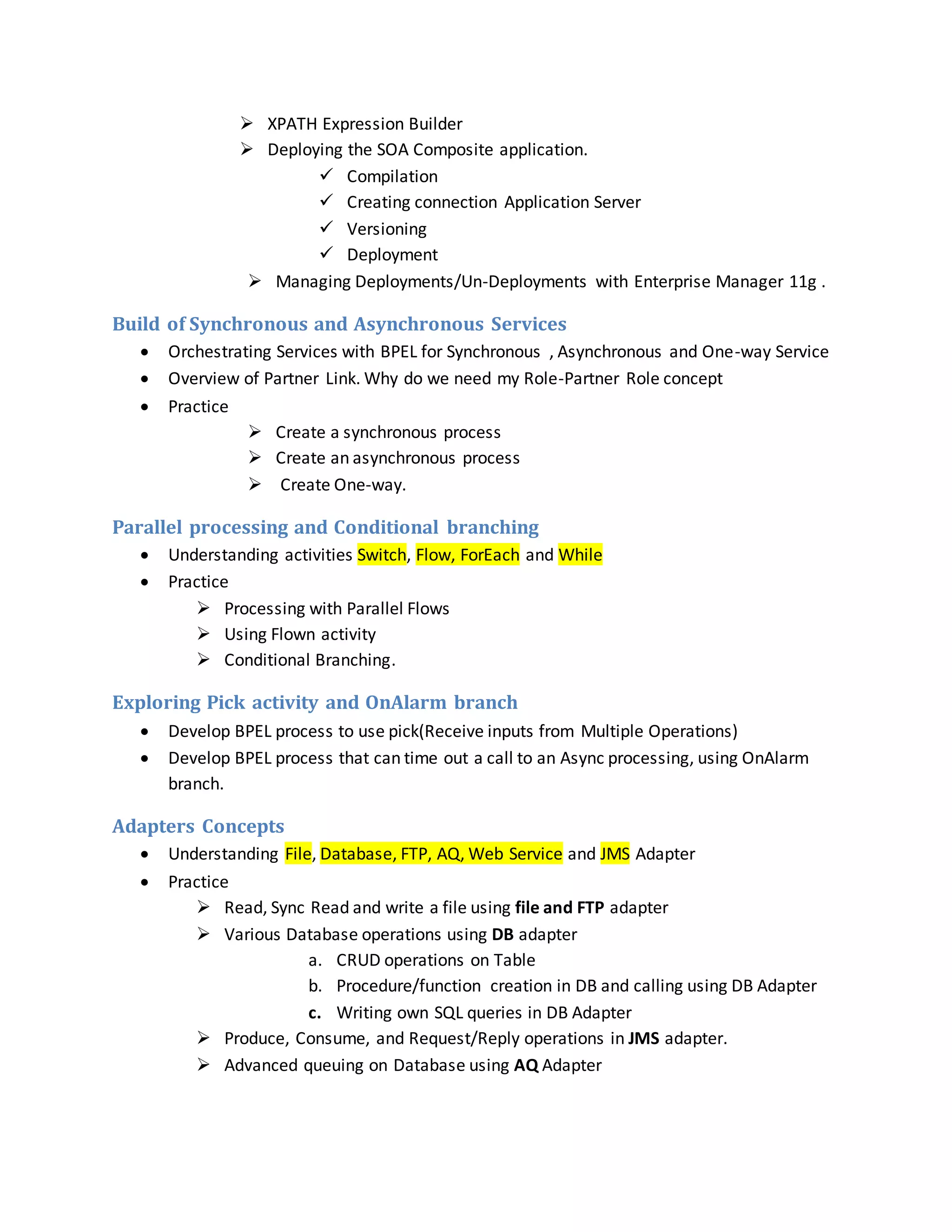
 XPATH Expression Builder
 Deploying the SOA Composite application.
 Compilation
 Creating connection Application Server
 Versioning
 Deployment
 Managing Deployments/Un-Deployments with Enterprise Manager 11g .
Build of Synchronous and Asynchronous Services
 Orchestrating Services with BPEL for Synchronous , Asynchronous and One-way Service
 Overview of Partner Link. Why do we need my Role-Partner Role concept
 Practice
 Create a synchronous process
 Create an asynchronous process
 Create One-way.
Parallel processing and Conditional branching
 Understanding activities Switch, Flow, ForEach and While
 Practice
 Processing with Parallel Flows
 Using Flown activity
 Conditional Branching.
Exploring Pick activity and OnAlarm branch
 Develop BPEL process to use pick(Receive inputs from Multiple Operations)
 Develop BPEL process that can time out a call to an Async processing, using OnAlarm
branch.
Adapters Concepts
 Understanding File, Database, FTP, AQ, Web Service and JMS Adapter
 Practice
 Read, Sync Read and write a file using file and FTP adapter
 Various Database operations using DB adapter
a. CRUD operations on Table
b. Procedure/function creation in DB and calling using DB Adapter
c. Writing own SQL queries in DB Adapter
 Produce, Consume, and Request/Reply operations in JMS adapter.
 Advanced queuing on Database using AQ Adapter
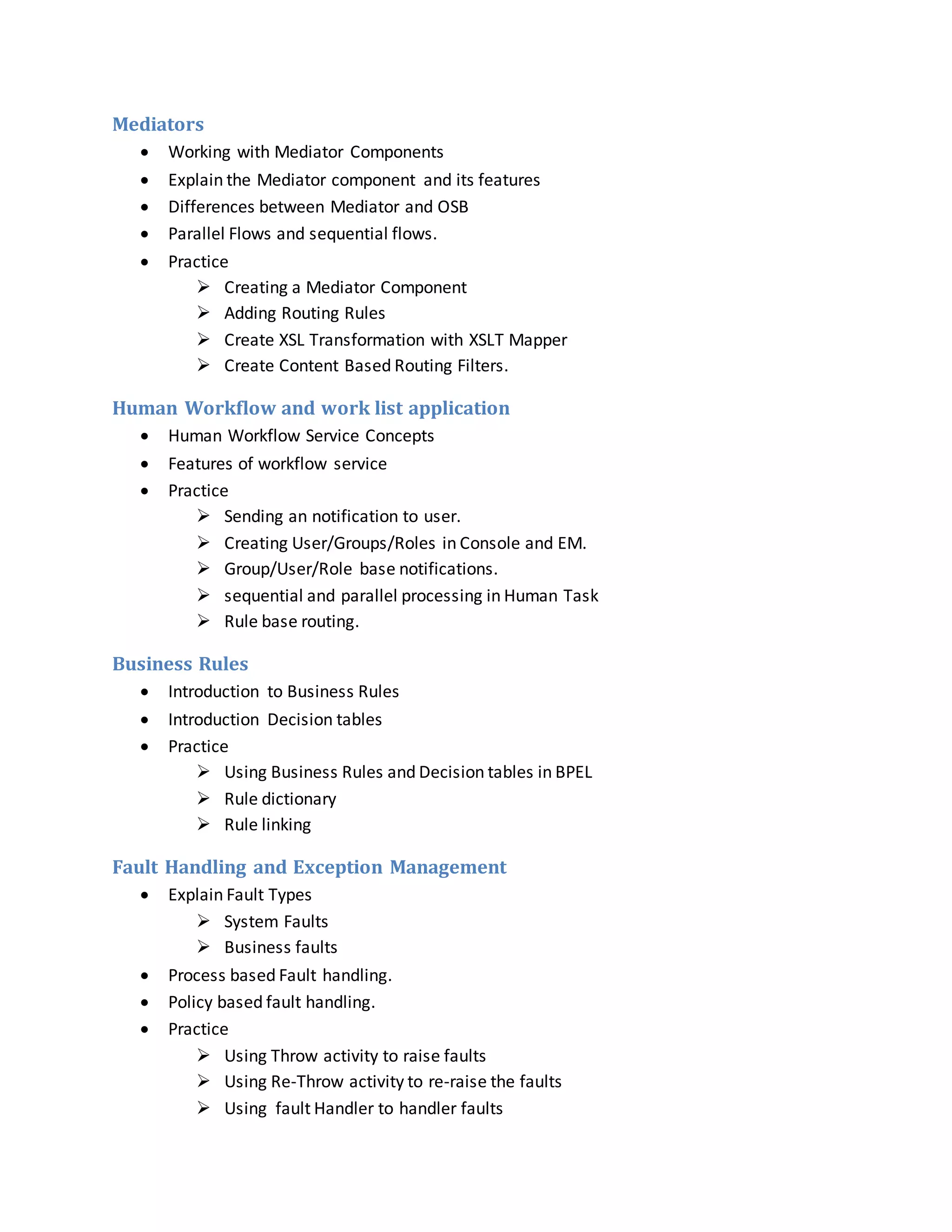
Mediators
 Working with Mediator Components
 Explain the Mediator component and its features
 Differences between Mediator and OSB
 Parallel Flows and sequential flows.
 Practice
 Creating a Mediator Component
 Adding Routing Rules
 Create XSL Transformation with XSLT Mapper
 Create Content Based Routing Filters.
Human Workflow and work list application
 Human Workflow Service Concepts
 Features of workflow service
 Practice
 Sending an notification to user.
 Creating User/Groups/Roles in Console and EM.
 Group/User/Role base notifications.
 sequential and parallel processing in Human Task
 Rule base routing.
Business Rules
 Introduction to Business Rules
 Introduction Decision tables
 Practice
 Using Business Rules and Decision tables in BPEL
 Rule dictionary
 Rule linking
Fault Handling and Exception Management
 Explain Fault Types
 System Faults
 Business faults
 Process based Fault handling.
 Policy based fault handling.
 Practice
 Using Throw activity to raise faults
 Using Re-Throw activity to re-raise the faults
 Using fault Handler to handler faults
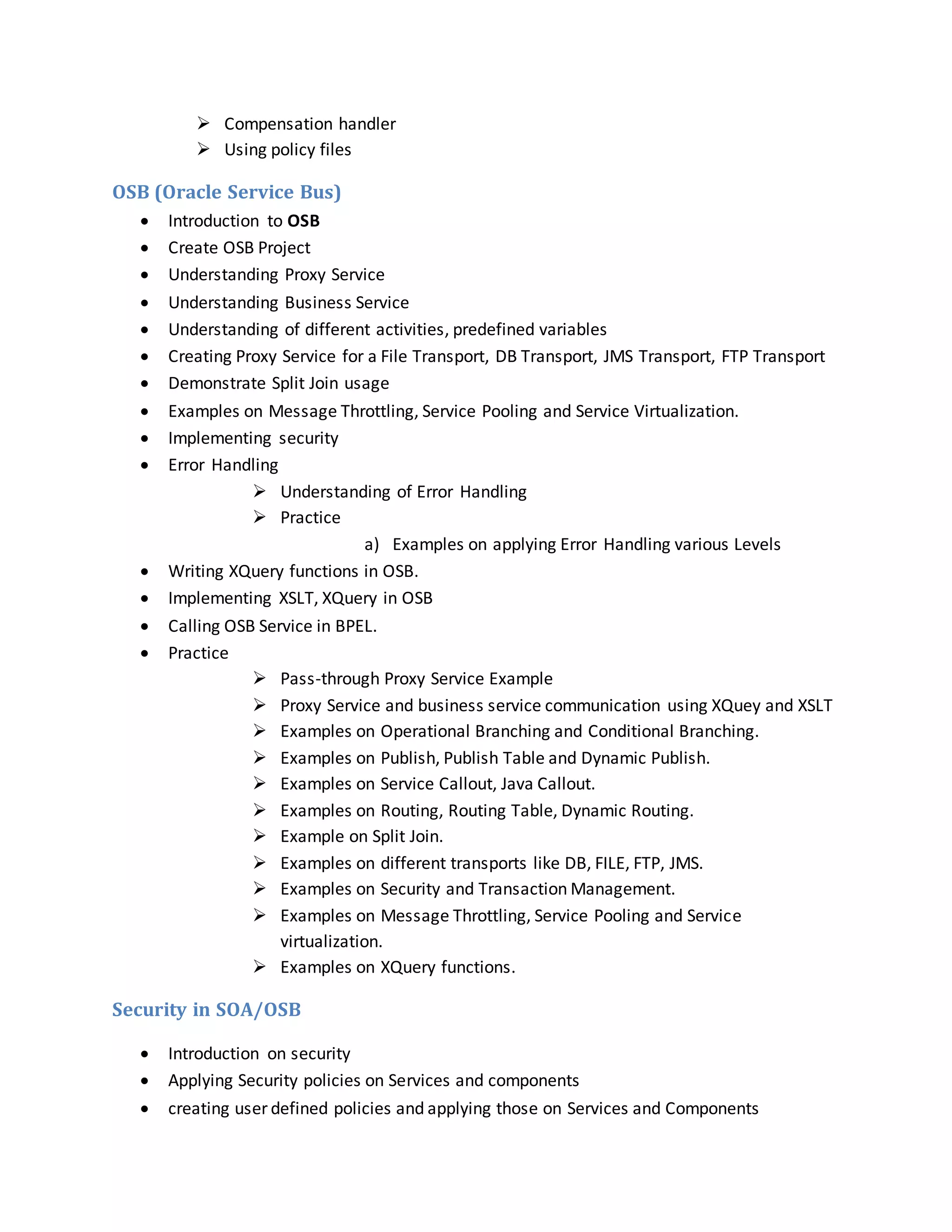
 Compensation handler
 Using policy files
OSB (Oracle Service Bus)
 Introduction to OSB
 Create OSB Project
 Understanding Proxy Service
 Understanding Business Service
 Understanding of different activities, predefined variables
 Creating Proxy Service for a File Transport, DB Transport, JMS Transport, FTP Transport
 Demonstrate Split Join usage
 Examples on Message Throttling, Service Pooling and Service Virtualization.
 Implementing security
 Error Handling
 Understanding of Error Handling
 Practice
a) Examples on applying Error Handling various Levels
 Writing XQuery functions in OSB.
 Implementing XSLT, XQuery in OSB
 Calling OSB Service in BPEL.
 Practice
 Pass-through Proxy Service Example
 Proxy Service and business service communication using XQuey and XSLT
 Examples on Operational Branching and Conditional Branching.
 Examples on Publish, Publish Table and Dynamic Publish.
 Examples on Service Callout, Java Callout.
 Examples on Routing, Routing Table, Dynamic Routing.
 Example on Split Join.
 Examples on different transports like DB, FILE, FTP, JMS.
 Examples on Security and Transaction Management.
 Examples on Message Throttling, Service Pooling and Service
virtualization.
 Examples on XQuery functions.
Security in SOA/OSB
 Introduction on security
 Applying Security policies on Services and components
 creating user defined policies and applying those on Services and Components
 Examples on Above all the Scenarios
Transaction Management in SOA/OSB
 BPEL level Transactions
 Component Level Transaction
 DB Transaction
 Service Level Transaction.

Soaosbcourse_content

  • 1.
    Oracle SOA andOSB Course Content  Introduction to Oracle SOA Suite 11g.  Overview of service-oriented architecture (SOA).  Advantage of using SOA.  Why is SOA 11g Important?  Building Blocks Of SOA.  Overview XML, XSD, WSDL.  Practice  Creating XSDs  Creating WSDL  Exposing XSD using WSDL.  Consuming Services in Java.  Creating of WSDL files. Installations  Overview of weblogic server  Overview of SOA server, OSB Server and bam server and meta data schemas  Creating domain in weblogic server.  Install SOA Server, OSB Server and BAM server.  Overview of start and stop steps of SOA/OSB server and Admin Server. Interaction Patterns  Synchronous Pattern  Asynchronous pattern (Delayed response)  One way Invoke (fire and forget model). SCA Architecture  Define a composite application  Describe SOA Composite Editor  Explain Component Type File. SOA Composite Build and Deploy  Explain SOA composite.  Practice  Understand BPEL designer (JDeveloper) and activities  Creating your first BPEL Process.
  • 2.
     XPATH ExpressionBuilder  Deploying the SOA Composite application.  Compilation  Creating connection Application Server  Versioning  Deployment  Managing Deployments/Un-Deployments with Enterprise Manager 11g . Build of Synchronous and Asynchronous Services  Orchestrating Services with BPEL for Synchronous , Asynchronous and One-way Service  Overview of Partner Link. Why do we need my Role-Partner Role concept  Practice  Create a synchronous process  Create an asynchronous process  Create One-way. Parallel processing and Conditional branching  Understanding activities Switch, Flow, ForEach and While  Practice  Processing with Parallel Flows  Using Flown activity  Conditional Branching. Exploring Pick activity and OnAlarm branch  Develop BPEL process to use pick(Receive inputs from Multiple Operations)  Develop BPEL process that can time out a call to an Async processing, using OnAlarm branch. Adapters Concepts  Understanding File, Database, FTP, AQ, Web Service and JMS Adapter  Practice  Read, Sync Read and write a file using file and FTP adapter  Various Database operations using DB adapter a. CRUD operations on Table b. Procedure/function creation in DB and calling using DB Adapter c. Writing own SQL queries in DB Adapter  Produce, Consume, and Request/Reply operations in JMS adapter.  Advanced queuing on Database using AQ Adapter
  • 3.
    Mediators  Working withMediator Components  Explain the Mediator component and its features  Differences between Mediator and OSB  Parallel Flows and sequential flows.  Practice  Creating a Mediator Component  Adding Routing Rules  Create XSL Transformation with XSLT Mapper  Create Content Based Routing Filters. Human Workflow and work list application  Human Workflow Service Concepts  Features of workflow service  Practice  Sending an notification to user.  Creating User/Groups/Roles in Console and EM.  Group/User/Role base notifications.  sequential and parallel processing in Human Task  Rule base routing. Business Rules  Introduction to Business Rules  Introduction Decision tables  Practice  Using Business Rules and Decision tables in BPEL  Rule dictionary  Rule linking Fault Handling and Exception Management  Explain Fault Types  System Faults  Business faults  Process based Fault handling.  Policy based fault handling.  Practice  Using Throw activity to raise faults  Using Re-Throw activity to re-raise the faults  Using fault Handler to handler faults
  • 4.
     Compensation handler Using policy files OSB (Oracle Service Bus)  Introduction to OSB  Create OSB Project  Understanding Proxy Service  Understanding Business Service  Understanding of different activities, predefined variables  Creating Proxy Service for a File Transport, DB Transport, JMS Transport, FTP Transport  Demonstrate Split Join usage  Examples on Message Throttling, Service Pooling and Service Virtualization.  Implementing security  Error Handling  Understanding of Error Handling  Practice a) Examples on applying Error Handling various Levels  Writing XQuery functions in OSB.  Implementing XSLT, XQuery in OSB  Calling OSB Service in BPEL.  Practice  Pass-through Proxy Service Example  Proxy Service and business service communication using XQuey and XSLT  Examples on Operational Branching and Conditional Branching.  Examples on Publish, Publish Table and Dynamic Publish.  Examples on Service Callout, Java Callout.  Examples on Routing, Routing Table, Dynamic Routing.  Example on Split Join.  Examples on different transports like DB, FILE, FTP, JMS.  Examples on Security and Transaction Management.  Examples on Message Throttling, Service Pooling and Service virtualization.  Examples on XQuery functions. Security in SOA/OSB  Introduction on security  Applying Security policies on Services and components  creating user defined policies and applying those on Services and Components
  • 5.
     Examples onAbove all the Scenarios Transaction Management in SOA/OSB  BPEL level Transactions  Component Level Transaction  DB Transaction  Service Level Transaction.