
 It is estimated that there are about 5 million snake bites every year, of
those it’s estimated around 2.4 million are envenoming
 These snake bites cause around 94 000 to 125 000 deaths annually with an
additional 400 000 amputations and other consequences -infection,
tetanus, scarring, contractures, and psychological sequelae
 Most snake bites are caused by non-venomous snakes
 Of the roughly 3000 known species of snake found worldwide, only 15%
are considered dangerous to humans
 Snakes are found on every continent except Antarctica
 In Sri Lanka there are about 65 000 snake bites annually
 More people die of snake bite in Sri Lanka than in any other
comparable area in the world
 An average of 800 people are killed by snakes every year on the
656,120Km² (25,332miles²) island - equivalent to one person every
82Km² (32 miles²) annually
 Over 95% of the fatalities are caused by the common krait (Bungarus
caeruleus), the Sri Lankan cobra (Naja n. naja) and Russel's pit viper
(Vipera russelli pulchella)
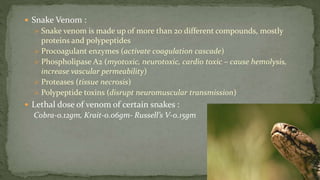
 Snake Venom :
 Snake venom is made up of more than 20 different compounds, mostly
proteins and polypeptides
 Procoagulant enzymes (activate coagulation cascade)
 Phospholipase A2 (myotoxic, neurotoxic, cardio toxic – cause hemolysis,
increase vascular permeability)
 Proteases (tissue necrosis)
 Polypeptide toxins (disrupt neuromuscular transmission)
 Lethal dose of venom of certain snakes :
Cobra-0.12gm, Krait-0.06gm- Russell’s V-0.15gm
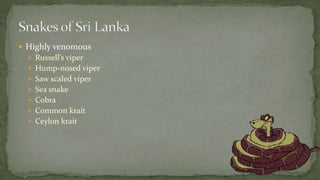
 Highly venomous
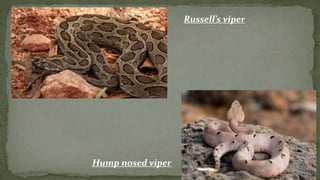
 Russell’s viper
 Hump-nosed viper
 Saw scaled viper
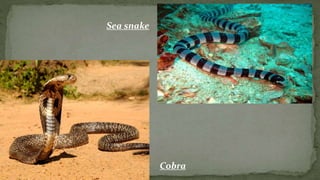
 Sea snake
 Cobra
 Common krait
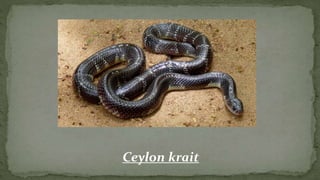
 Ceylon krait
Russell’s viper
Hump nosed viper
Sea snake
Cobra
Ceylon krait
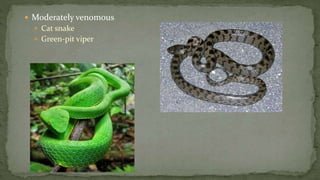
 Moderately venomous
 Cat snake
 Green-pit viper
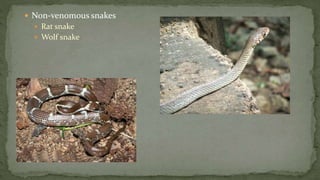
 Non-venomous snakes
 Rat snake
 Wolf snake
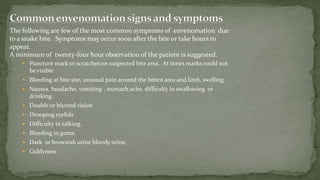
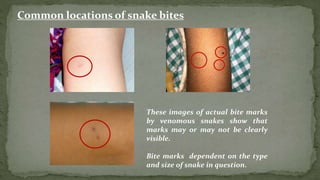
 Puncture mark or scratches on suspected bite area. At times marks could not
be visible
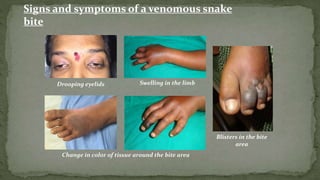
 Bleeding at bite site, unusual pain around the bitten area and limb, swelling
 Nausea, headache, vomiting , stomach ache, difficulty in swallowing or
drinking
 Double or blurred vision
 Drooping eyelids
 Difficulty in talking.
 Bleeding in gums.
 Dark or brownish urine bloody urine.
 Giddyness
The following are few of the most common symptoms of envenomation due
to a snake bite. Symptoms may occur soon after the bite or take hours to
appear.
A minimum of twenty-four hour observation of the patient is suggested.
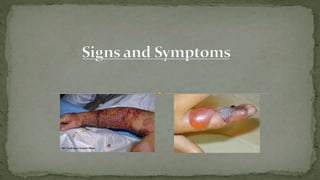
These images of actual bite marks
by venomous snakes show that
marks may or may not be clearly
visible.
Bite marks dependent on the type
and size of snake in question.
Common locations of snake bites
Drooping eyelids
Change in color of tissue around the bite area
Swelling in the limb
Blisters in the bite
area
Signs and symptoms of a venomous snake
bite
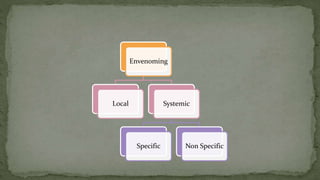
Envenoming
Local Systemic
Specific Non Specific
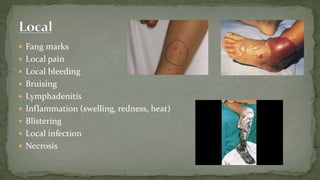
 Fang marks
 Local pain
 Local bleeding
 Bruising
 Lymphadenitis
 Inflammation (swelling, redness, heat)
 Blistering
 Local infection
 Necrosis
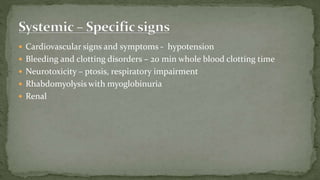
 Cardiovascular signs and symptoms - hypotension
 Bleeding and clotting disorders – 20 min whole blood clotting time
 Neurotoxicity – ptosis, respiratory impairment
 Rhabdomyolysis with myoglobinuria
 Renal
 Nausea
 Vomiting
 Malaise
 Abdominal pain
 Weakness
 Drowsiness
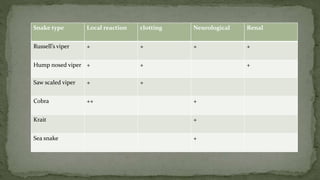
Snake type Local reaction clotting Neurological Renal
Russell’s viper + + + +
Hump nosed viper + + +
Saw scaled viper + +
Cobra ++ +
Krait +
Sea snake +
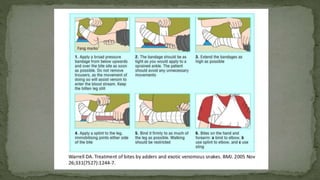
 Attempt to retard systemic absorption of venom
 Preserve life and prevent complications before the patient can receive
medical care
 Control distressing or dangerous early symptoms of envenoming
 Arrange the transport of the patient to a place where they can receive
medical care
 Anti-venom is the only specific antidote to snake venom
 A most important decision in the management of a snake bite victim is whether or not to
administer anti-venom
 Indications for anti-venom. Anti-venom treatment is recommended if and when a patient with
proven or suspected snakebite develops one or more of the following signs
1. Systemic envenoming
2. Haemostatic abnormalities : spontaneous systemic bleeding,
coagulopathy(20WBCT,prothrombin time) thrombocytopenia(less than 100*109 per litre)
3. Neurotoxic signs (ptosis, external opthalmoplegia, paralysis)
4. Cardiovascular abnormalities (hypotension, shock, cardiac arrhythmia)
 In Sri lanka given to all patients with systemic envenomation except in hump nosed viper bite
and sea snake bite
 If the snake is identified as nonvenomous patient can be discharged after a booster dose of
tetanous toxoid.
 Anti-venom administration must be temporarily suspended
 Epinephrine(0.1%solution,1 in 1000,1mg/ml)is the effective treatment
for early anaphylactic and pyrogenic anti-venom reactions
 All patients should be watched carefully for 2 hours after the
completion of anti-venom administration and should be treated with
epinephrine/adrenaline at the fist sign of a reaction
 Q.a farmer presents with a history of snake bite but could not identify or
kill the snake. His foot is swollen and painfull and bite site is necrotic. b/l
partial ptosis. uop is normal. rft normal. 20 min wbct normal. what is the
most likely snake
1. Russell’s viper
2. Cobra
3. Hump nose viper
4. Sea snake
5. Saw scale viper
THANK YOU

Snake bites

  • 2.
     It isestimated that there are about 5 million snake bites every year, of those it’s estimated around 2.4 million are envenoming  These snake bites cause around 94 000 to 125 000 deaths annually with an additional 400 000 amputations and other consequences -infection, tetanus, scarring, contractures, and psychological sequelae  Most snake bites are caused by non-venomous snakes  Of the roughly 3000 known species of snake found worldwide, only 15% are considered dangerous to humans  Snakes are found on every continent except Antarctica
  • 3.
     In SriLanka there are about 65 000 snake bites annually  More people die of snake bite in Sri Lanka than in any other comparable area in the world  An average of 800 people are killed by snakes every year on the 656,120Km² (25,332miles²) island - equivalent to one person every 82Km² (32 miles²) annually  Over 95% of the fatalities are caused by the common krait (Bungarus caeruleus), the Sri Lankan cobra (Naja n. naja) and Russel's pit viper (Vipera russelli pulchella)
  • 4.
     Snake Venom:  Snake venom is made up of more than 20 different compounds, mostly proteins and polypeptides  Procoagulant enzymes (activate coagulation cascade)  Phospholipase A2 (myotoxic, neurotoxic, cardio toxic – cause hemolysis, increase vascular permeability)  Proteases (tissue necrosis)  Polypeptide toxins (disrupt neuromuscular transmission)  Lethal dose of venom of certain snakes : Cobra-0.12gm, Krait-0.06gm- Russell’s V-0.15gm
  • 5.
     Highly venomous Russell’s viper  Hump-nosed viper  Saw scaled viper  Sea snake  Cobra  Common krait  Ceylon krait
  • 6.
  • 7.
  • 8.
  • 9.
     Moderately venomous Cat snake  Green-pit viper
  • 10.
     Non-venomous snakes Rat snake  Wolf snake
  • 12.
     Puncture markor scratches on suspected bite area. At times marks could not be visible  Bleeding at bite site, unusual pain around the bitten area and limb, swelling  Nausea, headache, vomiting , stomach ache, difficulty in swallowing or drinking  Double or blurred vision  Drooping eyelids  Difficulty in talking.  Bleeding in gums.  Dark or brownish urine bloody urine.  Giddyness The following are few of the most common symptoms of envenomation due to a snake bite. Symptoms may occur soon after the bite or take hours to appear. A minimum of twenty-four hour observation of the patient is suggested.
  • 13.
    These images ofactual bite marks by venomous snakes show that marks may or may not be clearly visible. Bite marks dependent on the type and size of snake in question. Common locations of snake bites
  • 14.
    Drooping eyelids Change incolor of tissue around the bite area Swelling in the limb Blisters in the bite area Signs and symptoms of a venomous snake bite
  • 16.
  • 17.
     Fang marks Local pain  Local bleeding  Bruising  Lymphadenitis  Inflammation (swelling, redness, heat)  Blistering  Local infection  Necrosis
  • 18.
     Cardiovascular signsand symptoms - hypotension  Bleeding and clotting disorders – 20 min whole blood clotting time  Neurotoxicity – ptosis, respiratory impairment  Rhabdomyolysis with myoglobinuria  Renal
  • 19.
     Nausea  Vomiting Malaise  Abdominal pain  Weakness  Drowsiness
  • 20.
    Snake type Localreaction clotting Neurological Renal Russell’s viper + + + + Hump nosed viper + + + Saw scaled viper + + Cobra ++ + Krait + Sea snake +
  • 21.
     Attempt toretard systemic absorption of venom  Preserve life and prevent complications before the patient can receive medical care  Control distressing or dangerous early symptoms of envenoming  Arrange the transport of the patient to a place where they can receive medical care
  • 23.
     Anti-venom isthe only specific antidote to snake venom  A most important decision in the management of a snake bite victim is whether or not to administer anti-venom  Indications for anti-venom. Anti-venom treatment is recommended if and when a patient with proven or suspected snakebite develops one or more of the following signs 1. Systemic envenoming 2. Haemostatic abnormalities : spontaneous systemic bleeding, coagulopathy(20WBCT,prothrombin time) thrombocytopenia(less than 100*109 per litre) 3. Neurotoxic signs (ptosis, external opthalmoplegia, paralysis) 4. Cardiovascular abnormalities (hypotension, shock, cardiac arrhythmia)  In Sri lanka given to all patients with systemic envenomation except in hump nosed viper bite and sea snake bite  If the snake is identified as nonvenomous patient can be discharged after a booster dose of tetanous toxoid.
  • 24.
     Anti-venom administrationmust be temporarily suspended  Epinephrine(0.1%solution,1 in 1000,1mg/ml)is the effective treatment for early anaphylactic and pyrogenic anti-venom reactions  All patients should be watched carefully for 2 hours after the completion of anti-venom administration and should be treated with epinephrine/adrenaline at the fist sign of a reaction
  • 25.
     Q.a farmerpresents with a history of snake bite but could not identify or kill the snake. His foot is swollen and painfull and bite site is necrotic. b/l partial ptosis. uop is normal. rft normal. 20 min wbct normal. what is the most likely snake 1. Russell’s viper 2. Cobra 3. Hump nose viper 4. Sea snake 5. Saw scale viper
  • 27.

Editor's Notes

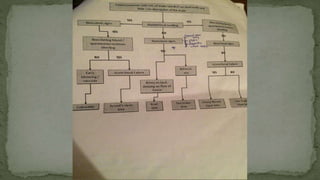
  • #21 These are the main snakes seen in sri lanka. In the emergency department doctors use this classification of symptoms to identify the type of the snake involved.