PRESENTATION BY:
ADITYA JHUNJHUNWALA (17001), ADITYA KUMAR (17002),
POULAMI GHOSH (17013), PRIYANKA KUMARI (170016), PRIYANKA ROY (17017)
• This case deals with the service operations and quality management issues faced by
SMRT Trains, one of the rapid transit rail operators in Singapore.
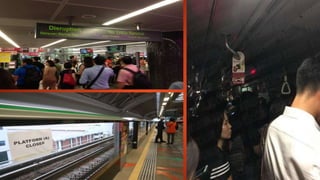
• The trigger point for the case was the occurrence of two massive service disruptions
on December 15, 2011 and December 17, 2011, respectively.
• Even though the rail line that faced the disruption had been in existence for over two
decades, this was the first time that multiple disruptions of such massive impact
occurred and impacted commuters widely across Singapore.
• The case delves into quality management, service operations and root cause analysis.
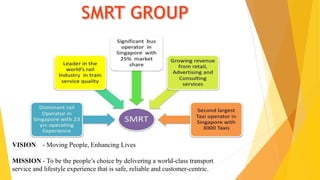
VISION - Moving People, Enhancing Lives
MISSION - To be the people’s choice by delivering a world-class transport
service and lifestyle experience that is safe, reliable and customer-centric.
• Turnaround Time: Shorter waiting time
• Cost effective and sustainable transport
• Network Span: Seamless travel across to wider network
• Modular transportation growth approach to offer better connection for future
• Safety and Security regulations
STRENGTHS
HIGH PRODUCT DIVERSITY
HIGH PRODUCT QUALITY
EXCELLENT STAFF
ADVANCED TECHNOLOGY
WEAKNESS
POOR REVENUE DISTRIBUTION
CENTRALIZATION IN SINGAPORE
OPPORTUNITIES
INCREASE RIDERSHIP TREND
EXPANSION OF LINE NETWORK
GROWTH IN INDUSTRY
THREATS
COMPETITIOS
LTA AS CENTRAL BUS NETWORK
PLANNER
SWOT
SMRT
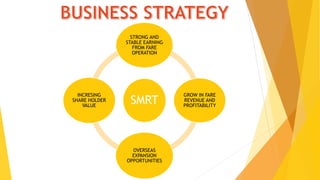
STRONG AND
STABLE EARNING
FROM FARE
OPERATION
GROW IN FARE
REVENUE AND
PROFITABILITY
OVERSEAS
EXPANSION
OPPORTUNITIES
INCRESING
SHARE HOLDER
VALUE
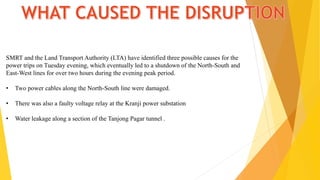
SMRT and the Land Transport Authority (LTA) have identified three possible causes for the
power trips on Tuesday evening, which eventually led to a shutdown of the North-South and
East-West lines for over two hours during the evening peak period.
• Two power cables along the North-South line were damaged.
• There was also a faulty voltage relay at the Kranji power substation
• Water leakage along a section of the Tanjong Pagar tunnel .
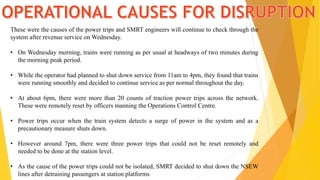
These were the causes of the power trips and SMRT engineers will continue to check through the
system after revenue service on Wednesday.
• On Wednesday morning, trains were running as per usual at headways of two minutes during
the morning peak period.
• While the operator had planned to shut down service from 11am to 4pm, they found that trains
were running smoothly and decided to continue service as per normal throughout the day.
• At about 6pm, there were more than 20 counts of traction power trips across the network.
These were remotely reset by officers manning the Operations Control Centre.
• Power trips occur when the train system detects a surge of power in the system and as a
precautionary measure shuts down.
• However around 7pm, there were three power trips that could not be reset remotely and
needed to be done at the station level.
• As the cause of the power trips could not be isolated, SMRT decided to shut down the NSEW
lines after detraining passengers at station platforms
• SMRT implement several measures to address its problems, including setting up a Joint
Readiness Inspection team that will audit its maintenance work and renewal of rail assets.
• It will bring in external experts to inspect critical systems across its network, and intensify
training to address lingering cultural issues.
SYSTEM DESIGN REVIEW AND DEVELOPMENT:
In the design review phase, leverage on a knowledge base of past experience to provide operational feedback to the
various system suppliers. This enables to recommend ideas leading to the goals of:
· Integrating the elements of systems engineering; Civil, and Railway Systems
· Ensuring that the system is able to deliver to a high level of standards during operations
· Improving system life-cycle costs
RAILWAY MANAGEMENT SYSTEMS:
Operational expertise enables to prepare comprehensive, standards-compliant operational procedures and guidelines
relating to the following:
· Safety Management System
· Railway Operating Procedures
· Standard Operating Procedures
· Emergency Procedures
· Coordination with multi-Agencies
· Maintenance Standards & Checklists
OPERATIONAL, TECHNICAL AND MANAGEMENT TRAINING:
Essential to any organisation is a competent and effective workforce. In addition to providing operational systems and
policies, SMRT Shall ensures effective transfer of knowledge and required skill sets through conducting staffing,
training and certification of manpower for any project. Training elements include:
· Training plan, implementation and strategy
· Railway training for operational readiness
· Railway safety management systems
· Train-the-trainer programmes
· Crisis response management
a) To introduce quality management concepts to business and engineering students in a
graduate or undergraduate programme.
b) To provide opportunity to apply root cause analysis to a quality management issue in
service operations.
c) To appreciate the strategic importance of quality and to understand how top
management commitment and focus is necessary to ensure consistent quality of goods
and services.
SMRT Trains Case Study

SMRT Trains Case Study

  • 1.
    PRESENTATION BY: ADITYA JHUNJHUNWALA(17001), ADITYA KUMAR (17002), POULAMI GHOSH (17013), PRIYANKA KUMARI (170016), PRIYANKA ROY (17017)
  • 2.
    • This casedeals with the service operations and quality management issues faced by SMRT Trains, one of the rapid transit rail operators in Singapore. • The trigger point for the case was the occurrence of two massive service disruptions on December 15, 2011 and December 17, 2011, respectively. • Even though the rail line that faced the disruption had been in existence for over two decades, this was the first time that multiple disruptions of such massive impact occurred and impacted commuters widely across Singapore. • The case delves into quality management, service operations and root cause analysis.
  • 4.
    VISION - MovingPeople, Enhancing Lives MISSION - To be the people’s choice by delivering a world-class transport service and lifestyle experience that is safe, reliable and customer-centric.
  • 6.
    • Turnaround Time:Shorter waiting time • Cost effective and sustainable transport • Network Span: Seamless travel across to wider network • Modular transportation growth approach to offer better connection for future • Safety and Security regulations
  • 8.
    STRENGTHS HIGH PRODUCT DIVERSITY HIGHPRODUCT QUALITY EXCELLENT STAFF ADVANCED TECHNOLOGY WEAKNESS POOR REVENUE DISTRIBUTION CENTRALIZATION IN SINGAPORE OPPORTUNITIES INCREASE RIDERSHIP TREND EXPANSION OF LINE NETWORK GROWTH IN INDUSTRY THREATS COMPETITIOS LTA AS CENTRAL BUS NETWORK PLANNER SWOT
  • 9.
    SMRT STRONG AND STABLE EARNING FROMFARE OPERATION GROW IN FARE REVENUE AND PROFITABILITY OVERSEAS EXPANSION OPPORTUNITIES INCRESING SHARE HOLDER VALUE
  • 10.
    SMRT and theLand Transport Authority (LTA) have identified three possible causes for the power trips on Tuesday evening, which eventually led to a shutdown of the North-South and East-West lines for over two hours during the evening peak period. • Two power cables along the North-South line were damaged. • There was also a faulty voltage relay at the Kranji power substation • Water leakage along a section of the Tanjong Pagar tunnel .
  • 11.
    These were thecauses of the power trips and SMRT engineers will continue to check through the system after revenue service on Wednesday. • On Wednesday morning, trains were running as per usual at headways of two minutes during the morning peak period. • While the operator had planned to shut down service from 11am to 4pm, they found that trains were running smoothly and decided to continue service as per normal throughout the day. • At about 6pm, there were more than 20 counts of traction power trips across the network. These were remotely reset by officers manning the Operations Control Centre. • Power trips occur when the train system detects a surge of power in the system and as a precautionary measure shuts down. • However around 7pm, there were three power trips that could not be reset remotely and needed to be done at the station level. • As the cause of the power trips could not be isolated, SMRT decided to shut down the NSEW lines after detraining passengers at station platforms
  • 12.
    • SMRT implementseveral measures to address its problems, including setting up a Joint Readiness Inspection team that will audit its maintenance work and renewal of rail assets. • It will bring in external experts to inspect critical systems across its network, and intensify training to address lingering cultural issues.
  • 13.
    SYSTEM DESIGN REVIEWAND DEVELOPMENT: In the design review phase, leverage on a knowledge base of past experience to provide operational feedback to the various system suppliers. This enables to recommend ideas leading to the goals of: · Integrating the elements of systems engineering; Civil, and Railway Systems · Ensuring that the system is able to deliver to a high level of standards during operations · Improving system life-cycle costs RAILWAY MANAGEMENT SYSTEMS: Operational expertise enables to prepare comprehensive, standards-compliant operational procedures and guidelines relating to the following: · Safety Management System · Railway Operating Procedures · Standard Operating Procedures · Emergency Procedures · Coordination with multi-Agencies · Maintenance Standards & Checklists
  • 14.
    OPERATIONAL, TECHNICAL ANDMANAGEMENT TRAINING: Essential to any organisation is a competent and effective workforce. In addition to providing operational systems and policies, SMRT Shall ensures effective transfer of knowledge and required skill sets through conducting staffing, training and certification of manpower for any project. Training elements include: · Training plan, implementation and strategy · Railway training for operational readiness · Railway safety management systems · Train-the-trainer programmes · Crisis response management
  • 15.
    a) To introducequality management concepts to business and engineering students in a graduate or undergraduate programme. b) To provide opportunity to apply root cause analysis to a quality management issue in service operations. c) To appreciate the strategic importance of quality and to understand how top management commitment and focus is necessary to ensure consistent quality of goods and services.