Kathmandu University
Department of Artificial Intelligence
Dhulikhel, Kavre
A
Lab Report
On
Smart Irrigation System
Submitted By
Bikash Banjara (230002)
Submitted To
Prof.Dr. Sudan Jha
Department of Artificial Intelligent
Submission Date
15th
August, 2024
Abstract:
1.0 Introduction
1.1 Background
1.2 Objective
2. Materials and Methods
2.1 Materials
2.2 Circuit Design
2.3 Software Design
2.4 Implementation
2.5 Testing Procedure
3. Results
3.1 Observations
3.2 Data Analysis
4. Conclusion
5. References
Abstract:
This is a project for the design and simulation of a smart irrigation system
using Cisco packet tracer. Set to automate lawn sprinkle based on real time after
measuring the water levels in the device. These IOT devices will essentially integrate an
MCU, water level monitors, humiture sensors, and lawn sprinklers all wirelessly
connected through a home gateway. The main objective is to save water by automating
sprinkler control so they only turn on if necessary. The MCU is programmed to turn on
the sprinklers if the water level drops below 5 cm and to turn off the sprinklers when the
water level is in excess of 20 cm. The obtained data from the sensors are then
transmitted wirelessly to the water level monitors, then to display information regarding
the performance of the system in real-time. This project therefore details the role of IoT
in irrigation system optimization for better efficiency in water usage within gardening and
agricultural applications.
1.0 Introduction
​
​ 1.1 Background
​ Water management is a critical aspect of agriculture and gardening, especially in
regions with limited water resources. Traditional irrigation systems often lead to
water wastage due to their inability to adapt to changing environmental
conditions. A smart irrigation system addresses this problem by automating the
process of watering based on real-time data collected from sensors, ensuring
optimal water usage.
​
​
​ 1.2 Objective
​ The objective of this lab is to design, implement, and test a smart irrigation system using IoT
(Internet of Things) technology. The system will monitor soil moisture levels and water the garden
accordingly, reducing water waste and ensuring adequate hydration for plants.
​
2. Materials and Methods
2.1 Materials
● IoT Devices: Humiture Sensor (IoT3), Water Sensor (IoT0), Lawn Sprinkler
● Microcontroller: MCU-PT (MCU0)
● Network Equipment: Home Gateway (DLC100)
● Monitoring Devices: Humiture Monitor, Water Level Monitor, Smartphone
● Software: Cisco Packet Tracer for simulation
● Other: Garden area, connectivity cables, power supply
2.2 Circuit Design
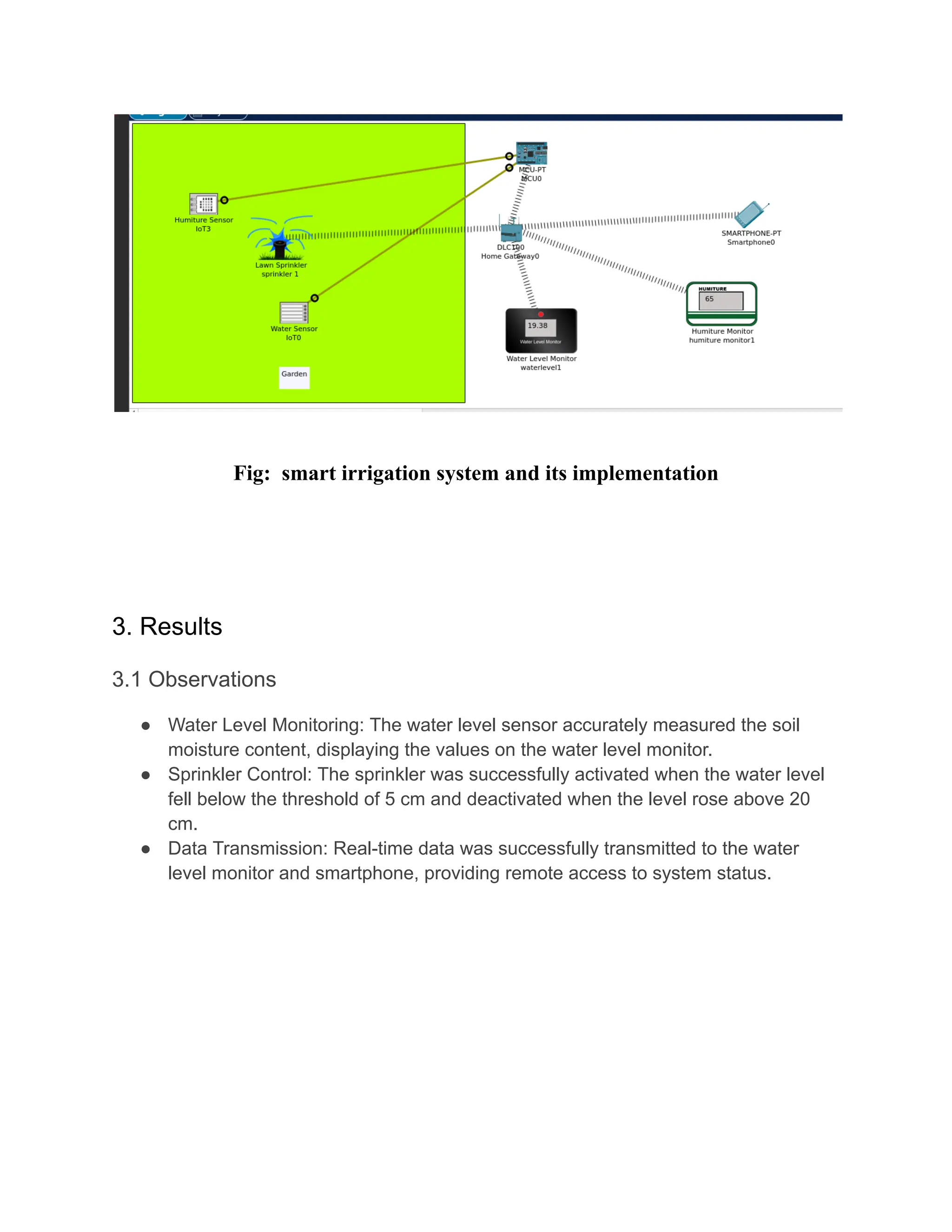
The smart irrigation system consists of a water sensor placed in the garden to monitor
soil moisture levels. The sensor is connected to a microcontroller, which processes the
sensor data and controls a lawn sprinkler. The system also includes a humiture sensor
to monitor environmental temperature and humidity, providing additional data for water
management.
2.3 Software Design
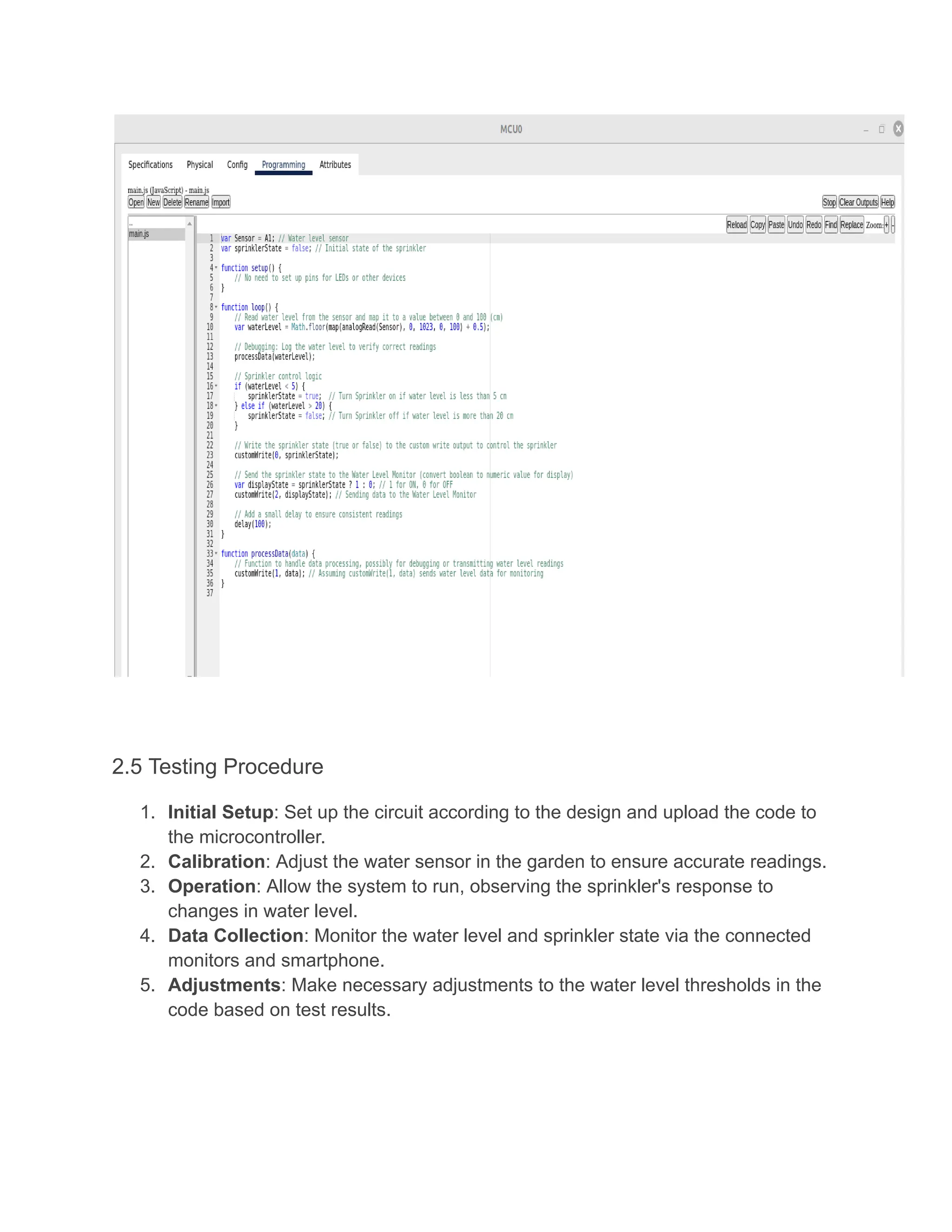
The system's logic is implemented using a program uploaded to the microcontroller. The
program reads data from the water sensor, processes the data, and controls the
sprinkler based on predefined thresholds. The program also sends real-time data to a
water level monitor and a smartphone for remote monitoring.
The main program logic includes:
● Sensor Data Acquisition: Collecting data from the water sensor and humiture
sensor.
● Data Processing: Mapping the sensor data to meaningful values (e.g., water
level in cm).
● Control Logic: Activating or deactivating the sprinkler based on water level
thresholds.
● Data Transmission: Sending sensor data to connected monitoring devices.
2.4 Implementation
The code used in this lab is written in java, commonly used for microcontroller
programming. Below is a simplified version of the code:
2.5 Testing Procedure
1. Initial Setup: Set up the circuit according to the design and upload the code to
the microcontroller.
2. Calibration: Adjust the water sensor in the garden to ensure accurate readings.
3. Operation: Allow the system to run, observing the sprinkler's response to
changes in water level.
4. Data Collection: Monitor the water level and sprinkler state via the connected
monitors and smartphone.
5. Adjustments: Make necessary adjustments to the water level thresholds in the
code based on test results.
Fig: smart irrigation system and its implementation
3. Results
3.1 Observations
● Water Level Monitoring: The water level sensor accurately measured the soil
moisture content, displaying the values on the water level monitor.
● Sprinkler Control: The sprinkler was successfully activated when the water level
fell below the threshold of 5 cm and deactivated when the level rose above 20
cm.
● Data Transmission: Real-time data was successfully transmitted to the water
level monitor and smartphone, providing remote access to system status.
3.2 Data Analysis
● The system effectively maintained the desired water level in the garden, reducing
the chances of overwatering or underwatering.
● The threshold values for sprinkler activation/deactivation proved effective for the
specific garden conditions tested.
4. Conclusion
The smart irrigation system successfully automated the watering process, improving
water efficiency and plant health. The project highlights the potential of IoT technology
in agricultural applications and offers a foundation for further development in smart
farming solutions.
5. References
● Cisco Packet Tracer Documentation for using sensors
● Arduino Programming Reference for programming on MCU

Smart_irrigation_system_In _cisco packet tracer

  • 1.
    Kathmandu University Department ofArtificial Intelligence Dhulikhel, Kavre A Lab Report On Smart Irrigation System Submitted By Bikash Banjara (230002) Submitted To Prof.Dr. Sudan Jha Department of Artificial Intelligent Submission Date 15th August, 2024
  • 2.
    Abstract: 1.0 Introduction 1.1 Background 1.2Objective 2. Materials and Methods 2.1 Materials 2.2 Circuit Design 2.3 Software Design 2.4 Implementation 2.5 Testing Procedure 3. Results 3.1 Observations 3.2 Data Analysis 4. Conclusion 5. References
  • 3.
    Abstract: This is aproject for the design and simulation of a smart irrigation system using Cisco packet tracer. Set to automate lawn sprinkle based on real time after measuring the water levels in the device. These IOT devices will essentially integrate an MCU, water level monitors, humiture sensors, and lawn sprinklers all wirelessly connected through a home gateway. The main objective is to save water by automating sprinkler control so they only turn on if necessary. The MCU is programmed to turn on the sprinklers if the water level drops below 5 cm and to turn off the sprinklers when the water level is in excess of 20 cm. The obtained data from the sensors are then transmitted wirelessly to the water level monitors, then to display information regarding the performance of the system in real-time. This project therefore details the role of IoT in irrigation system optimization for better efficiency in water usage within gardening and agricultural applications.
  • 4.
    1.0 Introduction ​ ​ 1.1Background ​ Water management is a critical aspect of agriculture and gardening, especially in regions with limited water resources. Traditional irrigation systems often lead to water wastage due to their inability to adapt to changing environmental conditions. A smart irrigation system addresses this problem by automating the process of watering based on real-time data collected from sensors, ensuring optimal water usage. ​ ​ ​ 1.2 Objective ​ The objective of this lab is to design, implement, and test a smart irrigation system using IoT (Internet of Things) technology. The system will monitor soil moisture levels and water the garden accordingly, reducing water waste and ensuring adequate hydration for plants. ​ 2. Materials and Methods 2.1 Materials ● IoT Devices: Humiture Sensor (IoT3), Water Sensor (IoT0), Lawn Sprinkler ● Microcontroller: MCU-PT (MCU0) ● Network Equipment: Home Gateway (DLC100) ● Monitoring Devices: Humiture Monitor, Water Level Monitor, Smartphone ● Software: Cisco Packet Tracer for simulation ● Other: Garden area, connectivity cables, power supply 2.2 Circuit Design The smart irrigation system consists of a water sensor placed in the garden to monitor soil moisture levels. The sensor is connected to a microcontroller, which processes the sensor data and controls a lawn sprinkler. The system also includes a humiture sensor to monitor environmental temperature and humidity, providing additional data for water management.
  • 5.
    2.3 Software Design Thesystem's logic is implemented using a program uploaded to the microcontroller. The program reads data from the water sensor, processes the data, and controls the sprinkler based on predefined thresholds. The program also sends real-time data to a water level monitor and a smartphone for remote monitoring. The main program logic includes: ● Sensor Data Acquisition: Collecting data from the water sensor and humiture sensor. ● Data Processing: Mapping the sensor data to meaningful values (e.g., water level in cm). ● Control Logic: Activating or deactivating the sprinkler based on water level thresholds. ● Data Transmission: Sending sensor data to connected monitoring devices. 2.4 Implementation The code used in this lab is written in java, commonly used for microcontroller programming. Below is a simplified version of the code:
  • 6.
    2.5 Testing Procedure 1.Initial Setup: Set up the circuit according to the design and upload the code to the microcontroller. 2. Calibration: Adjust the water sensor in the garden to ensure accurate readings. 3. Operation: Allow the system to run, observing the sprinkler's response to changes in water level. 4. Data Collection: Monitor the water level and sprinkler state via the connected monitors and smartphone. 5. Adjustments: Make necessary adjustments to the water level thresholds in the code based on test results.
  • 7.
    Fig: smart irrigationsystem and its implementation 3. Results 3.1 Observations ● Water Level Monitoring: The water level sensor accurately measured the soil moisture content, displaying the values on the water level monitor. ● Sprinkler Control: The sprinkler was successfully activated when the water level fell below the threshold of 5 cm and deactivated when the level rose above 20 cm. ● Data Transmission: Real-time data was successfully transmitted to the water level monitor and smartphone, providing remote access to system status.
  • 8.
    3.2 Data Analysis ●The system effectively maintained the desired water level in the garden, reducing the chances of overwatering or underwatering. ● The threshold values for sprinkler activation/deactivation proved effective for the specific garden conditions tested. 4. Conclusion The smart irrigation system successfully automated the watering process, improving water efficiency and plant health. The project highlights the potential of IoT technology in agricultural applications and offers a foundation for further development in smart farming solutions. 5. References ● Cisco Packet Tracer Documentation for using sensors ● Arduino Programming Reference for programming on MCU