Overview
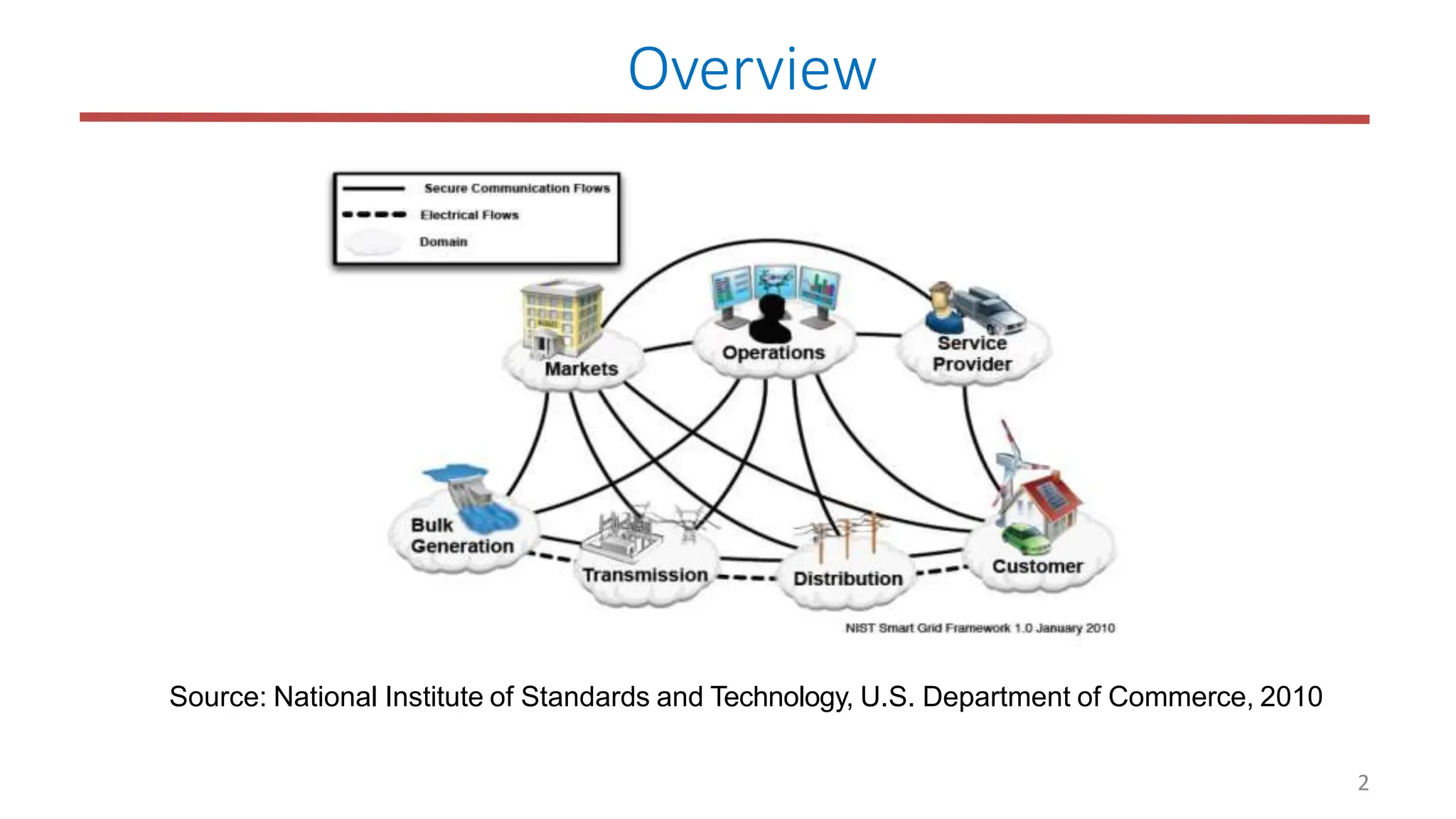
Source: National Institute of Standards and Technology, U.S. Department of Commerce, 2010
2
3
Grid Layout
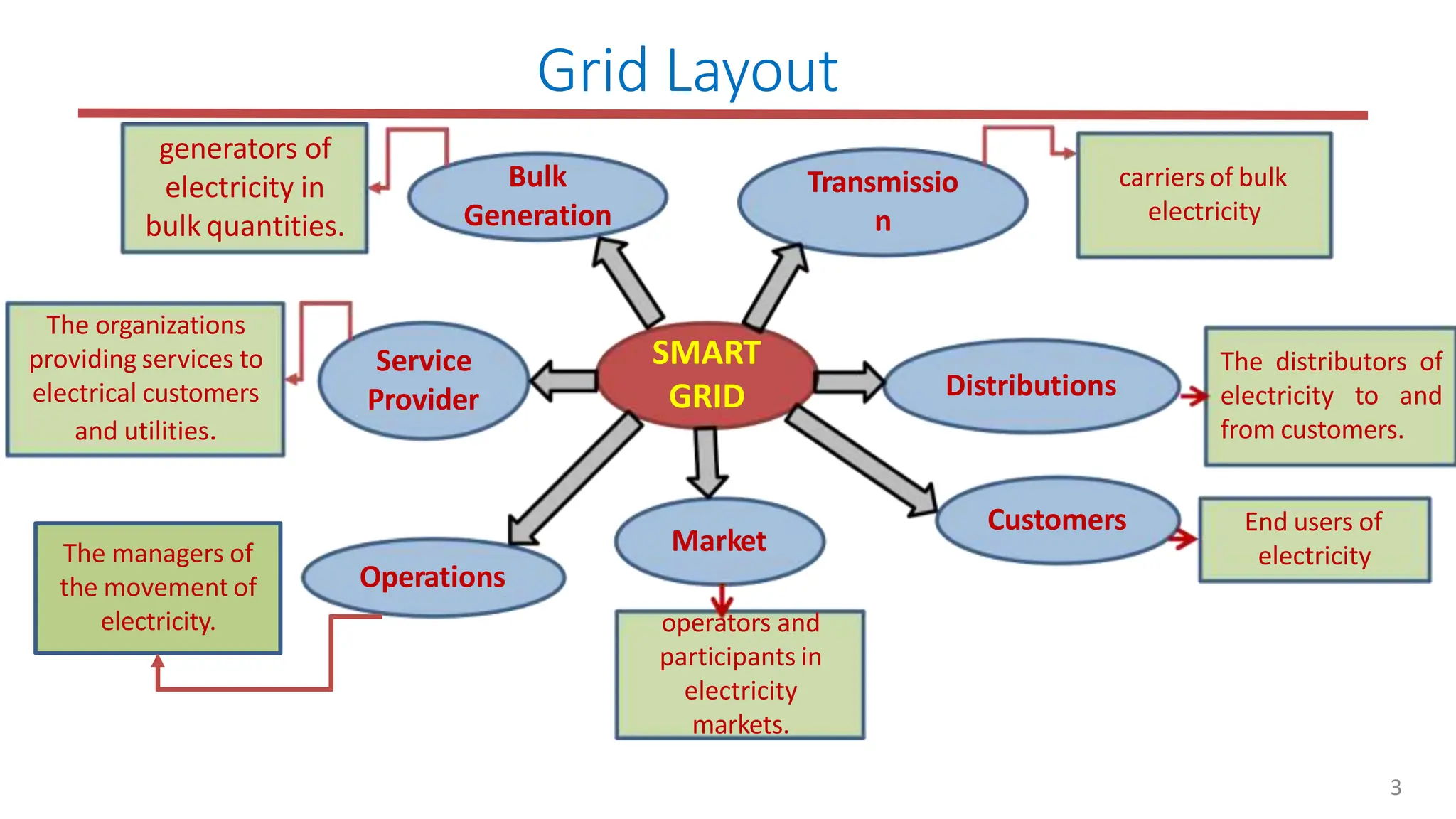
SMART
GRID
Bulk
Generation
Transmissio
n
Distributions
Operations
Service
Provider
Market
carriersof bulk
electricity
operators and
participants in
electricity
markets.
The distributors of
electricity to and
from customers.
The managers of
the movement of
electricity.
generators of
electricity in
bulk quantities.
The organizations
providing services to
electrical customers
and utilities.
Customers End users of
electricity
Customer Domain
Customer Domain
6
Customer Domain
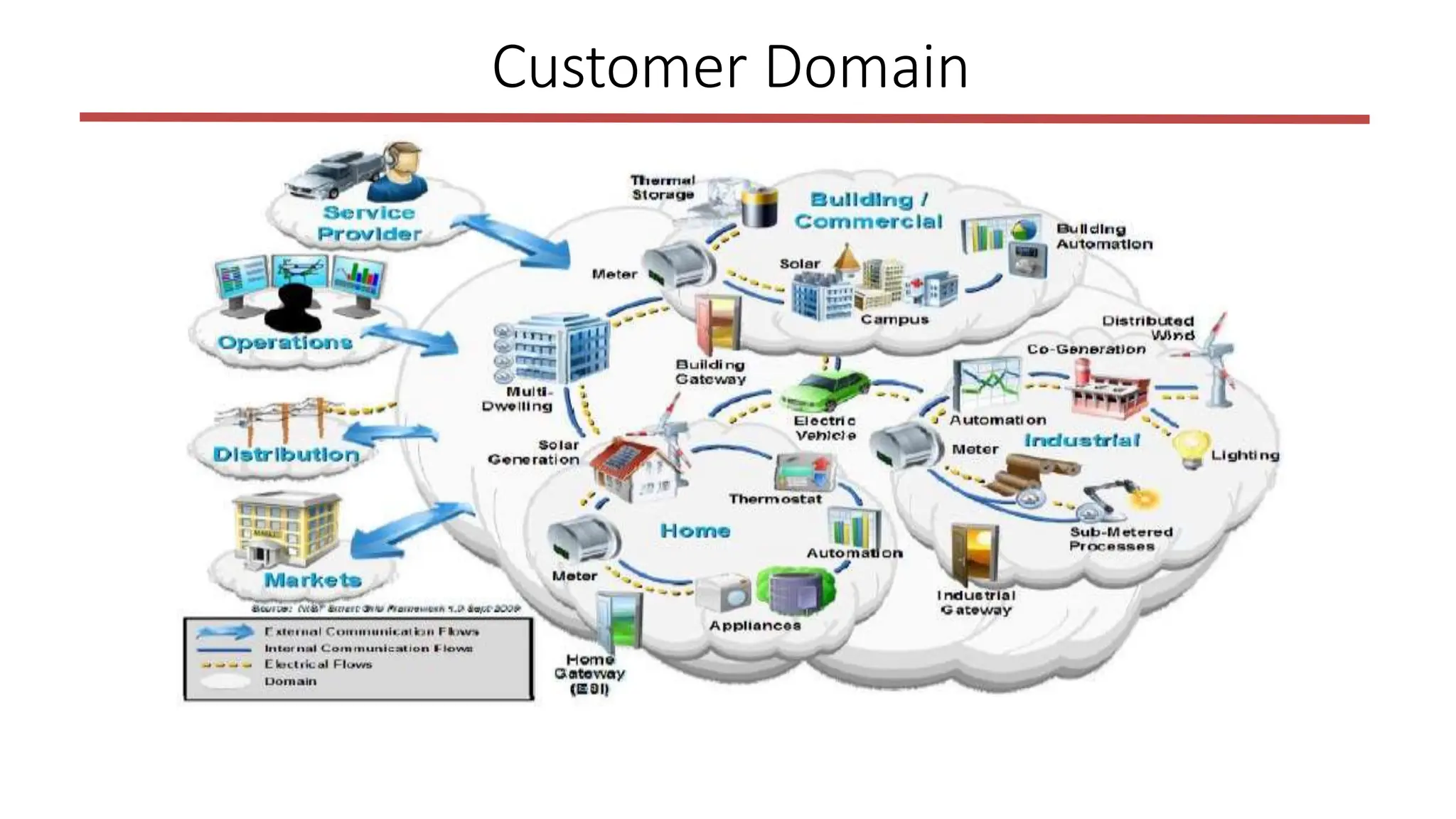
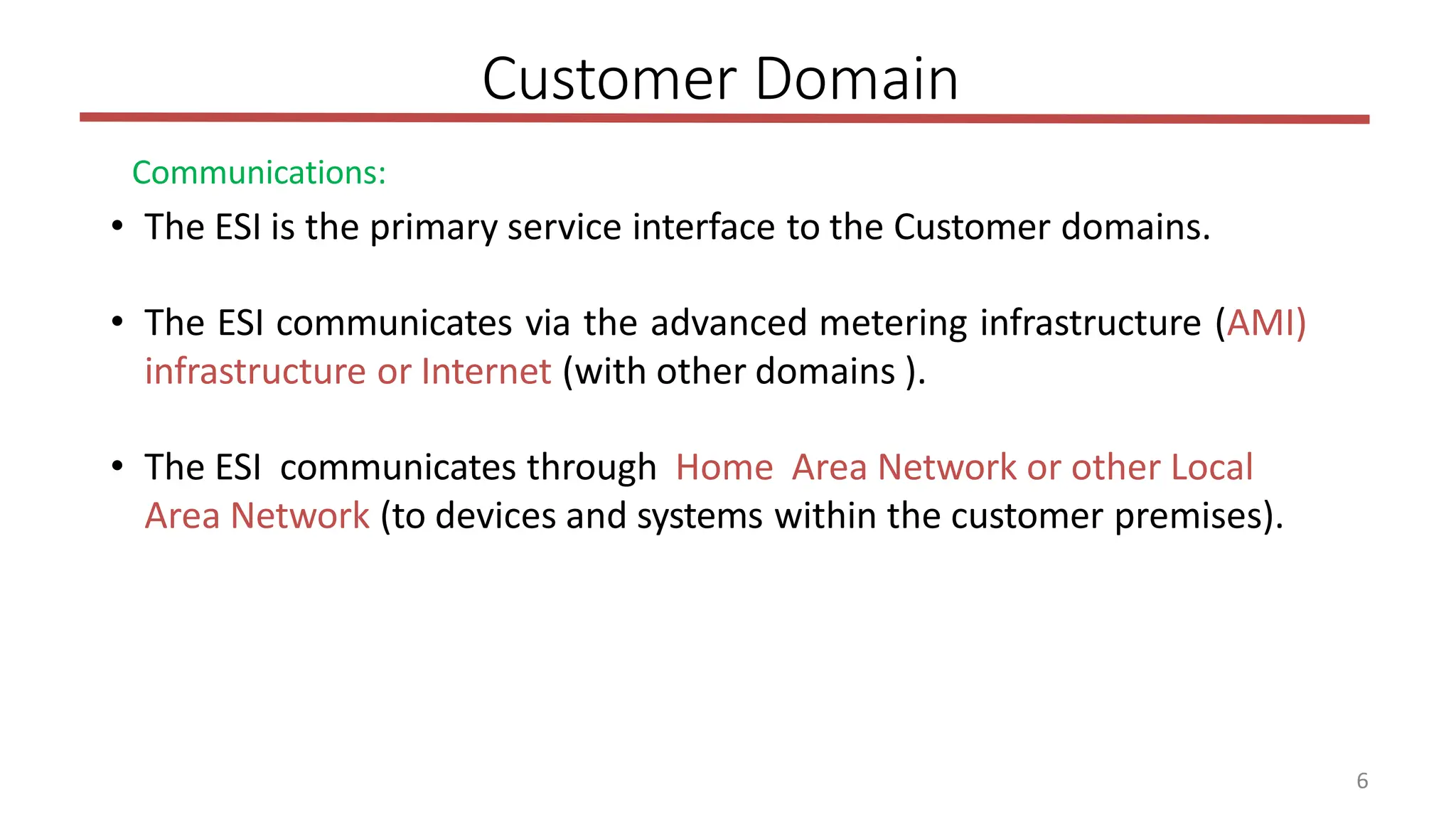
Communications:
• The ESI is the primary service interface to the Customer domains.
• The ESI communicates via the advanced metering infrastructure (AMI)
infrastructure or Internet (with other domains ).
• The ESI communicates through Home Area Network or other Local
Area Network (to devices and systems within the customer premises).
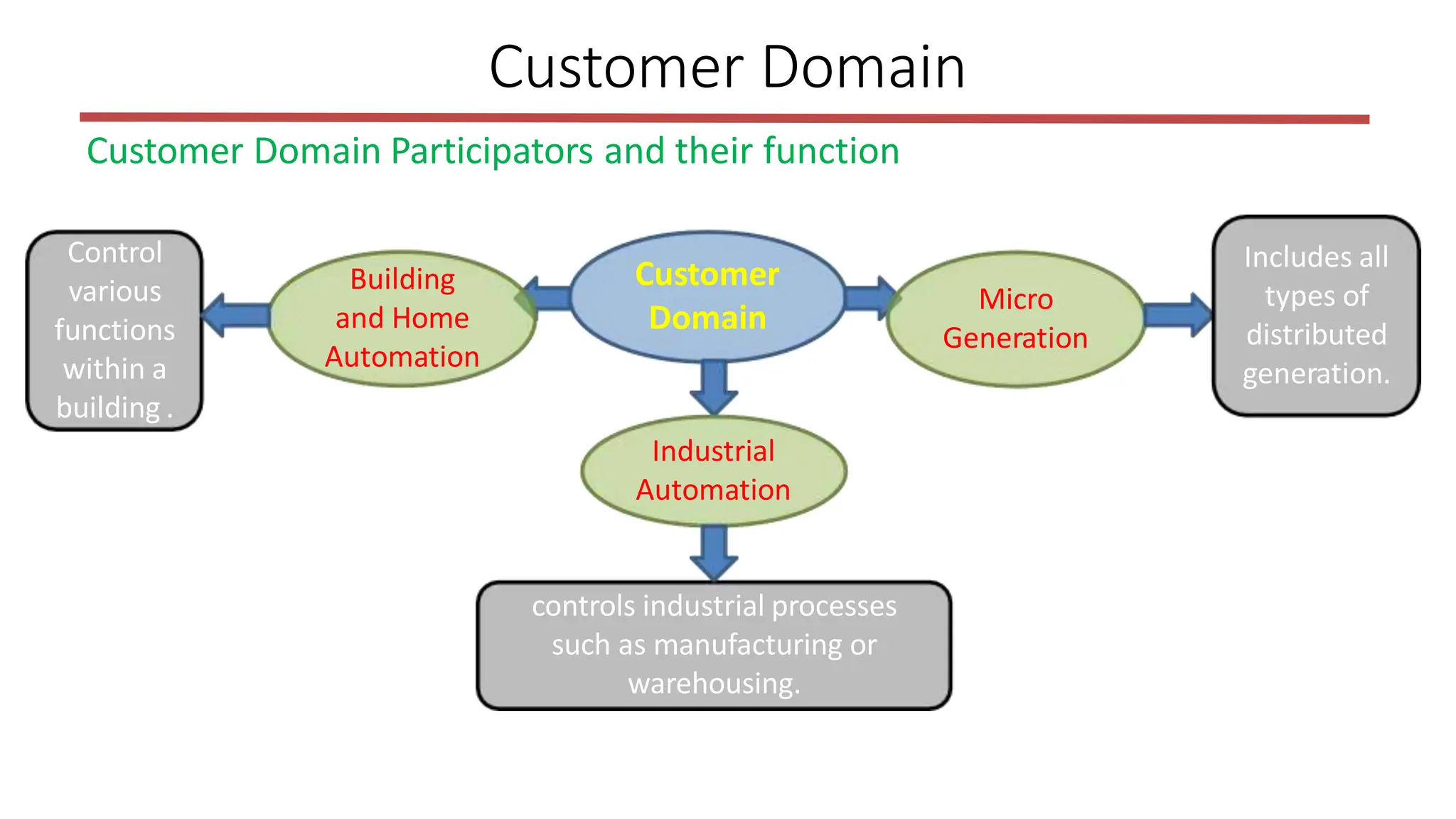
Customer Domain Participators and their function
Customer Domain
controls industrial processes
such as manufacturing or
warehousing.
Customer
Domain
Building
and Home
Automation
Industrial
Automation
Micro
Generation
Control
various
functions
within a
building .
Includes all
types of
distributed
generation.
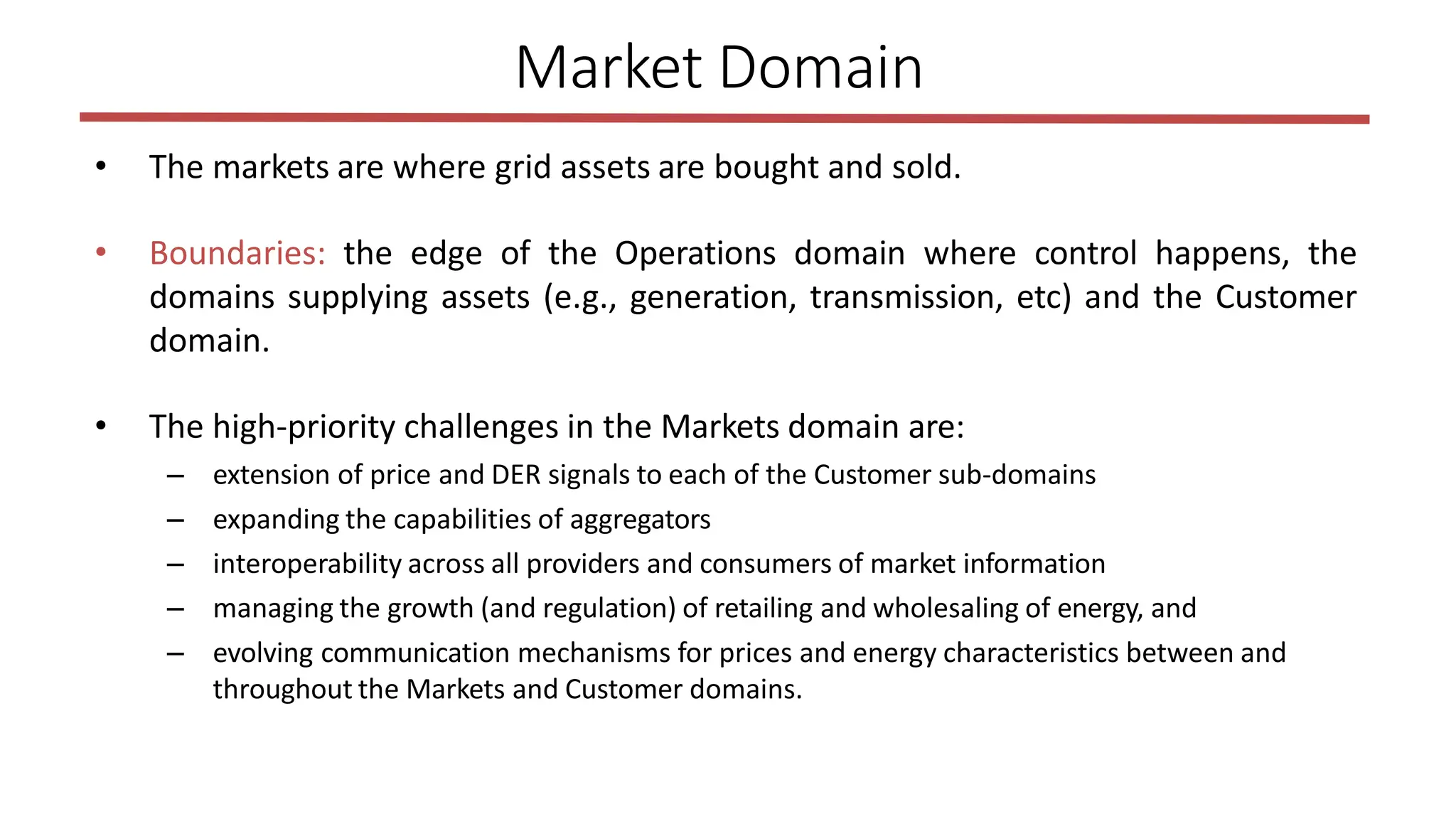
• The markets are where grid assets are bought and sold.
• Boundaries: the edge of the Operations domain where control happens, the
domains supplying assets (e.g., generation, transmission, etc) and the Customer
domain.
• The high-priority challenges in the Markets domain are:
– extension of price and DER signals to each of the Customer sub-domains
– expanding the capabilities of aggregators
– interoperability across all providers and consumers of market information
– managing the growth (and regulation) of retailing and wholesaling of energy, and
– evolving communication mechanisms for prices and energy characteristics between and
throughout the Markets and Customer domains.
Market Domain
Market Domain
Market Domain
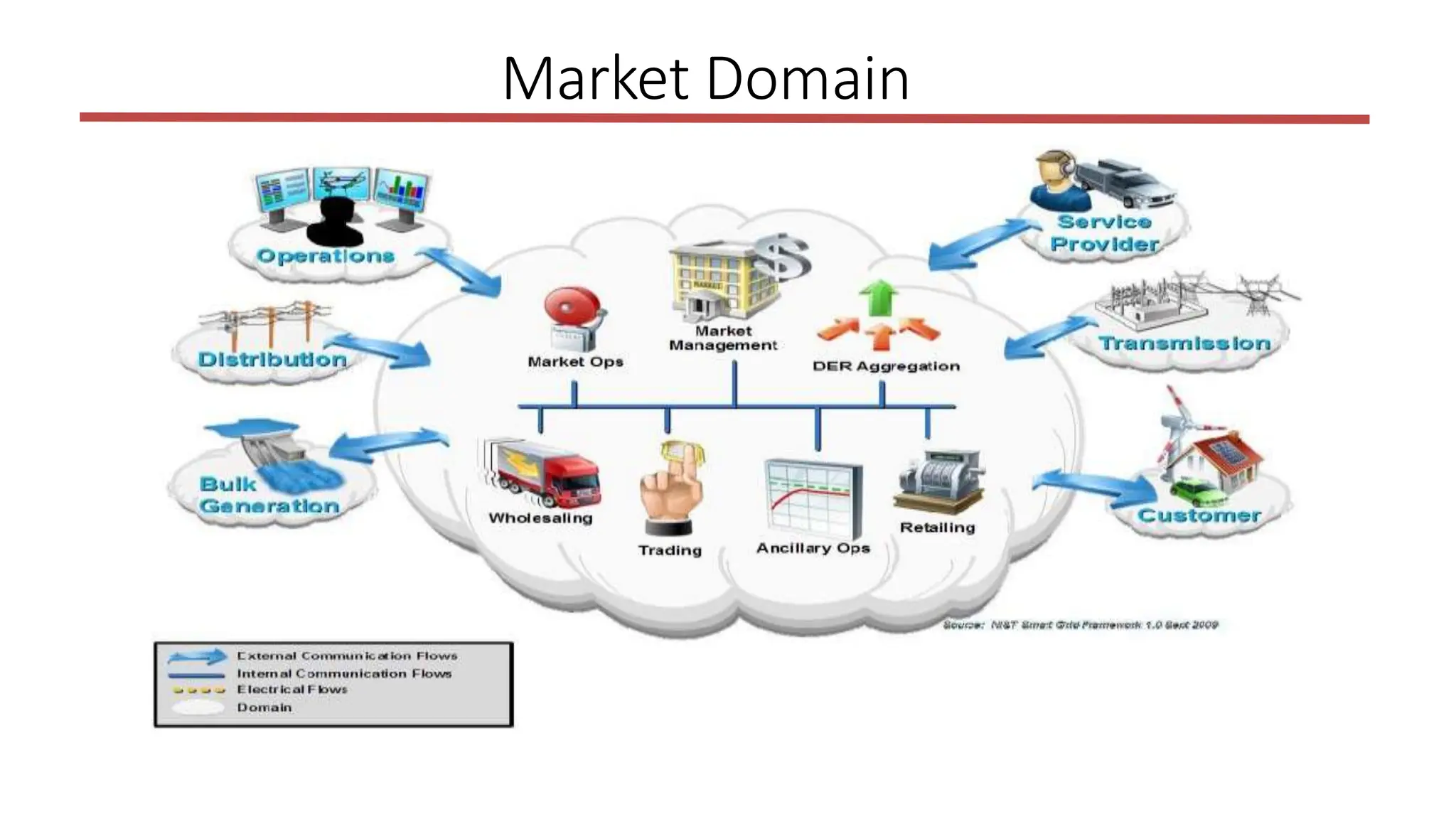
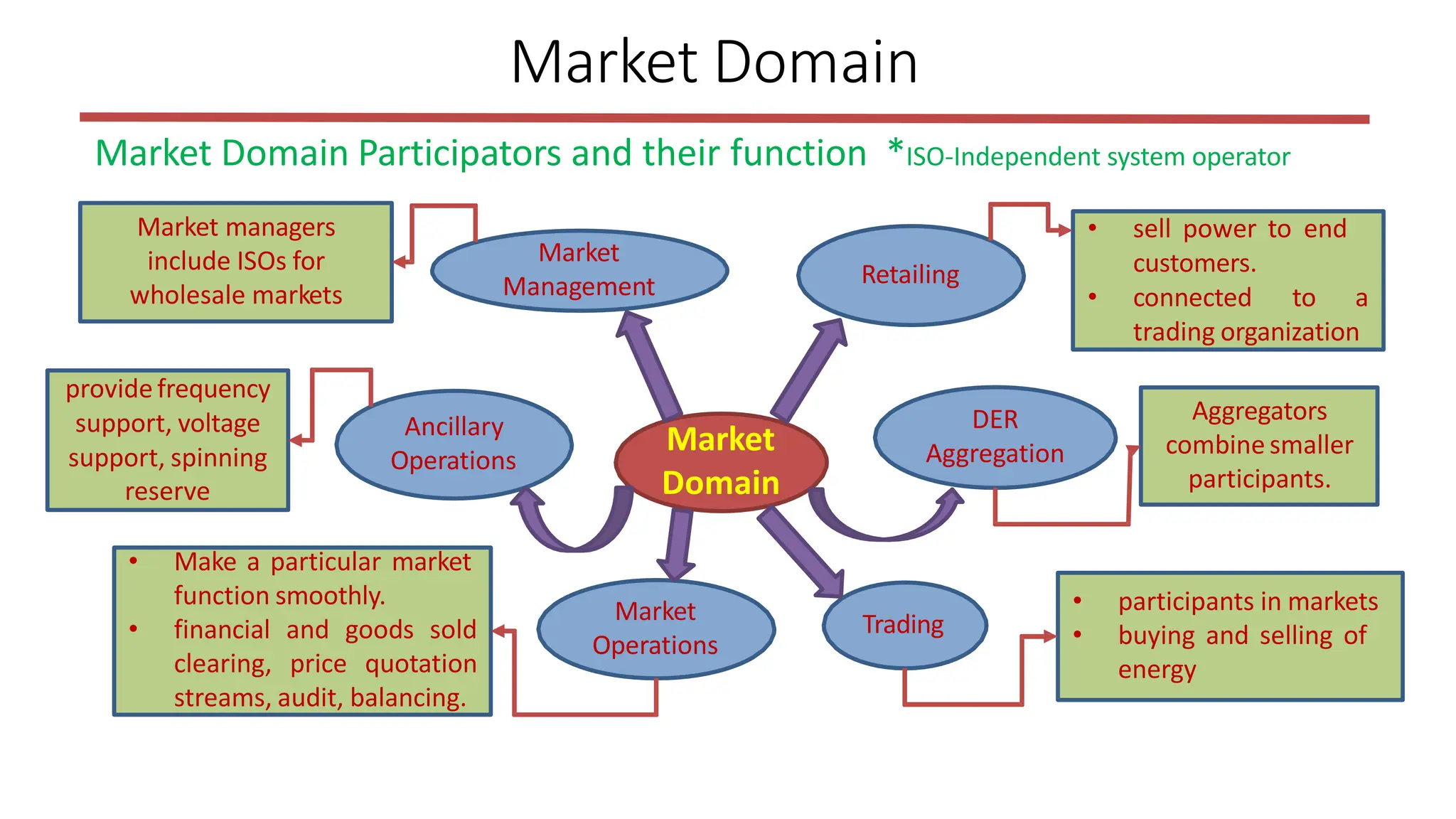
Market Domain Participators and their function *ISO-Independent system operator
Market
Domain
Market
Management Retailing
Trading
Market
Operations
Ancillary
Operations
DER
Aggregation
• sell power to end
customers.
• connected to a
trading organization
Aggregators
combine smaller
participants.
• participants in markets
• buying and selling of
energy
• Make a particular market
function smoothly.
• financial and goods sold
clearing, price quotation
streams, audit, balancing.
Market managers
include ISOs for
wholesale markets
provide frequency
support, voltage
support, spinning
reserve
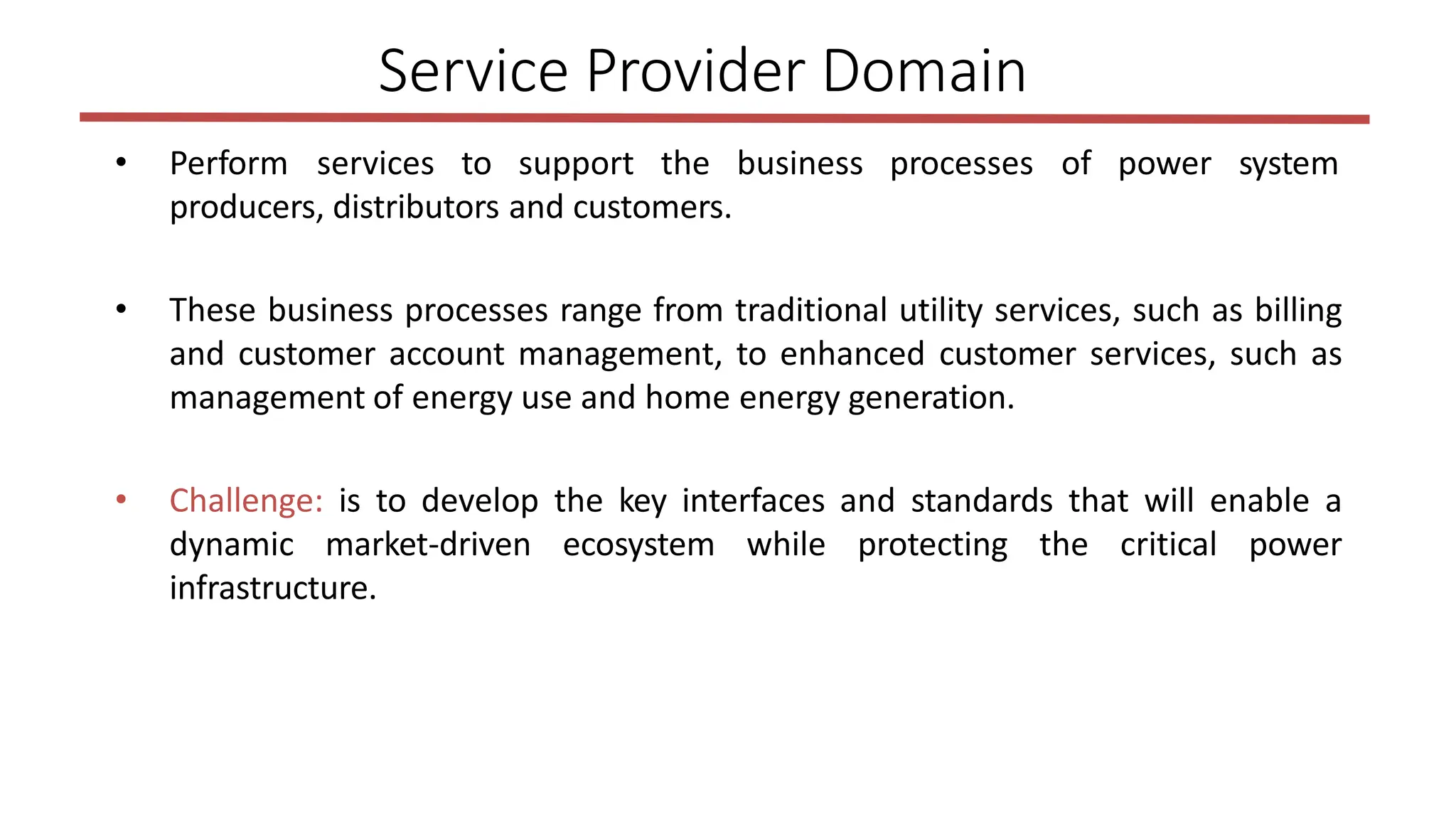
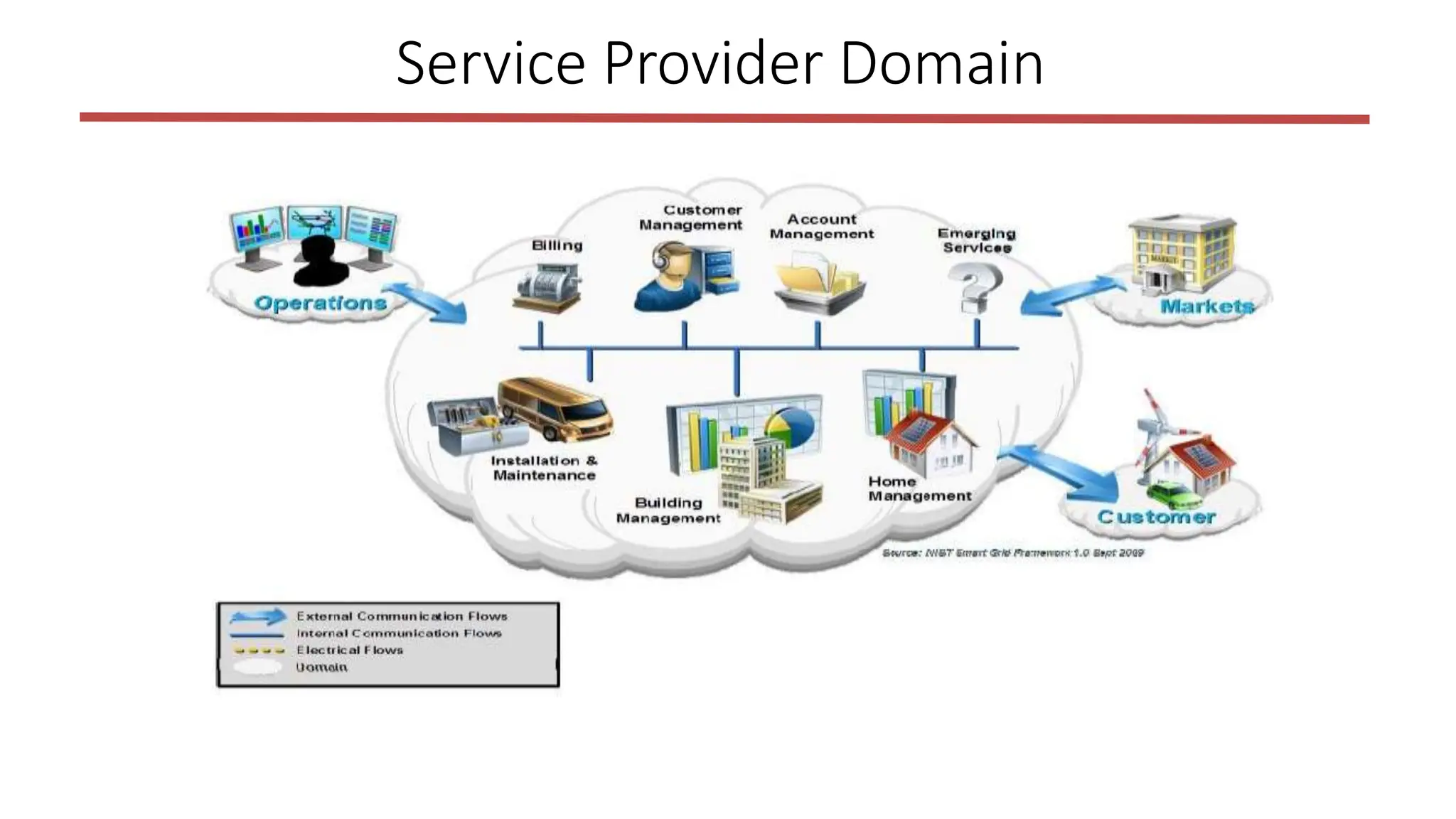
• Perform services to support the business processes of power system
producers, distributors and customers.
• These business processes range from traditional utility services, such as billing
and customer account management, to enhanced customer services, such as
management of energy use and home energy generation.
• Challenge: is to develop the key interfaces and standards that will enable a
dynamic market-driven ecosystem while protecting the critical power
infrastructure.
Service Provider Domain
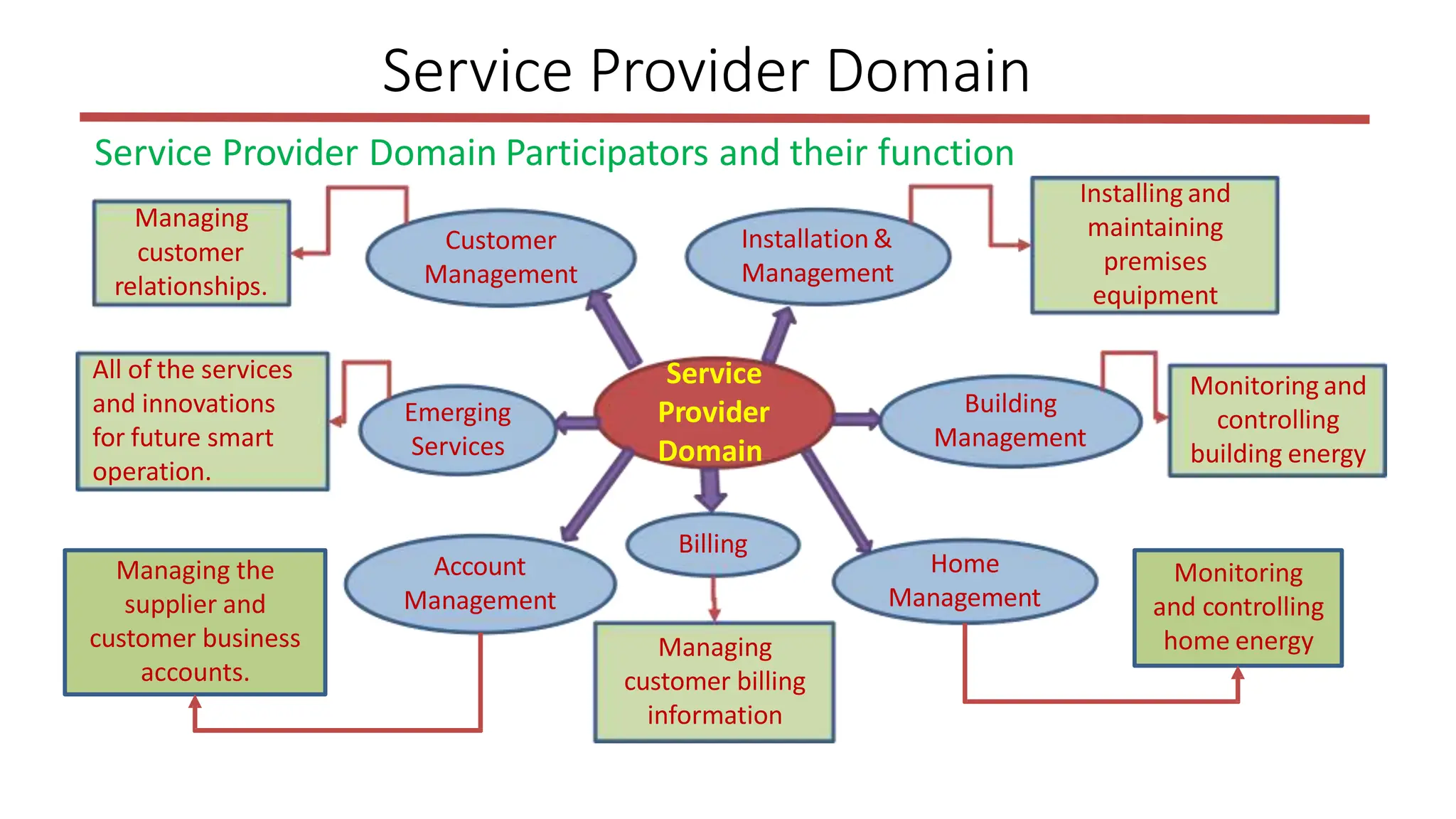
Service
Provider
Domain
Customer
Management
Installation&
Management
Home
Management
Account
Management
Emerging
Services
Building
Management
Installing and
maintaining
premises
equipment
Monitoring and
controlling
building energy
Monitoring
and controlling
home energy
Managing the
supplier and
customer business
accounts.
Service Provider Domain Participators and their function
Managing
customer
relationships.
All of the services
and innovations
for future smart
operation.
Billing
Managing
customer billing
information
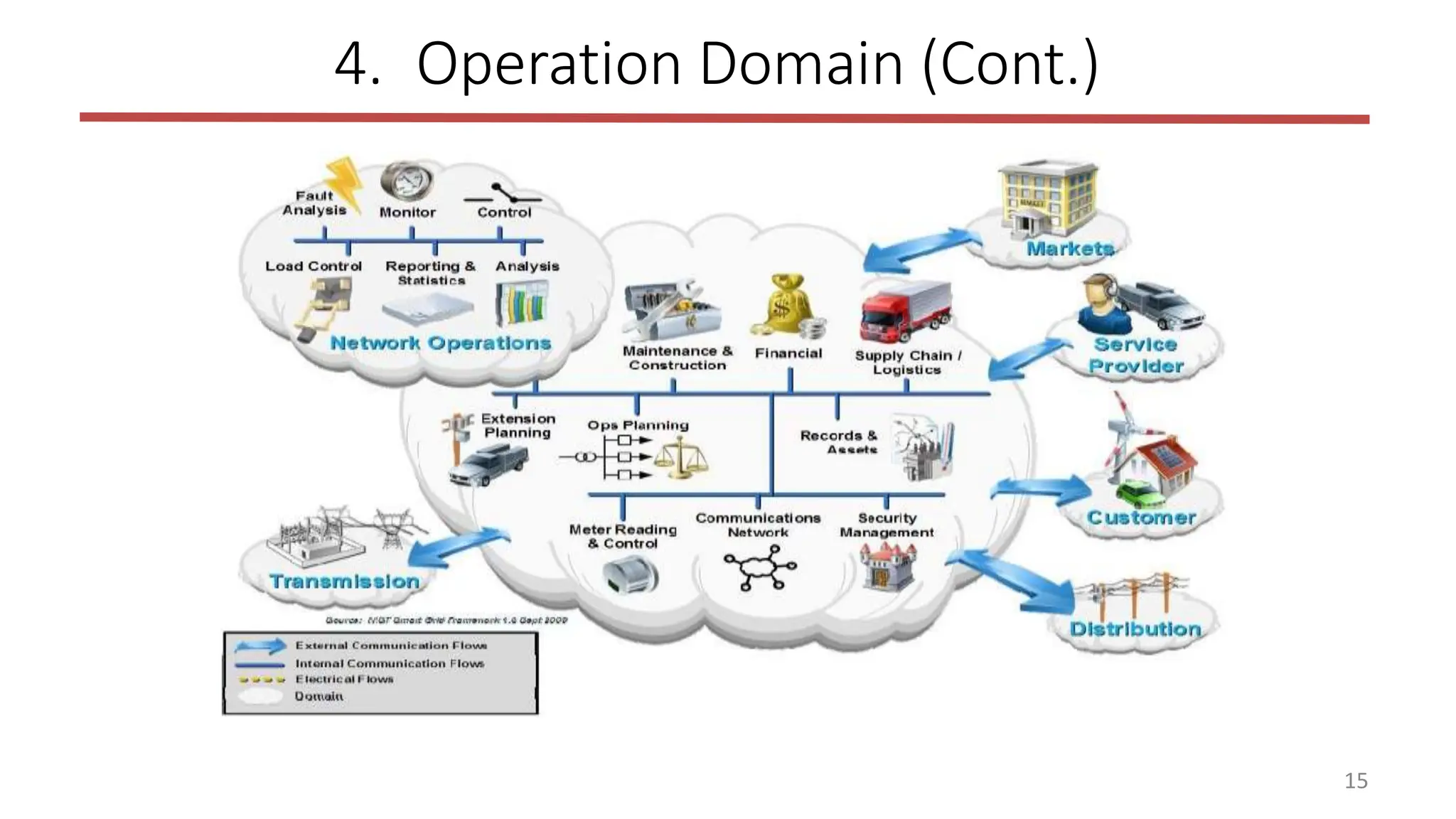
• Actors in the Operations domain are responsible for the smooth operation of
the power system.
Operation Domain
15
4. Operation Domain (Cont.)
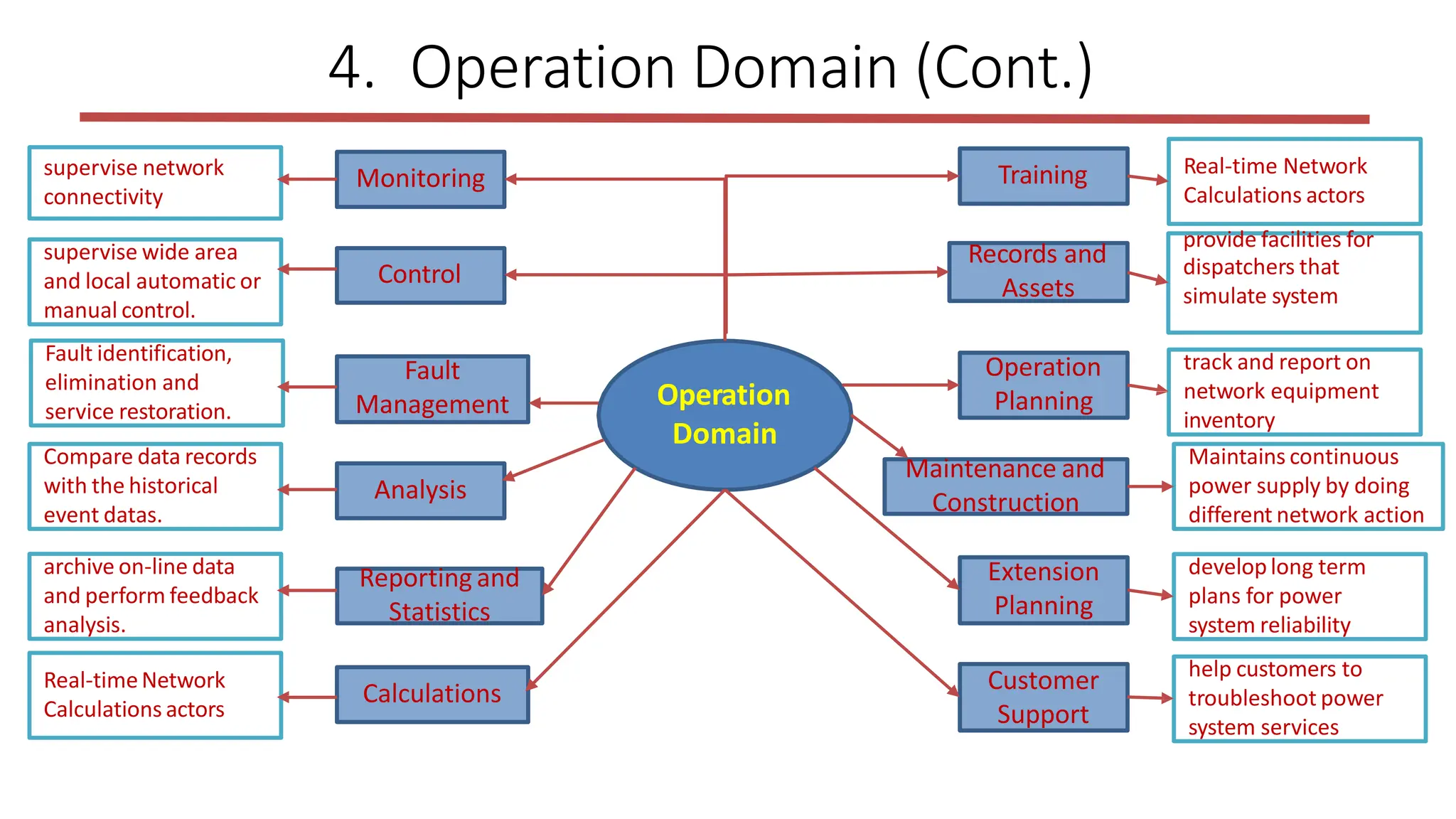
Operation
Domain
Monitoring
Control
Fault
Management
Analysis
Reporting and
Statistics
Calculations
Training
Records and
Assets
Operation
Planning
Maintenance and
Construction
Extension
Planning
Customer
Support
supervise network
connectivity
supervise wide area
and local automatic or
manual control.
Fault identification,
elimination and
service restoration.
Compare data records
with the historical
event datas.
archive on-line data
and perform feedback
analysis.
Real-timeNetwork
Calculations actors
Real-time Network
Calculations actors
provide facilities for
dispatchers that
simulate system
track and report on
network equipment
inventory
Maintains continuous
power supply by doing
different network action
developlong term
plans for power
system reliability
help customers to
troubleshoot power
system services
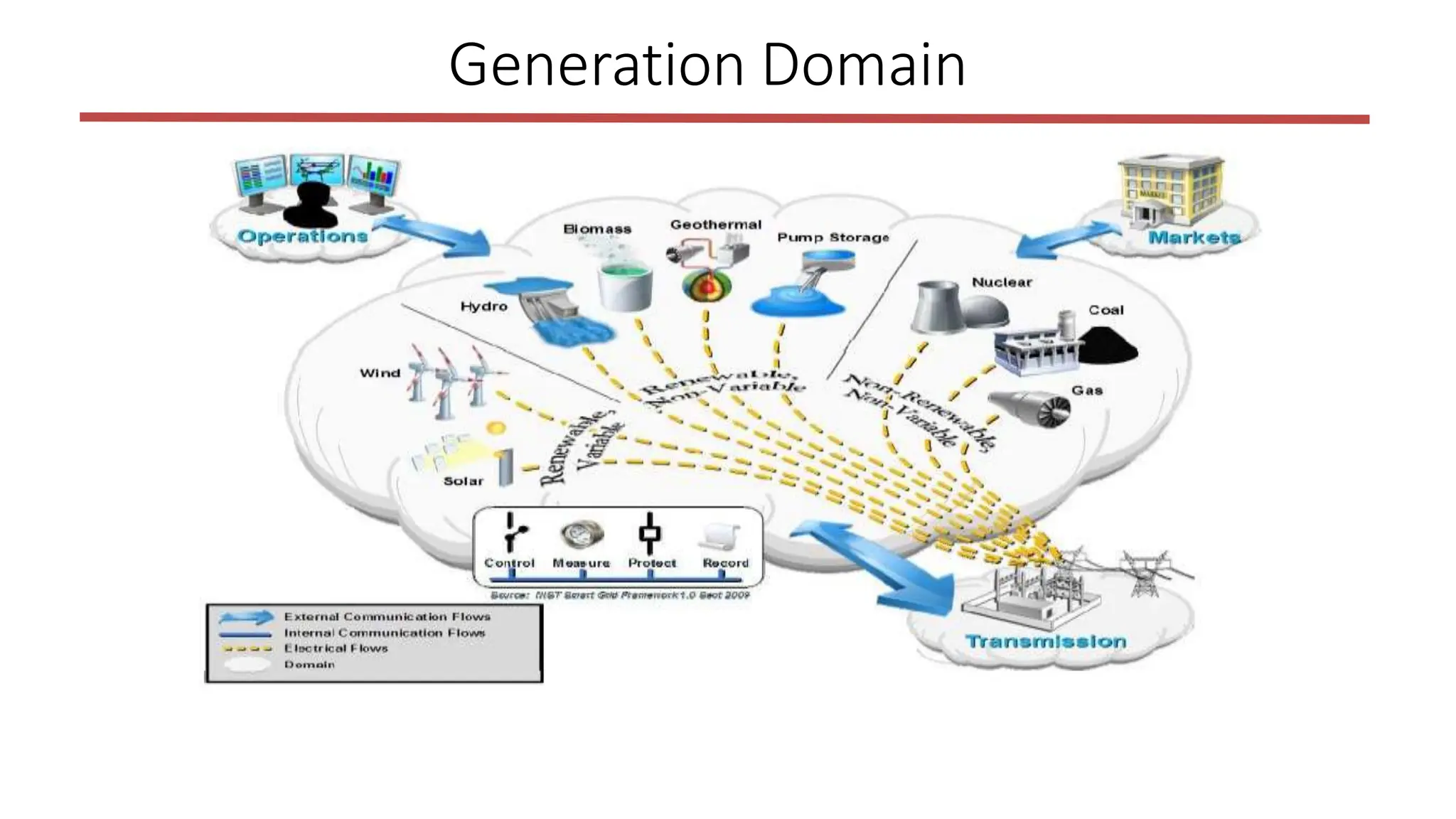
• Electricity generation is the process of creating electricity from other forms of
energy, which may vary from chemical combustion to nuclear fission, flowing
water, wind, solar radiation and geothermal heat.
• The boundary of the Bulk Generation domain is typically the Transmission
domain. The Bulk Generation domain is electrically connected to the
Transmission domain and shares interfaces with the Operations, Markets and
Transmission domains.
• New requirements for the Bulk Generation domain include green house gas
emissions controls, increases in renewable energy sources, and provision of
storage to manage the variability of renewable generation.
Bulk Generation Domain
Generation Domain
19
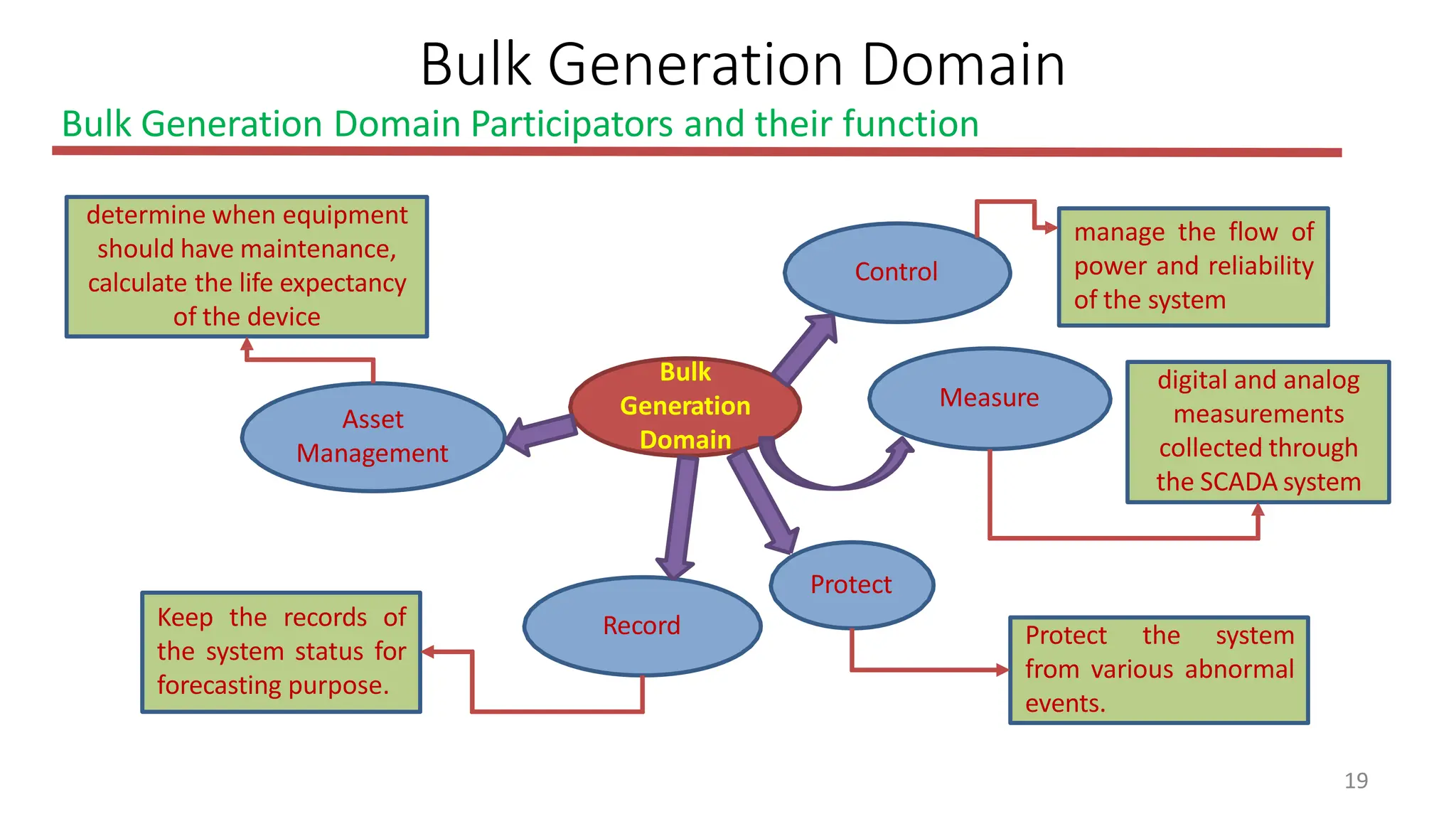
Bulk Generation Domain
Bulk Generation Domain Participators and their function
Bulk
Generation
Domain
Control
Protect
Record
Asset
Management
Measure
manage the flow of
power and reliability
of the system
digital and analog
measurements
collected through
the SCADA system
Protect the system
from various abnormal
events.
Keep the records of
the system status for
forecasting purpose.
determine when equipment
should have maintenance,
calculate the life expectancy
of the device
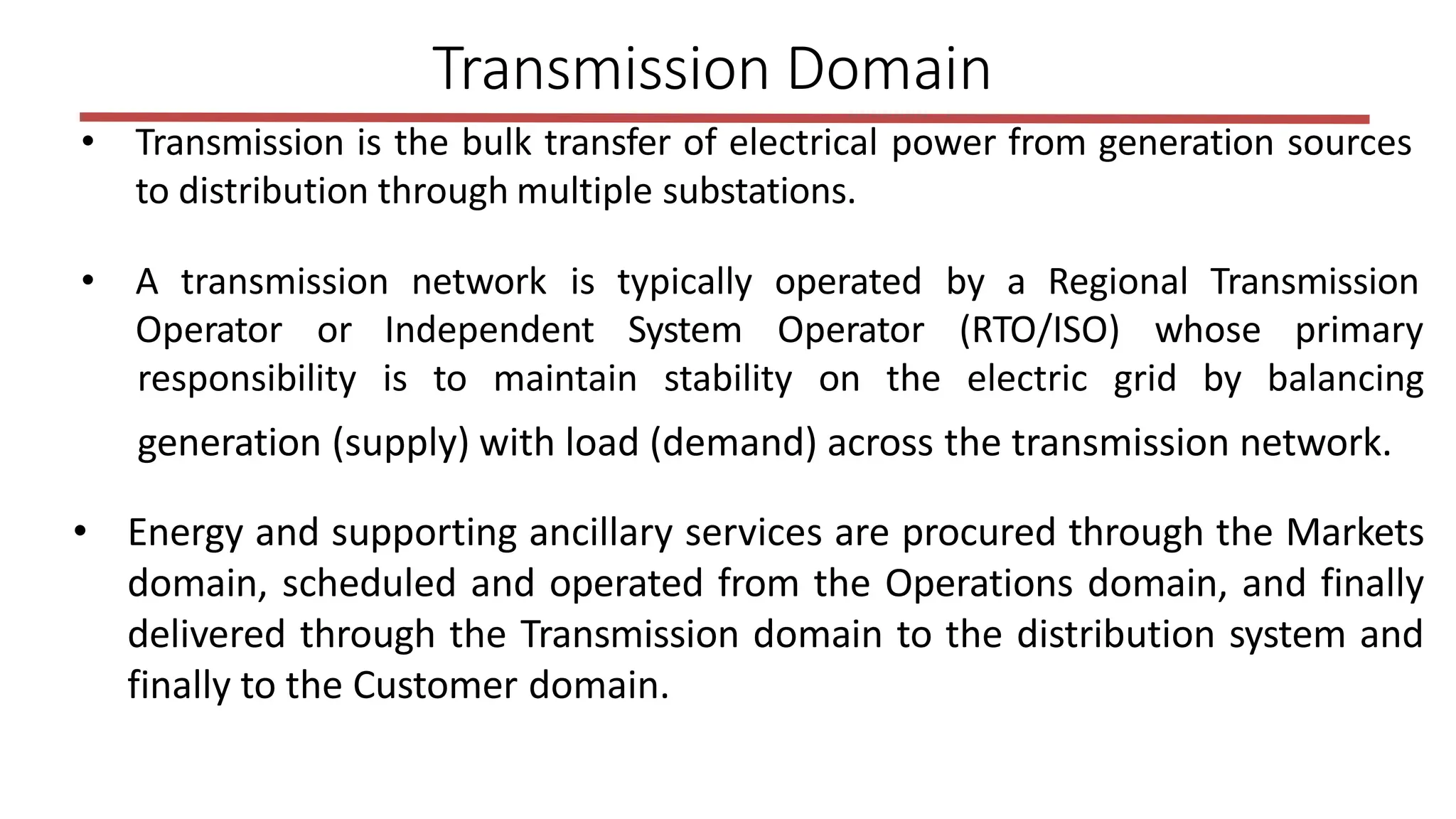
• Transmission is the bulk transfer of electrical power from generation sources
to distribution through multiple substations.
• A transmission network is typically operated by a Regional Transmission
Operator or Independent System Operator (RTO/ISO) whose primary
responsibility is to maintain stability on the electric grid by balancing
Transmission Domain
generation (supply) with load (demand) across the transmission network.
• Energy and supporting ancillary services are procured through the Markets
domain, scheduled and operated from the Operations domain, and finally
delivered through the Transmission domain to the distribution system and
finally to the Customer domain.
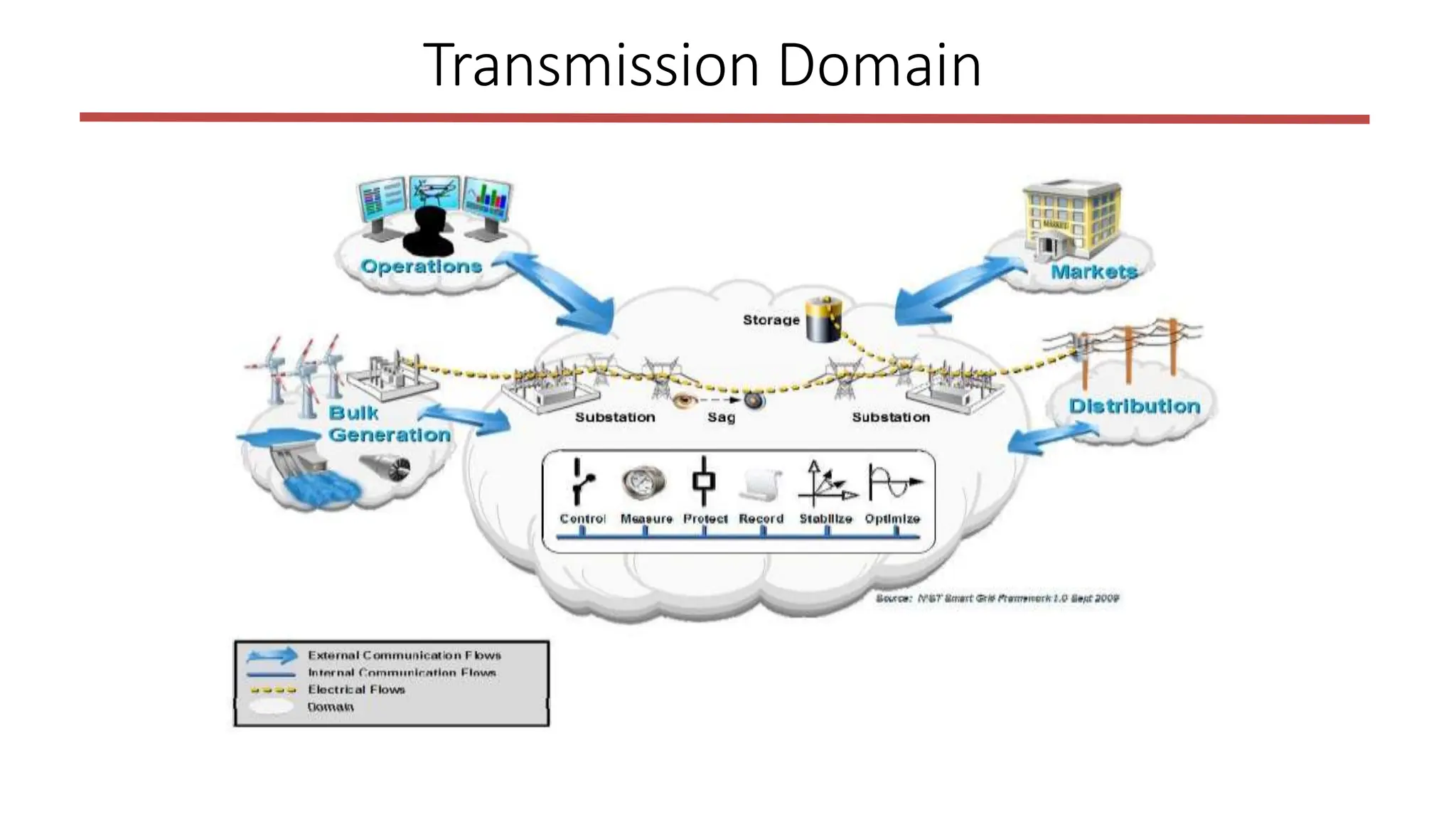
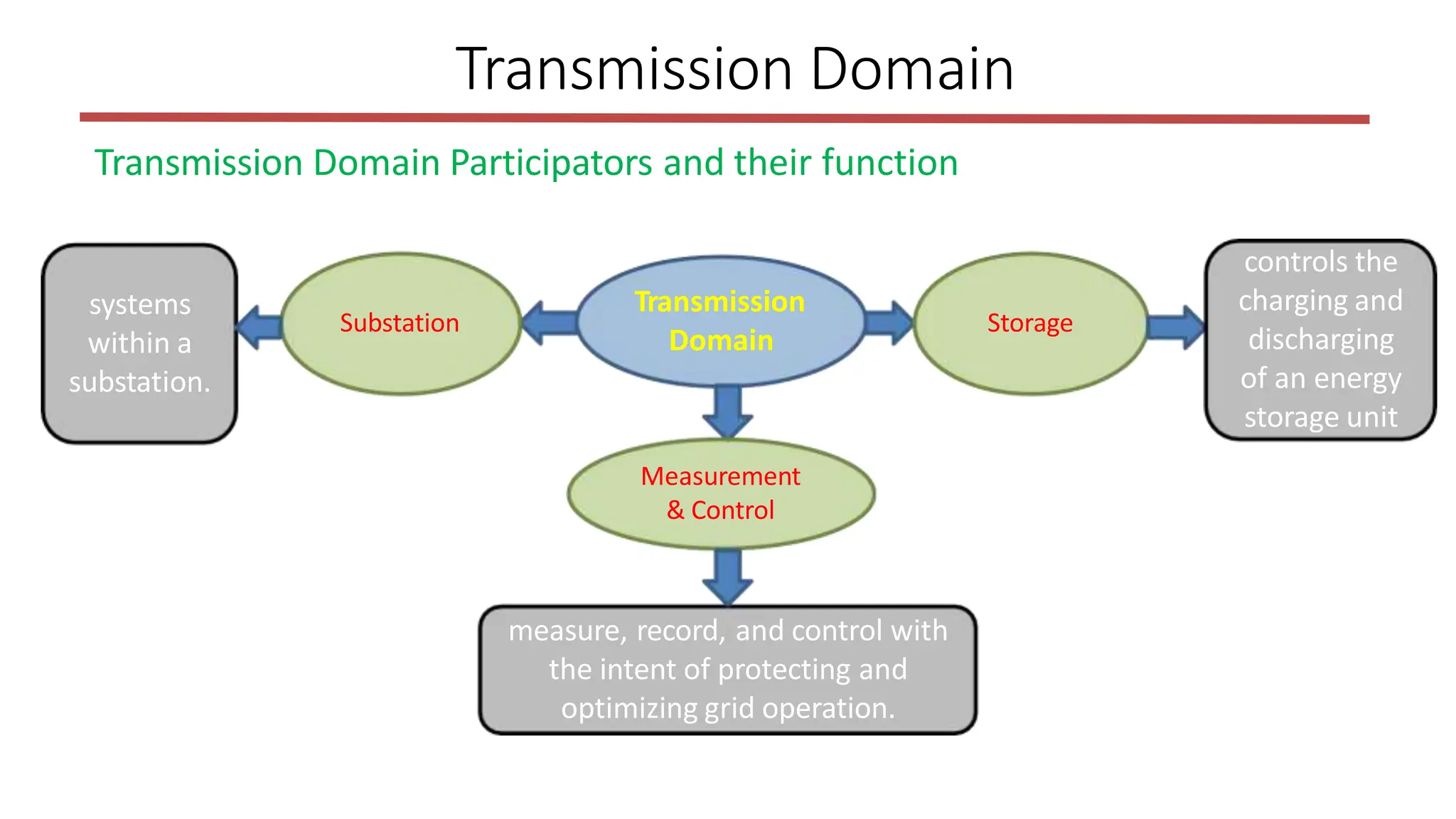
Transmission Domain
Transmission Domain Participators and their function
Transmission Domain
measure, record, and control with
the intent of protecting and
optimizing grid operation.
Transmission
Domain
Substation
Measurement
& Control
Storage
systems
within a
substation.
controls the
charging and
discharging
of an energy
storage unit
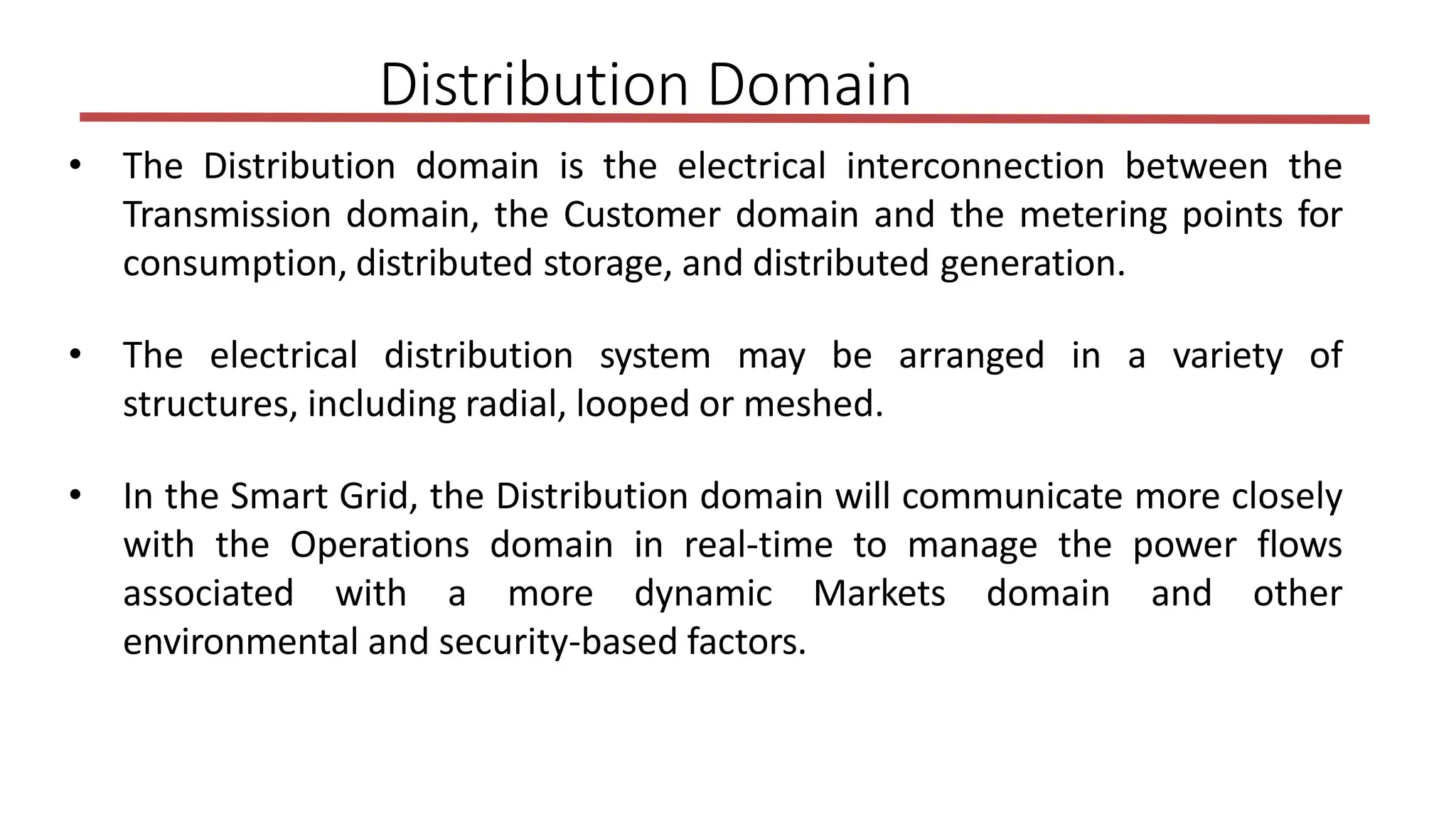
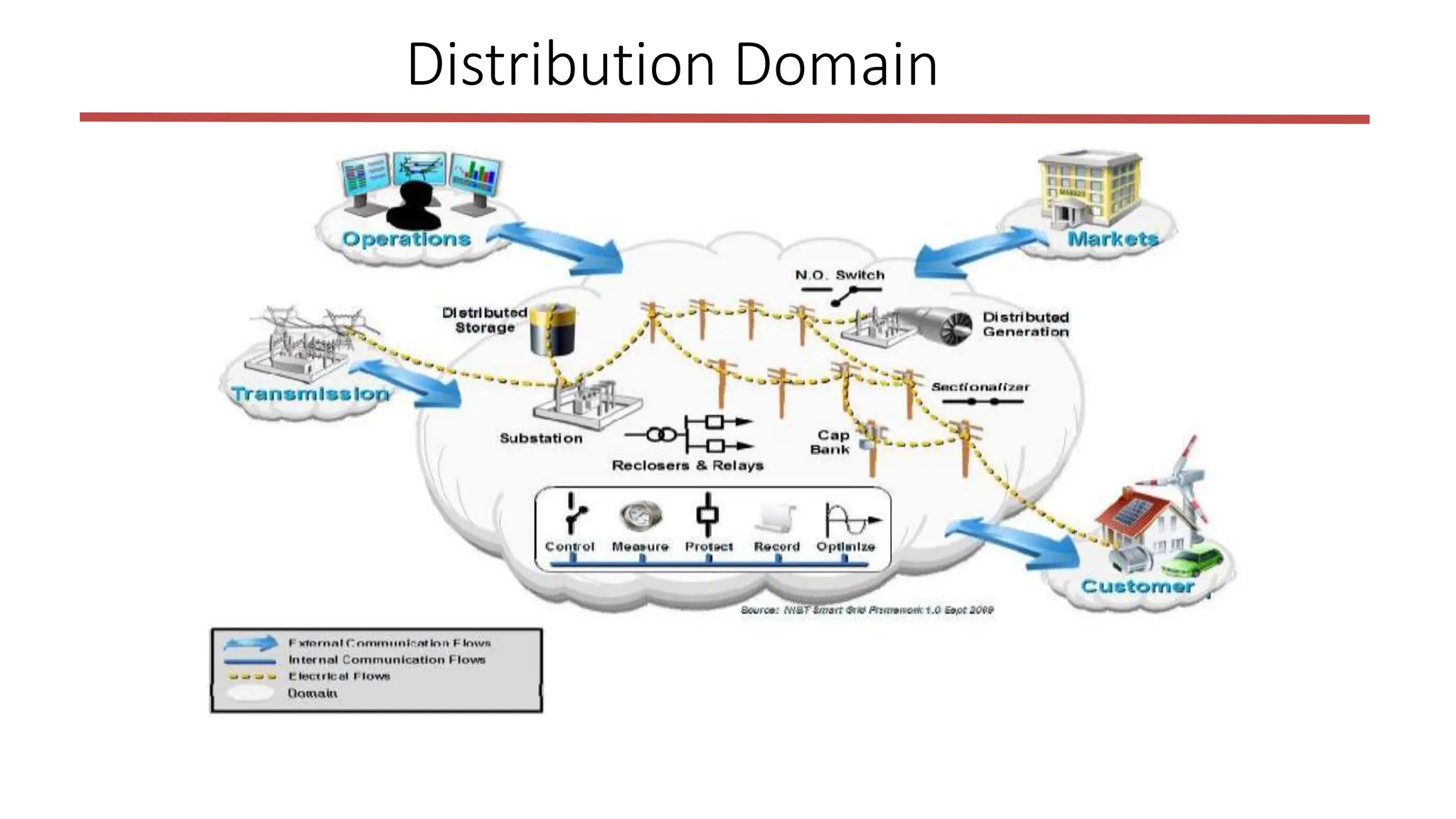
• The Distribution domain is the electrical interconnection between the
Transmission domain, the Customer domain and the metering points for
consumption, distributed storage, and distributed generation.
• The electrical distribution system may be arranged in a variety of
structures, including radial, looped or meshed.
• In the Smart Grid, the Distribution domain will communicate more closely
with the Operations domain in real-time to manage the power flows
associated with a more dynamic Markets domain and other
environmental and security-based factors.
Distribution Domain
Distribution Domain
25
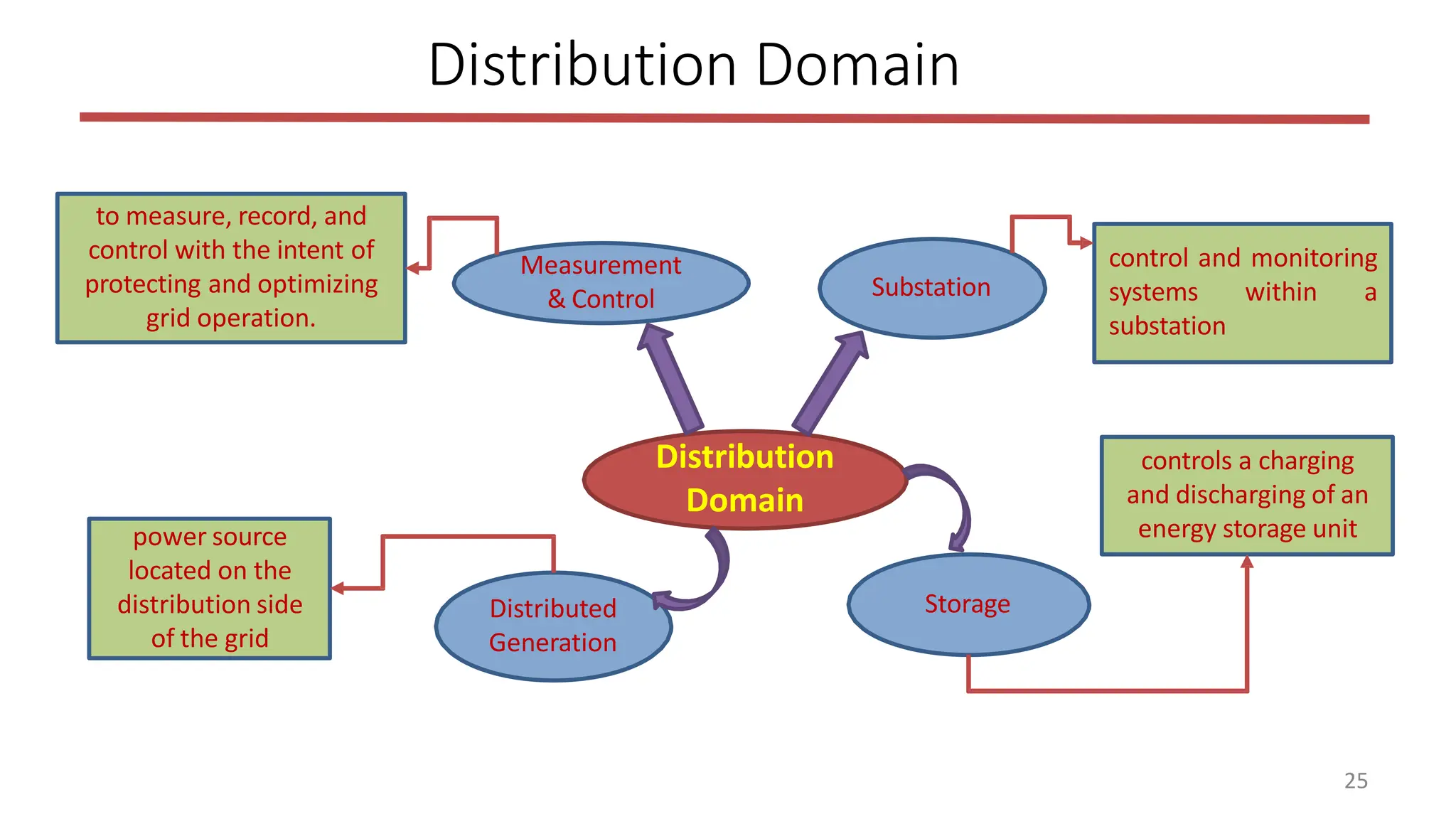
Distribution Domain
Distribution
Domain
Measurement
& Control Substation
Distributed
Generation
Storage
control and monitoring
systems within a
substation
controls a charging
and discharging of an
energy storage unit
to measure, record, and
control with the intent of
protecting and optimizing
grid operation.
power source
located on the
distribution side
of the grid

Smart Grid Technology - Smart Grid- Components

  • 1.
    Overview Source: National Instituteof Standards and Technology, U.S. Department of Commerce, 2010 2
  • 2.
    3 Grid Layout SMART GRID Bulk Generation Transmissio n Distributions Operations Service Provider Market carriersof bulk electricity operatorsand participants in electricity markets. The distributors of electricity to and from customers. The managers of the movement of electricity. generators of electricity in bulk quantities. The organizations providing services to electrical customers and utilities. Customers End users of electricity
  • 3.
  • 4.
  • 5.
    6 Customer Domain Communications: • TheESI is the primary service interface to the Customer domains. • The ESI communicates via the advanced metering infrastructure (AMI) infrastructure or Internet (with other domains ). • The ESI communicates through Home Area Network or other Local Area Network (to devices and systems within the customer premises).
  • 6.
    Customer Domain Participatorsand their function Customer Domain controls industrial processes such as manufacturing or warehousing. Customer Domain Building and Home Automation Industrial Automation Micro Generation Control various functions within a building . Includes all types of distributed generation.
  • 7.
    • The marketsare where grid assets are bought and sold. • Boundaries: the edge of the Operations domain where control happens, the domains supplying assets (e.g., generation, transmission, etc) and the Customer domain. • The high-priority challenges in the Markets domain are: – extension of price and DER signals to each of the Customer sub-domains – expanding the capabilities of aggregators – interoperability across all providers and consumers of market information – managing the growth (and regulation) of retailing and wholesaling of energy, and – evolving communication mechanisms for prices and energy characteristics between and throughout the Markets and Customer domains. Market Domain
  • 8.
  • 9.
    Market Domain Market DomainParticipators and their function *ISO-Independent system operator Market Domain Market Management Retailing Trading Market Operations Ancillary Operations DER Aggregation • sell power to end customers. • connected to a trading organization Aggregators combine smaller participants. • participants in markets • buying and selling of energy • Make a particular market function smoothly. • financial and goods sold clearing, price quotation streams, audit, balancing. Market managers include ISOs for wholesale markets provide frequency support, voltage support, spinning reserve
  • 10.
    • Perform servicesto support the business processes of power system producers, distributors and customers. • These business processes range from traditional utility services, such as billing and customer account management, to enhanced customer services, such as management of energy use and home energy generation. • Challenge: is to develop the key interfaces and standards that will enable a dynamic market-driven ecosystem while protecting the critical power infrastructure. Service Provider Domain
  • 11.
  • 12.
    Service Provider Domain Service Provider Domain Customer Management Installation& Management Home Management Account Management Emerging Services Building Management Installingand maintaining premises equipment Monitoring and controlling building energy Monitoring and controlling home energy Managing the supplier and customer business accounts. Service Provider Domain Participators and their function Managing customer relationships. All of the services and innovations for future smart operation. Billing Managing customer billing information
  • 13.
    • Actors inthe Operations domain are responsible for the smooth operation of the power system. Operation Domain
  • 14.
  • 15.
    4. Operation Domain(Cont.) Operation Domain Monitoring Control Fault Management Analysis Reporting and Statistics Calculations Training Records and Assets Operation Planning Maintenance and Construction Extension Planning Customer Support supervise network connectivity supervise wide area and local automatic or manual control. Fault identification, elimination and service restoration. Compare data records with the historical event datas. archive on-line data and perform feedback analysis. Real-timeNetwork Calculations actors Real-time Network Calculations actors provide facilities for dispatchers that simulate system track and report on network equipment inventory Maintains continuous power supply by doing different network action developlong term plans for power system reliability help customers to troubleshoot power system services
  • 16.
    • Electricity generationis the process of creating electricity from other forms of energy, which may vary from chemical combustion to nuclear fission, flowing water, wind, solar radiation and geothermal heat. • The boundary of the Bulk Generation domain is typically the Transmission domain. The Bulk Generation domain is electrically connected to the Transmission domain and shares interfaces with the Operations, Markets and Transmission domains. • New requirements for the Bulk Generation domain include green house gas emissions controls, increases in renewable energy sources, and provision of storage to manage the variability of renewable generation. Bulk Generation Domain
  • 17.
  • 18.
    19 Bulk Generation Domain BulkGeneration Domain Participators and their function Bulk Generation Domain Control Protect Record Asset Management Measure manage the flow of power and reliability of the system digital and analog measurements collected through the SCADA system Protect the system from various abnormal events. Keep the records of the system status for forecasting purpose. determine when equipment should have maintenance, calculate the life expectancy of the device
  • 19.
    • Transmission isthe bulk transfer of electrical power from generation sources to distribution through multiple substations. • A transmission network is typically operated by a Regional Transmission Operator or Independent System Operator (RTO/ISO) whose primary responsibility is to maintain stability on the electric grid by balancing Transmission Domain generation (supply) with load (demand) across the transmission network. • Energy and supporting ancillary services are procured through the Markets domain, scheduled and operated from the Operations domain, and finally delivered through the Transmission domain to the distribution system and finally to the Customer domain.
  • 20.
  • 21.
    Transmission Domain Participatorsand their function Transmission Domain measure, record, and control with the intent of protecting and optimizing grid operation. Transmission Domain Substation Measurement & Control Storage systems within a substation. controls the charging and discharging of an energy storage unit
  • 22.
    • The Distributiondomain is the electrical interconnection between the Transmission domain, the Customer domain and the metering points for consumption, distributed storage, and distributed generation. • The electrical distribution system may be arranged in a variety of structures, including radial, looped or meshed. • In the Smart Grid, the Distribution domain will communicate more closely with the Operations domain in real-time to manage the power flows associated with a more dynamic Markets domain and other environmental and security-based factors. Distribution Domain
  • 23.
  • 24.
    25 Distribution Domain Distribution Domain Measurement & ControlSubstation Distributed Generation Storage control and monitoring systems within a substation controls a charging and discharging of an energy storage unit to measure, record, and control with the intent of protecting and optimizing grid operation. power source located on the distribution side of the grid