GROUP - 3
Kapil Tirthani
Aman Agrawal
Rohan Khatri
Ashish Kadli
Mayuri Mahajan
Tanmoy Paul
Namrata Yadav
1. The global digital payment industry is evolving at a very
faster pace.
2. The ongoing digital and technology revolution, led by the
increasing penetration of smartphones and internet
on mobile revolutionized digital payments.
3. Customer are becoming more demanding and expecting
instantaneous and one touch payment solution.
1. There have been several progressive changes in
regulatory framework made.
2. The ‘JAM Trinity’, which comprises Jan Dhan,
Aadhaar and mobile, holds the key to one of the
biggest reforms aimed at transforming India. To
accelerate financial inclusion in India, the JAM Trinity
works across different sectors and will be the
backbone for this government initiative
Digital payments market size in the country is expected to
touch USD 500 billion by 2020, accounting for about 15
per cent of gross domestic product (GDP), a report said
today
The 'Digital Payments 2020' report, jointly published by
Google and Boston Consulting Group, projects that
non-cash contribution in the consumer payments
segment will double to 40 per cent.
Source: Digital Payments 2020
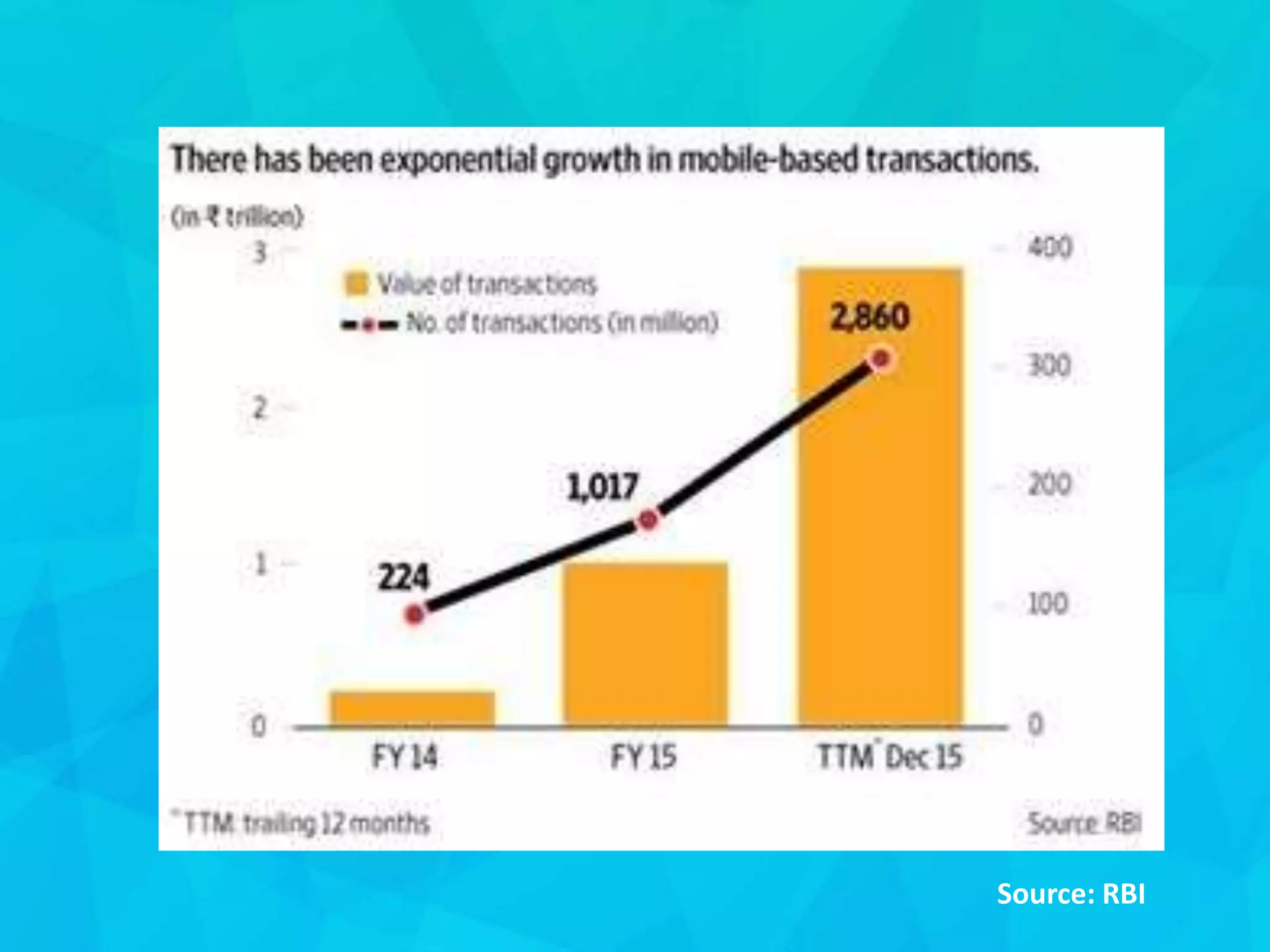
Source: RBI
Source: KPMG
1.Technology will make digital payment Simpler
2.Merchant acceptance network to grow 10X by
2020
3.Payments will drive consumption
4.Consolidation will drive ubiquity
5.Digital identity to accelerate customer acquisition
6.Cash to non-cash ratio invert over the next ten
years
• India, whose Internet user base is second
largest after China, will remain the fastest
growing market, according to 'The Future of
Internet in India' report by Nasscom and
Akamai Technologies.
Source: The Economic Times
Digital
Payment
Industry
Entry
barrier
Buyer
SubstituteSupplier
Rivalry
 Specialist Knowledge
Technology Protection
Economies of scale
Brand equity
Advertising cost
Extremely price sensitive
Ability to substitute
Low transition cost
High Volume
Cash
Gold
Few payment
process service
provider e.g. one97
Large number of competitors.
Diversity of competitors.
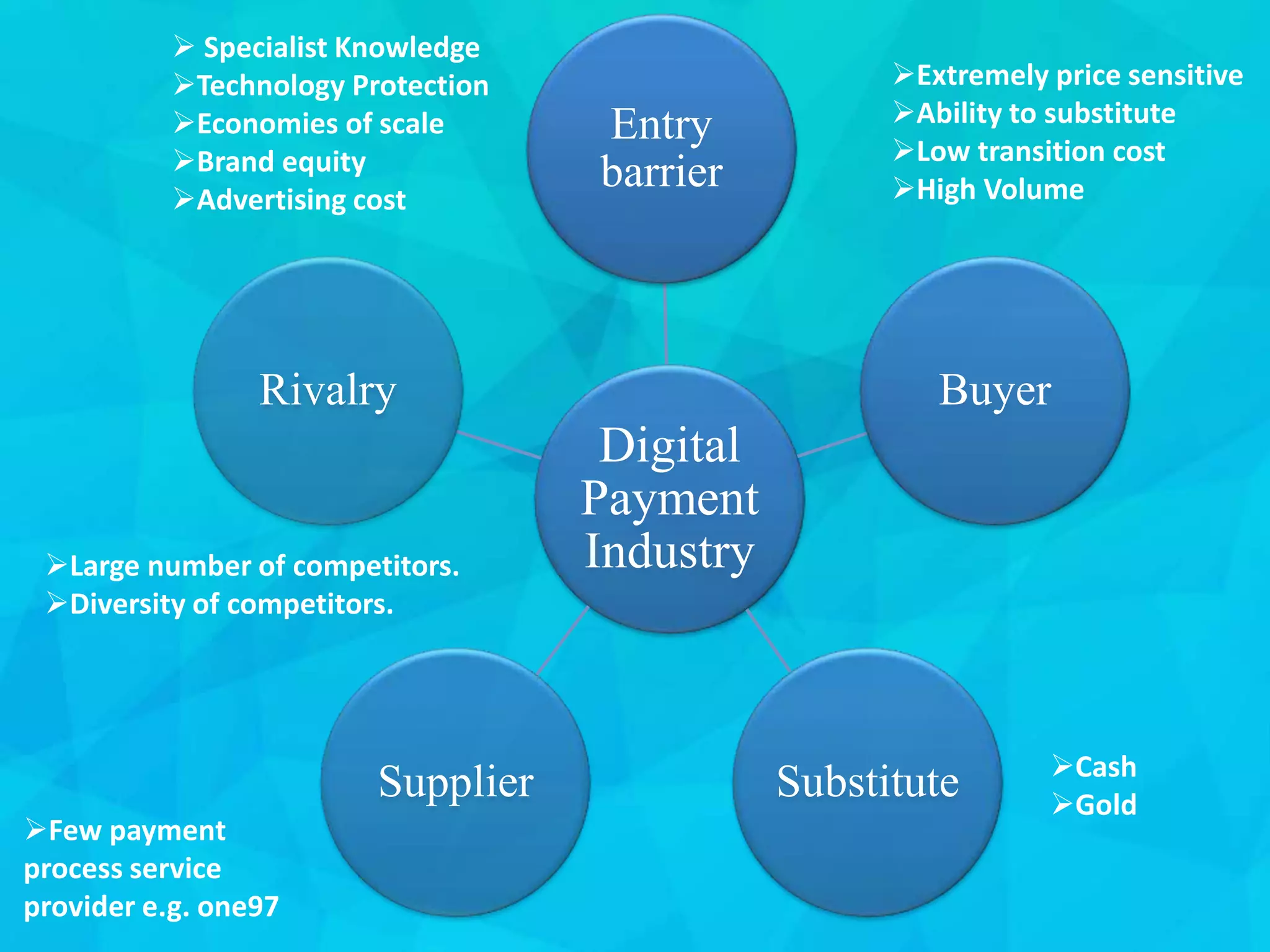
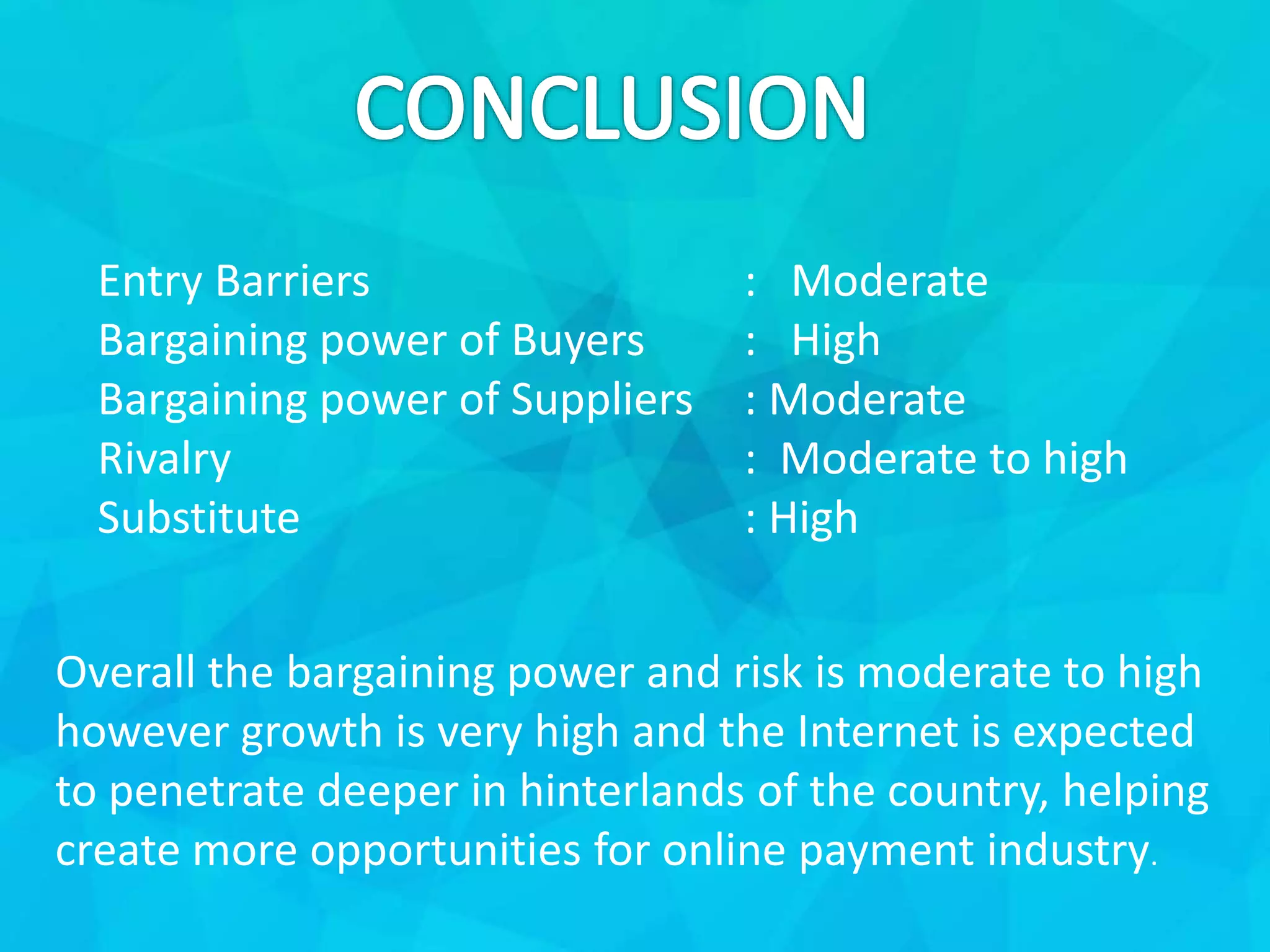
Entry Barriers : Moderate
Bargaining power of Buyers : High
Bargaining power of Suppliers : Moderate
Rivalry : Moderate to high
Substitute : High
Overall the bargaining power and risk is moderate to high
however growth is very high and the Internet is expected
to penetrate deeper in hinterlands of the country, helping
create more opportunities for online payment industry.

Porter's Five Factor Analysis of Paytm

  • 1.
    GROUP - 3 KapilTirthani Aman Agrawal Rohan Khatri Ashish Kadli Mayuri Mahajan Tanmoy Paul Namrata Yadav
  • 2.
    1. The globaldigital payment industry is evolving at a very faster pace. 2. The ongoing digital and technology revolution, led by the increasing penetration of smartphones and internet on mobile revolutionized digital payments. 3. Customer are becoming more demanding and expecting instantaneous and one touch payment solution.
  • 3.
    1. There havebeen several progressive changes in regulatory framework made. 2. The ‘JAM Trinity’, which comprises Jan Dhan, Aadhaar and mobile, holds the key to one of the biggest reforms aimed at transforming India. To accelerate financial inclusion in India, the JAM Trinity works across different sectors and will be the backbone for this government initiative
  • 4.
    Digital payments marketsize in the country is expected to touch USD 500 billion by 2020, accounting for about 15 per cent of gross domestic product (GDP), a report said today The 'Digital Payments 2020' report, jointly published by Google and Boston Consulting Group, projects that non-cash contribution in the consumer payments segment will double to 40 per cent. Source: Digital Payments 2020
  • 5.
  • 6.
  • 7.
    1.Technology will makedigital payment Simpler 2.Merchant acceptance network to grow 10X by 2020 3.Payments will drive consumption 4.Consolidation will drive ubiquity 5.Digital identity to accelerate customer acquisition 6.Cash to non-cash ratio invert over the next ten years
  • 8.
    • India, whoseInternet user base is second largest after China, will remain the fastest growing market, according to 'The Future of Internet in India' report by Nasscom and Akamai Technologies. Source: The Economic Times
  • 10.
    Digital Payment Industry Entry barrier Buyer SubstituteSupplier Rivalry  Specialist Knowledge TechnologyProtection Economies of scale Brand equity Advertising cost Extremely price sensitive Ability to substitute Low transition cost High Volume Cash Gold Few payment process service provider e.g. one97 Large number of competitors. Diversity of competitors.
  • 11.
    Entry Barriers :Moderate Bargaining power of Buyers : High Bargaining power of Suppliers : Moderate Rivalry : Moderate to high Substitute : High Overall the bargaining power and risk is moderate to high however growth is very high and the Internet is expected to penetrate deeper in hinterlands of the country, helping create more opportunities for online payment industry.