PRESENTERS:
Juliana Nicole T. Bernales
Mary Rose Basco
Site Collection
and
Soil Analysis
Objectives : At the end of discussion; students
should be able to:
Identify the factors to consider in site selection;
Select a site appropriate for rice production;
Appreciate the value of selecting a good site for rice production
State the kinds of soils in agriculture
Activity
EMTERATURE
LICMATE
LGITHNUS
TEMPERATURE
CLIMATE
SUNLIGHT
Introduction
Like any other
plant, needs an
appropriate kind of
soil as well as good
location to attain
the highest possible
yield.
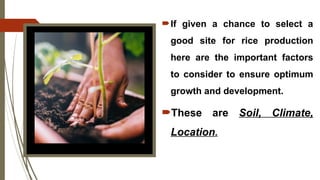
If given a chance to select a
good site for rice production
here are the important factors
to consider to ensure optimum
growth and development.
These are Soil, Climate,
Location.
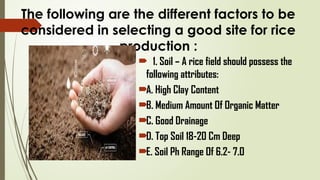
The following are the different factors to be
considered in selecting a good site for rice
production :
 1. Soil – A rice field should possess the
following attributes:
A. High Clay Content
B. Medium Amount Of Organic Matter
C. Good Drainage
D. Top Soil 18-20 Cm Deep
E. Soil Ph Range Of 6.2- 7.0
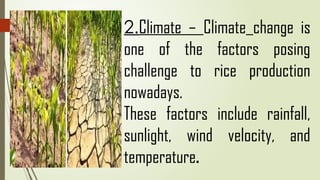
2.Climate – Climate change is
one of the factors posing
challenge to rice production
nowadays.
These factors include rainfall,
sunlight, wind velocity, and
temperature.
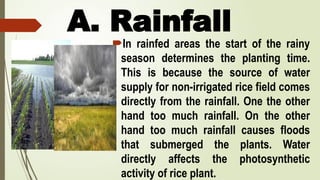
A. Rainfall
In rainfed areas the start of the rainy
season determines the planting time.
This is because the source of water
supply for non-irrigated rice field comes
directly from the rainfall. One the other
hand too much rainfall. On the other
hand too much rainfall causes floods
that submerged the plants. Water
directly affects the photosynthetic
activity of rice plant.
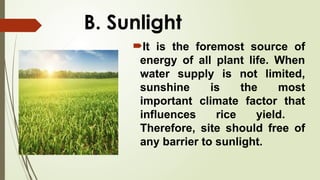
B. Sunlight
It is the foremost source of
energy of all plant life. When
water supply is not limited,
sunshine is the most
important climate factor that
influences rice yield.
Therefore, site should free of
any barrier to sunlight.
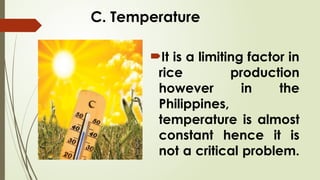
C. Temperature
It is a limiting factor in
rice production
however in the
Philippines,
temperature is almost
constant hence it is
not a critical problem.
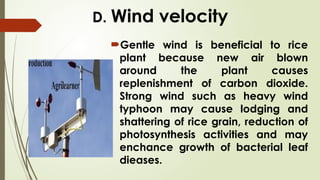
D. Wind velocity
Gentle wind is beneficial to rice
plant because new air blown
around the plant causes
replenishment of carbon dioxide.
Strong wind such as heavy wind
typhoon may cause lodging and
shattering of rice grain, reduction of
photosynthesis activities and may
enchance growth of bacterial leaf
dieases.
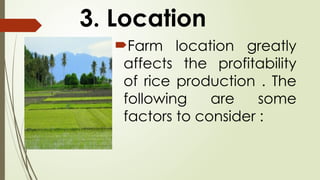
3. Location
Farm location greatly
affects the profitability
of rice production . The
following are some
factors to consider :
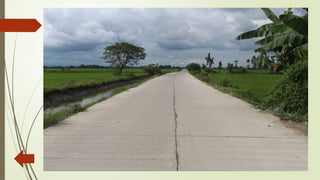
The farm should be near the
road to facilitate ease of
transport.
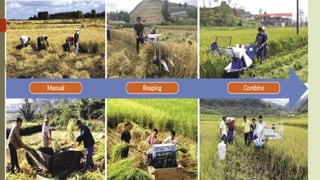
There should be available
laborers in the different stages
of rice production.
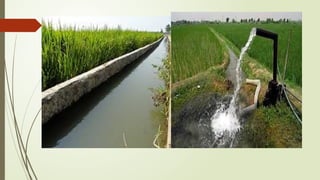
Good irrigation and
drainage system
Proximity to drying
pavement and other post-
harvest facilities.
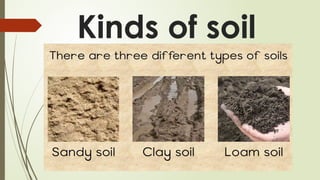
Kinds of soil
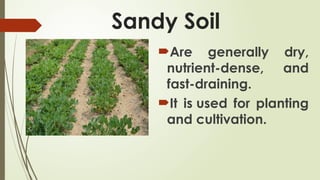
Sandy Soil
Are generally dry,
nutrient-dense, and
fast-draining.
It is used for planting
and cultivation.
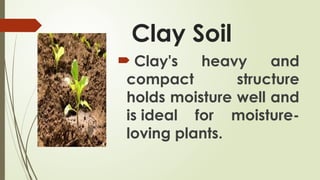
Clay Soil
 Clay's heavy and
compact structure
holds moisture well and
is ideal for moisture-
loving plants.
Loamy Soil
Loamy soil is ideal for
most garden plants
because it holds plenty of
moisture but also drains
well so that sufficient air
can reach the roots.

Site-collection-and-soil-analysis powerpoint presentation.pptx

  • 1.
    PRESENTERS: Juliana Nicole T.Bernales Mary Rose Basco Site Collection and Soil Analysis
  • 2.
    Objectives : Atthe end of discussion; students should be able to: Identify the factors to consider in site selection; Select a site appropriate for rice production; Appreciate the value of selecting a good site for rice production State the kinds of soils in agriculture
  • 3.
  • 4.
    Introduction Like any other plant,needs an appropriate kind of soil as well as good location to attain the highest possible yield.
  • 5.
    If given achance to select a good site for rice production here are the important factors to consider to ensure optimum growth and development. These are Soil, Climate, Location.
  • 6.
    The following arethe different factors to be considered in selecting a good site for rice production :  1. Soil – A rice field should possess the following attributes: A. High Clay Content B. Medium Amount Of Organic Matter C. Good Drainage D. Top Soil 18-20 Cm Deep E. Soil Ph Range Of 6.2- 7.0
  • 7.
    2.Climate – Climatechange is one of the factors posing challenge to rice production nowadays. These factors include rainfall, sunlight, wind velocity, and temperature.
  • 8.
    A. Rainfall In rainfedareas the start of the rainy season determines the planting time. This is because the source of water supply for non-irrigated rice field comes directly from the rainfall. One the other hand too much rainfall. On the other hand too much rainfall causes floods that submerged the plants. Water directly affects the photosynthetic activity of rice plant.
  • 9.
    B. Sunlight It isthe foremost source of energy of all plant life. When water supply is not limited, sunshine is the most important climate factor that influences rice yield. Therefore, site should free of any barrier to sunlight.
  • 10.
    C. Temperature It isa limiting factor in rice production however in the Philippines, temperature is almost constant hence it is not a critical problem.
  • 11.
    D. Wind velocity Gentlewind is beneficial to rice plant because new air blown around the plant causes replenishment of carbon dioxide. Strong wind such as heavy wind typhoon may cause lodging and shattering of rice grain, reduction of photosynthesis activities and may enchance growth of bacterial leaf dieases.
  • 12.
    3. Location Farm locationgreatly affects the profitability of rice production . The following are some factors to consider :
  • 13.
    The farm shouldbe near the road to facilitate ease of transport. There should be available laborers in the different stages of rice production.
  • 16.
    Good irrigation and drainagesystem Proximity to drying pavement and other post- harvest facilities.
  • 19.
  • 20.
    Sandy Soil Are generallydry, nutrient-dense, and fast-draining. It is used for planting and cultivation.
  • 21.
    Clay Soil  Clay'sheavy and compact structure holds moisture well and is ideal for moisture- loving plants.
  • 22.
    Loamy Soil Loamy soilis ideal for most garden plants because it holds plenty of moisture but also drains well so that sufficient air can reach the roots.