Simulators in Training
Rick Todd
CFII, MEI, AGI, FAASTeam Rep
Director National Association of Flight Instructors
First the burning question
Does this count
towards my rating?
It doesn’t matter!!
This is about proficiency & Competency!
▪ Proficiency:
A high degree of competence or skill
▪ Competency: The ability to do something
successfully or efficiently.
What we will be discussing today
▪ History of Flight Training Devices
▪ Current products on the market
▪ Ways to utilize these products
▪ Home based PCATD’s
▪ Comments from students.
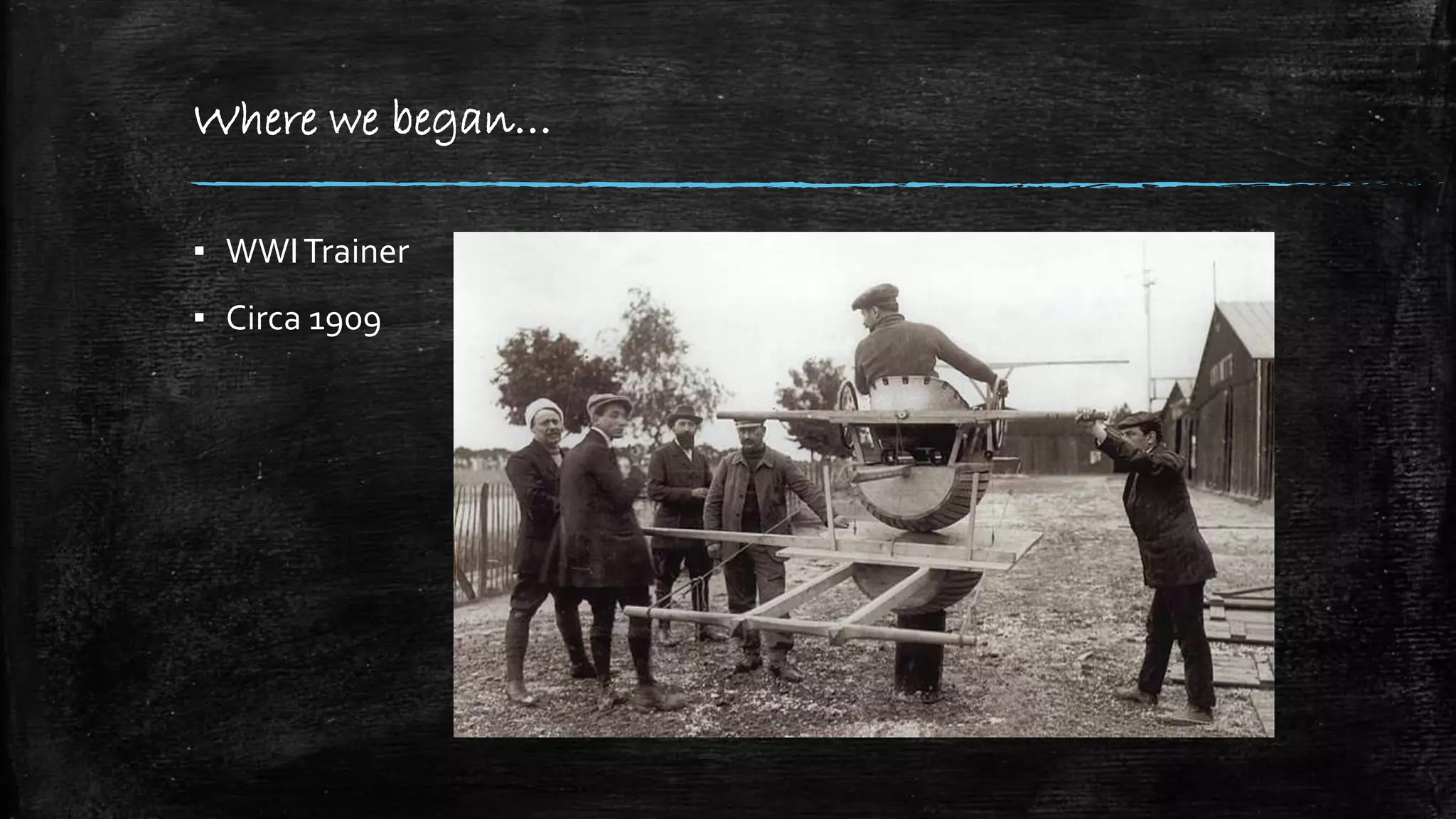
Where we began…
▪ WWITrainer
▪ Circa 1909
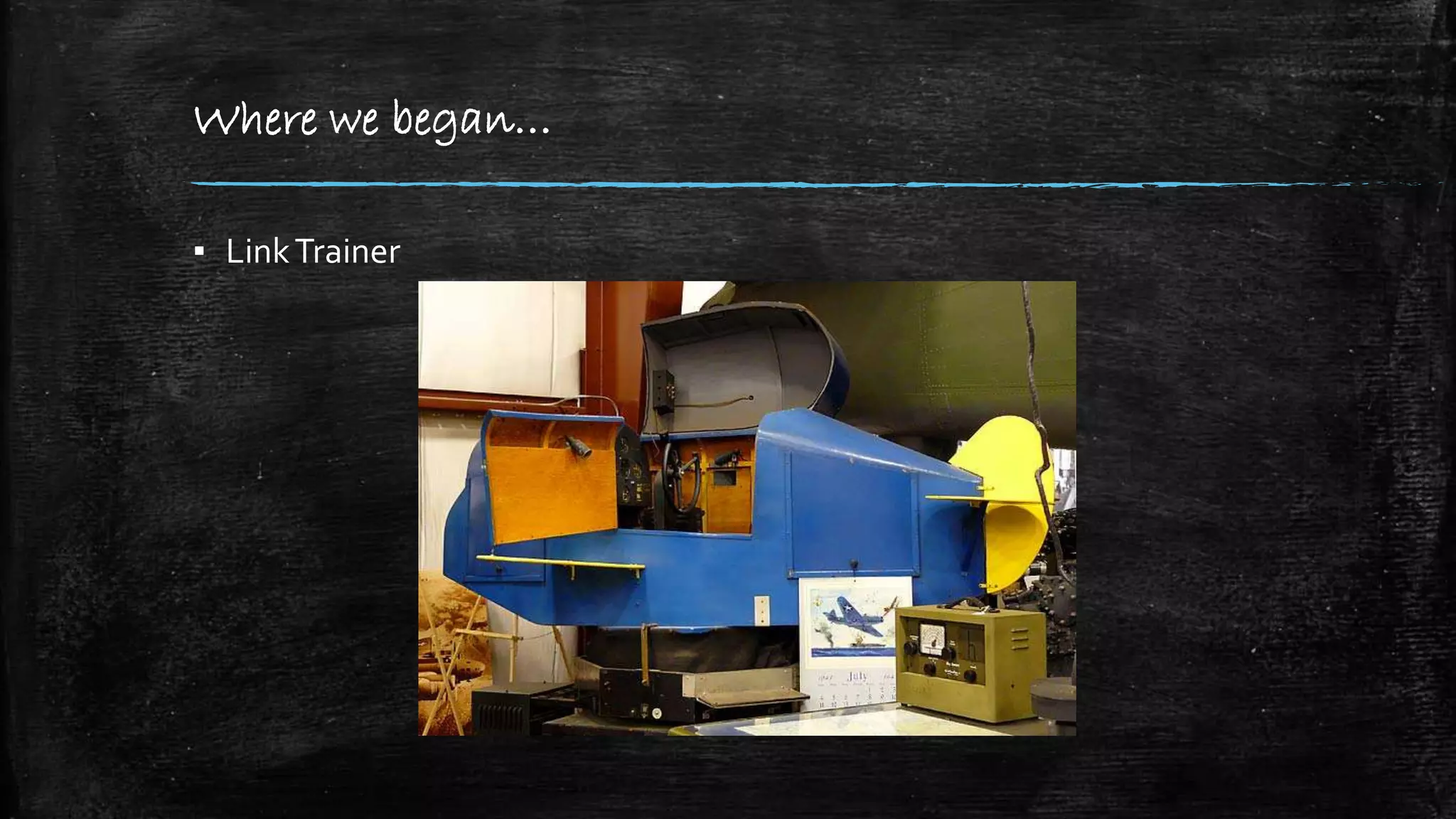
Where we began…
▪ LinkTrainer
The Link Trainer
▪ Produced from early 1930s – early 1950s
▪ Used as a key trainer in WWII
▪ Link was a former organ builder
▪ More than 500,000 pilots trained on it
▪ Designated as a Historic Mechanical Engineering Landmark
▪ Link Simulation & Training is now a division of L-3
Communications
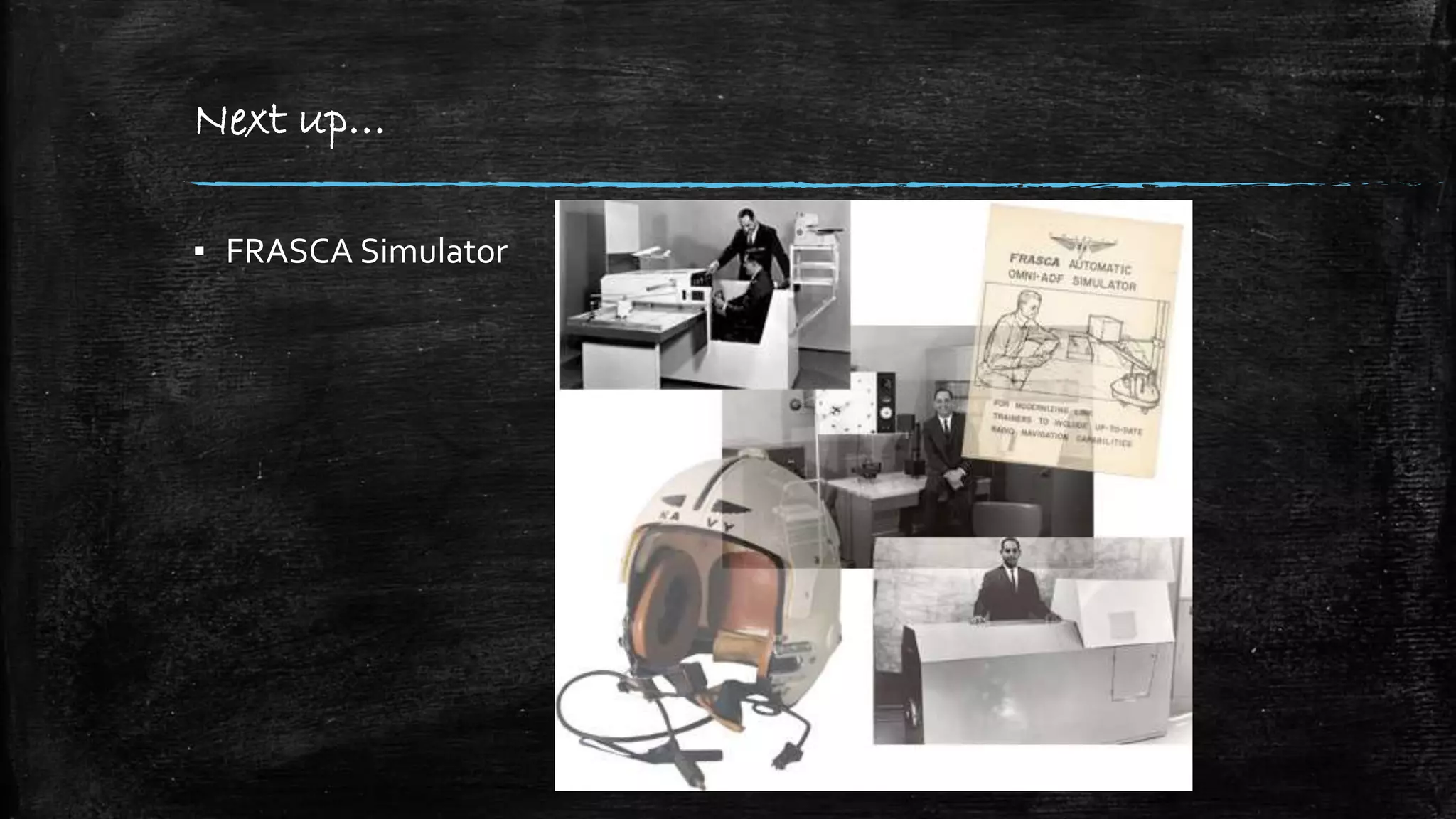
Next up…
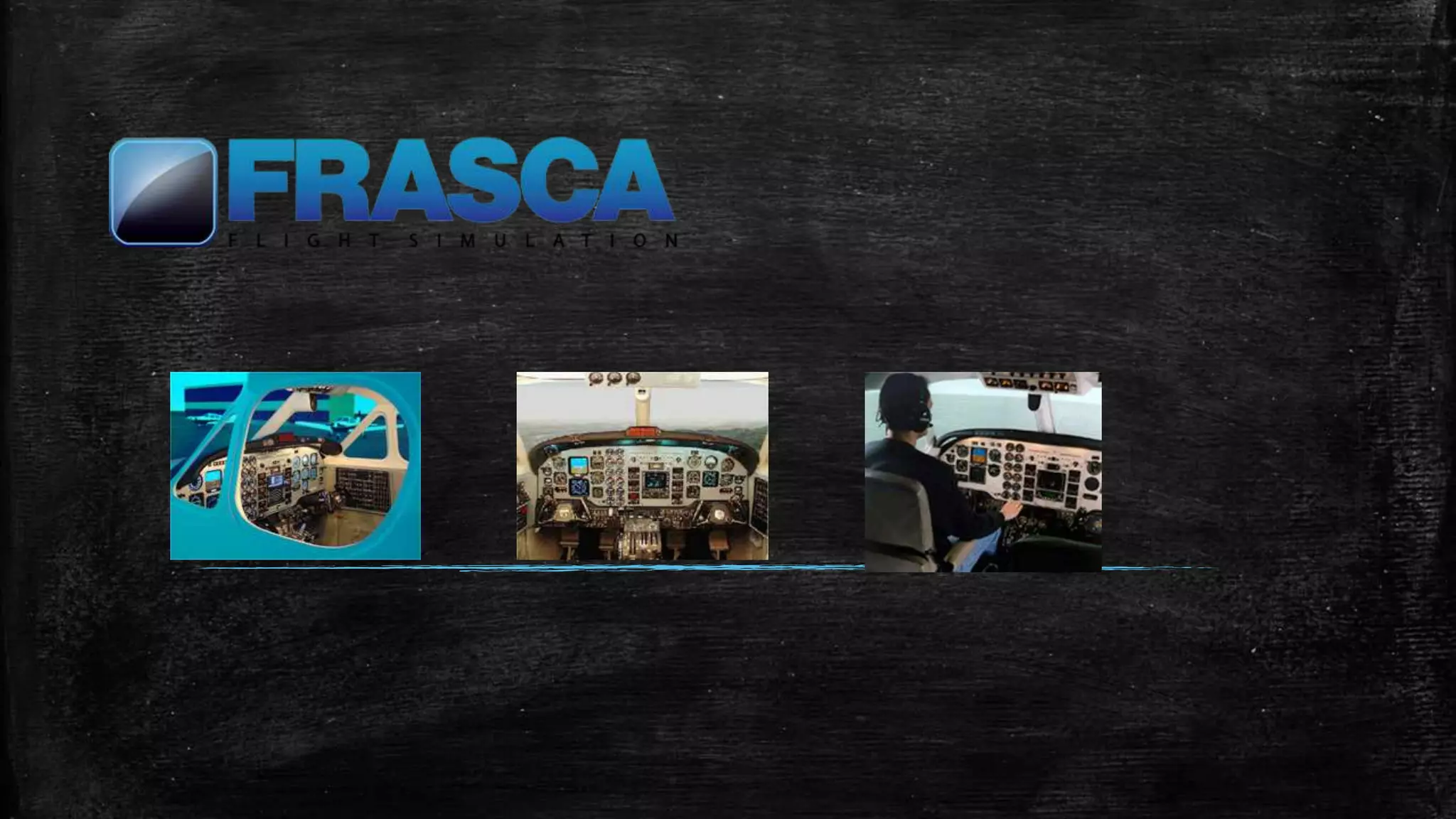
▪ FRASCA Simulator
Frasca Simulator
▪ Rudy used the Link trainer during the Korean War
▪ Introduced in 1958
▪ Used mechanical computers in design
▪ Built his own in his basement because,
“There had to be a better way!”
Skip forward a bit
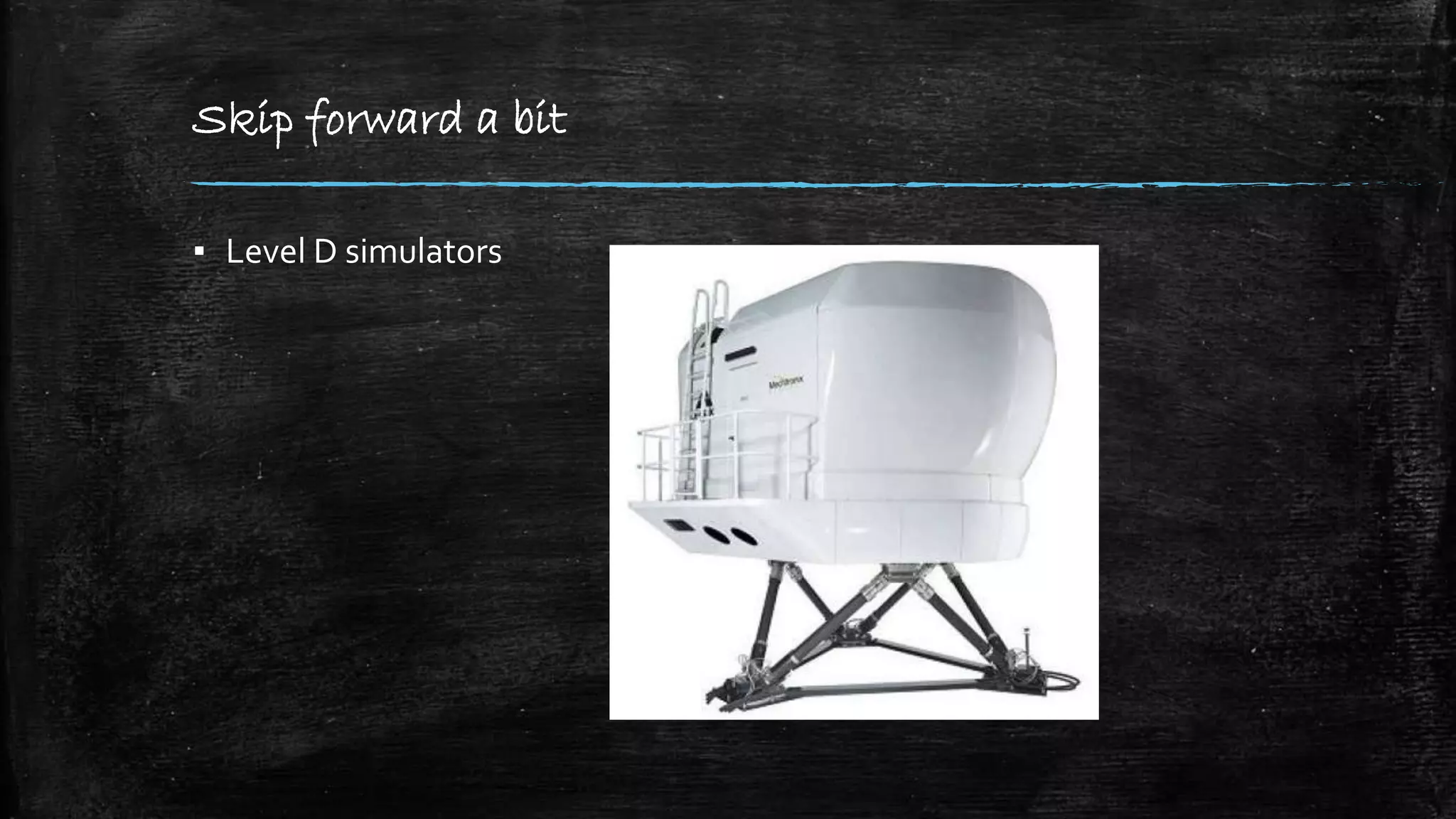
▪ Level D simulators
Level D simulators
▪ Duplicates relevant aspects of the aircraft and its environment,
including motion.
▪ Full Motion is obtained by electric, pneumatic or hydraulic jacks.
▪ Extremely realistic
▪ $1M+
▪ Used by training facilities like Simcom, Flight Safety and Boeing.
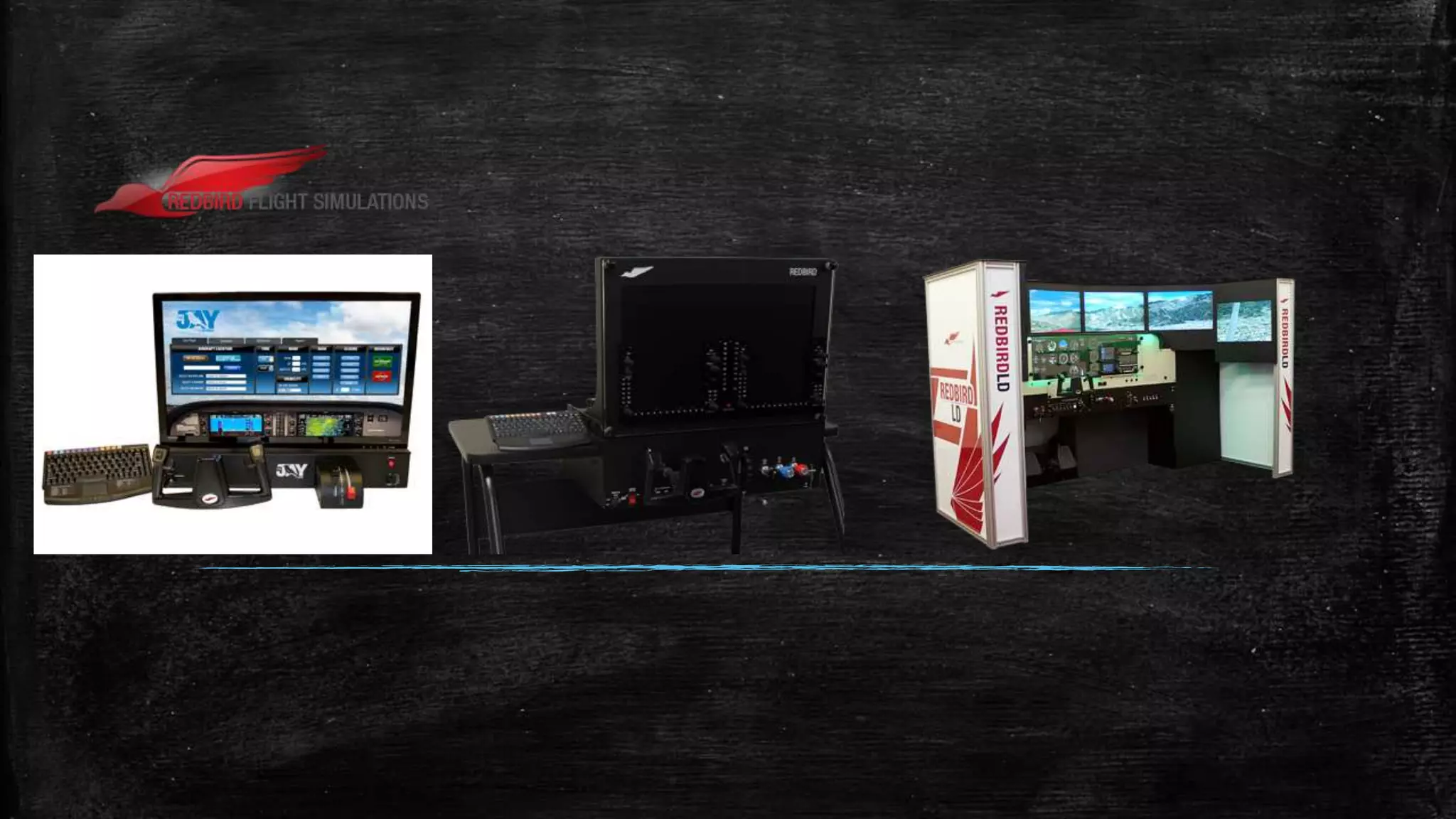
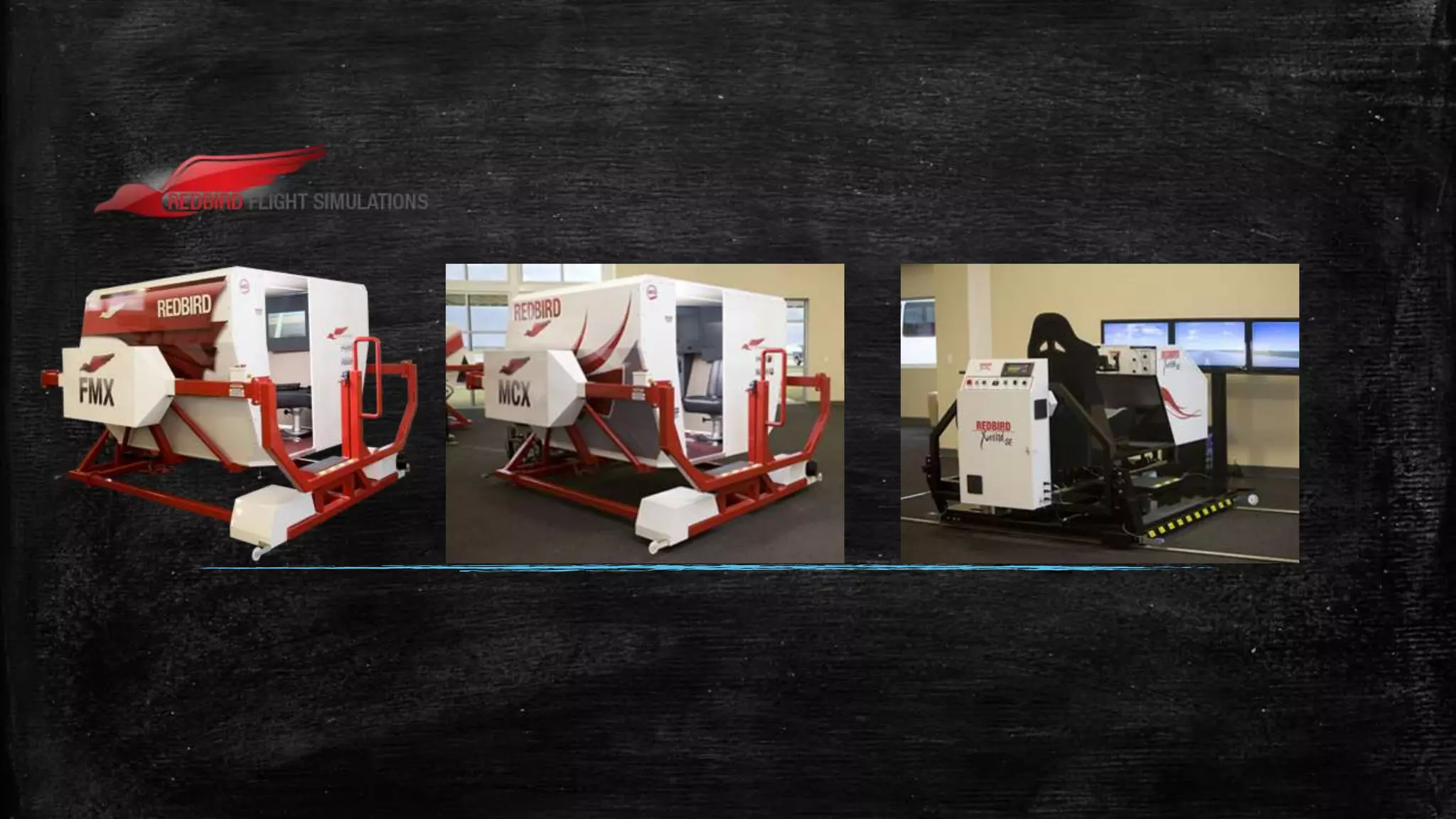
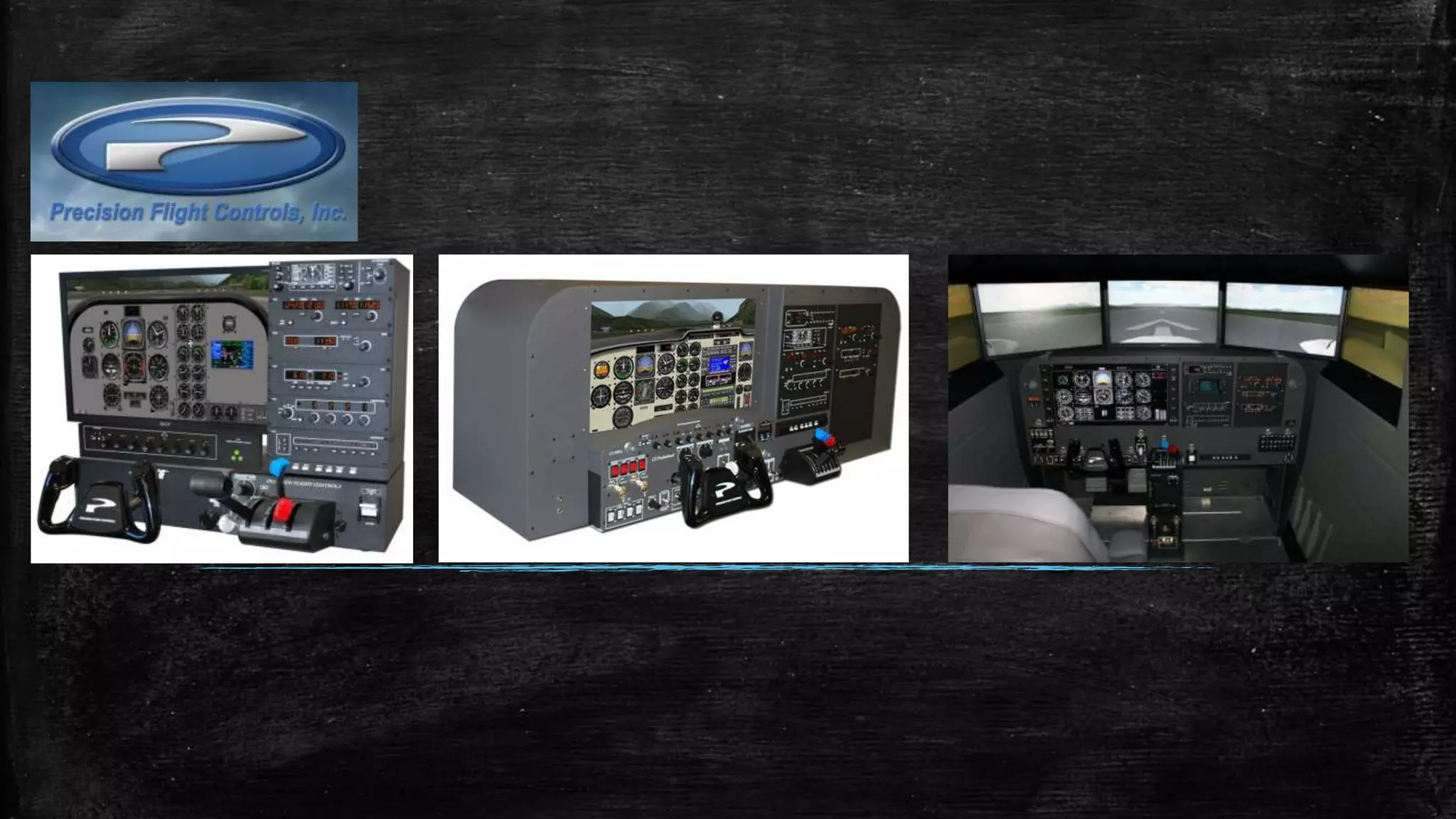
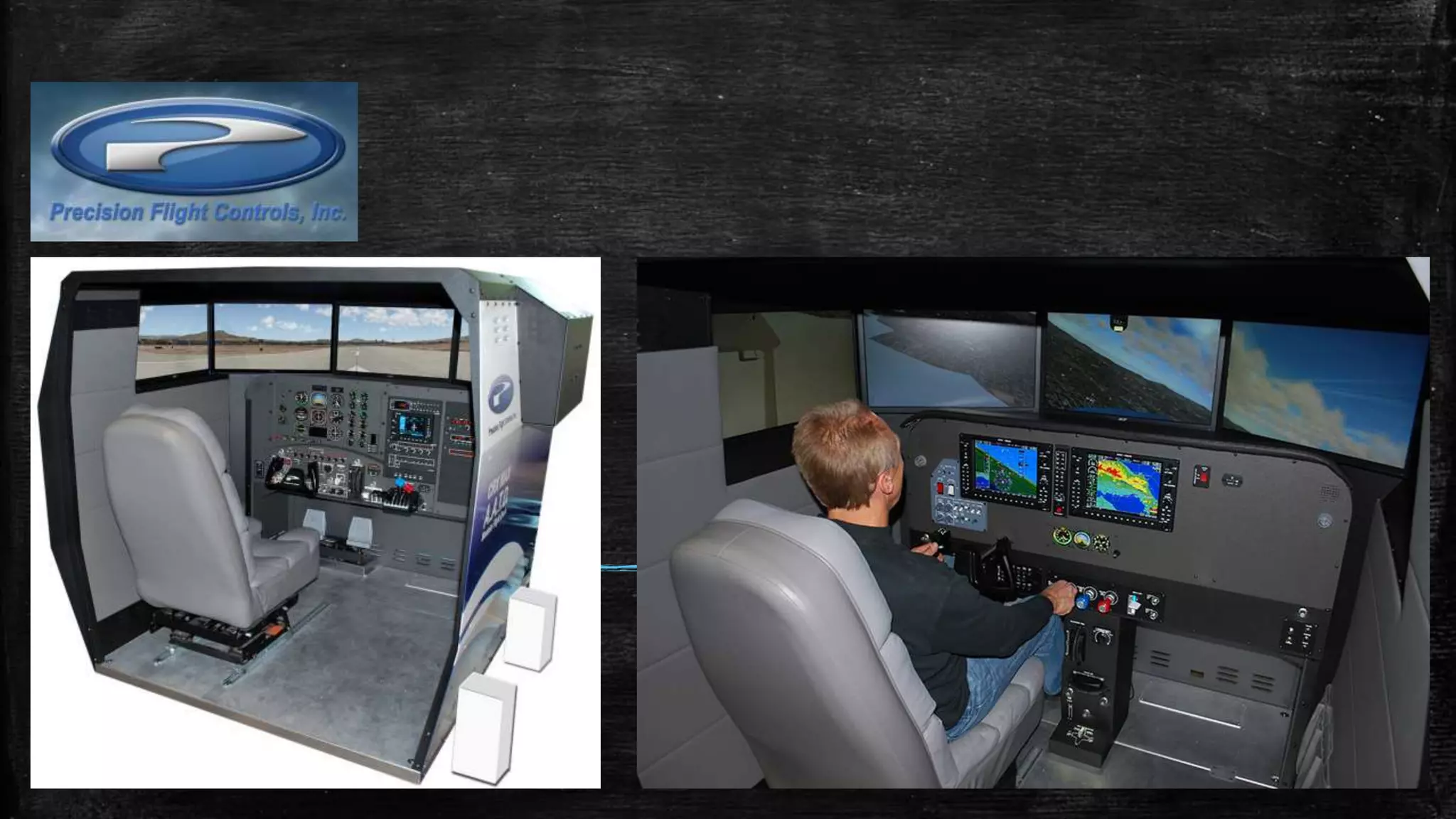
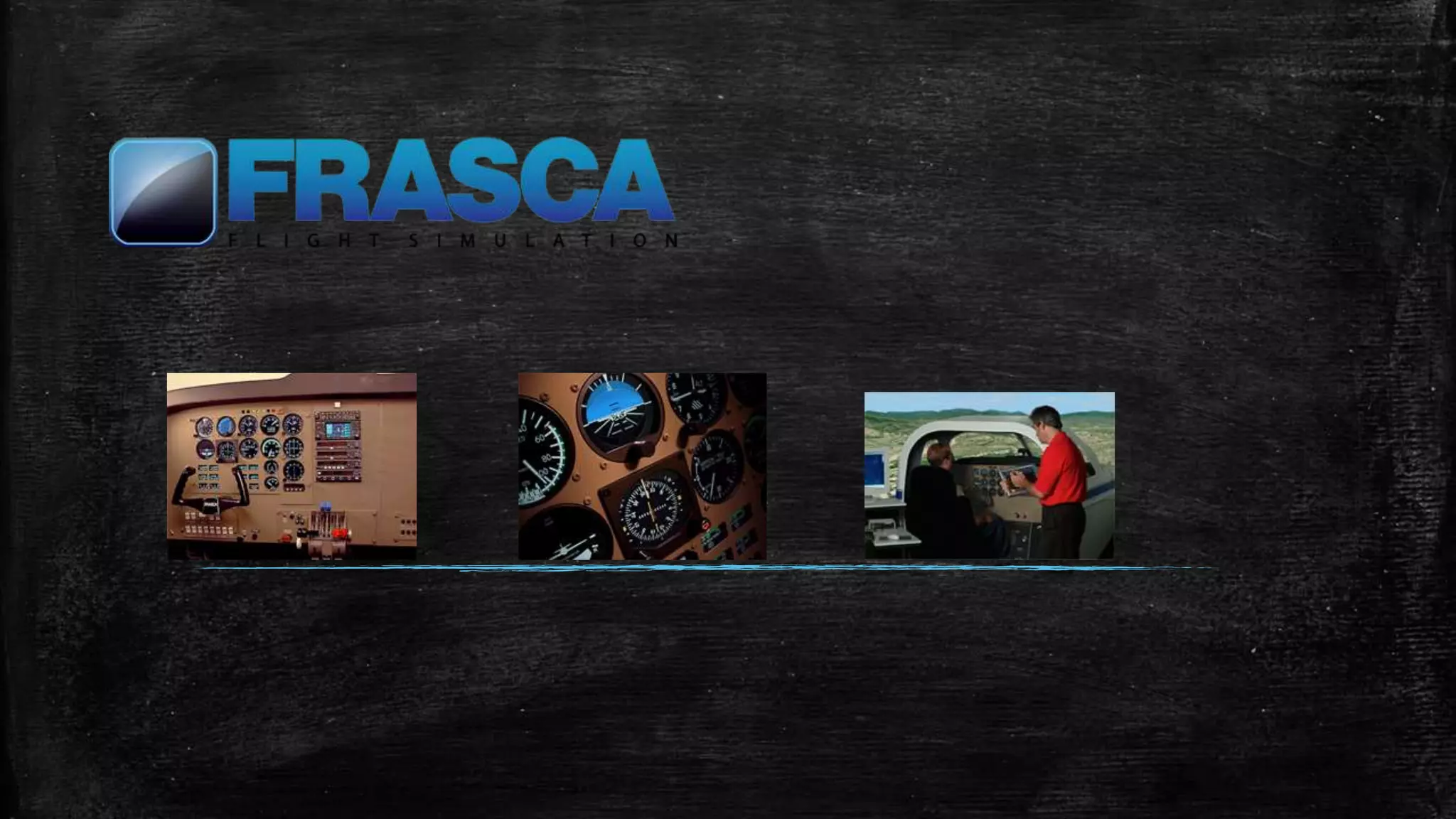
Current Products on the market
So What are all these devices used for?
Proficiency training!
It is not just about logging hours.
Save your money!!!
Now that we have that off our back,
Lets talk about how to do it.
Step 1: Find a flight training device
Step 2: find a NAFI instructor
Step 3: Lets fly!
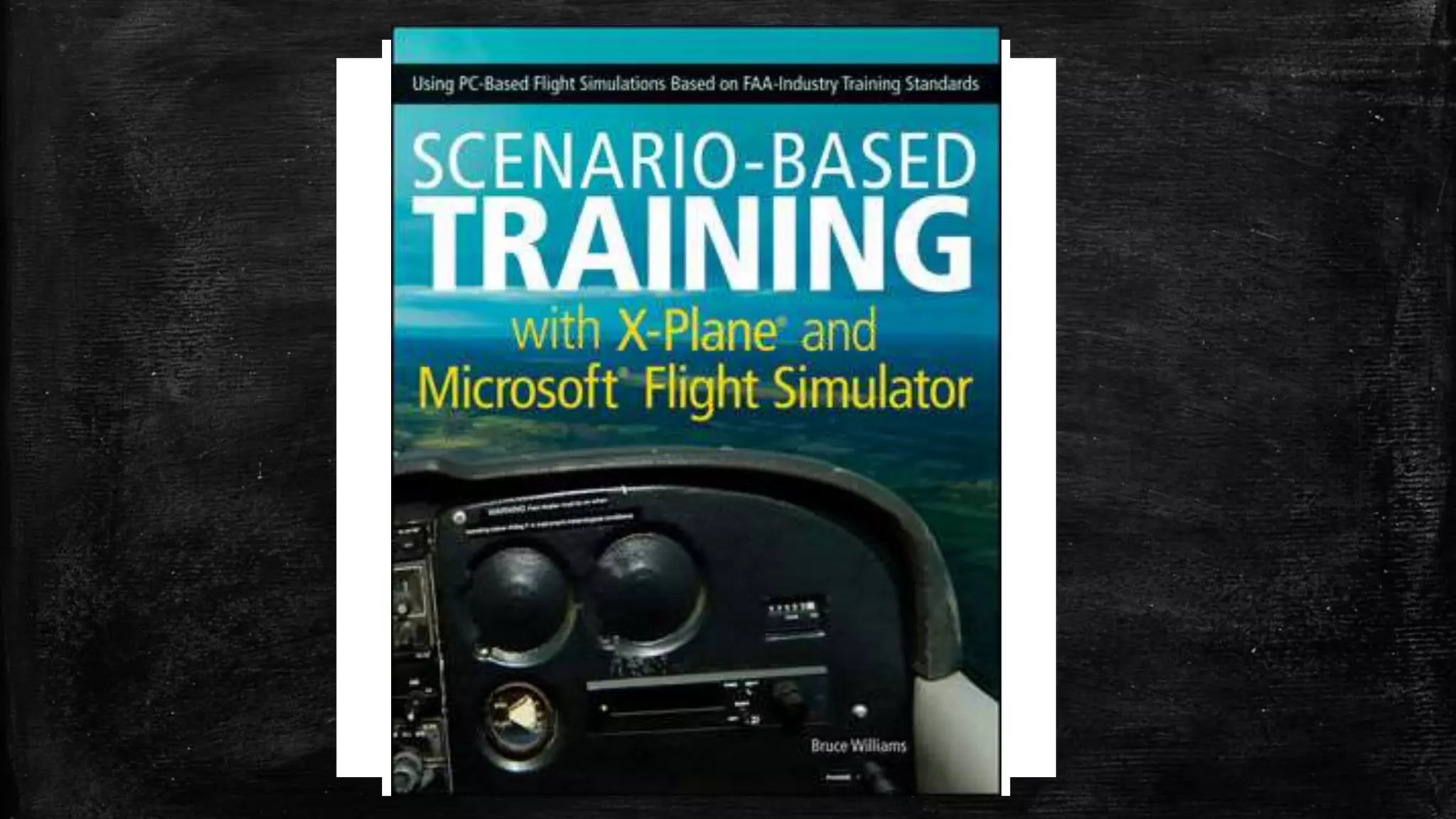
There are a number of great books on
the subject.
Here are just a few.
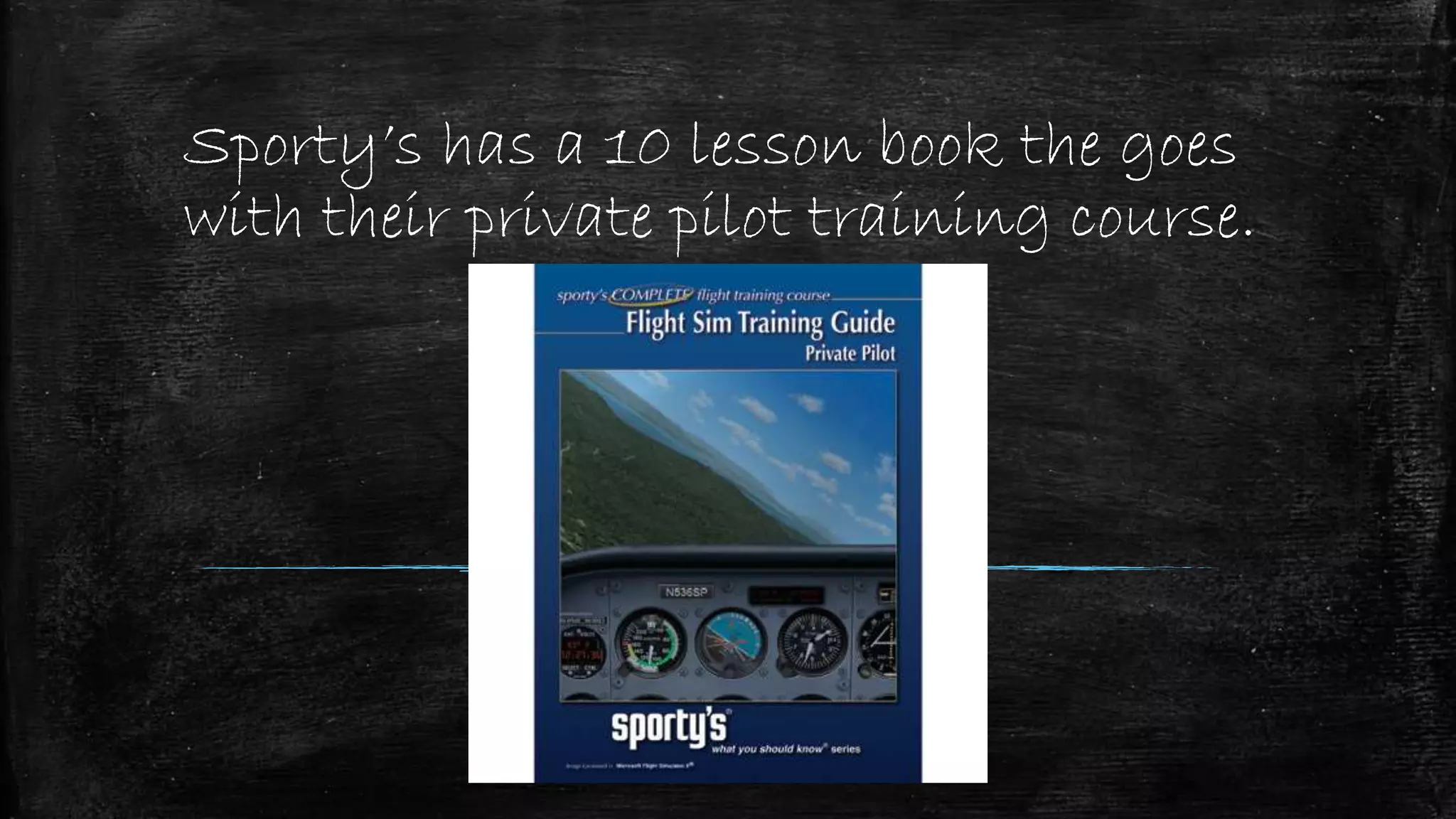
Sporty’s has a 10 lesson book the goes
with their private pilot training course.
Ways to utilize these items
▪ Start with one of the books
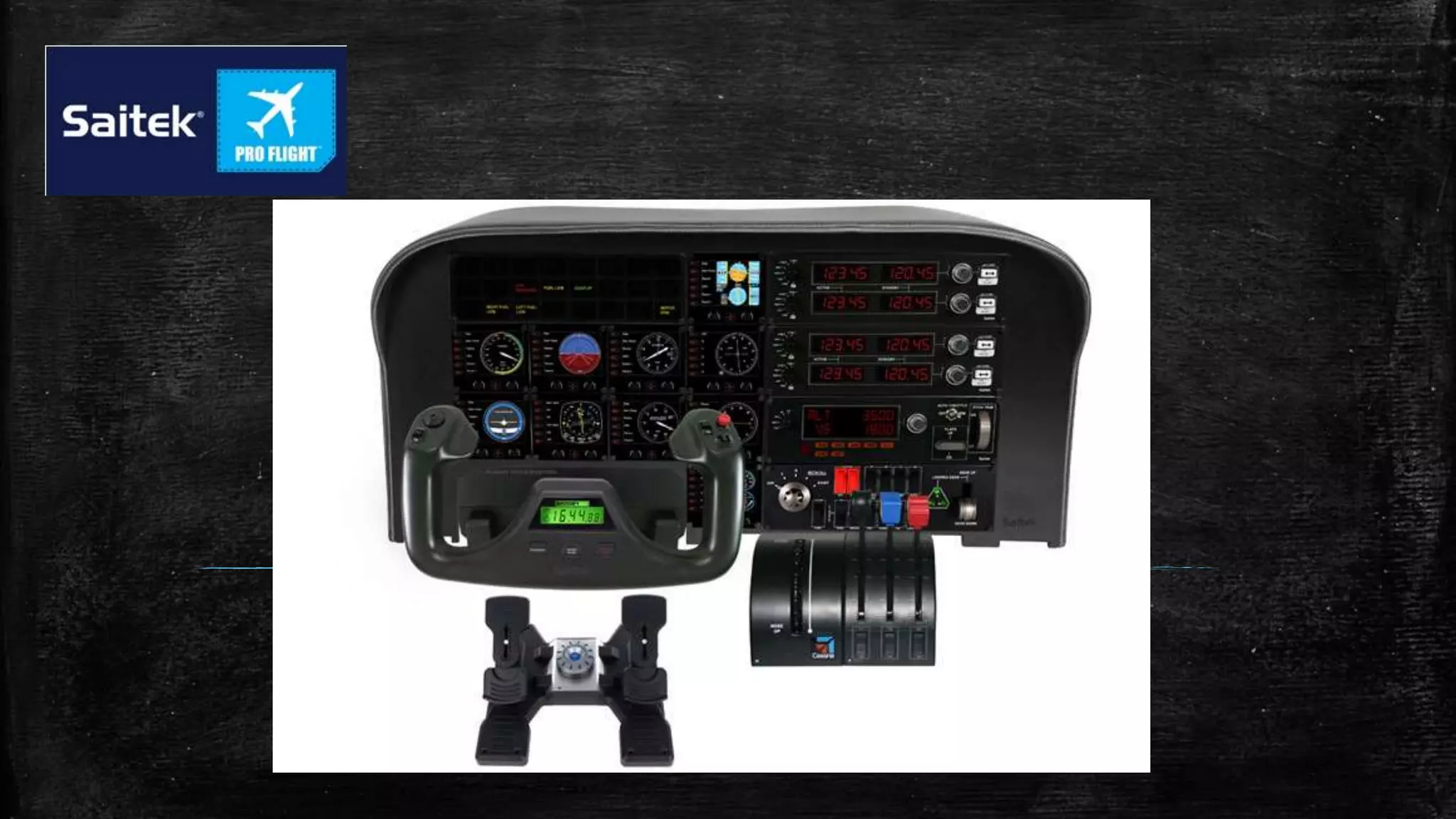
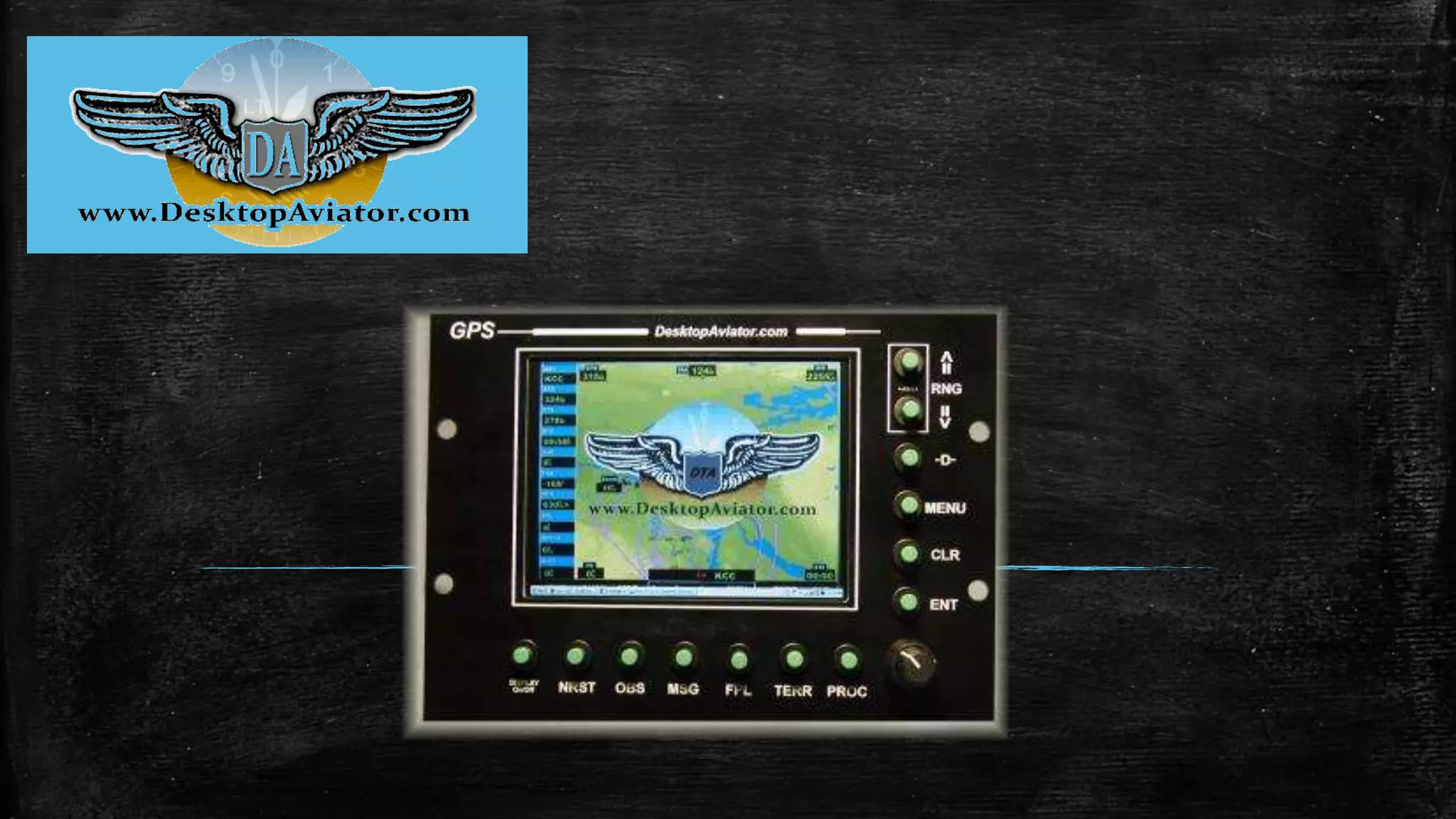
▪ Get a basic setup that should only cost around $300
▪ Follow the books step by step
▪ Ask a local flight instructor if you have questions
▪ Remember this is about proficiency not just earning
time towards a rating.
Ways to utilize these items
▪ Go to www.bruceair.com for Bruce Williams
▪ Earn Wings credit!
▪ Keep a log of the time you spent and what you did
▪ Do a preflight brief and post flight debrief with yourself
I’m a more visual learner, is there any
resources for me?
Absolutely!.
Go to www.flyaoamedia.com for a
complete video training course.
Advantages of Aviator 90 course
▪ Visual in nature
▪ Typically people learn faster
▪ Program is by pilots for sim enthusiasts and real world pilots.
▪ Does an excellent job of Preflight briefing
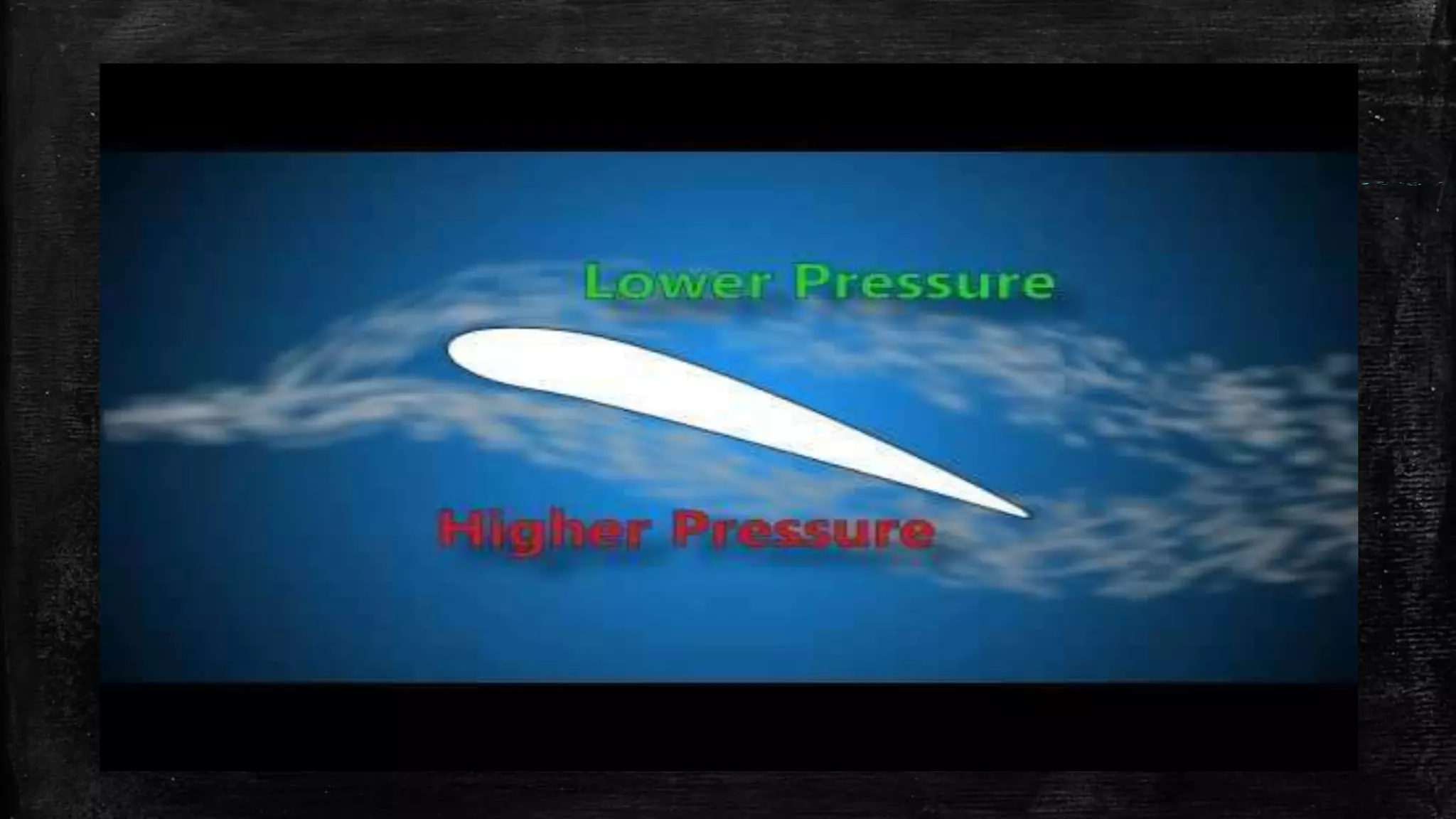
▪ First lesson explains the aerodynamics with visual references
So how do I start?
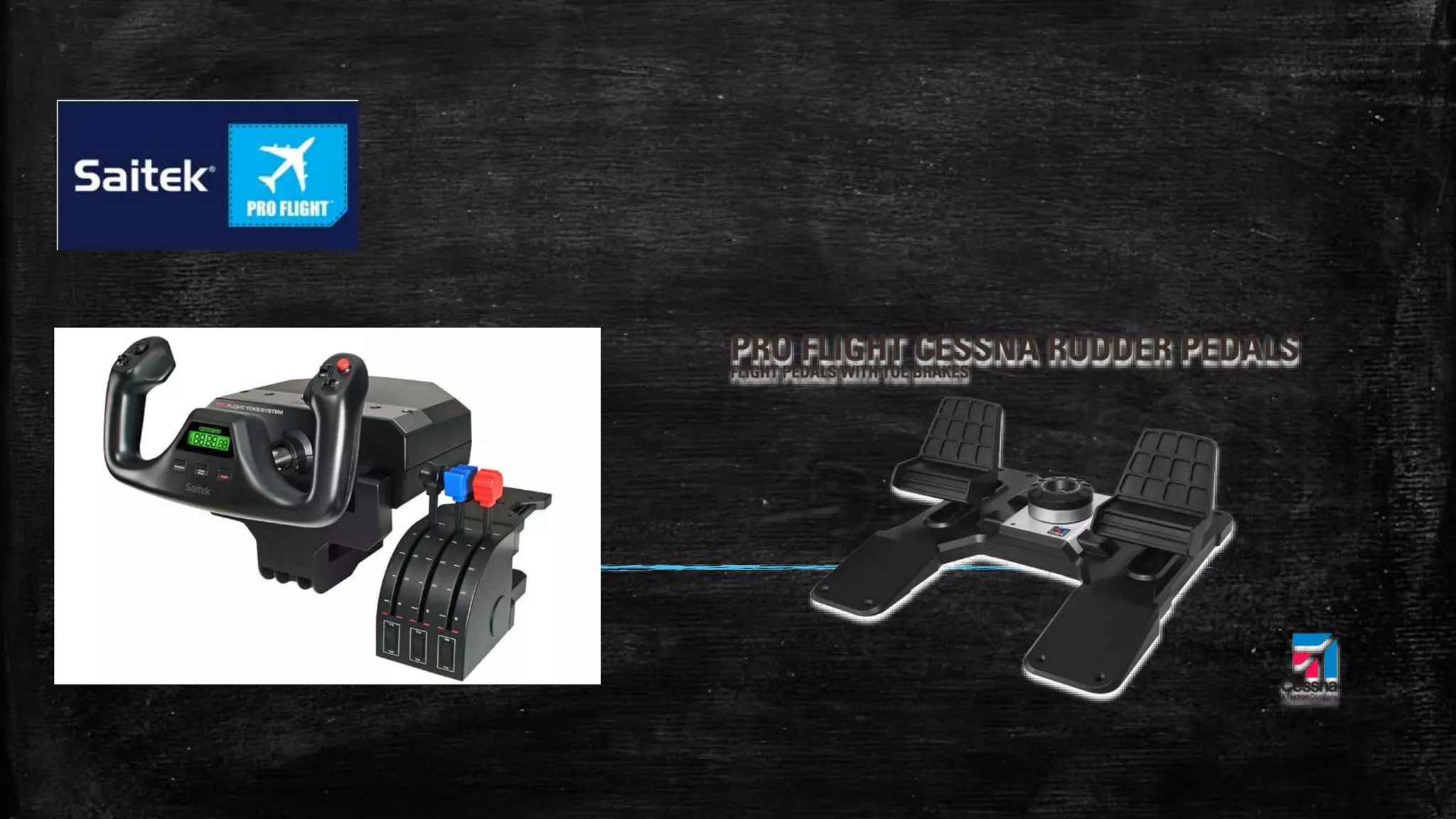
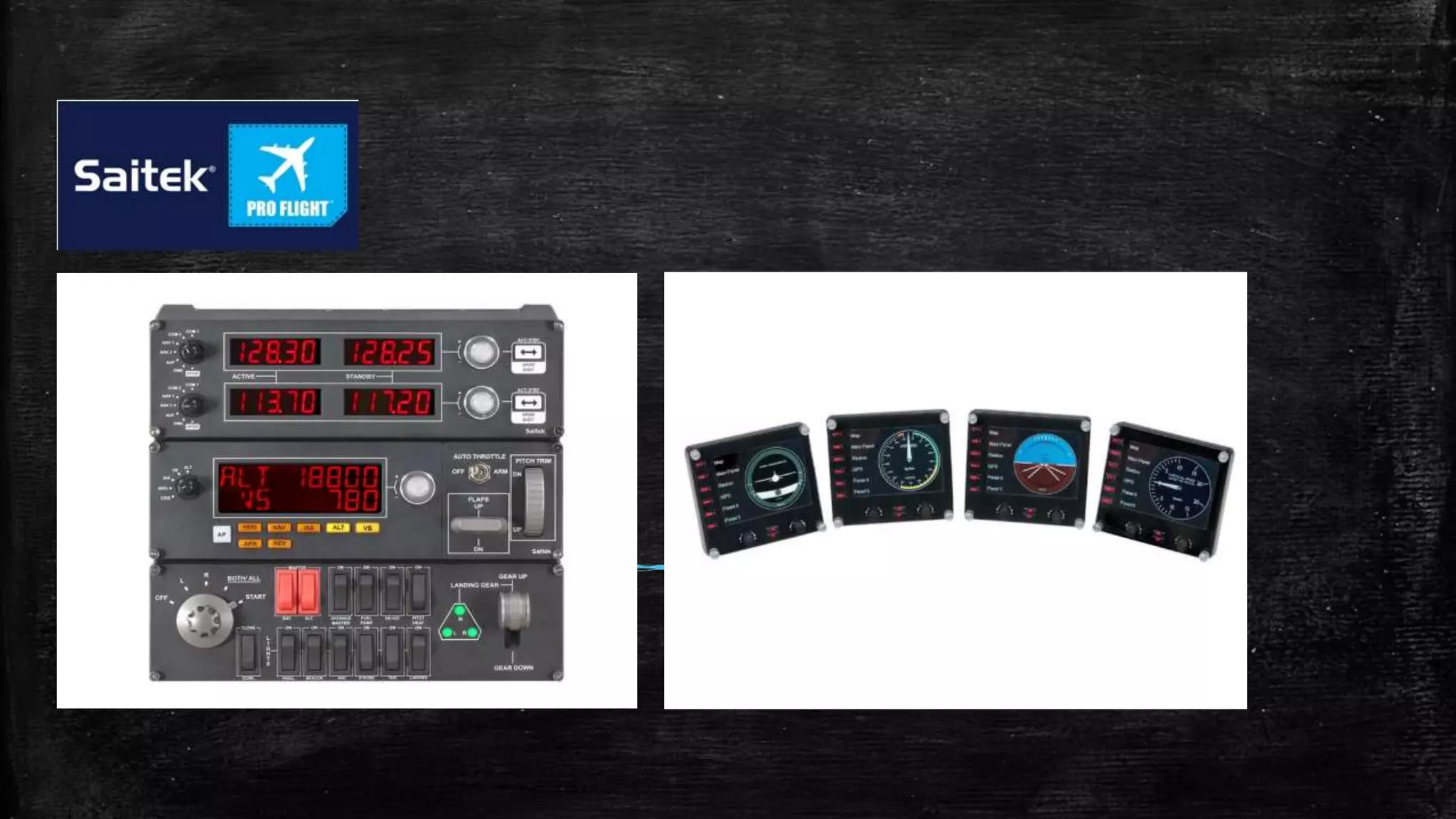
Get basic PC Flight Training Components
What else can I get?
A LOT!!!
Eventually you can build this…
For half the price of a certified device!
There are even more advanced options!
Use your mobile device for training!
FSXFlight
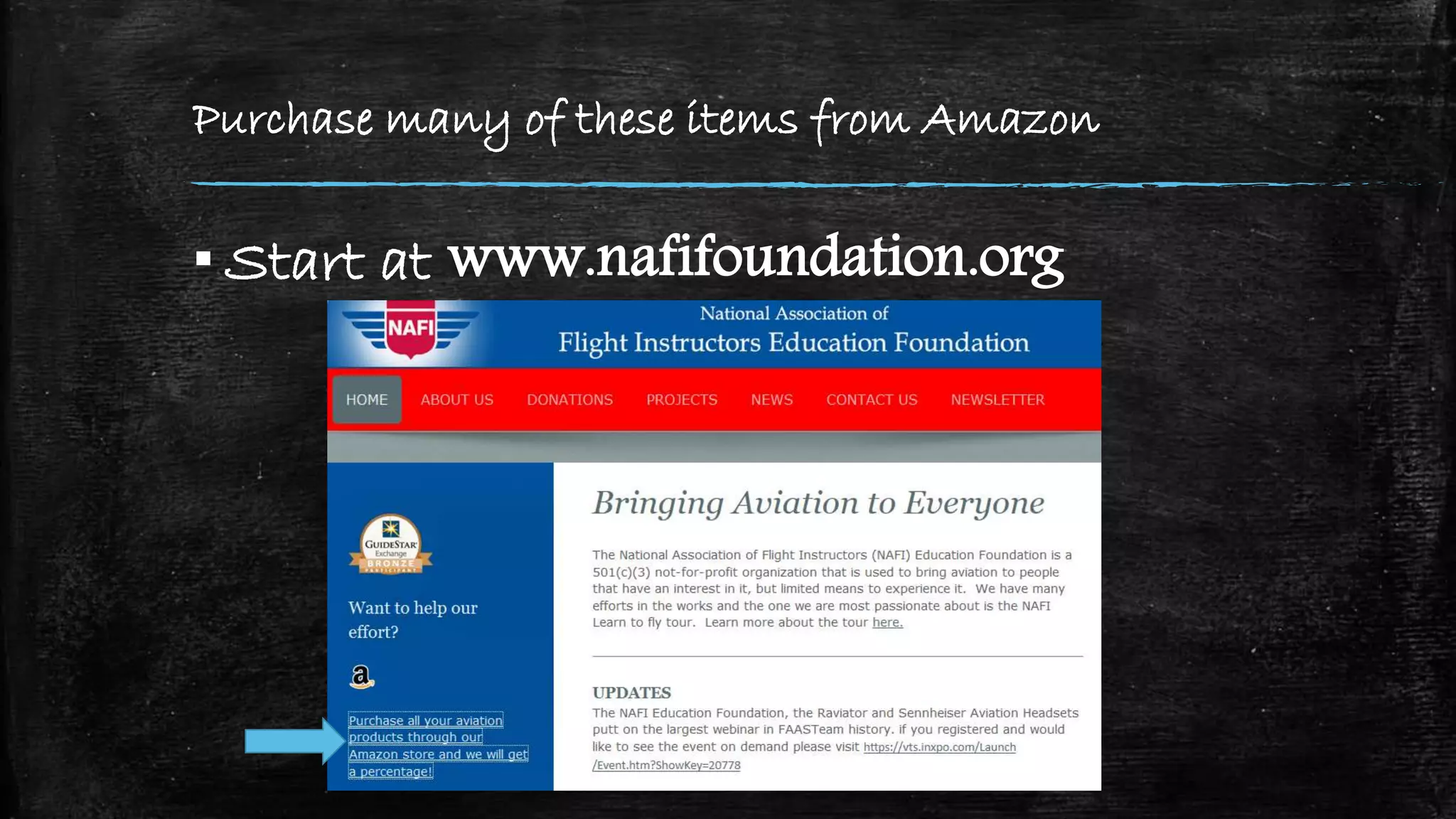
Purchase many of these items from Amazon
▪ Start at www.nafifoundation.org
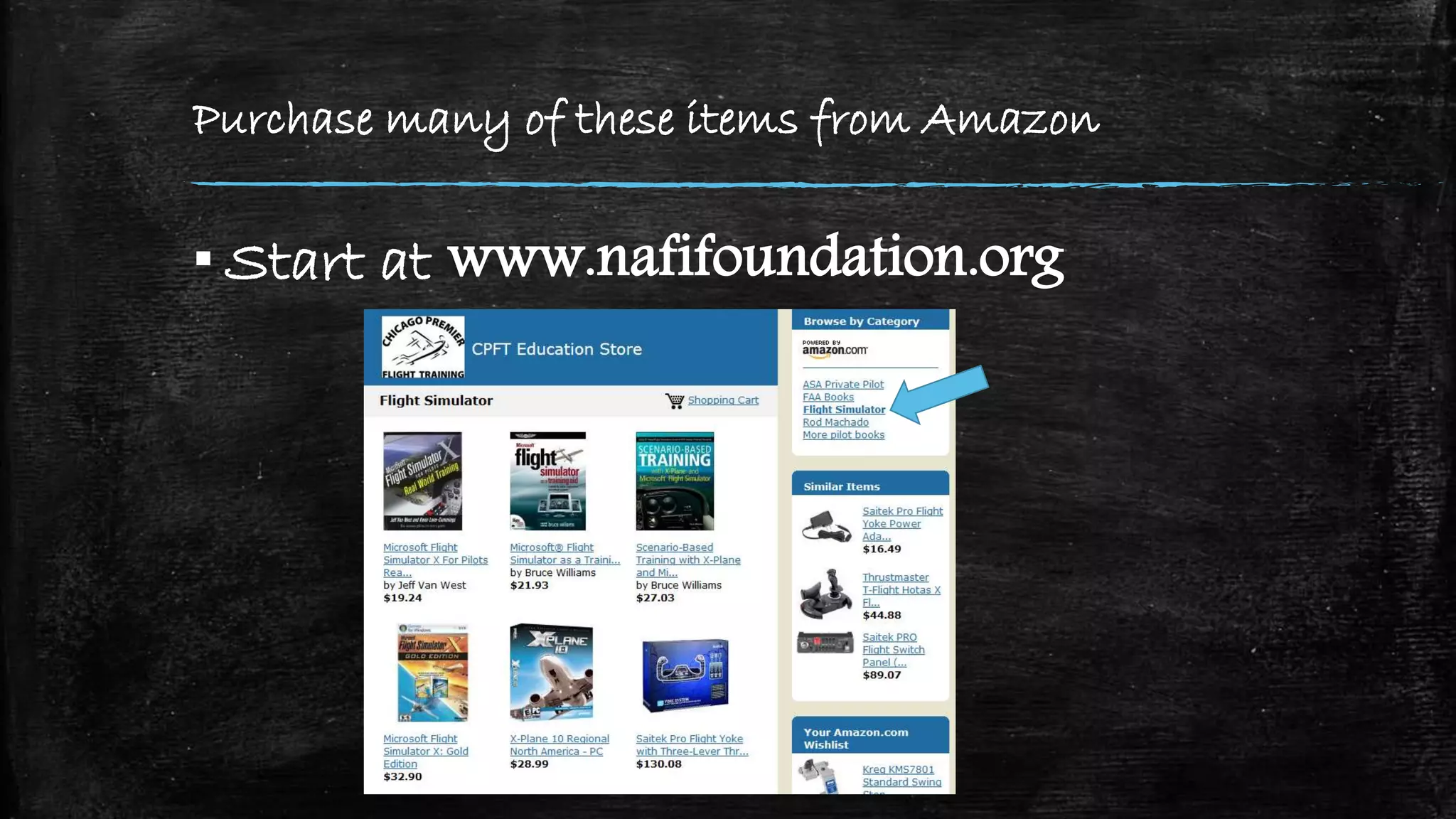
Purchase many of these items from Amazon
▪ Start at www.nafifoundation.org
Quotes from customers
▪ “Make flight simulator scenario based training part of your
learning schedule!”
▪ Hands on experience is valuable and necessary but recency and
currency on procedures is just as important
▪ With Scenario based training you can practice before you get into
an aircraft and pay for those hours.!
▪ THE FAA RECOMENDS SCENARIO BASED TRAINING!
Questions…
Simulators in Training
RickTodd CFII, MEI, NAFI Director

Simulators in training

  • 1.
    Simulators in Training RickTodd CFII, MEI, AGI, FAASTeam Rep Director National Association of Flight Instructors
  • 2.
    First the burningquestion Does this count towards my rating?
  • 3.
  • 4.
    This is aboutproficiency & Competency! ▪ Proficiency: A high degree of competence or skill ▪ Competency: The ability to do something successfully or efficiently.
  • 5.
    What we willbe discussing today ▪ History of Flight Training Devices ▪ Current products on the market ▪ Ways to utilize these products ▪ Home based PCATD’s ▪ Comments from students.
  • 6.
    Where we began… ▪WWITrainer ▪ Circa 1909
  • 7.
  • 8.
    The Link Trainer ▪Produced from early 1930s – early 1950s ▪ Used as a key trainer in WWII ▪ Link was a former organ builder ▪ More than 500,000 pilots trained on it ▪ Designated as a Historic Mechanical Engineering Landmark ▪ Link Simulation & Training is now a division of L-3 Communications
  • 9.
  • 10.
    Frasca Simulator ▪ Rudyused the Link trainer during the Korean War ▪ Introduced in 1958 ▪ Used mechanical computers in design ▪ Built his own in his basement because, “There had to be a better way!”
  • 11.
    Skip forward abit ▪ Level D simulators
  • 12.
    Level D simulators ▪Duplicates relevant aspects of the aircraft and its environment, including motion. ▪ Full Motion is obtained by electric, pneumatic or hydraulic jacks. ▪ Extremely realistic ▪ $1M+ ▪ Used by training facilities like Simcom, Flight Safety and Boeing.
  • 13.
  • 20.
    So What areall these devices used for? Proficiency training!
  • 21.
    It is notjust about logging hours. Save your money!!!
  • 22.
    Now that wehave that off our back, Lets talk about how to do it.
  • 23.
    Step 1: Finda flight training device Step 2: find a NAFI instructor Step 3: Lets fly!
  • 24.
    There are anumber of great books on the subject. Here are just a few.
  • 26.
    Sporty’s has a10 lesson book the goes with their private pilot training course.
  • 27.
    Ways to utilizethese items ▪ Start with one of the books ▪ Get a basic setup that should only cost around $300 ▪ Follow the books step by step ▪ Ask a local flight instructor if you have questions ▪ Remember this is about proficiency not just earning time towards a rating.
  • 28.
    Ways to utilizethese items ▪ Go to www.bruceair.com for Bruce Williams ▪ Earn Wings credit! ▪ Keep a log of the time you spent and what you did ▪ Do a preflight brief and post flight debrief with yourself
  • 29.
    I’m a morevisual learner, is there any resources for me? Absolutely!.
  • 30.
    Go to www.flyaoamedia.comfor a complete video training course.
  • 31.
    Advantages of Aviator90 course ▪ Visual in nature ▪ Typically people learn faster ▪ Program is by pilots for sim enthusiasts and real world pilots. ▪ Does an excellent job of Preflight briefing ▪ First lesson explains the aerodynamics with visual references
  • 33.
    So how doI start? Get basic PC Flight Training Components
  • 35.
    What else canI get? A LOT!!!
  • 37.
    Eventually you canbuild this… For half the price of a certified device!
  • 40.
    There are evenmore advanced options! Use your mobile device for training!
  • 41.
  • 42.
    Purchase many ofthese items from Amazon ▪ Start at www.nafifoundation.org
  • 43.
    Purchase many ofthese items from Amazon ▪ Start at www.nafifoundation.org
  • 44.
    Quotes from customers ▪“Make flight simulator scenario based training part of your learning schedule!” ▪ Hands on experience is valuable and necessary but recency and currency on procedures is just as important ▪ With Scenario based training you can practice before you get into an aircraft and pay for those hours.! ▪ THE FAA RECOMENDS SCENARIO BASED TRAINING!
  • 45.
  • 46.
    Simulators in Training RickToddCFII, MEI, NAFI Director