



typography
on my nightstand
for a decade
why doesn’t
anybody
like me?
Bob
laptop
phone phablet
long or short?
cultural
context
brand/image
web fonts and
performance
sizing and
proportions
fancying up
your text
Next day Prince Andrew called at a few houses he had not visited before, and among them at the Rostovs' with whom he had renewed acquaintance at the ball. Apart from considerations of
politeness which demanded the call, he wanted to see that original, eager girl who had left such a pleasant impression on his mind, in her own home.
Natasha was one of the first to meet him. She was wearing a dark-blue house dress in which Prince Andrew thought her even prettier than in her ball dress. She and all the Rostov family
welcomed him as an old friend, simply and cordially. The whole family, whom he had formerly judged severely, now seemed to him to consist of excellent, simple, and kindly people. The old
ount's hospitality and good nature, which struck one especially in Petersburg as a pleasant surprise, were such that Prince Andrew could not refuse to stay to dinner. "Yes," he thought, "they
re capital people, who of course have not the slightest idea what a treasure they possess in Natasha; but they are kindly folk and form the best possible setting for this strikingly poetic,
harming girl, overflowing with life!"
n Natasha Prince Andrew was conscious of a strange world completely alien to him and brimful of joys unknown to him, a different world, that in the Otradnoe avenue and at the window that
moonlight night had already begun to disconcert him. Now this world disconcerted him no longer and was no longer alien to him, but he himself having entered it found in it a new enjoyment.
After dinner Natasha, at Prince Andrew's request, went to the clavichord and began singing. Prince Andrew stood by a window talking to the ladies and listened to her. In the midst of a phrase
he ceased speaking and suddenly felt tears choking him, a thing he had thought impossible for him. He looked at Natasha as she sang, and something new and joyful stirred in his soul. He felt
happy and at the same time sad. He had absolutely nothing to weep about yet he was ready to weep. What about? His former love? The little princess? His disillusionments?... His hopes for
he future?... Yes and no. The chief reason was a sudden, vivid sense of the terrible contrast between something infinitely great and illimitable within him and that limited and material
omething that he, and even she, was. This contrast weighed on and yet cheered him while she sang.
As soon as Natasha had finished she went up to him and asked how he liked her voice. She asked this and then became confused, feeling that she ought not to have asked it. He smiled, looking
t her, and said he liked her singing as he liked everything she did.
Prince Andrew left the Rostovs' late in the evening. He went to bed from habit, but soon realized that he could not sleep. Having lit his candle he sat up in bed, then got up, then lay down
gain not at all troubled by his sleeplessness: his soul was as fresh and joyful as if he had stepped out of a stuffy room into God's own fresh air. It did not enter his head that he was in love with
Natasha; he was not thinking about her, but only picturing her to himself, and in consequence all life appeared in a new light. "Why do I strive, why do I toil in this narrow, confined frame,
when life, all life with all its joys, is open to me?" said he to himself. And for the first time for a very long while he began making happy plans for the future. He decided that he must attend to
his son's education by finding a tutor and putting the boy in his charge, then he ought to retire from the service and go abroad, and see England, Switzerland and Italy. "I must use my freedom
while I feel so much strength and youth in me," he said to himself. "Pierre was right when he said one must believe in the possibility of happiness in order to be happy, and now I do believe in
t. Let the dead bury their dead, but while one has life one must live and be happy!" thought he.
One morning Colonel Berg, whom Pierre knew as he knew everybody in Moscow and Petersburg, came to see him. Berg arrived in an immaculate brand-new uniform, with his hair pomaded
nd brushed forward over his temples as the Emperor Alexander wore his hair.
I have just been to see the countess, your wife. Unfortunately she could not grant my request, but I hope, Count, I shall be more fortunate with you," he said with a smile.
What is it you wish, Colonel? I am at your service."
I have now quite settled in my new rooms, Count" (Berg said this with perfect conviction that this information could not but be agreeable), "and so I wish to arrange just a small party for my
own and my wife's friends." (He smiled still more pleasantly.) "I wished to ask the countess and you to do me the honor of coming to tea and to supper."
Only Countess Helene, considering the society of such people as the Bergs beneath her, could be cruel enough to refuse such an invitation. Berg explained so clearly why he wanted to collect
t his house a small but select company, and why this would give him pleasure, and why though he grudged spending money on cards or anything harmful, he was prepared to run into some
xpense for the sake of good society—that Pierre could not refuse, and promised to come.
But don't be late, Count, if I may venture to ask; about ten minutes to eight, please. We shall make up a rubber. Our general is coming. He is very good to me. We shall have supper, Count. So
you will do me the favor."
Contrary to his habit of being late, Pierre on that day arrived at the Bergs' house, not at ten but at fifteen minutes to eight.
Having prepared everything necessary for the party, the Bergs were ready for their guests' arrival.
n their new, clean, and light study with its small busts and pictures and new furniture sat Berg and his wife. Berg, closely buttoned up in his new uniform, sat beside his wife explaining to her
hat one always could and should be acquainted with people above one, because only then does one get satisfaction from acquaintances.
You can get to know something, you can ask for something. See how I managed from my first promotion." (Berg measured his life not by years but by promotions.) "My comrades are still
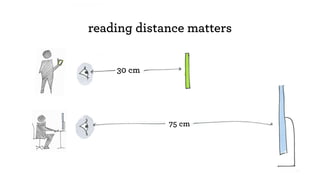
30 cmphone
75 cm
reading distance matters
illustration:
"Why do I strive, why do I toil in this narrow, confined frame, when life, all life with all its
joys, is open to me?" said he to himself. And for the first time for a very long while he
began making happy plans for the future. He decided that he must attend to his son's
education by finding a tutor and putting the boy in his charge, then he ought to retire from
the service and go abroad, and see England, Switzerland and Italy. "I must use my freedom
while I feel so much strength and youth in me," he said to himself. "Pierre was right when
he said one must believe in the possibility of happiness in order to be happy, and now I do
believe in it. Let the dead bury their dead, but while one has life one must live and be
happy!" thought he.
One morning Colonel Berg, whom Pierre knew as he knew everybody in Moscow and
Petersburg, came to see him. Berg arrived in an immaculate brand-new uniform, with his
hair pomaded and brushed forward over his temples as the Emperor Alexander wore his
hair.
"I have just been to see the countess, your wife. Unfortunately she could not grant my
request, but I hope, Count, I shall be more fortunate with you," he said with a smile.
"What is it you wish, Colonel? I am at your service."
Anything from 45 to 75 characters
is widely regarded as a satisfactory
length of line for a single-column
page. The 66-character line
(counting both letters and spaces)
is widely regarded as ideal.
“
“
ROBERT
BRINGURST
"Why do I strive, why do I toil in this narrow, confined frame,
when life, all life with all its joys, is open to me?" said he to
himself. And for the first time for a very long while he began
making happy plans for the future. He decided that he must attend
to his son's education by finding a tutor and putting the boy in his
charge, then he ought to retire from the service and go abroad,
and see England, Switzerland and Italy. "I must use my freedom
while I feel so much strength and youth in me," he said to
himself. "Pierre was right when he said one must believe in the
possibility of happiness in order to be happy, and now I do
believe in it. Let the dead bury their dead, but while one has life
one must live and be happy!" thought he.
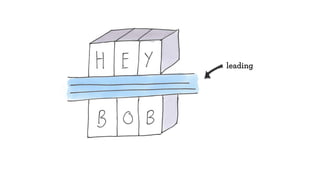
leading
"Why do I strive, why do I toil in this narrow, confined frame,
when life, all life with all its joys, is open to me?" said he to
himself. And for the first time for a very long while he began
making happy plans for the future. "I must use my freedom while
I feel so much strength and youth in me," he said to himself.
"Pierre was right when he said one must believe in the possibility
of happiness in order to be happy, and now I do believe in it. Let
the dead bury their dead, but while one has life one must live and
be happy!" thought he.
17
Chaparral Pro 20px/1.5
~ 68 CPL
Chaparral Pro 70px
Chaparral Pro 18px/1.5
~ 46 CPL
Chaparral Pro 32px
Freight 22px/1.5
~ 75 CPL
JAF Bernino 60px
JAF Bernino 32px
Freight 20px/1.4
~ 42 CPL
JAF Bernino 36px
JAF Bernino 24px
Wow, it’s
so much
easier to
read now!
"Why do I strive, why do I toil in this narrow, confined frame,
when life, all life with all its joys, is open to me?" said he to
himself. And for the first time for a very long while he began
making happy plans for the future. "I must use my freedom while
I feel so much strength and youth in me," he said to himself.
"Pierre was right when he said one must believe in the possibility
of happiness in order to be happy, and now I do believe in it. Let
the dead bury their dead, but while one has life one must live and
be happy!" thought he.
17
"Why do I strive, why do I toil in this narrow, confined frame,
when life, all life with all its joys, is open to me?" said he to
himself. And for the first time for a very long while he began
making happy plans for the future. "I must use my freedom
while I feel so much strength and youth in me," he said to
himself. "Pierre was right when he said one must believe in the
possibility of happiness in order to be happy, and now I do
believe in it. Let the dead bury their dead, but while one has
life one must live and be happy!" thought he.
17
source: httparchive.org
Mm,
performant!
"straight quotes"
"straight quotes"
“curly quotes”
"Why do I strive, why do I toil in this narrow, confined frame,
when life, all life with all its joys, is open to me?" said he to
himself. And for the first time for a very long while he began
making happy plans for the future. "I must use my freedom
while I feel so much strength and youth in me," he said to
himself. "Pierre was right when he said one must believe in the
possibility of happiness in order to be happy, and now I do
believe in it. Let the dead bury their dead, but while one has
life one must live and be happy!" thought he.
17
“Why do I strive, why do I toil in this narrow, confined frame,
when life, all life with all its joys, is open to me?” said he to
himself. And for the first time for a very long while he began
making happy plans for the future. “I must use my freedom
while I feel so much strength and youth in me,” he said to
himself. “Pierre was right when he said one must believe in the
possibility of happiness in order to be happy, and now I do
believe in it. Let the dead bury their dead, but while one has
life one must live and be happy!” thought he.
17
coffee & figs
coffee & figs
coffee & figs
“Why do I strive, why do I toil in this narrow, confined frame,
when life, all life with all its joys, is open to me?” said he to
himself. And for the first time for a very long while he began
making happy plans for the future. “I must use my freedom
while I feel so much strength and youth in me,” he said to
himself. “Pierre was right when he said one must believe in the
possibility of happiness in order to be happy, and now I do
believe in it. Let the dead bury their dead, but while one has
life one must live and be happy!” thought he.
17
“Why do I strive, why do I toil in this narrow, confined frame,
when life, all life with all its joys, is open to me?” said he to
himself. And for the first time for a very long while he began
making happy plans for the future. “I must use my freedom
while I feel so much strength and youth in me,” he said to
himself. “Pierre was right when he said one must believe in the
possibility of happiness in order to be happy, and now I do
believe in it. Let the dead bury their dead, but while one has
life one must live and be happy!” thought he.
17
text-rendering: optimizeLegibility;
-webkit-font-variant-ligatures: common-ligatures;
font-variant-ligatures: common-ligatures;
enabling ligatures
So polished!
I can’t wait
to continue
reading.
Next day Prince Andrew called at a few houses he had not visited before, and among them at the Rostovs' with whom he had renewed acquaintance at the ball. Apart from considerations of
politeness which demanded the call, he wanted to see that original, eager girl who had left such a pleasant impression on his mind, in her own home.
Natasha was one of the first to meet him. She was wearing a dark-blue house dress in which Prince Andrew thought her even prettier than in her ball dress. She and all the Rostov family
welcomed him as an old friend, simply and cordially. The whole family, whom he had formerly judged severely, now seemed to him to consist of excellent, simple, and kindly people. The old
ount's hospitality and good nature, which struck one especially in Petersburg as a pleasant surprise, were such that Prince Andrew could not refuse to stay to dinner. "Yes," he thought, "they
re capital people, who of course have not the slightest idea what a treasure they possess in Natasha; but they are kindly folk and form the best possible setting for this strikingly poetic,
harming girl, overflowing with life!"
n Natasha Prince Andrew was conscious of a strange world completely alien to him and brimful of joys unknown to him, a different world, that in the Otradnoe avenue and at the window that
moonlight night had already begun to disconcert him. Now this world disconcerted him no longer and was no longer alien to him, but he himself having entered it found in it a new enjoyment.
After dinner Natasha, at Prince Andrew's request, went to the clavichord and began singing. Prince Andrew stood by a window talking to the ladies and listened to her. In the midst of a phrase
he ceased speaking and suddenly felt tears choking him, a thing he had thought impossible for him. He looked at Natasha as she sang, and something new and joyful stirred in his soul. He felt
happy and at the same time sad. He had absolutely nothing to weep about yet he was ready to weep. What about? His former love? The little princess? His disillusionments?... His hopes for
he future?... Yes and no. The chief reason was a sudden, vivid sense of the terrible contrast between something infinitely great and illimitable within him and that limited and material
omething that he, and even she, was. This contrast weighed on and yet cheered him while she sang.
As soon as Natasha had finished she went up to him and asked how he liked her voice. She asked this and then became confused, feeling that she ought not to have asked it. He smiled, looking
t her, and said he liked her singing as he liked everything she did.
Prince Andrew left the Rostovs' late in the evening. He went to bed from habit, but soon realized that he could not sleep. Having lit his candle he sat up in bed, then got up, then lay down
gain not at all troubled by his sleeplessness: his soul was as fresh and joyful as if he had stepped out of a stuffy room into God's own fresh air. It did not enter his head that he was in love with
Natasha; he was not thinking about her, but only picturing her to himself, and in consequence all life appeared in a new light. "Why do I strive, why do I toil in this narrow, confined frame,
when life, all life with all its joys, is open to me?" said he to himself. And for the first time for a very long while he began making happy plans for the future. He decided that he must attend to
his son's education by finding a tutor and putting the boy in his charge, then he ought to retire from the service and go abroad, and see England, Switzerland and Italy. "I must use my freedom
while I feel so much strength and youth in me," he said to himself. "Pierre was right when he said one must believe in the possibility of happiness in order to be happy, and now I do believe in
t. Let the dead bury their dead, but while one has life one must live and be happy!" thought he.
One morning Colonel Berg, whom Pierre knew as he knew everybody in Moscow and Petersburg, came to see him. Berg arrived in an immaculate brand-new uniform, with his hair pomaded
nd brushed forward over his temples as the Emperor Alexander wore his hair.
I have just been to see the countess, your wife. Unfortunately she could not grant my request, but I hope, Count, I shall be more fortunate with you," he said with a smile.
What is it you wish, Colonel? I am at your service."
I have now quite settled in my new rooms, Count" (Berg said this with perfect conviction that this information could not but be agreeable), "and so I wish to arrange just a small party for my
own and my wife's friends." (He smiled still more pleasantly.) "I wished to ask the countess and you to do me the honor of coming to tea and to supper."
Only Countess Helene, considering the society of such people as the Bergs beneath her, could be cruel enough to refuse such an invitation. Berg explained so clearly why he wanted to collect
t his house a small but select company, and why this would give him pleasure, and why though he grudged spending money on cards or anything harmful, he was prepared to run into some
xpense for the sake of good society—that Pierre could not refuse, and promised to come.
But don't be late, Count, if I may venture to ask; about ten minutes to eight, please. We shall make up a rubber. Our general is coming. He is very good to me. We shall have supper, Count. So
you will do me the favor."
Contrary to his habit of being late, Pierre on that day arrived at the Bergs' house, not at ten but at fifteen minutes to eight.
Having prepared everything necessary for the party, the Bergs were ready for their guests' arrival.
n their new, clean, and light study with its small busts and pictures and new furniture sat Berg and his wife. Berg, closely buttoned up in his new uniform, sat beside his wife explaining to her
hat one always could and should be acquainted with people above one, because only then does one get satisfaction from acquaintances.
You can get to know something, you can ask for something. See how I managed from my first promotion." (Berg measured his life not by years but by promotions.) "My comrades are still
“Why do I strive, why do I toil in this narrow, confined frame,
when life, all life with all its joys, is open to me?” said he to
himself. And for the first time for a very long while he began
making happy plans for the future. “I must use my freedom
while I feel so much strength and youth in me,” he said to
himself. “Pierre was right when he said one must believe in the
possibility of happiness in order to be happy, and now I do
believe in it. Let the dead bury their dead, but while one has
life one must live and be happy!” thought he.
17
There’s an attitude out there that
type is just the shit. And it’s not.
It’s just type, it’s just letterforms.
They’re a means to an end.
Nobody cares what it looks like if
you what you say is dumb.
“
“
Thanks!

Simple responsive typography

  • 1.
  • 3.
    on my nightstand fora decade why doesn’t anybody like me?
  • 5.
  • 6.
  • 7.
  • 8.
    web fonts and performance sizingand proportions fancying up your text
  • 9.
    Next day PrinceAndrew called at a few houses he had not visited before, and among them at the Rostovs' with whom he had renewed acquaintance at the ball. Apart from considerations of politeness which demanded the call, he wanted to see that original, eager girl who had left such a pleasant impression on his mind, in her own home. Natasha was one of the first to meet him. She was wearing a dark-blue house dress in which Prince Andrew thought her even prettier than in her ball dress. She and all the Rostov family welcomed him as an old friend, simply and cordially. The whole family, whom he had formerly judged severely, now seemed to him to consist of excellent, simple, and kindly people. The old ount's hospitality and good nature, which struck one especially in Petersburg as a pleasant surprise, were such that Prince Andrew could not refuse to stay to dinner. "Yes," he thought, "they re capital people, who of course have not the slightest idea what a treasure they possess in Natasha; but they are kindly folk and form the best possible setting for this strikingly poetic, harming girl, overflowing with life!" n Natasha Prince Andrew was conscious of a strange world completely alien to him and brimful of joys unknown to him, a different world, that in the Otradnoe avenue and at the window that moonlight night had already begun to disconcert him. Now this world disconcerted him no longer and was no longer alien to him, but he himself having entered it found in it a new enjoyment. After dinner Natasha, at Prince Andrew's request, went to the clavichord and began singing. Prince Andrew stood by a window talking to the ladies and listened to her. In the midst of a phrase he ceased speaking and suddenly felt tears choking him, a thing he had thought impossible for him. He looked at Natasha as she sang, and something new and joyful stirred in his soul. He felt happy and at the same time sad. He had absolutely nothing to weep about yet he was ready to weep. What about? His former love? The little princess? His disillusionments?... His hopes for he future?... Yes and no. The chief reason was a sudden, vivid sense of the terrible contrast between something infinitely great and illimitable within him and that limited and material omething that he, and even she, was. This contrast weighed on and yet cheered him while she sang. As soon as Natasha had finished she went up to him and asked how he liked her voice. She asked this and then became confused, feeling that she ought not to have asked it. He smiled, looking t her, and said he liked her singing as he liked everything she did. Prince Andrew left the Rostovs' late in the evening. He went to bed from habit, but soon realized that he could not sleep. Having lit his candle he sat up in bed, then got up, then lay down gain not at all troubled by his sleeplessness: his soul was as fresh and joyful as if he had stepped out of a stuffy room into God's own fresh air. It did not enter his head that he was in love with Natasha; he was not thinking about her, but only picturing her to himself, and in consequence all life appeared in a new light. "Why do I strive, why do I toil in this narrow, confined frame, when life, all life with all its joys, is open to me?" said he to himself. And for the first time for a very long while he began making happy plans for the future. He decided that he must attend to his son's education by finding a tutor and putting the boy in his charge, then he ought to retire from the service and go abroad, and see England, Switzerland and Italy. "I must use my freedom while I feel so much strength and youth in me," he said to himself. "Pierre was right when he said one must believe in the possibility of happiness in order to be happy, and now I do believe in t. Let the dead bury their dead, but while one has life one must live and be happy!" thought he. One morning Colonel Berg, whom Pierre knew as he knew everybody in Moscow and Petersburg, came to see him. Berg arrived in an immaculate brand-new uniform, with his hair pomaded nd brushed forward over his temples as the Emperor Alexander wore his hair. I have just been to see the countess, your wife. Unfortunately she could not grant my request, but I hope, Count, I shall be more fortunate with you," he said with a smile. What is it you wish, Colonel? I am at your service." I have now quite settled in my new rooms, Count" (Berg said this with perfect conviction that this information could not but be agreeable), "and so I wish to arrange just a small party for my own and my wife's friends." (He smiled still more pleasantly.) "I wished to ask the countess and you to do me the honor of coming to tea and to supper." Only Countess Helene, considering the society of such people as the Bergs beneath her, could be cruel enough to refuse such an invitation. Berg explained so clearly why he wanted to collect t his house a small but select company, and why this would give him pleasure, and why though he grudged spending money on cards or anything harmful, he was prepared to run into some xpense for the sake of good society—that Pierre could not refuse, and promised to come. But don't be late, Count, if I may venture to ask; about ten minutes to eight, please. We shall make up a rubber. Our general is coming. He is very good to me. We shall have supper, Count. So you will do me the favor." Contrary to his habit of being late, Pierre on that day arrived at the Bergs' house, not at ten but at fifteen minutes to eight. Having prepared everything necessary for the party, the Bergs were ready for their guests' arrival. n their new, clean, and light study with its small busts and pictures and new furniture sat Berg and his wife. Berg, closely buttoned up in his new uniform, sat beside his wife explaining to her hat one always could and should be acquainted with people above one, because only then does one get satisfaction from acquaintances. You can get to know something, you can ask for something. See how I managed from my first promotion." (Berg measured his life not by years but by promotions.) "My comrades are still
  • 10.
    30 cmphone 75 cm readingdistance matters illustration:
  • 12.
    "Why do Istrive, why do I toil in this narrow, confined frame, when life, all life with all its joys, is open to me?" said he to himself. And for the first time for a very long while he began making happy plans for the future. He decided that he must attend to his son's education by finding a tutor and putting the boy in his charge, then he ought to retire from the service and go abroad, and see England, Switzerland and Italy. "I must use my freedom while I feel so much strength and youth in me," he said to himself. "Pierre was right when he said one must believe in the possibility of happiness in order to be happy, and now I do believe in it. Let the dead bury their dead, but while one has life one must live and be happy!" thought he. One morning Colonel Berg, whom Pierre knew as he knew everybody in Moscow and Petersburg, came to see him. Berg arrived in an immaculate brand-new uniform, with his hair pomaded and brushed forward over his temples as the Emperor Alexander wore his hair. "I have just been to see the countess, your wife. Unfortunately she could not grant my request, but I hope, Count, I shall be more fortunate with you," he said with a smile. "What is it you wish, Colonel? I am at your service."
  • 13.
    Anything from 45to 75 characters is widely regarded as a satisfactory length of line for a single-column page. The 66-character line (counting both letters and spaces) is widely regarded as ideal. “ “ ROBERT BRINGURST
  • 14.
    "Why do Istrive, why do I toil in this narrow, confined frame, when life, all life with all its joys, is open to me?" said he to himself. And for the first time for a very long while he began making happy plans for the future. He decided that he must attend to his son's education by finding a tutor and putting the boy in his charge, then he ought to retire from the service and go abroad, and see England, Switzerland and Italy. "I must use my freedom while I feel so much strength and youth in me," he said to himself. "Pierre was right when he said one must believe in the possibility of happiness in order to be happy, and now I do believe in it. Let the dead bury their dead, but while one has life one must live and be happy!" thought he.
  • 15.
  • 16.
    "Why do Istrive, why do I toil in this narrow, confined frame, when life, all life with all its joys, is open to me?" said he to himself. And for the first time for a very long while he began making happy plans for the future. "I must use my freedom while I feel so much strength and youth in me," he said to himself. "Pierre was right when he said one must believe in the possibility of happiness in order to be happy, and now I do believe in it. Let the dead bury their dead, but while one has life one must live and be happy!" thought he. 17
  • 17.
    Chaparral Pro 20px/1.5 ~68 CPL Chaparral Pro 70px
  • 18.
    Chaparral Pro 18px/1.5 ~46 CPL Chaparral Pro 32px
  • 19.
    Freight 22px/1.5 ~ 75CPL JAF Bernino 60px JAF Bernino 32px
  • 20.
    Freight 20px/1.4 ~ 42CPL JAF Bernino 36px JAF Bernino 24px
  • 21.
  • 22.
    "Why do Istrive, why do I toil in this narrow, confined frame, when life, all life with all its joys, is open to me?" said he to himself. And for the first time for a very long while he began making happy plans for the future. "I must use my freedom while I feel so much strength and youth in me," he said to himself. "Pierre was right when he said one must believe in the possibility of happiness in order to be happy, and now I do believe in it. Let the dead bury their dead, but while one has life one must live and be happy!" thought he. 17
  • 23.
    "Why do Istrive, why do I toil in this narrow, confined frame, when life, all life with all its joys, is open to me?" said he to himself. And for the first time for a very long while he began making happy plans for the future. "I must use my freedom while I feel so much strength and youth in me," he said to himself. "Pierre was right when he said one must believe in the possibility of happiness in order to be happy, and now I do believe in it. Let the dead bury their dead, but while one has life one must live and be happy!" thought he. 17
  • 25.
  • 27.
  • 28.
  • 29.
  • 30.
    "Why do Istrive, why do I toil in this narrow, confined frame, when life, all life with all its joys, is open to me?" said he to himself. And for the first time for a very long while he began making happy plans for the future. "I must use my freedom while I feel so much strength and youth in me," he said to himself. "Pierre was right when he said one must believe in the possibility of happiness in order to be happy, and now I do believe in it. Let the dead bury their dead, but while one has life one must live and be happy!" thought he. 17
  • 31.
    “Why do Istrive, why do I toil in this narrow, confined frame, when life, all life with all its joys, is open to me?” said he to himself. And for the first time for a very long while he began making happy plans for the future. “I must use my freedom while I feel so much strength and youth in me,” he said to himself. “Pierre was right when he said one must believe in the possibility of happiness in order to be happy, and now I do believe in it. Let the dead bury their dead, but while one has life one must live and be happy!” thought he. 17
  • 32.
  • 33.
  • 34.
    “Why do Istrive, why do I toil in this narrow, confined frame, when life, all life with all its joys, is open to me?” said he to himself. And for the first time for a very long while he began making happy plans for the future. “I must use my freedom while I feel so much strength and youth in me,” he said to himself. “Pierre was right when he said one must believe in the possibility of happiness in order to be happy, and now I do believe in it. Let the dead bury their dead, but while one has life one must live and be happy!” thought he. 17
  • 35.
    “Why do Istrive, why do I toil in this narrow, confined frame, when life, all life with all its joys, is open to me?” said he to himself. And for the first time for a very long while he began making happy plans for the future. “I must use my freedom while I feel so much strength and youth in me,” he said to himself. “Pierre was right when he said one must believe in the possibility of happiness in order to be happy, and now I do believe in it. Let the dead bury their dead, but while one has life one must live and be happy!” thought he. 17
  • 36.
  • 37.
    So polished! I can’twait to continue reading.
  • 38.
    Next day PrinceAndrew called at a few houses he had not visited before, and among them at the Rostovs' with whom he had renewed acquaintance at the ball. Apart from considerations of politeness which demanded the call, he wanted to see that original, eager girl who had left such a pleasant impression on his mind, in her own home. Natasha was one of the first to meet him. She was wearing a dark-blue house dress in which Prince Andrew thought her even prettier than in her ball dress. She and all the Rostov family welcomed him as an old friend, simply and cordially. The whole family, whom he had formerly judged severely, now seemed to him to consist of excellent, simple, and kindly people. The old ount's hospitality and good nature, which struck one especially in Petersburg as a pleasant surprise, were such that Prince Andrew could not refuse to stay to dinner. "Yes," he thought, "they re capital people, who of course have not the slightest idea what a treasure they possess in Natasha; but they are kindly folk and form the best possible setting for this strikingly poetic, harming girl, overflowing with life!" n Natasha Prince Andrew was conscious of a strange world completely alien to him and brimful of joys unknown to him, a different world, that in the Otradnoe avenue and at the window that moonlight night had already begun to disconcert him. Now this world disconcerted him no longer and was no longer alien to him, but he himself having entered it found in it a new enjoyment. After dinner Natasha, at Prince Andrew's request, went to the clavichord and began singing. Prince Andrew stood by a window talking to the ladies and listened to her. In the midst of a phrase he ceased speaking and suddenly felt tears choking him, a thing he had thought impossible for him. He looked at Natasha as she sang, and something new and joyful stirred in his soul. He felt happy and at the same time sad. He had absolutely nothing to weep about yet he was ready to weep. What about? His former love? The little princess? His disillusionments?... His hopes for he future?... Yes and no. The chief reason was a sudden, vivid sense of the terrible contrast between something infinitely great and illimitable within him and that limited and material omething that he, and even she, was. This contrast weighed on and yet cheered him while she sang. As soon as Natasha had finished she went up to him and asked how he liked her voice. She asked this and then became confused, feeling that she ought not to have asked it. He smiled, looking t her, and said he liked her singing as he liked everything she did. Prince Andrew left the Rostovs' late in the evening. He went to bed from habit, but soon realized that he could not sleep. Having lit his candle he sat up in bed, then got up, then lay down gain not at all troubled by his sleeplessness: his soul was as fresh and joyful as if he had stepped out of a stuffy room into God's own fresh air. It did not enter his head that he was in love with Natasha; he was not thinking about her, but only picturing her to himself, and in consequence all life appeared in a new light. "Why do I strive, why do I toil in this narrow, confined frame, when life, all life with all its joys, is open to me?" said he to himself. And for the first time for a very long while he began making happy plans for the future. He decided that he must attend to his son's education by finding a tutor and putting the boy in his charge, then he ought to retire from the service and go abroad, and see England, Switzerland and Italy. "I must use my freedom while I feel so much strength and youth in me," he said to himself. "Pierre was right when he said one must believe in the possibility of happiness in order to be happy, and now I do believe in t. Let the dead bury their dead, but while one has life one must live and be happy!" thought he. One morning Colonel Berg, whom Pierre knew as he knew everybody in Moscow and Petersburg, came to see him. Berg arrived in an immaculate brand-new uniform, with his hair pomaded nd brushed forward over his temples as the Emperor Alexander wore his hair. I have just been to see the countess, your wife. Unfortunately she could not grant my request, but I hope, Count, I shall be more fortunate with you," he said with a smile. What is it you wish, Colonel? I am at your service." I have now quite settled in my new rooms, Count" (Berg said this with perfect conviction that this information could not but be agreeable), "and so I wish to arrange just a small party for my own and my wife's friends." (He smiled still more pleasantly.) "I wished to ask the countess and you to do me the honor of coming to tea and to supper." Only Countess Helene, considering the society of such people as the Bergs beneath her, could be cruel enough to refuse such an invitation. Berg explained so clearly why he wanted to collect t his house a small but select company, and why this would give him pleasure, and why though he grudged spending money on cards or anything harmful, he was prepared to run into some xpense for the sake of good society—that Pierre could not refuse, and promised to come. But don't be late, Count, if I may venture to ask; about ten minutes to eight, please. We shall make up a rubber. Our general is coming. He is very good to me. We shall have supper, Count. So you will do me the favor." Contrary to his habit of being late, Pierre on that day arrived at the Bergs' house, not at ten but at fifteen minutes to eight. Having prepared everything necessary for the party, the Bergs were ready for their guests' arrival. n their new, clean, and light study with its small busts and pictures and new furniture sat Berg and his wife. Berg, closely buttoned up in his new uniform, sat beside his wife explaining to her hat one always could and should be acquainted with people above one, because only then does one get satisfaction from acquaintances. You can get to know something, you can ask for something. See how I managed from my first promotion." (Berg measured his life not by years but by promotions.) "My comrades are still
  • 39.
    “Why do Istrive, why do I toil in this narrow, confined frame, when life, all life with all its joys, is open to me?” said he to himself. And for the first time for a very long while he began making happy plans for the future. “I must use my freedom while I feel so much strength and youth in me,” he said to himself. “Pierre was right when he said one must believe in the possibility of happiness in order to be happy, and now I do believe in it. Let the dead bury their dead, but while one has life one must live and be happy!” thought he. 17
  • 40.
    There’s an attitudeout there that type is just the shit. And it’s not. It’s just type, it’s just letterforms. They’re a means to an end. Nobody cares what it looks like if you what you say is dumb. “ “
  • 41.