SIGHT READING
SEQUENCING MUSICIANSHIP
TREBLE CLEF CHOIR, GRADES 9 -10
TYLER ALESSI
LECTURE OBJECTIVES
STUDENT OBJECTIVES
• Students will be introduced to musicianship sequence
• Students will learn how to find ‘DO’ in a musical example
• Students will learn how to identify solfege present in music example using ‘DO’
• Students will learn how to sight read a musical excerpt out of time.
CA Standards
• NOV.MU:3.Pr4.1 – Select varied repertoire to study based on interest, music-reading skills, and
understanding of the structure of music, context, and the technical skill of the individual
ensemble
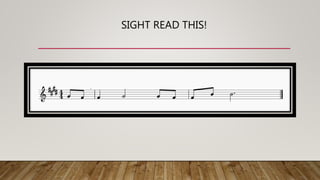
SIGHT READ THIS!
THAT’S NOT FAIR!
OK, OK, OK… LET’S
BREAK IT DOWN
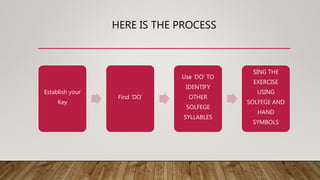
HERE IS THE PROCESS
Establish your
Key
Find ‘DO’
Use ‘DO’ TO
IDENTIFY
OTHER
SOLFEGE
SYLLABLES
SING THE
EXERCISE
USING
SOLFEGE AND
HAND
SYMBOLS
STEP 1: ESTABLISH
YOUR KEY
FOLLOW ALONG BY SINGING AND USING HAND
GESTURES
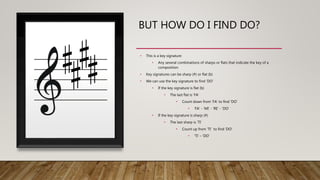
BUT HOW DO I FIND DO?
• This is a key signature
• Any several combinations of sharps or flats that indicate the key of a
composition
• Key signatures can be sharp (#) or flat (b)
• We can use the key signature to find ‘DO’
• If the key signature is flat (b)
• The last flat is ‘FA’
• Count down from ‘FA’ to find ‘DO’
• ‘FA’ - ‘MI’ - ‘RE’ - ‘DO’
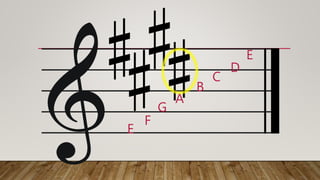
• If the key signature is sharp (#)
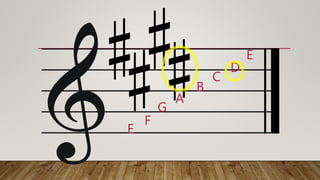
• The last sharp is ‘TI’
• Count up from ‘TI’ to find ‘DO’
• ‘TI’ – ‘DO’
NOW YOU TRY!
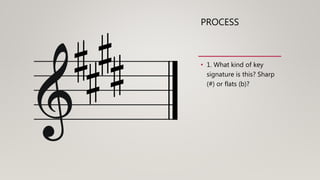
PROCESS
• 1. What kind of key
signature is this? Sharp
(#) or flats (b)?
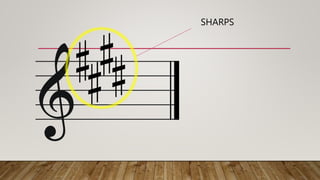
SHARPS
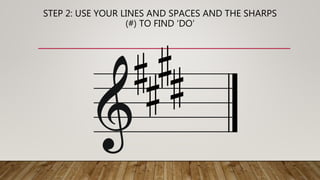
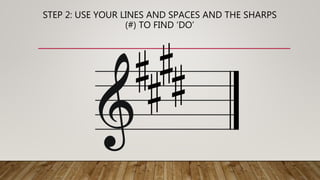
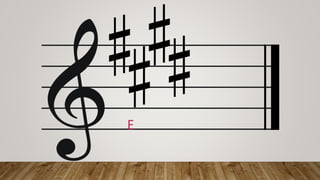
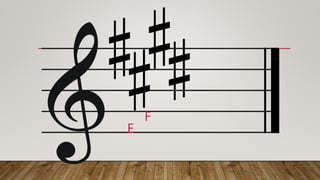
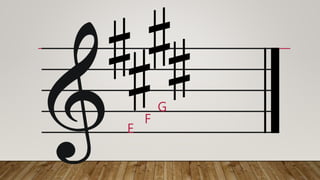
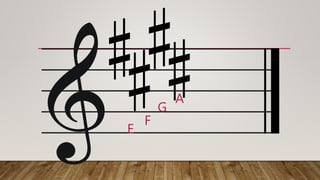
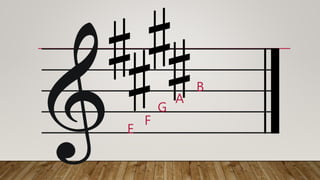
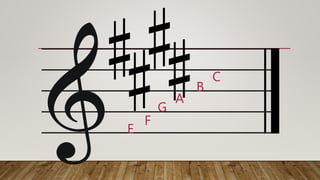
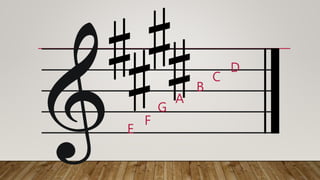
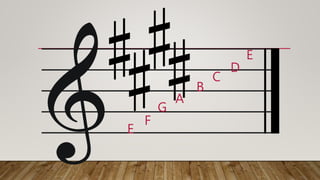
STEP 2: USE YOUR LINES AND SPACES AND THE SHARPS
(#) TO FIND ‘DO’
DO YOU REMEMBER
YOUR LINES AND
SPACES?
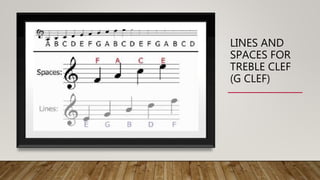
LINES AND
SPACES FOR
TREBLE CLEF
(G CLEF)
LET’S GO BACK
STEP 2: USE YOUR LINES AND SPACES AND THE SHARPS
(#) TO FIND ‘DO’
HOW’D YOU DO?
E
E
F
E
F
G
E
F
G
A
E
F
G
A
B
E
F
G
A
B
C
E
F
G
A
B
C
D
E
F
G
A
B
C
D
E
E
F
G
A
B
C
D
E
E
F
G
A
B
C
D
E
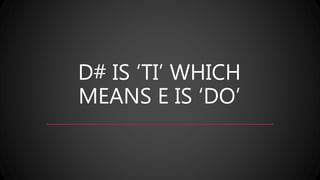
D# IS ‘TI’ WHICH
MEANS E IS ‘DO’
NOW LET’S GO BACK
TO OUR SIGHT
READING EXERCISE
EF
G A B C D E
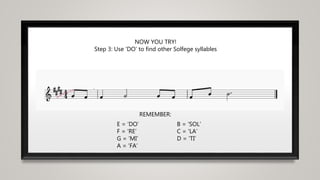
NOW YOU TRY!
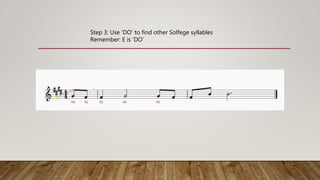
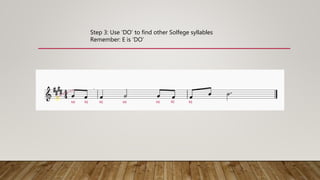
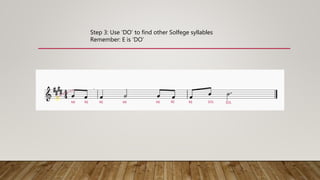
Step 3: Use ‘DO’ to find other Solfege syllables
E = ‘DO’ B = ‘SOL’
F = ‘RE’ C = ‘LA’
G = ‘MI’ D = ‘TI’
A = ‘FA’
REMEMBER:
HOW’D YOU DO?
EF
G A B C D E
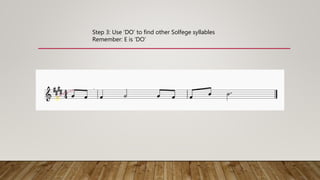
Step 3: Use ‘DO’ to find other Solfege syllables
Remember: E is ‘DO’
EF
G A B C D E
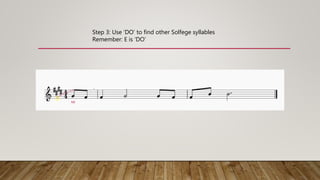
Step 3: Use ‘DO’ to find other Solfege syllables
Remember: E is ‘DO’
MI
EF
G A B C D E
Step 3: Use ‘DO’ to find other Solfege syllables
Remember: E is ‘DO’
MI RE RE
EF
G A B C D E
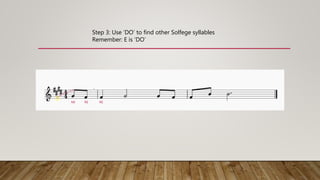
Step 3: Use ‘DO’ to find other Solfege syllables
Remember: E is ‘DO’
MI RE RE MI MI
EF
G A B C D E
Step 3: Use ‘DO’ to find other Solfege syllables
Remember: E is ‘DO’
MI RE RE MI MI RE RE
EF
G A B C D E
Step 3: Use ‘DO’ to find other Solfege syllables
Remember: E is ‘DO’
MI RE RE MI MI RE RE SOL SOL
STEP 4: LET’S TRY
SINGING!
REESTABLISH KEY:
FOLLOW ALONG BY SINGING AND USING HAND
GESTURES
HOW’D YOU DO?
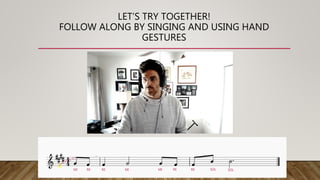
LET’S TRY TOGETHER!
FOLLOW ALONG BY SINGING AND USING HAND
GESTURES
EF
G A B C D E
MI RE RE MI MI RE RE SOL SOL
EF
G A B C D E
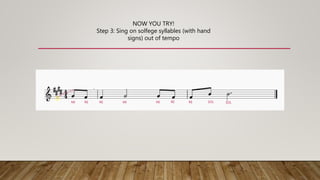
NOW YOU TRY!
Step 3: Sing on solfege syllables (with hand
signs) out of tempo
MI RE RE MI MI RE RE SOL SOL
GREAT JOB!
NEXT LECTURE, WE WILL
FIGURE OUT HOW TO
SIGHT READ IN RHYTHM!

Sight reading lecture

  • 1.
    SIGHT READING SEQUENCING MUSICIANSHIP TREBLECLEF CHOIR, GRADES 9 -10 TYLER ALESSI
  • 2.
    LECTURE OBJECTIVES STUDENT OBJECTIVES •Students will be introduced to musicianship sequence • Students will learn how to find ‘DO’ in a musical example • Students will learn how to identify solfege present in music example using ‘DO’ • Students will learn how to sight read a musical excerpt out of time. CA Standards • NOV.MU:3.Pr4.1 – Select varied repertoire to study based on interest, music-reading skills, and understanding of the structure of music, context, and the technical skill of the individual ensemble
  • 3.
  • 4.
  • 5.
    OK, OK, OK…LET’S BREAK IT DOWN
  • 6.
    HERE IS THEPROCESS Establish your Key Find ‘DO’ Use ‘DO’ TO IDENTIFY OTHER SOLFEGE SYLLABLES SING THE EXERCISE USING SOLFEGE AND HAND SYMBOLS
  • 7.
  • 8.
    FOLLOW ALONG BYSINGING AND USING HAND GESTURES
  • 9.
    BUT HOW DOI FIND DO? • This is a key signature • Any several combinations of sharps or flats that indicate the key of a composition • Key signatures can be sharp (#) or flat (b) • We can use the key signature to find ‘DO’ • If the key signature is flat (b) • The last flat is ‘FA’ • Count down from ‘FA’ to find ‘DO’ • ‘FA’ - ‘MI’ - ‘RE’ - ‘DO’ • If the key signature is sharp (#) • The last sharp is ‘TI’ • Count up from ‘TI’ to find ‘DO’ • ‘TI’ – ‘DO’
  • 10.
  • 11.
    PROCESS • 1. Whatkind of key signature is this? Sharp (#) or flats (b)?
  • 12.
  • 13.
    STEP 2: USEYOUR LINES AND SPACES AND THE SHARPS (#) TO FIND ‘DO’
  • 14.
    DO YOU REMEMBER YOURLINES AND SPACES?
  • 15.
  • 16.
  • 17.
    STEP 2: USEYOUR LINES AND SPACES AND THE SHARPS (#) TO FIND ‘DO’
  • 18.
  • 19.
  • 20.
  • 21.
  • 22.
  • 23.
  • 24.
  • 25.
  • 26.
  • 27.
  • 28.
  • 29.
    D# IS ‘TI’WHICH MEANS E IS ‘DO’
  • 30.
    NOW LET’S GOBACK TO OUR SIGHT READING EXERCISE
  • 31.
    EF G A BC D E NOW YOU TRY! Step 3: Use ‘DO’ to find other Solfege syllables E = ‘DO’ B = ‘SOL’ F = ‘RE’ C = ‘LA’ G = ‘MI’ D = ‘TI’ A = ‘FA’ REMEMBER:
  • 32.
  • 33.
    EF G A BC D E Step 3: Use ‘DO’ to find other Solfege syllables Remember: E is ‘DO’
  • 34.
    EF G A BC D E Step 3: Use ‘DO’ to find other Solfege syllables Remember: E is ‘DO’ MI
  • 35.
    EF G A BC D E Step 3: Use ‘DO’ to find other Solfege syllables Remember: E is ‘DO’ MI RE RE
  • 36.
    EF G A BC D E Step 3: Use ‘DO’ to find other Solfege syllables Remember: E is ‘DO’ MI RE RE MI MI
  • 37.
    EF G A BC D E Step 3: Use ‘DO’ to find other Solfege syllables Remember: E is ‘DO’ MI RE RE MI MI RE RE
  • 38.
    EF G A BC D E Step 3: Use ‘DO’ to find other Solfege syllables Remember: E is ‘DO’ MI RE RE MI MI RE RE SOL SOL
  • 39.
    STEP 4: LET’STRY SINGING!
  • 40.
    REESTABLISH KEY: FOLLOW ALONGBY SINGING AND USING HAND GESTURES
  • 41.
  • 42.
    LET’S TRY TOGETHER! FOLLOWALONG BY SINGING AND USING HAND GESTURES EF G A B C D E MI RE RE MI MI RE RE SOL SOL
  • 43.
    EF G A BC D E NOW YOU TRY! Step 3: Sing on solfege syllables (with hand signs) out of tempo MI RE RE MI MI RE RE SOL SOL
  • 44.
  • 45.
    NEXT LECTURE, WEWILL FIGURE OUT HOW TO SIGHT READ IN RHYTHM!