What is the Music Industry?
A Business mainly split into 4 parts:
 Writing of the Music
 Recording of the Music
 Publishing the Music
 Live Music and Managing the Artist
Recording
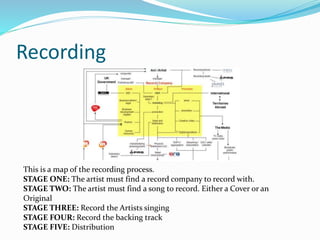
This is a map of the recording process.
STAGE ONE: The artist must find a record company to record with.
STAGE TWO: The artist must find a song to record. Either a Cover or an
Original
STAGE THREE: Record the Artists singing
STAGE FOUR: Record the backing track
STAGE FIVE: Distribution
Song Writing and Publishing
 When someone writes an original song there are
certain terms and conditions that apply when
publishing the song into the music industry.
 The song is split into two halves ; the writer share and
the publishers share.
 So for all the revenue a released single will get the
writer will get 50% and the publisher will get 50%.
Live Music
 With so much Illegal Downloading taking place in
todays society and Artists main source of income is
Live Performance, e.g Concerts/Gigs/Festivals
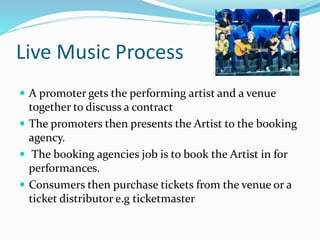
Live Music Process
 A promoter gets the performing artist and a venue
together to discuss a contract
 The promoters then presents the Artist to the booking
agency.
 The booking agencies job is to book the Artist in for
performances.
 Consumers then purchase tickets from the venue or a
ticket distributor e.g ticketmaster
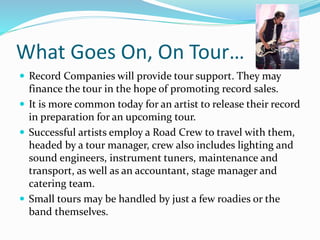
What Goes On, On Tour…
 Record Companies will provide tour support. They may
finance the tour in the hope of promoting record sales.
 It is more common today for an artist to release their record
in preparation for an upcoming tour.
 Successful artists employ a Road Crew to travel with them,
headed by a tour manager, crew also includes lighting and
sound engineers, instrument tuners, maintenance and
transport, as well as an accountant, stage manager and
catering team.
 Small tours may be handled by just a few roadies or the
band themselves.
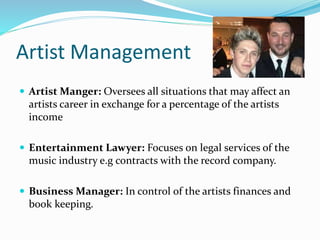
Artist Management
 Artist Manger: Oversees all situations that may affect an
artists career in exchange for a percentage of the artists
income
 Entertainment Lawyer: Focuses on legal services of the
music industry e.g contracts with the record company.
 Business Manager: In control of the artists finances and
book keeping.
Record Label
 A Record Label is a trade mark which takes care of
marketing and recording of artists songs and Music
Videos.
 Record Labels also cover production, manufacturing,
promotion, marketing and distribution
Departments in A Record Label
 A&R (Artists & Repertoire)-
Discover new talent, choose songs
for albums and where albums will be
recorded
 Artist Development- Promotes
and publicises the Artists over the
course of their career
 Promotion Department- Main
purpose is to make sure the artist
gets their music played on radio or
tv.
 Publicity- Works to get the word
out about new artists.
 Sales- Oversees retail for the record
company
 Admin- controls finance and legal
contracts.
Major Labels
 Universal Music Group (owns EMI)
 Sony Music Group
 Warner Music Group
Independent Labels
 Domino
 Rough Trade Records
 Apple Records
PRS- Performing Right Society
A UK copyright collection society that undertakes collective right
management in the music industry.
PPL- Phonographic Performance
Ltd
Licenses recorded music played in public or broadcast and then
distributes the licence fees to its performer and recording right
holder members.
Task
 Select an artist from your chosen genre from last lesson.
 Use wikipedia/band website
 What record label are the signed to?
 Is this owned by one of the big 3?
 Is this an independent label?
 When did they sign to this label?
 What other Artists are on their label?
 Have they collaborated with any other artists? If so are they
also on the same record label?
 Research the label- does it just represent a certain genre?

Music industry

  • 2.
    What is theMusic Industry? A Business mainly split into 4 parts:  Writing of the Music  Recording of the Music  Publishing the Music  Live Music and Managing the Artist
  • 3.
    Recording This is amap of the recording process. STAGE ONE: The artist must find a record company to record with. STAGE TWO: The artist must find a song to record. Either a Cover or an Original STAGE THREE: Record the Artists singing STAGE FOUR: Record the backing track STAGE FIVE: Distribution
  • 4.
    Song Writing andPublishing  When someone writes an original song there are certain terms and conditions that apply when publishing the song into the music industry.  The song is split into two halves ; the writer share and the publishers share.  So for all the revenue a released single will get the writer will get 50% and the publisher will get 50%.
  • 5.
    Live Music  Withso much Illegal Downloading taking place in todays society and Artists main source of income is Live Performance, e.g Concerts/Gigs/Festivals
  • 6.
    Live Music Process A promoter gets the performing artist and a venue together to discuss a contract  The promoters then presents the Artist to the booking agency.  The booking agencies job is to book the Artist in for performances.  Consumers then purchase tickets from the venue or a ticket distributor e.g ticketmaster
  • 7.
    What Goes On,On Tour…  Record Companies will provide tour support. They may finance the tour in the hope of promoting record sales.  It is more common today for an artist to release their record in preparation for an upcoming tour.  Successful artists employ a Road Crew to travel with them, headed by a tour manager, crew also includes lighting and sound engineers, instrument tuners, maintenance and transport, as well as an accountant, stage manager and catering team.  Small tours may be handled by just a few roadies or the band themselves.
  • 8.
    Artist Management  ArtistManger: Oversees all situations that may affect an artists career in exchange for a percentage of the artists income  Entertainment Lawyer: Focuses on legal services of the music industry e.g contracts with the record company.  Business Manager: In control of the artists finances and book keeping.
  • 9.
    Record Label  ARecord Label is a trade mark which takes care of marketing and recording of artists songs and Music Videos.  Record Labels also cover production, manufacturing, promotion, marketing and distribution
  • 10.
    Departments in ARecord Label  A&R (Artists & Repertoire)- Discover new talent, choose songs for albums and where albums will be recorded  Artist Development- Promotes and publicises the Artists over the course of their career  Promotion Department- Main purpose is to make sure the artist gets their music played on radio or tv.  Publicity- Works to get the word out about new artists.  Sales- Oversees retail for the record company  Admin- controls finance and legal contracts.
  • 11.
    Major Labels  UniversalMusic Group (owns EMI)  Sony Music Group  Warner Music Group
  • 12.
    Independent Labels  Domino Rough Trade Records  Apple Records
  • 13.
    PRS- Performing RightSociety A UK copyright collection society that undertakes collective right management in the music industry.
  • 14.
    PPL- Phonographic Performance Ltd Licensesrecorded music played in public or broadcast and then distributes the licence fees to its performer and recording right holder members.
  • 15.
    Task  Select anartist from your chosen genre from last lesson.  Use wikipedia/band website  What record label are the signed to?  Is this owned by one of the big 3?  Is this an independent label?  When did they sign to this label?  What other Artists are on their label?  Have they collaborated with any other artists? If so are they also on the same record label?  Research the label- does it just represent a certain genre?