BY BARASA
KISII UNIVERSITY
BSC CLINICAL MED
SICKLE CELL DISEASE
SICKLE CELL DISEASE
DEF Heretitdary autosomal recessive disorder
Resulting from β globlin chain of heamoglobin
Where valine is in position six instead of glutamin
PATHOPHYSIOLOGY
 Heamoglobin S resultes from the substitution
where by valine is in position six instead of
glutamin as the amino acid of the β globlin chain.
 When deoxygenated HBS molecule undergo
condesation to produce abigger
molecule(polymerization) result in sickle like
RBC.
 These cells are prone to spleenic and
intravascular heamolysis.
 They are more adhehesive(sticky) and cause
occlusion(blockage) in the micro vasculature
 Resulting in infarctive damage of the tissue
 Due to spleenic congestion and the defecct in
the in the complement system
 The immune system is affected especially against
the encapusulated bacteria(pneumonia)
 The life span for sickle cell in homologous is 15 to
60days,heterozygous is 50 to 80days
and normal child is 120days
PREVALENCE
 Is found in falciparum malaria endemic areas of
western,nyanza and coast province
TRANSMISSION
Inherited autosomal recessive gene
HbSS_____homologous(disease)
HbAS_____Heterozygous
HbAA_____Normal
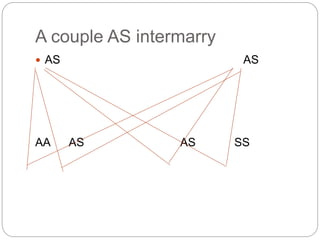
A couple AS intermarry
 AS AS
AA AS AS SS
Precipitating factors
 1.acute infections
 2.exercises/acidosis
 3dehydration
 4.shock
 5.drugs e.g anaesthesia
 6weather-high speed of wind,low
humidity,Atmospheric pollutants,
 7stress 8.alcohol 9.stress
CRISIS
 Vasoocclusive
 Sequestration
 Aplastic (assoĉ parvovirus B19 Infx)
 Painful/Vasooclusive
 Hemolytic
 Nonpainful non aneamic e.g stroke
1.Painful vaso-occlusive crisis:
 The most frequent and is precipitated by
infection, acidosis, dehydration or
deoxygenation(eg altitude, operation, stasis of
circulation, exposure to cold, exercise, etc)
 Infarcts occur in a variety of organs including the
bones(hips, shoulders & vertebrae commonly),
the lungs and the spleen, penis
 Most serious crisis is of the brain( stroke in 7% )
or spinal cord
 Hand and foot syndrome; dactylitis due to
infarctive damage of small bones
2. Visceral sequestration crisis:
 Caused by sickling within organs and pooling of
blood, often with a severe exacerbation of anaemia
and a rapidly enlarging spleen
 There is a risk of hypovolemic shock, particularly in
children
 parvovirus B19 infection may also be a risk factor for
splenic sequestration
 Acute sickle chest syndrome is a feared complication
and the most common cause of death after puberty
 Presents with dyspnea, falling Po2, chest pain and
pulmonary infiltrates on CXR
 Hepatic and splenic sequestration may lead to severe
3. Aplastic crisis:
 Occurs as a result of infection with parvovirus
B19
 Typically preceded by fever and or
gastrointestinal symptoms and several family
members may fall ill over a period of days
 Due to transient arrest of erythropoiesis,
leading to abrupt reductions in hemoglobin
concentration and red cell precursors in the
bone marrow, and a markedly reduced
number of reticulocytes in the peripheral blood
( <1.0 % and retic count <10,000)
4.Haemolytic crisis:
 Characterized by an increased rate of haemolysis
with a fall in Hb but rise in reticulocytes and
usually accompany a painful crisis
EVALUATION
 History
 Suggestive of sickle cell disease
 Family hx, recurrent transfusions, jaundice, hematuria,
chronic leg ulcers,etc
 Suggestive of the precipitating cause
 clinical exam
 Signs of sickle cell disease
 Signs of sickle cell crisis
 Signs of a precipitant eg infection, dehydration,etc
 Diagnosis of sickle cell crisis is usually clinical
 If a patient has symptoms that are severe enough
to warrant hospitalization, laboratory tests should
include a complete blood count, reticulocyte
count and urinalysis.
 If fever is present, a chest radiograph may be
obtained, and urine, sputum and blood may be
analyzed for a possible source of infection.
 Hb- drop of >2gm/dl indicates a hematological
crisis.If retic count N= sequestration, low=
aplastic, high= hemolytic
 WBC- leukocytosis expected in all patients; >
20,000 with left shift suggests
infection;leukopenia suggests parvovirus infection
 Platelet count often elevated.If low consider
hypersplenism
 PBF –sickle shaped RBCs along with target cells
and nucleated RBCs. Concurrent microcytosis
suggests sickle beta-thalassemia
 If SCD is uncertain – sickling test; Hb
ACUTE MANAGEMENT OF
PAIN
1. Pain management:
Opiates-
 Morphine, fentanyl, pethidine
Newer approaches
 Potent NSAIDs eg ketoralac –good for bone pain;
inj/po ; GI effects
 Opiod receptor-binding agents eg tramadol
 Other Nsaids used as pain improves
 Epidural anesthesia
2. Fluid therapy
IV fuids in severe painful crisis – 5% dextrose and
normal saline: 1-2 times maintainance.Does not
relieve the pain.
3. Treatment of infection:
 Broad spectrum antibiotics
 Acute chest syndrome S. pneumoniae, H.
influenzae type b, Mycoplasma pneumoniae, and
Chlamydia pneumoniae .
 Osteomyelitis- salmonella and s. aureus
4. Transfusion therapy(therapeutic)
Acute stroke- partial exchange
Acute chest syndrome – partial exchange
Acute multi-organ failure- partial exchange
Acute symptomatic anemia,
Aplastic crisis,
Reticulocytopenia (most commonly associated with
Parvovirus B19 infection, but can occur with any
infection),
Pre-operative settings,
Hepatic or splenic sequestration.
 Simple transfusion is used for single transfusions
to restore oxygen carrying capacity or blood
volume
 Partial exchange transfusions are recommended
for acute emergencies and for chronic transfusion
because of the improved viscosity effects and
reduced iron burden with this approach
 Hb should not be raised much above 10 g/dL
because of increases in viscosity and the risk of
vasoocclusive episodes.
5. Oxygen administration:
 Oxygen therapy has not been shown to affect the
duration of a pain crisis or to be useful in patients
with acute chest syndrome whose Pao2 is in the
normal .
 Oxygen should be administered only if
hypoxemia is present.
LONG TERM MANAGEMENT
Infection control and prophylaxis
 Instructions regarding early recognition of infection.
Fever should be considered a medical emergency
requiring prompt medical attention and treatment with
antibiotics.
 Immunization against Streptococcus pneumoniae,
Haemophilus influenzae type B, hepatitis B virus, and
influenza .
 The response to the pneumococcal capsular
polysaccharide vaccine is generally poor , but receipt
of ongoing penicillin prophylaxis does not appear to
interfere with an IgG response to reimmunization .
 Vaccination with the new conjugate pneumococcal
preparation may be superior in patients with SCD
Prophylactic penicillin — Penicillin V should be
given 125 mg po BD within 3 months of birth until
2-3 yrs of age then 250 mg BD until the age of
five.
 After five years of age some parents, after
consultation with their clinicians, may elect to stop
penicillin prophylaxis, while others will continue.
Paludrine 3mg/kg od monthly
Routine treatment and evaluations
Folic acid is given orally in a dose of 1 mg/day
Hydroxyurea:
has been definitively shown to reduce the
incidence of acute painful episodes,
transfusions, and hospitalization rates
 Increases HbF as a result of stress erythropoiesis induced
by its myelosuppressive effect
 Indications:(children older than 6 years):
 Frequent painful episodes
 History of acute chest syndrome
 History of other severe vasoocclusive events
 Severe symptomatic anaemia
 Start at 15mg/kg, increase to max 25mg/kg provided no
side effects
Bone marrow transplant:
 Allogeneic BMT from matched sibling donor
cures 85% of children with SCD less than 16
yrs of age
 5-10% die due to causes related to BMT
 10% experience graft rejection with the return
of SCD
 Indications:(complex)
 Stroke
 Recurrent acute chest syndrome
 Recurrent vaso-occlusive episodes

SICKLE CELL DISEASE.pptx

  • 1.
    BY BARASA KISII UNIVERSITY BSCCLINICAL MED SICKLE CELL DISEASE
  • 2.
    SICKLE CELL DISEASE DEFHeretitdary autosomal recessive disorder Resulting from β globlin chain of heamoglobin Where valine is in position six instead of glutamin
  • 3.
    PATHOPHYSIOLOGY  Heamoglobin Sresultes from the substitution where by valine is in position six instead of glutamin as the amino acid of the β globlin chain.  When deoxygenated HBS molecule undergo condesation to produce abigger molecule(polymerization) result in sickle like RBC.
  • 4.
     These cellsare prone to spleenic and intravascular heamolysis.  They are more adhehesive(sticky) and cause occlusion(blockage) in the micro vasculature  Resulting in infarctive damage of the tissue  Due to spleenic congestion and the defecct in the in the complement system  The immune system is affected especially against the encapusulated bacteria(pneumonia)
  • 5.
     The lifespan for sickle cell in homologous is 15 to 60days,heterozygous is 50 to 80days and normal child is 120days PREVALENCE  Is found in falciparum malaria endemic areas of western,nyanza and coast province
  • 6.
    TRANSMISSION Inherited autosomal recessivegene HbSS_____homologous(disease) HbAS_____Heterozygous HbAA_____Normal
  • 7.
    A couple ASintermarry  AS AS AA AS AS SS
  • 8.
    Precipitating factors  1.acuteinfections  2.exercises/acidosis  3dehydration  4.shock  5.drugs e.g anaesthesia  6weather-high speed of wind,low humidity,Atmospheric pollutants,  7stress 8.alcohol 9.stress
  • 9.
    CRISIS  Vasoocclusive  Sequestration Aplastic (assoĉ parvovirus B19 Infx)  Painful/Vasooclusive  Hemolytic  Nonpainful non aneamic e.g stroke
  • 10.
    1.Painful vaso-occlusive crisis: The most frequent and is precipitated by infection, acidosis, dehydration or deoxygenation(eg altitude, operation, stasis of circulation, exposure to cold, exercise, etc)  Infarcts occur in a variety of organs including the bones(hips, shoulders & vertebrae commonly), the lungs and the spleen, penis  Most serious crisis is of the brain( stroke in 7% ) or spinal cord  Hand and foot syndrome; dactylitis due to infarctive damage of small bones
  • 11.
    2. Visceral sequestrationcrisis:  Caused by sickling within organs and pooling of blood, often with a severe exacerbation of anaemia and a rapidly enlarging spleen  There is a risk of hypovolemic shock, particularly in children  parvovirus B19 infection may also be a risk factor for splenic sequestration  Acute sickle chest syndrome is a feared complication and the most common cause of death after puberty  Presents with dyspnea, falling Po2, chest pain and pulmonary infiltrates on CXR  Hepatic and splenic sequestration may lead to severe
  • 12.
    3. Aplastic crisis: Occurs as a result of infection with parvovirus B19  Typically preceded by fever and or gastrointestinal symptoms and several family members may fall ill over a period of days  Due to transient arrest of erythropoiesis, leading to abrupt reductions in hemoglobin concentration and red cell precursors in the bone marrow, and a markedly reduced number of reticulocytes in the peripheral blood ( <1.0 % and retic count <10,000)
  • 13.
    4.Haemolytic crisis:  Characterizedby an increased rate of haemolysis with a fall in Hb but rise in reticulocytes and usually accompany a painful crisis
  • 14.
    EVALUATION  History  Suggestiveof sickle cell disease  Family hx, recurrent transfusions, jaundice, hematuria, chronic leg ulcers,etc  Suggestive of the precipitating cause  clinical exam  Signs of sickle cell disease  Signs of sickle cell crisis  Signs of a precipitant eg infection, dehydration,etc
  • 15.
     Diagnosis ofsickle cell crisis is usually clinical  If a patient has symptoms that are severe enough to warrant hospitalization, laboratory tests should include a complete blood count, reticulocyte count and urinalysis.  If fever is present, a chest radiograph may be obtained, and urine, sputum and blood may be analyzed for a possible source of infection.
  • 16.
     Hb- dropof >2gm/dl indicates a hematological crisis.If retic count N= sequestration, low= aplastic, high= hemolytic  WBC- leukocytosis expected in all patients; > 20,000 with left shift suggests infection;leukopenia suggests parvovirus infection  Platelet count often elevated.If low consider hypersplenism  PBF –sickle shaped RBCs along with target cells and nucleated RBCs. Concurrent microcytosis suggests sickle beta-thalassemia  If SCD is uncertain – sickling test; Hb
  • 17.
    ACUTE MANAGEMENT OF PAIN 1.Pain management: Opiates-  Morphine, fentanyl, pethidine Newer approaches  Potent NSAIDs eg ketoralac –good for bone pain; inj/po ; GI effects  Opiod receptor-binding agents eg tramadol  Other Nsaids used as pain improves  Epidural anesthesia
  • 18.
    2. Fluid therapy IVfuids in severe painful crisis – 5% dextrose and normal saline: 1-2 times maintainance.Does not relieve the pain. 3. Treatment of infection:  Broad spectrum antibiotics  Acute chest syndrome S. pneumoniae, H. influenzae type b, Mycoplasma pneumoniae, and Chlamydia pneumoniae .  Osteomyelitis- salmonella and s. aureus
  • 19.
    4. Transfusion therapy(therapeutic) Acutestroke- partial exchange Acute chest syndrome – partial exchange Acute multi-organ failure- partial exchange Acute symptomatic anemia, Aplastic crisis, Reticulocytopenia (most commonly associated with Parvovirus B19 infection, but can occur with any infection), Pre-operative settings, Hepatic or splenic sequestration.
  • 20.
     Simple transfusionis used for single transfusions to restore oxygen carrying capacity or blood volume  Partial exchange transfusions are recommended for acute emergencies and for chronic transfusion because of the improved viscosity effects and reduced iron burden with this approach  Hb should not be raised much above 10 g/dL because of increases in viscosity and the risk of vasoocclusive episodes.
  • 21.
    5. Oxygen administration: Oxygen therapy has not been shown to affect the duration of a pain crisis or to be useful in patients with acute chest syndrome whose Pao2 is in the normal .  Oxygen should be administered only if hypoxemia is present.
  • 22.
    LONG TERM MANAGEMENT Infectioncontrol and prophylaxis  Instructions regarding early recognition of infection. Fever should be considered a medical emergency requiring prompt medical attention and treatment with antibiotics.  Immunization against Streptococcus pneumoniae, Haemophilus influenzae type B, hepatitis B virus, and influenza .  The response to the pneumococcal capsular polysaccharide vaccine is generally poor , but receipt of ongoing penicillin prophylaxis does not appear to interfere with an IgG response to reimmunization .  Vaccination with the new conjugate pneumococcal preparation may be superior in patients with SCD
  • 23.
    Prophylactic penicillin —Penicillin V should be given 125 mg po BD within 3 months of birth until 2-3 yrs of age then 250 mg BD until the age of five.  After five years of age some parents, after consultation with their clinicians, may elect to stop penicillin prophylaxis, while others will continue. Paludrine 3mg/kg od monthly Routine treatment and evaluations Folic acid is given orally in a dose of 1 mg/day
  • 24.
    Hydroxyurea: has been definitivelyshown to reduce the incidence of acute painful episodes, transfusions, and hospitalization rates  Increases HbF as a result of stress erythropoiesis induced by its myelosuppressive effect  Indications:(children older than 6 years):  Frequent painful episodes  History of acute chest syndrome  History of other severe vasoocclusive events  Severe symptomatic anaemia  Start at 15mg/kg, increase to max 25mg/kg provided no side effects
  • 25.
    Bone marrow transplant: Allogeneic BMT from matched sibling donor cures 85% of children with SCD less than 16 yrs of age  5-10% die due to causes related to BMT  10% experience graft rejection with the return of SCD  Indications:(complex)  Stroke  Recurrent acute chest syndrome  Recurrent vaso-occlusive episodes