State Insitutitons of Economic
Governance
Economic Constitutionalism
Prof. Dr. Mária Bordás
Professor
National University of Public Service
Faculty of Public Governance and International
Relations
2020.
Role of Economic Constitutionalism
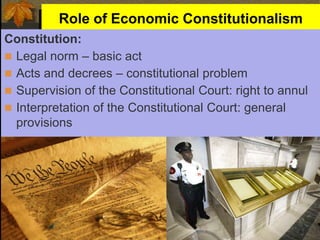
Constitution:
 Legal norm – basic act
 Acts and decrees – constitutional problem
 Supervision of the Constitutional Court: right to annul
 Interpretation of the Constitutional Court: general
provisions
Function of Economic
Consitutionalism
Regulation of government
acitivities: stabilty, accountability
Generally accepted requirements:
public goals - intervention
Limitation for government
activities:guarantees
Economic Constitutional
Regulations
Aims:
 Protection of the economic order: right to property,
contract, entrepreneurial activity, economic equality,
market competition
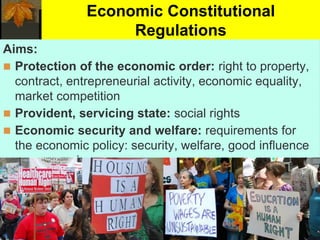
 Provident, servicing state: social rights
 Economic security and welfare: requirements for
the economic policy: security, welfare, good influence
on economic processes
Levels
 Provisions for the government decisions
 Constitutional rights can not be violated
Economic rights
Common features:
 declare economic freedom
 protect the business firms
 civil law legal relations
Economic rights II.
Limitations: not absolute protection: can be
limited in necessary and proportional measure
 Right to entrepreneurial activity: state
monopolies – private monopolies
 Right to contract: price regulation, abuse with
monoply position, customer contracts
 Economic equality: state subsidy, tax
allowance
 Right to property: expropriation -
compensation
Social Rights
Features:
 Second generation rights:
State activity is required
Aim: welfare, social security, employment
Social Rights
 Not a legal issue:
Minimum for the life, wide welfare institutions,
concrete: house, health, education, aids
 Different solutions: USA, Europe
 Redistribution: limits the right to property
Principles of Economic Policy
Expectations:
State aims: social market economy, freedom of
economic competition, scientific and technical
development, environment protection
Economic policy:
 Economic growth
 Economic planning
 Economic security
Principles of Economic Policy II
Fiscal policy: stable, financable, complete,
transparent, efficient, guarantees for procedural
rules
Monetary policy: price stability, adequacy,
independency of the central bank
State property: alienate prohibition, decision of
the parliament
Interpretation of the Constitutional Court
Relevance:
 Constitutional legal norms are brief
 Continuous interpretation
 Problem: economic, not legal content
 Points of view:
- Public goal, when constitutional rights are
violated
- Social security is served by the economic
policy
- Generally accpeted principles
Hungarian Economic
Constitution
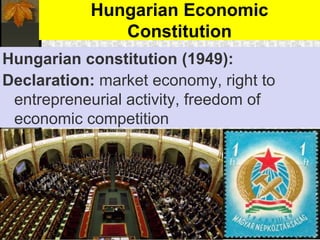
Hungarian constitution (1949):
Declaration: market economy, right to
entrepreneurial activity, freedom of
economic competition
Interpretation of the
Constitutional Court
 Wide opportunity
 Can not supervise government
decisions
 Constitutional problem: total elimination
of market institutions
 State intervention can not be interpreted
 Social rights: contradictory
Econimic Constitutionalism
(recent)
Basic Act
Drastic limitation of the competence of the Constitutional
Court:
Aim: not to hinder the Government in implementing its economic
policy
Economic Constitutionalism
(recent)
Basic Act
Means: regulation in the Constitution, if
problematic
Complain, action/petition – not by anybody (actio
popularis)
 No decision in financial matters
 Repealed former resolutions
 Appointment of the president by the Parliament
 Appointment of the members based on loyalty
Thanks for your attention!
Question?

Si 4th lecture - 2020 (b)

  • 1.
    State Insitutitons ofEconomic Governance Economic Constitutionalism Prof. Dr. Mária Bordás Professor National University of Public Service Faculty of Public Governance and International Relations 2020.
  • 2.
    Role of EconomicConstitutionalism Constitution:  Legal norm – basic act  Acts and decrees – constitutional problem  Supervision of the Constitutional Court: right to annul  Interpretation of the Constitutional Court: general provisions
  • 3.
    Function of Economic Consitutionalism Regulationof government acitivities: stabilty, accountability Generally accepted requirements: public goals - intervention Limitation for government activities:guarantees
  • 4.
    Economic Constitutional Regulations Aims:  Protectionof the economic order: right to property, contract, entrepreneurial activity, economic equality, market competition  Provident, servicing state: social rights  Economic security and welfare: requirements for the economic policy: security, welfare, good influence on economic processes
  • 5.
    Levels  Provisions forthe government decisions  Constitutional rights can not be violated
  • 6.
    Economic rights Common features: declare economic freedom  protect the business firms  civil law legal relations
  • 7.
    Economic rights II. Limitations:not absolute protection: can be limited in necessary and proportional measure  Right to entrepreneurial activity: state monopolies – private monopolies  Right to contract: price regulation, abuse with monoply position, customer contracts  Economic equality: state subsidy, tax allowance  Right to property: expropriation - compensation
  • 8.
    Social Rights Features:  Secondgeneration rights: State activity is required Aim: welfare, social security, employment
  • 9.
    Social Rights  Nota legal issue: Minimum for the life, wide welfare institutions, concrete: house, health, education, aids  Different solutions: USA, Europe  Redistribution: limits the right to property
  • 10.
    Principles of EconomicPolicy Expectations: State aims: social market economy, freedom of economic competition, scientific and technical development, environment protection Economic policy:  Economic growth  Economic planning  Economic security
  • 11.
    Principles of EconomicPolicy II Fiscal policy: stable, financable, complete, transparent, efficient, guarantees for procedural rules Monetary policy: price stability, adequacy, independency of the central bank State property: alienate prohibition, decision of the parliament
  • 12.
    Interpretation of theConstitutional Court Relevance:  Constitutional legal norms are brief  Continuous interpretation  Problem: economic, not legal content  Points of view: - Public goal, when constitutional rights are violated - Social security is served by the economic policy - Generally accpeted principles
  • 13.
    Hungarian Economic Constitution Hungarian constitution(1949): Declaration: market economy, right to entrepreneurial activity, freedom of economic competition
  • 14.
    Interpretation of the ConstitutionalCourt  Wide opportunity  Can not supervise government decisions  Constitutional problem: total elimination of market institutions  State intervention can not be interpreted  Social rights: contradictory
  • 15.
    Econimic Constitutionalism (recent) Basic Act Drasticlimitation of the competence of the Constitutional Court: Aim: not to hinder the Government in implementing its economic policy
  • 16.
    Economic Constitutionalism (recent) Basic Act Means:regulation in the Constitution, if problematic Complain, action/petition – not by anybody (actio popularis)  No decision in financial matters  Repealed former resolutions  Appointment of the president by the Parliament  Appointment of the members based on loyalty
  • 17.
    Thanks for yourattention! Question?